Mega Drive / Genesis1993Sega Technical InstitutePinball
Sonic Spinball (1993)
Sonic Team was busy with Sonic 3, so Sega’s American studio curled Sonic into a ball, fired him into a volcano and turned Robotnik’s fortress into the most dangerous pinball table on Mobius.
Released15 Nov 1993 (EU) · 23 Nov 1993 (US) · 10 Dec 1993 (JP)
DeveloperSega Technical Institute, programmed largely by Polygames
PublisherSega
TablesFour levels and four bonus tables
8-bit versionGame Gear 1994 · Master System 1995
Cartoon linkSet in the Mobius of the Sonic the Hedgehog cartoon (SatAM)
Title
Sonic the Hedgehog Spinball (Sonic Spinball on most packaging) Japan: ソニック・スピンボール; pitched inside Sega as Sonic Pinball
Platforms
Mega Drive / Genesis (1993); a separate 8-bit version for Game Gear (1994) and Master System (1995); later Wii Virtual Console, PC and Steam, iOS, Nintendo Switch Online and many compilations
Developer
Sega Technical Institute (Mega Drive), with about 90% of the programming by Polygames; Sega Interactive Development Division (Game Gear and Master System)
Publisher
Sega
Concept and design
Peter Morawiec (concept and design), Hoyt Ng (design)
Producer
Yutaka Sugano; art director John Duggan; STI director Roger Hector
Music
Howard Drossin, Barry Blum, Brian Coburn and OUI Multimedia; on 8-bit, Paul Gadbois (music director) with Dave Delia, Howard Drossin and Brad Scott Gish
Players
1–4, taking turns on one control pad
Cartridge
8 megabits (Mega Drive); 4 megabits (512 KB) for Game Gear and Master System
Released (Mega Drive)
North America and the UK 23 November 1993 (US$49.99; £39.99) by Sega Retro (our original page gave Europe 15 November); Japan 10 December 1993 (¥6,800)
Released (Game Gear)
Europe August 1994 by our original page, September 1994 by Sega Retro; North America September 1994; UK £29.99; Majesco reissue in the US in 2001 (US$14.97)
Released (Master System)
Europe and Brazil 25 January 1995
Genre
Pinball, action
Followed by
Sonic Pinball Party (Game Boy Advance, 2003)
Overview
Sonic Spinball exists because Sonic 3 would not be ready for Christmas 1993. With the Japanese half of Sega Technical Institute building the next big platformer, Sega of America handed its American staff a different brief: a Sonic game, any Sonic game, in the shops for the holidays. Designer Peter Morawiec remembered how much players loved Sonic 2’s Casino Night Zone and asked the obvious question. What if the whole game was a pinball table, and Sonic was the ball?
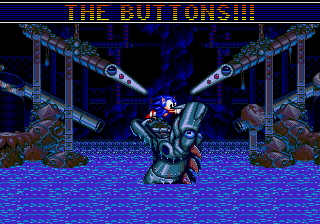
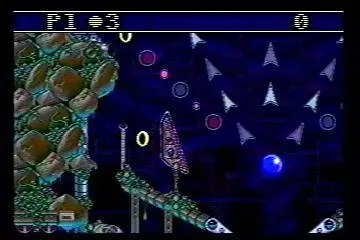
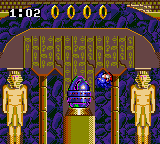
The result drops Sonic into the Veg-O-Fortress, a robot factory Dr. Robotnik has built inside a volcano. Four huge tables climb from toxic caves at the mountain’s foot to a rocket pad at its summit. You flip Sonic with the buttons and nudge him in mid-air with the D-pad, hunting Chaos Emeralds that unlock each boss, and when he lands on solid ground he runs, jumps and Spin Dashes like his platform self.
It is also the most cartoon-flavoured Sonic of the era. The world, the roboticizer and the cast lean on the Saturday-morning Sonic the Hedgehog series (SatAM), whose Freedom Fighters make their video game debut in a bonus table, while a robot from Adventures of Sonic the Hedgehog turns up too. Built in nine months and coded in C, it is rough round the edges, but it sold well and has been re-released many times since.
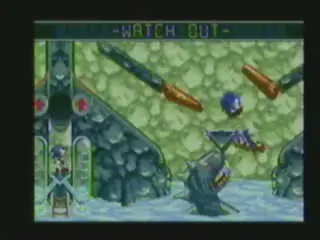
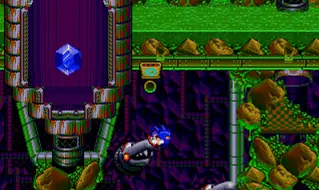
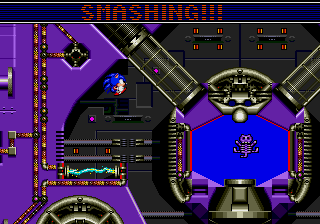
Toxic Caves, the first table.Lava Powerhouse.Taking on the Veg-O-Machine.
He’s already captured thousands of animals in his fiery fortress.
That is the stakes in one line, from the story Sega printed for the 8-bit Spinball, which our original Spinball page reproduced in 2017. Under the headline “Robotnik strikes again!”, it tells how Robotnik has built the Volcano Veg-O Fortress, a robot factory hidden inside an island volcano and powered by its lava, guarded his prisoners with a pinball security system, and left Sonic to free his friends before the scheme succeeds.
— Official description: Sega’s story introduction for Sonic Spinball (Game Gear / Master System), as reproduced on Sonic Scene’s original 2017 Spinball page. One line quoted; the rest summarised.
Quick Answers
The short answers, with the detail further down the page.
When did Sonic Spinball come out?
On the Mega Drive in North America and the UK on 23 November 1993 and in Japan on 10 December 1993. The 8-bit version followed on Game Gear in 1994 and on Master System in January 1995. More →
Who made Sonic Spinball?
The American staff of Sega Technical Institute, led by designer Peter Morawiec, with outside studio Polygames writing most of the code. Sonic Team was not involved: it was busy with Sonic 3. More →
Is Sonic Spinball connected to the SatAM cartoon?
Yes. It is set in the Mobius of the 1993 Sonic the Hedgehog TV series, with Robotnik roboticizing animals, and Sally, Bunnie, Rotor and Muttski cameo in a bonus table. It is the only official game to use that show’s characters. More →
How many levels are there?
Four: Toxic Caves, Lava Powerhouse, The Machine and Showdown, plus three bonus tables after the first three bosses and a hidden multi-ball table, Clucker’s Defense. More →
How many Chaos Emeralds are there?
Sixteen in total: three each in the first two levels and five each in the last two. Collect every Emerald on a level to open the way to its boss. More →
Is there a level select?
Yes. Enter a button code on the Options screen, then hold A, B or C with Start on the title screen to begin at level 2, 3 or 4. More →
Why does the title music not sound like Sonic?
Right before release the team learned Sega could not reuse Masato Nakamura’s Sonic 1 tunes, so composer Howard Drossin wrote replacements at the last minute. More →
Is the Game Gear version the same game?
The same story, levels and bosses, but with new table layouts, more running on foot, slower physics and different bonus stages. It was made by a separate Sega team. More →
Can I play it today?
The Mega Drive game is on Nintendo Switch Online and in several Sega collections; the Game Gear version is part of Sonic Origins Plus (2023). More →
Plot / Story
Dr. Robotnik, master of the Veg-O-Fortress.Image via Sonic Wiki Zone
Robotnik has done it again. He has seized Mount Mobius, a volcano rising out of the sea, and wrapped it in machinery to create the Veg-O-Fortress. Magma from the mountain’s core powers a factory that turns captured animals into robot slaves, and the whole thing is held together by the Chaos Emeralds, which keep the volcano from blowing its top.
That is Robotnik’s weak point, and both sides know it. Take the Emeralds away and the volcano erupts, bringing the fortress down from the inside. So the doctor has hidden them in a Pinball Defense System: a set of giant mechanical tables, crawling with robots, that only something very fast and very round could survive.
Shot down over Mount Mobius
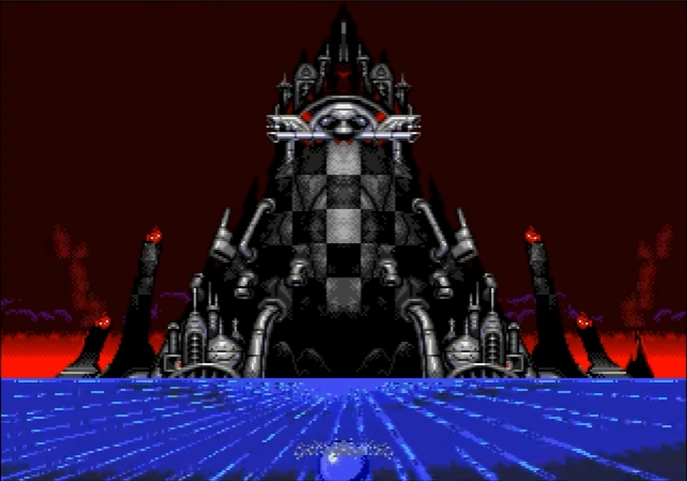
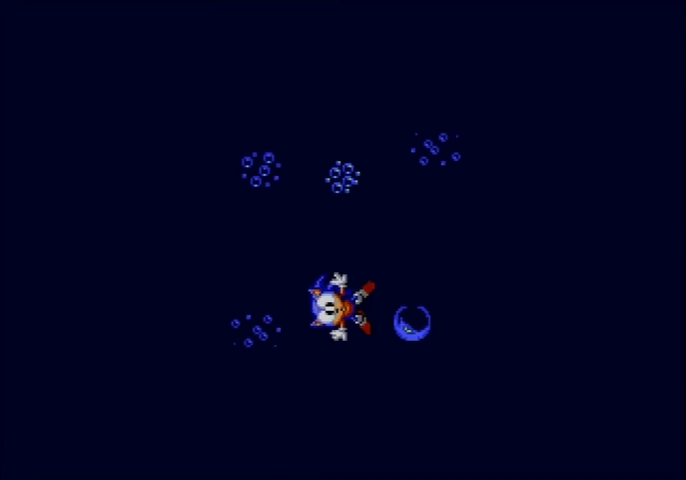
Sonic and Tails come in low over the waves in the Tornado for an aerial assault, but the fortress fires back. A blast knocks Sonic off the plane’s wings and into the sea. He washes up in the half-flooded caves at the foot of the mountain, the lowest and dirtiest corner of Robotnik’s base, and starts the long climb up.
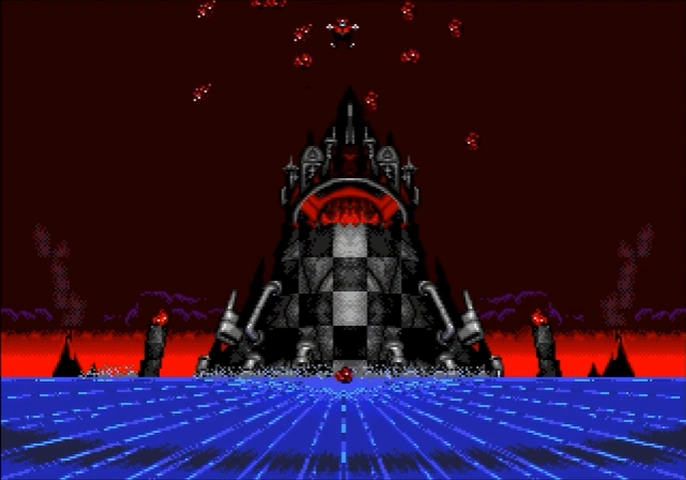
Sonic and Tails fly in on the Tornado.The fortress looms over the sea.Knocked off the plane, Sonic sinks.
Up through the volcano
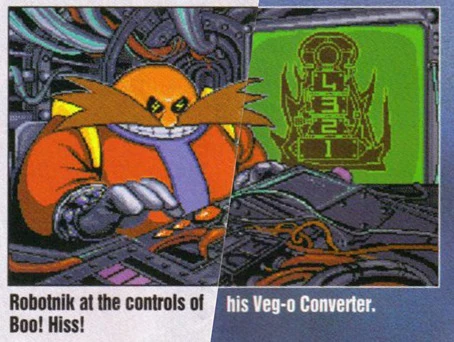
Each level is a storey of the fortress. Toxic Caves is the doctor’s dumping ground, flooded with glowing green waste. Lava Powerhouse taps the magma to make the factory’s power. The Machine is the factory itself, a prison full of animals waiting their turn in the Veg-O-Machine, the giant roboticizer at the heart of the plan. Every storey has its Emeralds and its guardian, and the status strip running across the top of the display keeps count, shouts warnings and drops hints about how to beat each boss.
Smash the Veg-O-Machine and the animals go free, but Robotnik is not finished. He makes for a rocket ship on the launch pad around the crater, and the final level, Showdown, is a race up the scaffolding and into the ship itself before it can lift off.
The ending
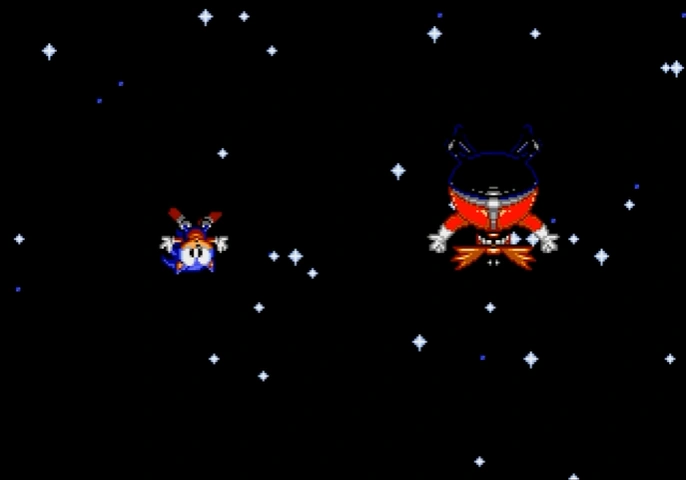
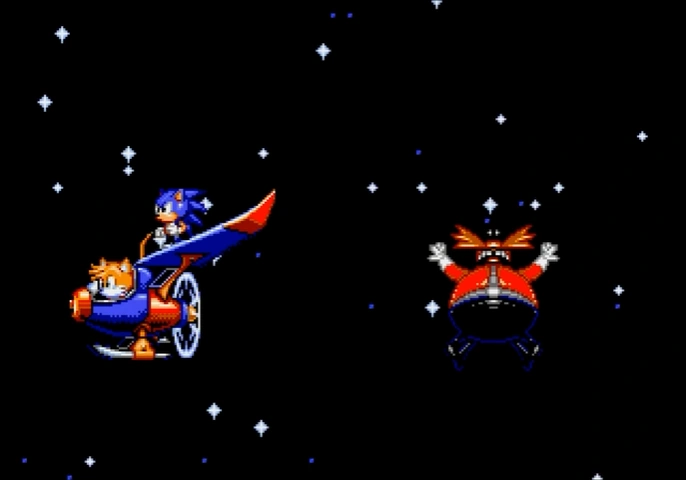
With the last Emeralds gone, the volcano finally erupts. Sonic wrecks the doctor’s ship and both of them fall from the sky, but only one gets a ride home: Tails swoops in with the Tornado to catch his friend, while Robotnik drops back into his collapsing fortress as the whole mountain sinks beneath the sea.
Sonic and Robotnik fall from the sky.Tails swoops in to the rescue.The fortress goes down.
Levels and bonus tables
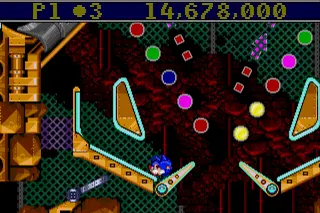
Four levels, each a tall multi-screen pinball table with flippers, bumpers, loops and drains, and a boss waiting at the top once every Emerald is collected. Beat a boss in the first three and Sonic steps up to a real pinball machine for a bonus round.
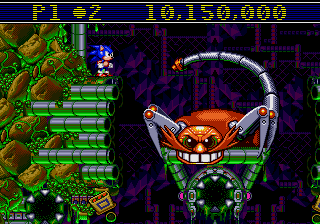
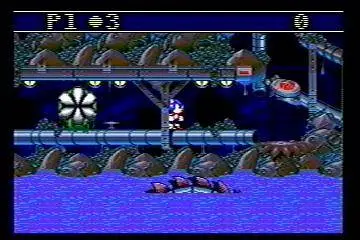
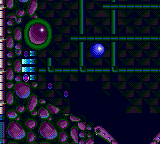
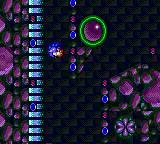
Toxic CavesLevel 1 · 3 Emeralds · boss: ScorpiusSlime-filled sewer caves with mine-cart rails, barrels to ride across the ooze and Rexxon the sea serpent lurking below the flippers.
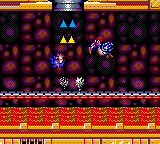
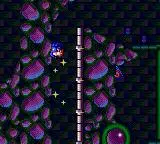
Lava PowerhouseLevel 2 · 3 Emeralds · boss: Robo-BoilerA geothermal power plant of pistons, pressure dials and cannons, with steam arenas full of Cluckbirds and bellows worked by two blue kangaroos.
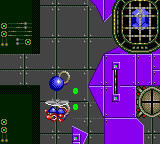
The MachineLevel 3 · 5 Emeralds · boss: Veg-O-MachineThe Badnik factory at the fortress’s heart, with grinding gears and a prison block; break every cell for a 500,000-point bonus.
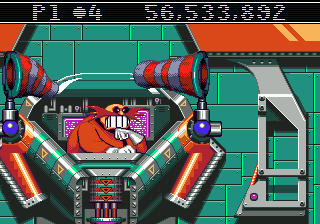
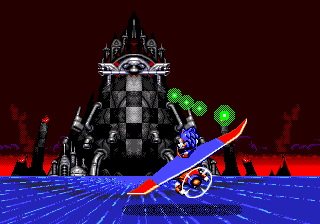
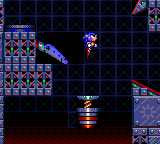
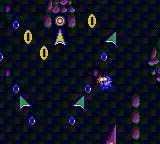
ShowdownLevel 4 · 5 Emeralds · boss: Robotnik’s ShipThe launch pad at sunset, with molten rock waiting below. Balloons, windsocks and the doctor’s own bombs carry Sonic up to the ship.
Trapped AliveBonus table after Toxic CavesBreak the capsules behind Robotnik’s Egg Mobile to free the prisoners, then hit the doctor himself.
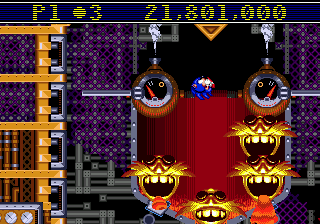
Robo SmileBonus table after Lava PowerhouseKnock every tooth out of a giant Robotnik head until it gets a headache and blows up.
The MarchBonus table after The MachineSmash a giant capsule full of animals while a ring of Scratch robots marches round it.
Clucker’s DefenseHidden multi-ball tableCollect every ring on a level to open a Bonus Gate to this secret table, where up to three balls take on Crawl and his Cluckers.
Bonus rounds cannot cost you a life: Sonic plays them with three balls and only the flippers, and they simply add to your score. Shake the table with all three buttons, but not too often, or the machine tilts and the flippers lock.
Sonic the Hedgehog (SatAM)ABC · 1993–1994Spinball takes its setting from the darker Saturday-morning series: Robotnik roboticizing the animals of Mobius, and Sally, Bunnie, Rotor and Muttski cameo in a bonus table. It is the only official game to feature the show’s cast.
SatAM Season 1 and Season 2Episode guidesRobotnik’s robot chicken Cluck, a regular on the show, is the likely model for Spinball’s Cluckbird enemies. Both seasons are covered episode by episode, from Season 1 to Season 2.
The SatAM game that never wasSega Technical Institute · 1993Morawiec also pitched Sonic-16, a full game set in the cartoon’s world. It was turned down, which left Spinball as STI’s finished SatAM-flavoured Sonic.
Adventures of Sonic the HedgehogSyndicated · 1993Scratch, one of Robotnik’s robot henchmen from the comedy series, marches round the capsule in The March bonus table. That makes Spinball one of only two games, with Dr. Robotnik’s Mean Bean Machine, to use the show’s material.
Archie’s Sonic the Hedgehog #6Archie Comics · on sale October 1993“The Spin Doctor” adapts the game for the comic, with Sonic fighting through the Veg-O-Fortress, Rexxon and Scorpius, and meeting Hip and Hop in Lava Powerhouse. Our Archie Comics primer covers the series.
Sonic the Hedgehog BoomSoundtrack albumSpinball’s music was released on this American Sonic soundtrack album.
Characters
Only Sonic is playable, but Spinball has a bigger supporting cast than it lets on, drawn from the games and from both cartoons.
Character
Who they are
In this game
Stats & abilities
Sonic the HedgehogThe only playable character
Sega’s blue hero, here very much the wisecracking freedom fighter of the American cartoons and comics.
Spends most of the game curled up as the pinball, working his way up through the fortress Emerald by Emerald.
Steered in mid-air with the D-pad
Runs, jumps, ducks and Spin Dashes on solid ground
Cliffhanger Flip to grab ledges
Three lives; an extra one every 20 million points
Miles “Tails” ProwerPilot of the Tornado
Sonic’s two-tailed best friend and flying ace.
Flies Sonic to the fortress in the opening, then returns at the very end to catch him in mid-air. He is not playable.
Appears only in the opening and ending scenes.
Dr. RobotnikThe villain
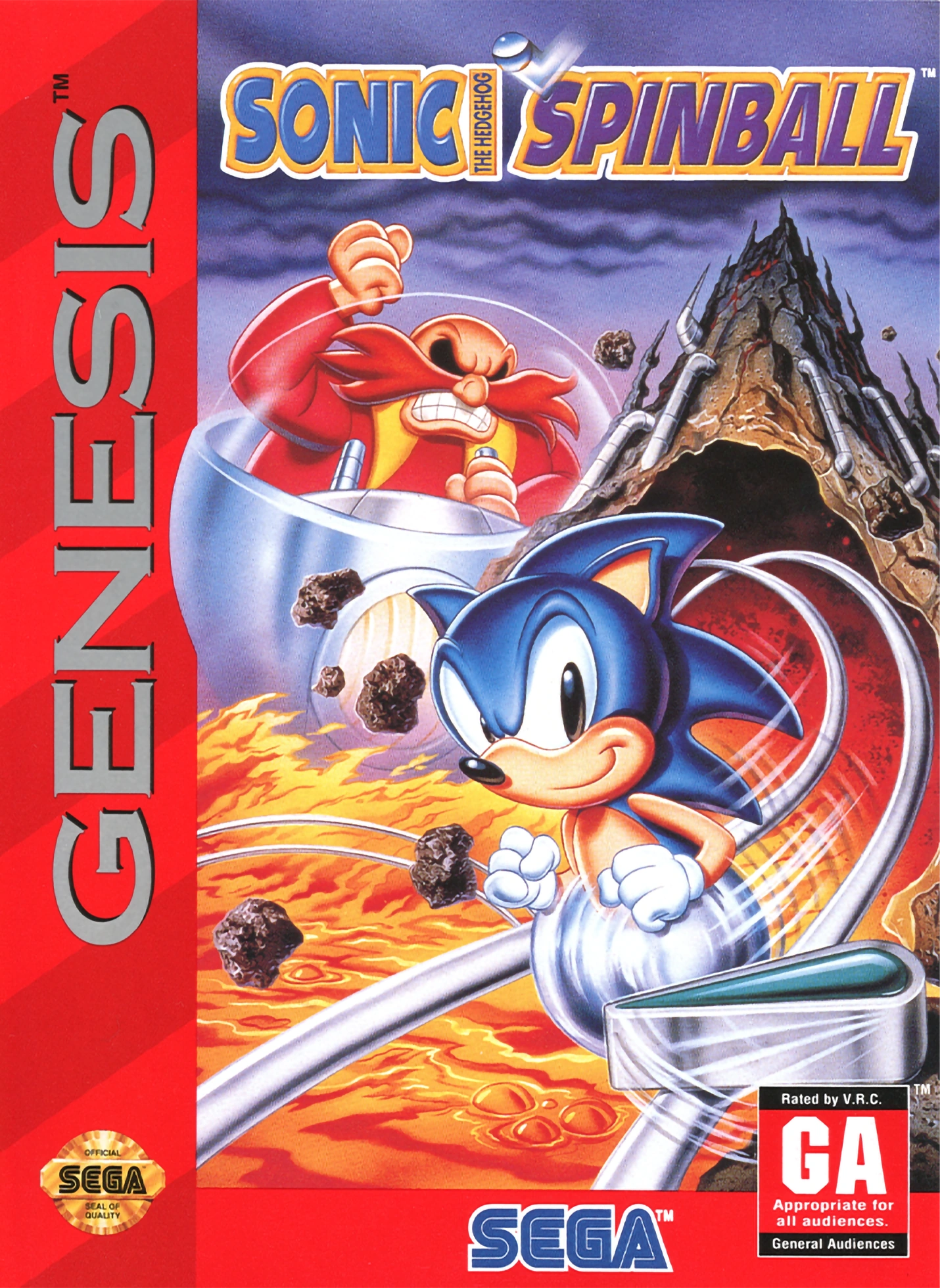
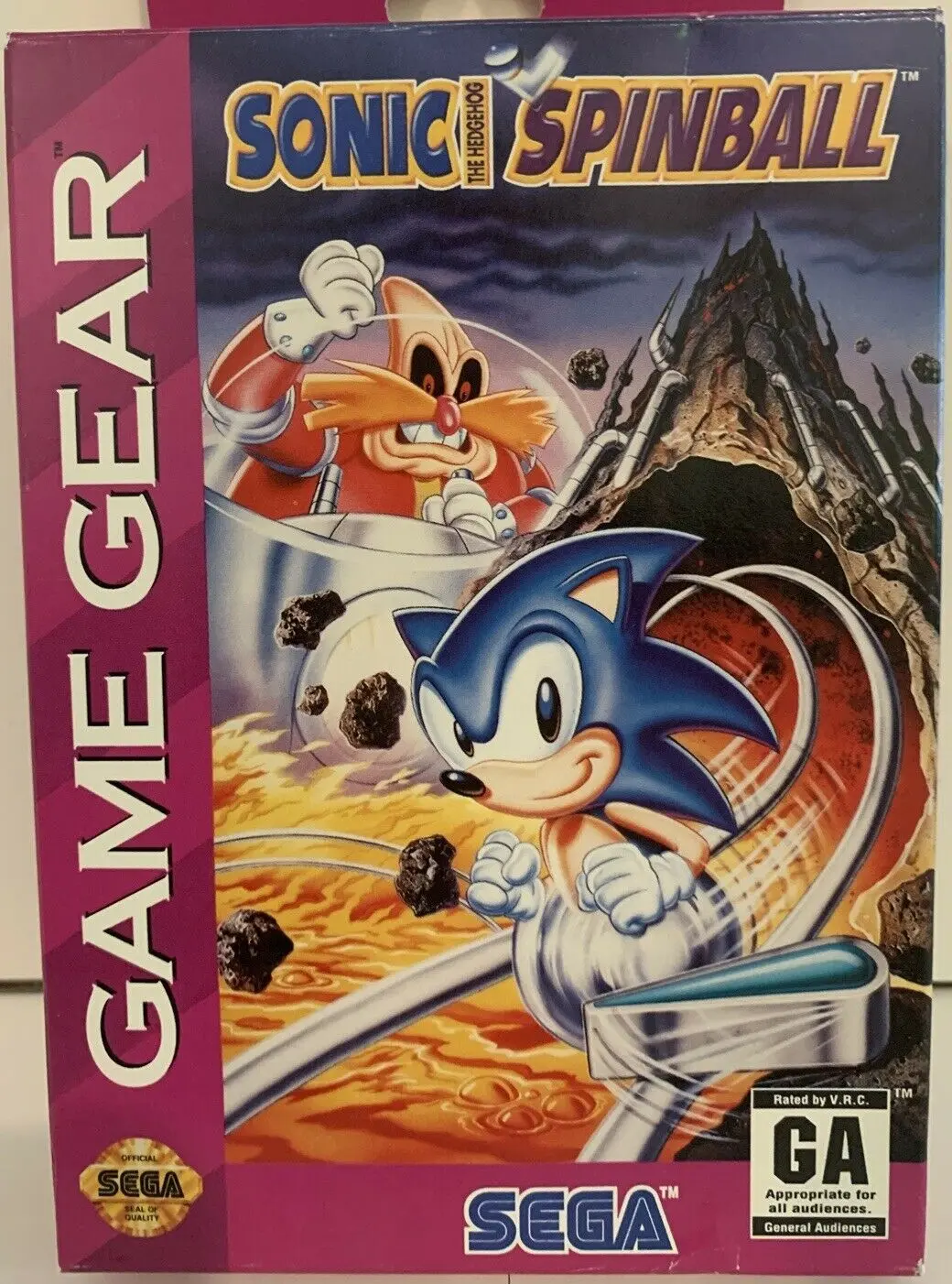
The evil scientist of the Western games and cartoons. On the 8-bit box he is drawn in the style of Adventures of Sonic the Hedgehog, while the Mega Drive box uses his usual game look.
Has turned Mount Mobius into the Veg-O-Fortress to roboticize the planet’s animals; flees in his rocket ship at the end.
Boss guardians on every level
Rides the Egg Mobile in the Trapped Alive bonus
Final battle: Robotnik’s Ship
The Freedom FightersCameo: Sally, Bunnie, Rotor and Muttski
Princess Sally Acorn and her rebels from the SatAM cartoon, who fight Robotnik from their hidden village of Knothole. Pictured: Sally in the series.
Pop up as tiny sprites in a bonus table, their first appearance in any video game. The 8-bit version drops them.
Cameo only; not playable.
Hip and HopLava Powerhouse
A pair of blue kangaroos, original to Spinball.
Work the giant bellows in Lava Powerhouse. Archie’s comic adaptation turns them into Sonic’s allies, who warn him about the Ferrons.
Part of the scenery, not enemies.
ScratchCameo from Adventures of Sonic the Hedgehog
The robot rooster who, with Grounder, bungles Robotnik’s schemes in the comedy cartoon. Pictured: Scratch in the series.
A troop of Scratches circles the animal capsule in The March bonus table, and the pinball knocks them over.
Bonus-table enemy.
The animalsPrisoners of the Veg-O-Fortress
Mobius’s animal population, including the birds and critters of the Mega Drive games.
Locked in cells and capsules waiting for the Veg-O-Machine. Freeing them is the point of the whole adventure.
Break every cell in The Machine for a 500,000-point bonus.
Badniks and bosses
The enemies are new to Spinball, and they rarely hurt Sonic directly: they knock him off course instead. Sprites via Sonic Retro.
RexxonToxic CavesA robot sea serpent beneath the flippers that swallows Sonic whole; mash the buttons to escape.
Magma WormToxic CavesPops out of its hole to block the way.
CluckbirdToxic Caves to The MachineA flying chicken that bats Sonic off course.
FerronLava PowerhouseMachete-wielding flyers that patrol key passages.
BusterThe MachineHovers on a propeller on top of its head.
WaspShowdownHangs in the air; also in the 8-bit version.
ScorpiusBoss · Toxic CavesA mechanical scorpion with Robotnik’s face, spitting acid from its stinger; only its body can be hurt.
Robo-BoilerBoss · Lava PowerhouseFour robot heads in a boiler that spew lava; called the Roboiler in the game.
Veg-O-MachineBoss · The MachineThe roboticizer. Break its two feed tubes, ten hits each, then wreck it from inside.
Robotnik’s ShipBoss · ShowdownThe doctor’s escape rocket, reached by hooks under its wings once enough Emeralds are in hand.
The people who made it
Credits from the game and manual, as listed by Sega Retro, with roles from Sonic Retro’s development history.
Peter MorawiecGame concept and designPitched Sonic Pinball, designed the game and later recalled the deadline as tight.
PolygamesProgrammingThe outside studio wrote about 90% of the code; its founders Lee Actor and Dennis Koble were hired onto the project.
Howard DrossinMusicSTI’s first in-house composer, who wrote Toxic Caves on his first day and the last-minute replacement themes.
Katsuhiko Sato, Craig Stitt, Tom PayneArtSato came from Japan to help; Stitt and Payne recycled art from Sonic 2’s lost levels.
Yutaka Sugano, Roger HectorProducer · STI directorWith John Duggan as art director and Hoyt Ng on design.
Sega Interactive Development Division8-bit versionA separate American team led by programmer Hideki Ikeda and artist Michael Chung made the Game Gear and Master System game.
How it was made
Our original page had no history section. This one draws on Sonic Retro’s development history, Wikipedia’s account of Peter Morawiec’s interviews and Sega Retro’s credits.
Sonic for the holidays
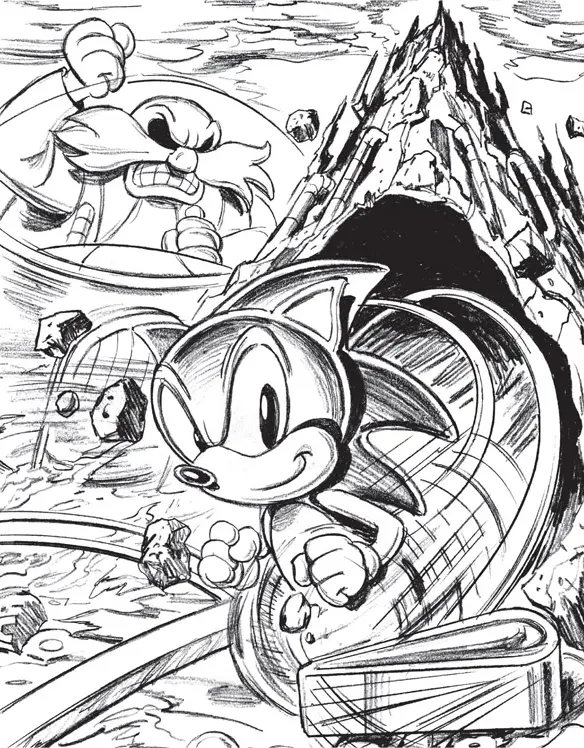
A 1993 sketch for the North American cover.Image via Sonic Retro
Sega of America had a Christmas problem in 1993. Sonic 2 had given Mega Drive sales a huge lift the previous year, but Sonic 3 was clearly not going to be ready in time. Sega Technical Institute’s American staff were free, because after the mixed Japanese and American team of Sonic 2, Yuji Naka’s group was making Sonic 3 on its own, and management still wanted Sonic on the shelves for the season.
The idea grew out of Sega’s research, which had Casino Night among Sonic 2’s most popular zones, and designer Peter Morawiec ran with it. In the two or three days before the 1993 Winter Consumer Electronics Show, he, artist Kurt Peterson and Justin Chin animated a short Amiga pitch called Sonic Pinball, with Sonic ricocheting round a table to a demoscene music file; Pinball Dreams, an Amiga hit, was the inspiration. Senior management signed it off.
Written in C, against the clock
The Sonic Pinball pitch demo.Image via Sonic Retro
There were only about nine months, so the team broke with Mega Drive habit and wrote the game in C rather than hand-tuned 68000 assembly. Morawiec has said that saved a great deal of time, at the price of frame-rate and polish problems that reviewers noticed, and he later regretted not having longer to refine it; he had braced for a cool reception and was surprised, coming back from a trip to Europe, to find it selling well.
Most of the code came from outside. Polygames, whose founders Lee Actor and Dennis Koble joined as programmers, wrote roughly nine-tenths of it, while STI did the design, art and sound, helped by veteran Sonic artist Katsuhiko Sato. Beyond that, Sonic’s Japanese creators had almost no say, so Spinball counts as the first Sonic made entirely in the West. Much of it came together between June and August 1993.
Built from Sonic 2’s lost levels
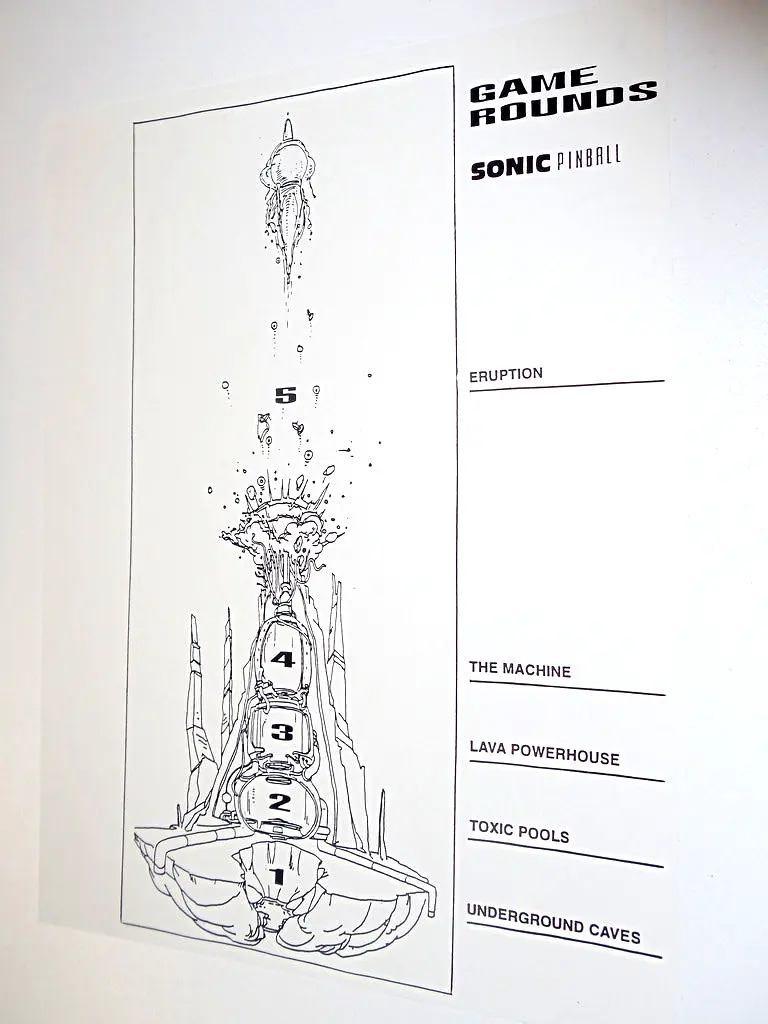
Some of the art had a past. Craig Stitt, who designed Toxic Caves, reused his foreground graphics from Hidden Palace, the zone famously cut from Sonic 2, as the cave backgrounds. Level designer Tom Payne said The Machine recycles art from Sonic 2’s scrapped Genocide City and from B-Bomb, an unreleased Mega Drive game. An early concept sketch shows five rounds on a map of the fortress; Underground Caves and Toxic Pools were later merged into Toxic Caves, and the finale, Eruption, became Showdown.
Two hours to replace a theme
The best-known scramble came at the very end. At the wrap party, Sonic co-creator Hirokazu Yasuhara pointed out that two short jingles carried over from Sonic 1 were the work of Masato Nakamura of Dreams Come True, and Sega had no licence to reuse them, so Morawiec asked composer Howard Drossin for replacements within about two hours. The build with the old jingles got out anyway and was online by 6 November 1993. Collectors once took it for a recalled first print; the current view is that the scene group SNEAKERS put out a late prototype taken from a Sega of America bulletin-board server.
Drossin had only joined in June 1993, as STI’s first in-house composer. His first job was simply to try out the Mega Drive’s sound chip, and the piece he produced before his first day was out became the Toxic Caves music. The rest of the score came from Sega Multimedia Studio, among them Barry Blum and Brian Coburn, and from the outside firm OUI Multimedia.
Summer CES 1993
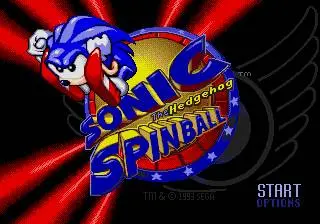
The title screen shown at Summer CES 1993.Image via Sonic Retro
Spinball was announced at the 1993 Summer Consumer Electronics Show in Chicago with a teaser video, as one of three Sonic games for “Sonic Mania Day” in November alongside Sonic CD and the Game Gear Sonic Chaos. Sega made a point of saying it was not the Sonic 3 on its release lists. The footage was not real gameplay, and it showed a different title screen, a map screen later cut, and table layouts that changed before release.
The 8-bit Spinball
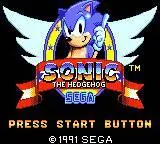
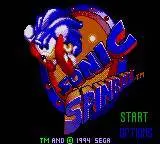
The Game Gear title screen.
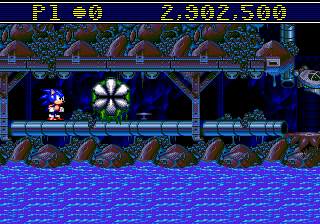
The Game Gear and Master System game is a separate production by Sega Interactive Development Division, another American team, with Howard Drossin again among the composers and a physics consultant in the credits. Wikipedia reports it was released worldwide in late 1994 after the Game Gear racer Sonic Drift went down badly with Japanese reviewers. It keeps the story, the four levels (with Toxic Pools and Final Showdown keeping early names) and the bosses, but redraws every table, adds more running on foot, slows the ball down and replaces the bonus stages. Hidden rooms hold monitors that reveal cheat codes, and after a Game Over a roulette wheel can win you a free ball.
The Master System version arrived in Europe and Brazil on 25 January 1995, near the end of the console’s life. It sold poorly, and boxed copies are now collectors’ items.
The PC version that never was
Sonic CD and Sonic & Knuckles both made it to Windows, and Spinball was meant to follow: an enhanced PC port was planned for 1995 and box art was drawn, but it was cancelled. Sega Forever posted the cover online on 27 July 2023, as Sonic Retro records.
Firsts: what this game introduced
A spin-off, but one with a surprising number of milestones.
1The first Western SonicThe first Sonic game made entirely outside Japan, and the first designed with Western players in mind.
2SatAM’s game debutThe first and only official game to use the Sonic the Hedgehog cartoon’s characters and setting.
3Sonic in CWritten in the C language at a time when Mega Drive games were coded in assembly.
4Sonic as a pinballThe first Sonic game built around pinball, a decade before Sonic Pinball Party.
5Howard Drossin’s debutThe first Sonic score by STI’s first in-house composer, who started writing it on his first day in the job.
Cheats & secrets
Our original page had no cheats, so this section is new, checked against Sonic Retro’s hidden-content notes. Enter the codes before changing the flipper buttons: the Flippers option remaps the whole pad, so the codes stop working once you have swapped buttons.
Level select
Go to the Options screen and enter A, Down, B, Down, C, Down, A, B, Up, A, C, Up, B, C, Up; you will hear a chime. Back on the title screen, hold A and press Start for Lava Powerhouse, B and Start for The Machine, or C and Start for Showdown.
Jump to the credits
Go to the Options screen and enter C, Up, B, Up, A, Up, C, B, Down, C, A, Down, B, A, Down. After the chime the game cuts straight to the ending credits.
Game Genie
Galoob’s official codes include infinite lives (AXBA-4A4T), starting on Showdown (APBT-5N7G) and infinite balls in every bonus round (AXST-8A5L).
8-bit secrets
The Game Gear and Master System game hides rooms containing monitors that display cheat codes when broken. And after a Game Over, stop the spinning roulette on the last four digits of your score to win a free ball.
Codes checked against Sonic Retro, November 2026.
Glitches, exploits and oddities
Nine months of crunch left plenty of rough edges. These are the best ones Sonic Retro has catalogued.
255 lives from one
The lives counter after wrapping round.Image via Sonic Retro
In Toxic Caves with one life left, ride a barrel to the far edge and jump into the slime right next to it, facing it. Sonic dies twice: the game declares Game Over but also sets its “extra ball” flag, relaunches you with zero lives, and the next death wraps the counter round to 255, shown as gibberish on the status strip.
Skipping the cork
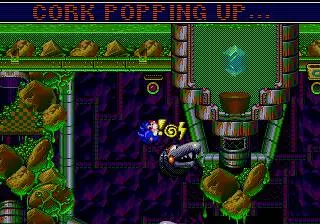
Enter Toxic Caves’ Loop de Force before popping the cork and a Magma Worm appears to bounce Sonic back. Hit it from the right angle while holding the D-pad and he can re-enter the loop and warp up to the higher tables, collecting the last two Emeralds early.
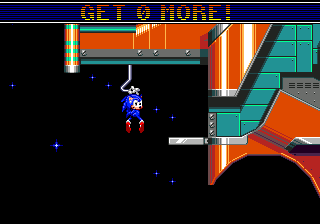
“Get 0 more Emeralds”
Zero Emeralds still to find.Image via Sonic Retro
In Showdown, grab the hooks under the ship’s wings again right after opening the hatch and the status strip insists you still need to collect 0 more Emeralds. Nearby, two hidden flippers can be flipped from a distance before they have been revealed.
A ride to nowhere
The camera pans down to show a ride that is not there.Image via Sonic Retro
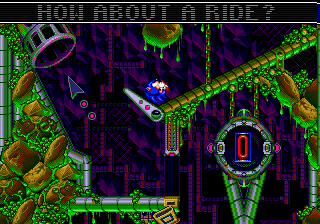
Trap Sonic on a flipper in Toxic Caves and the strip asks “How about a ride?”, panning down to the barrel. Do it on the top two flippers and the camera pans to an empty spot.
Wobbly rings and see-through walls
One frame of the ring animation is not mirrored, so rings wobble instead of spinning. Sonic often sinks into walls instead of pushing against them, especially in Toxic Caves; the European and Japanese versions fix some of them. His braking dust appears in front of him when he faces left, and his eyelids switch between blue and tan.
Fixed in Europe
The European release fixes two music bugs: instruments that play too early in the boss theme, and one that cuts out the first time the Lava Powerhouse tune loops.
Videos & media
A complete run of the Mega Drive game, and a review from one of the longest-running retro game shows.
The whole game, all four levels and bonus tables, from the World of Longplays archive.
Classic Game Room’s review of the Genesis original.
Trivia & facts
The name is a pun on pinball and Sonic’s Spin Attack.
Showdown hides the last five.Sixteen Chaos Emeralds, not the usual seven or six: three each in the first two levels and five each in the last two. Sega’s Japanese manual says the fortress is powered by them.
In the United States the Mega Drive Spinball came out on the same day as the Game Gear Sonic Chaos: 23 November 1993.
The Cluckbird enemies are thought to be modelled on Cluck, Robotnik’s robot chicken in the SatAM cartoon.
The Toxic Caves background is Hidden Palace Zone’s foreground, recycled by its designer Craig Stitt.
The 8-bit credits list a physics consultant, Dr. Scott Gould, and end their thank-you list with “and… Tails”.
Sega Retro’s lowest period score for the Mega Drive game, 56%, came from Japan’s Sega Saturn Magazine in 1995, nearly two years after release.
Ian Flynn, head writer of IDW’s Sonic comics, once called Spinball non-canon, but in a 2022 podcast he placed it after Sonic 3 & Knuckles.
Media & artwork
Box art, artwork, screenshots and cutscenes, from Sonic Scene’s own galleries, Sonic Retro and Sonic Wiki Zone. Select any image to view it larger.
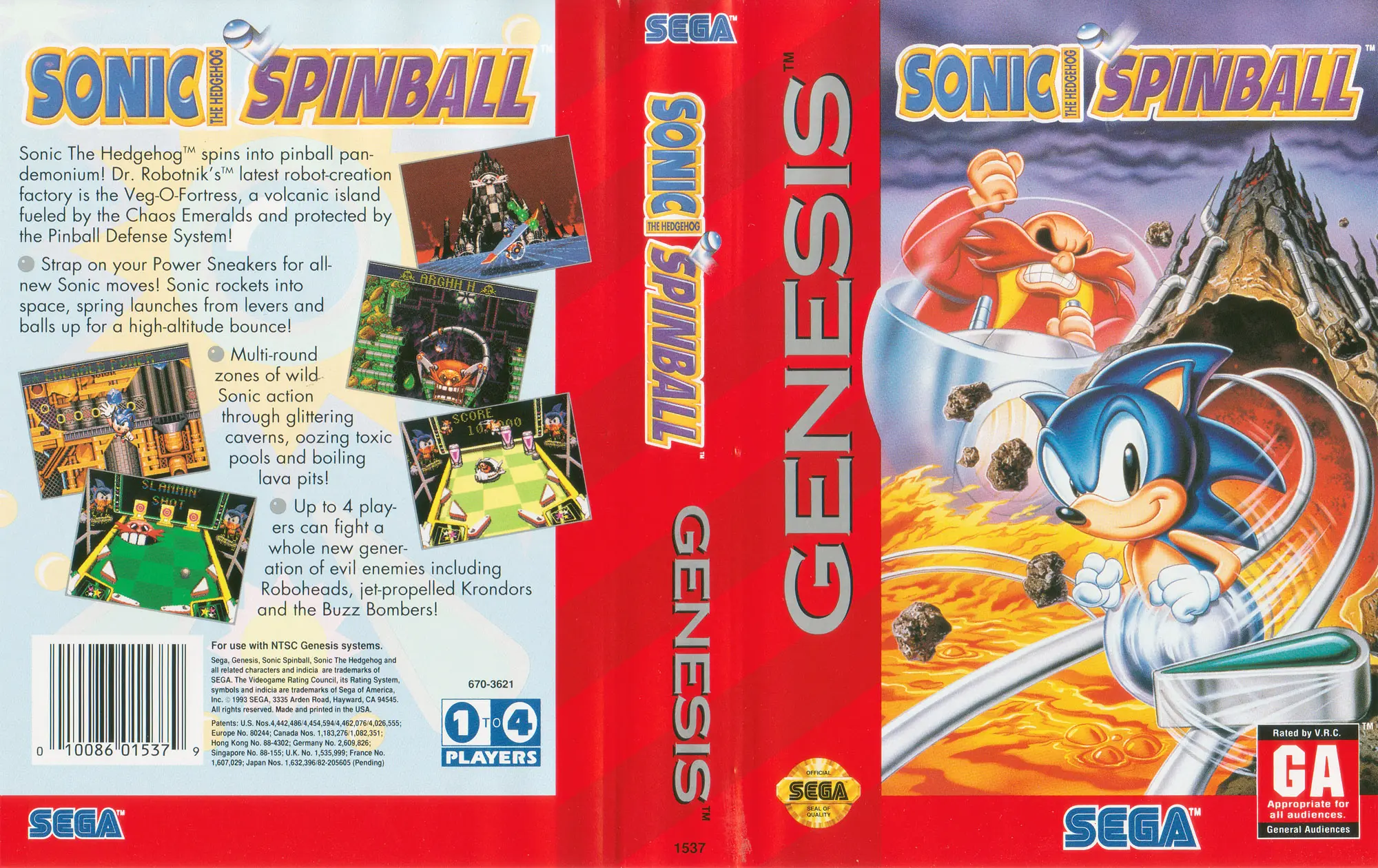
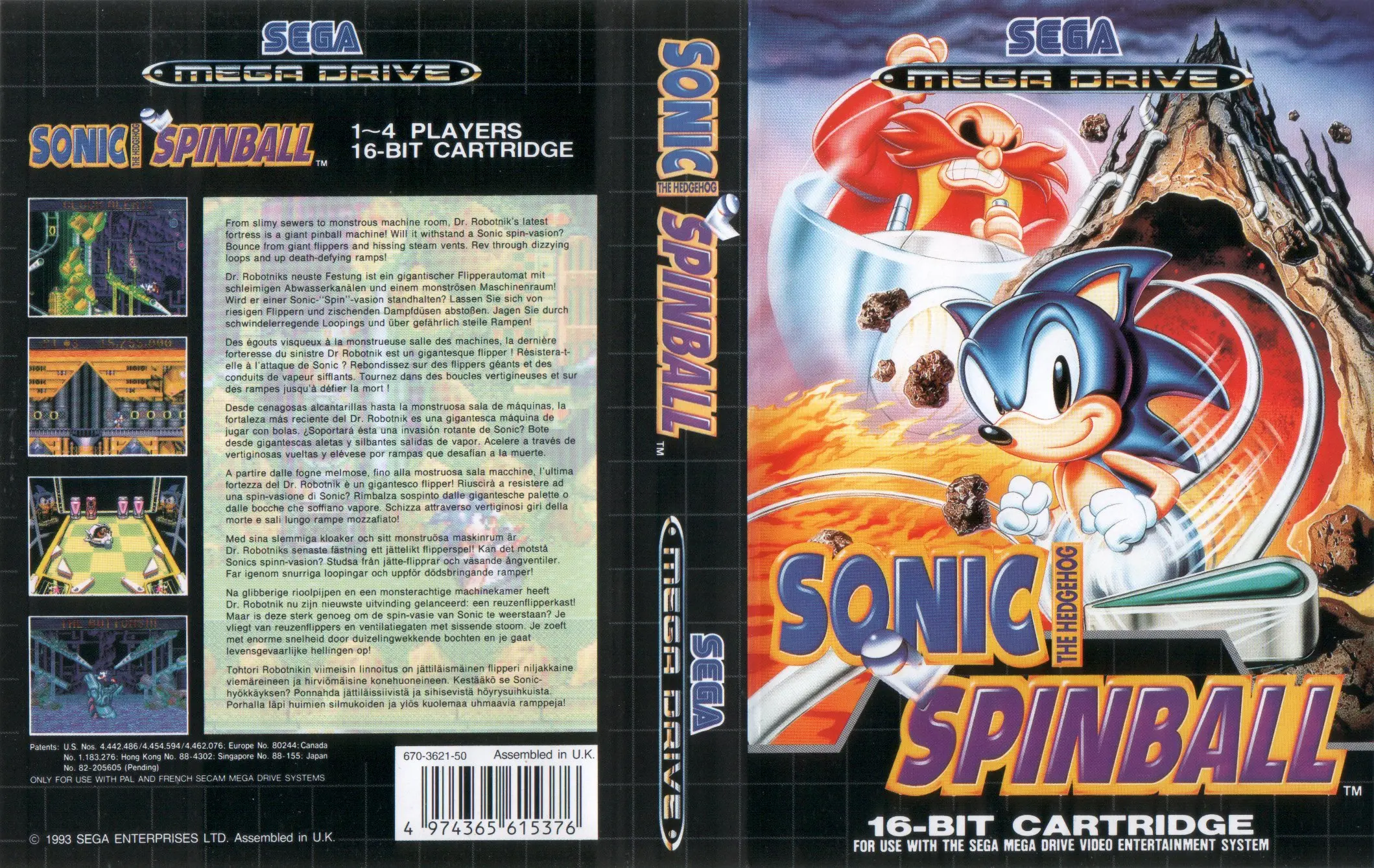
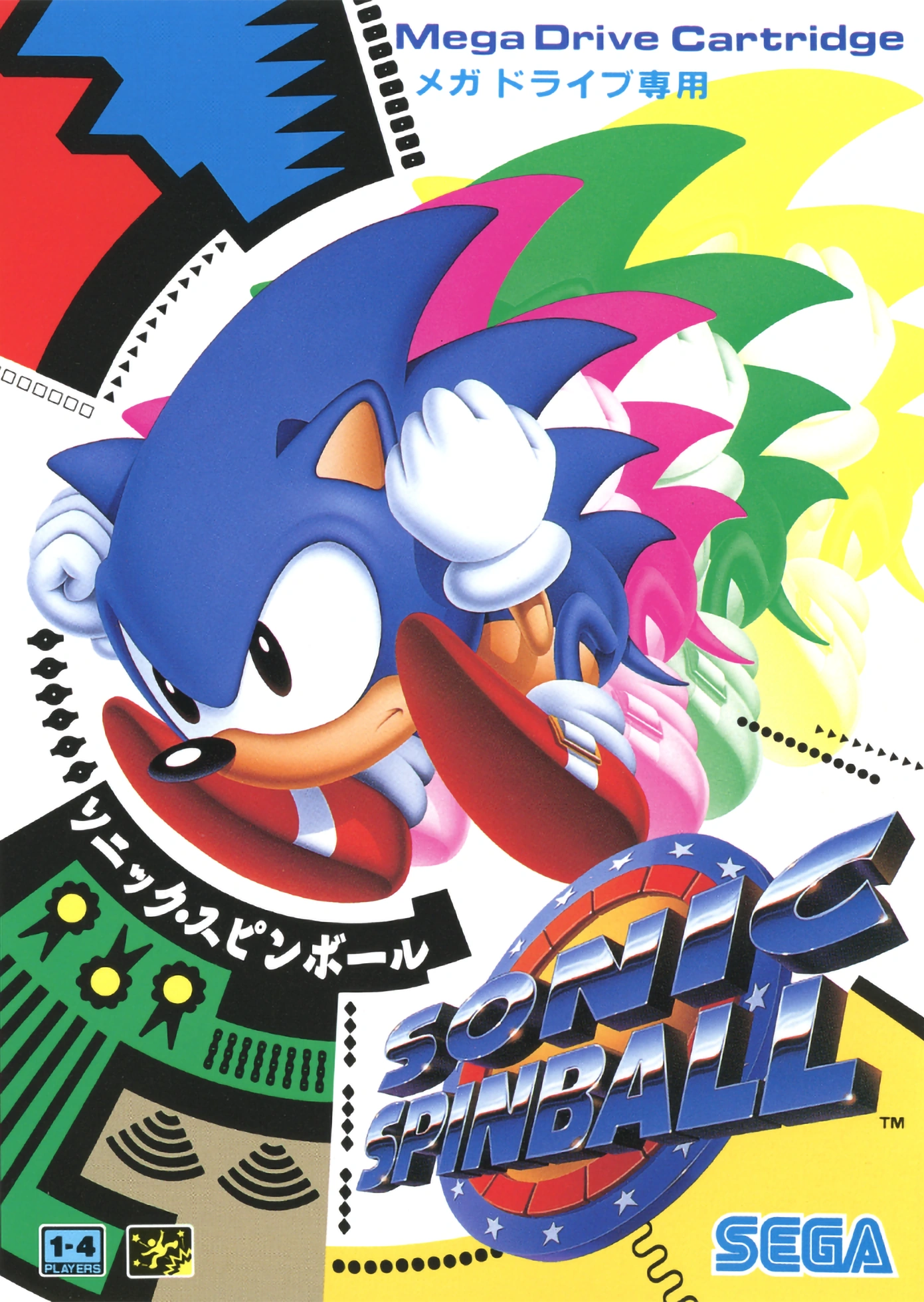
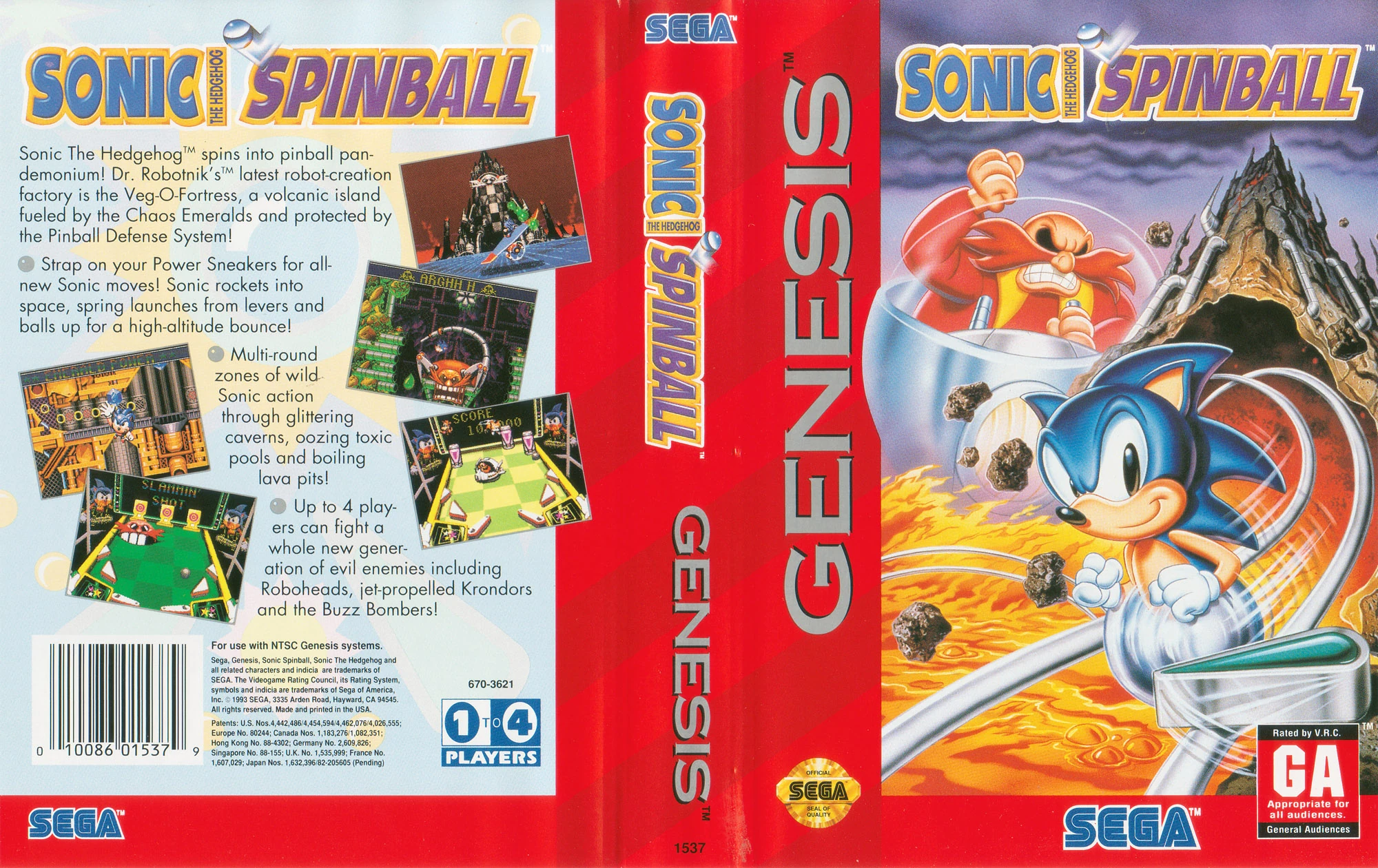
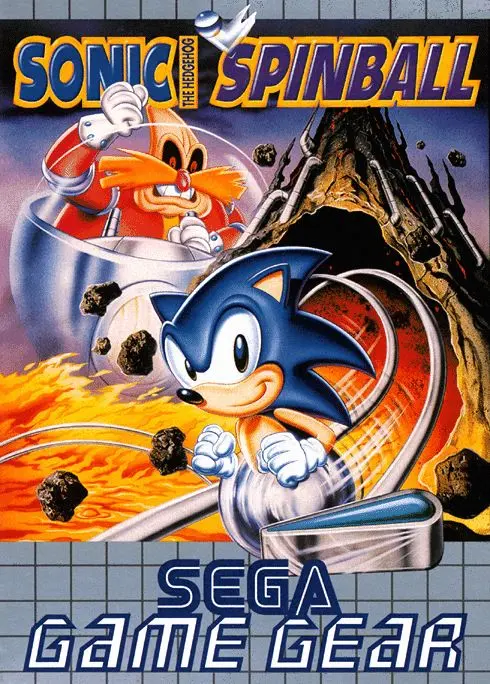
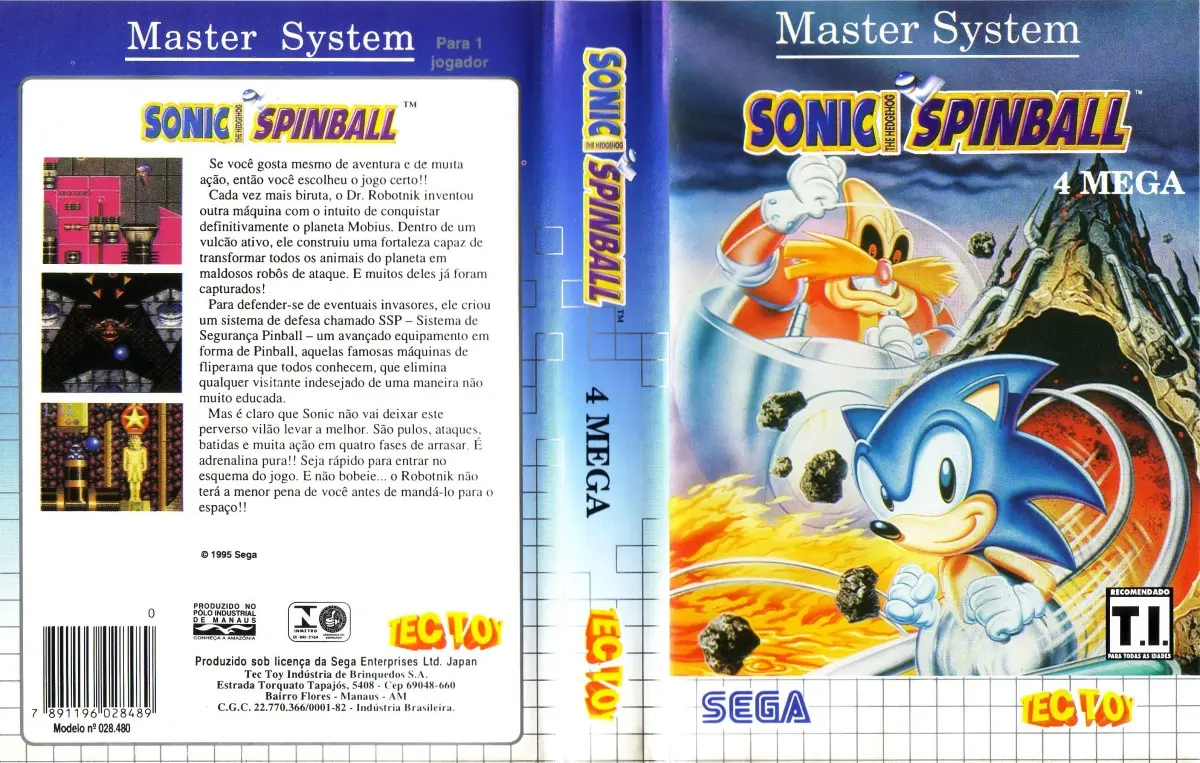
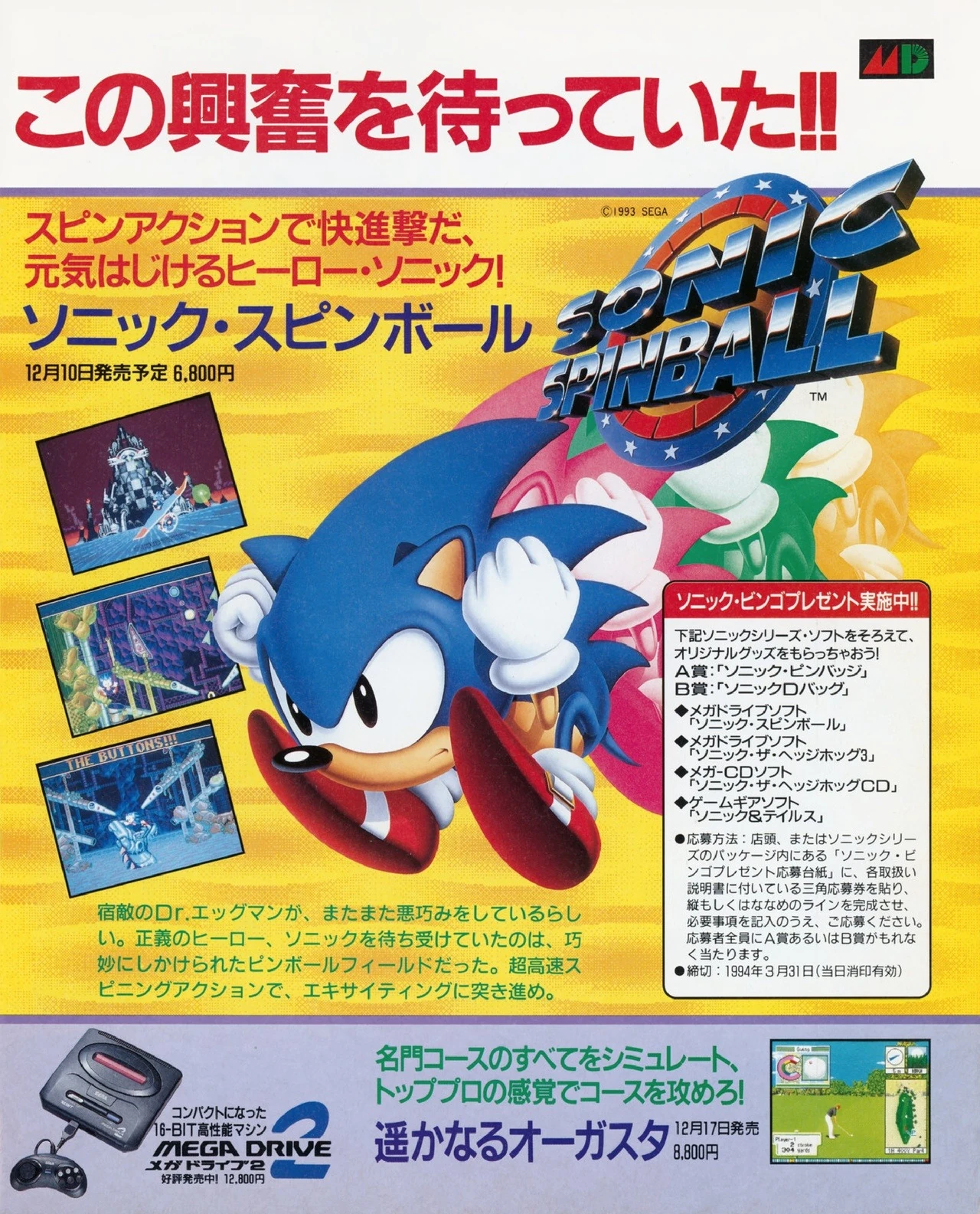
The North American Genesis box: back, spine and front.European Mega Drive box.Japanese Mega Drive box.The North American box, back.The cover illustration.North American Game Gear box.European Game Gear box.Brazilian Master System box.Spinball artwork.The logo.The Japanese logo.The iOS icon.A Japanese advert.Early map concept.The Veg-O-Fortress.Sonic and Tails fly home.Rexxon.The Mega Drive title screen.Mega Drive screenshot.Mega Drive screenshot.Mega Drive screenshot.Toxic Pools (8-bit).Lava Powerhouse (8-bit).The Machine (8-bit).Final Showdown (8-bit).8-bit bonus stage.Game Gear screenshot.Game Gear screenshot.Game Gear screenshot.Game Gear title screen.Game Gear opening.
Spinball proved Sega of America could make a Sonic game without Sonic Team, and its tables, bosses and kangaroos found their way into comics and compilations for decades. A second pinball game, Sonic Pinball Party, followed on Game Boy Advance in 2003.
Releases and re-releases
Mega Drive / GenesisNovember–December 1993 – Europe 15 Nov, North America 23 Nov, Japan 10 Dec.
Sega Channel (US)1994 – On the cable service’s schedule from June 1994.
Game GearAugust–September 1994 – The 8-bit version, by Sega Interactive Development Division.
Master System25 January 1995 – Europe and Brazil.
Sonic 2 in 11995 – Game Gear cartridge pairing Spinball with Sonic 2, as our original page listed.
PC compilations2000 – Sega PC Smash Pack and Sega Archives from USA Vol. 1; a Game Boy Advance Sega Smash Pack followed in 2001.
Sonic Mega Collection2002–2004 – GameCube (2002); Sonic Mega Collection Plus for PlayStation 2, Xbox and PC (2004).
Sonic Adventure DX: Director’s Cut2003 – The Game Gear version as an unlockable, on GameCube and PC.
Sonic Gems Collection and plug-and-play2005 – Game Gear version on GameCube and PlayStation 2; Techno Source’s Sonic the Hedgehog Chaos & Spinball TV game.
Wii Virtual ConsoleMarch–April 2007 – North America 12 Mar, Japan 13 Mar, Europe 6 Apr.
Sonic’s Ultimate Genesis Collection and Sonic PC Collection2009 – PlayStation 3 and Xbox 360; PC (Game Gear version).
Steam and iOS2010 – Steam 13 Sep; iOS 16 Dec, later withdrawn in 2015.
Mega Drive Mini and Sega Genesis Classics2018–2019 – Included on the collection for modern consoles and the 2019 mini console.
Nintendo Switch OnlineApril 2022 – Mega Drive / Genesis library.
Sonic Origins Plus2023 – The Game Gear version, with all twelve Game Gear Sonic games.
A rollercoaster in Staffordshire
In 2010 a spinning rollercoaster at the Alton Towers theme park in Staffordshire opened under the name Sonic Spinball.
Where it fits
For years Spinball sat outside the official story, a Western spin-off with a Western Mobius. Sonic Origins brought it back into the fold by placing the Veg-O-Fortress among the classic locations on its menu, and Ian Flynn has placed the adventure after Sonic 3 & Knuckles.
Where to play it today
The Mega Drive original is part of the Nintendo Switch Online library; the Game Gear version is included in Sonic Origins Plus.
Sales & reviews
Sales
We have not found a reliable sales figure for Spinball. Peter Morawiec has said he was surprised, on returning from a trip to Europe, to find the game selling well on the strength of the Sonic name, though he regretted that the team never had time to polish it. The Master System version, released late in the console’s life, sold poorly and is now a collectors’ item.
40Mega Drive review scores in Sega Retro’s index
93%Electronic Games, US, January 1994
91%Mega Action and Mega Force
61%GameRankings retrospective average
Reception and review scores
Period reviews of the Mega Drive game from Sega Retro’s index of magazine scans. The 8-bit version fared worse: its Game Gear scores there range from 36% to 90%.
Electronic GamesUS · January 1994
93%
Aktueller Software MarktGermany · March 1994
92%
Mega ActionUK · December 1993
91%
Mega ForceFrance · November 1993
91%
Sega PowerUK · December 1993
90%
GameProUS
88%
HyperAustralia · January 1994
88%
MegaTechUK · December 1993
86%
MegaUK · December 1993
83%
Mean Machines SegaUK · December 1993
81%
Sonic the ComicUK · 13 November 1993
80%
Computer & Video GamesUK · December 1993
73%
GameFanUS · November 1993
71%
Electronic Gaming MonthlyUS · December 1993
70%
Game InformerUS · January/February 1994
69%
Beep! MegaDriveJapan · January 1994
63%
At the time, most critics liked what they saw. Electronic Games rated its playability at 95%, GamePro called it fast and fun while warning pinball purists off its cartoon trimmings, and EGM’s Ed Semrad praised the idea of a game set inside a pinball machine and its presentation, though a colleague found the graphics less sharp than other Sonics and the sound underwhelming.
The doubts were about how it played and how long it lasted. Entertainment Weekly’s Bob Strauss loved the concept but said Sonic rolled like a “leaden marble”, and Mean Machines Sega’s Rich Leadbetter enjoyed it but thought four levels thin at full price. Later reviews were harsher: Eurogamer and GameSpot picked on the slowdown, and Nintendo Life called it neither a good platformer nor a good pinball game. IGN was kinder about its looks and its bonus tables but warned that newcomers would find it very hard.
Reader reviews
No reader reviews yet. Played it? Give it a score out of 10 and tell other fans what you think.
Every fact on this page was checked against the sources below. Sonic Retro and Sega Retro pages were read through Wayback Machine copies from 2024, because both live sites show a bot check; each Sonic Retro link opens the nearest archived copy. Magazine scores come from Sega Retro’s review index, which links each score to a scan of the original page.
To provide the best experiences, we use technologies like cookies to store and/or access device information. Consenting to these technologies will allow us to process data such as browsing behavior or unique IDs on this site. Not consenting or withdrawing consent, may adversely affect certain features and functions.
Functional
Always active
The technical storage or access is strictly necessary for the legitimate purpose of enabling the use of a specific service explicitly requested by the subscriber or user, or for the sole purpose of carrying out the transmission of a communication over an electronic communications network.
Preferences
The technical storage or access is necessary for the legitimate purpose of storing preferences that are not requested by the subscriber or user.
Statistics
The technical storage or access that is used exclusively for statistical purposes.The technical storage or access that is used exclusively for anonymous statistical purposes. Without a subpoena, voluntary compliance on the part of your Internet Service Provider, or additional records from a third party, information stored or retrieved for this purpose alone cannot usually be used to identify you.
Marketing
The technical storage or access is required to create user profiles to send advertising, or to track the user on a website or across several websites for similar marketing purposes.


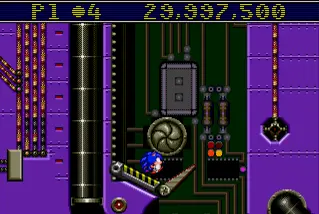 The MachineLevel 3 · 5 Emeralds · boss: Veg-O-MachineThe Badnik factory at the fortress’s heart, with grinding gears and a prison block; break every cell for a 500,000-point bonus.
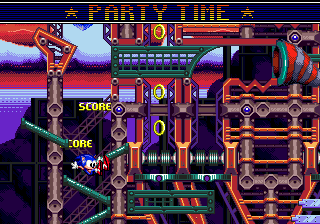 ShowdownLevel 4 · 5 Emeralds · boss: Robotnik’s ShipThe launch pad at sunset, with molten rock waiting below. Balloons, windsocks and the doctor’s own bombs carry Sonic up to the ship.
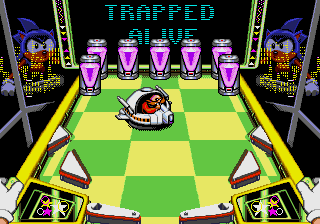 Trapped AliveBonus table after Toxic CavesBreak the capsules behind Robotnik’s Egg Mobile to free the prisoners, then hit the doctor himself.
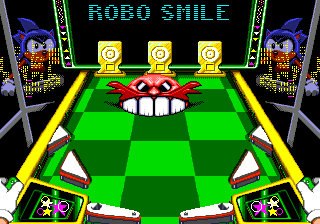 Robo SmileBonus table after Lava PowerhouseKnock every tooth out of a giant Robotnik head until it gets a headache and blows up.
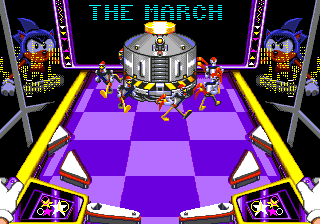 The MarchBonus table after The MachineSmash a giant capsule full of animals while a ring of Scratch robots marches round it.
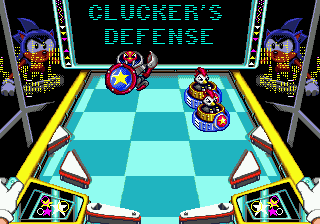 Clucker’s DefenseHidden multi-ball tableCollect every ring on a level to open a Bonus Gate to this secret table, where up to three balls take on Crawl and his Cluckers.
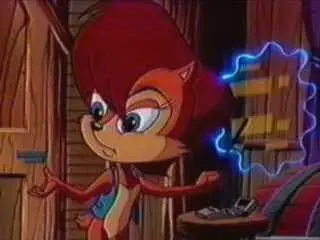 Sonic the Hedgehog (SatAM)ABC · 1993–1994Spinball takes its setting from the darker Saturday-morning series: Robotnik roboticizing the animals of Mobius, and Sally, Bunnie, Rotor and Muttski cameo in a bonus table. It is the only official game to feature the show’s cast.
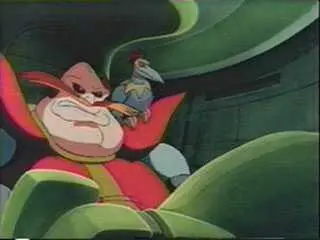 SatAM Season 1 and Season 2Episode guidesRobotnik’s robot chicken Cluck, a regular on the show, is the likely model for Spinball’s Cluckbird enemies. Both seasons are covered episode by episode, from Season 1 to Season 2.
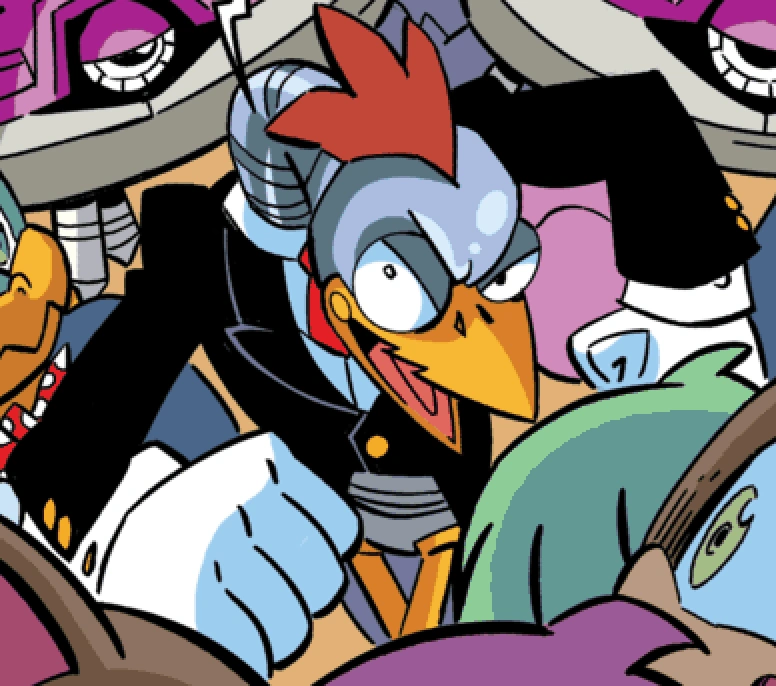 Adventures of Sonic the HedgehogSyndicated · 1993Scratch, one of Robotnik’s robot henchmen from the comedy series, marches round the capsule in The March bonus table. That makes Spinball one of only two games, with Dr. Robotnik’s Mean Bean Machine, to use the show’s material.
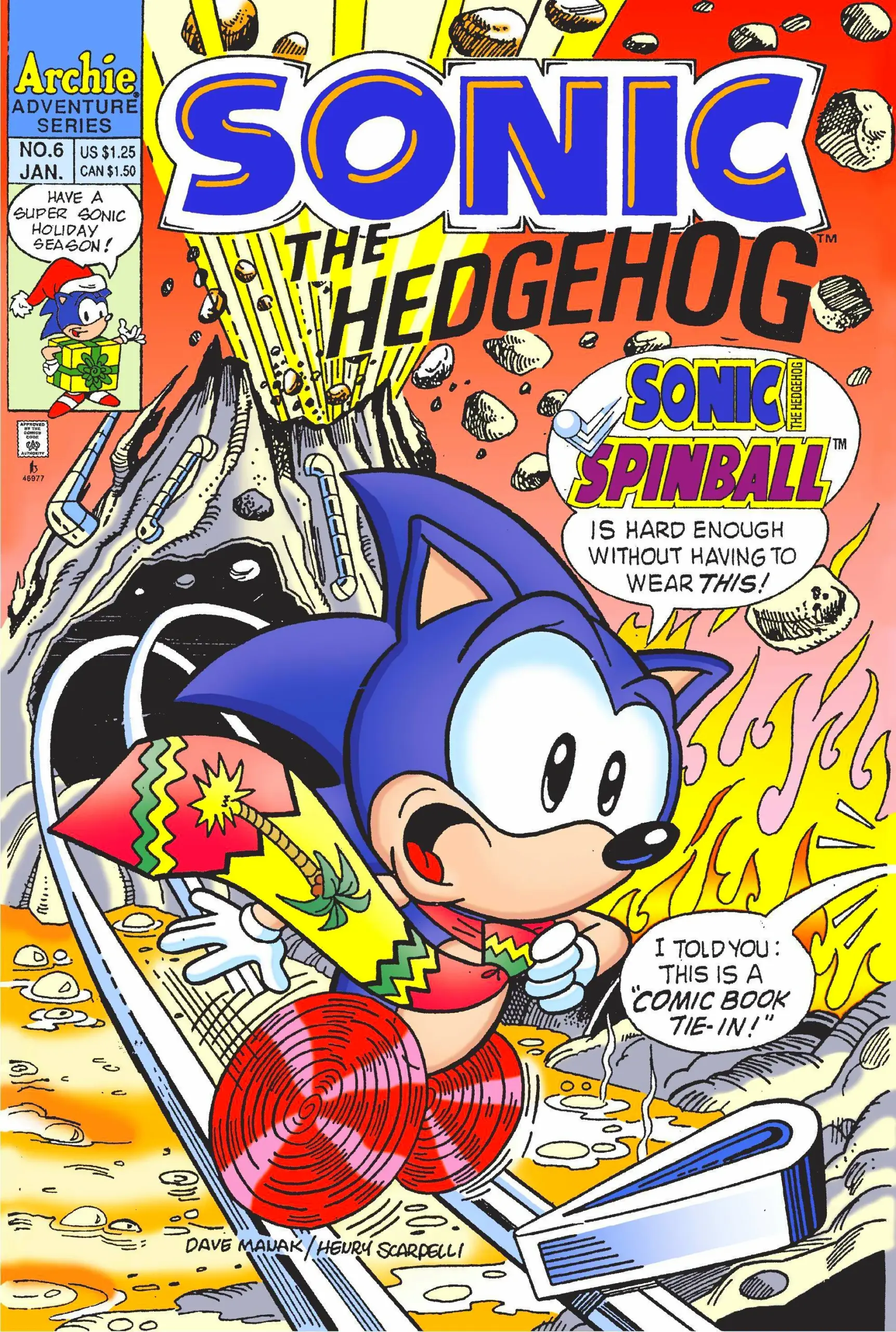 Archie’s Sonic the Hedgehog #6Archie Comics · on sale October 1993“The Spin Doctor” adapts the game for the comic, with Sonic fighting through the Veg-O-Fortress, Rexxon and Scorpius, and meeting Hip and Hop in Lava Powerhouse. Our Archie Comics primer covers the series.
 Sonic the HedgehogThe only playable character
 Hip and HopLava Powerhouse
 RexxonToxic CavesA robot sea serpent beneath the flippers that swallows Sonic whole; mash the buttons to escape.
 Magma WormToxic CavesPops out of its hole to block the way.
 CluckbirdToxic Caves to The MachineA flying chicken that bats Sonic off course.
 FerronLava PowerhouseMachete-wielding flyers that patrol key passages.
 BusterThe MachineHovers on a propeller on top of its head.
 KrondorThe MachineA robot condor holding chute lids open.
 WaspShowdownHangs in the air; also in the 8-bit version.
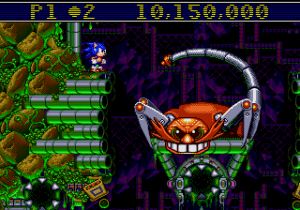 ScorpiusBoss · Toxic CavesA mechanical scorpion with Robotnik’s face, spitting acid from its stinger; only its body can be hurt.
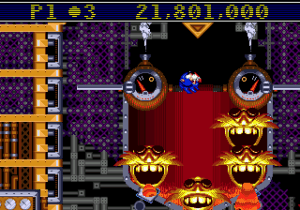 Robo-BoilerBoss · Lava PowerhouseFour robot heads in a boiler that spew lava; called the Roboiler in the game.
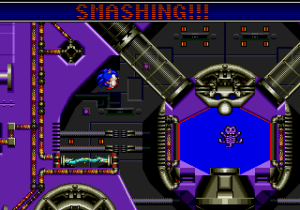 Veg-O-MachineBoss · The MachineThe roboticizer. Break its two feed tubes, ten hits each, then wreck it from inside.
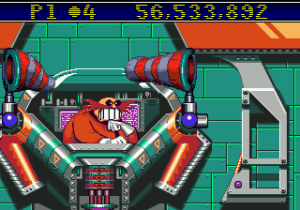 Robotnik’s ShipBoss · ShowdownThe doctor’s escape rocket, reached by hooks under its wings once enough Emeralds are in hand.