
 Sonic-16 · STI pitch demo · 1993 | |
| Project | Sonic-16, a Mega Drive/Genesis game set in the world of the ABC cartoon |
| Developer | Sega Technical Institute (STI) |
| Demo | A video pitch, dated November 1993 |
| Concept & demo | Peter Morawiec, with graphics by Morawiec and John Duggan |
| Based on | Sonic the Hedgehog (ABC, 1993) |
| Fate | Turned down after Yuji Naka judged it too slow; ideas carried into Sonic Mars and Sonic X-treme |
| Related | Sonic the Hedgehog Spinball (1993), STI’s finished SatAM-flavoured game |
SatAM Sonic was released at the peak of Sonic’s popularity, which lasted from 1992 until 1995. The cartoon series’ characters even saw cameo appearances within Sonic the Hedgehog Spinball. There were plans of a full-fledged SatAM-oriented game as far back as 1992, when the cartoon series was still in development, as the game and cartoon would tie-in to each other, but these things would not come to pass for a few reasons.
There were several incarnations of a SatAM Sonic game, but none of them made it off the ground. The history of the SatAM video games is closely tied-in with the history of Sonic X-treme, the final also-aborted project of a 3D Sonic game that utilized many of the SatAM games’ ideas, and Sonic Adventure, which in turn used many of Sonic X-treme’s ideas. This page will chronicle all of them, and what might have been.
What Was “Sonic-16”?
“Sonic-16” was one of the most ambitious projects in Sega, and was a victim of the times, as Sega was going through internal power struggles. Sonic-16 was intended to be a side-scrolling video game on the Sega Mega Drive / Genesis involving the Freedom Fighters from the ABC show “Sonic the Hedgehog”, and was the first of several early incarnations of the cancelled Sonic X-treme. If the game was completed, it would have been a radical departure from the mainstream Sonic series’ games up to that point. The demo is dated November 1993, around the same time Sonic’s popularity was approaching its peak. Part of the project staff included Chris Senn, who designed demo animations in order to persuade executives at Sega, and Michael Kosaka, who was the staff leader and the game’s producer.
In 1992, plans were already in place to make a video game based off of SatAM and its characters in their struggle to overthrow Robotnik, as mentioned in the SatAM Sonic Bible. Roger Hector, Peter Morawiec, Sega Technical Institute (STI) writer John Duggan and the STI team went to DiC Entertainment’s offices in Burbank, California to see the progress of SatAM, as it was being designed and scripted. DiC and Sega had wanted to make a spin-off of the upcoming cartoon, and while it was received quite well by the American members of STI, the Japanese members (including Yuji Naka) did not seem to like the idea of SatAM (or AoStH) at all, and development was cancelled.
As it became apparent that Naka would be unable to ship Sonic 3 in time for Christmas of 1993, most of the efforts were diverted into making Sonic the Hedgehog Spinball, a “stopgap” video game to hold gamers’ interests until Sonic 3 was released in February of 1994. The game was completely coded from scratch and released in just nine months, released in time for Christmas of 1993, and written in the C programming language (when most games at the time were still written in Assembler for their consoles’ processor type, such as ASM-68000, the Assembler for the Motorola 68000).
Peter was given the go-ahead by Sega to design two games in early 1993, Sonic the Hedgehog Spinball, and Sonic-16. The projects got off the ground, and while Sonic Spinball was able to be released as a finalized product in 1993, Sonic-16 was only able to get as far as a video demo designed on the Commodore Amiga (which shared the same 16-bit Motorola 68000 processor as the Sega Mega Drive / Genesis). Yuji Naka did not like the perceived “slow pace” of the video game, and gave it the thumbs-down, effectively cancelling it. All that was made of this game was the video demo made by Peter Morawiec and John Duggan.
Chris Senn had stated that much of the Sonic-16 demo was salvaged into another upcoming project, “Sonic Mars” (see below for more on Sonic Mars), stating that Sonic-16 and Sonic Mars would later be “stepping stones” towards Sonic X-treme. Had Sonic-16 been completed, it is expected it would have been 16 Megabits (2 MB) in size, roughly half the limit of the Sega Mega Drive / Genesis’ processing capabilities (which could handle a ROM cartridge up to 32 Megabits, or 4 MB, in size).
The Sonic-16 pitch demo, from the Sonic Scene YouTube channel.
In the demo, Sonic makes his way through a level that looks very much like the cartoon’s Robotropolis, dodging security cameras and SWATbots, and finishes by trashing a pair of SWATbots before Sally lets him through to the next room.
Gameplay
The sprites and background are reported to have been 32-bit within a 16-bit game. The video game’s artwork would have been reminiscent of the cartoon series, rather than the artwork used in the regular video game series, such as Sonic the Hedgehog 2. Much like Sonic 3, the levels would be generally larger than previous Sonic games, though unlike other Sonic games, the sprites and level art would be much larger as well.
Even though it looked like a slower-paced game than preceding games, the game was intended to have faster-moving segments. It would also have been much more story-driven than the previous games, to allow for tie-ins between the cartoon and the game.
Although Sonic moves much slower than in previous games, he has been given a new set of moves. Despite being a side-scroller like other games, Sonic-16 also adds the ability to move “up and down”, instead of just left-and-right with jumping, to add the illusion of depth and side-stepping. Sonic is also able to hold his back to the wall to avoid being detected by enemies, and peek around corners (similar to Solid Snake of the Metal Gear Solid series of games). Similar to Lara Croft in Tomb Raider, Sonic is also able to grab and pull himself up onto ledges.
Three very interesting attack moves were also shown in the demo: a ring attack, a buzzsaw attack, and a spike blast attack. The ring attack was shown where Sonic uses rings from his life bar and tosses them like projectiles to destroy enemy robots. The buzzsaw attack move would be used to clear obstacles, performed in mid-air, similar to Sonic Adventure’s Homing Attack, or the Insta-Shield of Sonic 3. The final (and in this webmaster’s opinion, the coolest) move, is Spike Blast. Sonic is able to shoot out quills in eight different directions at the same time, outward from himself to damage surrounding enemies. This is also performed in mid-air.
Sonic-16 staff
- Production leader: Michael Kosaka (per Luke’s sources)
- Concept & demo: Peter Morawiec
- Graphics & animation: Peter Morawiec, John Duggan
- Other staff: Chris Senn
Sources for this section: Chris Senn’s posts on his Senntient forums (no longer online); the 2007 Sega-16 interview with Peter Morawiec; Sonic Retro and Sonic Wiki Zone, ‘Sonic-16’.
The Untitled STI Sonic Game
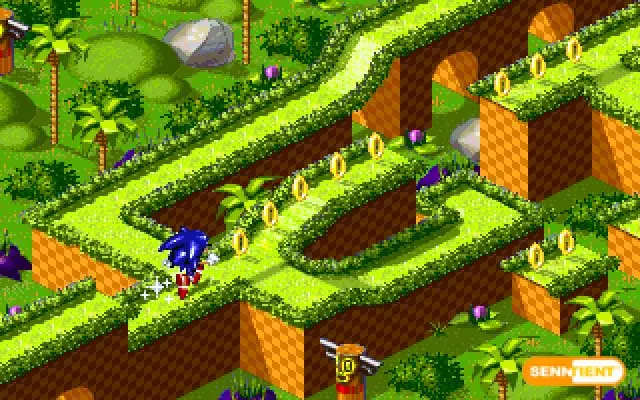
After Sonic-16 was cancelled, Chris Senn had decided to make a mock-up of an isometric Sonic game on the Sega 32X, similar to Sonic 3D, but before 3D was released. It is unknown if this would have been built into another game, as the concept design was not finished further.
The image to the right shows the mock-up of the Untitled STI Sonic Game, which Chris Senn has reported to be another stage of development of Sonic X-treme. The image was created by Chris Senn, during his tenure as an employee of STI. There was no actual game engine created, nor any game data such as levels or sprites, and there was no actual work done to create a game based upon the image, as it was merely concept art. The image shows what the game could have been, if developed. Had the game gone into development, it quite possibly could have turned out far different from Sonic 3D, featuring a less wide-open environment, due to there being single-column walls, platforms, and fixed paths to run on. The game would be an “on-rails” game, similar to Sonic Riders. Its focus may have been more on platforming (like Sonic the Hedgehog 2 and Sonic Riders) than exploring (like Sonic Adventure and Sonic R). However, from this single screen, it is simply impossible to determine if this is entirely true, partially true, or if there were more open areas to move around in. According to Chris Senn this mockup was created before Sonic 3D was released and was during the development of the 32X.
Mock-up: Chris Senn. Source: Chris Senn on his Senntient forums (no longer online); see also Untitled STI Sonic Game at Sonic Retro.
What Was “Sonic Mars”?
It was rather quickly realised, however, that the aging Mega Drive / Genesis’ hardware was simply not up to the task of handling the huge game, and focus was then shifted to the Sega 32X, which was in development in North America and Europe at the time. Its name was derived from the code name for the Sega 32X, “Sega Mars” (as Sega had a tendency to give codenames based on planets to its consoles during development). In the beginning, the DiC / SatAM characters were retained, as SatAM was still very popular at the time, and it was thought that they may fit in a Sonic game if it was fast-paced enough. Michael Kosaka wrote a general game script, with Don Goddard (Lead Programmer/Game Designer of the game) writing a revised script shortly afterwards, along with general descriptions of the levels that would have been in the game.
STI’s 3D pitch demo, uploaded to the Sonic Scene YouTube channel as “Sonic X-Treme Pitch demo by STI”.
As the game’s development progressed, the 32X version was cancelled, most likely due to the add-on’s limitations (which caused its ultimate failure in the marketplace). The game was intended to be the first 3D polygonal Sonic the Hedgehog game, but the DiC / SatAM characters were dropped due to disinterest from the development team.
As the 32X started to fail and fade from public view, the focus on the game was switched yet again, to the upcoming and far more powerful Sega Saturn. The game’s storyline was altered heavily, removing the Freedom Fighters later on in development in favour of original characters (possibly due to licensing issues, as well as general disinterest from the development team, or at the insistence of Yuji Naka). The game then became what would be popularly known as the cancelled Sonic game, Sonic X-treme.
Those “licensing issues” look different today. A Sega legal document that surfaced in 2025 shows the company in dispute with DiC over SatAM in the mid-1990s – the full story is in our cancellation article.
Michael Kosaka’s script
An early script of Sonic Mars by Michael Kosaka was leaked in 2007. This would be one of two Sonic Mars scripts released, with the other being a script written by Don Goddard. The cover page of the Michael Kosaka script is dated May 19, 1994, while the Don Goddard Script was created later, according to Chris Senn, one of the developers of the game.
According to the leaked Michael Kosaka game script, this version of Sonic Mars was estimated to be 16 megs, have two players simultaneously and be completed by June 1995. The final story of the game would have taken place in a 3D Virtual Reality world, similar to its predecessor, Sonic-16. The premise of “Sonic Mars” was as follows:
While Sonic is away checking on a security alarm in a remote part of the Great Forest, his pals (Sally, Bunnie, Tails and Knuckles) have discovered a strange message from within one of Robotnik’s super computers. [Dr. Robotnik is trying to take over a computer VR world (Micro Mobius) and the message is a plea for help from its peaceful inhabitants.] Sonic returns to Knothole to discover that Robotnik has captured his friends and taken them into his VR world. Sonic attempts to save his friends and thwart Robotnik’s plan to “reformat” Micro Mobius.
— Premise of the Kosaka script, as summarised by the Sonic X-treme Compendium (SXC)
Game play in the Kosaka script
Sonic Mars had an easter egg placed during the Sega logo. Pressing any button besides Start will play a “Sega shout” by either Sonic, Tails, Sally, or Robotnik. This screen can be bypassed by pressing the Start button. A second cheat was to be hidden on the Title screen. A cheat menu would activate after a certain button sequence is entered, letting you pick the Zone, Act, Sound and Music.
The game would have the standard power-up monitors that were present in Sonic the Hedgehog 2 and Sonic 3, such as Invincibility and Power Sneakers. Similar to the electric shield of Sonic 3 would be the Magnetic Shield, which attracts Rings, a unique Electron Box (which would enable Sonic to move along electric circuits), a Bubble Shield (which gives an air bubble, also similar to the water bubble shield of Sonic 3). Another so-called power-up is the Robotnik box, from Sonic 3. These would damage the player. Another unique box would be the Swatbot Repel Box, which repels rings for 15 seconds.
Continues in the game would be earned by gaining a minimum of 255 rings. Certain events would also trigger dialogue from your partner, such as completing a certain task, or collecting an item. Levels would be made of 2 to 4 floating cubes suspended in mid-air. The End Level Sign propels Sonic (or his character) and can be swatted back and forth, similar to in Sonic 3. Also, like in Sonic 3, when the sign hits the ground, there is a chance that the sign’s impact will be knocked upwards and out of the ground. At the end of the level, your accumulated rings would splash out of a tube.
The game had several badniks lined up, such as Skuzzy, Socket, Cache Masher, Stacker, Viruz, Chipset, Floppy, Stagnat Sentry (which activates when someone is near), Patrollers (which follow a dedicated path), and Hunter-Killers (these act the same as Stagnat or Patrollers, and follow the player).
Don Goddard’s script
Don Goddard’s script came after Michael Kosaka’s, and is generally considered to be a revision. It is also sometimes referred to as Sonic 32X, despite the Sega Mega Drive / Genesis being mentioned in the script, with no mention of the 32X add-on. It is a drastic revision from Michael Kosaka’s script, as while Sonic is the main character, no others are mentioned. Interestingly, the script mentions sprites AND polygons, so it probably was bound for the 32X. The reason for this assumption is that there was only one Sega Mega Drive / Genesis game that used polygons, and the processor used to create the polygons (similar to the Super-FX chip used in Nintendo’s Star Fox) brought the cost of the cartridge up to US$100.
Sonic Mars staff
- Director/Game Designer: Chris Senn
- Technical Programmer: Ofer Alon
- Lead Programmer/Game Designer: “Me” in the script (presumably Don Goddard)
- Tools Programmers: Mark, Robert
- Reference: Adrian
- Producer: Mike Wallis
Alongside making the general design, Chris Senn also made a few sprites and concept art pages for the Don Goddard script.
Sources for this section: the two leaked scripts as described by Luke; Chris Senn on his Senntient forums (no longer online); the Sonic X-treme Compendium (no longer online); Sonic Mars at Sonic Retro. We have not been able to check the script details against the scripts themselves.
Sonic X-treme
Sonic X-treme was intended to be the first original Sonic game for the Sega Saturn, as well as the first true 3D Sonic game, but was cancelled due to development issues, though its history is very colourful (as shown in the above section, with its roots in Sonic Mars).
The story of the game contained Sonic, Tails, Knuckles, Metal Sonic, Nack, and involved two new original creations: Professor Gazebo Boobowski and his daughter, Tiara (recycled from Sonic Mars, originally with the last name Cybernooski). The professor and his daughter were the guardians of the six magical Rings of Order, as well as the ancient art of Ring smithing. They feared that Dr. Robotnik is after the six Rings of Order, and called on Sonic to get the Rings before Robotnik can. The playable characters in the game were Sonic, Tails, Knuckles, and Tiara, and would have unique storylines to that character, similar to Sonic Adventure.
Levels within Sonic X-treme were designed as “tubes”, with changing gravity so Sonic (or the other characters) could walk and run, regardless of their physical orientation. One idea recycled from Sonic-16 and Sonic Mars was Sonic’s ring-throw ability, where he would toss a ring at a badnik or enemy to knock them out. Sonic X-treme would have also featured Nack the Weasel and Metal Sonic as bosses.
However, Sonic Mars and Sonic X-treme would live on, as many of the ideas from those two games were salvaged and recycled into one of the biggest Sonic games ever, Sonic Adventure for the Dreamcast. Ideas that were recycled from Sonic X-treme include character-specific storylines, Robotnik trying to steal a secret ancient object, and using new characters.
The SatAM Game That Did Come Out
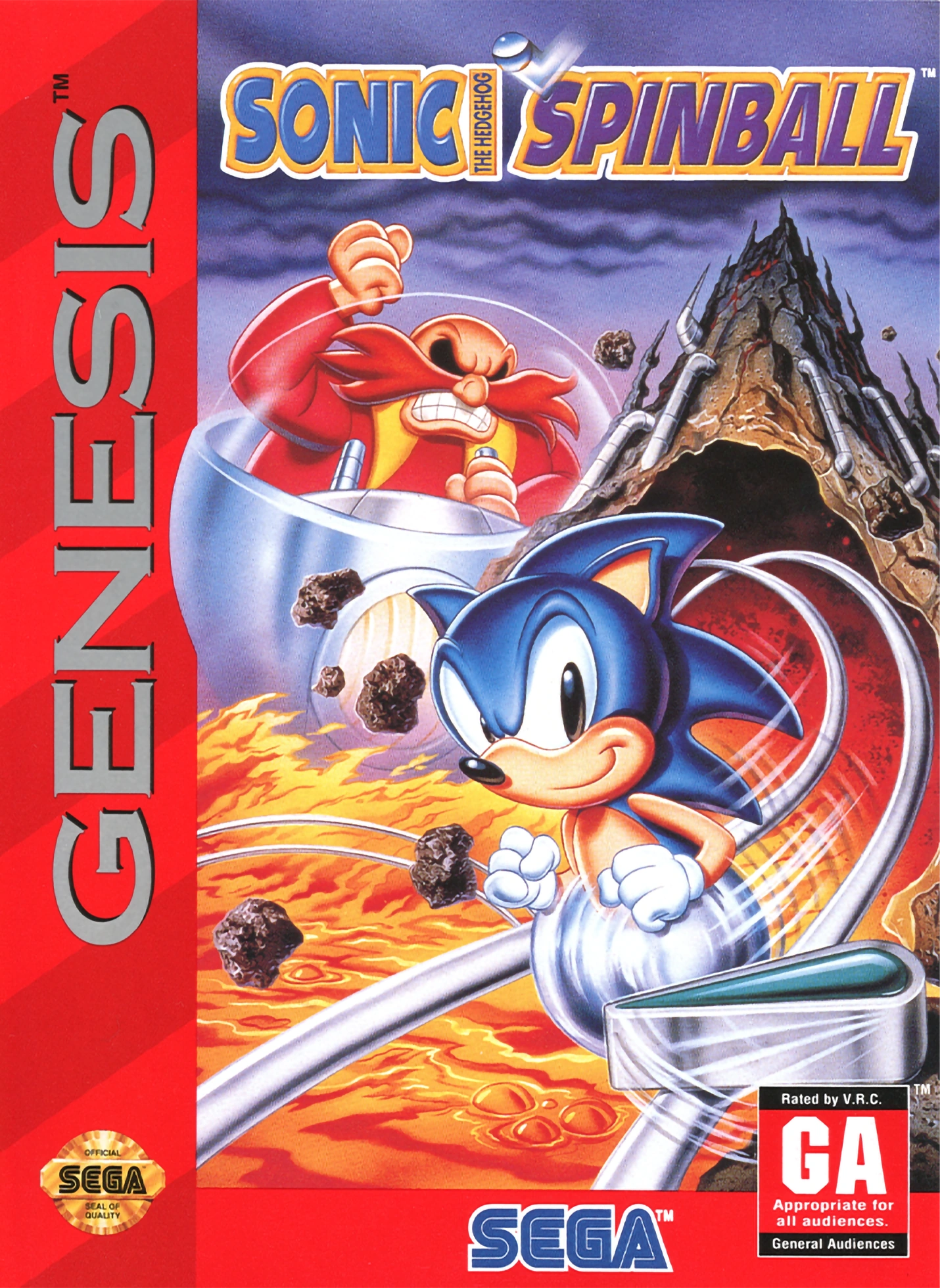
STI’s Sonic the Hedgehog Spinball, the stopgap built while Sonic 3 was finished, is the closest the Freedom Fighters came to a game of their own in the 1990s: the cartoon’s heroes turn up in cameo roles. The idea of a game in the cartoon’s world went quiet for years after that, and SatAM’s characters lived on in Archie’s comics instead.
More SatAM on Sonic Scene
- Sonic the Hedgehog SpinballSTI’s 1993 pinball game.
- SatAM: the series pageHistory, characters, cast and credits.
- Season 1 (1993)All 13 episodes, characters and the Vault model sheets.
- Season 2 (1994)All 13 episodes, from Game Guy to The Doomsday Project.
- Why SatAM was cancelled
- SatAM airing history
- Ben Hurst memorial
Sources
Facts on this page were checked against these sources in November 2026.
- Luke, ‘The Fabled SatAM Sonic the Hedgehog Game’ (Sonic Scene) – the original article
- Sega-16, ‘Interview: Peter Morawiec (STI Programmer)’ (April 2007)
- Sonic Wiki Zone, ‘Sonic-16’ (demo date, gameplay, staff); Sonic Retro, ‘Sonic-16’, ‘Sonic Mars’, ‘Untitled STI Sonic Game’ and ‘Sonic X-treme’ (Wayback copies)
- Chris Senn, posts on the Senntient forums (cited by Luke; no longer online)
- Videos: the Sonic Scene YouTube channel; Sonic-16 title screen and Spinball box via Sonic Wiki Zone; STI mock-up from Sonic Scene’s archive