iOS / Wii / PS3 / Xbox 3602010Dimps · Sonic Team2D platformer
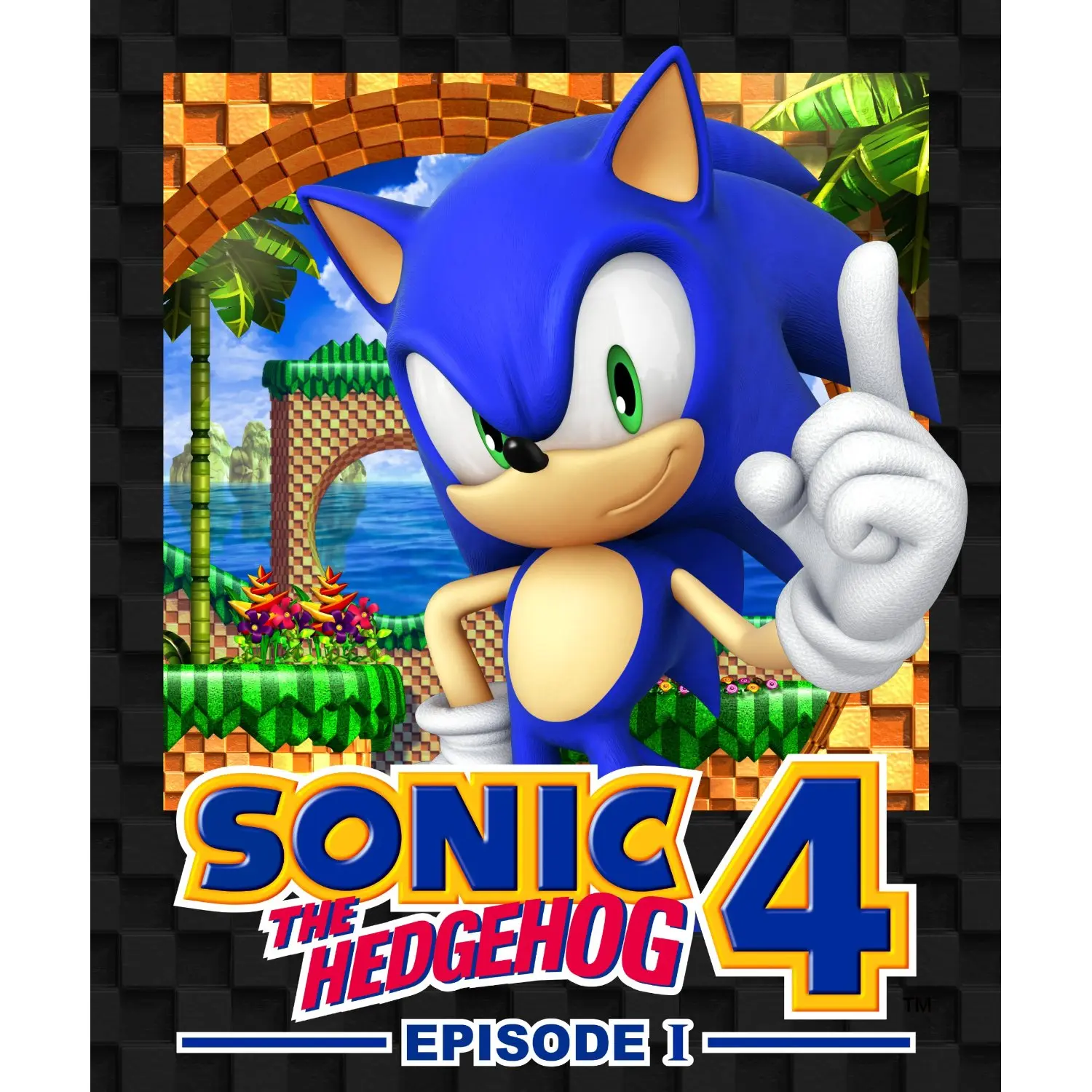
Sonic the Hedgehog 4: Episode I (2010)
Sixteen years after Sonic & Knuckles, Sega finally put a 4 on the box. Sonic runs alone through four remixed zones, Eggman brings back his greatest hits, and fans argue about the physics to this day.
Released7 Oct 2010 (iOS) · 11 Oct (WiiWare, NA) · 12 Oct (PSN, NA) · 13 Oct 2010 (Xbox Live Arcade)
DeveloperDimps, with Sonic Team
DirectorToshiyuki Nagahara
ProducerTakashi Iizuka
MusicJun Senoue
SalesOver 1 million by 2011
Title
Sonic the Hedgehog 4: Episode I (ソニック・ザ・ヘッジホッグ4 エピソードI); developed under the codename Project Needlemouse
Platforms
iOS, Wii (WiiWare), PlayStation 3 (PlayStation Network), Xbox 360 (Xbox Live Arcade); later Windows Phone 7, Windows (Steam), Android, BlackBerry PlayBook and Ouya
For years the loudest request from Sonic fans was simple: make another one like the Mega Drive games. In 2010 Sega answered with Sonic the Hedgehog 4, a downloadable sequel to Sonic & Knuckles (1994) released in parts, and Episode I was the opening chapter. It is a side-scroller in the old mould, rendered with modern 3D models on a flat 2D plane, with one button to jump and attack, no voice acting and no partners. Just Sonic, rings, springs, loops and Dr. Eggman.
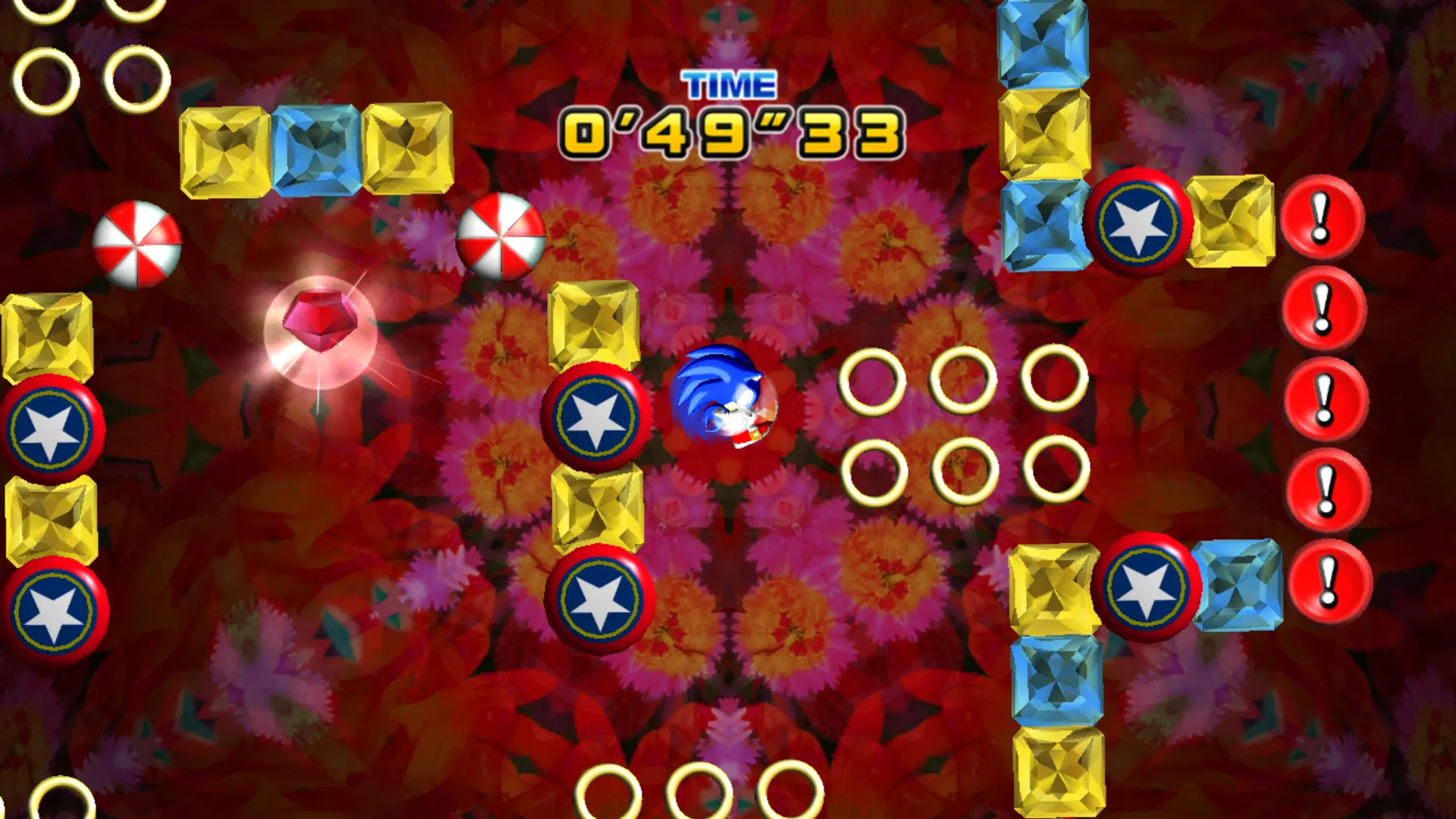
Episode I has four zones that each remix a classic location, from the Green Hill-style Splash Hill to the neon of Casino Street, which you can tackle in any order after the first act, plus a final gauntlet aboard Eggman’s E.G.G. Station. Clear an act with 50 rings and you can tilt your way through a rotating Special Stage for a Chaos Emerald. Collect all seven and Super Sonic is yours, along with a short scene teasing the return of an old metal rival.
It was built by Dimps, the studio behind Sonic Advance and Sonic Rush, with Sonic Team assisting, and it arrived in October 2010 on iPhone, WiiWare, PlayStation Network and Xbox Live Arcade. Critics mostly liked it, with the Wii version best received, but its momentum-light physics became the big talking point among fans. It still sold over a million copies within a year.
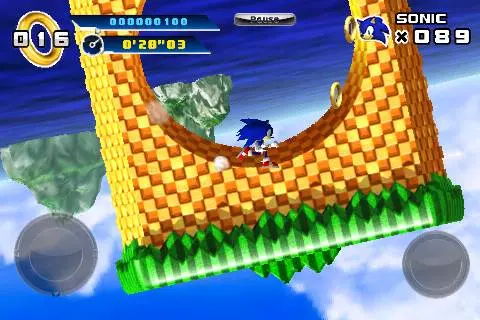
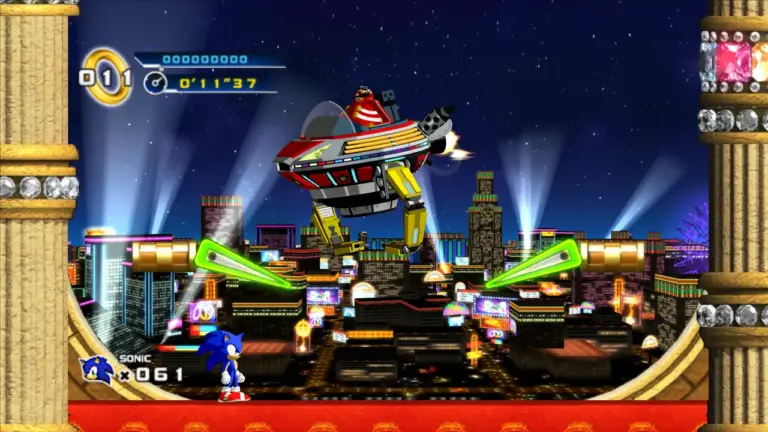
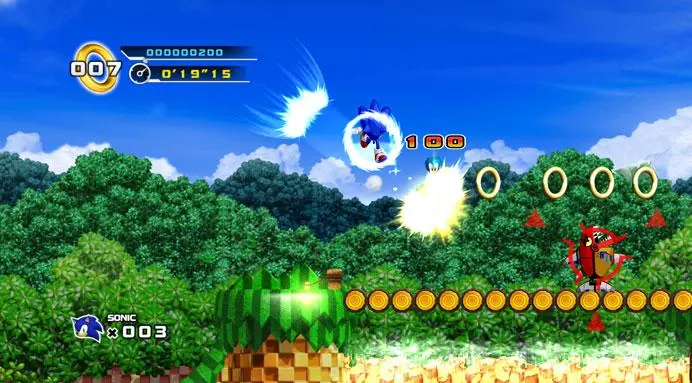
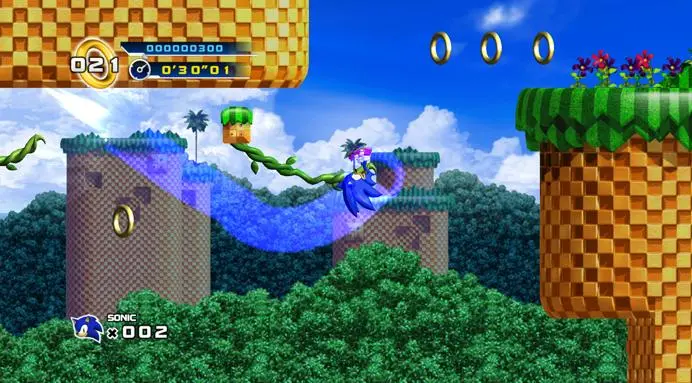
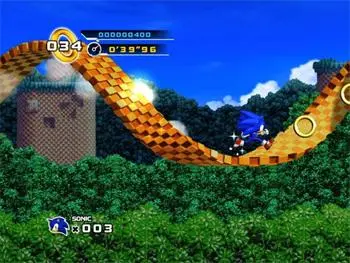
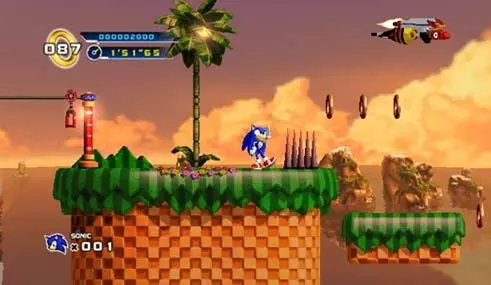
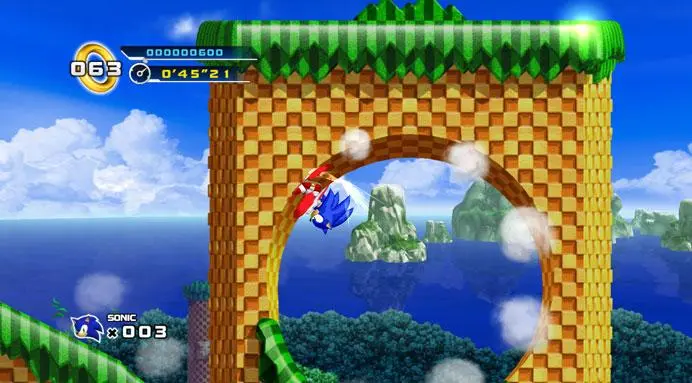
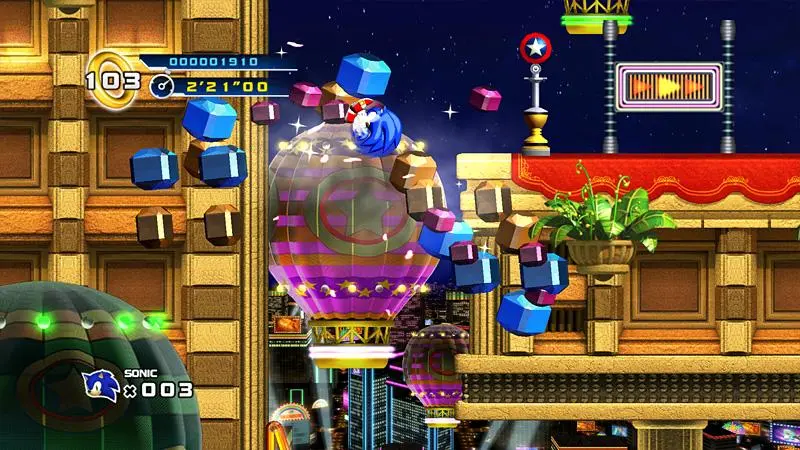
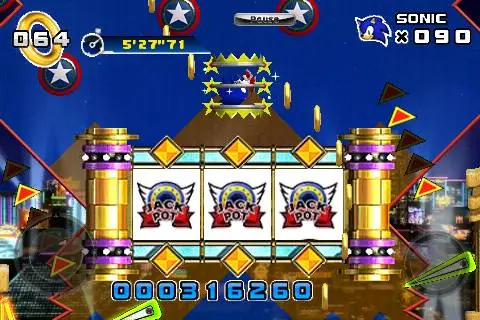
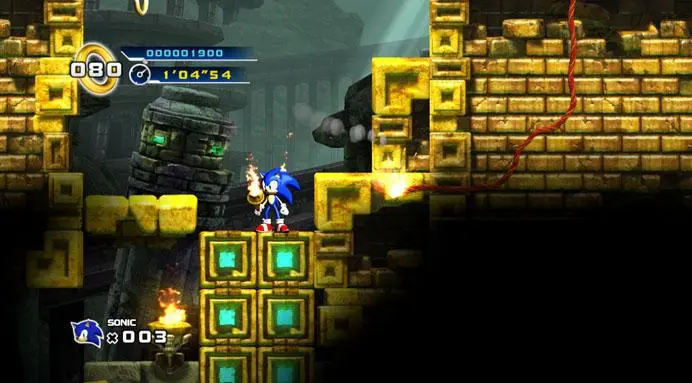
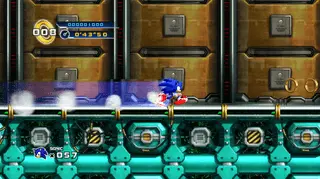
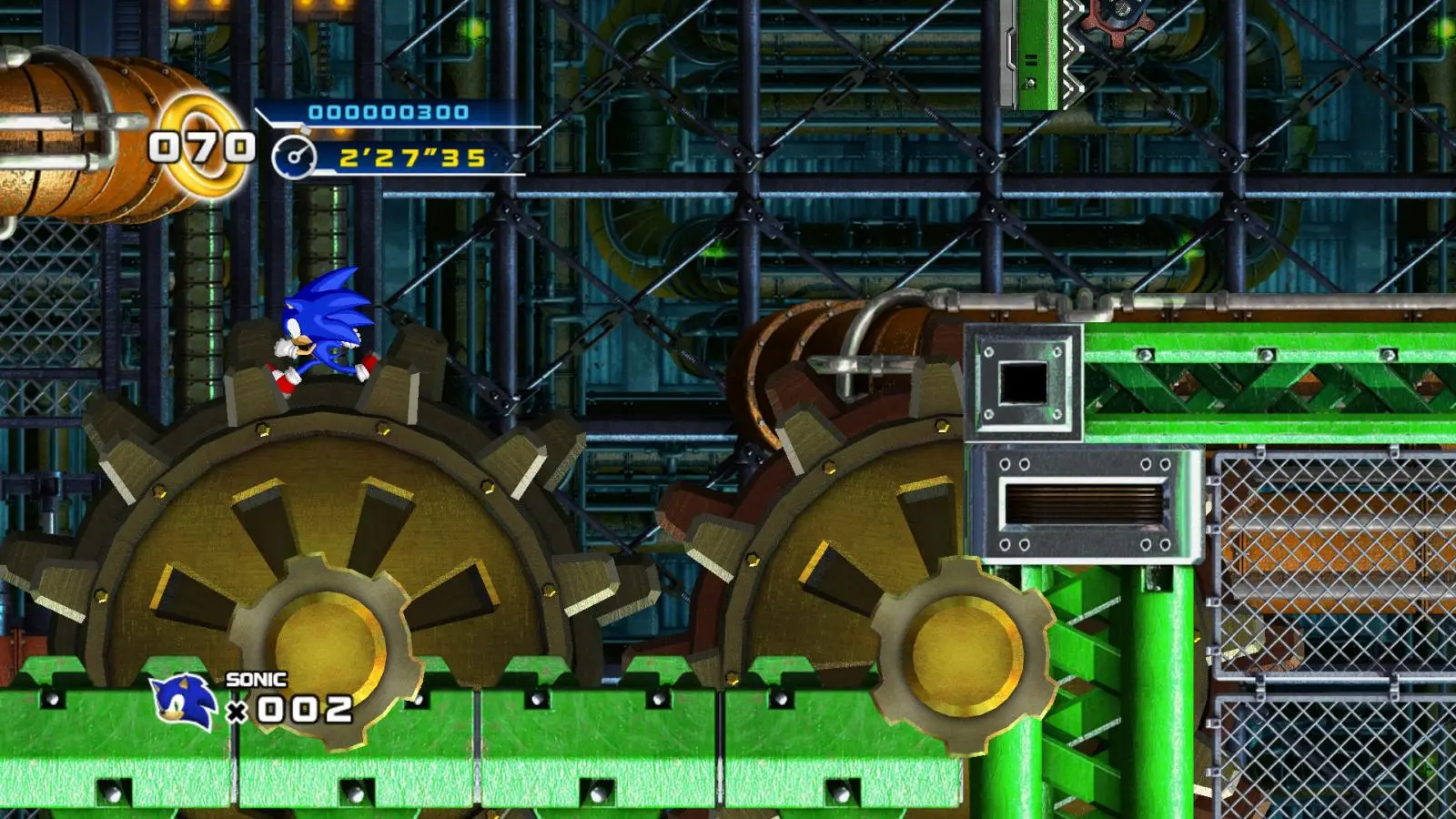
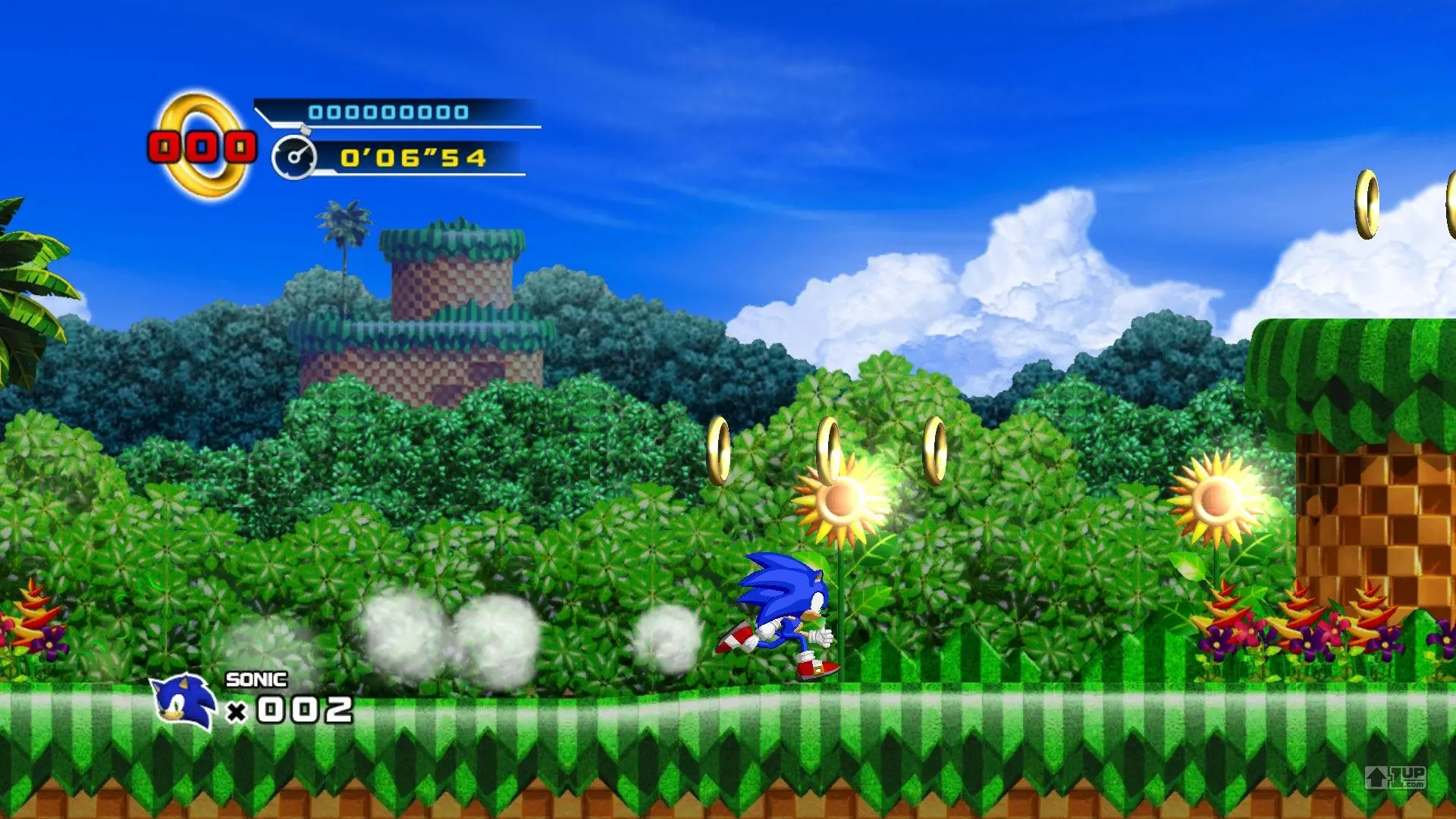
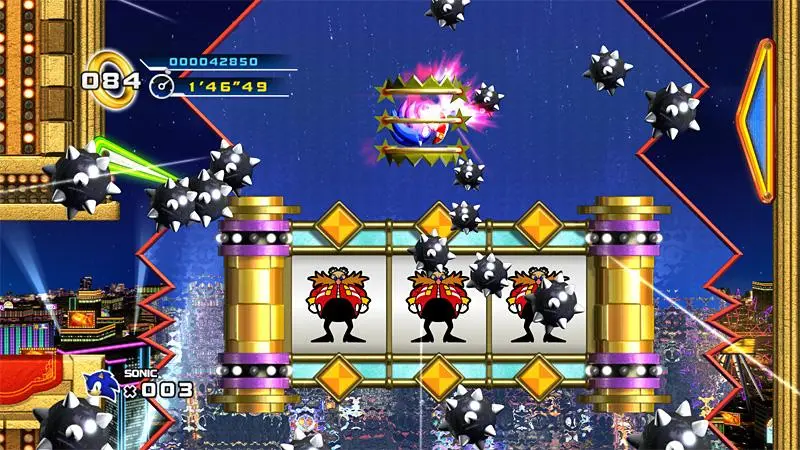
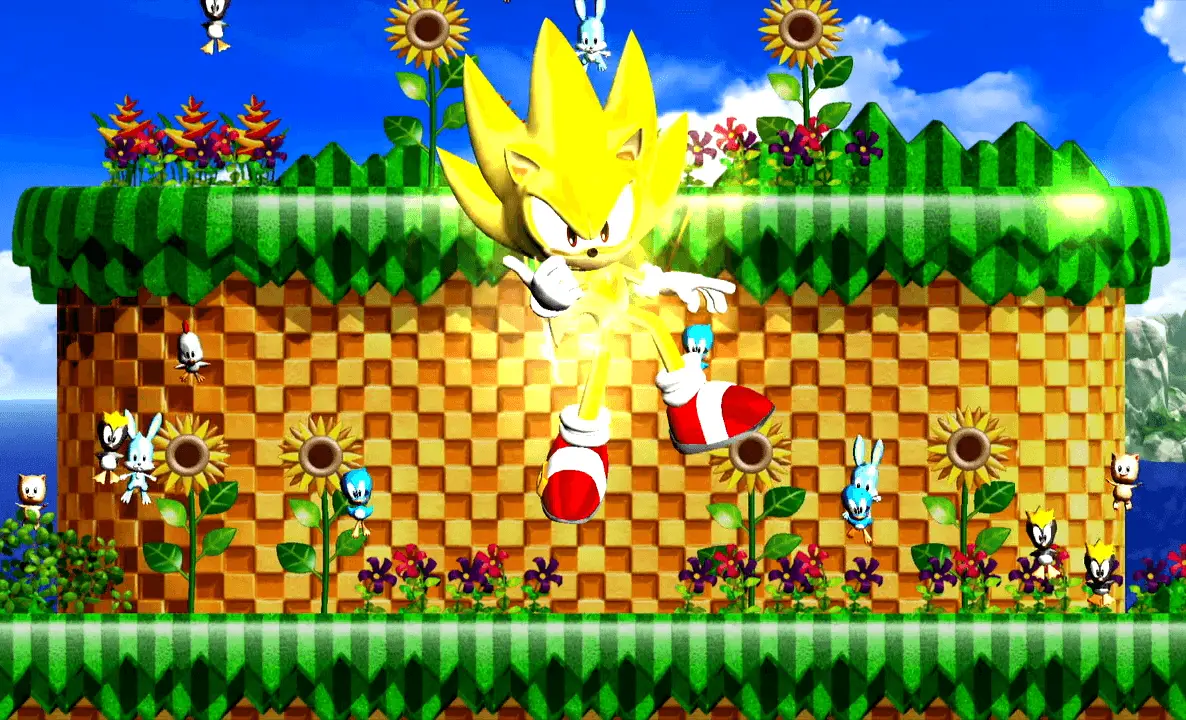
Splash Hill Zone, Act 1.Casino Street’s giant slot machine.Super Sonic in Splash Hill.
Sonic returns to his fast-paced platforming roots in this sequel to Sonic & Knuckles.
Sega’s own copy for the game, which our original 2010 page reproduced, then retold the whole Mega Drive saga before promising that Eggman was back with improved versions of his best creations. The Steam store page in 2012 sold it as the sequel fans had waited sixteen years for, picking up where Sonic & Knuckles left off, with the classic Spin Dash and the newer Homing Attack, and as the first chapter of a new 2D saga for old and new fans alike.
— Official description: Sega’s product copy as kept on our original page, and the Steam store page (January 2012, Wayback Machine). One line quoted; the rest summarised.
Quick Answers
The quick version, with more detail further down.
When did Sonic 4: Episode I come out?
On iOS on 7 October 2010, then on WiiWare (11 October in North America, 15 October in Europe), PlayStation Network (12 and 13 October) and Xbox Live Arcade (13 October). Windows Phone, Steam, Android and BlackBerry PlayBook versions followed in 2011 and 2012. More →
Is it really a sequel to Sonic & Knuckles?
Yes. The story picks up after Sonic & Knuckles, and the zones, Badniks and bosses all remix ideas from the first two Mega Drive games. More →
Can you play as Tails or Knuckles?
No. Sonic is the only playable character; Sega’s 2010 Character Countdown promotion ended by revealing exactly that. Tails returned as a partner in Episode II. More →
How many zones are there?
Four main zones of three acts plus a boss (Splash Hill, Casino Street, Lost Labyrinth and Mad Gear), then the E.G.G. Station boss gauntlet. More →
How do I get Super Sonic?
Finish acts with 50 or more rings to reach the Special Stages and collect all seven Chaos Emeralds. Sonic can then turn Super in normal acts, though not in boss fights. More →
What was Project Needlemouse?
The codename Sega used when it announced the game in September 2009, before the real title was revealed on 4 February 2010. More →
Why do people complain about the physics?
Sonic does not carry momentum the way he did on the Mega Drive: he uncurls when he leaves a ramp, can stand at odd angles on walls and feels floaty in the air. Sega reworked the physics for Episode II. More →
Was there ever an Episode III?
No. Sega said in March 2012 that it had no plans beyond Episode II. Christian Whitehead later said Sega Studios Australia had offered him the chance to make it before the studio was closed. More →
Plot / Story
Dr. Eggman, back again.Image via Sonic Retro
Sonic 4 tells its story in a few lines of text and some wordless scenes, in the spirit of the Mega Drive games. What there is picks up straight after the Death Egg’s last crash.
The story so far, as Sega told it
Sega’s own write-up for the game, kept on our original page, spent most of its length recapping the Mega Drive saga to set the scene. It begins on South Island, where Sonic’s animal friends are vanishing because Eggman is turning them into robots to hunt for the Chaos Emeralds; Sonic fights through zone after zone, corners the doctor in the Final Zone, sends his machine limping away and heads home to Green Hill.
The peace is short. Eggman starts kidnapping again to build a workforce for his Death Egg, so Sonic teams up with a new friend, Miles “Tails” Prower, frees West Side Island, flies the Tornado up to the Death Egg, destroys Mecha Sonic and topples the Eggman Robot. The crashing station brings the pair down on Angel Island, kept aloft by the Master Emerald, where Eggman tricks its guardian, Knuckles, into believing Sonic has come to steal it, and Knuckles snatches the Chaos Emeralds.
The recap then covers Sonic & Knuckles: the repaired Death Egg launches, Eggman sends an EggRobo to bomb Knuckles at Mushroom Hill once the echidna has served his purpose, the rivals finally fight, and Eggman steals the Master Emerald. Sonic chases him into space, wins it back and returns it to Knuckles, and Angel Island floats up again while the two heroes head off into the sunset. Humiliated, Eggman decides to get rid of Sonic once and for all.
Eggman’s encore
With the Death Egg down, Sonic says goodbye to Tails and Knuckles and sets off to see new places on his own. Eggman, of course, survived. Rather than invent something new, he digs out the robots that nearly worked the first time, the Motobugs, Choppers, Shellcrackers and Slicers, upgrades them, and rebuilds his favourite boss machines with a few improvements. His aim is simply to finish Sonic off for good.
Sonic sets off alone.Splash Hill Zone.
Four zones, any order
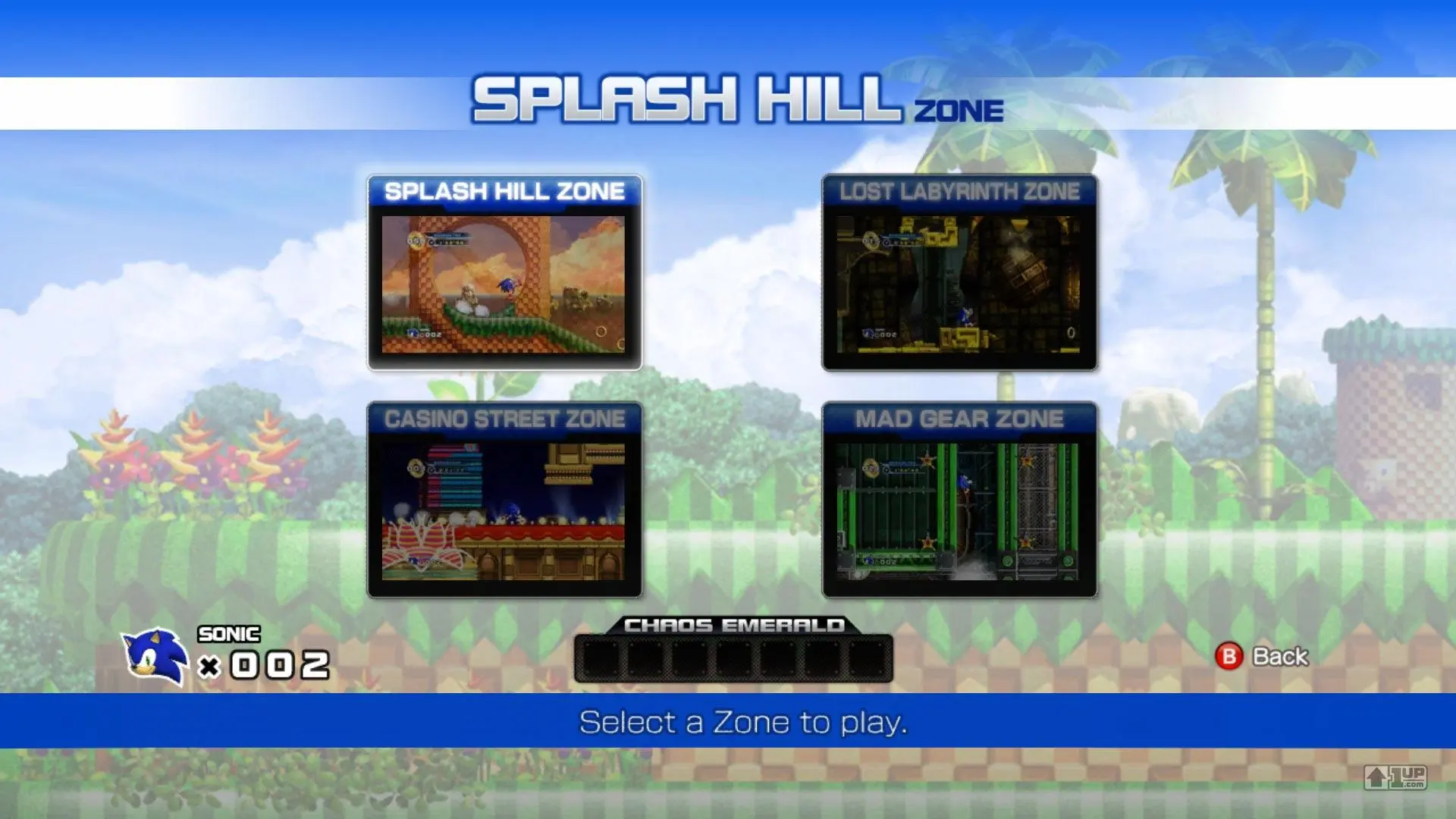
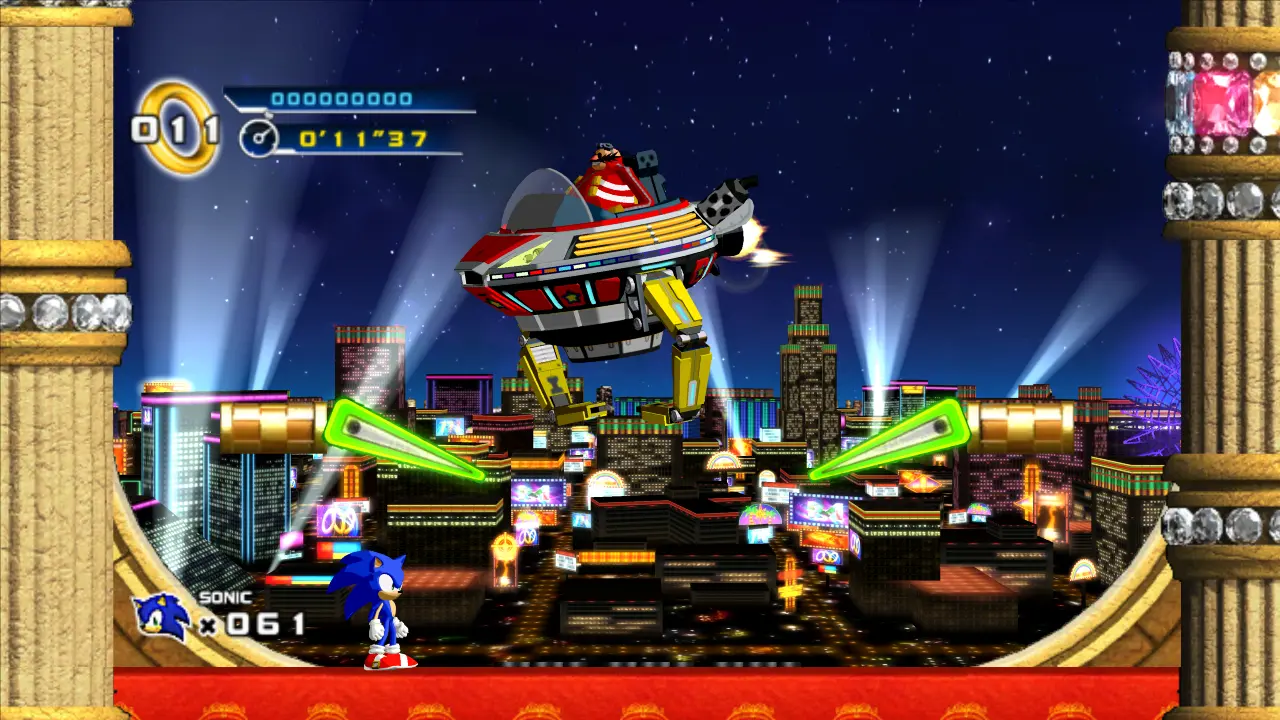
Sonic’s route begins in Splash Hill, a sunny stretch of checkerboard hills and corkscrews. Once its first act is done a world map opens up and he can head for Casino Street, a city of slot machines, pinball bumpers and playing cards; Lost Labyrinth, a flooded ruin of boulders, torches and minecarts; or Mad Gear, Eggman’s fortress of cogs and machinery. Each zone ends with Eggman in a souped-up version of one of his old contraptions, and every one needs eight hits.
Casino Street Zone.Lost Labyrinth Zone.
The E.G.G. Station
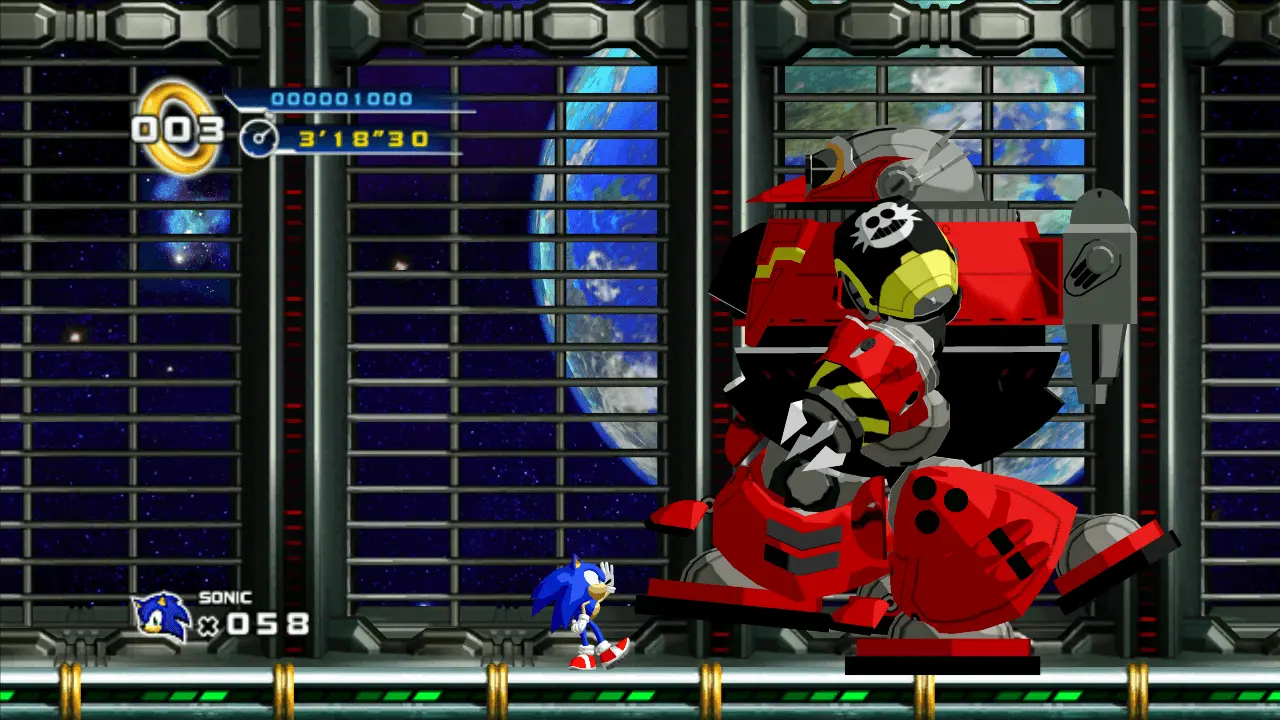
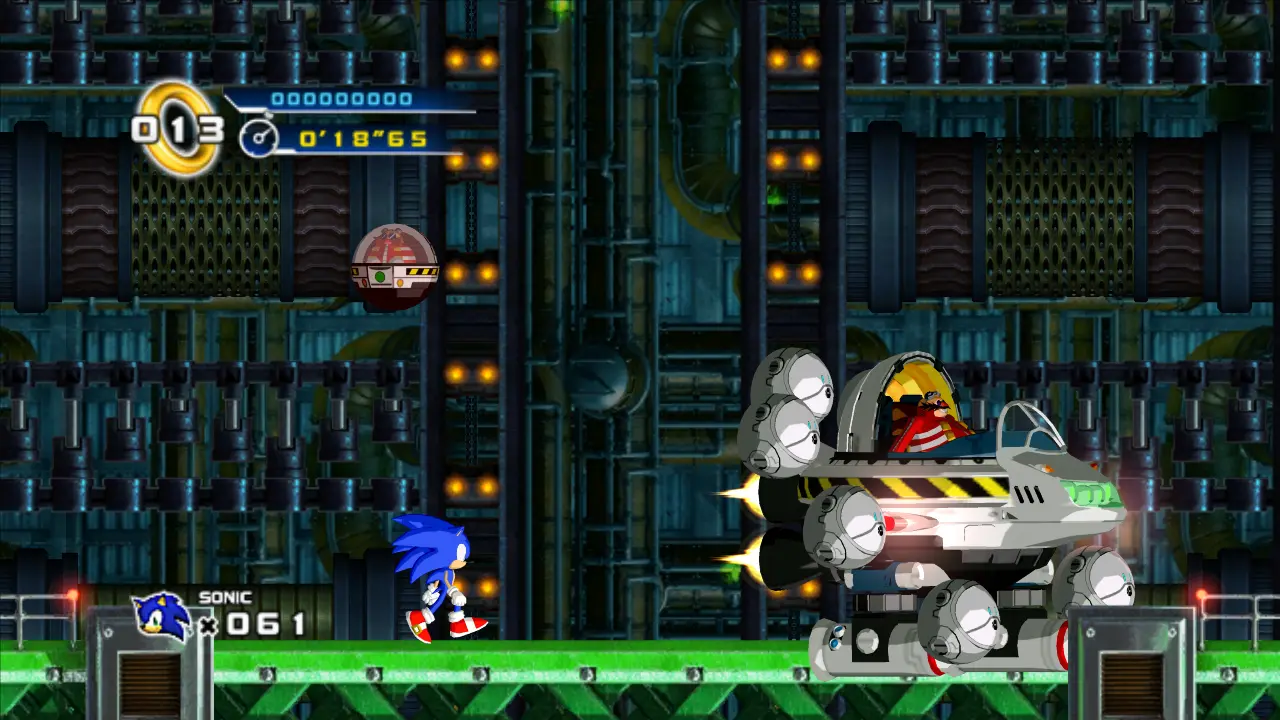
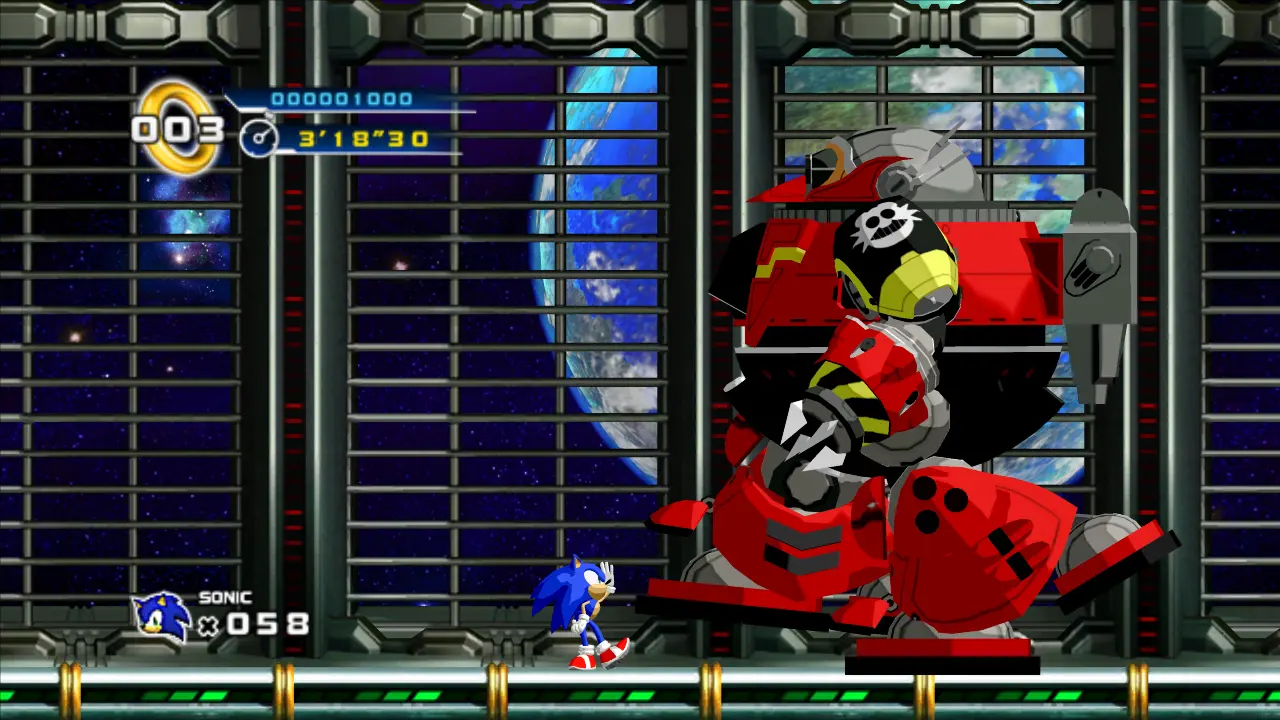
With all four zones cleared, the trail leads into space and aboard the E.G.G. Station, a single-act finale. Eggman throws every boss machine at Sonic again, each tougher than before, and finally climbs into the towering Death Egg Robot. Sonic takes it apart, and the doctor is beaten once more.
The E.G.G. Station.The Death Egg Robot.
A metal shadow
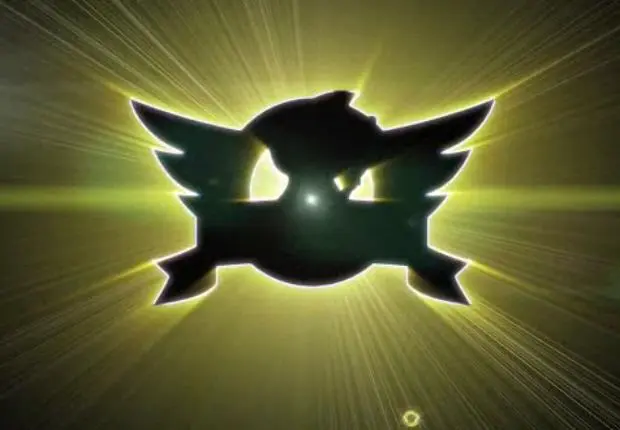
Finish the game with all seven Chaos Emeralds and the credits are followed by a short scene: the silhouette of Metal Sonic, Sonic’s robotic double from Sonic CD (1993), long gone from the main series, although he had raced in spin-offs such as Sonic Rivals 2 (2007) and Mario & Sonic at the Olympic Winter Games (2009). It was a promise of things to come, and Episode II revealed how Eggman had rescued his old robot from Little Planet.
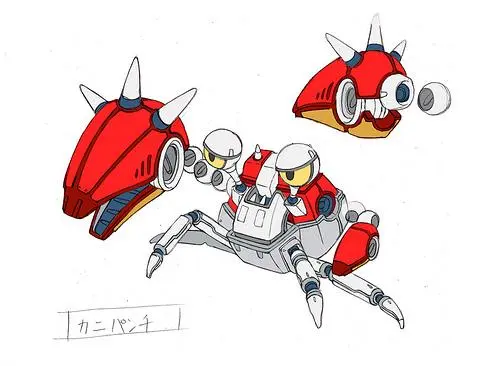
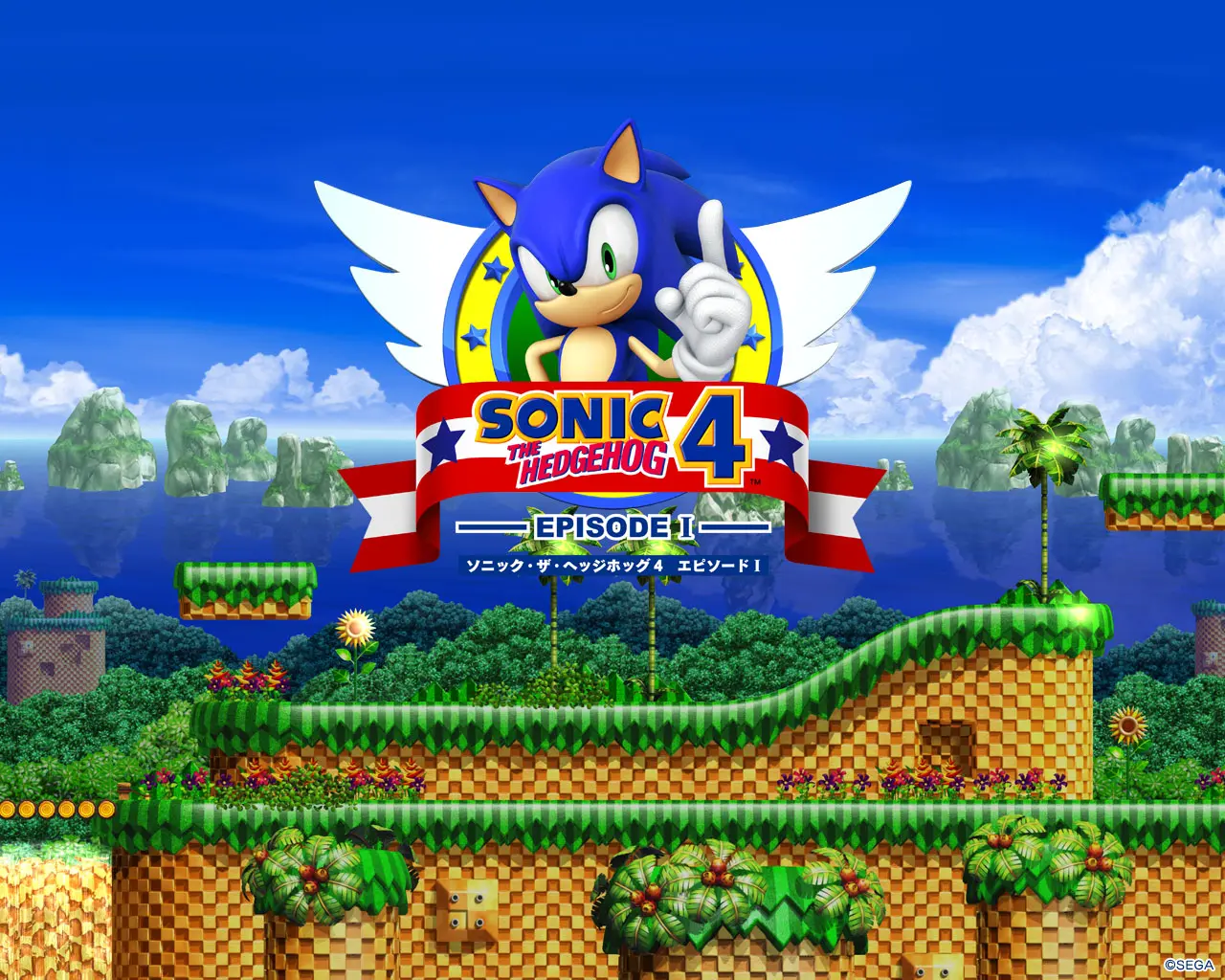
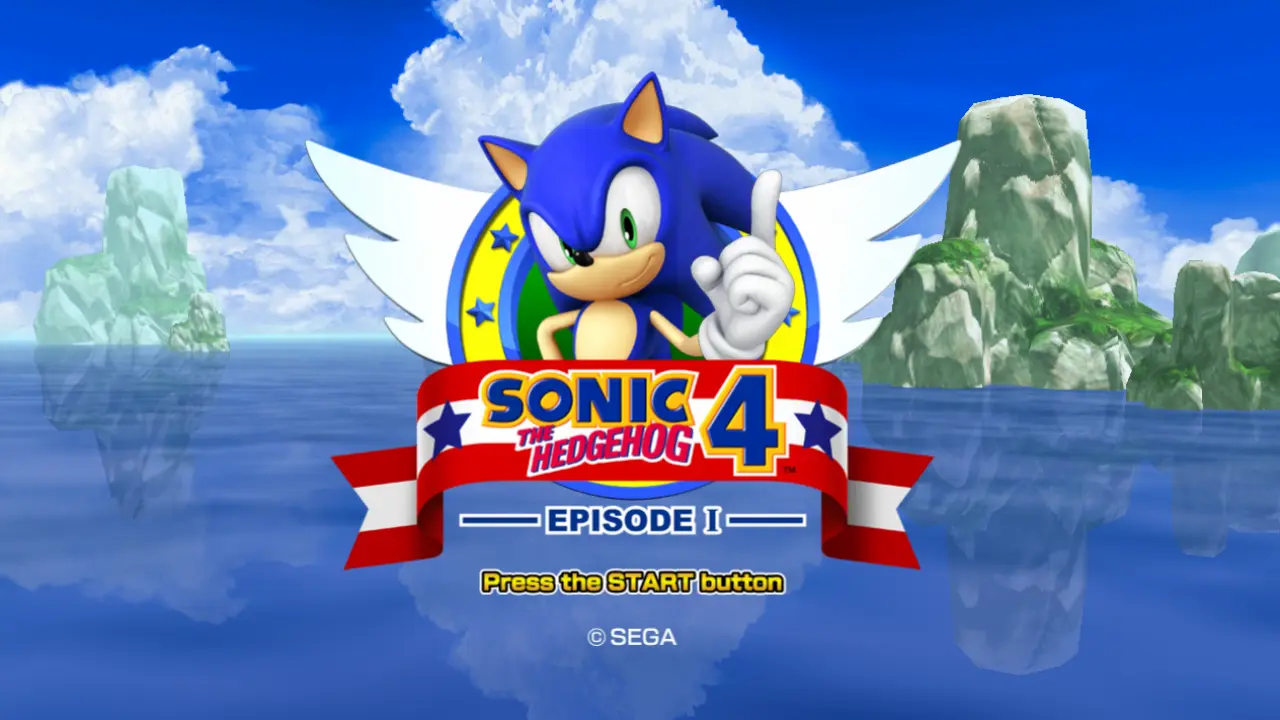
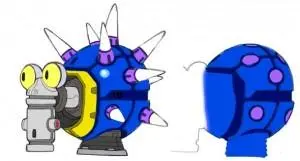
The title screen.Newtron concept art.
Zones in Sonic 4: Episode I
Each main zone has three acts plus a boss act, and each remixes a stage from Sonic the Hedgehog (1991) or Sonic the Hedgehog 2 (1992), with the same Badniks, gimmicks and boss ideas given a new coat of paint.
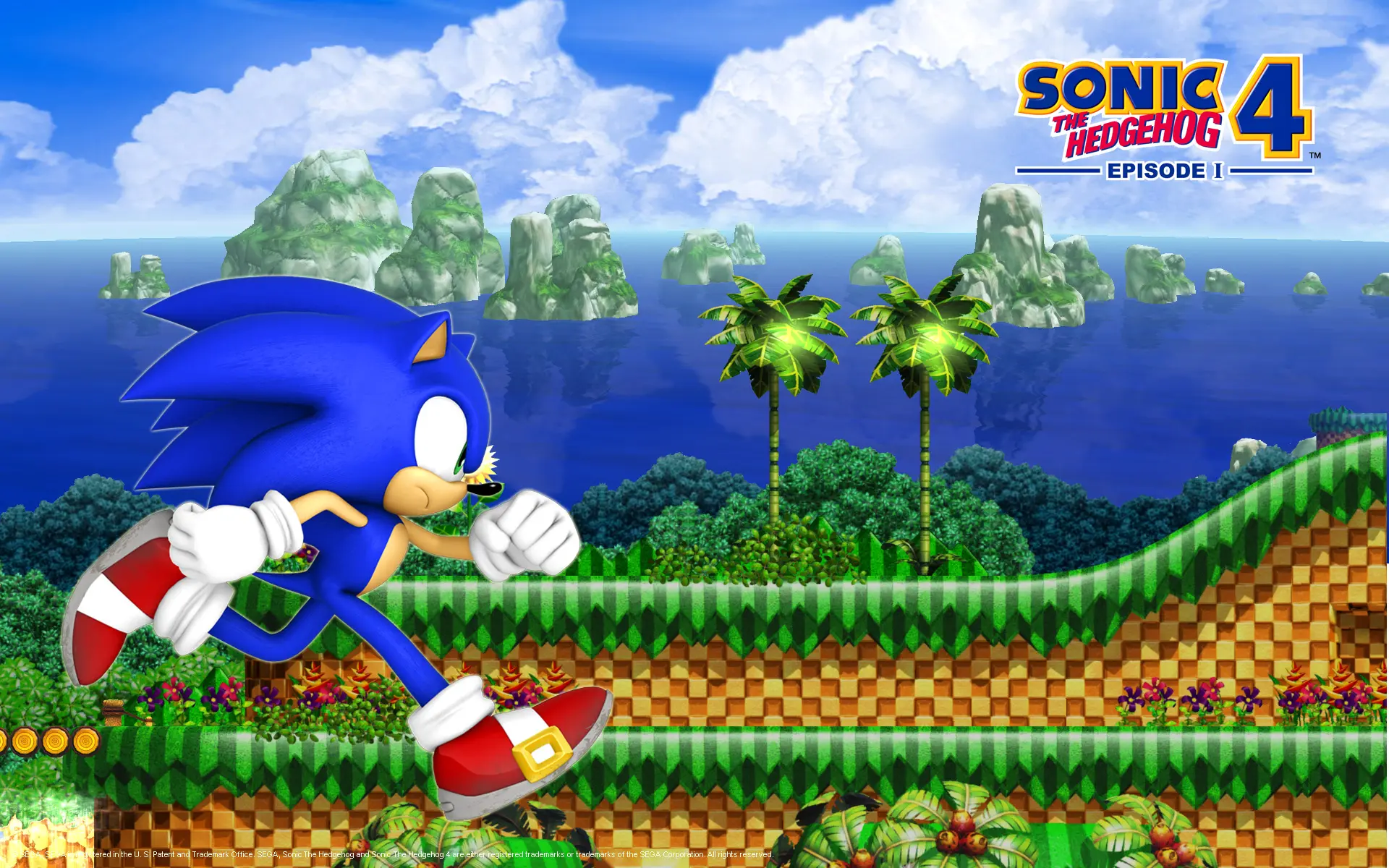
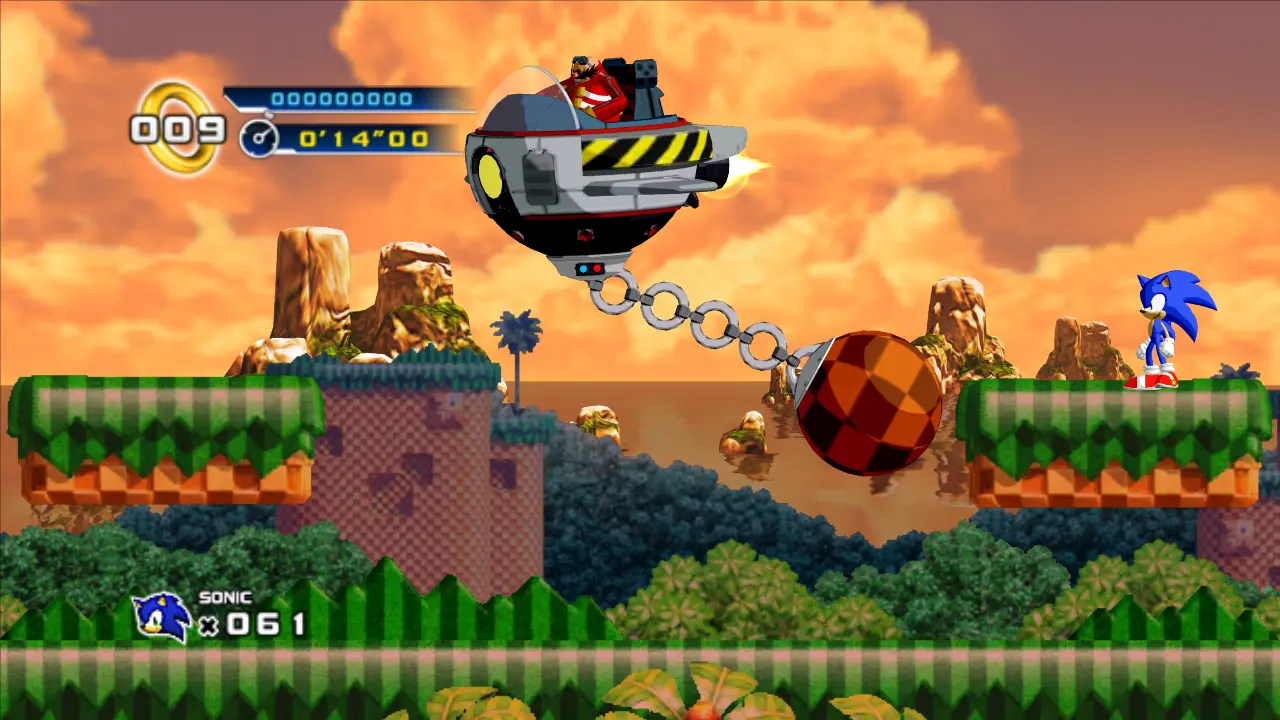
Splash Hill Zone3 acts + boss · inspired by Green Hill (Sonic 1)Palm trees, sunflowers, corkscrews and loops, with vines and zip lines to swing on. Boss: the Egg Mobile with a wrecking ball, after the first boss of Sonic 1.
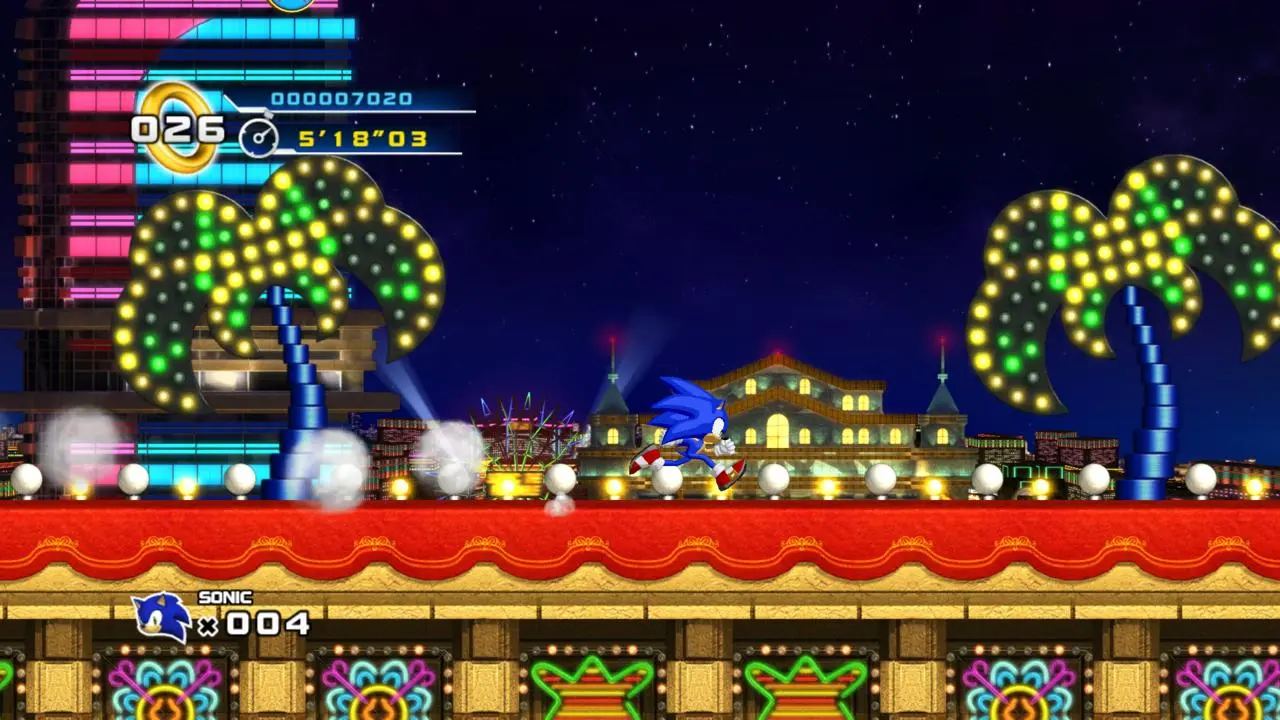
Casino Street Zone3 acts + boss · inspired by Casino Night (Sonic 2)Pinball flippers and bumpers, slot machines, cannons and giant playing cards. Boss: Eggman returns with a grabbing claw, a nod to Casino Night’s machine.
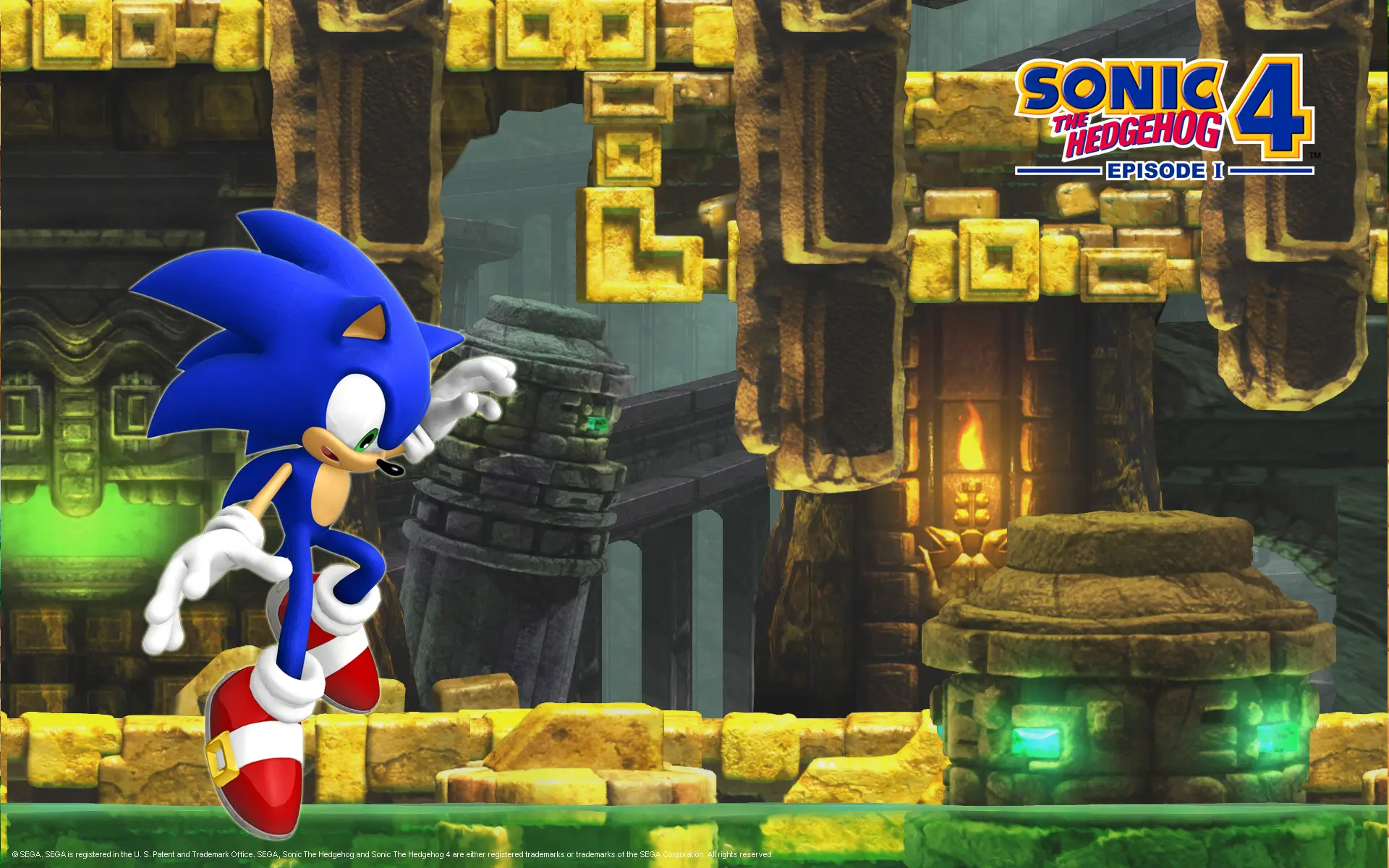
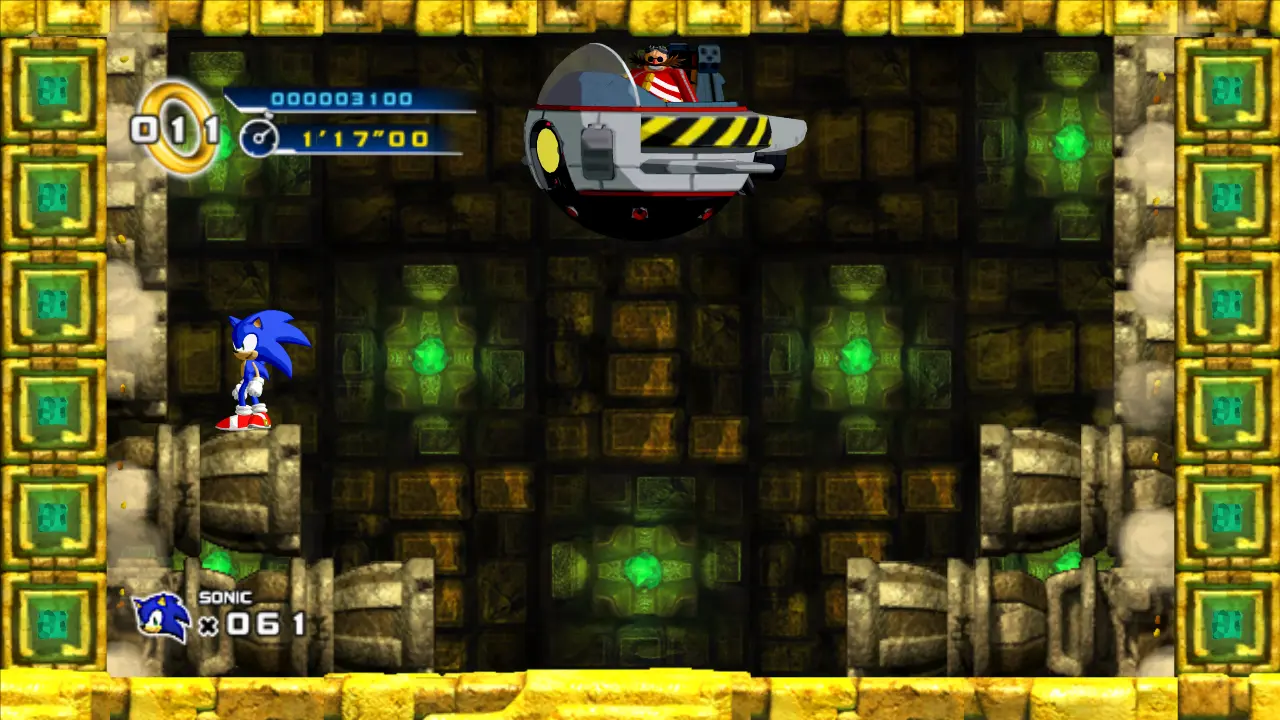
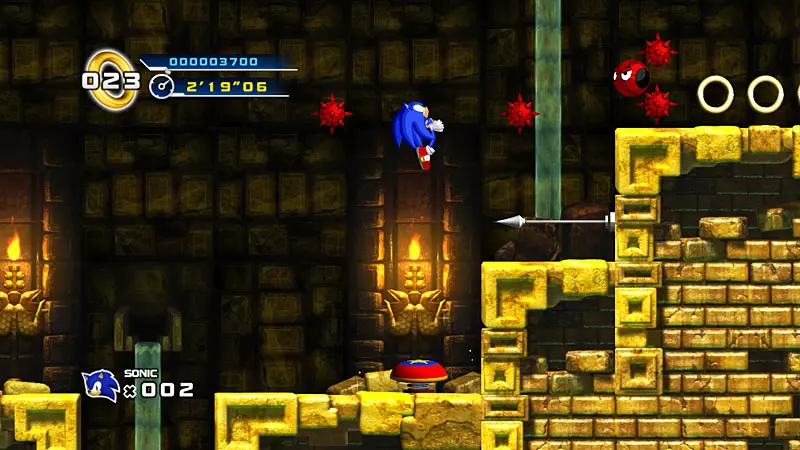
Lost Labyrinth Zone3 acts + boss · inspired by Labyrinth (Sonic 1)Boulders to balance on, torches to light up dark corridors, and minecarts. Boss: Eggman in the Egg Mobile.
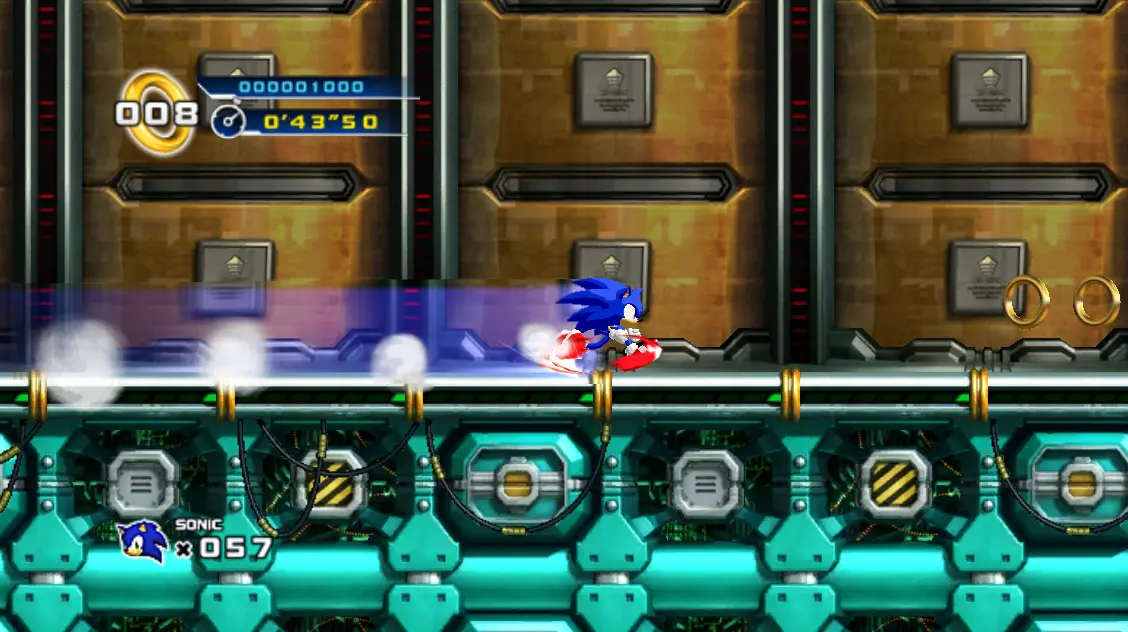
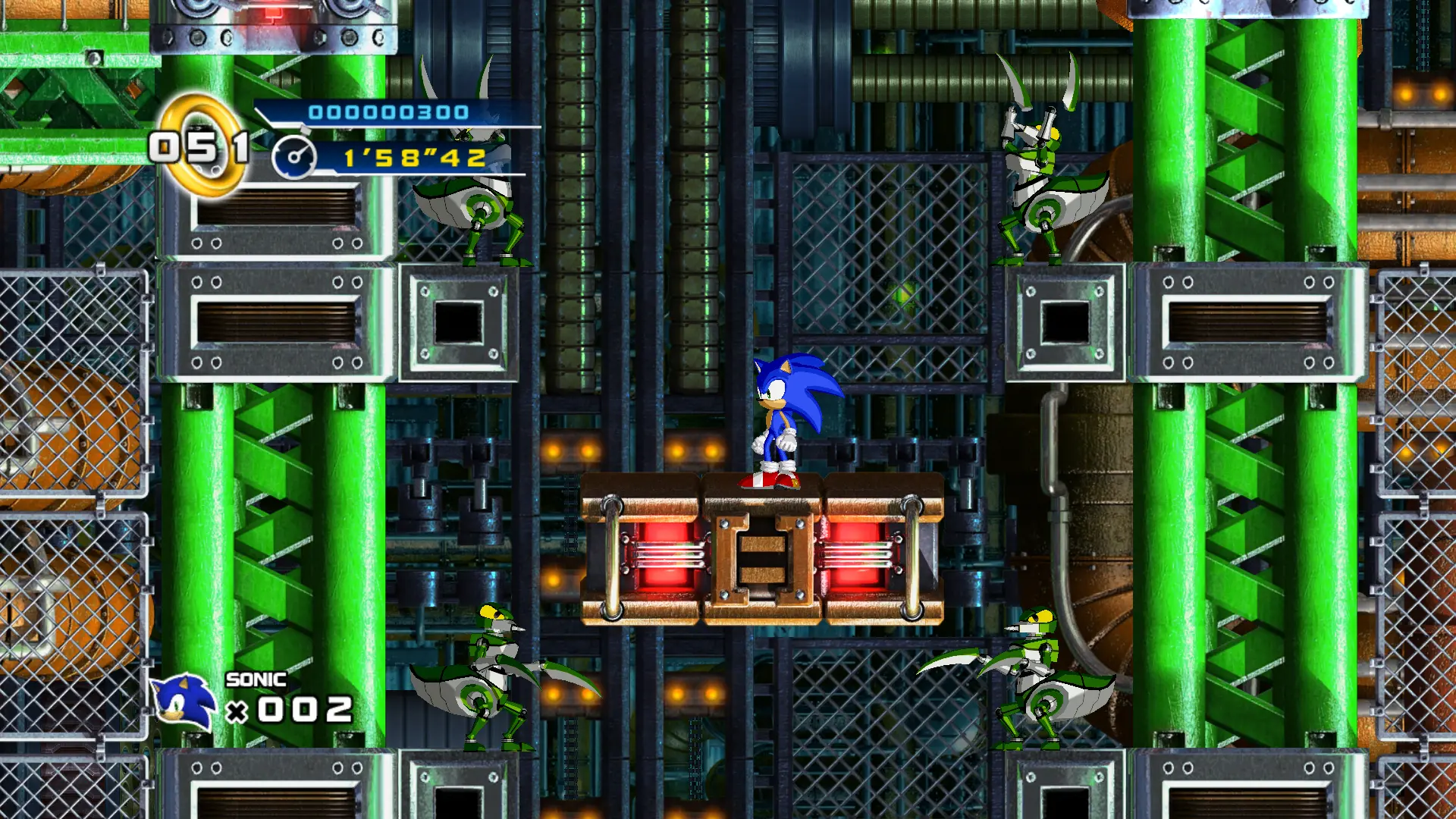
Mad Gear Zone3 acts + boss · inspired by Metropolis (Sonic 2)Eggman’s fortress of cogs and machinery, home to Metropolis veterans such as Slicer and Shellcracker. Boss: a flying Egg Mobile machine (Sonic Retro calls it Flying Eggman).
E.G.G. Station ZoneSingle act · inspired by Death Egg (Sonic 2)A boss rush in orbit: harder rematches with all four zone bosses, then the Death Egg Robot.
Special Stage7 stages · inspired by Sonic 1A rotating maze that you turn yourself. Rings unlock the gates, bonus orbs add time, and a Chaos Emerald waits at the end.
The iOS version keeps two acts designed around tilting the phone, a minecart ride in Lost Labyrinth Act 2 and a score-attack section in Casino Street Act 2; the console versions have different, conventional acts in their place.
In comics, TV & other media
Sonic 4 was sold as the continuation of the Mega Drive story, so most of its connections point backwards. More in Sonic in other movies and media.
Sonic CD (2011 re-release)Sega · late 2011Sega’s digital re-release of Sonic CD (1993) was promoted as a prequel to Sonic 4, because Episode II’s story leans on Metal Sonic and Little Planet.
Sonic the Hedgehog 4: Episode IISega · 2012The follow-up, with Tails and Metal Sonic. Owners of both episodes on one system unlock Episode Metal, which sends Metal Sonic through remixed acts of Episode I.
Original soundtracksSoundtrack albumsJun Senoue’s music was released on an Episode I soundtrack album and later on a combined Episode I & II album.
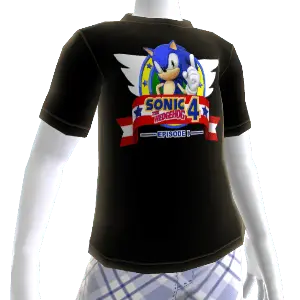
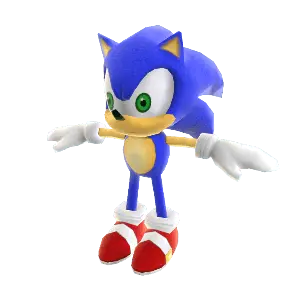
Xbox Live avatar itemsXbox 360Sonic 4 T-shirts and a Sonic costume for Xbox Live avatars; our artwork gallery has pictures of them.
Sonic ManiaSega · 2017Christian Whitehead’s later Mega Drive-style sequel, which critics repeatedly compared with Sonic 4, rarely in Sonic 4’s favour.
Characters
Sonic 4 deliberately strips the cast back to the 1991 essentials: one hedgehog, one doctor, a lot of robots, and one surprise at the end.
Character
Who they are
In this game
Stats & abilities
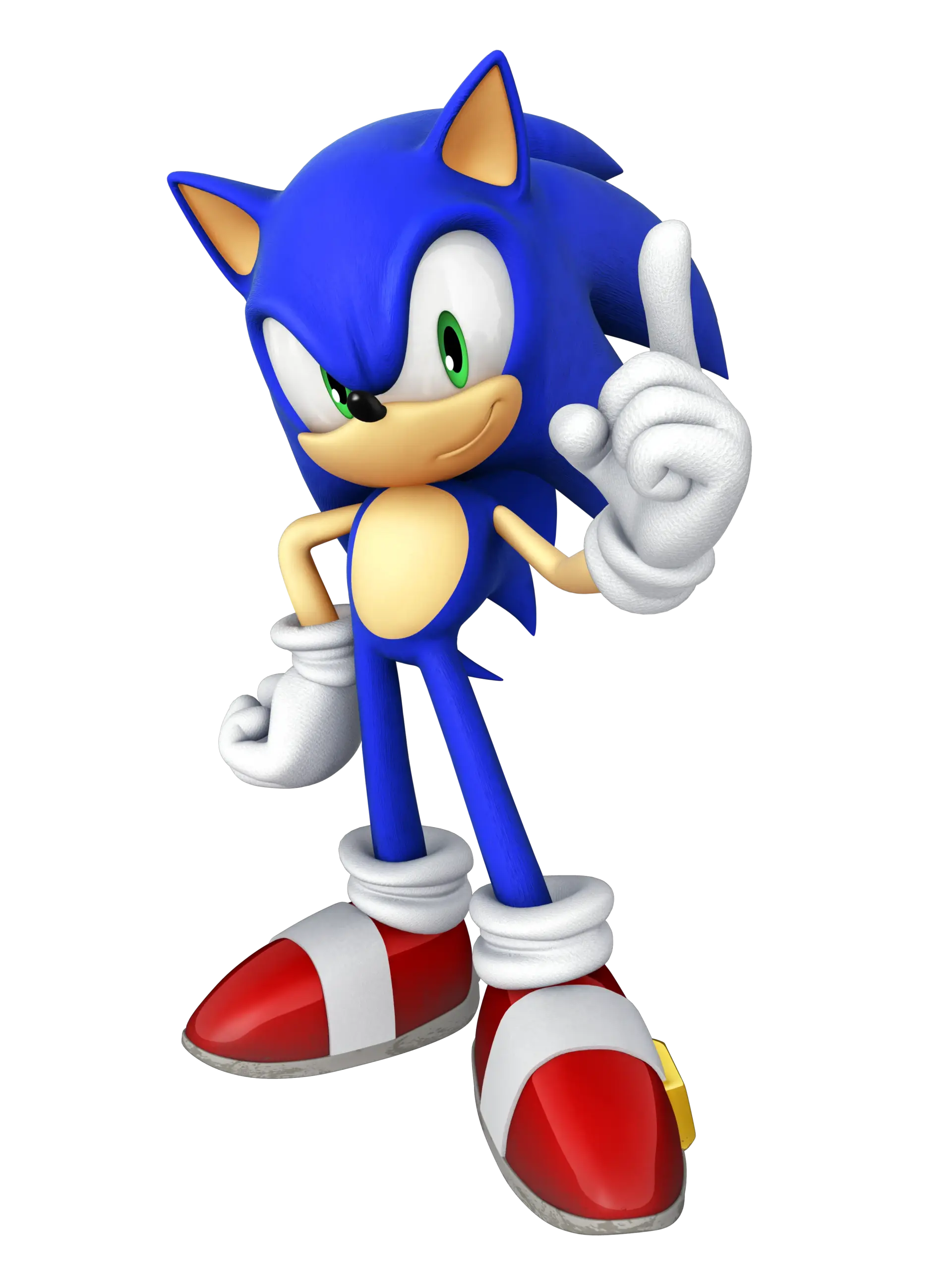
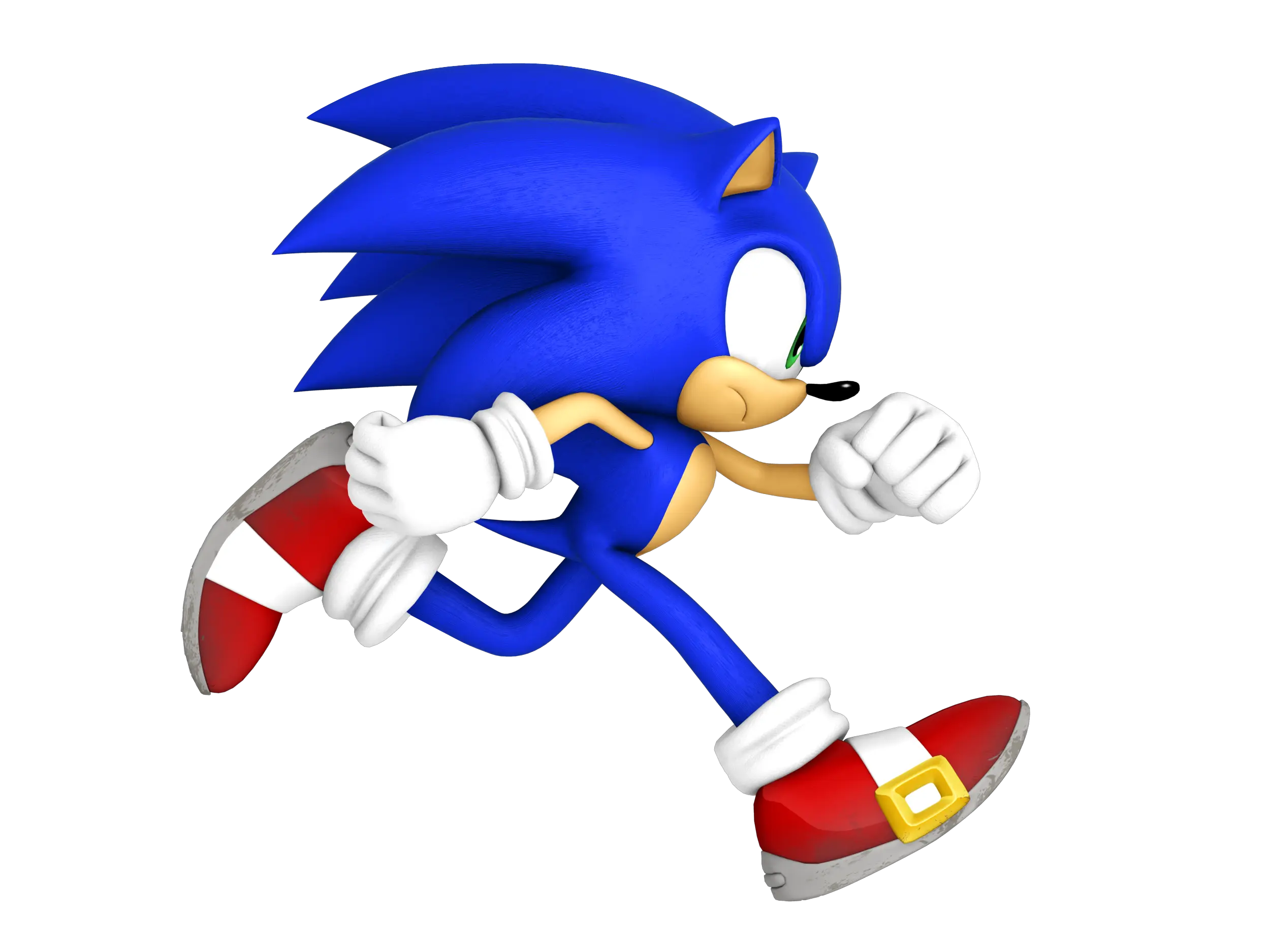
Sonic the HedgehogPlayable
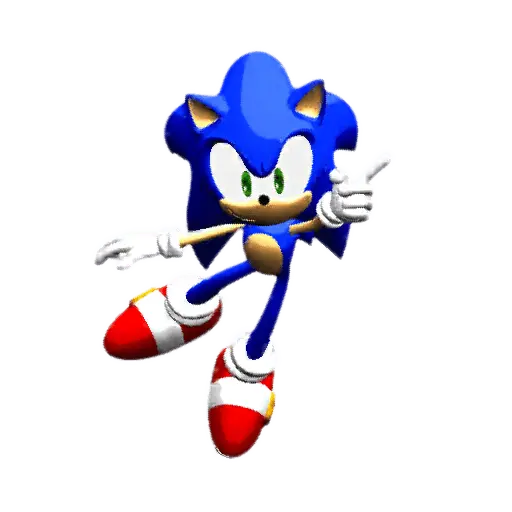
The blue hedgehog himself, in his modern green-eyed design rather than the 1991 look. Producer Takashi Iizuka explained that Sonic 4 was a new game, not a remake, so it used today’s Sonic.
Fresh from the events of Sonic & Knuckles, he leaves his friends behind to explore, and runs straight into Eggman’s upgraded army.
Spin Dash and Spin Attack
Homing attack in mid-air, borrowed from the 3D games
Speed Shoes, shields and invincibility
No voice: just jumps and rings
Super SonicBonus form
The golden form Sonic takes with the seven Chaos Emeralds, first seen in Sonic the Hedgehog 2 (1992).
Unlocked once all seven Emeralds are collected; available in normal acts but not in boss fights.
Invincible and much faster
Drains one ring per second
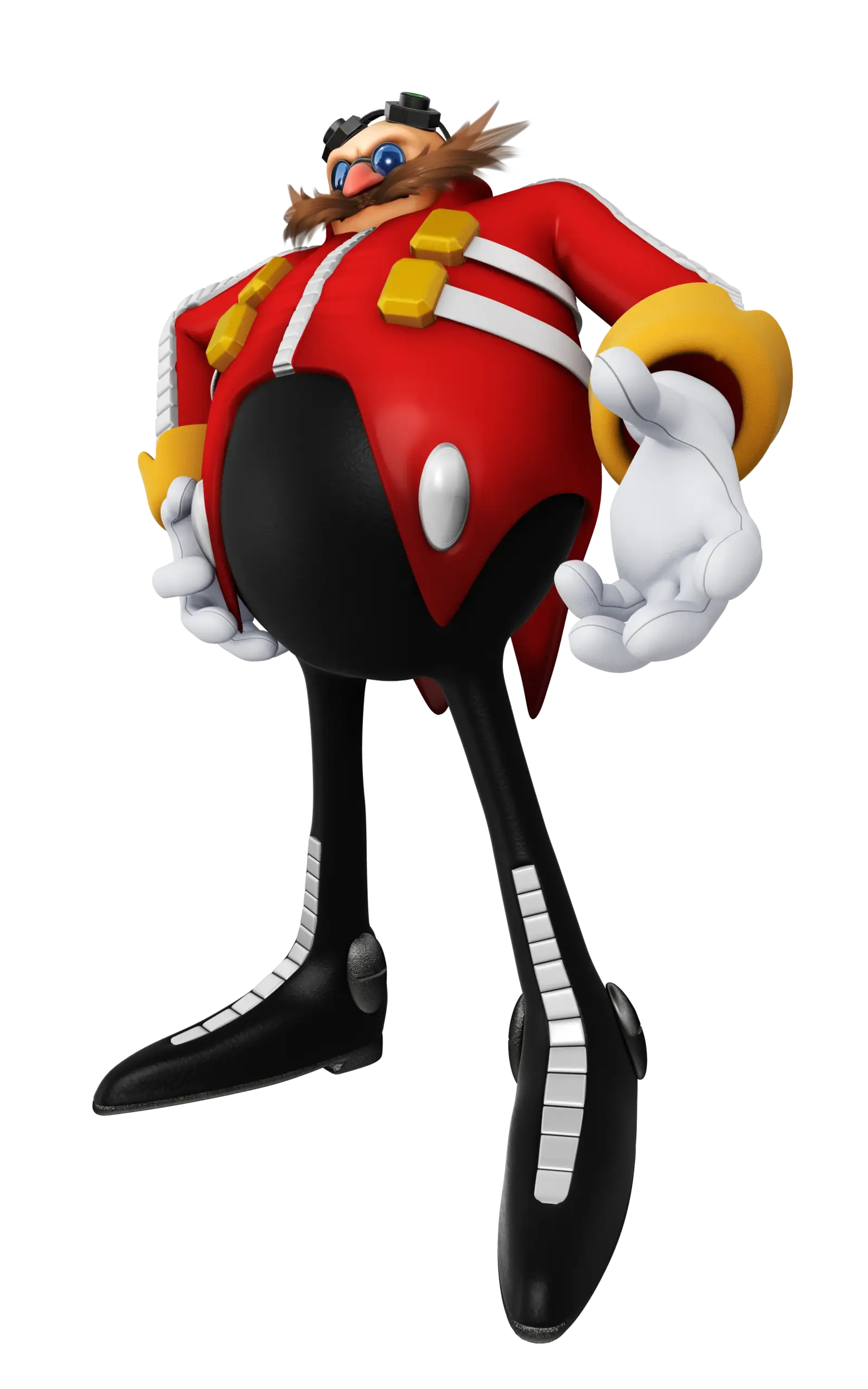
Dr. EggmanVillain
Sonic’s arch-enemy, the round, moustached scientist who has been building robot armies since 1991.
Survived the Death Egg’s fall and comes back with improved versions of his old Badniks and boss machines. Fights Sonic at the end of every zone and again in the E.G.G. Station.
Every boss takes eight hits; the E.G.G. Station rematches are harder versions of the four zone bosses, followed by the Death Egg Robot.
The Egg MobileEggman’s ride
The doctor’s hovering one-man craft, a fixture of the Mega Drive boss fights.
Bolts onto each of the boss machines in turn: a wrecking ball in Splash Hill, a claw in Casino Street and more.
Hit Eggman in the cockpit, and avoid the gadgets underneath.
Metal SonicCameo · Rival
Eggman’s robot copy of Sonic, created for Sonic CD (1993).
Appears only as a silhouette in the post-credits scene after a full Chaos Emerald run, setting up his return as the main rival of Episode II. Brand manager Ken Balough said fans had asked for years to see him back.
Not playable here; playable in Episode Metal for owners of both episodes.
Tails and KnucklesMentioned
Sonic’s best friend, the two-tailed fox, and Knuckles, guardian of Angel Island, both partners in the Mega Drive games.
Part ways with Sonic at the start of the story and do not appear in the game. Tails returned as Sonic’s partner in Episode II.
Not playable.
Badniks
Most of Eggman’s robots are returning favourites from the Mega Drive games, rebuilt in 3D. Sega introduced them during the 2010 promotion with short profiles, retold here in brief, with the game each one first appeared in.
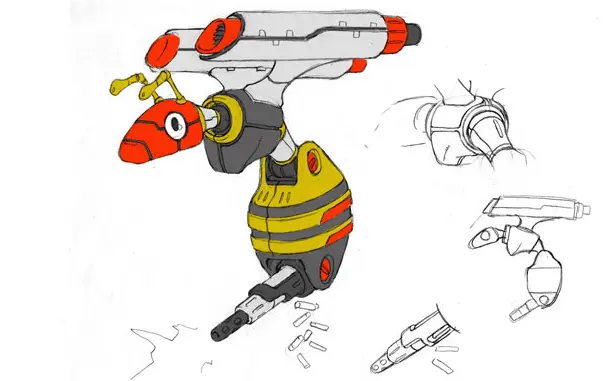
MotobugFrom Sonic 1The very first Badnik from 1991, now able to turn around and chase Sonic if it misses.
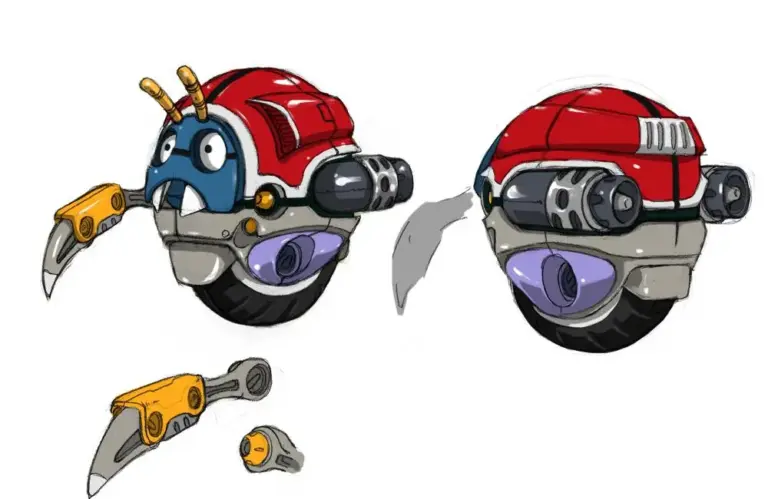
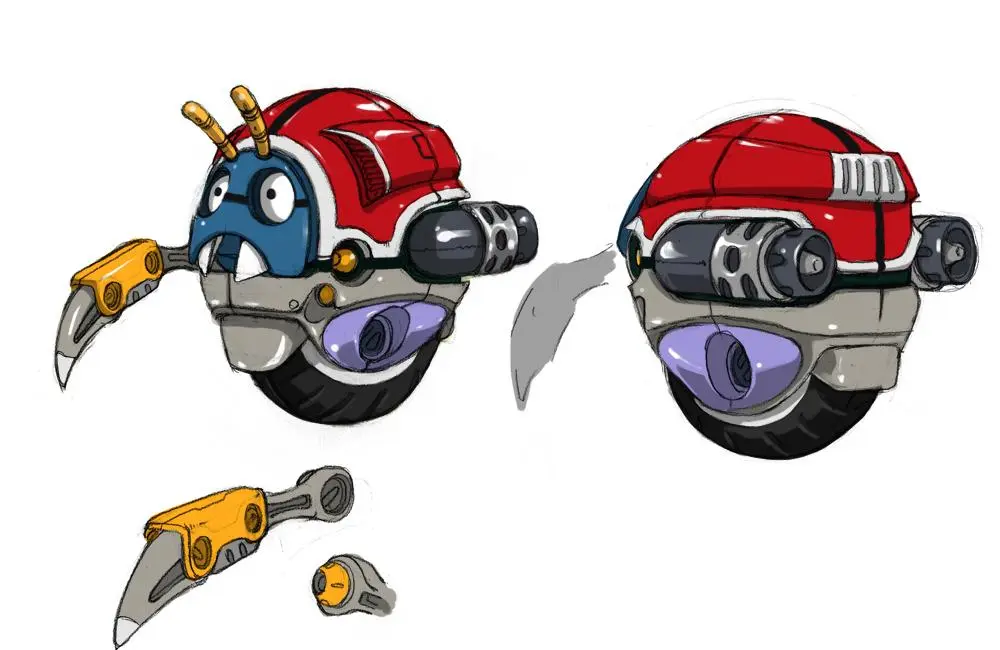
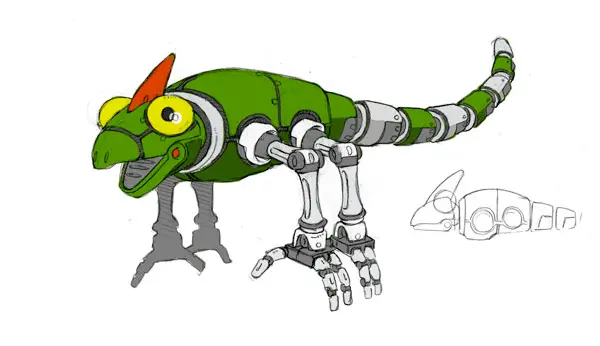
NewtronFrom Sonic 1A chameleon robot that hides with camouflage, fires shots or turns into a rocket.
ChopperFrom Sonic 1The piranha robot that jumps out from under bridges.
BuzzerFrom Sonic 2A wasp robot from Emerald Hill with a stinger cannon.
CrawlFrom Sonic 2A crab robot that blocks attacks with its bumper shield.
BatbotFrom Sonic 3A bat robot from Carnival Night that swoops at Sonic with its light bulb.
BubblesFrom Sonic the Hedgehog 3A balloon-fish robot; not all are spiked, but the red ones are.
JawsFrom Sonic 1An underwater patrol fish.
BurrobotFrom Sonic 1A mole robot that leaps out of the ground.
OrbinautFrom Sonic 1A core surrounded by spiked orbs; there is only a split second to hit it.
ShellcrackerFrom Sonic 2A Metropolis crab with a fast extending claw.
SlicerFrom Sonic 2The praying mantis that throws its blade arms, the Badnik everyone loves to hate.
AsteronFrom Sonic 2A starfish robot that explodes into spikes.
The people who made it
Key credits from Wikipedia’s cited sources and Sonic Retro.
Toshiyuki NagaharaDirectorSonic Team’s director on the project, who disliked Splash Hill’s theme so much that he tried to get it replaced.
Takashi IizukaProducerHead of the project and, with Senoue, the only team member who had worked on the Mega Drive games.
Jun SenoueComposer and soundWrote every track and sound effect, aiming for the style of the first two games.
DimpsDeveloperThe studio behind Sonic Advance and Sonic Rush, which led development with Sonic Team assisting.
Ken BaloughBrand manager, Sega of AmericaThe public face of Project Needlemouse, who explained it as an answer to fans asking for 2D Sonic.
Yuji UekawaArtistCredited among the game’s artists; he also sketched the Episode II logo.
How it was made
Our original page had no history section, so this one is new, built from Wikipedia’s cited development history and Sonic Retro’s development page.
Project Needlemouse
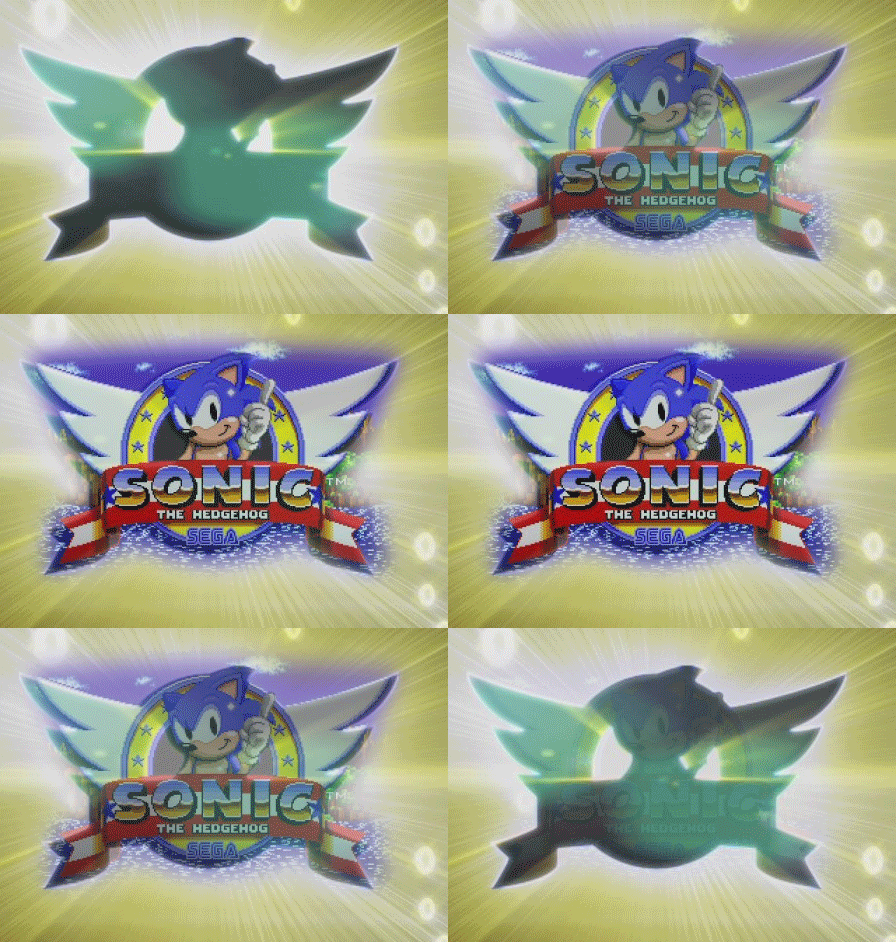
The teaser emblem echoed Sonic 1’s title screen.Image via Sonic Retro
Takashi Iizuka has said the idea was born in January 2009, with production starting that May and running for about a year and a half. Sega went public in September 2009 under a codename, Project Needlemouse, a nod to a common mistranslation of Sonic’s early Japanese name. The teaser showed Sonic grabbing rings to old Mega Drive sound effects and ended on a silhouetted emblem shaped like the one on the 1991 title screen.
Brand manager Ken Balough framed it as a response to fans of the old games, who had long wanted Sonic back in 2D, and acknowledged that Sega now had two audiences to please: those who grew up with the Mega Drive and younger players raised on games like Sonic Unleashed.
Born on a phone
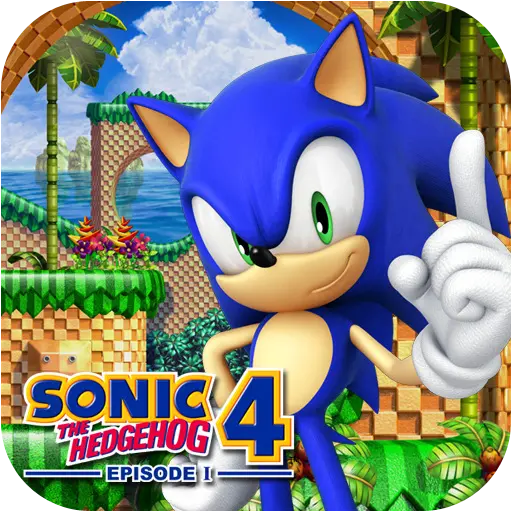
The App Store icon.Image via Sonic Retro
Balough maintained the game was always Sonic 4, but historian Kurt Kalata reported that it began life as a smartphone-only spin-off called Sonic the Portable, designed around the phone’s tilt controls. Sega of America pushed for it to become a numbered, multi-platform sequel, and one level still has signs reading Sonic the Portable. Two acts built for the gyroscope survived only in the mobile release.
Back to basics
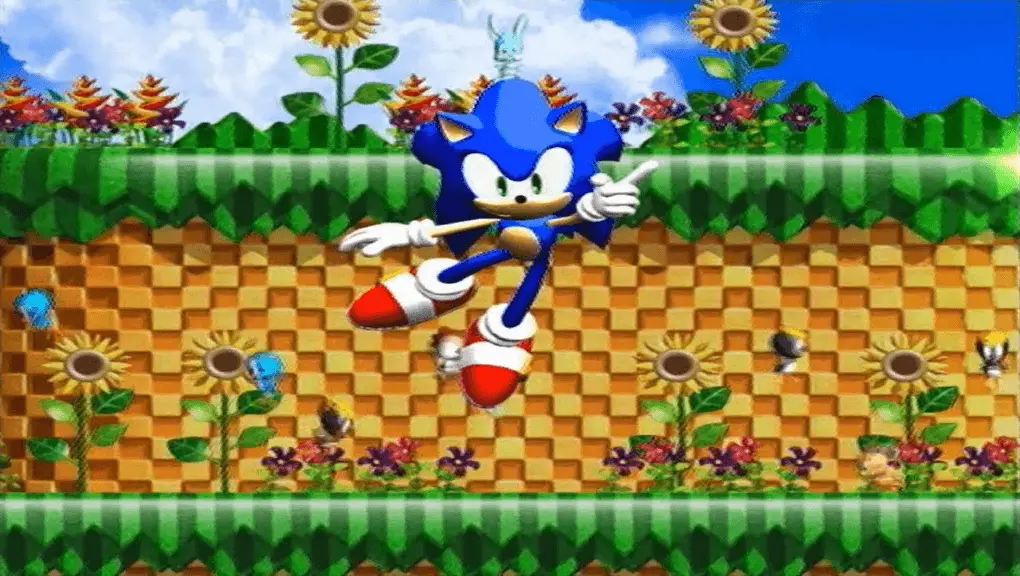
Sunflower concept art.
The rulebook was short. No voice acting; one button that both jumps and attacks; stages that reward platforming and momentum rather than holding right; and settings that would ring a bell with anyone who grew up on the Mega Drive. Iizuka’s summary of the goal was the classic style rebuilt with modern technology, and two concessions to the present made it through. The homing attack stayed, because he felt it added a thrill and opened up paths through the air, and Sonic kept his modern look: this was a sequel, Iizuka stressed, not a remake.
The Character Countdown
The Shellcracker art unlocked by fans.
In January 2010 Sega ran a week-long Character Countdown on its blog. It posted a list of possible playable characters, from Shadow and Amy to the obscure Froggy, Chip and Shade, and crossed names off each day as fans answered Mega Drive trivia on the blog, Facebook and Twitter. By the end of the week only Sonic was left. Fans also earned bonus points that unlocked concept art of a Shellcracker, and a second challenge asked them to draw their own Badniks: Sega asked for 100 entries and received more than 300 in two days.
Hedgehog Day followed on 2 February 2010, chosen because it was Sonic 3’s original release date, with sunflower and palm tree concept art and a snippet of music. On 4 February GameSpot unveiled the real name, Sonic the Hedgehog 4: Episode I, with a trailer showing the first few seconds of play.
The leak and the delay
The leaked level select.Image via Sonic Retro
The same month, a build uploaded to PartnerNet, the Xbox 360’s testing service for developers, leaked, followed by music, footage and eventually a full playthrough. PartnerNet was shut down for a night, and Sonic Retro suspended Sonic 4 discussion for several days. Fans did not like what they saw: floaty physics, which many blamed on the Sonic Rush engine, stiff animation and gimmick-heavy acts.
Sega had promised a July release. On 20 May 2010 it announced a delay to later in the year to act on internal and fan feedback, promising more momentum-based levels and physics closer to the Mega Drive games. The tilt-controlled acts were moved to the iPhone version and replaced on consoles. Sega also ran a birthday video contest that summer for Sonic’s 19th anniversary, though public voting was suspended after people found a way to vote repeatedly.
Music
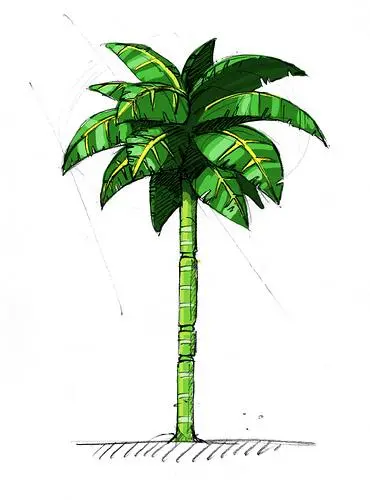
Palm tree concept art.
Splash Hill’s theme was Jun Senoue’s personal favourite, and it very nearly did not survive: director Toshiyuki Nagahara disliked it enough to push for a replacement. Senoue, one of only two Mega Drive veterans on the team, had a far bigger job than in the 1990s, when he contributed a handful of tracks; here the whole score and every sound effect were his. He set himself Mega Drive rules, with sparse arrangements and tempos in step with the 1991 and 1992 games, and even went looking for old hardware to drive a Mega Drive-style sound bank, a search that came to nothing. One tune was recycled: Eggman’s boss music started life as a piece left unused in Sonic 3D Blast. Not every fan was won over by the synthesised instruments.
Release
The iPhone and iPod touch version came first, on 7 October 2010, followed by WiiWare on 11 October in North America, PlayStation Network on 12 October and Xbox Live Arcade on 13 October. To fit WiiWare’s size limit, the Wii version plays sequenced music rather than recorded audio and runs at standard definition; the PlayStation 3 and Xbox 360 releases let you play your own music over the game. Ports followed for Windows Phone 7 in June 2011, Steam on 19 January 2012, Android on 25 January 2012 and the BlackBerry PlayBook in July 2012, and an iPad edition arrived in December 2011. A 2016 iOS update added widescreen support and sharper models.
Firsts: what this game introduced
Sonic 4 was built to feel like 1994, but it added a few things the Mega Drive games never had.
1Pick your zoneAfter Splash Hill’s first act, a world map lets you play the zones in any order, unlike the fixed running order of the Mega Drive games.
2The homing attack in 2DThe lock-on attack from the 3D games, with chains of homing attacks opening alternative routes through the air.
3Special Stages you steerThe rotating maze of Sonic 1 returns, but now you tilt it yourself, with ring gates and time bonuses.
4Online leaderboardsTimes and scores for every act can be uploaded and compared online.
5An episodic SonicSega planned Sonic 4 as a larger story told in downloadable episodes; Episode I was the first, and Episode II followed in 2012.
6New zonesSplash Hill, Casino Street, Lost Labyrinth, Mad Gear and the E.G.G. Station all made their debuts here.
Cheats & secrets
Our original page had no secrets section, so this one is new. Episode I has no button-code cheats; its extras are earned.
Super Sonic
Clear acts with at least 50 rings to enter the seven Special Stages and win the Chaos Emeralds. With all seven, Sonic can turn Super in any normal act, burning one ring a second. Boss fights are off limits.
The Metal Sonic scene
Finish the game with all seven Chaos Emeralds to see the post-credits silhouette of Metal Sonic.
Replay the Special Stages
Completed Special Stages can be replayed from the level select, with a 1-Up waiting where the Emerald used to be.
Episode Metal
Own Episode I and Episode II on the same system and Episode II unlocks Episode Metal, in which Metal Sonic runs through reworked versions of the first act of each Episode I zone.
Achievements and Trophies
Twelve in all, including Speed’s My Game (clear Splash Hill Act 1 in under a minute), Golden Flash (clear every act as Super Sonic), Immortal (stock up 99 lives) and Untouchable (clear the E.G.G. Station without taking a hit).
Your own soundtrack
On PlayStation 3 and Xbox 360 you can swap Senoue’s music for tracks of your own.
Glitches, exploits and oddities
Episode I’s oddities are mostly about how Sonic moves, and they became the most debated part of the game.
Floaty physics
A loop in the iPhone version.
Sonic does not build and keep momentum the way he did on the Mega Drive, and he feels floaty in the air; critics broadly agreed the physics fell short of the originals. The physics were tuned after the leaked build drew complaints, but according to Sonic Retro anything more drastic would have meant redesigning the levels, and there was no time.
Standing on walls
Sonic can end up standing upright at strange angles on slopes and even sideways on walls. Fans uploaded hundreds of videos showing this kind of oddity.
Uncurling in mid-air
Roll off a ramp or a ledge and Sonic uncurls, losing his spin attack and leaving himself open to Badniks. Episode II removed this.
Music that does not loop
In the iOS and Android versions, the music does not loop cleanly.
Different on every machine
The Xbox 360 version has stronger bloom lighting and looks shinier than the PlayStation 3 version, the iPad version changes some textures to look less glossy, and the Wii version runs at 640 by 480 with sequenced music.
Videos & media
Sega’s trailer for Episode I and a complete playthrough.
The official trailer, from Sega’s YouTube channel.
A complete playthrough from FCPlaythroughs.
Trivia & facts
The Needlemouse silhouette.The working title Project Needlemouse came from a common mistranslation of Sonic’s early name, and “Sonic’s new friend Mr. Needlemouse” was one of the joke entries in the Character Countdown.
The Character Countdown list also included Froggy, Big the Cat’s frog, and Chip from Sonic Unleashed; both were crossed off.
Sega held Hedgehog Day on 2 February 2010 because that was Sonic 3’s original release date. The prize for post number 333 on the blog was a copy of Sonic 3 signed by Takashi Iizuka.
The Casino Street boss.Screenshot via Sonic RetroEggman’s boss theme was reworked from a track written for, but never used in, Sonic 3D Blast.
One level still contains signs that say Sonic the Portable, the game’s reported original name.
The Steam store page called it the sequel fans had waited sixteen years for: Sonic & Knuckles came out in 1994.
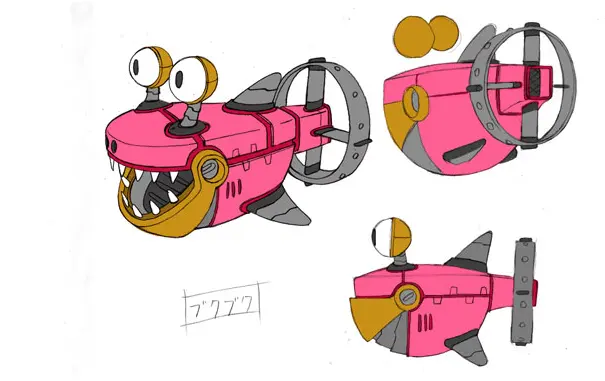
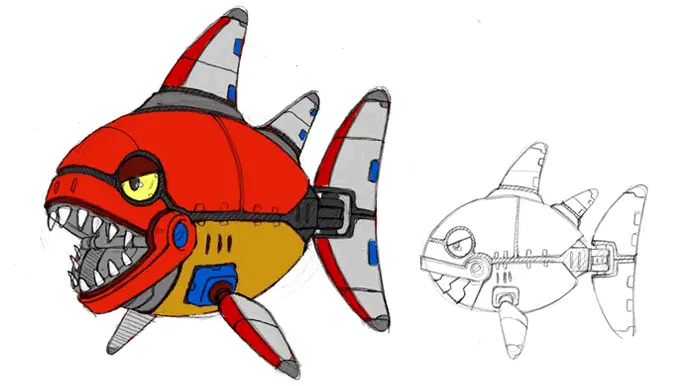
Motobug concept art.Sega’s Badnik profiles joked that, thanks to budget cuts, not every Bubbles robot has spikes.
In 2011 Sega re-released Sonic CD and billed it as a prequel to Sonic 4.
Media & artwork
Box art, artwork, concept art and screenshots from Sonic Scene’s own galleries and Sonic Retro. Select any image to view it larger.
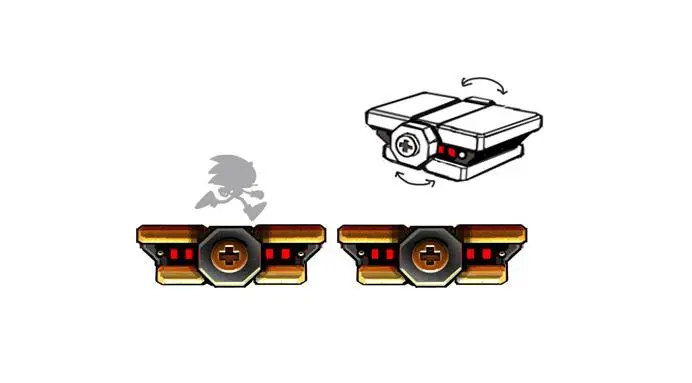
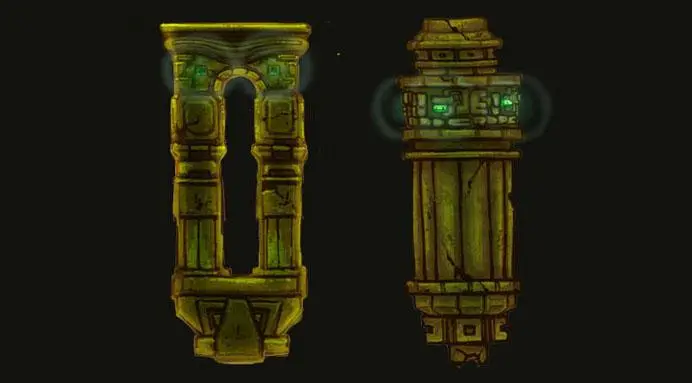
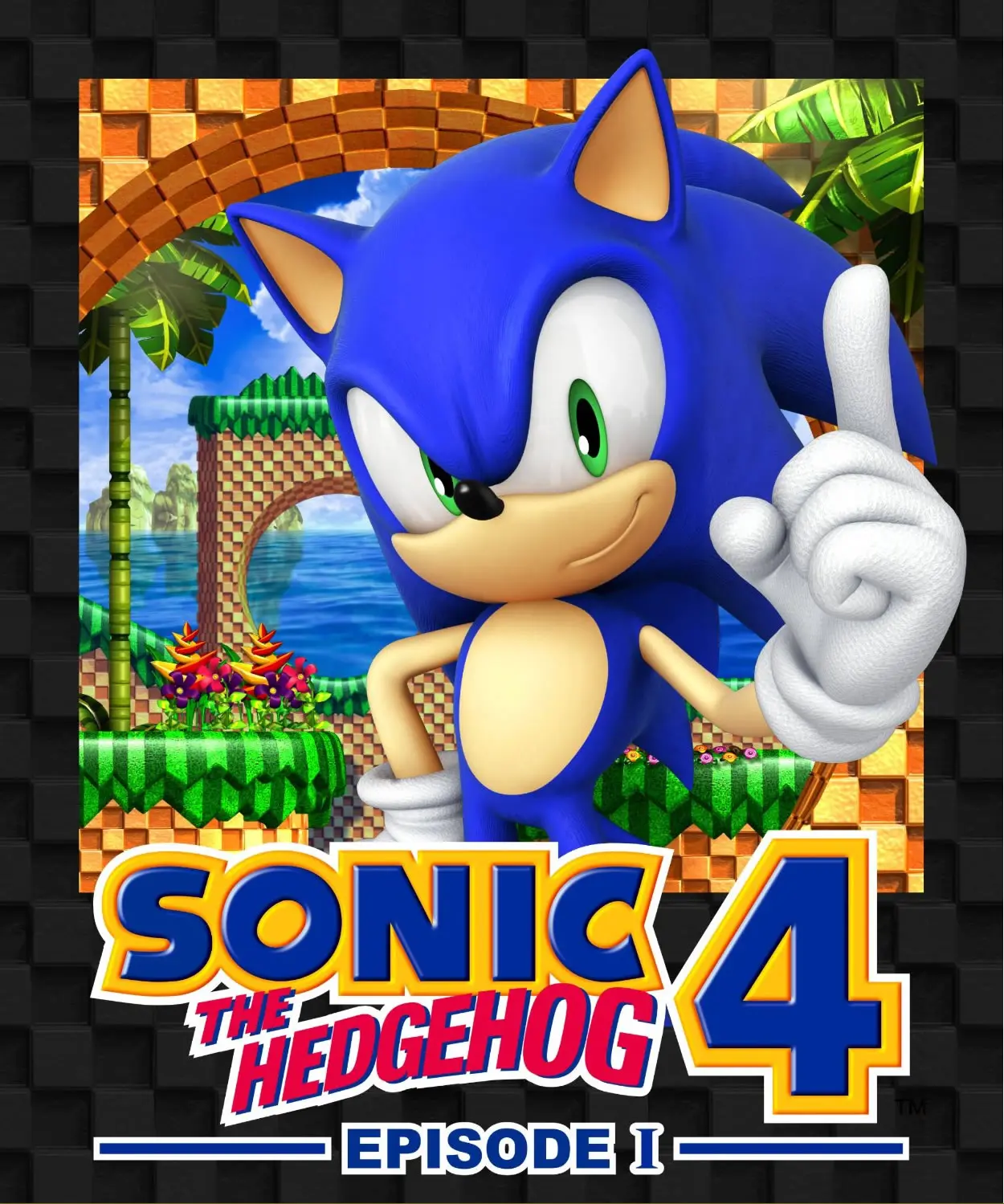
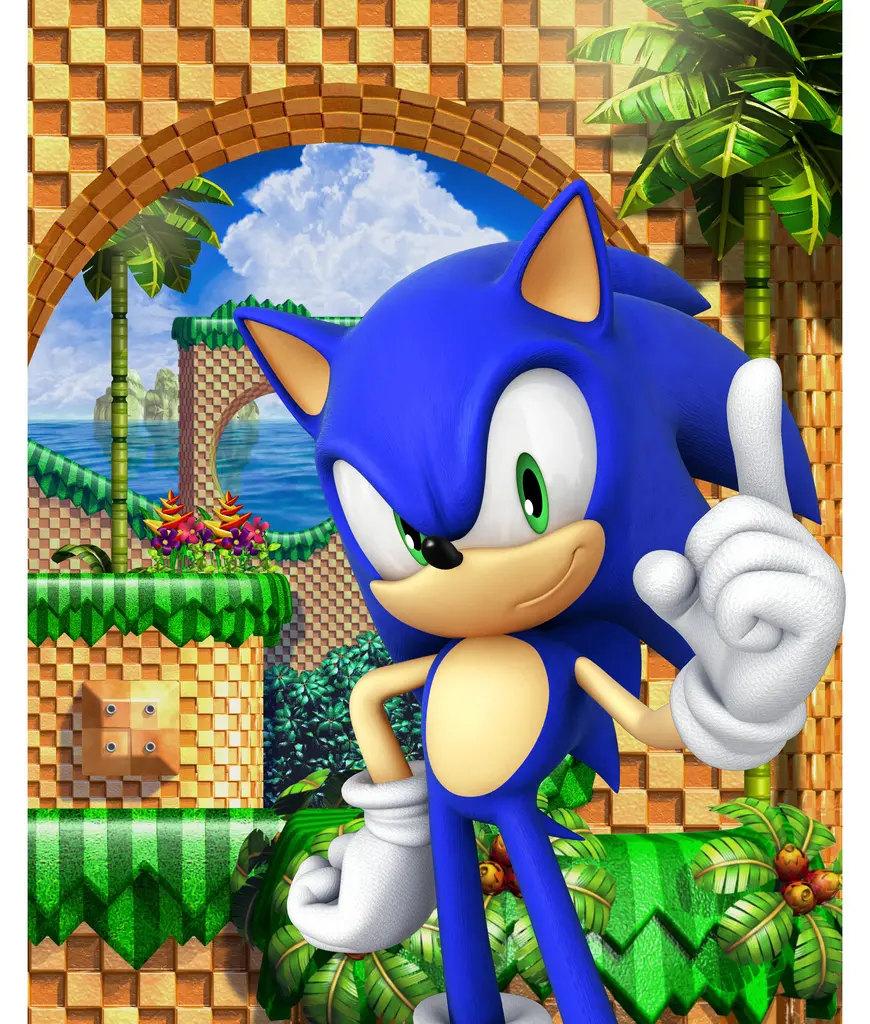
Box artwork.Title logo.Official wallpaper.Official wallpaper.Official wallpaper.Official wallpaper.Official wallpaper.Japanese wallpaper.Sonic falling.Ending artwork.Prototype title screen.Splash Hill Zone.Splash Hill Zone.A Splash Hill corkscrew.Splash Hill’s sunflowers.Splash Hill at sunset.A Splash Hill loop.Casino Street Zone.Casino Street on iPhone.Lost Labyrinth’s boulders.Lost Labyrinth by torchlight.Lost Labyrinth Zone.Mad Gear Zone.Mad Gear Zone.A homing attack in Mad Gear.The Death Egg Robot.A Special Stage.The Splash Hill boss.The Lost Labyrinth boss.The Mad Gear boss.Early Splash Hill footage.Bubbles concept art.Buzzer concept art.Jaws concept art.Chopper concept art.Rotating platform concept art.Bush concept art.Lost Labyrinth concept art.Xbox Live avatar T-shirt.Xbox Live avatar costume.Sonic.
Episode I did what Sega needed: it sold, and it proved there was still an appetite for 2D Sonic. But the arguments over its physics shaped what followed, from the rebuilt engine of Episode II to Sonic Mania, led by Christian Whitehead, the developer who was once offered Episode III.
Releases and milestones
Announced as Project NeedlemouseSeptember 2009 – Teaser with a silhouetted emblem.
Character Countdown11–15 January 2010 – Only Sonic survives.
Title revealed4 February 2010 – First gameplay footage.
Delayed20 May 2010 – From July to later in 2010.
iOS7 October 2010 – The first release.
WiiWare, PlayStation Network, Xbox Live Arcade11–15 October 2010 – 1,500 Wii Points; 1,200 Microsoft Points.
Windows Phone 7June 2011 –
iPad HD version21 December 2011 – Later merged into the universal iPhone app.
Steam and Android19 and 25 January 2012 –
Episode IIMay 2012 – Owners of both unlock Episode Metal.
BlackBerry PlayBook20 July 2012 –
OuyaJuly 2013 – With Episode II.
iOS update and Xbox One backward compatibility2016 – Widescreen and Retina support on iOS.
Episode II and the missing Episode III
Sega had planned Sonic 4 as one larger story told in parts. Episode II arrived in May 2012 with Tails, Metal Sonic, a new engine and reworked physics, but Episode III never followed: in March 2012 Takashi Iizuka said there were no plans beyond Episode II. In 2015 Christian Whitehead disclosed that, before Sega shut its Australian studio, he had been invited to develop the third episode there. An unused Episode II ending, which surfaced in April 2025, hints that Knuckles would have featured.
Sonic 4 and Sonic Mania
Whitehead went on to lead Sonic Mania in 2017, another sequel to the Mega Drive games, and the comparison has followed Sonic 4 ever since, with journalists generally preferring Mania. Episode I’s own legacy is the 2D revival it started: Sega kept returning to Mega Drive-style Sonic on modern machines after 2010.
Sales & reviews
Sales
Sega’s Mike Hayes said in a 2011 interview that Episode I had sold more than a million copies across PlayStation 3, Xbox 360, Wii and iOS. It topped the PlayStation Store download chart for October 2010.
1m+Copies sold by 2011 (Sega)
81Metacritic, Wii
74Metacritic, PlayStation 3
72Metacritic, Xbox 360
70Metacritic, iOS
Reception and review scores
Scores from Wikipedia’s cited review table, plus one magazine score from Sega Retro, converted to percentages. Metacritic rated the Wii version “generally favorable” and the others “mixed or average”. Letter grades (1UP B, GameRevolution B−) are not shown as bars.
NGamerUK · Wii (10/10)
100%
EurogamerUK (9/10)
90%
GamesRadar+UK (4.5/5)
90%
GamesMasterUK
88%
Official Nintendo MagazineUK · Wii
88%
NintendocuTurkey · Wii (Sega Retro)
85%
IGNUS (8/10)
80%
Nintendo LifeWii (8/10)
80%
Nintendo World ReportWii (8/10)
80%
GameTrailersUS (7.5/10)
75%
IGNUS · iOS (7.5/10)
75%
GameSpotUS (6.5/10)
65%
Digital SpyUK (3/5)
60%
Most reviewers were happy to have a new 2D Sonic. IGN’s Hilary Goldstein gave it an Editor’s Choice award and called it short but sweet, GamesRadar’s Justin Towell felt it earned the Sonic 4 name, Eurogamer’s Ellie Gibson praised its pacing, and GameTrailers saw it as a worthwhile buy for fans. 1UP’s Kat Bailey enjoyed the speed but found some bosses and puzzles poorly designed.
The physics were the sticking point: the consensus was that Sonic lacked the momentum of the Mega Drive games. Others felt the game was over too quickly and too easily, and Digital Spy’s Liam Martin concluded that it lived up to the hype, but only just.
Reader reviews
No reader reviews yet. Played it? Give it a score out of 10 and tell other fans what you think.
Every fact on this page was checked against the sources below. Sonic Retro and Sega Retro pages were read through Wayback Machine copies from 2025 that show the real article, because both live sites show a bot check. Review scores come from Wikipedia’s cited review table and Sega Retro’s magazine index. Our original 2010 article reproduced Sega’s product description; one line of it is quoted above and its story recap is retold in our own words.
To provide the best experiences, we use technologies like cookies to store and/or access device information. Consenting to these technologies will allow us to process data such as browsing behavior or unique IDs on this site. Not consenting or withdrawing consent, may adversely affect certain features and functions.
Functional
Always active
The technical storage or access is strictly necessary for the legitimate purpose of enabling the use of a specific service explicitly requested by the subscriber or user, or for the sole purpose of carrying out the transmission of a communication over an electronic communications network.
Preferences
The technical storage or access is necessary for the legitimate purpose of storing preferences that are not requested by the subscriber or user.
Statistics
The technical storage or access that is used exclusively for statistical purposes.The technical storage or access that is used exclusively for anonymous statistical purposes. Without a subpoena, voluntary compliance on the part of your Internet Service Provider, or additional records from a third party, information stored or retrieved for this purpose alone cannot usually be used to identify you.
Marketing
The technical storage or access is required to create user profiles to send advertising, or to track the user on a website or across several websites for similar marketing purposes.

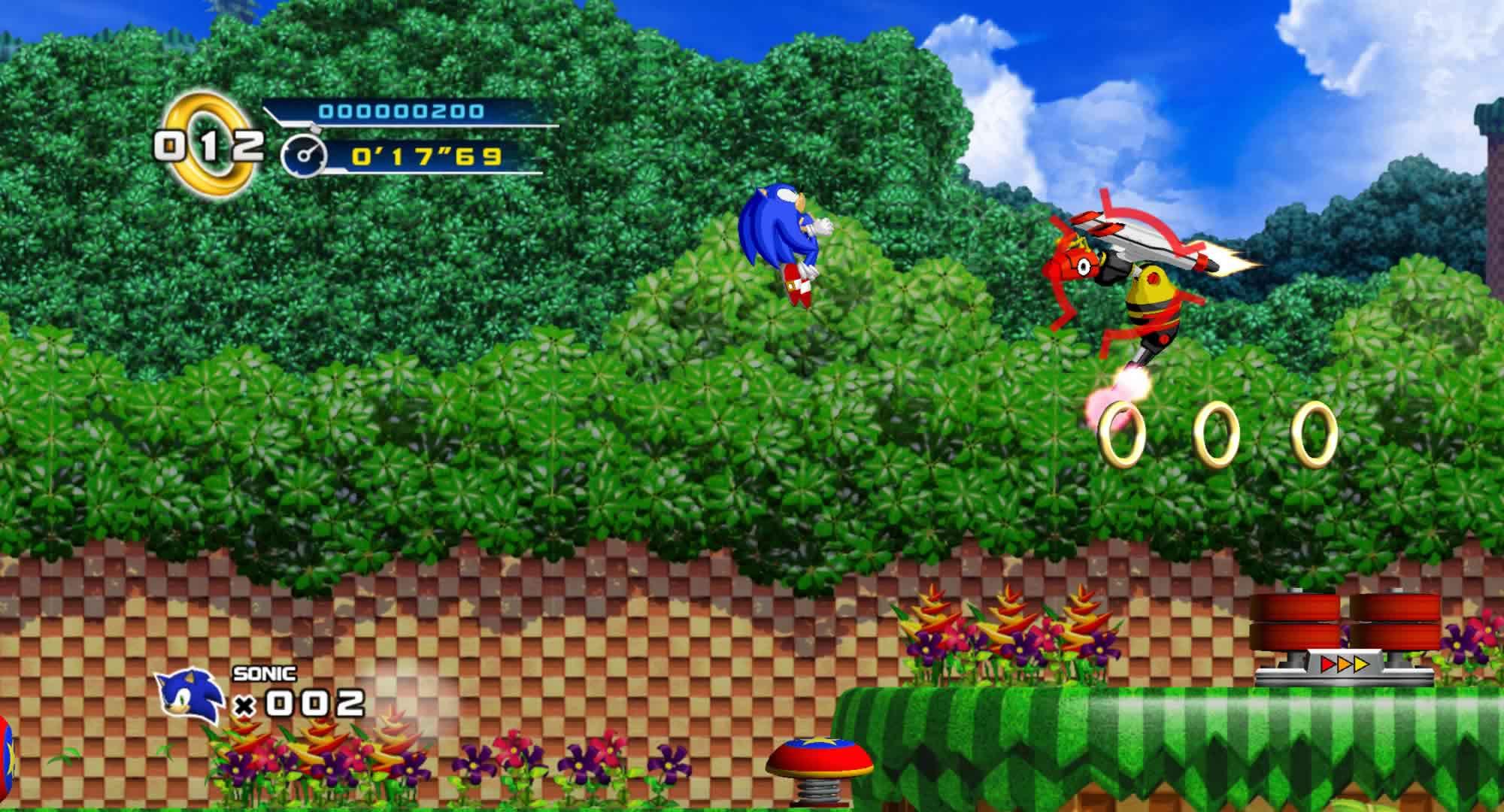
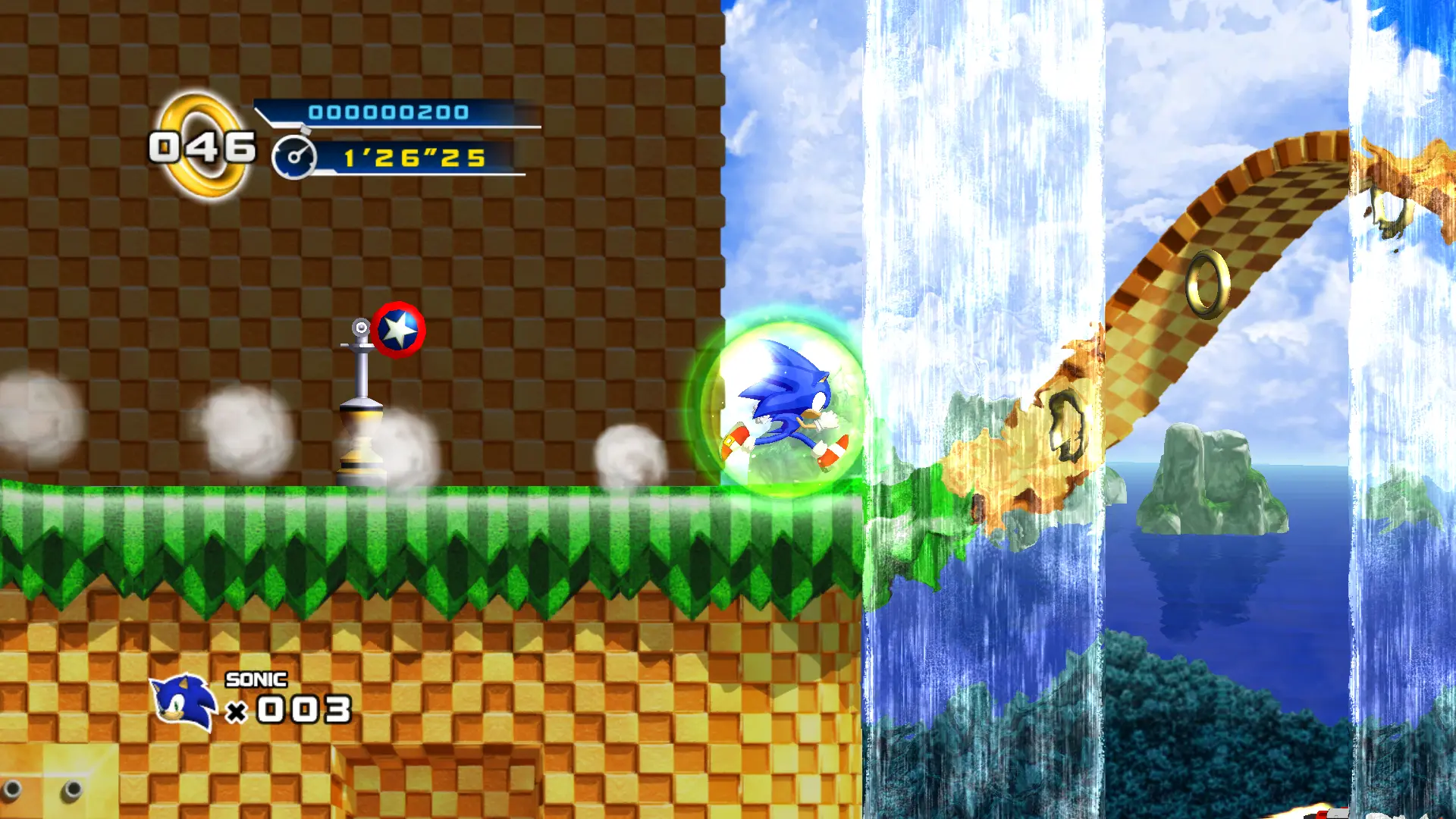
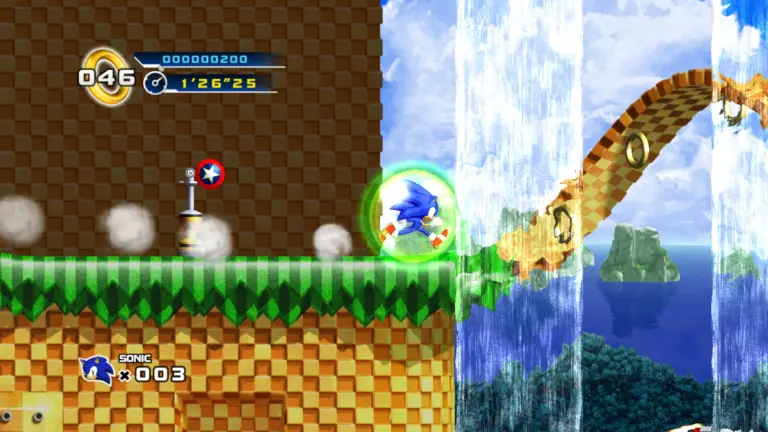 Splash Hill Zone3 acts + boss · inspired by Green Hill (Sonic 1)Palm trees, sunflowers, corkscrews and loops, with vines and zip lines to swing on. Boss: the Egg Mobile with a wrecking ball, after the first boss of Sonic 1.
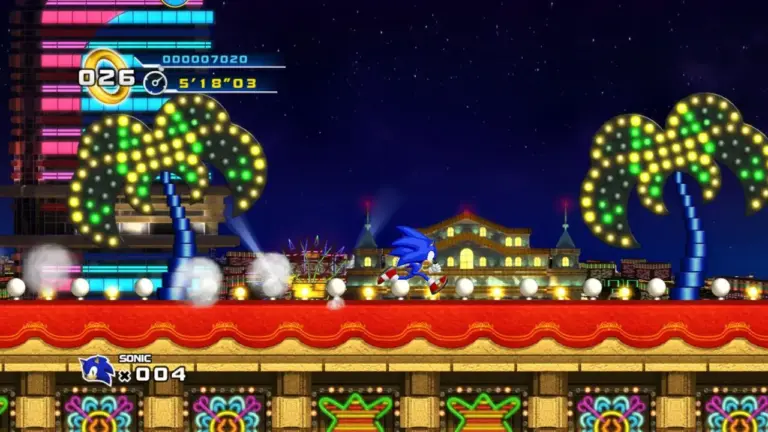 Casino Street Zone3 acts + boss · inspired by Casino Night (Sonic 2)Pinball flippers and bumpers, slot machines, cannons and giant playing cards. Boss: Eggman returns with a grabbing claw, a nod to Casino Night’s machine.
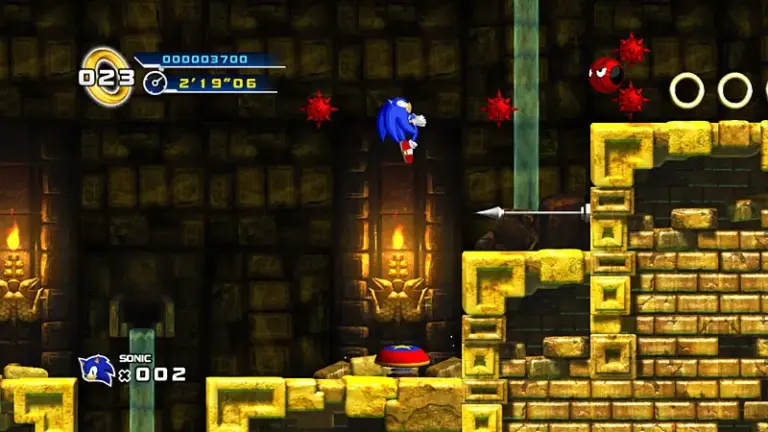 Lost Labyrinth Zone3 acts + boss · inspired by Labyrinth (Sonic 1)Boulders to balance on, torches to light up dark corridors, and minecarts. Boss: Eggman in the Egg Mobile.
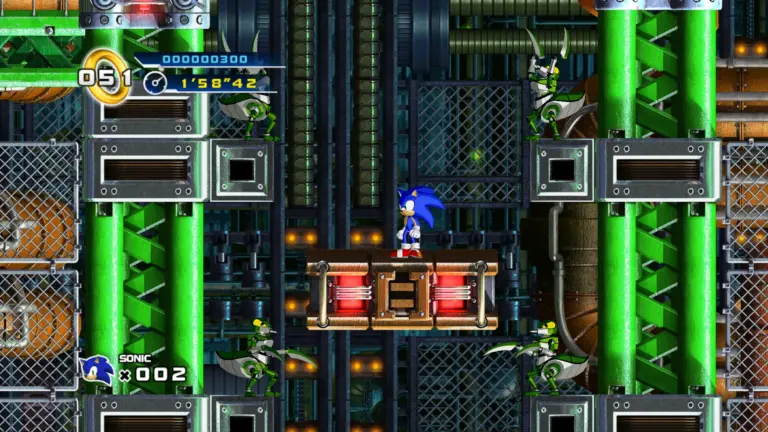 Mad Gear Zone3 acts + boss · inspired by Metropolis (Sonic 2)Eggman’s fortress of cogs and machinery, home to Metropolis veterans such as Slicer and Shellcracker. Boss: a flying Egg Mobile machine (Sonic Retro calls it Flying Eggman).
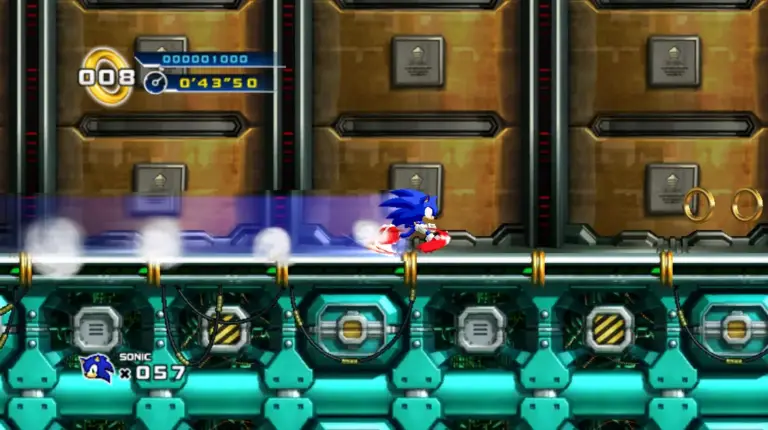 E.G.G. Station ZoneSingle act · inspired by Death Egg (Sonic 2)A boss rush in orbit: harder rematches with all four zone bosses, then the Death Egg Robot.
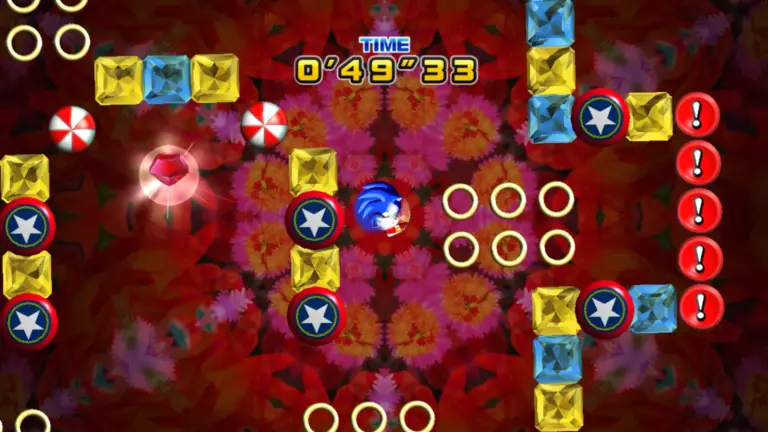 Special Stage7 stages · inspired by Sonic 1A rotating maze that you turn yourself. Rings unlock the gates, bonus orbs add time, and a Chaos Emerald waits at the end.
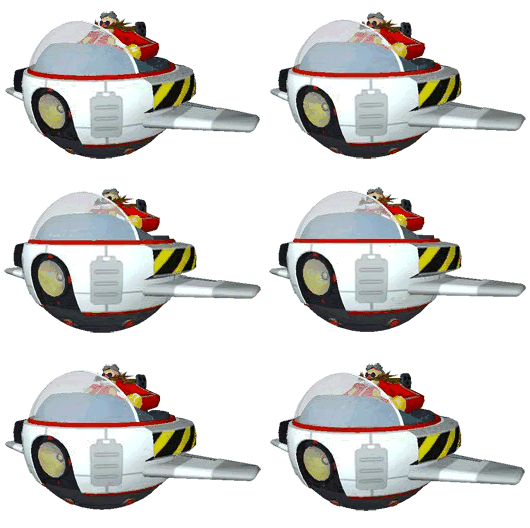 The Egg MobileEggman’s ride
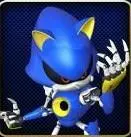 Metal SonicCameo · Rival
 Tails and KnucklesMentioned
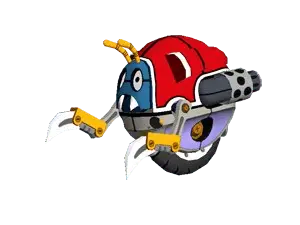 MotobugFrom Sonic 1The very first Badnik from 1991, now able to turn around and chase Sonic if it misses.
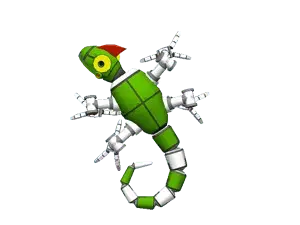 NewtronFrom Sonic 1A chameleon robot that hides with camouflage, fires shots or turns into a rocket.
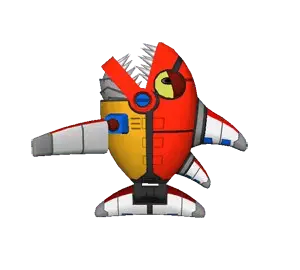 ChopperFrom Sonic 1The piranha robot that jumps out from under bridges.
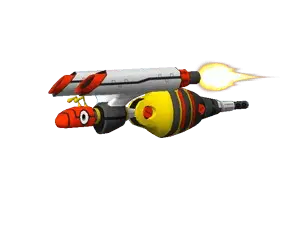 BuzzerFrom Sonic 2A wasp robot from Emerald Hill with a stinger cannon.
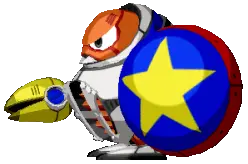 CrawlFrom Sonic 2A crab robot that blocks attacks with its bumper shield.
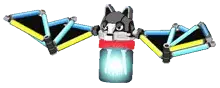 BatbotFrom Sonic 3A bat robot from Carnival Night that swoops at Sonic with its light bulb.
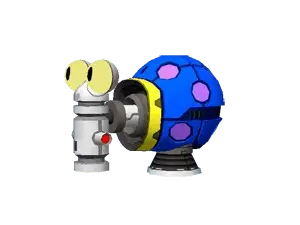 BubblesFrom Sonic the Hedgehog 3A balloon-fish robot; not all are spiked, but the red ones are.
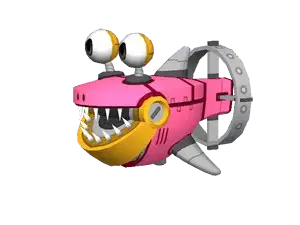 JawsFrom Sonic 1An underwater patrol fish.
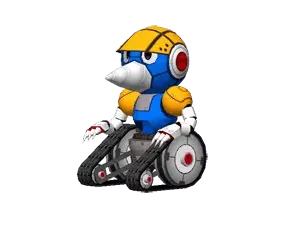 BurrobotFrom Sonic 1A mole robot that leaps out of the ground.
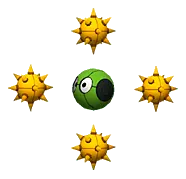 OrbinautFrom Sonic 1A core surrounded by spiked orbs; there is only a split second to hit it.
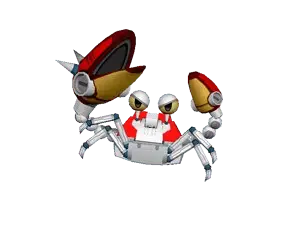 ShellcrackerFrom Sonic 2A Metropolis crab with a fast extending claw.
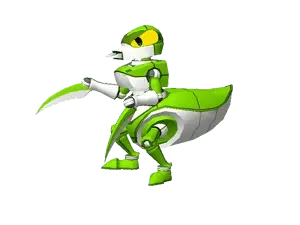 SlicerFrom Sonic 2The praying mantis that throws its blade arms, the Badnik everyone loves to hate.
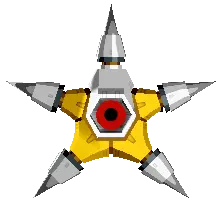 AsteronFrom Sonic 2A starfish robot that explodes into spikes.