Sega Pico1994Realtime Associates / NovotradeMusic / educational
Tails and the Music Maker (1994)
Create music with Miles “Tails” Prower. Before he ever starred in an action game, Tails had a Storyware book of his own: six pages of pinball, block-breaking and sing-along for Sega’s children’s computer.
Released4 Oct 1994 (US) · 5 Dec 1995 (Japan and Europe)
DeveloperRealtime Associates, produced by Novotrade
PublisherSega; Imagineer in Japan; Tec Toy in Brazil
PagesSix Storyware pages
StarringTails, with Sonic and Robotnik cameos
ForChildren aged about three to seven
Title
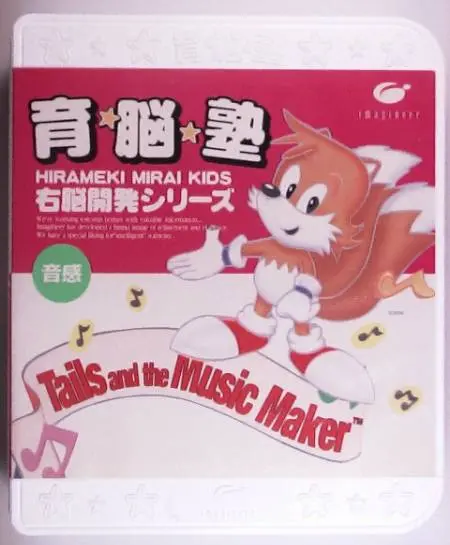
Tails and the Music Maker Japan: 右脳開発シリーズ7 Tails and the Music Maker (Unou Kaihatsu Series 7) France: Tails et le Faiseur de Musique; Germany: Tails und der Musikant; Spain: Tails y el Músico; Italy: Tails e il Music Maker; Brazil: Tails no Mundo da Música
Platform
Sega Pico
Developer
Realtime Associates, with Novotrade International as producer; our original page credited Novotrade
Publisher
Sega (Sega of America in the US); Imagineer in Japan, on its Hirameki Mirai Kids label; Tec Toy in Brazil
Producer and designer
Shannon Donnelly (Novotrade)
Producer for Sega
Cindy Claveran
Programming
Jim Schuler (lead), Rick Chipeco
Art
Ellen Drucker, Connie Goldman (backgrounds); Martine Gaudissart, Barbara Lipton, Laura Smith (animation)
Music and sound
David Scheffler (composer), Greg Turner (sound design)
Genre
Music / educational
Players
1
Released (North America)
4 October 1994 (MK-49023); Wikipedia gives September 1994
Released (Japan)
5 December 1995 (¥4,980, T-150050)
Released (Europe)
5 December 1995 (UK, France, Germany, Spain, Italy); also Brazil the same day
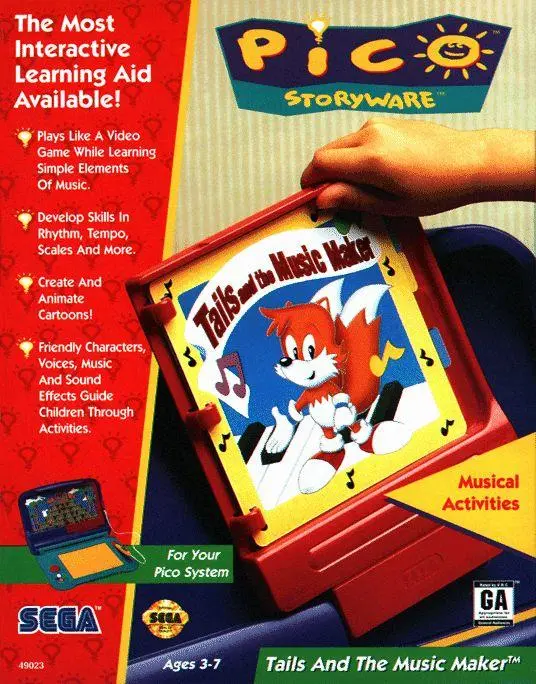
Tails and the Music Maker is the first game named after Tails alone (in Japan his name had already shared a title with Sonic’s, on 1993’s Sonic & Tails, known in the West as Sonic Chaos). It came out in North America in October 1994 for the Sega Pico, a chunky, laptop-shaped learning computer for small children that you played with a pen-shaped controller, the Magic Pen; and it used Sonic’s two-tailed sidekick to teach music: rhythm, tempo, scales and the sounds of different instruments.
Underneath the cartoon fun sits a music lesson. Bouncing Tails off drum-shaped bumpers, knocking notes out of a wall or copying a tune on a giant keyboard, a young player is also hearing the difference between fast and slow, high and low notes, scales, and the voices of different instruments.
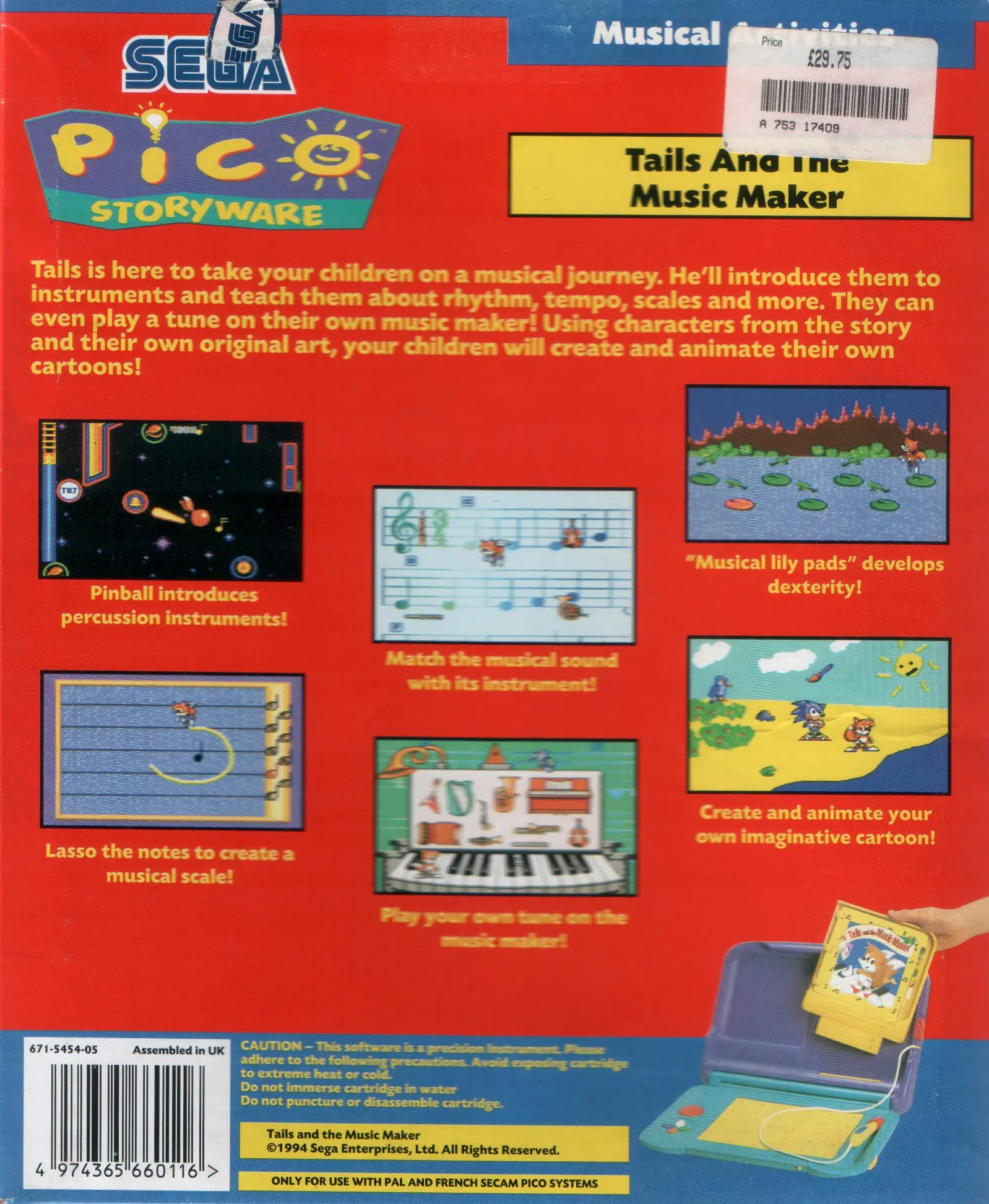
Each Pico cartridge came with a picture book, its Storyware, and turning a page changes the scene on the television. Here that means six pages: a Green Hill Zone singalong, a pinball table made of drums, a wall of notes to smash, a giant keyboard, and a drawing studio where Sonic drops by. It was built in America by Realtime Associates, reached Japan and Europe at the end of 1995, and remains one of the most unusual entries in Tails’ career.
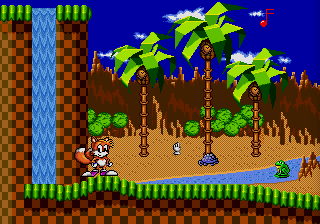
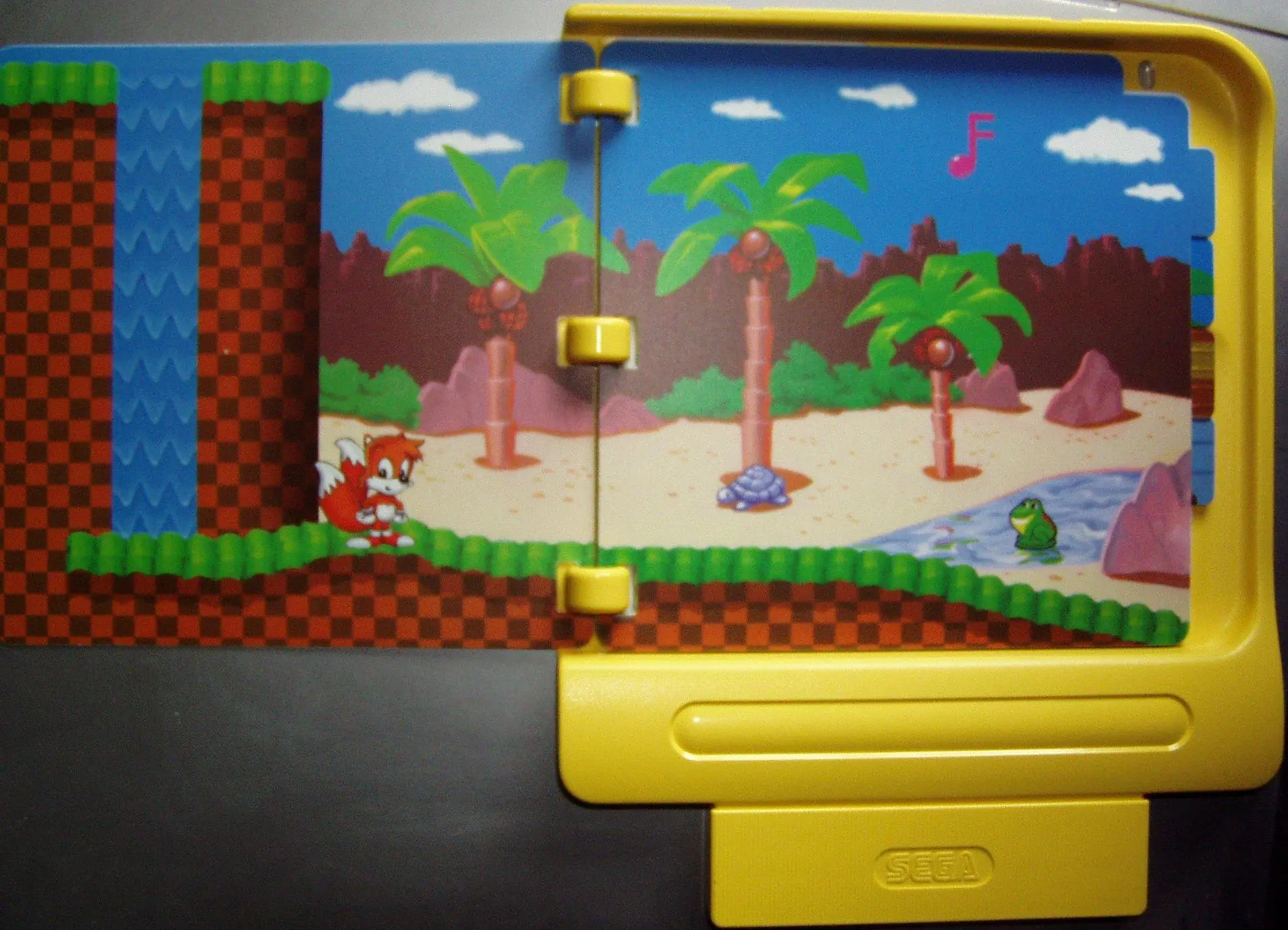
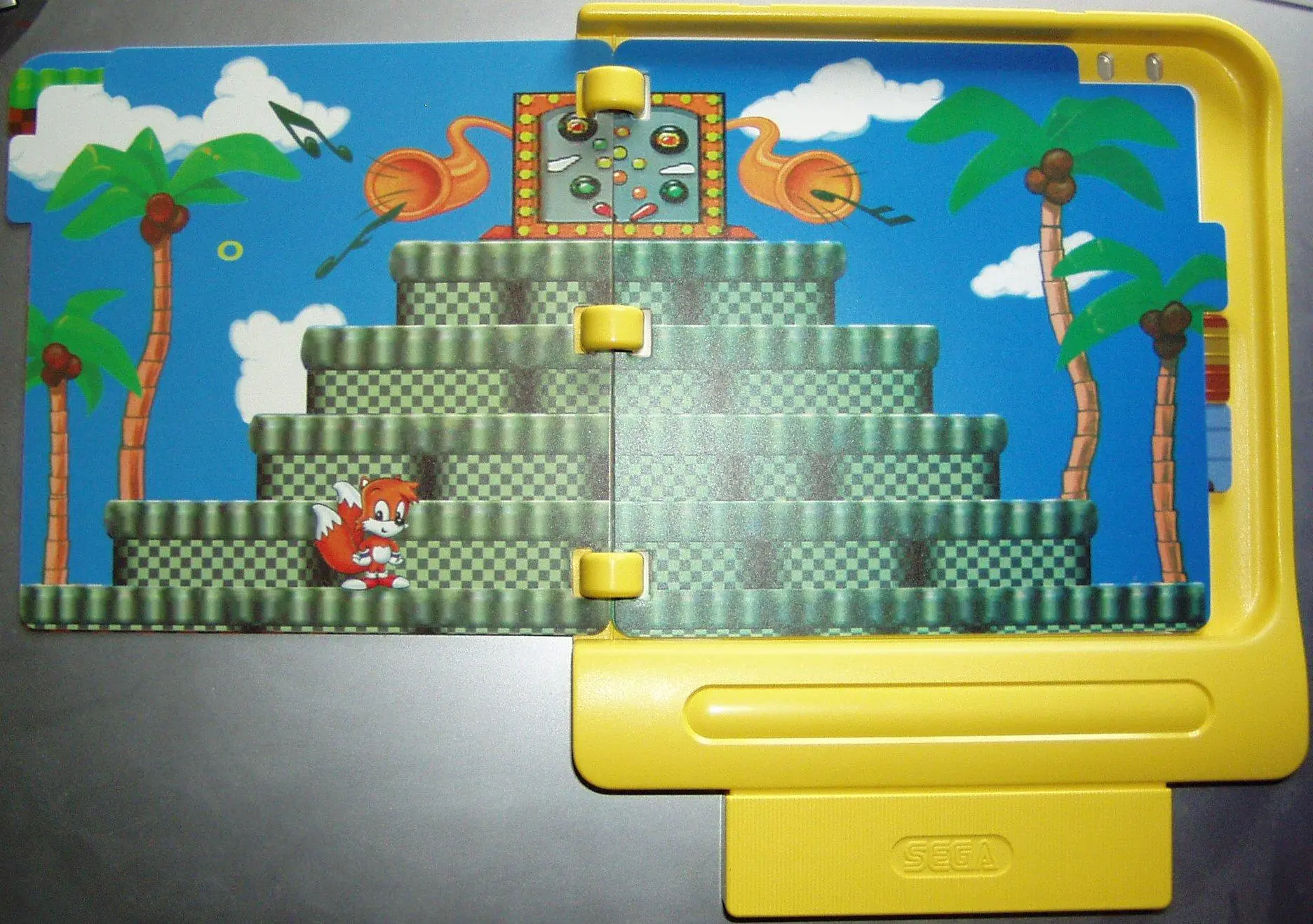
Page 2: Green Hill, Pico style.Page 3: Percussion Pinball.Page 5: the giant keyboard.
Create music with Miles “Tails” Prower.
That was the one-line pitch on Sonic Scene’s original page, and it is the game in a nutshell: Tails as a friendly music teacher, with Sega’s own characters as the hook for children too young for Sonic’s action games.
— Sonic Scene, original “Tails and the Music Maker (Sega Pico)” page (2017). Kept from Luke’s text.
Quick Answers
The short answers, with the detail further down the page.
When did Tails and the Music Maker come out?
In North America on 4 October 1994 (Wikipedia says September), and in Japan and Europe on 5 December 1995. More →
What is the Sega Pico?
Sega’s 1994 learning computer for young children: a laptop-shaped case around Mega Drive hardware, played with the Magic Pen, using cartridges that come with a picture book. More →
Is this the first game starring Tails?
It is the first named after Tails alone, released in October 1994 (Sonic Chaos had been sold in Japan as Sonic & Tails a year earlier), before Tails’ Skypatrol (April 1995) and Tails Adventure (September 1995). More →
What can you do in it?
Guide Tails through a musical Green Hill, play percussion pinball, break a wall of notes, match instruments to their sounds, copy tunes on a giant keyboard, and draw your own animated pictures. More →
Who made it?
Realtime Associates in the US developed it, with Novotrade producing for Sega. Imagineer published it in Japan. More →
Are Sonic and Robotnik in it?
Both make cameos: Robotnik hovers in the background and hides behind a door, and Sonic appears on the last page, where he will Spin Dash if you tap him. More →
What age is it for?
Sega aimed it at children of about three to seven. More →
Plot / Story
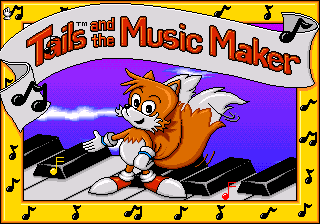
The title screen.
There is no villain to beat and no world to save. Tails and the Music Maker casts Tails as a cheerful music teacher who leads the player through a picture book of activities, each page a little stage set with its own surprises. Tap the scenery with the Magic Pen and things happen: coconuts drop, a waterfall switches off, coyotes howl, a door knocks back with Dr. Robotnik behind it.
It is Tails at his friendliest, and a long way from the plucky solo hero of his Game Gear adventures the following year. The music is the star: the title screen floats coloured notes around him, the background tune changes tempo with what he is doing, and almost every activity turns the sounds of instruments into a game.
Six pages of Storyware
Page 1 is the title screen; tap the black note and the credits roll. Page 2 opens on a Green Hill Zone lifted from the Mega Drive original, complete with chequered hills, palms and waterfalls. In Travels With Tails you walk, tiptoe, jump and run him through Green Hill in summer, autumn and winter, dodging falling coconuts and crumbling bridges, with the music speeding up and slowing down to match. There are no Badniks or rings, and a fall into a pit just bounces him back. Tap the frogs instead and you get musical chairs on lily pads.
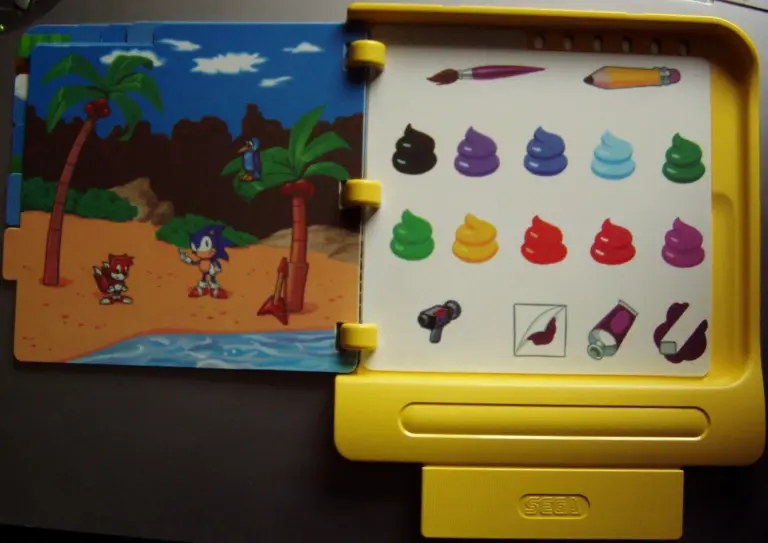
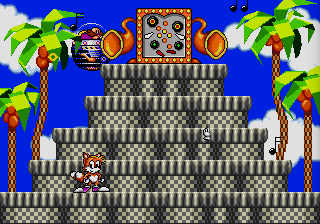
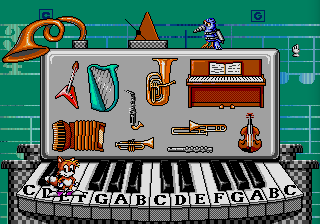
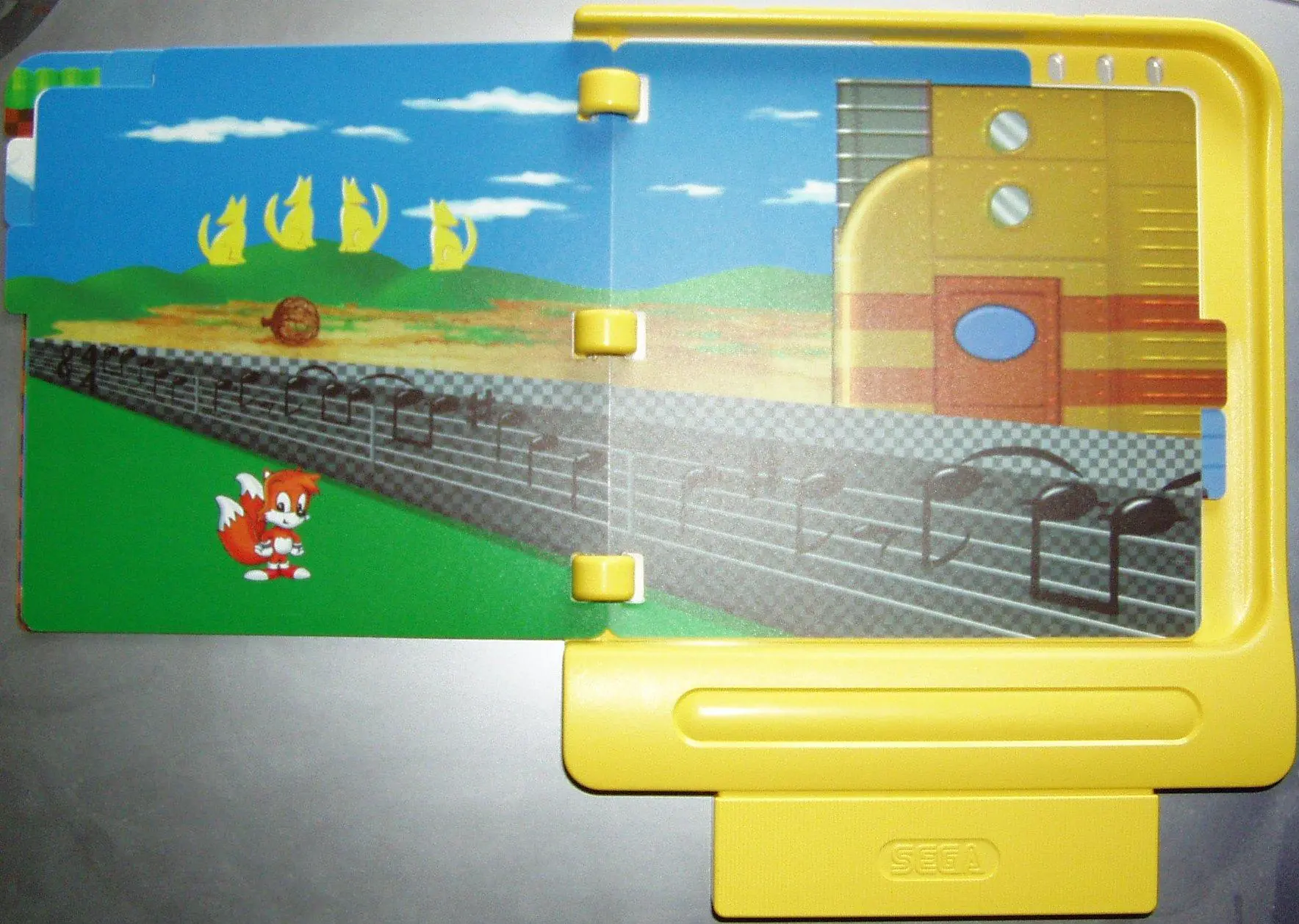
Page 3 is Percussion Pinball, with Tails curled up as the ball and bumpers shaped like percussion instruments that sound as he hits them; a second game has you circle notes as they bounce along the stave. Page 4 is The Great Wall of Music, a Breakout-style game in which every brick is a note of a different length. Page 5 puts Tails on a giant keyboard for Making a Musical Match and Match That Tone, a memory game with nursery tunes. Page 6 brings Sonic in, along with a drawing studio for animated pictures and a recording studio full of songs.
The Green Hill page in the Pico.The pinball page.The wall of music.
The pages of Tails and the Music Maker
Each page of the Storyware book changes the screen; the pen chooses the activity.
Page 1: TitleCredits hidden on the black noteTails surrounded by floating black, red and yellow notes, with the main theme playing.
Page 2: Green HillTravels With Tails · lily-pad musical chairsA three-stage stroll through the seasons and a frog-filled game of musical chairs.
Page 3: Music machinePercussion Pinball · catch the notesA pinball table of percussion instruments under Robotnik’s watchful eye, and a note-circling game on the stave.
Page 4: The Great Wall of MusicBlock-breakerEvery brick plays a note; clear the wall and another row is added. Coyotes howl on the hill, and Robotnik answers the door.
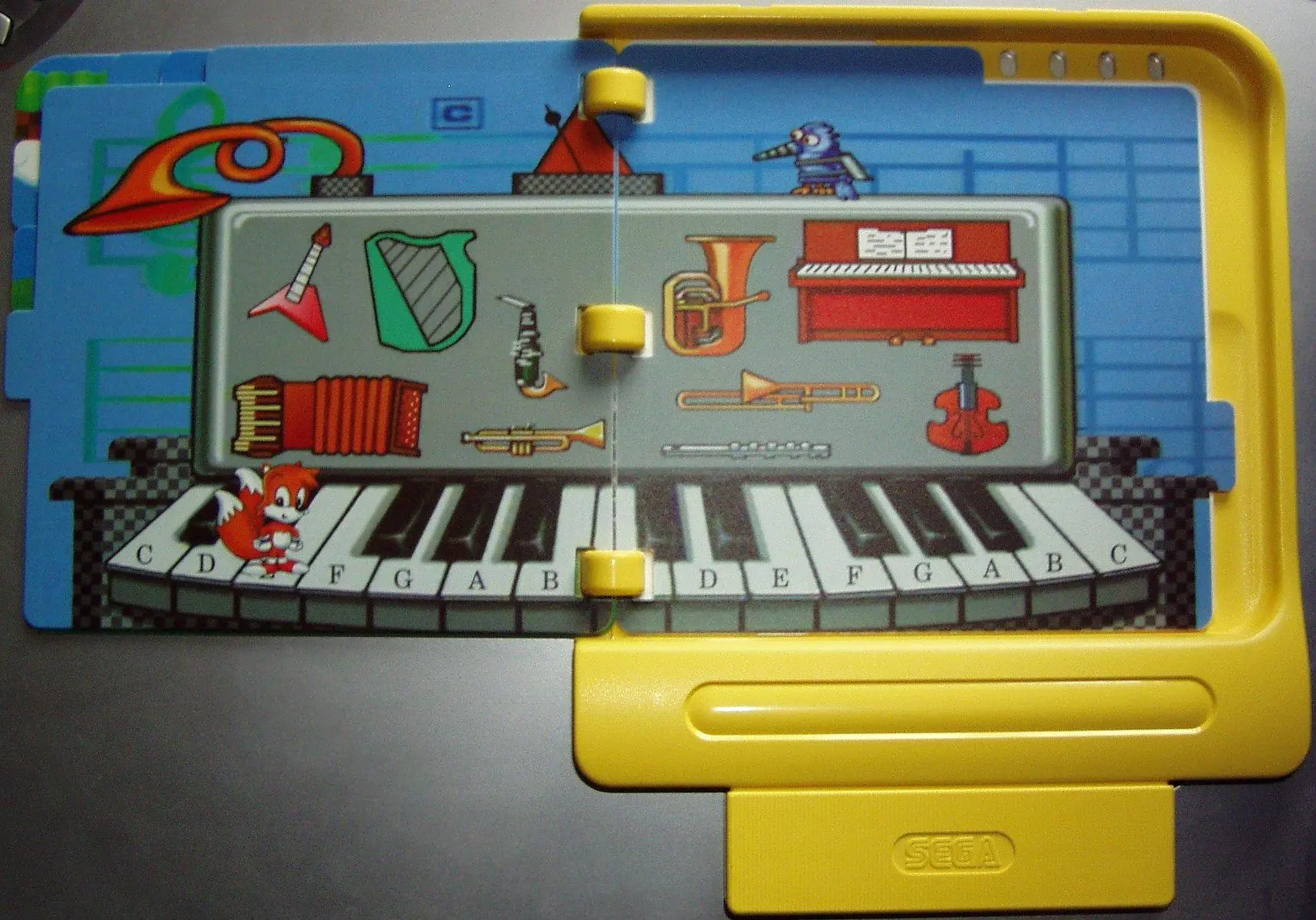
Page 5: The keyboardMaking a Musical Match · Match That ToneMatch instruments to their sounds, then repeat tunes such as Twinkle Twinkle Little Star and Three Blind Mice; a metronome sets the tempo.
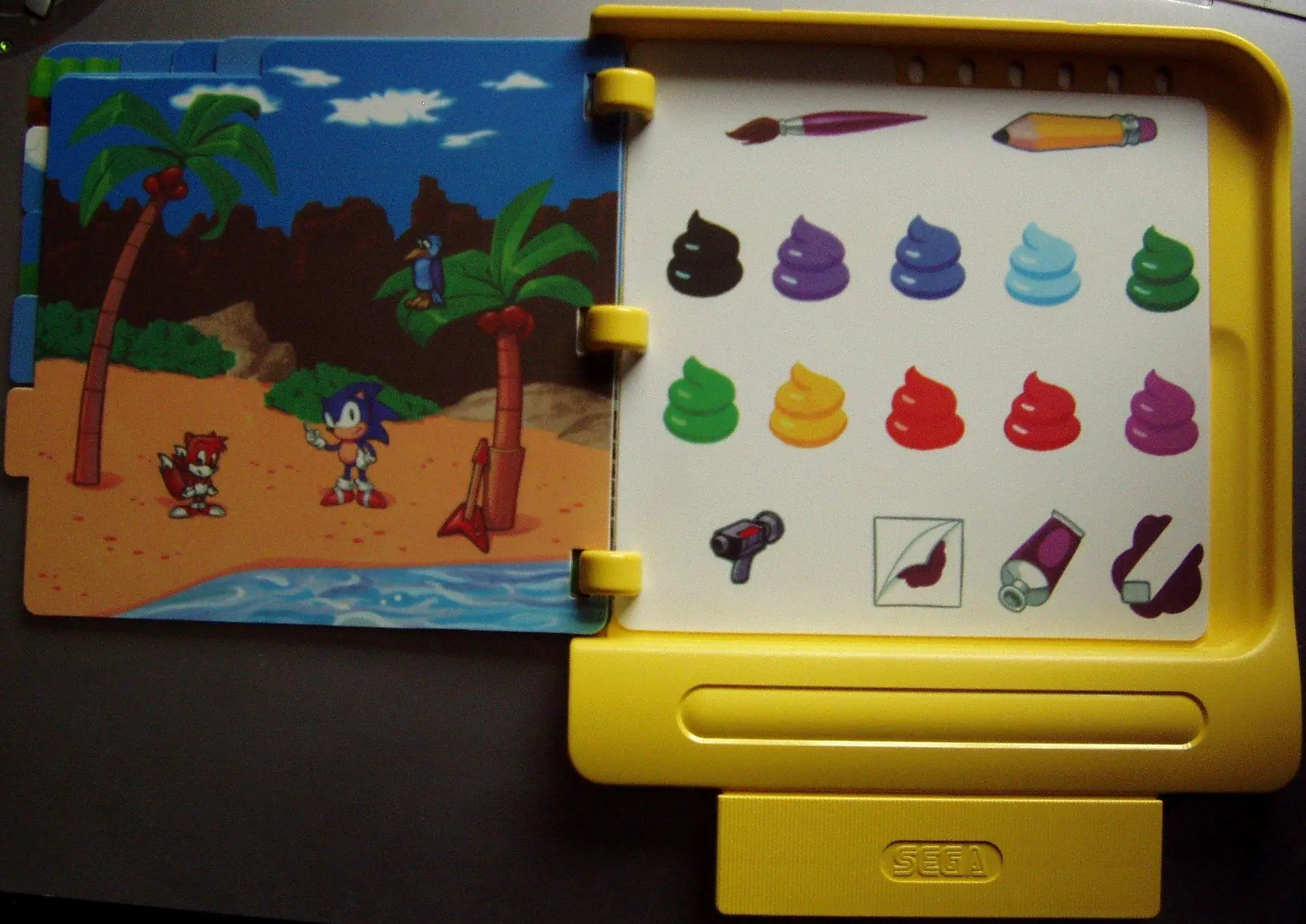
Page 6: With SonicDraw System · The Recording StudioPaint and animate your own scenes with the cast, or listen to instrument themes and nursery rhymes.
Sonic the Hedgehog’s GameworldSega Pico · 1994The other Sonic Storyware, made by Aspect: a picture book of problem-solving games with Sonic, Tails and Amy. Wikipedia counts it as the first of the two Sonic Pico games.
Sonic’s SchoolhousePC · 1996Sega’s later educational Sonic for Windows. Sonic Retro groups Tails and the Music Maker with it as a similar idea.
Sonic the Hedgehog (LeapFrog Didj)LeapFrog · 2008More than a decade later, Wikipedia notes, LeapFrog released educational Sonic games of its own for the Leapster and Didj handhelds.
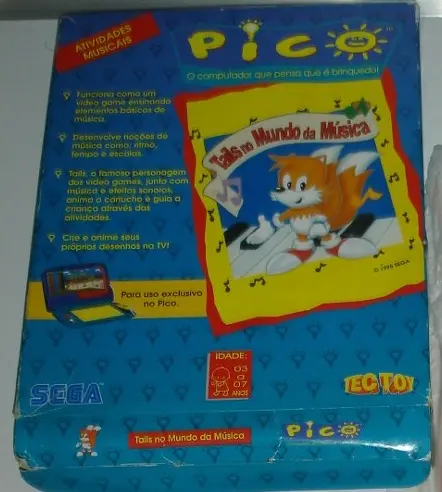
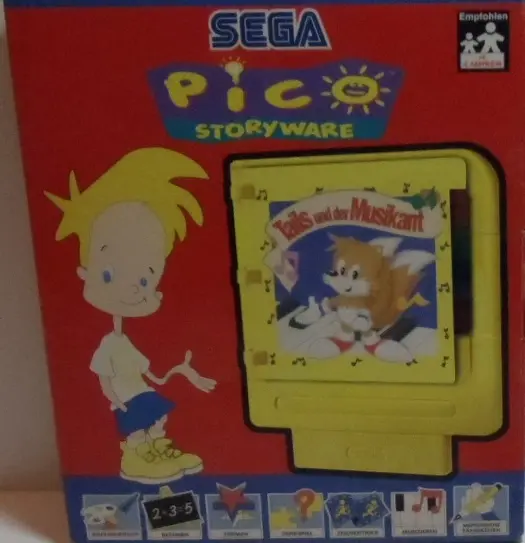
Tails et le Faiseur de MusiqueFrance · 1995One of several translated releases, each with its own title screen and box: Tails und der Musikant in Germany, Tails y el Músico in Spain, Tails no Mundo da Música in Brazil.
Characters
A gentle cast for a gentle game: Tails runs the show, Sonic and Robotnik drop in, and the scenery is full of animals that react to the pen.
Character
Who they are
In this game
Stats & abilities
Miles “Tails” ProwerStar and music teacher
Sonic’s two-tailed fox friend, here in his first title role.
Leads the player through every page: walking Green Hill, rolling as a pinball, bouncing off a wall of notes and standing on a giant keyboard.
Walks, tiptoes, jumps and runs in Travels With Tails
Becomes the ball in Percussion Pinball and The Great Wall of Music
Hops lily pads in musical chairs
Sonic the HedgehogGuest star
Sega’s mascot and Tails’ best friend.
Waits on the last page beside Tails. Tap him and he Spin Dashes off and back again.
Spin Dash on request
Can be added to your drawings
Dr. RobotnikBackground cameo
Sonic’s arch-enemy, in his usual Egg Mobile.
Floats in the background of the pinball page and appears if you knock on the door on page 4.
Seen on pages 3 and 4
Who else lives here
The pages are full of animals and objects that respond to the Magic Pen. Pictures are the game’s Storyware pages from our original gallery.
Frogs and a turtlePage 2Tails’ rivals at musical chairs, and a turtle that wanders to whichever palm tree drops a coconut.
CoyotesPage 4Perched on the hill; tap one and it howls.
A caged birdPage 5Win three songs in Match That Tone and it is set free.
Your own castPage 6Characters you can stamp into your own animated drawings.
The people who made it
From the in-game credits and the US manual, as listed by Sonic Retro and Sega Retro.
Realtime AssociatesDeveloperThe American studio that built the game.
Novotrade InternationalProducerProduced the game for Sega; Shannon Donnelly was producer and designer.
Jim Schuler, Rick ChipecoProgrammingLead and assistant programmer.
David Scheffler, Greg TurnerMusic and soundComposer and sound designer.
Ellen Drucker, Connie GoldmanBackground artDrew the backgrounds; Martine Gaudissart, Barbara Lipton and Laura Smith animated the characters.
Pat RobinsonEducation consultantCredited in the US manual.
How it was made
Our original page had no history section; this one is built from the credits, the release data and the prototypes catalogued by Sonic Retro and Sega Retro.
Sonic for the youngest players
The Pico logo, from our original gallery.
Sega launched the Pico in 1994 as an “edutainment” machine: Mega Drive technology inside a plastic case that opened like a laptop, with a drawing pad and the Magic Pen. Sonic was by then Sega’s mascot, so two of its Storyware books used his world: Sonic the Hedgehog’s Gameworld and this one.
Made in America
The game was developed by Realtime Associates and produced by Novotrade International for Sega of America, whose testers and technical staff appear in the credits; the US manual adds an education consultant, Pat Robinson. Eight prototype discs survive, burned between June and October 1994, and the one dated 2 July 1994 matches the released American cartridge.
Release
It went on sale in North America on 4 October 1994. Europe and Japan followed on 5 December 1995: Imagineer published it in Japan as number 7 in its “right-brain development” series, and Tec Toy handled Brazil. The European and Japanese cartridges carry January 1995 build dates.
Firsts: what this game introduced
What Tails and the Music Maker brought to Tails’ story.
1Named after Tails aloneThe first game named after Tails alone, half a year before Tails’ Skypatrol and Tails Adventure. He had shared a title before: Sonic Chaos came out in Japan in 1993 as Sonic & Tails.
2A music lessonA Sonic-world game built entirely around rhythm, tempo, scales and instruments.
3Green Hill without dangerSonic’s most famous zone with no Badniks or rings, where a fall into a pit just bounces Tails back.
4Tails as a pinballHe rolls into a ball for Percussion Pinball and The Great Wall of Music.
Glitches, exploits and oddities
No bugs are documented. These are the game’s oddities.
No sharps or flats
The giant keyboard on page 5 labels its white keys with note names but leaves the black keys blank, and Sonic Wiki Zone notes that the game never uses sharps or flats at all.
Pits that bounce
In Travels With Tails a fall into a pit simply springs Tails back up to where he was, so there is no way to fail.
Robotnik’s house call
Knock on the door on page 4 and the doctor appears, for no reason the game ever explains.
Videos & media
A full run through every page, and a longplay from the Pico specialists at Retro View.
A complete playthrough by NintendoComplete.
A longplay from the Retro View channel.
Trivia & facts
The last Storyware page.The Recording Studio on page 6 plays a dozen nursery tunes, from Twinkle, Twinkle, Little Star and Jingle Bells to Pop Goes the Weasel and Row, Row, Row Your Boat.
The Japanese version carries Imagineer’s series title, Unou Kaihatsu Series 7, which translates as right-brain development series number 7.
The credits even list Sega of America’s lead tester and three assistant testers.
The American cartridge’s internal header is dated July 1994, three months before the game went on sale.
Page 5’s metronome changes the tempo of the music.
Gameworld, the other Sonic Pico game, was made by Aspect, the studio behind most of the Game Gear Sonic games.
Media & artwork
Box art, Storyware pages and screenshots, from Sonic Scene’s own galleries and Sonic Retro. Select any image to view it larger.
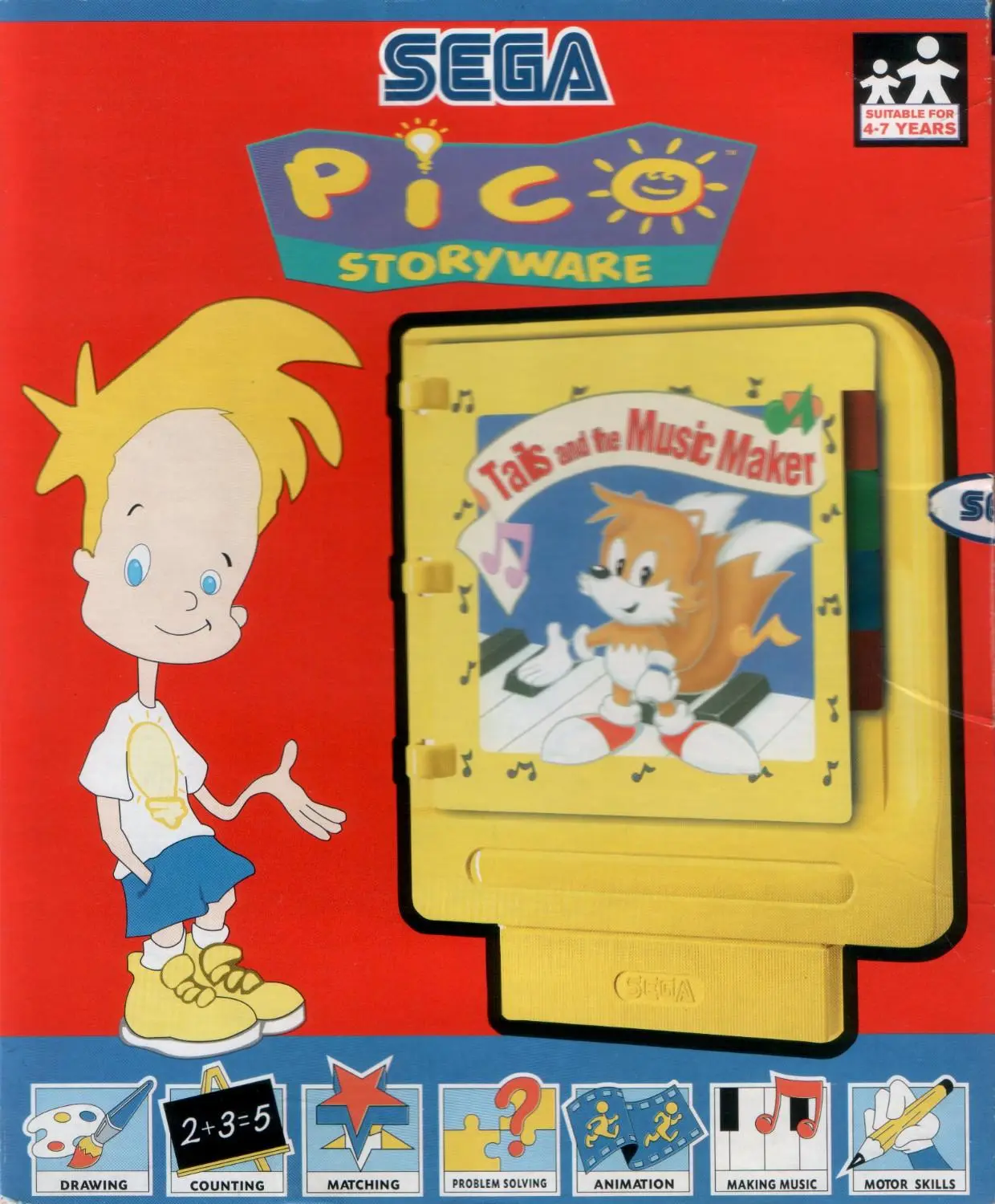
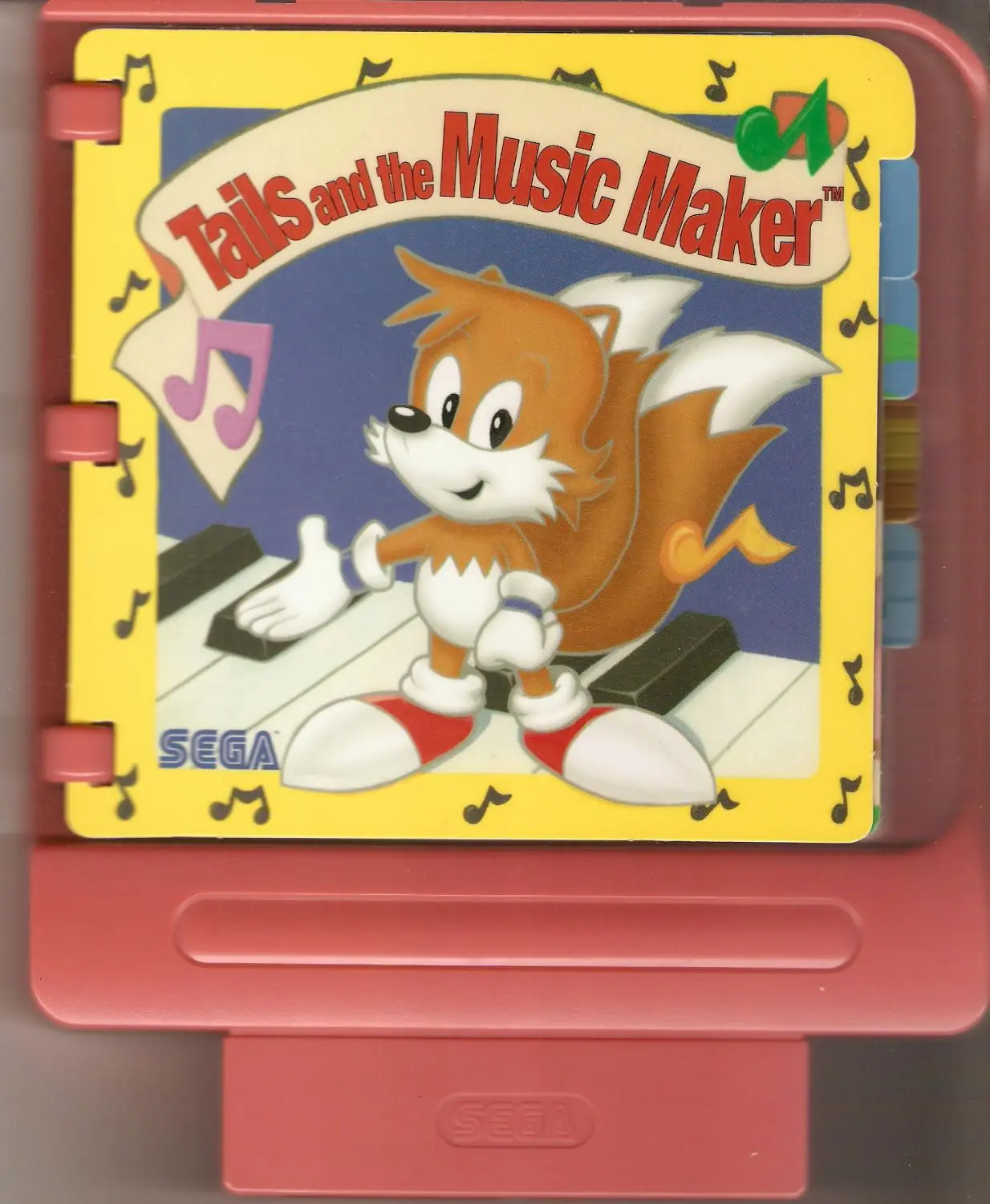
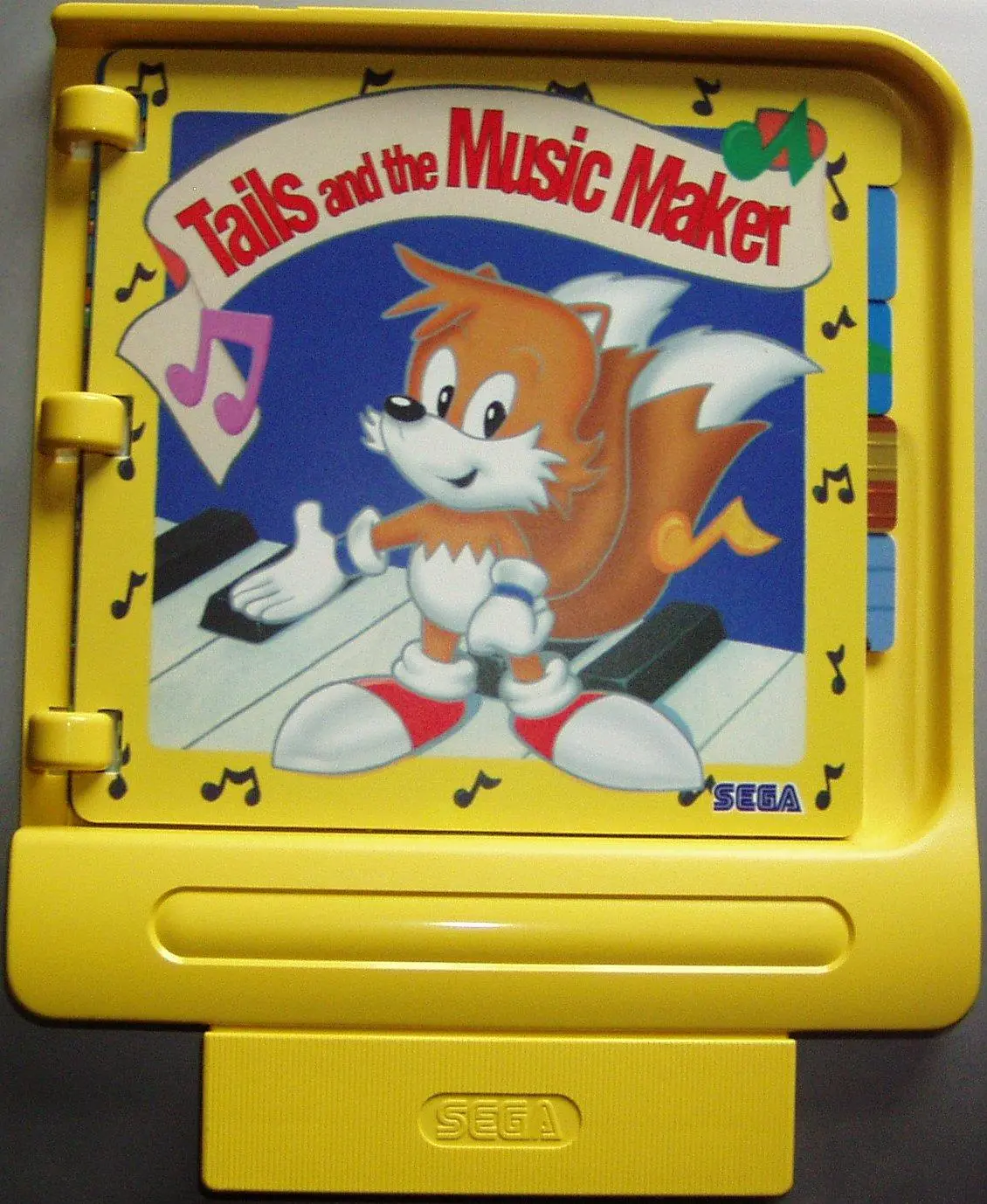
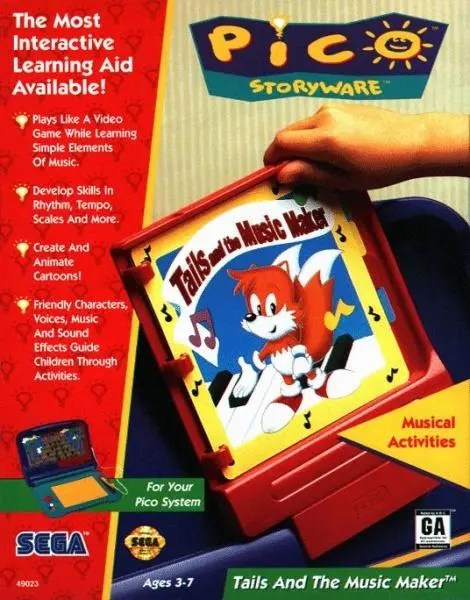
North American box.North American box, another scan.European box.Back of the European box.Japanese box.Brazilian box.French box.German box.North American cartridge.Storyware cover.Storyware page 2.Storyware page 3.Storyware page 4.Storyware page 5.Storyware page 6.The Great Wall of Music page.
Its place in history is simple: Tails and the Music Maker was the first game named after Tails alone.
Releases
Sega Pico (North America)4 October 1994 – Sega of America.
Sega Pico (Japan)5 December 1995 – Imagineer, ¥4,980.
Sega Pico (Europe)5 December 1995 – UK, France, Germany, Spain and Italy, each in its own language.
Sega Pico (Brazil)5 December 1995 – Tec Toy, as Tails no Mundo da Música.
Tails becomes a headliner
Within a year of this release Tails had starred in two more games of his own, Tails’ Skypatrol and Tails Adventure on the Game Gear. Together they made 1994 and 1995 the years Sonic’s sidekick first carried games by himself.
Sales & reviews
Sales and reviews
No sales figures have been published, and Sega Retro catalogues no magazine reviews for the game. We have not found a reliable score to list.
3–7Target age range
6Storyware pages
12Nursery tunes in the Recording Studio
8Prototype discs preserved
Reader reviews
No reader reviews yet. Played it? Give it a score out of 10 and tell other fans what you think.
Every fact on this page was checked against the sources below. Sonic Retro and Sega Retro pages were read through Wayback Machine copies, because both live sites show a bot check; each link opens the copy we read. The second and third paragraphs of the overview are Luke’s text from the original Sonic Scene page.
To provide the best experiences, we use technologies like cookies to store and/or access device information. Consenting to these technologies will allow us to process data such as browsing behavior or unique IDs on this site. Not consenting or withdrawing consent, may adversely affect certain features and functions.
Functional
Always active
The technical storage or access is strictly necessary for the legitimate purpose of enabling the use of a specific service explicitly requested by the subscriber or user, or for the sole purpose of carrying out the transmission of a communication over an electronic communications network.
Preferences
The technical storage or access is necessary for the legitimate purpose of storing preferences that are not requested by the subscriber or user.
Statistics
The technical storage or access that is used exclusively for statistical purposes.The technical storage or access that is used exclusively for anonymous statistical purposes. Without a subpoena, voluntary compliance on the part of your Internet Service Provider, or additional records from a third party, information stored or retrieved for this purpose alone cannot usually be used to identify you.
Marketing
The technical storage or access is required to create user profiles to send advertising, or to track the user on a website or across several websites for similar marketing purposes.

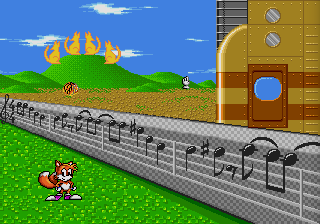 Page 4: The Great Wall of MusicBlock-breakerEvery brick plays a note; clear the wall and another row is added. Coyotes howl on the hill, and Robotnik answers the door.
 Page 6: With SonicDraw System · The Recording StudioPaint and animate your own scenes with the cast, or listen to instrument themes and nursery rhymes.
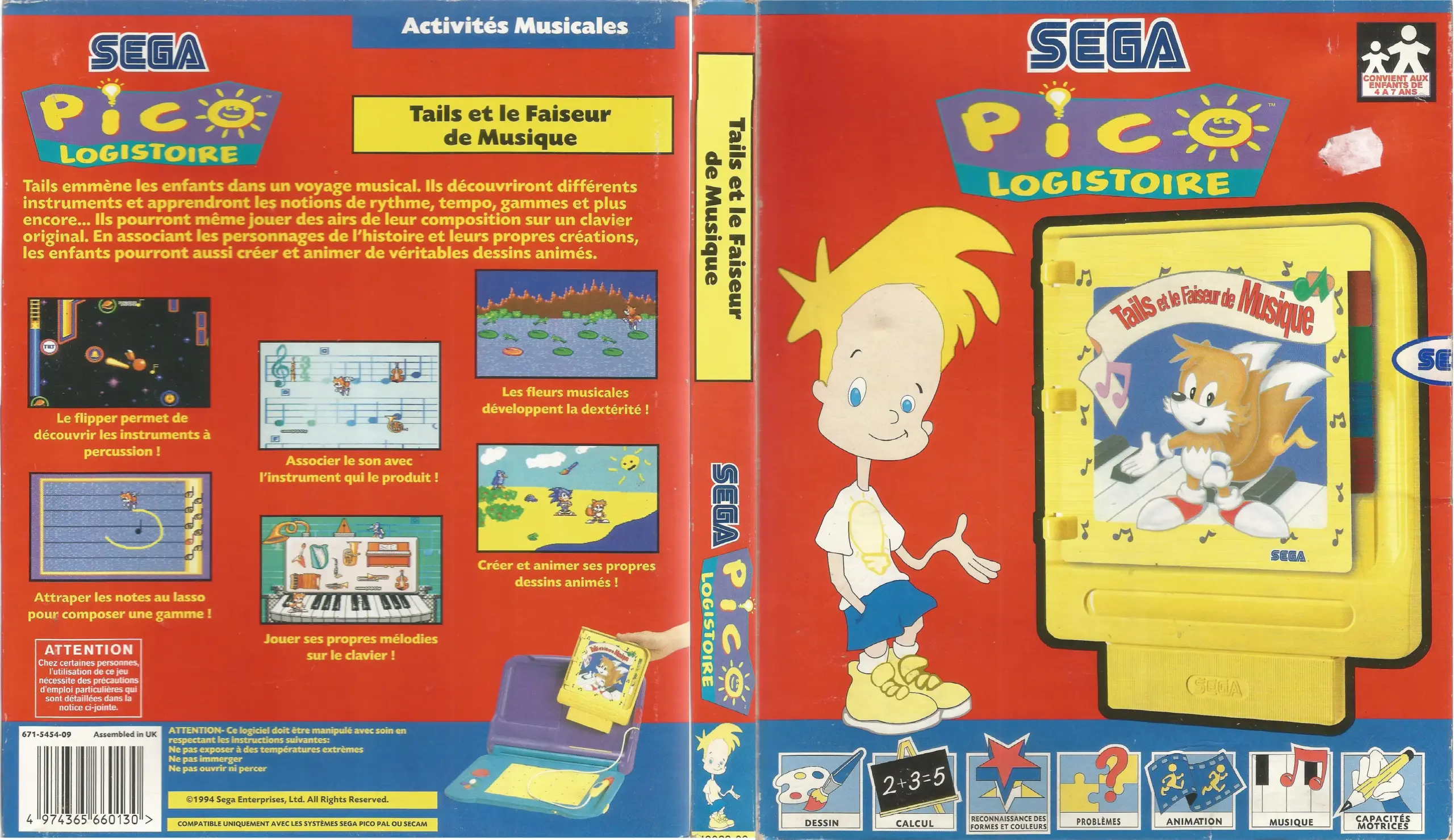 Tails et le Faiseur de MusiqueFrance · 1995One of several translated releases, each with its own title screen and box: Tails und der Musikant in Germany, Tails y el Músico in Spain, Tails no Mundo da Música in Brazil.
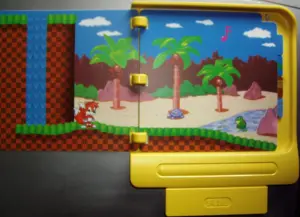 Frogs and a turtlePage 2Tails’ rivals at musical chairs, and a turtle that wanders to whichever palm tree drops a coconut.
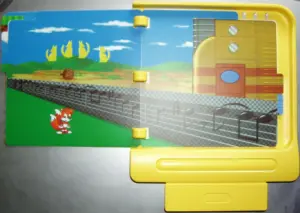 CoyotesPage 4Perched on the hill; tap one and it howls.
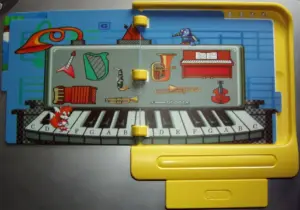 A caged birdPage 5Win three songs in Match That Tone and it is set free.
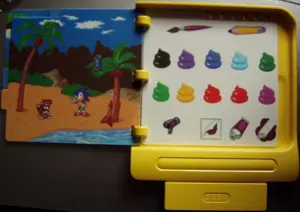 Your own castPage 6Characters you can stamp into your own animated drawings.