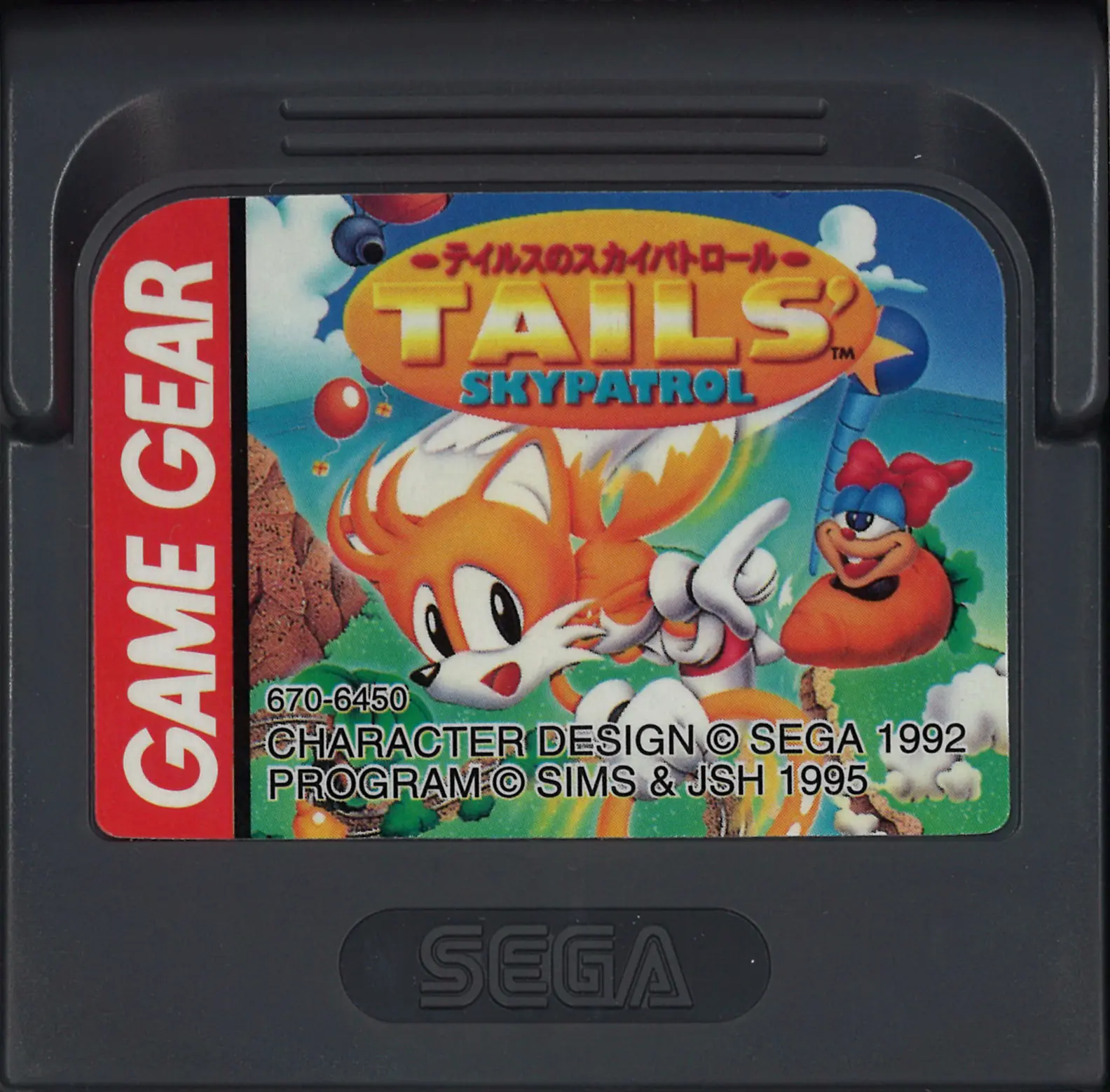
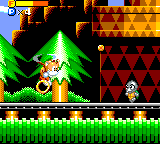
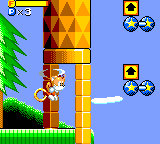
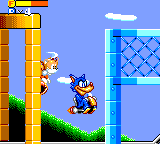
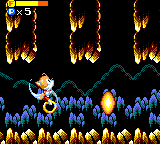
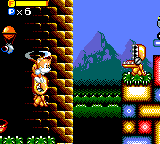
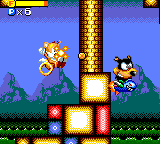
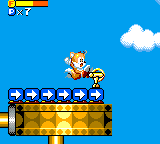
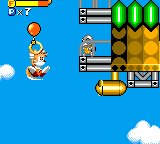
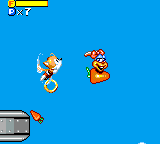
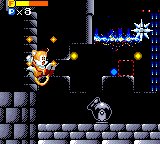
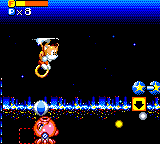
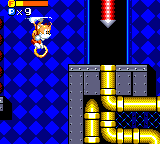
Tails’ Skypatrol is the strangest little game in the Game Gear Sonic library. Released only in Japan in April 1995, it hands the spotlight to Miles “Tails” Prower, sends him on a holiday of his own and drops him on an island run by a cackling witch called Witchcart. Sonic stays out of the picture, Dr. Eggman never turns up and there is not a single Chaos Emerald to find.
It is not a platformer either. Tails never stops flying: the screen carries him from left to right, a fuel gauge drains as he goes, and brushing against scenery costs a life. His only weapon is a golden ring that he hurls at enemies, spins around himself like a shield and hooks onto poles, bars and mine trolleys to swing through each area. Mint candy keeps his tails turning.
The odd fit has an explanation. Japan System House built the game for a cheap handheld that was cancelled before anyone announced it, moved it to the Game Gear to earn something back, and only then did Sega ask for Tails to take the lead. The result is cute, tough and short, and it stayed in Japan until Sega slipped it into a GameCube compilation eight years later.
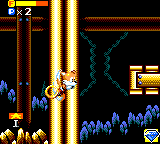
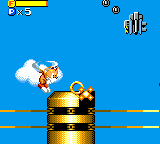
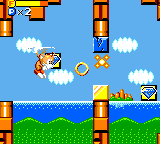
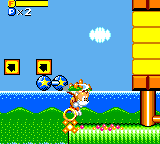
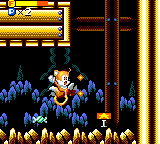
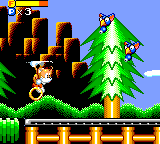
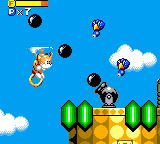
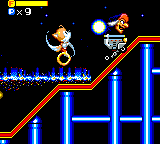
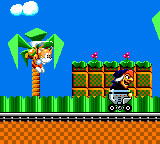
Rail Canyon, the first real area.Dodging cannon fire over Metal Island.Witchcart on her rails.
We all want to travel alone once in a while…
The Japanese manual opens Tails’ story with that line. It goes on to stress that he has not fallen out with Sonic; he simply fancies an adventure that is all his own, and he finds one on a lonely island criss-crossed with steel rails.
— Official description: Sega, Tails’ Skypatrol Japanese instruction manual (1995), story page, in the English translation by Windii published by Sonic Retro. One line quoted; the rest summarised.
Quick Answers
The short answers, with the detail further down the page.
When did Tails’ Skypatrol come out?
On 28 April 1995, on the Game Gear, in Japan only. It cost ¥3,800. More →
Was it ever released outside Japan?
Not on its own. Western players first got it in 2003 as an unlockable in Sonic Adventure DX: Director’s Cut, and since then in Sonic Gems Collection (2005) and Sonic Origins Plus (2023). More →
Who is the villain?
Witchcart, an elderly witch who rides a mine cart along rails she has laid across the island and threatens to turn anyone who defies her into crystal. Dr. Eggman does not appear. More →
How do you play it?
Tails flies constantly from left to right. You steer him up and down, slow him down or speed him up, throw his ring at enemies and hook it onto objects. Touching the scenery, or letting the flight gauge run dry, loses a life; mint candy refills the gauge. More →
How many levels are there?
Five areas: the enemy-free Training Area, then Rail Canyon, Ruin Wood, Metal Island and Dark Castle, each of the last four ending with a boss. More →
Who made it?
Japan System House, with help from Sega’s part-owned studio SIMS. The credits use nicknames; the main programmer, Alice Kagamino, appears as Captain Alice. More →
Was it really meant to be a Disney game?
Possibly. Prototype footage from April 1995 shows Tails fighting Disney’s Pete where Bearenger now stands, and two bosses look a lot like Disney villains. The programmer has said only that the enemy designs kept the feel of the originals. More →
Is it hard?
Very. It looks like a game for young children, but one touch of the scenery costs a life and the bosses take 20 hits each. Continues are unlimited, though, and send you back to the start of the area. More →
Is there a level select?
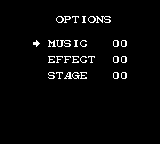
Yes. Hold Up and button 2 and press Start on the title screen to open a hidden options screen with a sound test and level select. More →
Plot / Story
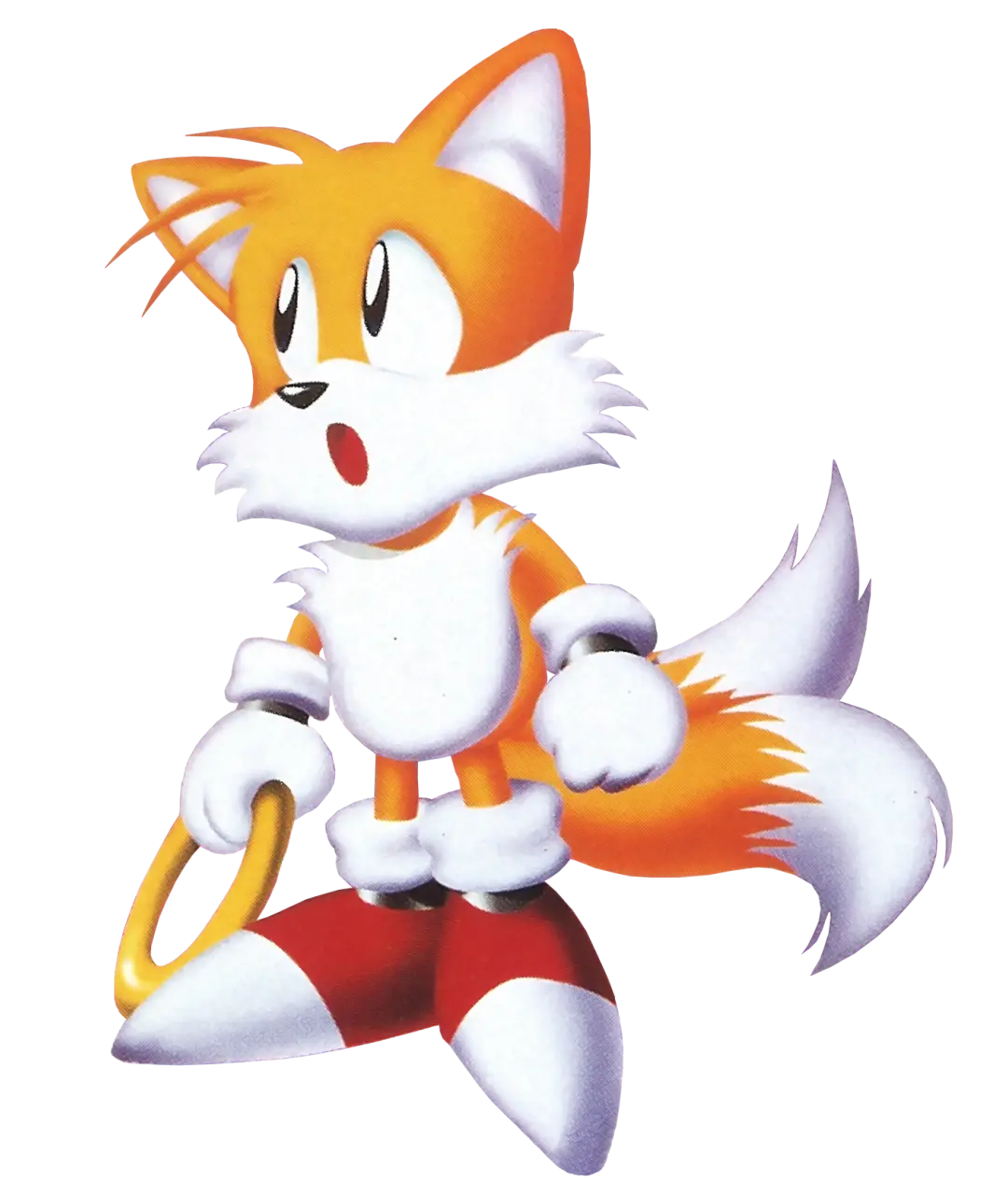
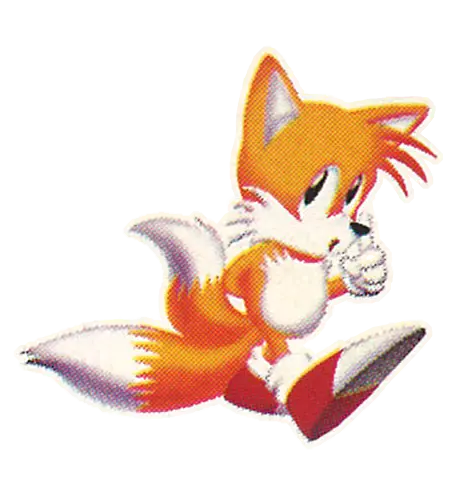
Tails in Sega’s artwork for the game.
Every sidekick deserves a day off. In the Japanese manual Tails simply wants some time to himself: he has not argued with Sonic, he has no destination, he just sets his two tails spinning and flies wherever the sky takes him. It is a gentle opening for a character who had been Sonic’s tag-along ever since 1992.
The trip ends over the open sea, where Tails spots a small island and drops down for a look. Something is wrong. Steel rails run across every corner of it and the animals that should live there have vanished. He wonders about Dr. Eggman, but it does not look like the doctor’s work, and the real culprit rumbles into view on a silver mine trolley: a witch named Witchcart, who announces that the whole island now belongs to her, threatens to turn anyone who crosses her into crystal and sends her minions off on patrol in their flying machines.
Tails on his own
What makes the story work is the decision Tails takes in the long grass where he has hidden. Sonic is nowhere near, and the manual has him admit it before talking himself round: he can manage this, even without Sonic. Then he takes off. It is the same small, brave moment that later games would build whole storylines around, and here it is the entire plot.
The game backs the idea up with its design. Tails cannot curl into a ball or run; he has only his flight and his wits. His weapon is one of Sonic’s own symbols turned to a new use, a golden ring that he throws, spins and uses as a grappling hook, and every boss fight ends with Tails dragging the beaten villain away.
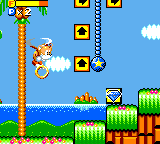
Tails and Witchcart in the opening.Ring at the ready.Swinging through the Training Area.
The rules of the sky
The screen scrolls whether you like it or not. Up and down steer Tails, left slows him and right speeds him up, and he can never turn round. A hit sends him spiralling towards the ground, and only frantic button presses pull him out of the dive, at a cost to his flight gauge. If he touches the scenery or the gauge runs dry, a life is gone.
Mint candy comes in ones, twos and threes, filling a quarter, half or all of the gauge. Crystals are worth 1,000 points each at the end of an area, bells work as checkpoints, and the rare Muteki Star makes Tails invincible even to walls. Each area is full of gadgets for the ring to latch onto: poles to swing round, bars and catapults that fling him forward, balloons that lift him without using fuel, trolleys that tow him along the rails, and heavy weights that drag him towards the ground. Extra lives arrive at 10,000 and 30,000 points.
Items: mint candy, crystals, bells and more.Poles, bars, balloons and other gadgets.Hooked onto a trolley in Ruin Wood.
Areas in Tails’ Skypatrol
Five areas, each one single long flight. The Training Area has no enemies and no boss; the other four end with one of Witchcart’s gang, and the area bonus climbs from 5,000 points to 20,000.
Training AreaTutorial · no boss · 5,000-point bonusA tropical warm-up that sets out every gadget in the game, from simple poles to troublesome Bonmetal blocks, and leaves you to work out what each one does. Its look seems to borrow from Sonic 2’s Emerald Hill.
Rail Canyon AreaArea 1 · boss: Hocke-WulfRocky canyons, pine forests and the first stretches of Witchcart’s railway, patrolled by crows, turtle robots and balloon-borne guns.
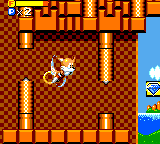
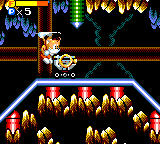
Ruin Wood AreaArea 2 · boss: BearengerA dark mine of moving pillars and trolley rides, then ancient ruins under the mountains, with leaping skeletons and plants that snap at Tails’ ring. The only area with two tunes of its own.
Metal Island AreaArea 3 · boss: CarrotiaA huge airship in the clouds, all propellers, rocket exhausts and swinging weights. The most open area in the game, and it wraps round vertically: fly off the bottom and you reappear at the top.
Dark Castle AreaArea 4 · boss: WitchcartThe witch’s grey-brick stronghold and its cramped steel interiors, crammed with homing cannons and Bonmetal traps. Likely the hardest area, though two Muteki Stars sit close together for a skilled flier.
Lose every life and the game offers unlimited continues, restarting you at the beginning of the area.
In comics, TV & other media
Witchcart’s gang were forgotten for twenty years, then the comics came looking for them. More in Sonic in other movies and media.
Tails’ 30th Anniversary SpecialIDW Publishing · 2022A one-shot that follows on from both this game and Sonic 3D Blast. Witchcart and her minions have taken over Flicky Island and sealed Sonic in crystal; Tails frees him with equipment taken from the minions, then knocks one of the witch’s own bolts back at her and traps her in crystal.
Sonic Universe: Eggman’s DozenArchie Comics · issues 83–86 · 2016Archie reworked Witchcart and her crew with new names, looks and histories, and placed the events of Tails’ Skypatrol in flashbacks set just after the 8-bit Sonic 2. Its Witchcart became Wendy Naugus, a troll and the twin sister of Walter Naugus.
Tails Sky Patrol (LCD game)McDonald’s Happy Meal toy · US · 2003A different game with nearly the same name: a pocket LCD toy in which Tails moves up and down collecting rings. Thirty rings speeds things up; miss ten and it is over.
Sonic Adventure DX: Director’s CutGameCube 2003 · PC 2004The unlockable Game Gear collection inside Sonic Adventure DX was the first way to play Skypatrol outside Japan.
Characters
One hero and a villainous gang of four. Witchcart and her minions first appeared here, and Sonic Retro notes that it is still their only appearance in a game.
Character
Who they are
In this game
Stats & abilities
Miles “Tails” ProwerThe only playable character
Sonic’s two-tailed fox friend, mechanic and pilot, here out on a solo trip with no particular destination.
Stumbles on Witchcart’s takeover, decides he can handle it without Sonic and flies through all five areas to free the island.
Permanent flight; cannot stop or turn
Throws a golden ring; hold the button to spin it round him
Ring hooks onto poles, bars, balloons and trolleys
Flight gauge refilled by mint candy
WitchcartThe villain · ウィチカート
An elderly witch who travels everywhere in a mine cart, so she can only go where her rails go. She is human, and the main villain of a Sonic game that has no Dr. Eggman in it at all.
Declares the island hers, threatens to crystallise anyone who resists, sends her minions out on patrol and waits for Tails in Dark Castle.
Final boss: 20 ring hits, or four slams into the scenery
Hurls magic sparks from her cart
The only boss who stays on the ground
Hocke-WulfMinion · Rail Canyon · ホッケウルフ
A wolf drawn like a stock Western cartoon villain, riding a flying bike that looks a lot like Fang’s Marvelous Queen. Sonic Retro suspects his name nods to the German aircraft maker Focke-Wulf.
Guards Rail Canyon, apparently the lowest-ranking of the three minions.
Keeps his distance and lobs bobbing mines
Shot mines burst into four pellets
20 hits, or four slams
BearengerMinion · Ruin Wood · ベアンジャ
A gruff cartoon bear who rides a craft Sonic Retro calls the Shark Torpedo. IDW spells him Bearanger.
Holds Ruin Wood. In the prototype footage his spot was taken by Disney’s Pete.
Flies erratically
Throws pellets three at a time
20 hits, or four slams
CarrotiaMinion · Metal Island · キャロッティア
A buck-toothed rabbit on a flying carrot who comes across as vain and flirtatious. IDW spells her Carrottia.
Rules the skies over Metal Island.
Homing carrot missiles
Blows kisses that Tails can knock back
Too quick to hook: 20 ring hits needed
Enemies
Witchcart’s patrol robots, using the names from the Japanese manual and Sonic Retro. The sprites come from our original gallery.
Balloon GunEvery area with enemiesA cannon held up by balloons. Shoot the gun and the balloon is yours to ride; pop the balloon and the gun drops.
Tobikoshi CrowRail Canyon · Metal Island · Dark CastleSwoops in, strikes, pulls back; later ones fire shots too.
DorigameRail Canyon · Metal Island · Dark CastleA two-legged turtle robot that throws things at low fliers. Worth 1,000 points.
Bee FlyRail Canyon · Metal IslandBuzzes about at random; modelled on Sonic 2’s Whisp.
HanerutonRuin Wood · Metal Island · Dark CastleA skeleton that springs out of the ground and bursts into flying bones.
Bound HeadRuin Wood · Dark CastleA glowing ball that drops from above and bounces along.
MinokichiRuin WoodA bagworm robot that drops from the ceiling.
Capture BerryRuin WoodSnaps shut on the ring and holds Tails in place. Cannot be destroyed.
GonRuin Wood · Dark CastleLeaps up, bites the ring and hangs on, slowing Tails down. Also indestructible.
CarronadeMetal Island · Dark CastleA fixed cannon that swivels to aim; the castle’s ones track Tails.
TashiyaDark CastleAn octopus robot that waddles along balancing a circus ball.
The people who made it
The in-game credits are almost all nicknames, as listed by Sega Retro.
Alice KagaminoProgramming · credited as Captain AliceMain programmer. Built the tools for the original, cancelled handheld version and wrote the layer that carried it to the Game Gear.
AT-AT, BryanProgrammingThe other programmers in the credits. On the original version, a second programmer wrote the bosses.
K3, LRGame designCredited for the game design.
Mt. Emerald, ShowGraphicsCredited for the graphics.
Chikayo, KazunechanSoundCredited for the sound. The soundtrack runs to 19 pieces, from four boss themes to a Muteki Star jingle; Wikipedia names the composer as Chikayo Fukuda.
SIMS and JSHStudiosThanked in the credits as “SIMS All Staff” and “JSH All Staff”; character design is credited to Sega.
How it was made
Our original page had no history, so this section is new. Two accounts carry the story: programmer Alice Kagamino’s posts and the Game Developer Research Institute’s notes, gathered on Sonic Retro’s development page, and Hardcore Gaming 101’s history, which Wikipedia follows. Sonic Wiki Zone adds the sources for the prototype footage.
A Disney cat in the prototype
Pete as the Ruin Wood boss in prototype footage.Image via Sonic Wiki Zone
The first hint that Skypatrol had a past came from Sega itself. Footage of an unfinished version in the April 1995 Sega Video Magazine ends Ruin Wood with Tails squaring up to Pete, the hulking cat from Disney cartoons; the finished game puts Bearenger there instead. Once you look, the resemblances pile up. Hocke-Wulf could pass for the Big Bad Wolf, and Witchcart is a near twin of Mizrabel, the witch from Castle of Illusion.
Nobody has confirmed a Disney connection. When fans put the question to Kagamino on Twitter, the reply kept to generalities: the enemies still carry something of their look from before Tails was the hero, and the rest is up to the imagination.
Built for a handheld nobody saw
Both accounts start at Japan System House, a studio best known for fitting Sega games onto 8-bit machines, and neither starts with Sonic. The game began as a launch title for an unannounced black-and-white handheld, a cheaper alternative to the Game Boy for young children with an educational slant, and it starred characters of its own. The hardware was modest even for 1994-era handhelds: a Z80 processor, one background layer, two sound channels, and a 1-megabit cartridge for the game.
Nobody had written development tools for it, so Kagamino built them, leaving the bosses to a colleague. Then the console was cancelled before it was ever announced, and outside the team almost nobody knew it had existed.
Second chance on the Game Gear
A finished game with nowhere to go was money down the drain, so JSH looked at the Game Gear, whose specifications were close and whose screen resolution matched. Kagamino spent about two weeks on a layer that let the old code run on Sega’s machine and a converter for the graphics, though everything was still in black and white.
JSH’s sales people then took it to Sega, which was interested on one condition: Tails would be the star. Kagamino had moved on to the Game Gear Ristar by then, so other hands made the changes. The world was reshaped to fit Sonic’s, the art was redrawn, the opening scenes and the Training Area were added and the difficulty was rebalanced, while the way it played stayed much the same.
Release, and a second life without Sonic
Sega put it out in Japan on 28 April 1995 at ¥3,800, and it never had a stand-alone release anywhere else. Years later JSH, by then renamed Biox, turned it back into an original game for the Game Boy Color, Boon Boon Kabun, with every Sonic element stripped out; that port was completed and then cancelled, for contractual reasons nobody has explained.
Firsts: what this game introduced
Not milestones for the whole series so much as things you will only find here.
1Witchcart’s debutThe witch made her first appearance here, and to date it remains her only video game.
2A gang of threeHocke-Wulf, Bearenger and Carrotia also started out in this game, and also never returned in another.
3Witchcart’s robotsAll eleven enemy types serve Witchcart rather than Eggman, from the Balloon Gun to the ring-biting Gon.
4Rings to throwThe ring is not something to collect but Tails’ only weapon and his grappling hook, used for every attack and almost every gadget.
5Flying on mint candyTails flies the whole game on a draining gauge, topped up with mint candy instead of rings.
6A late trip westIts first release outside Japan came eight years on, inside Sonic Adventure DX: Director’s Cut.
Cheats & secrets
Our original page had no cheats section, so this is new, checked against Sonic Retro’s hidden-content notes.
Options screen, sound test and level select
On the title screen, hold Up and button 2 and press Start. A hidden options screen appears, doubling as a sound test and a level select. Confirm with button 2; Start takes you back to the title.
Pro Action Replay codes
00D795:09 gives infinite lives and 00D797:99 sets the crystal count to 99. These are unofficial codes for cheat devices and emulators.
Checked against Sonic Retro, November 2026.
Glitches, exploits and oddities
Sonic Retro lists only two bugs, and neither was ever fixed. There is also a little left-over art.
Through the wall
Slipping through a wall in Ruin Wood.Image via Sonic Retro
Tails flashes for a moment after taking a hit, and while he flickers, walls can lose their solidity along with the enemies their bite. Catch the timing and he drifts through the thinner ones; the classic spot is the wall that comes up after the first mine-cart section of Ruin Wood.
A propeller you can break
The breakable propeller tile on Metal Island.Image via Sonic Retro
On Metal Island the top-right corner tile of the big twin-bladed propellers is flagged as breakable by mistake. A ring throw, or flying into it under a Muteki Star, knocks a chunk out of the blade.
Witchcart’s missing defeat
Unused defeat frames for Witchcart.Image via Sonic Retro
The cartridge holds defeat frames for Witchcart that the game never shows.
An island that loops
Metal Island wraps round vertically, so flying off the bottom of the screen brings Tails back in at the top. If the flight gauge empties there, the game switches off the vertical scroll so that you are not left drifting for ages before the life is lost.
Videos & media
A complete run through all five areas, and a retrospective on both of Tails’ Game Gear adventures.
A full playthrough of the Japanese cartridge from the World of Longplays archive.
A retrospective on both of Tails’ 1995 Game Gear games by the YouTube channel RobotnikHolmes.
Trivia & facts
Witchcart’s last stand.Witchcart is a human villain in a Sonic game with no Dr. Eggman at all. Her mine cart defines her: she cannot go anywhere her rails do not reach.
Eggman never appears. He is mentioned once, in the manual, when Tails wonders whether the mysterious rails are his work.
The first area is called Rail Canyon, a name Sonic Heroes reused for an unrelated stage in 2003.
Ruin Wood is the only area with two pieces of music, one for the mine and one for the woods.
Every boss takes 20 ring hits. Hooking a boss with the ring and slamming it into the scenery four times also works, except against Carrotia, who is too quick to catch.
Sonic Retro notes that the Training Area looks like Sonic 2’s Emerald Hill, Rail Canyon’s pines echo Hill Top, and Dark Castle’s backdrop borrows from Casino Night.
The Bee Fly enemy is modelled on Sonic 2’s Whisp Badnik.
A McDonald’s Happy Meal LCD toy of 2003, Tails Sky Patrol, shares the name but nothing else.
Media & artwork
Box art, artwork and screenshots, from Sonic Scene’s own galleries, Sonic Retro and Sonic Wiki Zone. Select any image to view it larger.
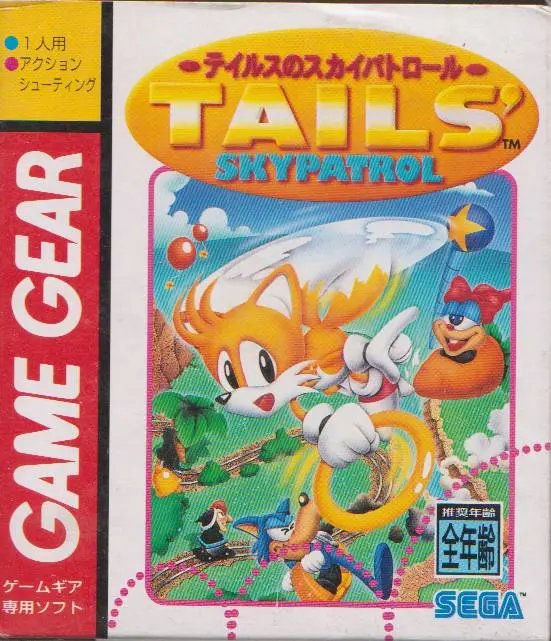
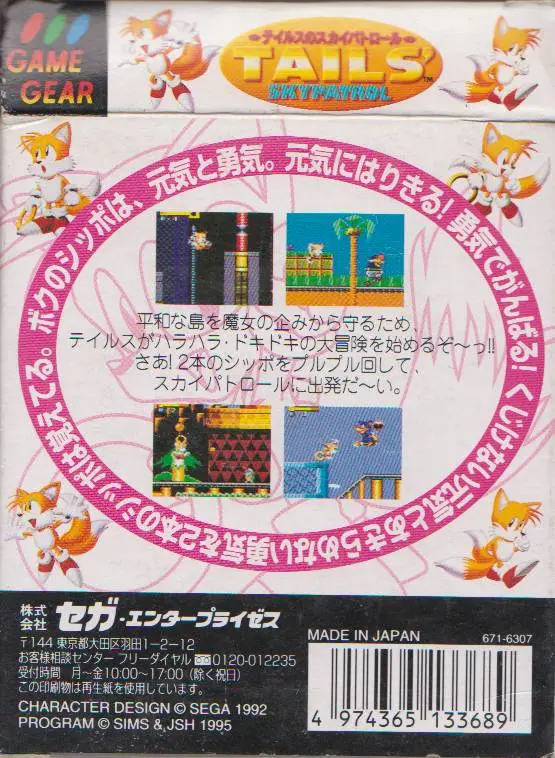
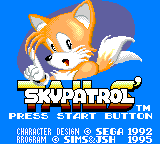
Japanese box.Back of the Japanese box.Japanese cartridge.The Japanese logo.Tails artwork.Tails artwork.Tails with his ring.Title screen.An early stretch of open sky.Arrow blocks and springs.Rail Canyon.Rail Canyon cliffs.Hocke-Wulf.Ruin Wood’s mine.Ruin Wood’s mountains.Bearenger.Metal Island.Metal Island’s airship.Carrotia.Dark Castle.Inside Dark Castle.Dark Castle’s pipes.The hidden options screen.Setting up the wall clip.
A Japan-only spin-off with no Sonic in it was always going to be a curio, and for years Tails’ Skypatrol was one of the most obscure games in the series. The compilations of the 2000s rescued it, and in the 2010s the comics finally gave Witchcart a second outing.
Releases and re-releases
Game Gear (Japan)28 April 1995 – ¥3,800; never released on its own elsewhere.
Sonic Adventure DX: Director’s Cut2003 (GameCube), 2004 (PC) – One of twelve Game Gear games to unlock; its first release outside Japan.
Sonic Gems Collection2005 – GameCube and PlayStation 2.
Sonic PC Collection2009 – PC.
Sonic Origins Plus2023 – With the rest of the Game Gear Sonic library, on PlayStation, Xbox, Switch and PC.
Witchcart’s comeback
Witchcart spent two decades as a footnote. Archie Comics reimagined her and her minions in Sonic Universe in 2016, and IDW brought the originals back for Tails’ thirtieth birthday in 2022, in a story that picks up after this game and ends with Tails beating her all over again.
The game that nearly lost Tails again
The game itself almost had a third life. Its developers converted it to the Game Boy Color as Boon Boon Kabun, with original characters in place of Sonic’s, but contractual problems kept it from release.
Sales & reviews
Sales
No sales figures have been published for the Japanese cartridge, and we have not found a reliable estimate.
JPReleased in Japan only
22/40Famitsu cross review
60%Average of the two period scores below
26thOf 28 Sonic games in USgamer’s ranking
Reception and review scores
Period scores from Sega Retro’s index of Japanese magazines, which is all there is for a game that never left Japan.
Sega Saturn MagazineJapan · September 1995 · readers’ rating
65%
FamitsuJapan · 5 May 1995 issue · 5, 6, 6, 5
55%
Japanese magazines were lukewarm. Famitsu’s four reviewers gave it 22 out of 40, and readers of Sega Saturn Magazine rated it 65% in the September 1995 issue (Sega Retro files that score as a readers’ rating, not a review). Wikipedia credits the magazine itself with calling it one of the weakest Sonic games for its controls and difficulty, while granting that it played like nothing else in the series.
Western critics met it in the compilations and were not much kinder. GameZone’s Louis Bedigian found it the most interesting of the Game Gear extras in Sonic Gems Collection, but 1UP’s Jeremy Parish dismissed both Tails games as garbage. USgamer placed it 26th of 28 Sonic games, with Nadia Oxford calling it adorable but hard to control; Retro Gamer found the controls and camera frustrating. Hardcore Gaming 101 was kinder, blaming the difficulty on Tails’ hitbox and a training level that teaches nothing, praising the graphics and sound, and recommending it to Tails fans and the curious.
Reader reviews
No reader reviews yet. Played it? Give it a score out of 10 and tell other fans what you think.
Every fact on this page was checked against the sources below. Sonic Retro and Sega Retro pages were read through Wayback Machine copies from late 2024 and early 2025, because both live sites show a bot check; each link opens the copy we read. The magazine scores come from Sega Retro’s review index.
To provide the best experiences, we use technologies like cookies to store and/or access device information. Consenting to these technologies will allow us to process data such as browsing behavior or unique IDs on this site. Not consenting or withdrawing consent, may adversely affect certain features and functions.
Functional
Always active
The technical storage or access is strictly necessary for the legitimate purpose of enabling the use of a specific service explicitly requested by the subscriber or user, or for the sole purpose of carrying out the transmission of a communication over an electronic communications network.
Preferences
The technical storage or access is necessary for the legitimate purpose of storing preferences that are not requested by the subscriber or user.
Statistics
The technical storage or access that is used exclusively for statistical purposes.The technical storage or access that is used exclusively for anonymous statistical purposes. Without a subpoena, voluntary compliance on the part of your Internet Service Provider, or additional records from a third party, information stored or retrieved for this purpose alone cannot usually be used to identify you.
Marketing
The technical storage or access is required to create user profiles to send advertising, or to track the user on a website or across several websites for similar marketing purposes.



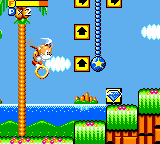 Training AreaTutorial · no boss · 5,000-point bonusA tropical warm-up that sets out every gadget in the game, from simple poles to troublesome Bonmetal blocks, and leaves you to work out what each one does. Its look seems to borrow from Sonic 2’s Emerald Hill.
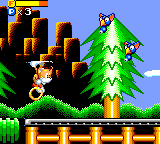 Rail Canyon AreaArea 1 · boss: Hocke-WulfRocky canyons, pine forests and the first stretches of Witchcart’s railway, patrolled by crows, turtle robots and balloon-borne guns.
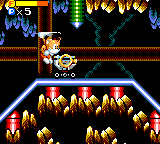 Ruin Wood AreaArea 2 · boss: BearengerA dark mine of moving pillars and trolley rides, then ancient ruins under the mountains, with leaping skeletons and plants that snap at Tails’ ring. The only area with two tunes of its own.
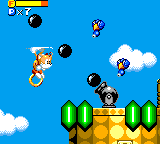 Metal Island AreaArea 3 · boss: CarrotiaA huge airship in the clouds, all propellers, rocket exhausts and swinging weights. The most open area in the game, and it wraps round vertically: fly off the bottom and you reappear at the top.
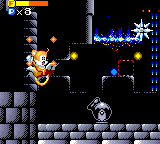 Dark Castle AreaArea 4 · boss: WitchcartThe witch’s grey-brick stronghold and its cramped steel interiors, crammed with homing cannons and Bonmetal traps. Likely the hardest area, though two Muteki Stars sit close together for a skilled flier.
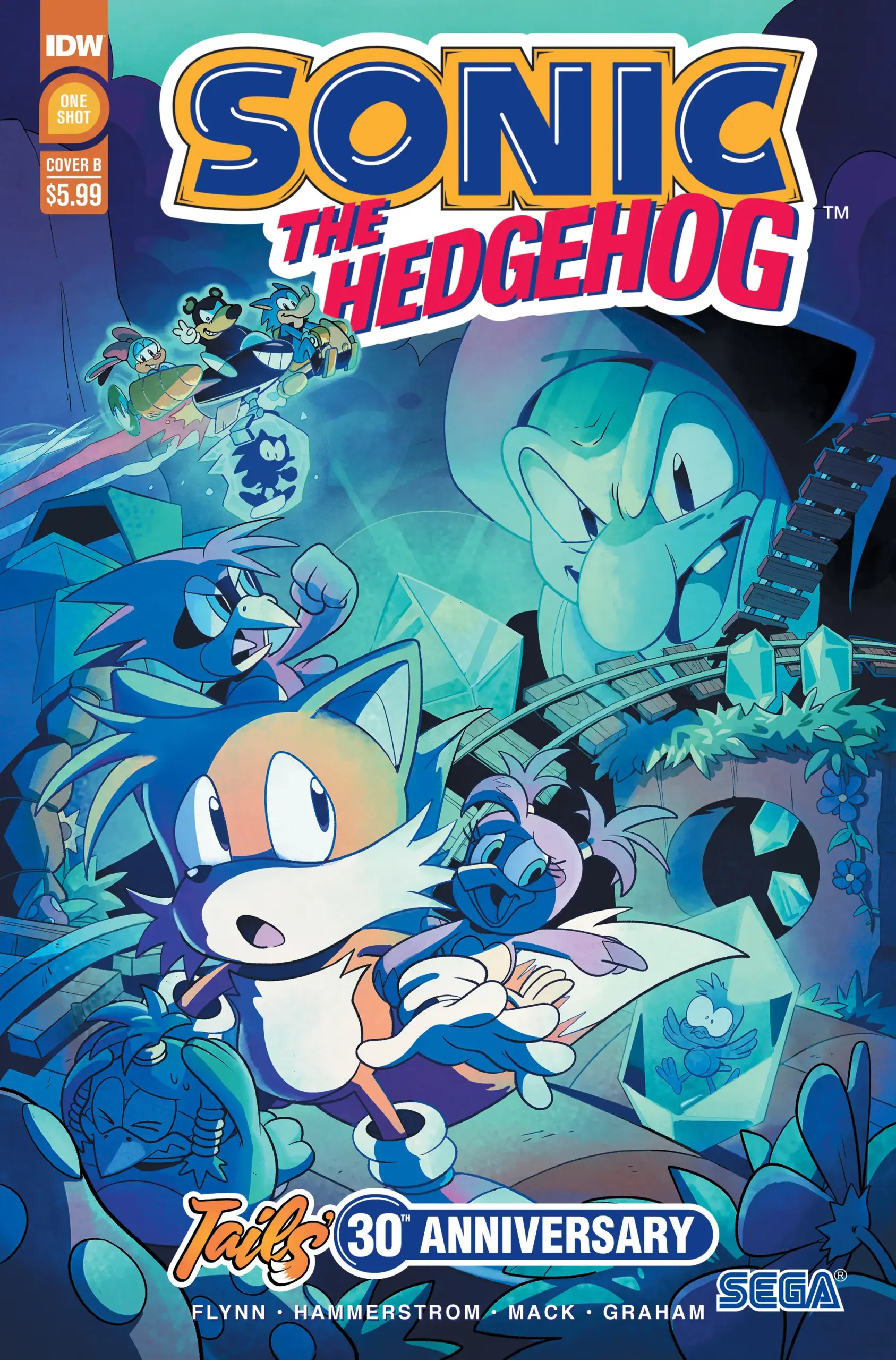 Tails’ 30th Anniversary SpecialIDW Publishing · 2022A one-shot that follows on from both this game and Sonic 3D Blast. Witchcart and her minions have taken over Flicky Island and sealed Sonic in crystal; Tails frees him with equipment taken from the minions, then knocks one of the witch’s own bolts back at her and traps her in crystal.
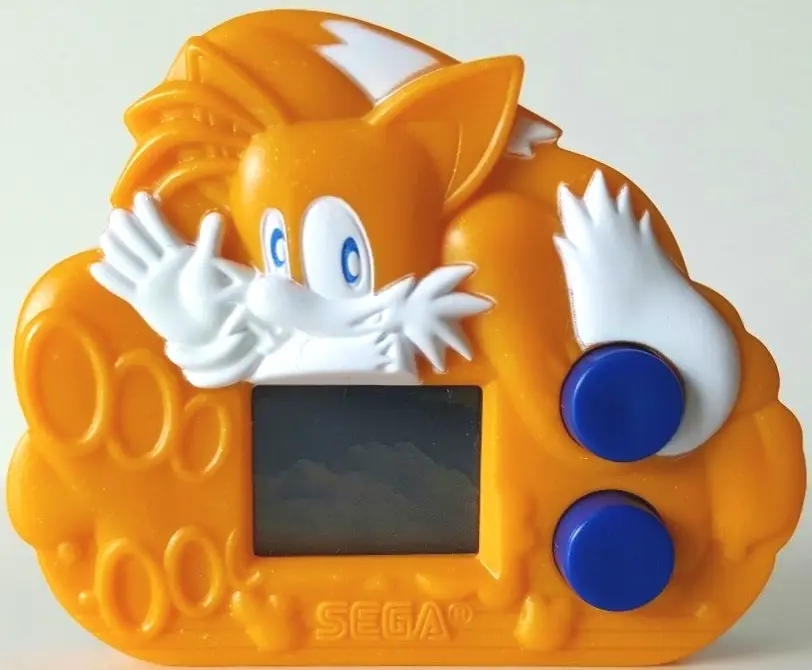 Tails Sky Patrol (LCD game)McDonald’s Happy Meal toy · US · 2003A different game with nearly the same name: a pocket LCD toy in which Tails moves up and down collecting rings. Thirty rings speeds things up; miss ten and it is over.
 Miles “Tails” ProwerThe only playable character
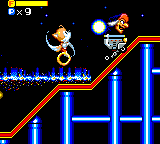 WitchcartThe villain · ウィチカート
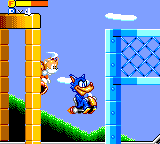 Hocke-WulfMinion · Rail Canyon · ホッケウルフ
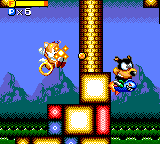 BearengerMinion · Ruin Wood · ベアンジャ
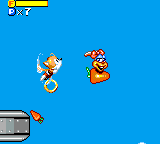 CarrotiaMinion · Metal Island · キャロッティア
 Balloon GunEvery area with enemiesA cannon held up by balloons. Shoot the gun and the balloon is yours to ride; pop the balloon and the gun drops.
 Tobikoshi CrowRail Canyon · Metal Island · Dark CastleSwoops in, strikes, pulls back; later ones fire shots too.
 DorigameRail Canyon · Metal Island · Dark CastleA two-legged turtle robot that throws things at low fliers. Worth 1,000 points.
 Bee FlyRail Canyon · Metal IslandBuzzes about at random; modelled on Sonic 2’s Whisp.
 HanerutonRuin Wood · Metal Island · Dark CastleA skeleton that springs out of the ground and bursts into flying bones.
 Bound HeadRuin Wood · Dark CastleA glowing ball that drops from above and bounces along.
 MinokichiRuin WoodA bagworm robot that drops from the ceiling.
 Capture BerryRuin WoodSnaps shut on the ring and holds Tails in place. Cannot be destroyed.
 GonRuin Wood · Dark CastleLeaps up, bites the ring and hangs on, slowing Tails down. Also indestructible.
 CarronadeMetal Island · Dark CastleA fixed cannon that swivels to aim; the castle’s ones track Tails.
 TashiyaDark CastleAn octopus robot that waddles along balancing a circus ball.