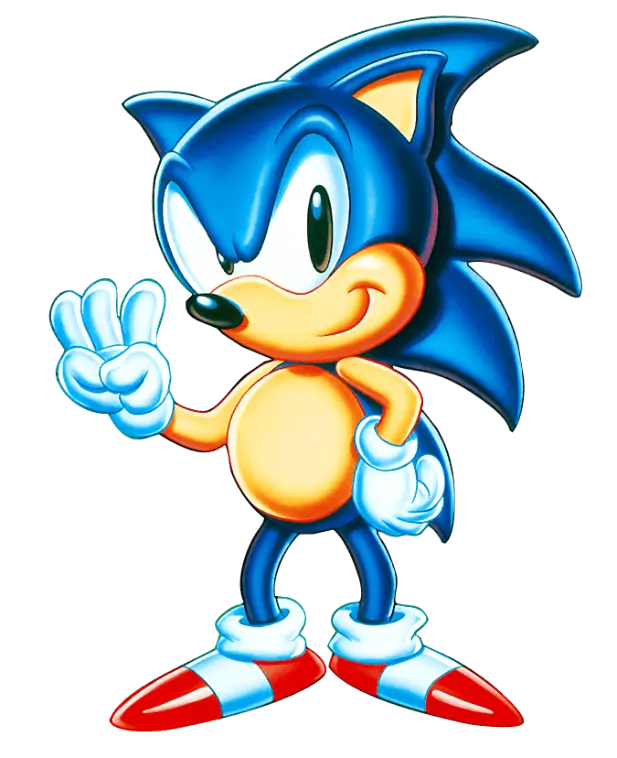
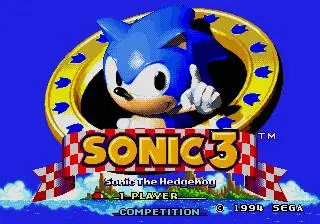
A crashed Death Egg, a floating island, three elemental shields and a new rival with spiked fists: the first half of the biggest classic Sonic adventure.
Released2 February 1994 (US) · 27 May 1994 (JP)
DeveloperSonic Team at Sega Technical Institute
IntroducesKnuckles the Echidna
ZonesSix, plus five Competition zones
Players1–2
SavesSix battery-free save slots
Title
Sonic the Hedgehog 3 ソニック・ザ・ヘッジホッグ3
Platform
Sega Mega Drive / Genesis (16-megabit cartridge with FRAM save memory)
Developer
Sonic Team and Sega Technical Institute
Publisher
Sega (Sega of America in North America)
Producer & lead programmer
Yuji Naka
Director & lead game designer
Hirokazu Yasuhara
Character designer
Takashi Thomas Yuda
Music
Bobby Brooks, Brad Buxer, Geoff Grace, Doug Grigsby III, Darryl Ross and Scirocco (alphabetically), with the Sega Sound Team
Players
1–2 (co-op with Tails, or Competition mode)
Released (North America)
2 February 1994, “Hedgehog Day” (US$69.99)
Released (Europe)
24 February 1994 in the UK (£49.99); 3 March 1994 in Germany and Spain
Released (Australia)
March 1994 (A$149.95)
Released (Japan)
27 May 1994 (¥5,800, product code G-5531)
Virtual Console (Wii)
Japan 21 August 2007; Europe 7 September 2007; North America 10 September 2007
Xbox Live Arcade
10 June 2009
Continued in
Sonic & Knuckles (October 1994), which locks on to make Sonic 3 & Knuckles
Over 4 million with Sonic & Knuckles, according to Sega
Overview
Sonic the Hedgehog 3 was released in the US on February 2, 1994, dubbed “Hedgehog Day”.
It picks up straight after Sonic 2. The Death Egg has come down on Angel Island, a land that floats in the sky, and its guardian, Knuckles the Echidna, has been fooled into believing Sonic is the thief. Six huge zones, each with two acts, take Sonic and Tails across the island, and for the first time you can save your progress.
Sonic Team planned something so big that it was split down the middle. The second half became Sonic & Knuckles later the same year, and plugging Sonic 3 into the top of that cartridge joins them into the complete game, Sonic 3 & Knuckles. On its own, Sonic 3 still brought plenty that was new: three elemental shields, the Insta-Shield, Tails flying under your control, Blue Sphere Special Stages and a two-player Competition mode with zones of its own.
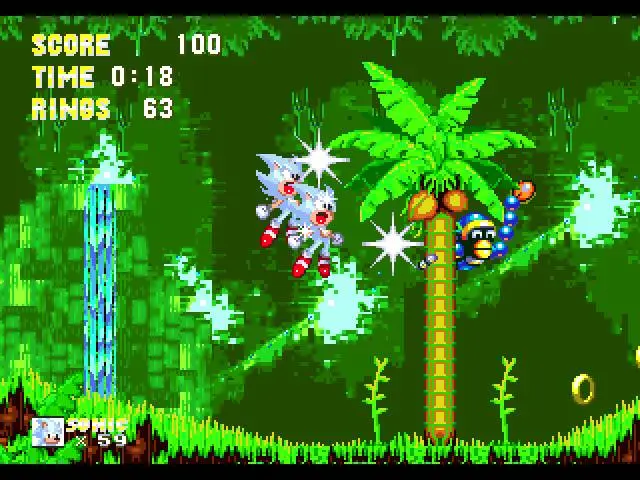
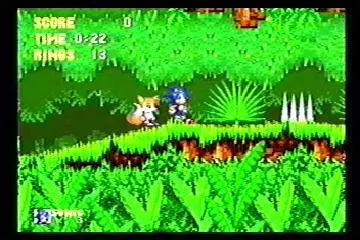
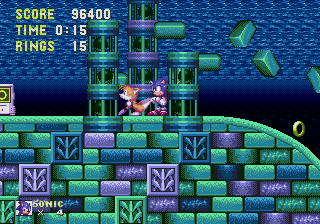
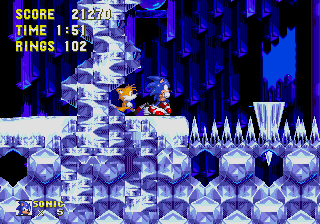
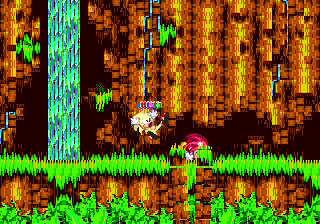
Angel Island Zone’s jungle.Hydrocity Zone, under the island.IceCap Zone’s ice caves.
Quick Answers
Short answers first; the details are further down.
When did Sonic the Hedgehog 3 come out?
On 2 February 1994 in North America, a date Sega branded “Hedgehog Day”; 24 February in the UK; and 27 May 1994 in Japan. More →
Who is Knuckles?
The last echidna and the guardian of Angel Island. Eggman tricks him into thinking Sonic has come to steal the Chaos Emeralds, so he spends Sonic 3 getting in the way. More →
Can you play as Knuckles in Sonic 3?
Only in Competition mode. To play through the main story as Knuckles, lock Sonic 3 on to Sonic & Knuckles. More →
Why was Sonic 3 split into two games?
The team planned far more than it could finish in time, so the material was divided. Sonic 3 shipped first; the rest became Sonic & Knuckles, and the two join through Lock-On Technology. More →
How many zones are in Sonic 3?
Six, two acts each, starting at Angel Island and Hydrocity and ending at IceCap and then Launch Base. Competition mode adds five small race courses. More →
How do you get the Chaos Emeralds?
Find the giant rings hidden in each act. They lead to the Blue Sphere Special Stages; collect every blue sphere, avoid the red ones and the Emerald is yours. All seven unlock Super Sonic and the good ending. More →
Can you save in Sonic 3?
Yes. It was the first Sonic on cartridge that could save (Sonic CD had already used the Mega-CD’s back-up memory): six slots on a chip that needs no battery, saving after each zone along with your Emeralds. More →
Did Michael Jackson work on the music?
Jackson and his team were involved late in development and left before release, and how much of the final soundtrack comes from that work has never been fully settled. More →
Is there a level select?
Yes. Yes. Right after the Sega logo, the moment Sonic leaps at the camera, enter Up, Up, Down, Down, Up, Up, Up, Up. The window is very short. More →
Where can I play it today?
As part of Sonic 3 & Knuckles in Sonic Origins (2022). Sega delisted several older standalone versions ahead of its release. More →
Plot / Story
Super Sonic meets Knuckles, and loses the Chaos Emeralds.Screenshot via Sonic Retro
Sonic’s Adventure Continues
Sonic the Hedgehog 3 takes place on the mysterious Floating Island which holds many special powers. The source of these powers are Chaos Emeralds. In Sonic the Hedgehog 2, Sonic and Tails thought that they had destroyed the Death Egg, which was Dr. Robotnik’s heavily armored ship. Instead, Dr. Robotnik managed to crash land on the Floating Island. After learning that the island is able to float in the sky by harnessing the power of the emeralds, the Doc decides to steal the emeralds so he can repair his Death Egg ship.
To obtain the emeralds, Dr. Robotnik tricks Knuckles, the guardian of the Floating Island’s Chaos Emeralds. He also tells Knuckles that Sonic and Tails are the ones trying to steal the emeralds.
Between battling new types of Badniks and trying to outsmart Knuckles, Sonic and Tails have their work cut out for them once they arrive on the Floating Island and search for Dr. Robotnik.
The fall of Angel Island
Tails picked up the trail first. His newest gadget, the Jewel Radar, started registering Chaos energy somewhere out at sea, and Sonic had a clue of his own: an old ring inscribed with ancient writing that brought back a story about a people who drew their strength from a “Stone of Power”, until a greedy few seized it, their civilisation vanished and its land rose into the sky. That was all the excuse needed to fuel up the Tornado.
The land was real. Angel Island (Floating Island in the Western manuals and comics of the time) had drifted above the sea for ages, until the crippled Death Egg came down on it at the end of Sonic 2 and dragged it into the ocean, raising a tidal wave that rolled for miles.
Its guardian had already lost everything. Knuckles, the last of the echidnas, was tending one of the island’s Emerald altars when the gem shook, glowed and flashed, knocking him out; when he came round, every altar was empty, and on the horizon stood an egg-shaped shape straight out of an old legend about a dragon’s egg. Then a friendly scientist appeared, said he had come to study it, and warned Knuckles that a blue hedgehog called Sonic was on his way to steal the Emeralds.
A destined meeting
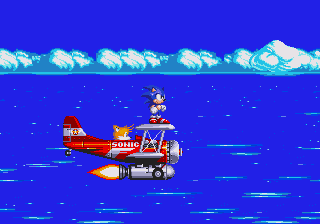
Sonic and Tails arrive on the Tornado.Screenshot via Sonic Retro
Sonic and Tails arrive on the Tornado, and Sonic, unable to resist showing off, uses the seven Chaos Emeralds he brought back from West Side Island to become Super Sonic and race ashore. A fist comes out of nowhere. The Emeralds scatter, Sonic turns blue again, and a red echidna scoops them up, laughs and vanishes into the jungle.
From then on Knuckles is a thorn in Sonic’s side, popping up to block his path; in Carnival Night Zone he cuts the power and floods the way ahead. Meanwhile Eggman builds a new army to find the Emeralds, because he needs their power to get the Death Egg flying again. By the last zone, Launch Base, the station sits half-sunk in a lake under a forest of cranes, nearly repaired, and Sonic must stop the launch.
Giant rings, Blue Spheres and saving
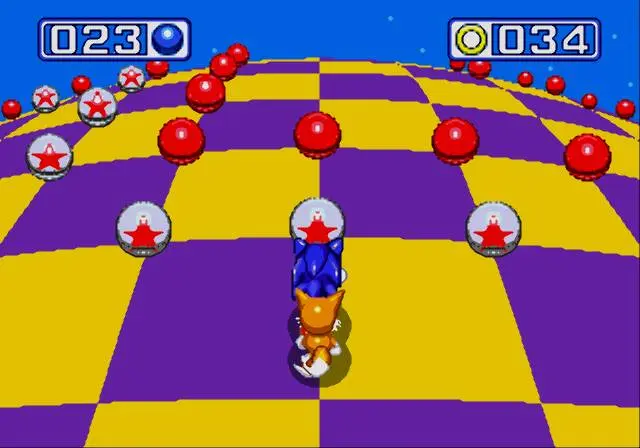
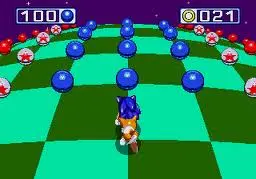
The Blue Sphere Special Stage.
Sonic 3 was the first Sonic cartridge with a save feature, and its save files are built around the Emeralds. There are six slots, saving after each zone along with the gems you have won, and a finished file lets you return to any zone to look for the ones you missed.
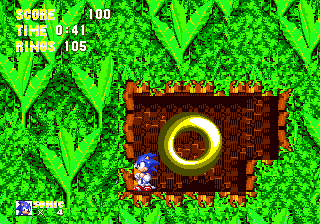
Finding them means hunting for giant rings, which are tucked into corners and secret rooms rather than handed out at checkpoints. Each one leads to a checkerboard globe of blue and red spheres: collect every blue one and avoid the red to win an Emerald. Star Posts still matter, but a circle of stars over one now leads to a Bonus Stage instead, a giant gumball machine that hands out power-ups, provided you pass it holding 50 rings.
Win all seven and you get the good ending and the return of Super Sonic. With 50 rings, jump and then press the button again in mid-air; he still drowns, can be crushed and can fall into pits, and he cannot transform while a shield is on.
Three shields and a fox who flies
The old shield is replaced by three elemental ones, each with its own move when you press jump again in mid-air. The Water Shield lets you breathe underwater and bounce off the ground. The Fire Shield protects against flames and fires Sonic forward in a dash. The Lightning Shield guards against electricity, pulls in nearby rings and gives a double jump. Without a shield, the same button gives the Insta-Shield, a split-second flash that widens Sonic’s attack.
Tails can now fly when you tell him to, by pressing jump twice, until he tires. With a second player controlling him, he can even pick Sonic up and carry him to places he could not reach alone.
Zones in Sonic the Hedgehog 3
Six zones of two acts each, every act larger than Sonic 2’s and full of alternative routes. Many acts have a sub-boss as well as the usual Eggman fight.
Angel Island ZoneTwo actsJungle, and the first run-in with Knuckles; RhinoBot, Monkey Dude, Bloominator and Catakiller Jr.
Hydrocity ZoneTwo actsUnderground and full of water, with spinning hand-wheels and a wall that chases you; Turbo Spiker, Buggernaut, Jawz, Blastoid, Mega Chopper and Pointdexter.
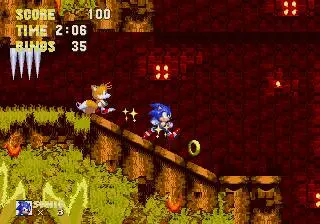
Marble Garden ZoneTwo actsOvergrown ruins under purple mountains, with spinning tops and Eggman drilling for jewels; Bubbles, Mantis and Spiker.
Carnival Night ZoneTwo actsA theme park at night with cannons, balloons and pink water; Batbot, Clamer and Sparkle.
IceCap ZoneTwo actsA snowboard dash down the mountain, then ice caves and icebergs; Penguinator and Star Pointer.
Launch Base ZoneTwo actsEggman’s building site, where the Death Egg is being repaired; Corkey, Flybot767, Orbinaut, Ribot and Snail Blaster.
Competition mode adds five race courses of its own: Endless Mine, Desert Palace, Chrome Gadget, Balloon Park and Azure Lake.
In comics, TV & other media
Knuckles made his comic debuts on both sides of the Atlantic within months of the game. More in Sonic in other movies and media.
“Wonderman”Right Said Fred · UK single · 1994Right Said Fred’s song was a Sega of Europe promotion. The video mixes Sonic footage with Steve O’Donnell, the actor who fronted Sega’s European TV adverts at the time, and the single stopped at number 55 in the UK chart.
Sonic the ComicFleetway · UK · 1994The British comic took its time: the story began in the Sonic Summer Special 1994 and ran from issue 33 to 38. It also gave the zones lives of their own, with Carnival Night a park built by the Marxio Brothers to raise money for Robotnik and Launch Base the yard where his improved Death Egg was put back together.
Archie’s Sonic the Hedgehog #13Archie Comics · USArchie squeezed its version into 12 pages and used them to introduce Knuckles, guardian of the Floating Island and of the one Chaos Emerald that keeps it airborne.
Sonic & Knuckles (novel)Michael Teitelbaum · USA junior novel that borrows loosely from the game.
Characters
Sonic 3 is where the classic trio comes together, though one of them spends the whole game on the wrong side.
Character
Who they are
In this game
Stats & abilities
Sonic the HedgehogThe hero
Fresh from saving West Side Island, Sonic finds a ring on the beach that reminds him of an old legend and sets off to see if it is true, Chaos Emeralds in hand.
Loses the Emeralds to Knuckles within seconds of arriving, then chases Eggman across Angel Island to stop the Death Egg relaunching.
New: the Insta-Shield (jump, then press again)
Spin Dash and Spin Attack
Shield moves: water bounce, fire dash, lightning double jump
Super Sonic with seven Emeralds and 50 rings
Miles “Tails” ProwerInventor and pilot
Sonic’s sidekick has become an inventor. His new Jewel Radar is what picks up the Chaos energy and starts the adventure, and he flies the Tornado to Angel Island.
Follows Sonic as in Sonic 2, or can be played alone. A second player can take him over at any time.
Flies on command (press jump twice) until he tires
Can carry Sonic when a second player controls him
Infinite lives as the following partner
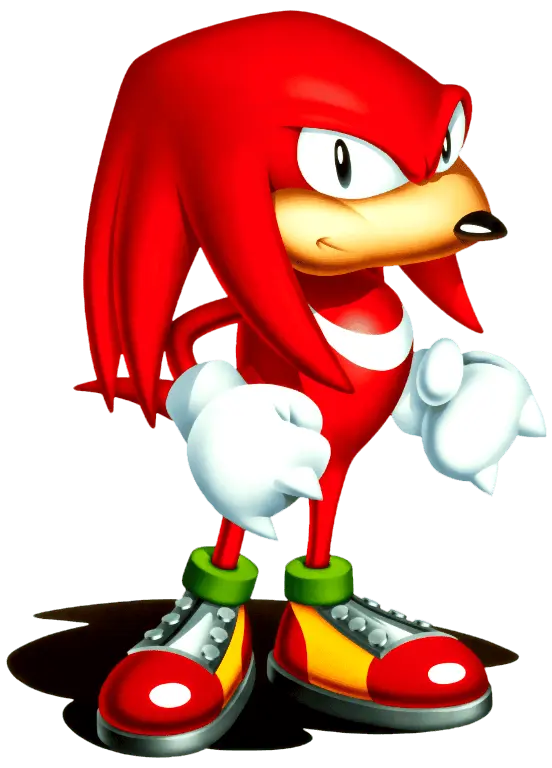
Knuckles the EchidnaDebut
The last of the echidnas and guardian of Angel Island’s Emerald altars. The team wanted a rival for Sonic, first imagined as another hedgehog; an internal contest was won by Takashi Yuda’s echidna. Children in a focus group liked him except for one thing, his original green colour, so he became red.
Tricked by Eggman into seeing Sonic as a thief, he punches the Emeralds out of Super Sonic, then keeps getting in the way, most memorably by blacking out and flooding Carnival Night. Playable only in Competition mode until Sonic & Knuckles.
Spin Attack and Spin Dash in Competition mode
Glides and climbs in Sonic & Knuckles
Yellow socks in Sonic 3 (a palette fix, see Glitches)
Dr. EggmanDr. Robotnik in the West
Survived the Death Egg’s fall and finds himself on a floating island full of Chaos energy. He tells Knuckles he is a scientist studying the giant egg, and that Sonic is the real threat.
Needs the Emeralds to relaunch the Death Egg, which he repairs in Launch Base Zone. He attacks Sonic at the end of each zone, and sometimes in the middle of one, as in Marble Garden, where he drills for jewels.
New machines in every zone
Rides a Drill Mobile in Marble Garden
The Death Egg is half-sunk in Launch Base’s lake
Super SonicThe golden form returns
The super form from Sonic 2, and the first thing you see in the game: Sonic arrives on Angel Island already super, until Knuckles intervenes.
Earned back by winning all seven Emeralds in the Blue Sphere stages.
50 rings, then a second press in mid-air
Not while wearing a shield
Still drowns and can be crushed
The BadniksEggman’s new army
A fresh robot army built to hunt for the Emeralds, from Angel Island’s RhinoBots and coconut-throwing Monkey Dudes to Launch Base’s frog-like Ribots.
Twenty-three kinds across the six zones (listed below).
Break them to free the animals inside, as before.
The Badniks
Every Badnik in Sonic 3 and the zone it lives in. The pictures are the game’s own sprites.
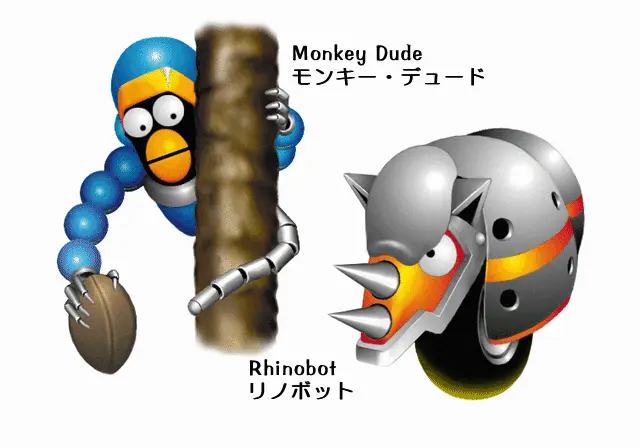
RhinoBotAngel IslandA robot rhino that charges at you.
Monkey DudeAngel IslandA blue monkey that throws coconuts.
BloominatorAngel IslandA red flower on a metal stem.
Catakiller Jr.Angel IslandA caterpillar inside a shield; only its head can be hit.
Turbo SpikerHydrocityA red-wheeled vehicle carrying a spike.
BuggernautHydrocityA blue mosquito that usually comes in threes.
JawzHydrocityA blue robot shark that flies straight ahead.
BlastoidHydrocityA cannon.
Mega ChopperHydrocityA red piranha that bites and eats your rings.
PointdexterHydrocityA spiny pufferfish.
BubblesMarble GardenA blue bubble with spikes.
MantisMarble GardenA green mantis that leaps up at regular intervals.
SpikerMarble GardenIts fake spikes work as a spring for Sonic.
BatbotCarnival NightA bat with a light bulb for a tail end.
ClamerCarnival NightA blue clam that doubles as a spring.
SparkleCarnival NightAn electric grenade, usually in pairs.
PenguinatorIceCapA blue penguin that slides along the ground.
Star PointerIceCapA dark, icy Orbinaut.
CorkeyLaunch BaseA grey energy cannon on rails or ceilings.
Flybot767Launch BaseA silver bird that flies into you.
OrbinautLaunch BaseA silver orb with four spiked balls, moving only when you do.
RibotLaunch BaseA robot frog that swings and flings metal balls.
Snail BlasterLaunch BaseA snail whose shell hides its cannons.
The people who made it
Names and roles from the game’s credits.
Yuji NakaProducer & lead programmerReluctant at first to make another sequel, he agreed once he was made producer and given more freedom.
Hirokazu YasuharaDirector & lead game designerWanted the sprawling game that Sonic 2’s schedule had not allowed. He stayed on in America afterwards.
Takashi Iizuka & Hisayoshi YoshidaSenior game designersIizuka, newly arrived from Japan, pushed for characters who play differently and take different routes.
Takashi Thomas YudaCharacter designer & animatorWon the contest to design Sonic’s new rival: Knuckles.
Kunitake Aoki & Satoshi YokokawaCG artist & enemy artistAoki also worked on the scenery; Yokokawa drew the Badniks.
Hiroshi Nikaidoh & Masanobu YamamotoSenior programmersThe programming team under Naka.
Six credited composersMusicBobby Brooks, Brad Buxer, Geoff Grace, Doug Grigsby III, Darryl Ross and Scirocco, in alphabetical order, alongside a Sega Sound Team that included Jun Senoue.
Roger HectorSTI director & executive coordinatorSaw early on that the project was too big for one game.
How it was made
Sonic 3 was planned as one enormous game and shipped as half of one. Here is how that happened, from the size of the plan to the day it reached the shops.
Too big for one cartridge
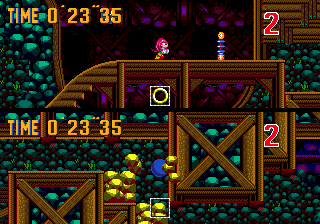
Competition mode: Sonic and Knuckles race through Endless Mine.Screenshot via Sonic Retro
Everything about the plan was bigger. Levels were drawn at around three times the size of Sonic 2’s, the story was to be told through in-game cutscenes rather than text so that it would read the same in every country, and fourteen zones were mapped out. Putting all of that on one cartridge, with save memory, would have needed a 34-megabit board that cost far too much to make, and Sega of America had already committed to a McDonald’s Happy Meal promotion for February 1994.
Roger Hector, who ran STI and is credited as an executive coordinator on both halves, recalled seeing early on that it would not fit. The material was divided: Flying Battery Zone, fifth in the original running order, went to the second cartridge, Launch Base became the finale, and the six remaining zones were finished off so that the first half could stand alone. Lock-On Technology was built so that the two could still be played as the single game the team had designed.
A Japanese team in California
The crew was largely Sonic 2’s. After that game, Sega Technical Institute split along national lines: its Japanese staff, among them Yuji Naka, Hirokazu Yasuhara and a young designer called Takashi Iizuka, took on Sonic 3, while the American developers got a Sonic project of their own, Sonic Spinball. Naka, who had no wish to repeat himself, came round once he was made producer; he and Yasuhara drew up the design document and the schedule.
Early work went into 3D. The Sega Virtua Processor, a chip developed with Samsung to put simple polygons on Mega Drive cartridges, was the basis for an isometric prototype. When it became clear the chip would not be ready in time, the team went back to 2D, and the isometric idea waited until Sonic 3D Blast in 1996.
A rival called Dreds
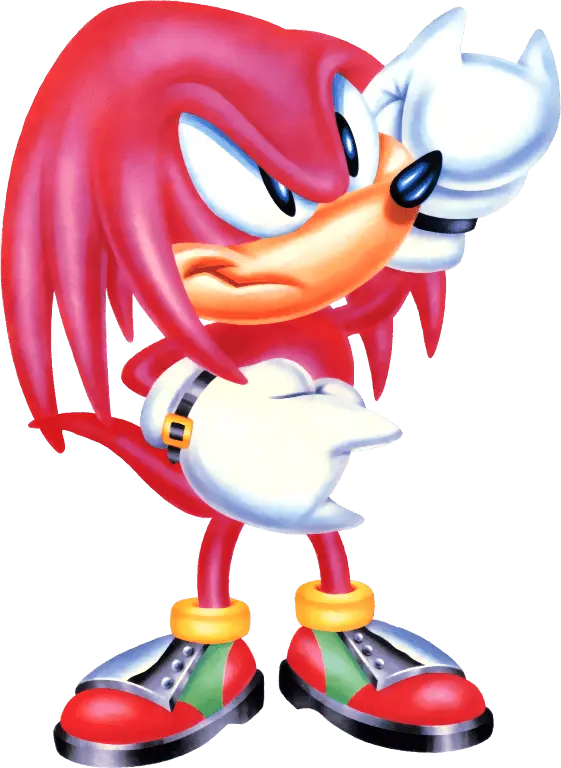
Knuckles the Echidna.
Knuckles took several attempts. The first rival on the drawing board was another hedgehog; an internal design contest then went to Takashi Yuda’s echidna, a character built around strength the way Sonic is built around speed. His working name was Dreds, after the dreadlocks, until Pamela Kelly, who led the game’s marketing, chose “Knuckles”, and his shoes take their colours from the Jamaican flag.
He was not red at first. Tested on groups of American children, the design did well in every respect except its green colouring, which was changed. For Iizuka a rival with his own moves also answered a complaint about Sonic 2, where Tails handled too much like Sonic: Knuckles’ gliding and climbing let the designers build upwards, with routes that only he can use.
Snowboards and carnivals
Some zones came straight out of the team’s life in California. IceCap grew from staff snowboarding outings, which one developer remembered mostly for the injuries, and at one stage it was meant to follow Flying Battery, with Sonic riding a door from the airship down the mountain as his board. Carnival Night borrowed its look from the touring funfairs that set up in the area. Even the island has a Bay Area name: the real Angel Island, in San Francisco Bay, was once the first stop for many immigrants arriving in America.
The Michael Jackson question
The soundtrack is a long-running puzzle for Sega. Michael Jackson and his sound team were brought in late in development and left before release, and staff accounts of what was kept disagree, so it is not fully clear how much of the music Sega owns. Six composers are credited; alphabetically, they are Bobby Brooks, Brad Buxer, Geoff Grace, Doug Grigsby III, Darryl Ross and Scirocco.
“Hedgehog Day”
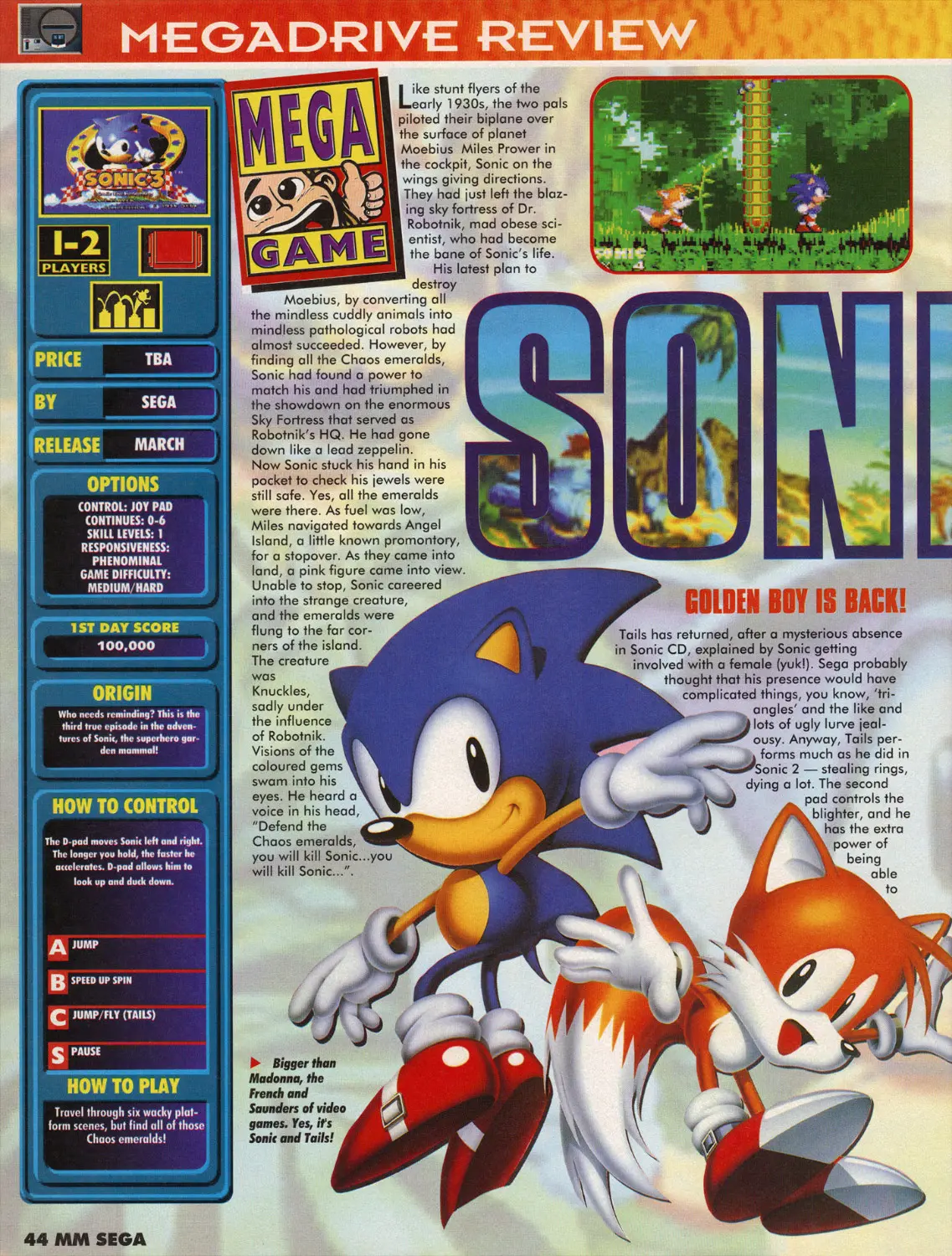
Mean Machines Sega issue 17’s Sonic 3 feature, from Sonic Scene’s magazine archive.
Punxsutawney, Pennsylvania, is famous for one thing: Groundhog Day, every 2 February. That was also Sonic 3’s American release date, so Sega’s marketing renamed it “Hedgehog Day”, launched the game in Punxsutawney itself and brought along the giant Sonic balloon first seen in 1993. Food and snack tie-ins followed, from McDonald’s toys to Life Savers and SpaghettiOs.
Western pre-orders came with a free CD, Sonic the Hedgehog Boom, although its tracks turned out to be from Sonic Spinball and the American Sonic CD rather than Sonic 3. Japan waited until 27 May. Sega never explained why; the rumour was a bigger 24-megabit Japanese cartridge, dropped once imported copies were already in the shops. Japanese pre-orders came with a “History of Sonic” video.
Firsts: what this game introduced
What Sonic 3 added to the series:
1Knuckles the EchidnaSonic’s rival, and later friend, makes his debut.
2Angel IslandThe floating island and its guardian became a fixture of the series.
3Elemental shieldsWater, Fire and Lightning, each with its own move.
4The Insta-ShieldA mid-air flash that briefly widens Sonic’s attack.
5Tails flies for realFlight under player control, and the ability to carry Sonic.
6SavingThe first Sonic cartridge to save, and the first with several save slots, on a battery-free chip.
7Blue SphereThe checkerboard Special Stages, later a standalone game via Lock-On.
8Competition modeTwo-player racing on courses made for it.
9Sub-bossesMany acts now have a sub-boss of their own, not just Eggman at the end of the zone.
10A pre-order bonusNo earlier Sonic game in the West had a pre-order gift; this one came with a free CD.
Cheats & secrets
Sonic 3’s codes are tied to the sound test and the Sega logo.
Level Select and Debug Mode
Wait for the Sega logo to dim and Sonic to leap at the camera, then enter Up, Up, Down, Down, Up, Up, Up, Up straight away. A ring sound confirms it; the timing is notoriously tight. A new option then appears in the title screen menu (labelled Sound Test) that leads to the level select. Hold A and press Start on a zone to play it with debug mode: B switches between Sonic and object placing, A cycles objects and C places them. (In Sonic Jam you type it at the title screen instead, and the timing does not matter.)
All Chaos Emeralds
In the level select’s sound test, play 02, 04, 05, 06. An Emerald sound plays, and you have all seven.
Night Mode
With the level select on, choose a zone and press C and Start together.
The hidden eighth Special Stage
Pick “Special Stage 2” on the level select with sound 07 playing and hold A as you press Start. You get a stage that is not used in the game: a long spiral, no rings at all, and as the prize a grey Emerald that has no effect.
Level select from Sonic 2
On real hardware: turn on the level select in Sonic 2, swap in the Sonic 3 cartridge without switching off, and press reset.
Codes checked against Sonic Retro’s hidden content page, November 2026.
Glitches, exploits and oddities
Graphical slips first, then the bugs that change how the game plays. Several were tidied up when Sonic 3 was joined to Sonic & Knuckles, and more in Sonic Origins.
Garbled shields
Screen changes, such as the jump into a Bonus Stage, can leave a shield flickering with scrambled tiles for a few frames.
Knuckles’ yellow socks
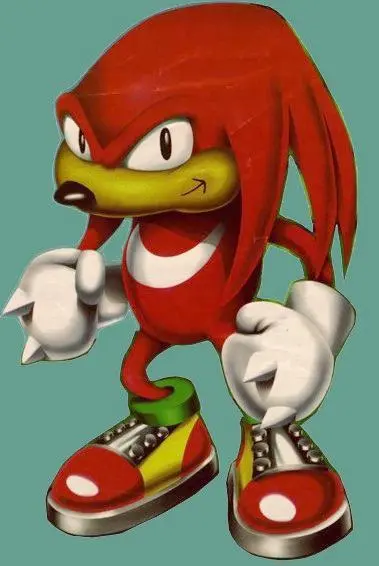
In Sonic 3 Knuckles’ socks are yellow, not green, apparently because green caused worse colour clashes in the palette, and a few Western illustrators copied the yellow. Competition mode and Sonic & Knuckles colour him correctly, and Sonic Origins puts it right.
“Blue Knuckles” on the signpost
Watch the end-of-act signpost as it spins and you may catch a blue Knuckles face among its frames. In Sonic 3 & Knuckles his face is dropped from Sonic’s signposts altogether.
Sudden stops
Rolling fast through some loops and quarter-pipes can bring a character to a dead halt, because the collision there is unreliable. Hydrocity is the worst for it, with a few spots in Carnival Night and Launch Base.
Vertical wrap
Marble Garden Act 1 and IceCap Act 1 loop from the bottom of the map back to the top. Duck to pull the camera down and jump straight away, and the camera can lose you and wrap round the level, carrying you through solid objects, past death planes and into Knuckles-only areas. Two Sonic & Knuckles acts share the flaw; Sonic Origins fixed it.
Jump buffering
Hold a jump button while the title card is still on screen and your character jumps the instant play begins. Do it on the way into the gumball Bonus Stage and Sonic can turn super, or Tails can shoot upwards. Sonic 3 & Knuckles fixed it in the main game but not in Competition mode; Sonic Origins fixed it everywhere.
Wandering during the tally
In a two-player game, if Tails lifts Sonic just as the Act 1 signpost lands, Sonic stays free to roam while his bonus is counted.
Videos & media
Sonic 3 is now played as part of Sonic 3 & Knuckles in Sonic Origins. Two official videos from its launch.
The official Sonic Origins trailer, from the Sonic the Hedgehog channel.
SEGA’s Sonic Central presentation of 7 June 2022, which showed Sonic Origins and its version of Sonic 3 & Knuckles.
Trivia & facts
There is an unused eighth Special Stage, and clearing it awards a grey Emerald.
Angel Island takes its name from the island in San Francisco Bay, near where the game was made.
Knuckles, 1994 artwork.Knuckles was designed green and turned red after a focus group of children.
Unused data for a playable Knuckles is still in the Sonic 3 cartridge, including his character icon.
Sonic 3 reached North America on Groundhog Day 1994, hence “Hedgehog Day”.
Sega planned a combined release of both halves, known as “Sonic 3 Limited Edition”, then shelved it.
Flying Battery Zone was meant to be Sonic 3’s fifth zone before it moved to Sonic & Knuckles.
Media & artwork
Box art, artwork and screenshots, mostly from Sonic Scene’s own galleries. Select any image to view it larger.
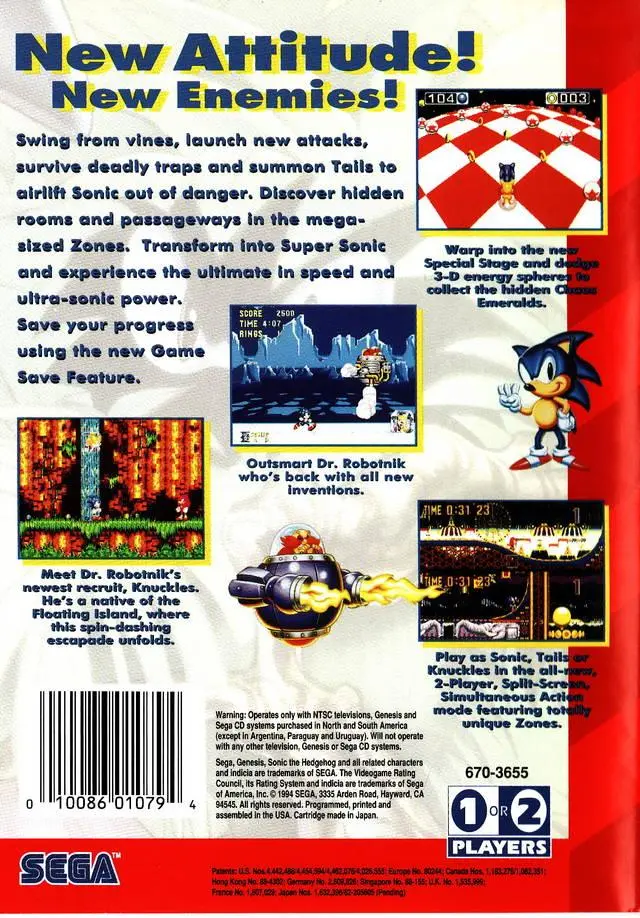
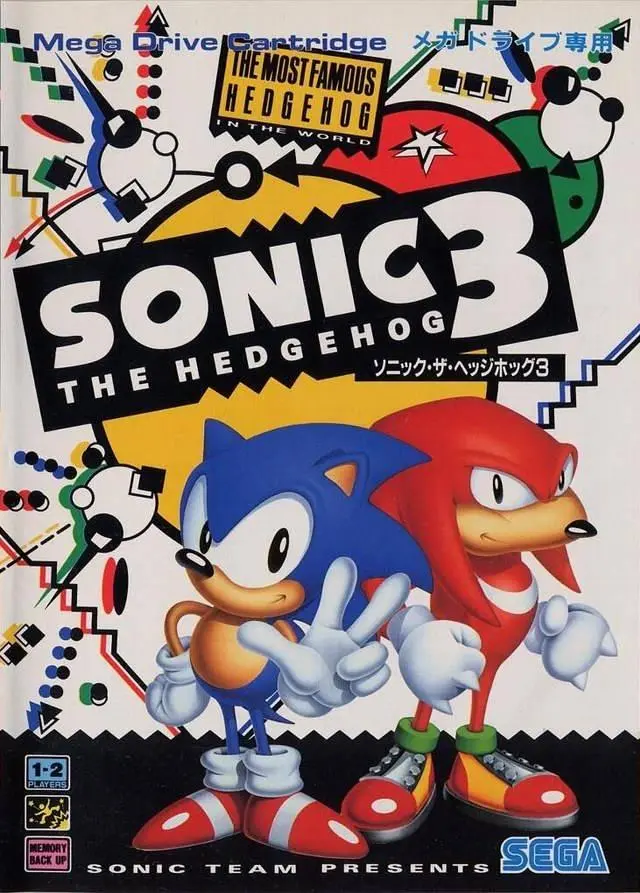
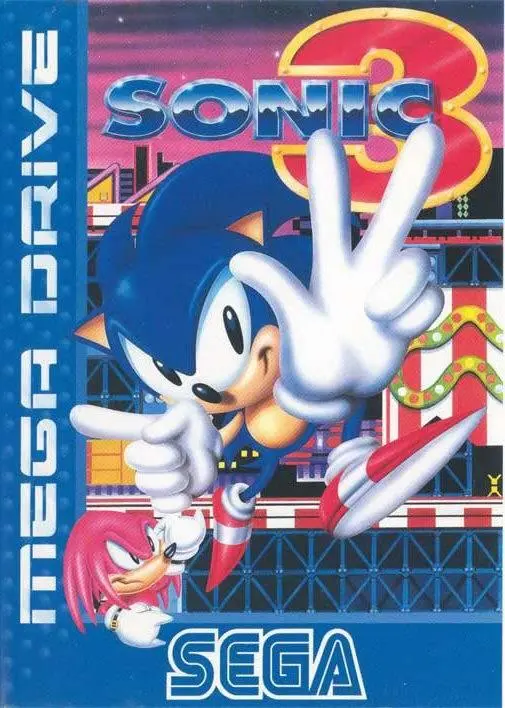
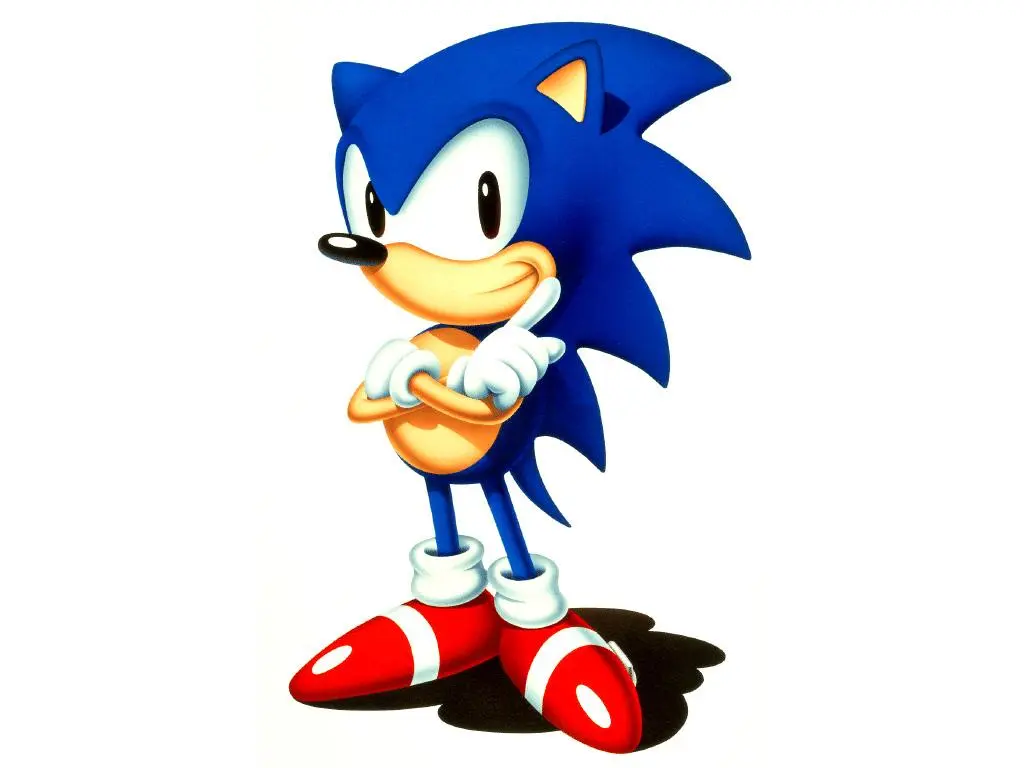
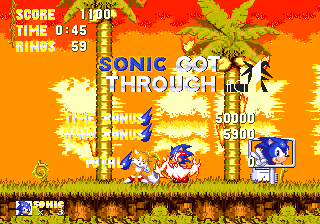
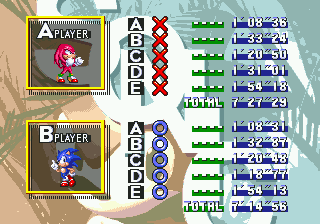
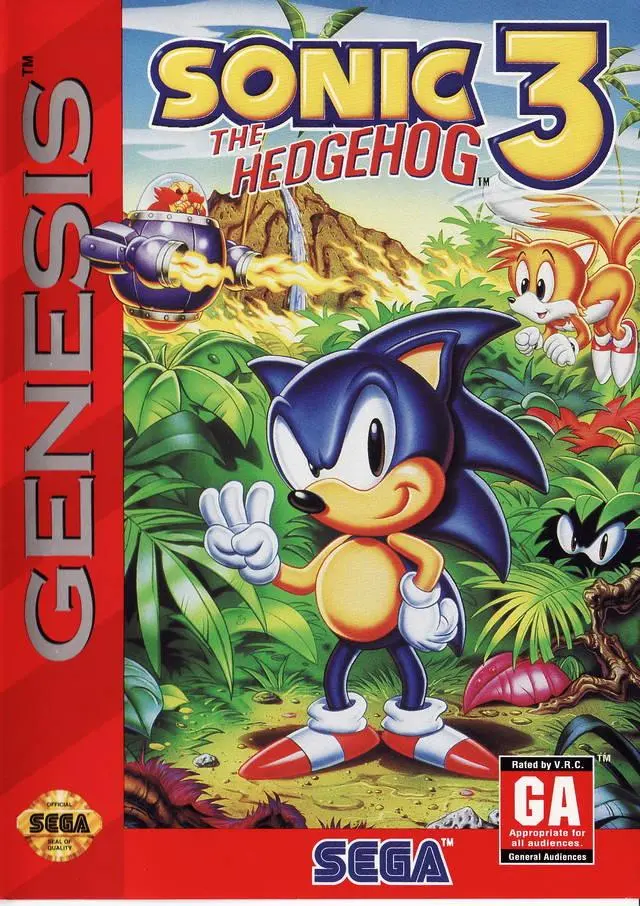
North American Genesis box.Back of the North American box.Japanese Mega Drive box.European Mega Drive box.Sonic, 1994 artwork.Sonic, 1994 artwork.Tails, 1994 artwork.Knuckles, 1994 artwork.The title screen.Angel Island Zone.A giant ring.A Special Stage.Act cleared.Competition mode results.Launch Base Zone boss.Super Sonic in IceCap Zone.
Sonic 3 is now almost always played as Sonic 3 & Knuckles, widely considered the high point of the classic series and the standard later 2D Sonic games are measured against.
From Mega Drive to Sonic Origins
Mega Drive / GenesisFebruary–May 1994 – North America 2 February, UK 24 February, Japan 27 May.
Sonic & KnucklesOctober 1994 – The second half; lock Sonic 3 on top for the full game.
Sonic & Knuckles Collection1997 – Windows PC.
Sonic Jam1997 – Sega Saturn.
Sonic Mega Collection2002 – GameCube, then PlayStation 2 and Xbox.
Virtual Console2007 – Wii: Japan 21 August, Europe 7 September, North America 10 September.
Xbox Live Arcade10 June 2009 – Xbox 360.
Steam2011 – Windows; Mac and Linux support came later through the Sega Genesis Classics hub.
Sonic Origins23 June 2022 – As Sonic 3 & Knuckles, on PlayStation, Xbox, Switch and PC.
Also playable in
From our original page:
1994 Sonic the Hedgehog 3, Tiger LCD handheld
1997 Sonic & Knuckles Collection, PC
1997 Sonic Jam, Sega Saturn
1999 Sonic & Garfield Pack, PC
2000 Sonic Action Pack, PC
2001 Sonic Action 4 Pack, PC
2002 Twin Pack (Sonic & Knuckles Collection with Sonic CD), PC
2002 Sonic Mega Collection, Nintendo GameCube
2003 Sega PC Mega Pack, PC
2004 Sonic Mega Collection Plus, PlayStation 2 and Xbox
2005 Super Monkey Ball Deluxe with Sonic Mega Collection Plus, Xbox double pack
2007 Virtual Console, Nintendo Wii
2008 Tectoy Mega Drive 3 plug-and-play console
2009 Sega Fun Pack (Shadow the Hedgehog with Sonic Mega Collection Plus), PlayStation 2
2009 Sonic’s Ultimate Genesis Collection, PlayStation 3 and Xbox 360
2009 Sonic the Hedgehog 3 on Xbox Live Arcade, Xbox 360
2009 Sonic PC Collection, PC
2010 Sonic Classic Collection, Nintendo DS
Since then: Steam (2011) and Sonic Origins (2022). Checked against Sonic Retro, November 2026.
Sonic 3 & Knuckles
Lock Sonic 3 on to the Sonic & Knuckles cartridge and the two become one fourteen-zone game: Knuckles gets his own story from Angel Island onwards, the Emeralds lead on to Super Emeralds, and the adventure runs right through to the Death Egg. See Sonic & Knuckles for the full story.
Sales & reviews
Sales figures
Sega has said Sonic 3 and Sonic & Knuckles sold over four million copies between them. In the United States, Sonic 3 had sold just over a million copies by January 2007.
4m+Sonic 3 and Sonic & Knuckles combined (Sega)
1.02mSonic 3 in the US by January 2007
Reception and review scores
Mean Machines Sega issue 17, from Sonic Scene’s magazine archive.
Period reviews from Sega Retro’s index of magazine scans; scores not out of 100 are shown as Sega Retro converts them. Sonic Scene has Mean Machines Sega’s Sonic 3 feature in its magazine archive.
Scores were high across the board. France’s Player One was keenest at 98%; of the scores listed here, Japan’s Beep! MegaDrive was the coolest, at the equivalent of 80% (a few smaller magazines went lower).
Honours
Sega · 1994“Hedgehog Day”A US launch on Groundhog Day, with a premiere in Punxsutawney.
UK chart“Wonderman”Right Said Fred’s Sonic 3 single reached number 55.
Mega DriveThe first Sonic cartridge with savesSix slots on a battery-free FRAM chip. Sonic CD had saved to the Mega-CD’s memory a few months earlier.
Reader reviews
No reader reviews yet. Played it? Give it a score out of 10 and tell other fans what you think.
Every fact on this page was checked against the sources below. Sonic Retro and Sega Retro are linked through the Wayback Machine copies we read (the live sites sit behind a bot check). Magazine scores come from Sega Retro’s review index, which links each score to a scan of the original page.
To provide the best experiences, we use technologies like cookies to store and/or access device information. Consenting to these technologies will allow us to process data such as browsing behavior or unique IDs on this site. Not consenting or withdrawing consent, may adversely affect certain features and functions.
Functional
Always active
The technical storage or access is strictly necessary for the legitimate purpose of enabling the use of a specific service explicitly requested by the subscriber or user, or for the sole purpose of carrying out the transmission of a communication over an electronic communications network.
Preferences
The technical storage or access is necessary for the legitimate purpose of storing preferences that are not requested by the subscriber or user.
Statistics
The technical storage or access that is used exclusively for statistical purposes.The technical storage or access that is used exclusively for anonymous statistical purposes. Without a subpoena, voluntary compliance on the part of your Internet Service Provider, or additional records from a third party, information stored or retrieved for this purpose alone cannot usually be used to identify you.
Marketing
The technical storage or access is required to create user profiles to send advertising, or to track the user on a website or across several websites for similar marketing purposes.

 Marble Garden ZoneTwo actsOvergrown ruins under purple mountains, with spinning tops and Eggman drilling for jewels; Bubbles, Mantis and Spiker.
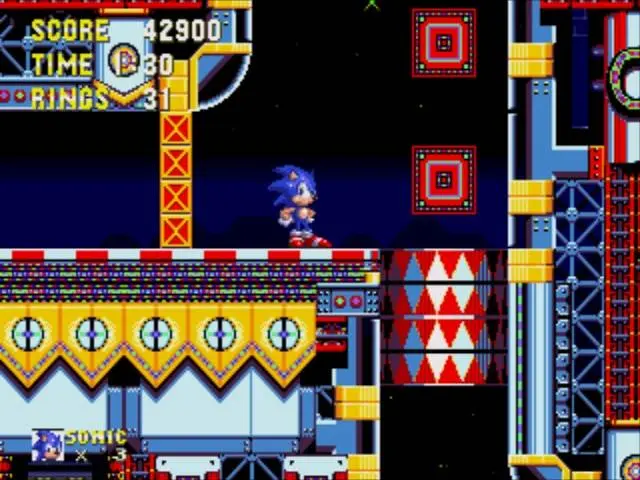 Carnival Night ZoneTwo actsA theme park at night with cannons, balloons and pink water; Batbot, Clamer and Sparkle.
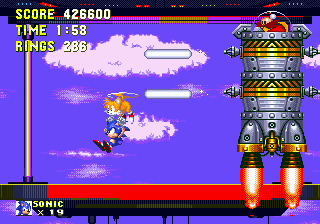 Launch Base ZoneTwo actsEggman’s building site, where the Death Egg is being repaired; Corkey, Flybot767, Orbinaut, Ribot and Snail Blaster.
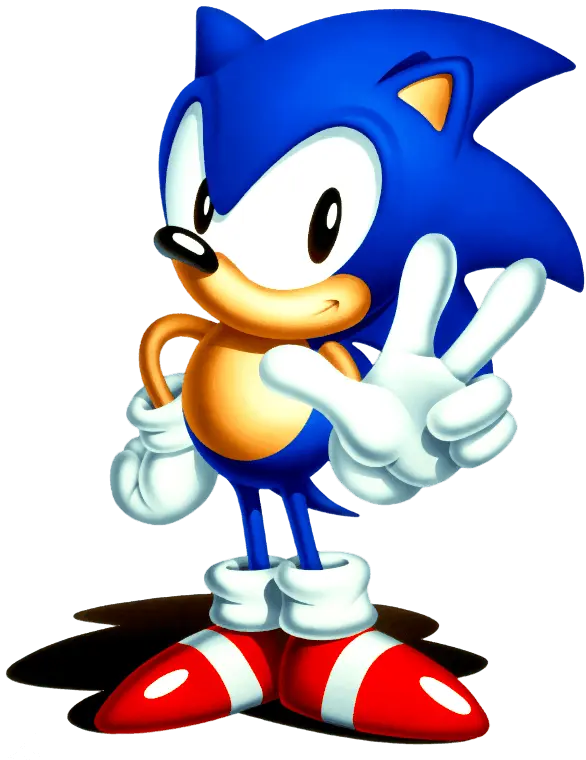 Sonic the HedgehogThe hero
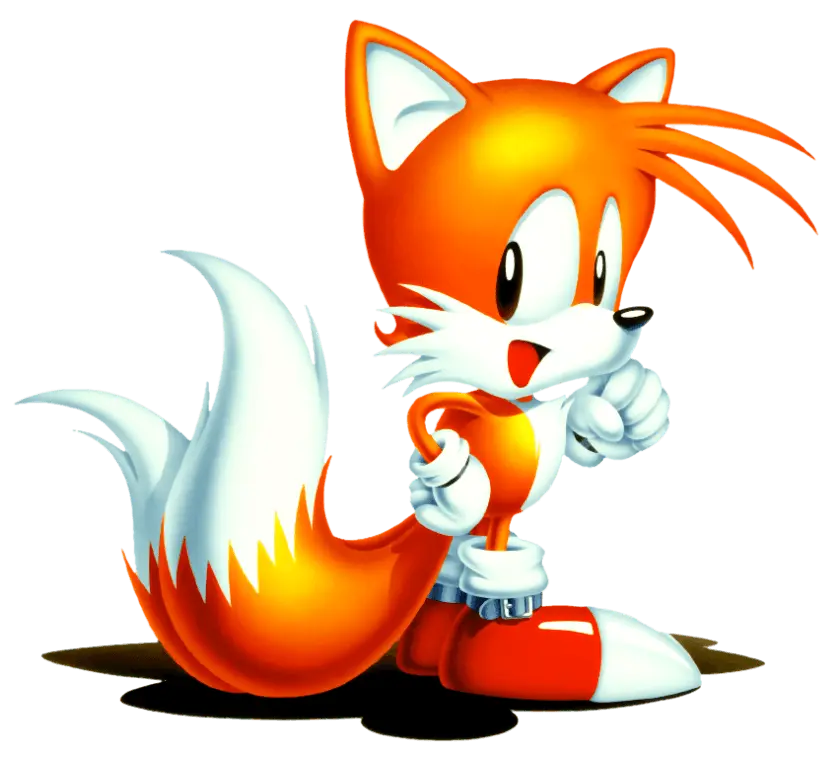 Miles “Tails” ProwerInventor and pilot
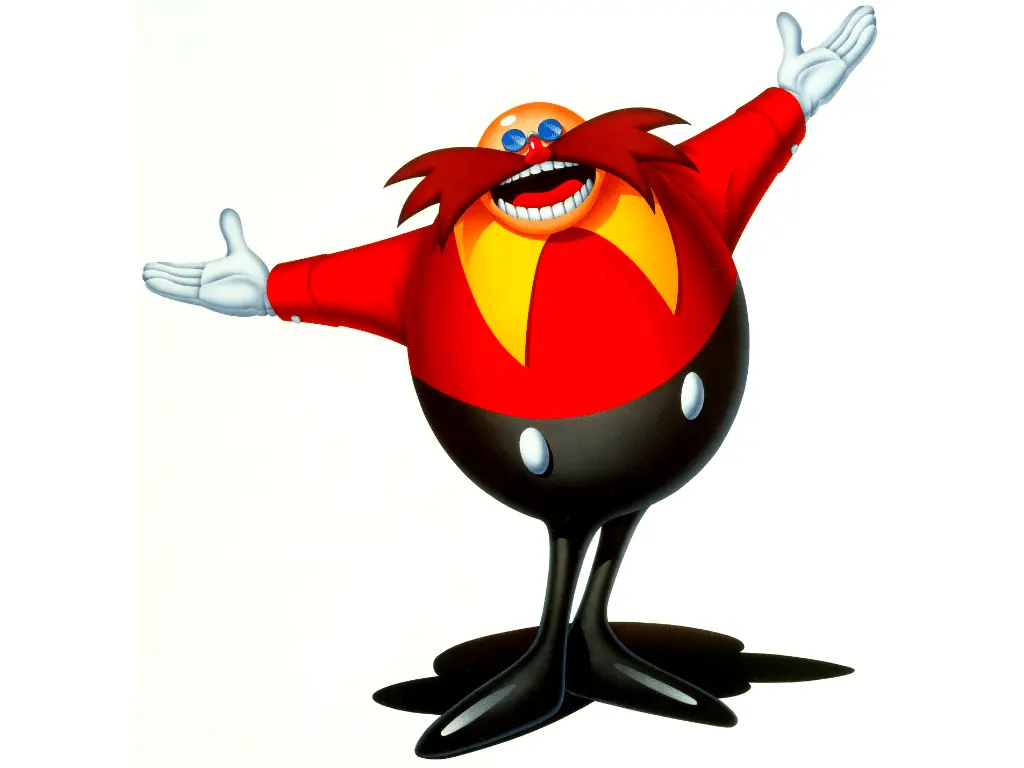 Dr. EggmanDr. Robotnik in the West
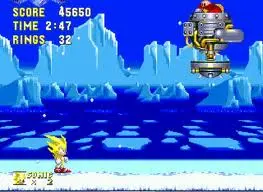 Super SonicThe golden form returns
 The BadniksEggman’s new army
 RhinoBotAngel IslandA robot rhino that charges at you.
 Monkey DudeAngel IslandA blue monkey that throws coconuts.
 BloominatorAngel IslandA red flower on a metal stem.
 Catakiller Jr.Angel IslandA caterpillar inside a shield; only its head can be hit.
 Turbo SpikerHydrocityA red-wheeled vehicle carrying a spike.
 BuggernautHydrocityA blue mosquito that usually comes in threes.
 JawzHydrocityA blue robot shark that flies straight ahead.
 BlastoidHydrocityA cannon.
 Mega ChopperHydrocityA red piranha that bites and eats your rings.
 PointdexterHydrocityA spiny pufferfish.
 BubblesMarble GardenA blue bubble with spikes.
 MantisMarble GardenA green mantis that leaps up at regular intervals.
 SpikerMarble GardenIts fake spikes work as a spring for Sonic.
 BatbotCarnival NightA bat with a light bulb for a tail end.
 ClamerCarnival NightA blue clam that doubles as a spring.
 SparkleCarnival NightAn electric grenade, usually in pairs.
 PenguinatorIceCapA blue penguin that slides along the ground.
 Star PointerIceCapA dark, icy Orbinaut.
 CorkeyLaunch BaseA grey energy cannon on rails or ceilings.
 Flybot767Launch BaseA silver bird that flies into you.
 OrbinautLaunch BaseA silver orb with four spiked balls, moving only when you do.
 RibotLaunch BaseA robot frog that swings and flings metal balls.
 Snail BlasterLaunch BaseA snail whose shell hides its cannons.