No Sonic, no rings, no loops: just Robotnik, his bumbling robots from the Adventures of Sonic cartoon and a lot of very worried beans. Puyo Puyo, Mobius style.
ReleasedMega Drive: November–December 1993 (US) · January 1994 (UK)
DeveloperCompile, for Sega
PublisherSega
Based onCompile’s Puyo Puyo
OpponentsTwelve robots, then Dr. Robotnik
Other versionsGame Gear (1993) · Master System (1994)
Title
Dr. Robotnik’s Mean Bean Machine; Dr. Robotnik and his Mean Bean Machine on some European boxes; Dr. Eggman no Mean Bean Machine in the Japanese Sonic Mega Collection; Dong Gu Ri Te Chi Jak Jeon in South Korea
Platforms
Mega Drive / Genesis; a separate 8-bit version for Game Gear and Master System; later Wii and 3DS Virtual Console, PC and Steam, Palm OS, Nintendo Switch Online and many compilations
Developer
Compile (directors Tetsuo Shinyu, Takayuki Yanagihori and Masanobu Tsukamoto)
Publisher
Sega; Western producer Max Taylor (Sega of America)
Music
Masanori Hikichi and Masayuki Nagao (Compile); David Javelosa (Sega)
Players
1–2
Cartridge
8 megabits (1 MB) on Mega Drive; 2 megabits (256 KB) on Game Gear and Master System
Released (Mega Drive)
North America late 1993: 26 November by our original listing, December by Sega Retro (US$34.99). Europe: November 1993 by our original page; UK 21 January 1994 by Sega Retro (£44.99)
Released (Game Gear)
North America December 1993 (US$34.95); Europe January 1994 by our original page and Sonic Retro, February 1994 by Sega Retro (UK £29.99)
Released (Master System)
Europe and Brazil 26 July 1994 by our original page; Sega Retro and Sonic Retro list February 1994 for Europe (UK £29.99)
Japan
No release at the time; first sold there in the PC compilation Sega Archives from USA Vol. 2 (2000)
Genre
Puzzle (falling blocks)
Overview
In Japan, Compile’s Puyo Puyo was a phenomenon: a falling-block puzzler where blobs of jelly pop in groups of four and chain reactions bury your opponent in junk. Sega doubted its cast of wizards and monsters would mean much to Western players, so it gave the game a costume change. The result was Dr. Robotnik’s Mean Bean Machine, the first Puyo Puyo released in the West.
The new costume came from television. Instead of the Japanese games, Mean Bean Machine borrows the look and cast of Adventures of Sonic the Hedgehog, the slapstick cartoon that began in 1993: the loud, round Robotnik of the show, his bumbling robots Scratch and Grounder, Coconuts the monkey and a gang of bounty hunters from the first episode. Our original pages called it the first Western Puyo Puyo with an Adventures of Sonic storyline, and that is exactly what it is. Sonic himself never appears.
There are really two games here. Compile’s Mega Drive version reached North America in late 1993, and an 8-bit version for Game Gear and Master System followed within months, adding a Puzzle Mode of its own. Critics loved both, especially with two players, and the game has been re-released on almost every Sega collection since.
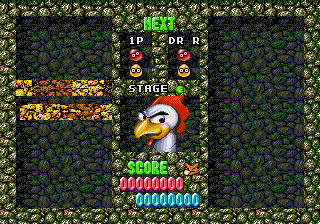
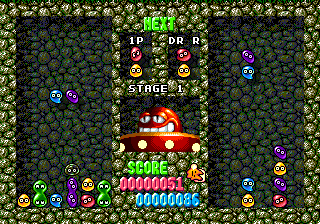
A match against Arms, the first opponent.The Mean Bean-Steaming Machine at work.Two players, head to head.
The beans are counting on you!
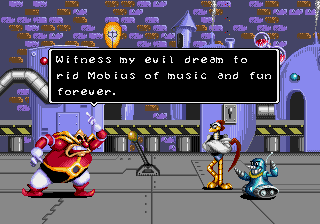
So ends the story in the Mega Drive manual, which our original page reproduced. It casts Robotnik as the menace of Mobius, out to rid the planet of music and fun by steaming the jolly folk of Beanville into robots, and puts you in charge of the jailbreak: group the beans in fours so they escape before the dungeon overflows, and outlast each robot jailer on the way to Robotnik himself.
— Official description: Sega, Dr. Robotnik’s Mean Bean Machine Mega Drive / Genesis instruction manual (1993), as reproduced on Sonic Scene’s original pages. One line quoted; the rest summarised.
Quick Answers
The short answers, with the detail further down the page.
When did Mean Bean Machine come out?
The Mega Drive game reached North America in late November or December 1993 and the UK in January 1994. The Game Gear version followed in December 1993 in the US, and the Master System version in 1994. More →
Is it really Puyo Puyo?
Yes. Compile made both, and Mean Bean Machine is its Mega Drive Puyo Puyo with new graphics, a new story and rearranged music. Even the opponents line up one-for-one with Puyo Puyo’s cast. More →
Is Sonic in it?
No. Sonic never appears and is not mentioned. The hero is Has Bean, a little bean who dances beside your well. More →
Which cartoon is it based on?
Adventures of Sonic the Hedgehog, the 1993 comedy series with Scratch, Grounder and Coconuts, not the darker Saturday-morning SatAM show that Sonic Spinball borrows from. More →
How many opponents are there?
Thirteen in Scenario Mode: twelve robots, from Arms to Scratch, and Dr. Robotnik as the final boss. More →
What is different on Game Gear and Master System?
The 8-bit version adds a Puzzle Mode of 30 lessons, borrowed from Compile’s Nazo Puyo, alongside Scenario, versus and practice play. More →
Was it released in Japan?
Not on cartridge. Its first Japanese release was the 2000 PC compilation Sega Archives from USA Vol. 2, and the Japanese Sonic Mega Collection later called it Dr. Eggman no Mean Bean Machine. More →
Can I play it today?
The Mega Drive game is on Nintendo Switch Online and in Sega’s collections; the Game Gear version is in Sonic Origins Plus (2023). More →
Plot / Story
The opening story.Image via Sonic Retro
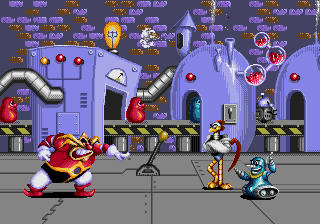
Doctor Robotnik, the bad-tempered menace of planet Mobius, has decided the world is having too much fun. His latest scheme is to banish music and joy for good, and he needs an army to do it. So he has built the Mean Bean-Steaming Machine, a contraption that turns the cheerful bean people of Beanville into robot slaves.
His robot henchmen are rounding up every bean they can find and locking them in dark dungeons. Whenever four beans are bunched together, off they go to the machine. That is where you come in. Line the beans up in fours and they escape instead, but the dungeon is filling fast, the robot jailers have spotted you, and each of them is trying to bust your dungeon before you bust theirs.
Up the ladder to Robotnik
Scenario Mode is a ladder of thirteen battles. You start against Arms, a lumbering robot who barely knows how to play, and each win sends you further up the chain of command: Frankly, Humpty, Coconuts and on through a gallery of oddballs until Scratch, Robotnik’s right-hand robot, and finally the doctor himself. Before each round the next opponent introduces themselves in a short cutscene.
Beat Robotnik and the whole cast of characters parades past before the credits. Passwords made of bean pictures let you pick up the ladder where you left it.
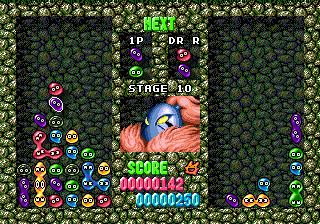
Sir Ffuzzy-Logik, opponent ten.Has Bean.Robotnik’s machine.
Game modes
Every mode uses the same well: six columns wide and twelve high. Beans fall in pairs, and you can move and spin them as they drop. Four or more of one colour touching each other pop, the beans above fall, and if they make another group you have a chain.
Scenario ModeOne player · 13 stagesThe story: beat Robotnik’s robots one by one, then the doctor. Bean-picture passwords record your progress.
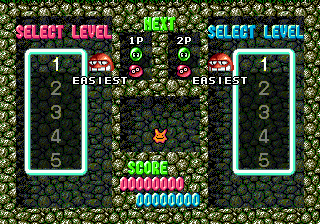
1P vs 2P ModeTwo playersHead-to-head with five handicap levels. Level 1 uses four bean colours and the rest five; levels 4 and 5 start you with rows of refugee beans already in the well.
Exercise ModeOne or two playersEndless practice at three speeds. Has Bean sometimes drops in to turn beans to one colour, and on the hardest setting a giant bean squashes everything across two columns.
Puzzle ModeGame Gear and Master System onlyThirty set puzzles, from clearing every red bean to popping a set number at once or surviving a number of waves.
Chains are the key to winning. Every chain sends grey refugee beans tumbling into your opponent’s well. They will not pop on their own, only when a group next to them clears, so a big enough chain can bury the other player completely. Whoever’s well overflows first loses.
In comics, TV & other media
Mean Bean Machine is the video game face of the 1993 Adventures of Sonic the Hedgehog cartoon. More on the cartoons in our cartoons section.
Adventures of Sonic the HedgehogSyndicated · 1993 · pictured: Scratch, Grounder and CoconutsMost of the opponents come from the show’s first episode, “Super Special Sonic Search and Smash Squad”, where Robotnik hires a gang of robot bounty hunters to catch Sonic; when they fail, he builds Scratch and Grounder. The game was made before the series aired, so the robots do not quite match their screen selves.
Scratch, Grounder and CoconutsRobotnik’s henchmenThe show’s regular stooges all fight you: Coconuts in stage 4, Grounder in stage 8 and Scratch in stage 12, just before the doctor.
Sonic SpinballMega Drive · 1993Released within weeks of each other, the two are the only games to use Adventures of Sonic material: Spinball has a troop of Scratch robots in one of its bonus tables.
Puyo PuyoCompile · 1991 onwardsThe original. Every Mean Bean opponent stands in for a Puyo Puyo character, from Draco Centauros (Arms) to Satan (Robotnik), and the hero Has Bean is Carbuncle in disguise.
Sonic ManiaSegaChemical Plant Zone’s second boss is a game of Mean Bean Machine against Dr. Eggman, rules and all.
Puyo Puyo Tetris 2SegaThe favour returned: Sonic joined Sega’s later Puyo Puyo series as a playable bonus character.
Characters
A cast lifted almost entirely from the Adventures of Sonic the Hedgehog cartoon, plus one little hero of the game’s own.
Character
Who they are
In this game
Stats & abilities
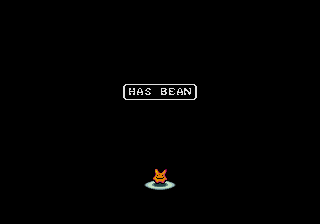
Has BeanThe hero · pictured on his introduction screen
A small, cheerful bean with a big grin. His name is a pun on “has-been”, and the red mark on his forehead gives away his origin: he is Puyo Puyo’s Carbuncle with a new name.
Dances beside your well and reacts to how well you are playing. The manual says he was one of Beanville’s jolliest residents until Robotnik turned him into a robot.
Pops up in Exercise Mode to turn falling beans into one colour
Not directly controlled: you play the beans
Dr. RobotnikThe final boss
The loud, round, short-tempered Robotnik of Adventures of Sonic the Hedgehog, who would rather nobody on Mobius had any fun at all.
Built the Mean Bean-Steaming Machine to turn Beanville into a robot army. You face him in stage 13 after beating his whole staff.
The toughest opponent in Scenario Mode; stands in for Puyo Puyo’s Satan.
ScratchOpponent 12
A tall robot rooster, the self-appointed leader of Robotnik’s Super Special Sonic Search and Smash Squad. Pictured: Scratch in the cartoon.
The last robot between you and Robotnik, and one of the hardest.
Stands in for Puyo Puyo’s Rulue.
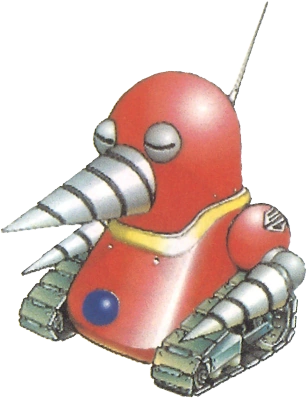
GrounderOpponent 8
Scratch’s partner in failure, a dim robot on caterpillar treads with drills for hands. Pictured: Grounder in the cartoon.
Guards the middle of the ladder.
Stands in for Puyo Puyo’s Witch.
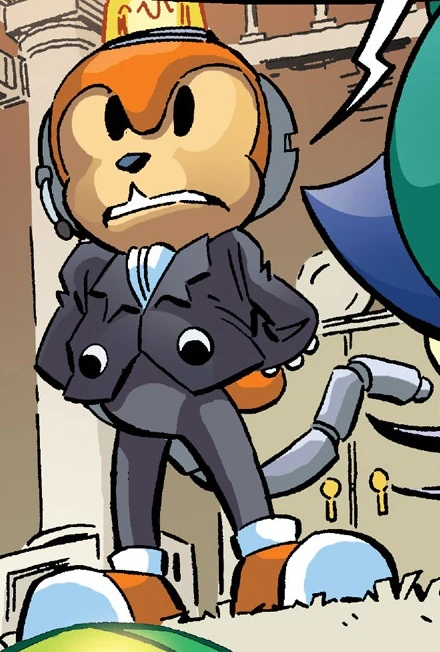
CoconutsOpponent 4
A robot monkey always trying to win Robotnik’s favour. Pictured: Coconuts in the cartoon.
The first familiar face on the ladder.
Stands in for Puyo Puyo’s Harpy.
The bounty huntersOpponents 1–3, 5–7, 9–11
Arms, Frankly, Humpty, Davy Sprocket, Skweel, Dynamight, Spike, Sir Ffuzzy-Logik and Dragon Breath. Most of them are the robot bounty hunters Robotnik hires to catch Sonic in the cartoon’s first episode. Pictured: a match against Sir Ffuzzy-Logik.
Fill out the ladder. On television only Dragon Breath gets any lines, and none of them was seen again after the first episode.
Each replaces a Puyo Puyo opponent; see the list below.
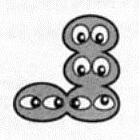
The beans of BeanvilleThe people you are saving
The happy bean folk of Beanville, in red, yellow, green, blue and purple. Pictured: beans in the manual’s artwork.
They are what you drop and pop: every group of four you match escapes the machine. Grey refugee beans are the ones your opponent sends to clog your well.
Four bean colours on the easiest level, five on the rest.
The thirteen opponents
Scenario Mode in order, with the Puyo Puyo character each one replaces and the bean-picture password that skips to that stage in the Game Gear and Master System version. Portraits via Sonic Retro.
ArmsStage 1 · was Draco CentaurosStage 1: no password needed.
FranklyStage 2 · was Suketoudara8-bit password: refugee, blue, red, Has Bean.
HumptyStage 3 · was Sukiyapodes8-bit password: yellow, blue, purple, blue.
CoconutsStage 4 · was Harpy8-bit password: red, purple, refugee, green.
Davy SprocketStage 5 · was Sasoriman8-bit password: blue, refugee, refugee, Has Bean.
SkweelStage 6 · was Panotty8-bit password: Has Bean, purple, refugee, yellow.
DynamightStage 7 · was Zombie8-bit password: blue, red, refugee, Has Bean.
GrounderStage 8 · was Witch8-bit password: Has Bean, purple, yellow, blue.
SpikeStage 9 · was Zoh Daimaoh8-bit password: blue, Has Bean, yellow, purple.
Sir Ffuzzy-LogikStage 10 · was Schezo Wegey8-bit password: blue, yellow, red, green.
ScratchStage 12 · was Rulue8-bit password: purple, blue, red, Has Bean.
Dr. RobotnikStage 13 · was Satan8-bit password: yellow, red, green, blue.
The people who made it
Credits from the game, as listed by Sega Retro.
CompileDeveloperThe studio behind Puyo Puyo, with producers Yoji Ishii, Noriyoshi Ohba and Moo Niitani.
Tetsuo Shinyu, Takayuki Yanagihori, Masanobu TsukamotoDirectorsTsukamoto also wrote the Puyo Puyo music that Mean Bean Machine reworks.
Max TaylorProducer · SegaSega’s Western producer, who also designed the game’s new look with Brian Ransom and Dave Albert.
David JavelosaSound · SegaSega Multimedia Studio’s audio director, who wrote new tunes including the menu and early-stage themes.
Masanori Hikichi, Masayuki NagaoMusic and effects · CompileRearranged Puyo Puyo’s score for the new game.
Takaya Segawa and teamGraphic designWith Saori Yamaguchi, Hideaki Moriya and Keisuke Saka; programmers Manabu Ishihara and Tsukasa Aoki.
How it was made
Our original pages gave the facts in a few lines. This history is new, drawn from Sonic Retro, Sega Retro’s credits and Wikipedia.
From Puyo Puyo to Beanville
Puyo Puyo on the Japanese Mega Drive.Image via Sonic Wiki Zone
Compile first released Puyo Puyo on the MSX2 computer in 1991, and by 1993 it had moved on to Japanese arcades and the Mega Drive. Sega wanted it for the West but worried that its fantasy heroine Arle and her monstrous rivals would not sell, so the Mega Drive version was rebuilt around Sonic’s world.
Rather than the game characters, Sega chose the cast of Adventures of Sonic the Hedgehog, the comedy cartoon about to launch in American syndication. Production started before the series aired, which is why the robots in the game do not quite match their television versions. Compile kept the engine almost untouched: underneath, Mean Bean Machine is the Mega Drive Puyo Puyo, with each opponent swapped for a robot of similar strength.
New tunes and a lost Kraftwerk cover
Sega of America’s producer Max Taylor asked audio director David Javelosa for new music. Javelosa wrote tracks as MIDI files, among them the title and some stage themes, and sent them to Sega of Japan to be converted to the Mega Drive sound chip; Barry Blum contributed one track. Much of the rest is Masanobu Tsukamoto’s Puyo Puyo music, remixed by Compile’s sound engineer Masanori Hikichi: Puyo Puyo’s ending tune even plays unchanged over the staff roll.
At least one track never made it. Sonic Retro identifies an unused song in the hidden sound test as a rendition of Kraftwerk’s “Home Computer”, the title music of an earlier build, dropped for licensing reasons; Sega Retro’s music credits list the same track as an alternate stage theme by Javelosa.
The Game Gear and Master System version
The Master System version.Image via Sonic Wiki Zone
The 8-bit Mean Bean Machine is a separate game, based on the Game Gear Puyo Puyo rather than the Mega Drive one. It keeps the story and the thirteen opponents and adds a Puzzle Mode taken from Nazo Puyo, Compile’s puzzle spin-off released in Japan a few months earlier: thirty set challenges that ask you to clear every red bean, pop a certain number at once or survive a set number of waves. The Game Gear version arrived in North America in December 1993 and the Master System version in Europe and Brazil in 1994.
Release around the world
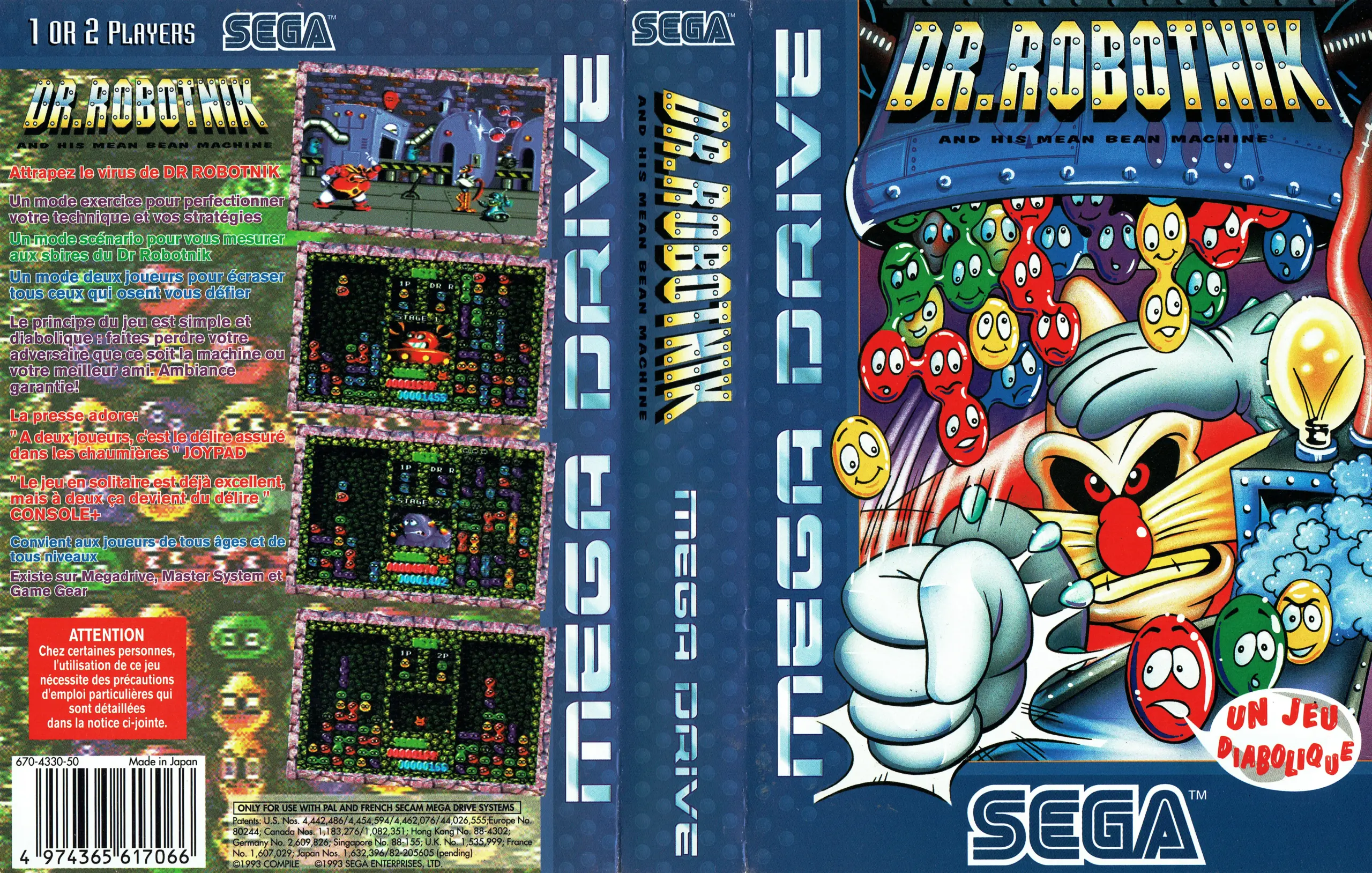
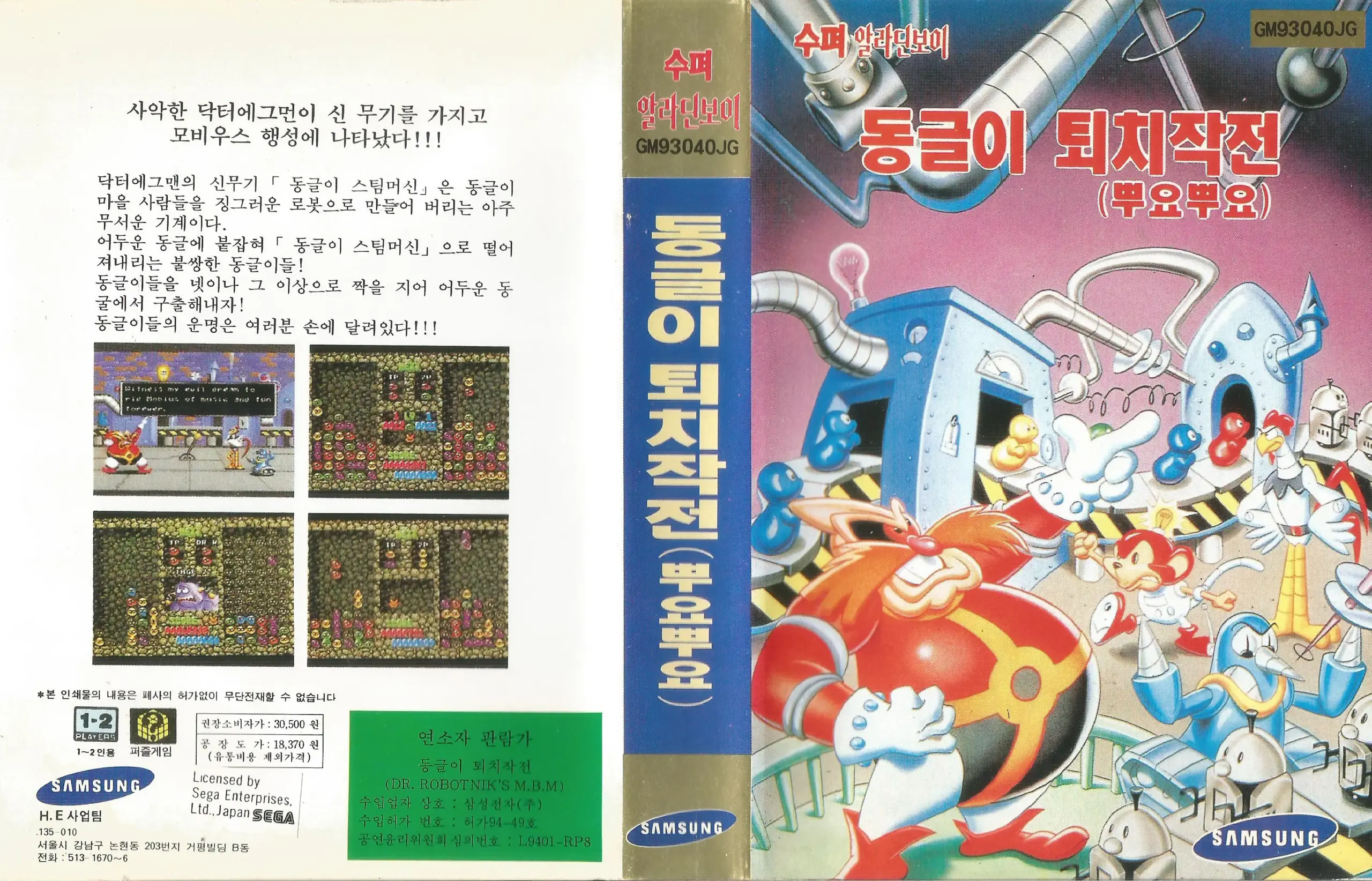
In some European countries the box reads Dr. Robotnik and his Mean Bean Machine. In South Korea, Samsung sold it as Dong Gu Ri Te Chi Jak Jeon, and some early Korean cartridges turned out to contain the Japanese Puyo Puyo under the new label. Japan itself had to wait: the game’s first release there was the PC compilation Sega Archives from USA Vol. 2 in 2000.
Firsts: what this game introduced
A puzzle game with a surprising place in Sonic history.
1Puyo Puyo goes WestThe first Puyo Puyo game released outside Japan, with an Adventures of Sonic story on top; Nintendo’s Kirby’s Avalanche followed in 1995.
2Adventures of Sonic’s gameOne of only two games to use the Adventures of Sonic the Hedgehog cartoon (Sonic Spinball is the other), and the one built most fully around it, with its Robotnik, Scratch, Grounder and Coconuts.
3A Sonic game without SonicSonic is nowhere to be seen, not even in the manual.
4Has Bean’s debutThe first and only starring role for the little bean.
Cheats & secrets
New for this page: secrets checked against Sonic Retro’s hidden-content notes. Our original pages had no cheats section.
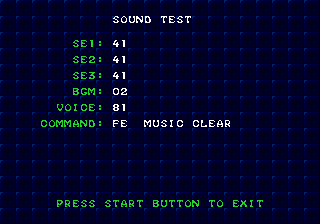
Hidden sound test
Puyo Puyo’s sound test is still in the game but only appears on a Japanese console. Set your Mega Drive to Japanese, or use the Game Genie code ADTT-AAAE after the Sega logo, and it shows up in the Options menu with the unused tracks.
Beat the region lock
On a console from the wrong region, the lock-out screen can be skipped by pressing A, A, Up, Right, Down, Left, B, B, Right, Down, Left, Up, C, C, Down, Left, Up, Right, Start, Start on the second controller. You only get one attempt; a mistake means resetting.
Game Genie codes
Official codes can switch off refugee beans altogether (ALNT-AA66), make them fall in smaller amounts (VWNT-AAHE), or start Scenario Mode on any stage from 2 to 13.
Last-stage password (8-bit)
On Game Gear and Master System, the password for stage 13 against Robotnik is yellow bean, red bean, green bean, blue bean.
Codes checked against Sonic Retro, November 2026.
Glitches, exploits and oddities
Under the beans, Puyo Puyo is still there, and Sonic Retro has found plenty of it.
Arle is still in the cartridge
Arle Nadja, left in the code.Image via Sonic Retro
The cutscene sprites of Puyo Puyo’s heroine, Arle Nadja, are still loaded with the cutscenes, unused, which suggests nobody ever planned for Sonic or another hero to take her place on screen.
The lost Lesson stages
A leftover Lesson stage.Image via Sonic Retro
Puyo Puyo’s three beginner Lesson stages were never removed. A Pro Action Replay code reaches them: the tutorial text is garbled, no music plays, Coconuts stands in odd places, and beating the third one jumps to the ending.
Puyo Puyo leftovers
The hidden sound test.Image via Sonic Retro
The arena graphics from the Lesson stages turn up as the Options screen background, a high-score screen survives in part, and the checksum error screen is Puyo Puyo’s own. The sound test also holds Puyo Puyo’s original Theme and Brave tracks.
Puyo Puyo in a Korean box
Some early Korean cartridges sold as Dong Gu Ri Te Chi Jak Jeon contained the Japanese Puyo Puyo instead.
Videos & media
A full run of the Mega Drive game, and a look at the Game Gear version.
The Mega Drive Scenario Mode from start to finish, from the World of Longplays archive.
CGRundertow’s review of the Game Gear version.
Trivia & facts
Our original page subtitled the Mega Drive game “the first Western Puyo Puyo release with an Adventures of Sonic the Hedgehog storyline”.
Has Bean.Image via Sonic Wiki ZoneHas Bean is Carbuncle, the mascot of the Puyo Puyo series, with a new name. The red mark on his forehead is the giveaway.
Every one of the twelve robots stands in for a Puyo Puyo opponent of about the same strength, from Draco Centauros (Arms) to Rulue (Scratch), with Robotnik replacing Satan.
Sonic Retro notes that most of the opponents also appear in the cartoon’s pilot and first episode.
Mega Zone included the game in its 1995 list of the Top 50 Games in History.
Media & artwork
Box art, artwork and screenshots of both versions, from our original page, Sonic Retro and Sonic Wiki Zone. Select any image to view it larger.
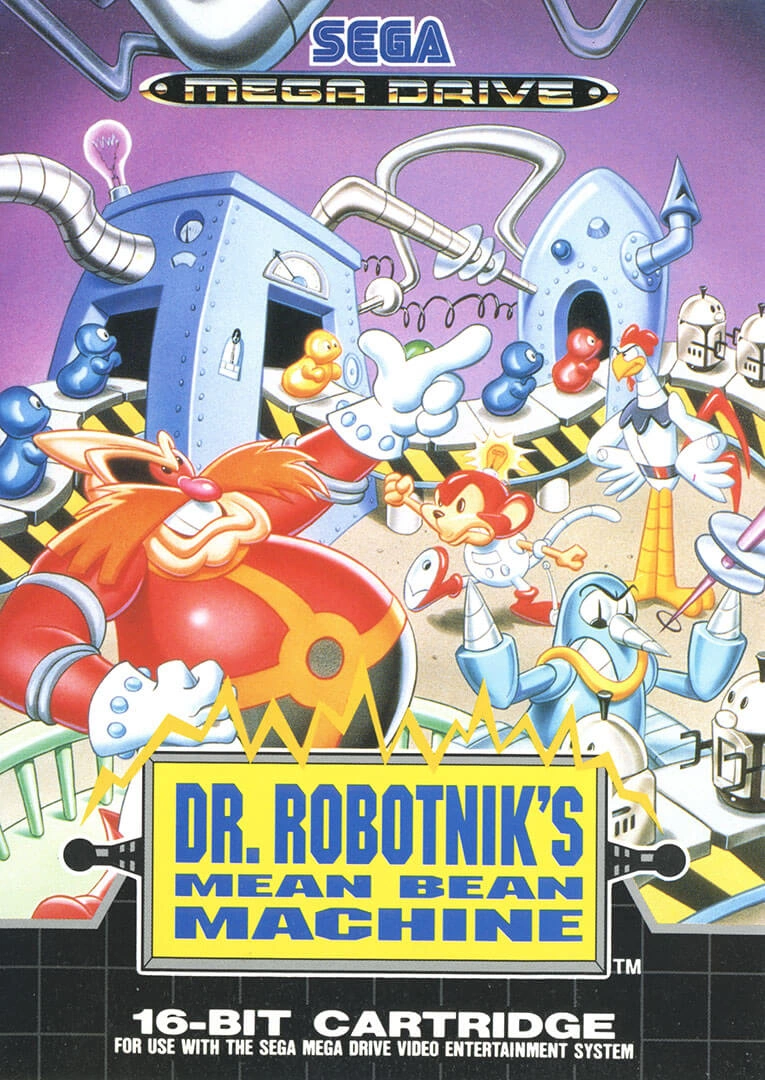
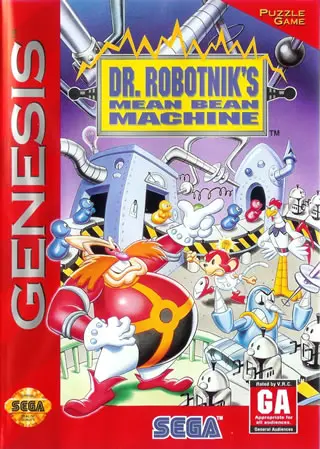
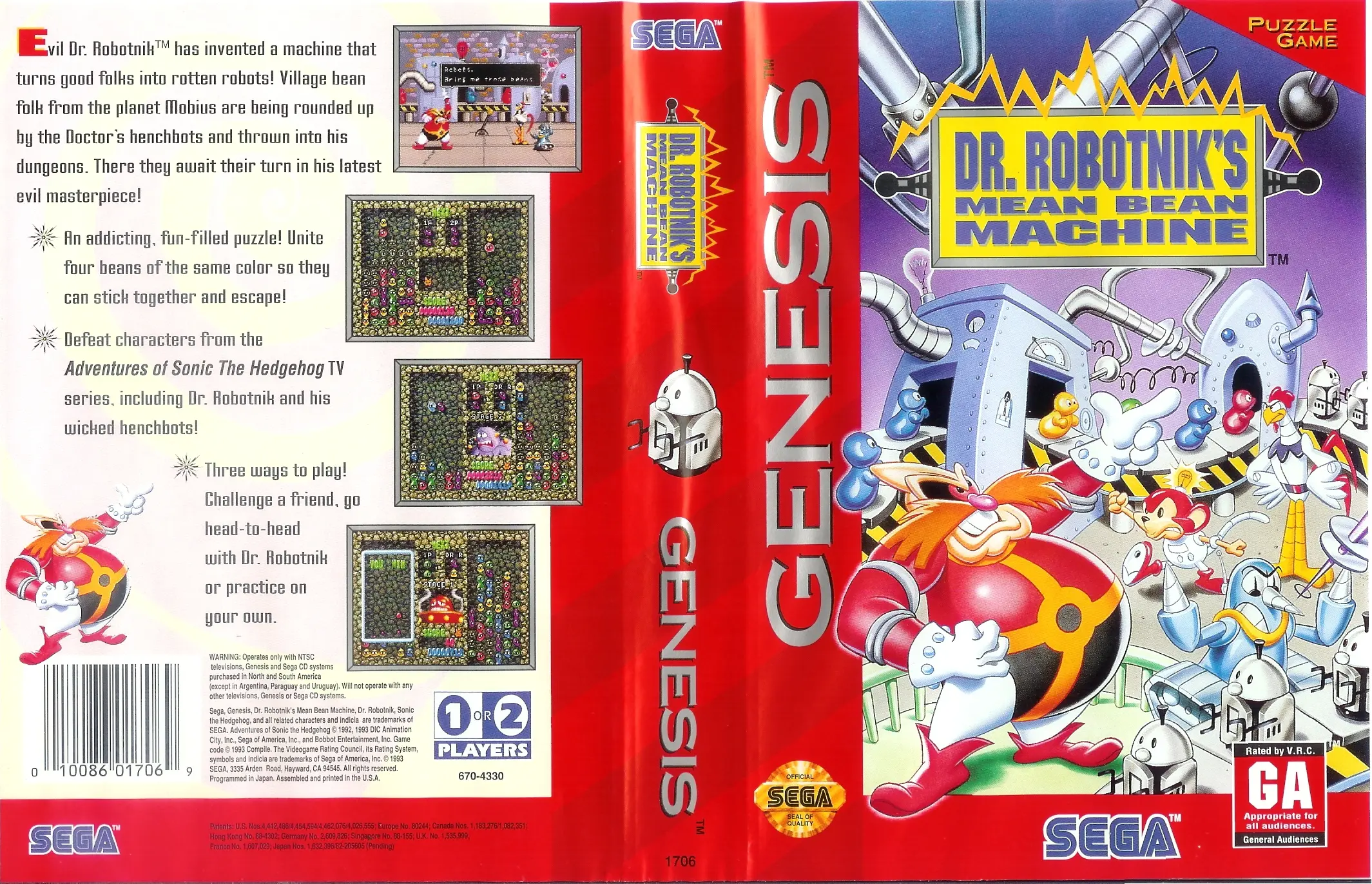
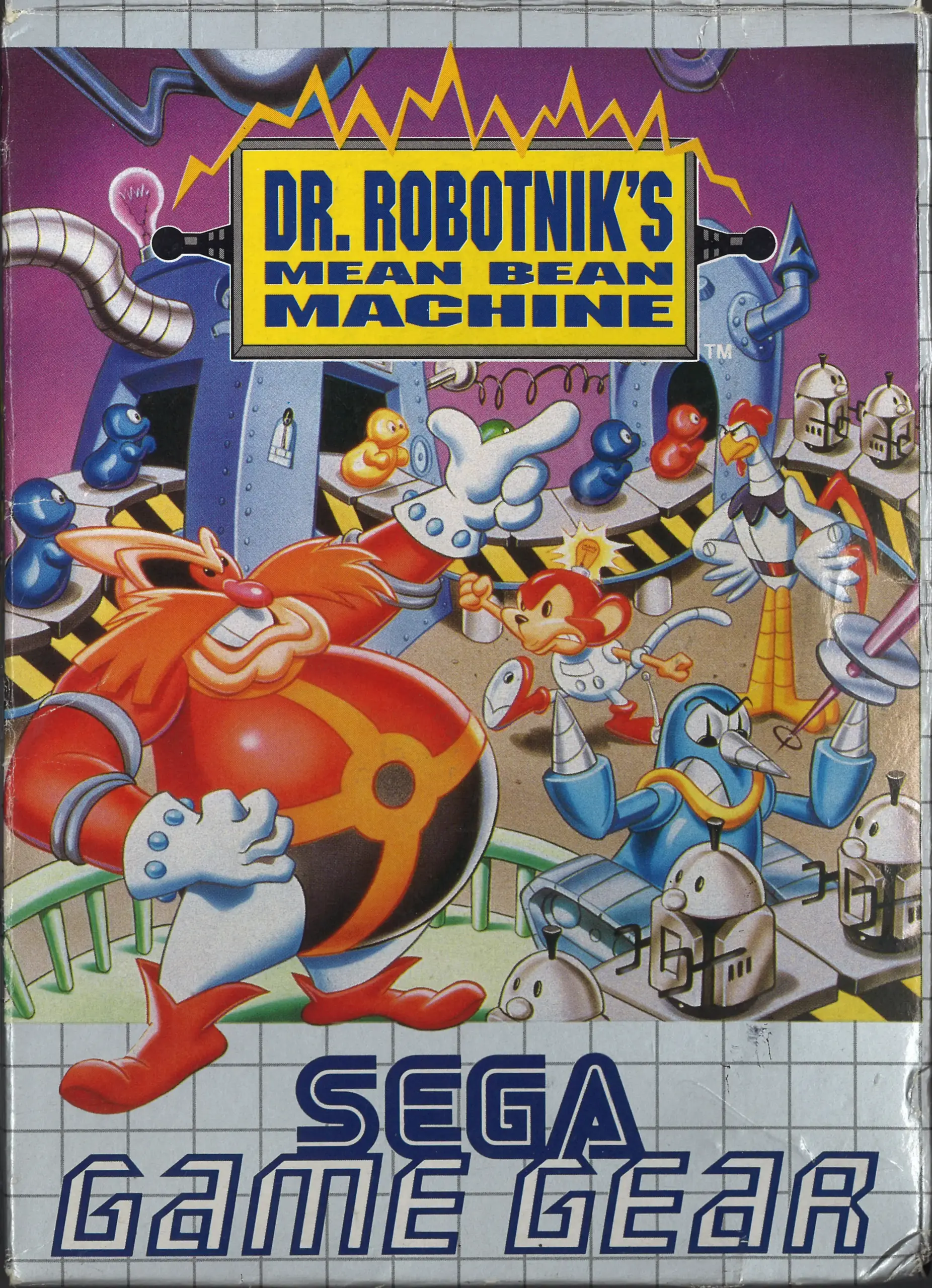
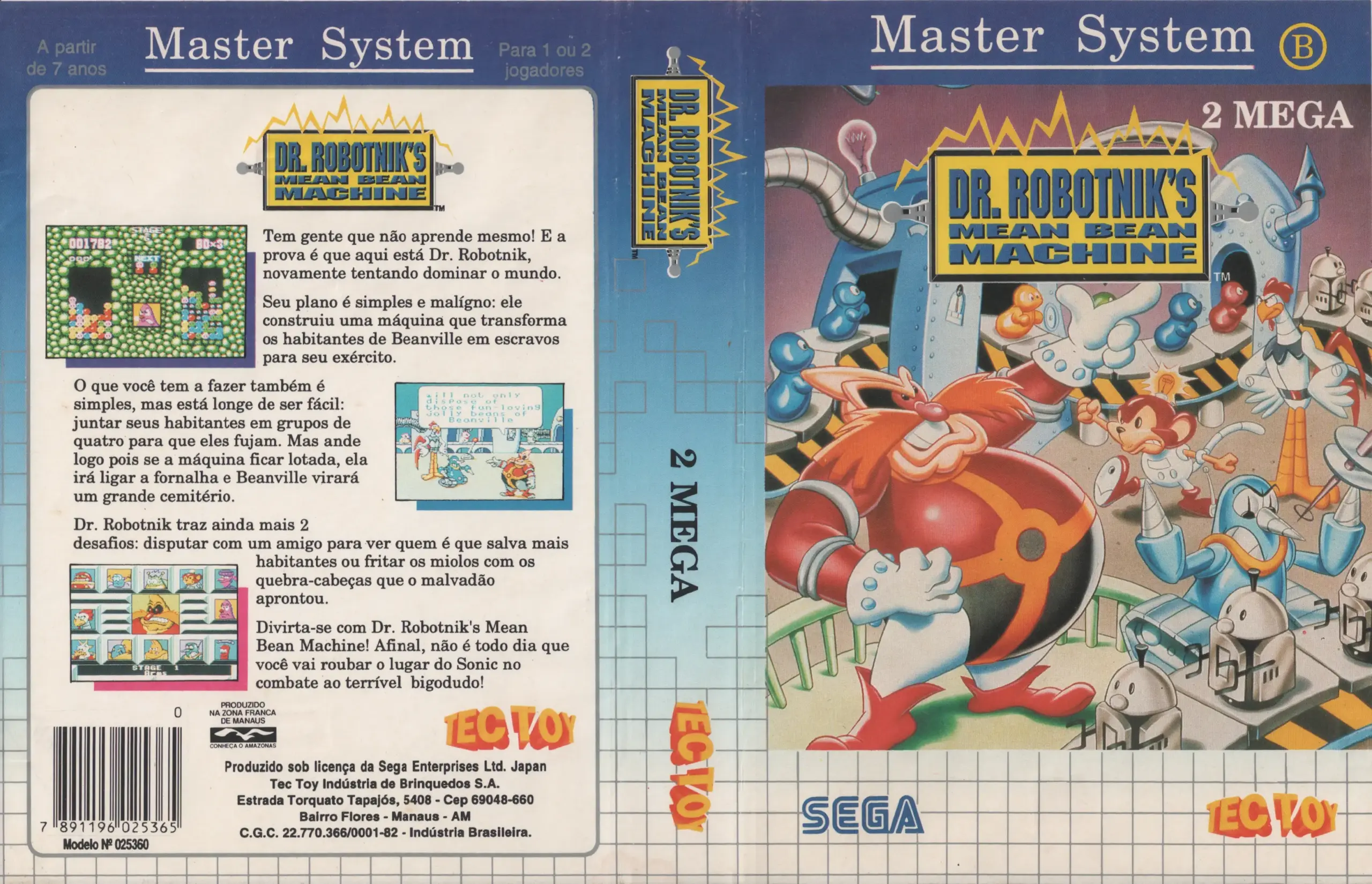
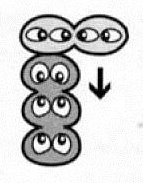
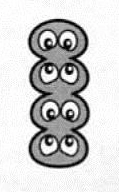
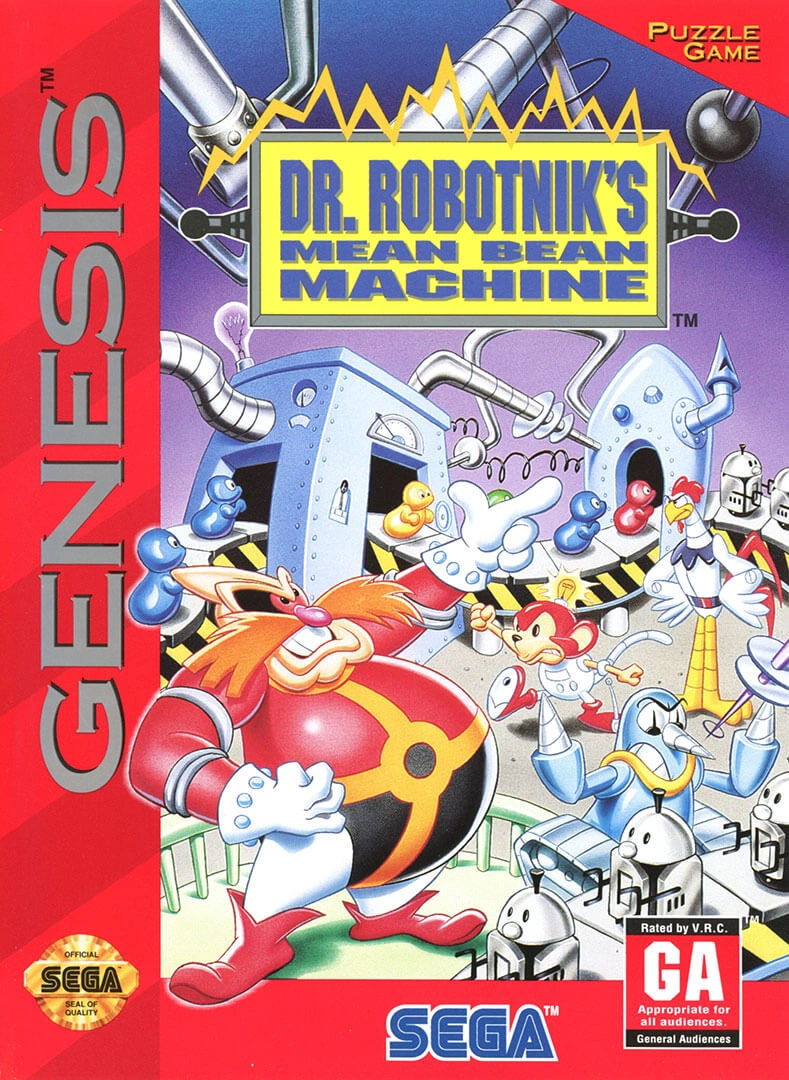
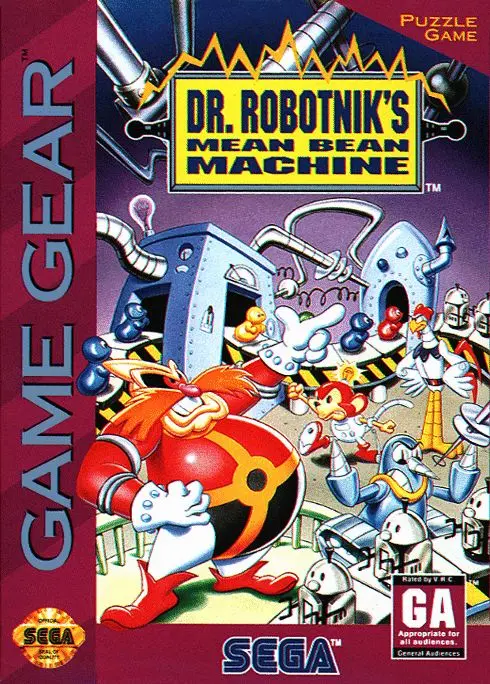
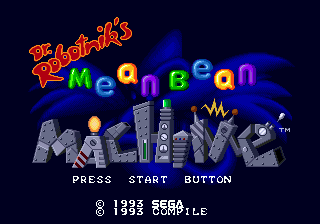
North American Genesis cover.European Mega Drive cover.The cover from our original page.The North American box.Dr. Robotnik and his Mean Bean Machine.The Korean Samsung release.North American Game Gear box.European Game Gear box.Brazilian Master System box.The cover artwork.The logo.Manual art: a chain in the making.Manual art: four in a row.Mega Drive title screen.The opening story.The instructions screen.Against Sir Ffuzzy-Logik.Scratch, Grounder and Coconuts on TV.The Sonic Mania boss.
Legacy
Mean Bean Machine has been on almost every Sonic collection Sega has made, and it later returned as a boss fight in Sonic Mania.
Releases and re-releases
Mega Drive / GenesisLate 1993 to January 1994 – North America (26 November by our original listing; December by Sega Retro), then the UK on 21 January 1994.
Game GearDecember 1993 – North America; Europe in early 1994.
Master System1994 – Europe and Brazil.
Sega Channel1994 – On the US cable service from June 1994.
Sonic Classics / Sonic Compilation1995 – Mega Drive cartridge with Sonic 1 and Sonic 2.
PC1999–2000 – Sega PC Puzzle Pack, then Sega Archives from USA Vol. 2, its first release in Japan.
Sonic Mega Collection2002 – GameCube.
Palm OS and Sonic Adventure DX: Director’s Cut2003 – The Game Gear version on Palm handhelds (April) and as an unlockable on GameCube and PC.
Sonic Mega Collection Plus2004–2005 – PlayStation 2, Xbox and PC, with both versions; also paired with Super Monkey Ball Deluxe on Xbox (2005).
Wii Virtual ConsoleDecember 2006 – Europe 8 Dec, North America 11 Dec.
Sonic’s Ultimate Genesis Collection, Sega Fun Pack and Sonic PC Collection2009 – PlayStation 3 and Xbox 360; PlayStation 2; PC.
Steam13 September 2010 – PC; Linux and Mac in 2019.
Nintendo 3DS Virtual Console13 June 2013 – The Game Gear version.
Mega Drive Mini2019 – On the mini console.
Nintendo Switch OnlineOctober 2021 – Mega Drive library (Expansion Pack).
Sonic Origins Plus23 June 2023 – The Game Gear version.
A boss fight in Sonic Mania
Sonic Mania turned the game into a boss. At the end of Chemical Plant Zone Act 2, Dr. Eggman challenges Sonic to a round of Mean Bean Machine, played with the original rules and the original look.
Where to play it today
The Mega Drive game is part of the Nintendo Switch Online Mega Drive library and of Sega’s console collections; the Game Gear version is in Sonic Origins Plus. Our original pages also listed Sega Fun Pack: Sonic Mega Collection Plus & Shadow the Hedgehog (PlayStation 2, 2009) and the Sonic PC Collection (2009).
Sales & reviews
Sales
We have not found reliable sales figures for either version. What we can say is that critics took to it: Sega Retro’s index lists 36 Mega Drive reviews with a median around 85%, and the 8-bit versions did even better with the magazines.
36Mega Drive review scores in Sega Retro’s index
92%Consoles +, France (Mega Drive)
95%Player One, France (Game Gear)
92%Sega Power, UK (Game Gear and Master System)
Reception and review scores
Period reviews from Sega Retro’s index of magazine scans: the Mega Drive game first, then the Game Gear (GG) and Master System (MS) versions.
Consoles +France · Mega Drive
92%
Sega MagazineUK · Mega Drive
91%
Computer & Video GamesUK · November 1993 · Mega Drive
90%
MegaUK · January 1994 · Mega Drive
90%
Sega ZoneUK · Mega Drive
90%
Mega ActionUK · Mega Drive
89%
GameProUS · Mega Drive
88%
Game PlayersUS · Mega Drive
86%
Sonic the ComicUK · Mega Drive
80%
HyperAustralia · Mega Drive
75%
Electronic Gaming MonthlyUS · Mega Drive
70%
Player OneFrance · GG
95%
Sega PowerUK · GG and MS
92%
Sega ProUK · GG 89% · MS 90%
90%
Mean Machines SegaUK · MS
87%
GameProUS · GG
83%
Most reviewers in 1993 came away hooked. Computer and Video Games rated it as addictive as Tetris and preferred its bright colours, GamePro advised going on the attack, and Mega’s Andy Dyer liked the simple idea while wishing the computer put up more of a fight.
Later reviews were split on the Sonic paint job. Eurogamer called it a barely disguised reskin of Puyo Puyo bolted onto the Sonic name to sell copies, while admitting it was solid and addictive. IGN and Nintendo Life agreed it shines with two players, Gamezebo found it too hard and its password saves dated, and Nintendo Life’s look at the Game Gear version praised its spread of modes while finding the music repetitive.
Honours
Mega Zone · 1995Top 50 Games in HistoryListed by the Australian magazine.
Reader reviews
No reader reviews yet. Played it? Give it a score out of 10 and tell other fans what you think.
Every fact on this page was checked against the sources below. Sonic Retro and Sega Retro pages were read through Wayback Machine copies from 2024, because both live sites show a bot check; each Sonic Retro link opens the nearest archived copy. Magazine scores come from Sega Retro’s review index, which links each score to a scan of the original page.
To provide the best experiences, we use technologies like cookies to store and/or access device information. Consenting to these technologies will allow us to process data such as browsing behavior or unique IDs on this site. Not consenting or withdrawing consent, may adversely affect certain features and functions.
Functional
Always active
The technical storage or access is strictly necessary for the legitimate purpose of enabling the use of a specific service explicitly requested by the subscriber or user, or for the sole purpose of carrying out the transmission of a communication over an electronic communications network.
Preferences
The technical storage or access is necessary for the legitimate purpose of storing preferences that are not requested by the subscriber or user.
Statistics
The technical storage or access that is used exclusively for statistical purposes.The technical storage or access that is used exclusively for anonymous statistical purposes. Without a subpoena, voluntary compliance on the part of your Internet Service Provider, or additional records from a third party, information stored or retrieved for this purpose alone cannot usually be used to identify you.
Marketing
The technical storage or access is required to create user profiles to send advertising, or to track the user on a website or across several websites for similar marketing purposes.

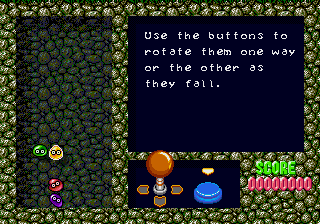 Exercise ModeOne or two playersEndless practice at three speeds. Has Bean sometimes drops in to turn beans to one colour, and on the hardest setting a giant bean squashes everything across two columns.
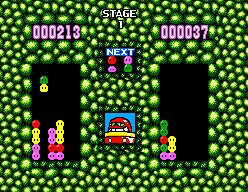 Puzzle ModeGame Gear and Master System onlyThirty set puzzles, from clearing every red bean to popping a set number at once or surviving a number of waves.
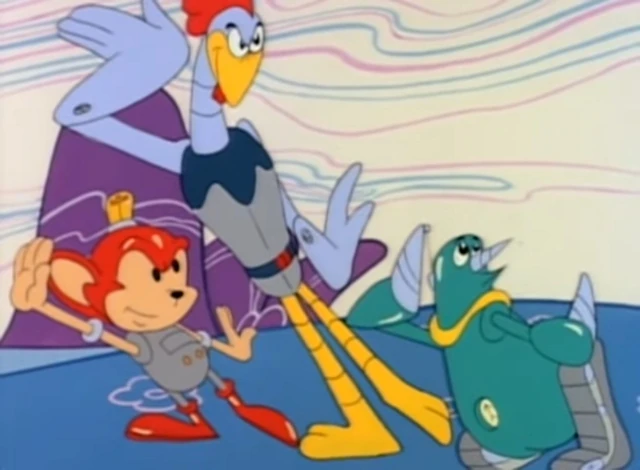 Adventures of Sonic the HedgehogSyndicated · 1993 · pictured: Scratch, Grounder and CoconutsMost of the opponents come from the show’s first episode, “Super Special Sonic Search and Smash Squad”, where Robotnik hires a gang of robot bounty hunters to catch Sonic; when they fail, he builds Scratch and Grounder. The game was made before the series aired, so the robots do not quite match their screen selves.
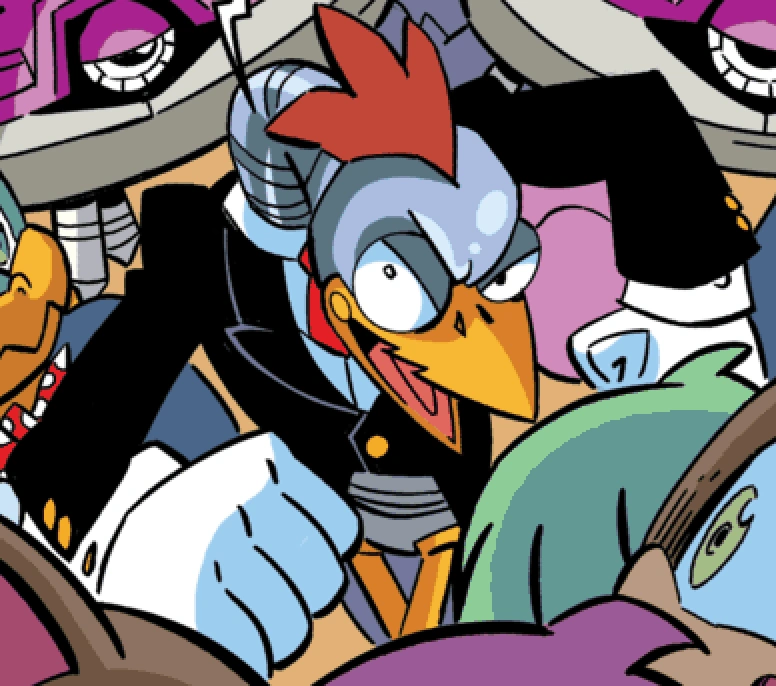 Scratch, Grounder and CoconutsRobotnik’s henchmenThe show’s regular stooges all fight you: Coconuts in stage 4, Grounder in stage 8 and Scratch in stage 12, just before the doctor.
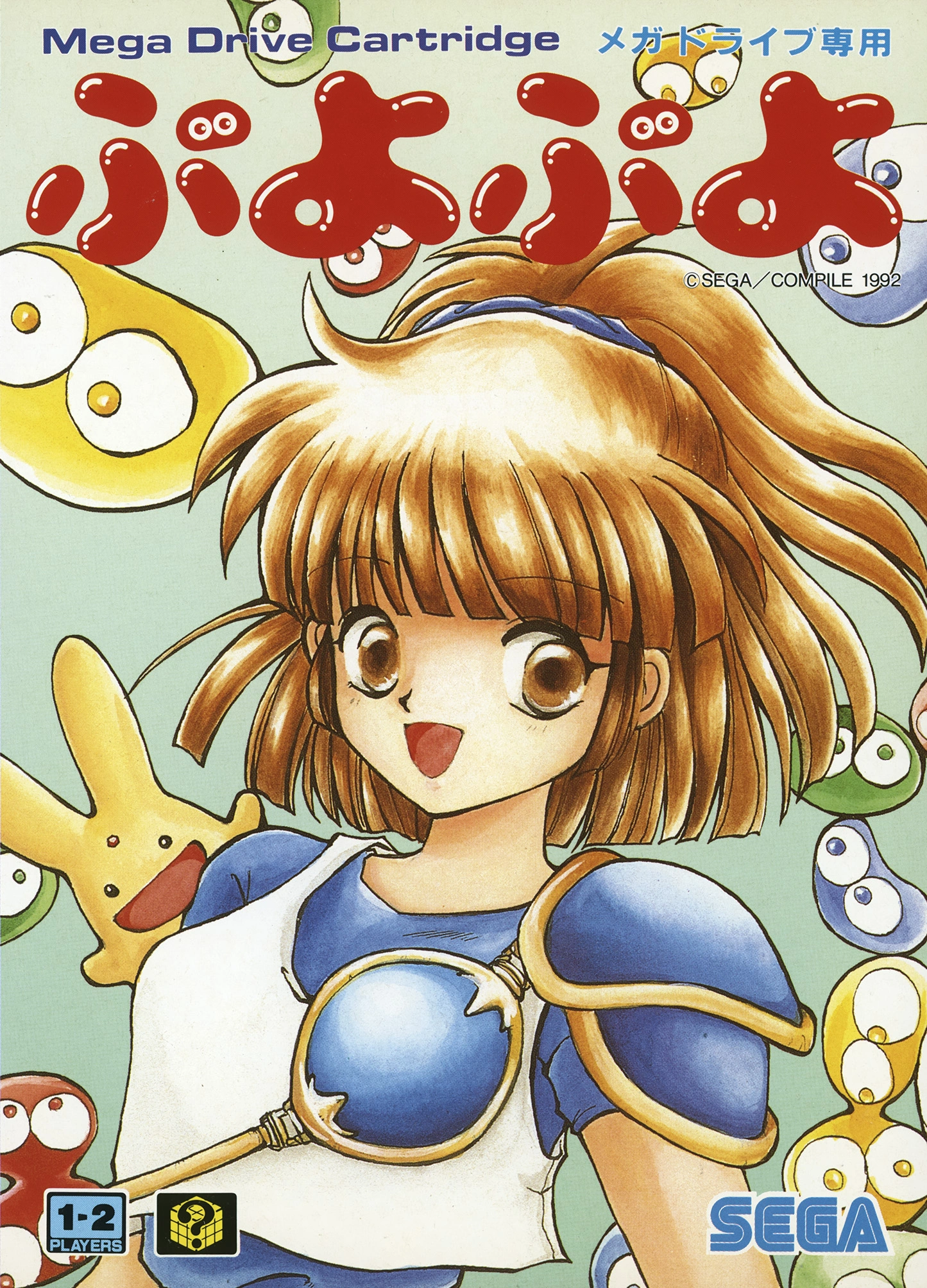 Puyo PuyoCompile · 1991 onwardsThe original. Every Mean Bean opponent stands in for a Puyo Puyo character, from Draco Centauros (Arms) to Satan (Robotnik), and the hero Has Bean is Carbuncle in disguise.
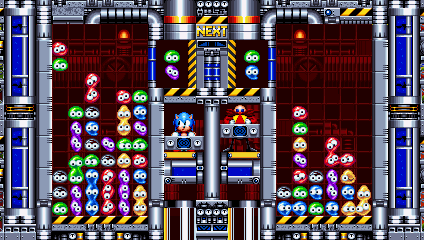 Sonic ManiaSegaChemical Plant Zone’s second boss is a game of Mean Bean Machine against Dr. Eggman, rules and all.
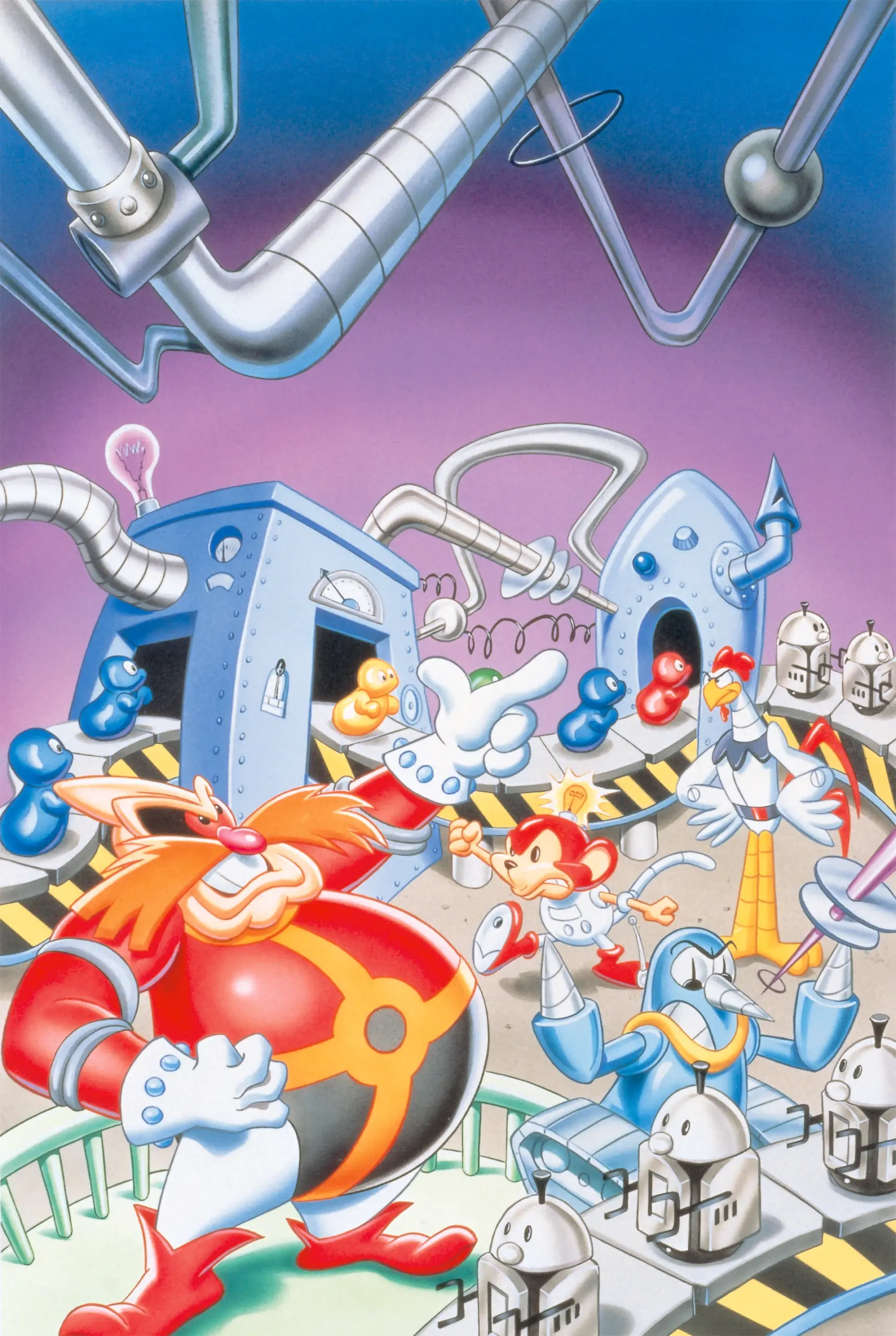 Dr. RobotnikThe final boss
 GrounderOpponent 8
 CoconutsOpponent 4
 The beans of BeanvilleThe people you are saving
 ArmsStage 1 · was Draco CentaurosStage 1: no password needed.
 FranklyStage 2 · was Suketoudara8-bit password: refugee, blue, red, Has Bean.
 HumptyStage 3 · was Sukiyapodes8-bit password: yellow, blue, purple, blue.
 CoconutsStage 4 · was Harpy8-bit password: red, purple, refugee, green.
 Davy SprocketStage 5 · was Sasoriman8-bit password: blue, refugee, refugee, Has Bean.
 SkweelStage 6 · was Panotty8-bit password: Has Bean, purple, refugee, yellow.
 DynamightStage 7 · was Zombie8-bit password: blue, red, refugee, Has Bean.
 GrounderStage 8 · was Witch8-bit password: Has Bean, purple, yellow, blue.
 SpikeStage 9 · was Zoh Daimaoh8-bit password: blue, Has Bean, yellow, purple.
 Sir Ffuzzy-LogikStage 10 · was Schezo Wegey8-bit password: blue, yellow, red, green.
 Dragon BreathStage 11 · was Minotauros8-bit password: purple, blue, refugee, yellow.
 ScratchStage 12 · was Rulue8-bit password: purple, blue, red, Has Bean.
 Dr. RobotnikStage 13 · was Satan8-bit password: yellow, red, green, blue.