Not a port but a whole new game: Yuzo Koshiro’s family studio rebuilt Sonic for 8-bit hardware, with bridges, jungles, an airship and a soundtrack by Koshiro himself.
Released25 Oct 1991 (EU, Master System) · 28 Dec 1991 (JP, Game Gear)
DeveloperAncient, for Sega
MusicYuzo Koshiro
ZonesSix, three acts each
Players1
A firstThe first handheld Sonic
Title
Sonic the Hedgehog ソニック・ザ・ヘッジホッグ
Platforms
Sega Master System, Sega Game Gear
Developer
Ancient
Publisher
Sega
Original character design
Sega
Game program
Shinobu Hayashi
Graphic design
Ayano Koshiro, Takefuni Yunoue
Sound produce
Masato Nakamura
Rearrange and original music
Yuzo Koshiro
Players
1
Released (Master System)
Europe: 25 October 1991 · UK: 8 November 1991 (£29.99) · North America: November 1991 (US$29.95) · Brazil: January 1992 (Tec Toy)
Released (Game Gear)
Japan: 28 December 1991 (¥3,800, G-3307) · North America: December 1991 (US$39.95) · Europe: January 1992 (UK £29.99) · Brazil: February 1992
Cartridge size
2 megabits (256 KB)
Versions
Game Gear revisions 00 and 01; built into some European Master System II consoles
Later releases
Palm OS (US, 2003); Wii Virtual Console (Master System version, 2008); Nintendo 3DS Virtual Console (Game Gear version, 2013)
Collections
Sonic Adventure DX: Director’s Cut, Sonic Mega Collection Plus, the black Game Gear Micro (2020) and Sonic Origins Plus (2023)
Sonic the Hedgehog on the Master System and Game Gear is not a cut-down copy of the Mega Drive game. Porting it to 8-bit hardware was out of the question, so Sega handed the job to Ancient, a brand-new studio set up by composer Yuzo Koshiro and his family, and Ancient built a fresh game around the same hero, the same villain and the same idea.
Three of its six zones borrow names from the Mega Drive original, Green Hill, Labyrinth and Scrap Brain, but every layout is new, and the other three, Bridge, Jungle and Sky Base, are all its own. The pace is gentler, the Chaos Emeralds are hidden in the levels rather than in Special Stages, and Eggman is chased all the way to an airship above the clouds.
It came out on the Master System in October 1991, and the Game Gear version followed that December, making it the first Sonic game you could carry in your pocket. Reviewers loved it: Sega Retro’s average for the Master System version is 91%. Koshiro’s soundtrack, which mixes his own tunes with re-arrangements of Masato Nakamura’s, is still much loved.
This page covers the 8-bit game. For the Mega Drive / Genesis original, see Sonic the Hedgehog (1991).
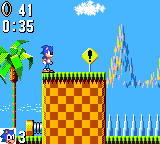
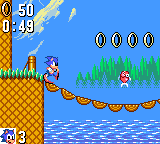
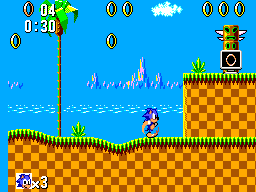
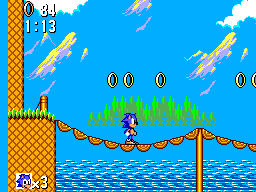
Green Hill Zone, Master System.Bridge Zone, one of three zones made for this game.Sky Base, Eggman’s airship.
Be Sonic! Be Atomic!
That is how the North American and European manual signs off. Before that it pitches Dr. Ivo Robotnik as a mad scientist turning innocent animals into evil robots, and Sonic as the coolest hedgehog around, with power sneakers and a Super Sonic Spin Attack. It promises rolling hills, booby traps, a chilly underground cavern and a pinball-like Special Stage, and saves the big finish for a showdown aboard a flying blimp.
— Official description: Sega, Sonic the Hedgehog Game Gear / Master System instruction manual (North America and Europe, 1991), as transcribed by Sonic Retro. One line quoted; the rest summarised.
Quick Answers
The questions people ask about the 8-bit Sonic 1, answered first and explained further down.
Is the 8-bit Sonic the Hedgehog a port of the Mega Drive game?
No. It is a separate game by a different studio, Ancient. Three zones share names with the Mega Drive original, but every level is new. More →
When did it come out?
The Master System version came out in Europe on 25 October 1991 and in North America in November 1991. The Game Gear version followed on 28 December 1991 in Japan, in December 1991 in North America and in January 1992 in Europe. More →
Who made it?
Ancient, the studio Yuzo Koshiro founded with his family to make it. His sister Ayano Koshiro was director and graphic designer, Shinobu Hayashi programmed it, and Koshiro wrote and arranged the music. More →
How many zones are there?
Six: Green Hill, Bridge, Jungle, Labyrinth, Scrap Brain and Sky Base, each with three acts. The third act is a short boss stage with no rings. More →
Where are the Chaos Emeralds?
Each of the six zones hides one. Special Stages exist but only give out lives, continues and points. More →
How do you get to a Special Stage?
Finish Act 1 or 2 of a zone with 50 or more rings and the Bonus Panel lands on an exclamation mark. Scrap Brain and Sky Base have none. More →
What is different on the Game Gear?
A smaller screen but more colours, a smaller Sonic, warning signs in Green Hill, a reworked Labyrinth with the Emerald moved, easier and sometimes different bosses, and redesigned bonus stages. More →
Did Sonic Team make it?
Sonic Team oversaw it, according to Sonic Retro, but Yuzo Koshiro has said they were busy with the Mega Drive game and left Ancient a lot of freedom. More →
Where can I play it today?
The Game Gear version is in Sonic Origins Plus (2023) and is built into the black Game Gear Micro (2020). More →
Plot / Story
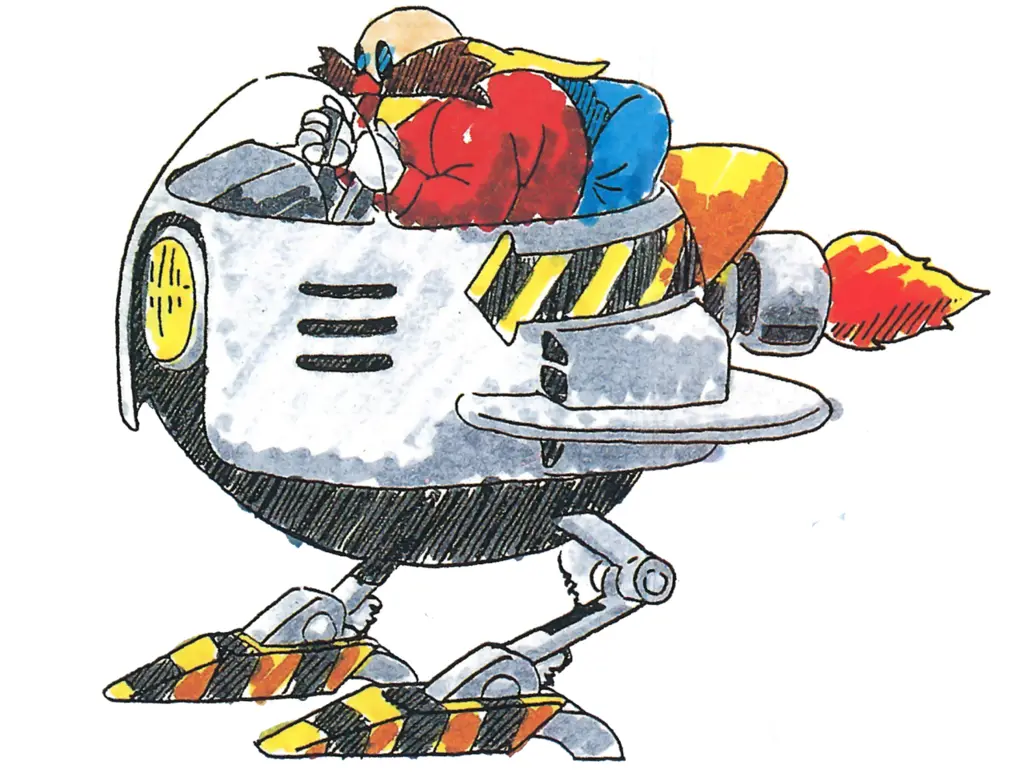
Dr. Eggman, Dr. Robotnik in the West, in his 1991 artwork.
The first 8-bit Sonic keeps its story to a postcard, and its two manuals cannot even agree on what the postcard says. Sega of America’s version is pure sales pitch: a mad scientist is turning innocent animals into evil robots, and only one very cool hedgehog can stop him. The Japanese booklet gives the stakes more weight. South Island hides the Chaos Emeralds, gems that feed every living thing but could also arm a war machine, and they are what Eggman is really after.
Either way the method is the same. The animals end up sealed in capsules or wired into Badniks, and the whole island turns into enemy ground. Sonic’s job is to cut straight through it, set his friends free and, if he keeps his eyes open, find the six Emeralds before the doctor does.
From Green Hill to the clouds
Half the route is borrowed and half is brand new. Green Hill, Labyrinth and Scrap Brain take their names and scenery from the Mega Drive game but get new layouts; Bridge, Jungle and Sky Base exist only here. The chase ends in the air. Cornered at the top of Scrap Brain, Eggman runs for an airship parked in the smog, and Sonic has to fight his way across its dock and then the zeppelin itself to reach him.
The final fight ends with the doctor diving into a teleporter. Sonic follows him through and pops out back in Green Hill, where the whole thing started.
Scrap Brain, Eggman’s factory city.Sky Base on the Game Gear.The final fight.
Six hidden Emeralds and a cleaner island
Each zone hides one Chaos Emerald, and none of them is compulsory. Find the full set and you earn the better ending, in which the gems lift into the sky and scrub South Island clean of Eggman’s smog. It is a lovely touch.
Zones in Sonic the Hedgehog (8-bit)
Six zones of three acts each. Acts 1 and 2 are full levels; Act 3 is a short run to the boss with no rings. Finish Act 1 or 2 and a Bonus Panel spins: Eggman means nothing, a ring adds ten rings, Sonic gives an extra life, and an exclamation mark sends you to a Special Stage if you have 50 rings or more. Checkpoints are arrow-shaped monitors.
Green Hill ZoneActs 1–3Masato Nakamura’s Mega Drive theme survives here, though every layout is new. The ramps are the fun part: hit one rolling and Sonic can sail clean off the screen. On the Game Gear, warning signs flag the fastest drops.
Bridge ZoneActs 1–3Ancient’s first new zone, strung across the island’s big river. Act 1 is all tilted and crumbling bridges and seesaw scales; Act 2 scrolls by itself, so nobody can finish it in under 1:53.
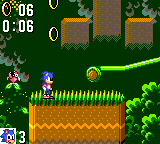
Jungle ZoneActs 1–3The second original zone: logs riding the waterfalls in Act 1, then a vertical Act 2 that climbs a giant waterfall. Slip back down it and the Master System takes a life; the Game Gear just lets you fall.
Labyrinth ZoneActs 1–3Flooded ruins again, with slow underwater lifts and air to find. The Game Gear has its own layout, with the Emerald moved.
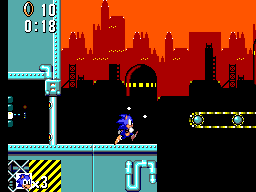
Scrap Brain ZoneActs 1–3Eggman’s smoky factory city at the top of the island, all doors and machinery, and the place he abandons for his airship. No Special Stage here.
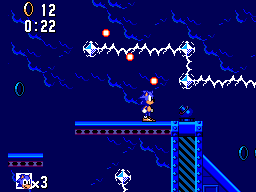
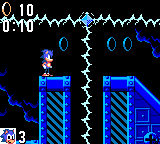
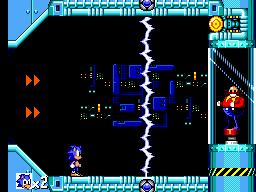
Sky Base ZoneActs 1–3The finale, and another Ancient original. Act 1 crosses the airship dock, where timed electric fields light up the sky; Act 2 boards the zeppelin, which has not a single ring to save you.
There are eight Special Stages, bouncy pinball-style courses of springs and bumpers. They hold lives and continues rather than Emeralds; playing and finishing all eight adds to the Special Bonus at the end.
In comics, TV & other media
The 8-bit game was everywhere in 1991 and 1992, and one of its own zones later made it into the comics. More in Sonic in other movies and media.
Sonic the Comic #51–52Fleetway · UKJungle Zone, a zone that exists only in the 8-bit game, is the setting for “Face from the Past”. In it the shape-shifter Metamorphia turns up claiming to be Tonic, a brother Sonic never knew he had, hoping to worm her way into the Freedom Fighters. Nobody is fooled for long.
Sonic the Comic #2Fleetway · UK · 1993The comic’s Q Zone answered readers’ questions on the 8-bit Sonic the Hedgehog.
Sonic the Hedgehog 1 & 2: Sega’s Official Player’s GuideBook · 1993Sega’s guide to the first two games; it and An Official Player’s Guide to Sonic the Hedgehog (1994) both cover the 8-bit game.
Mean Machines Sega #1UK · October 1992The new magazine’s first issue rated the Master System version 90% and, in its Game Gear index, the Game Gear version 91%.
Characters
The cast is the Mega Drive game’s, redrawn for 8-bit: one hero, one villain and the animals caught in between.
Character
Who they are
In this game
Stats & abilities
Sonic the HedgehogThe hero
Sega’s new mascot, designed by Naoto Ohshima for the Mega Drive game earlier in 1991. The Western manual sells him as a cool dude with a spiked haircut and power sneakers; the Japanese one simply has him living on South Island with his animal friends.
The only playable character. He races across South Island to free the animals and stop Eggman, finding the six Emeralds along the way if he can.
Spin Attack and rolling, as on the Mega Drive
100 rings = extra life, then the counter resets to 00 and he is ringless again
Dropped rings cannot be picked up again
Monitors and arrow-monitor checkpoints
Slower than on the Mega Drive
Dr. EggmanDr. Ivo Robotnik in the West
Sega’s round, moustached mad scientist, introduced alongside Sonic in 1991. (The picture is his Mega Drive artwork.)
Invades South Island for the Chaos Emeralds, imprisons the animals and fights Sonic at the end of most zones before fleeing from Scrap Brain to his airship, Sky Base.
Five boss fights: Green Hill, Bridge, Jungle, Labyrinth and Sky Base
Escapes by teleporter at the end
Easier, and sometimes different, on the Game Gear
The animalsSouth Island’s residents
The friends Sonic lives with on South Island. (The picture is Pocky the rabbit in later Sega artwork.)
Locked in capsules and inside the Badniks, waiting for Sonic.
Not playable.
The BadniksEggman’s robot army
Robots built around captured animals, redrawn from the Mega Drive game.
Thirteen kinds: Moto Bug and Buzz Bomber, Crabmeat, Newtron and Chopper, Jaws and Burrobot, Caterkiller, Ball Hog, Bomb, Spikes and two kinds of Orbinaut (Unidus and Uni Uni).
100 points each.
Badniks and bosses
A few of the 8-bit Badnik sprites, and Eggman’s five boss machines, in screenshots from Sonic Retro.
Buzz BomberBadnikThe robot wasp, in 8-bit form.
CrabmeatBadnikThe pincered crab.
SpikesBadnikThe spiked-shell Badnik; one in the Game Gear’s Bridge Act 2 is stuck under the floor.
OrbinautBadnikA core ringed by spiked balls.
Green Hill bossBoss · Green HillThe first meeting with Eggman.
Bridge bossBoss · BridgeEggman fires on Sonic here. On the Game Gear, roll over the collapsing bridge fast enough and he cannot.
Final bossBoss · Sky BaseEggman behind protective glass, with a teleporter as his way out.
The people who made it
A small team, much of it one family.
Yuzo KoshiroRearrange and original music · Ancient founderComposer of Streets of Rage and The Revenge of Shinobi, who told Sega he could make games too, founded Ancient to do it and wrote the music on a PC-88.
Ayano KoshiroDirector and graphic designYuzo’s sister, credited for graphic design.
Shinobu HayashiGame programAncient’s first hire, who programmed the game (credited as Shinobu “Machine” Hayashi on the Game Gear).
Takefuni YunoueGraphic designThe second credited graphic designer.
Masato NakamuraSound produceThe Dreams Come True bassist who scored the Mega Drive game; Koshiro rearranged his themes.
How it was made
This page is new, so there is no original Sonic Scene history to keep; the story below comes from Sonic Retro, Sega Retro and the interviews cited by Sonic Wiki Zone.
A studio founded for one game
Sega’s 8-bit consoles were up against Nintendo, but the company believed Sonic could sell on them too. Yuzo Koshiro, already famous for his music for The Revenge of Shinobi (1989), told Sega he could make games as well as score them, and Sega took him up on it. There was a catch: Sega would not sign a contract with an individual. So Koshiro set up a company with his family, Ancient, with his sister Ayano as director and graphic designer, and Shinobu Hayashi, the first person they hired, as programmer.
Squeezing the Mega Drive game onto 8-bit hardware was never an option, so Ancient designed a new one, deliberately different from its big brother. Sonic Retro says Sonic Team oversaw the project, but Koshiro has recalled that the Mega Drive team was far too busy to get involved and left him plenty of freedom.
Koshiro’s soundtrack
Masato Nakamura’s Green Hill theme survives, but most of the music is Koshiro’s own, composed on a PC-88 computer.
What got cut
Dig into the cartridge and a slightly different game emerges. The Game Gear version alone hides a 1992 copyright line, apparently insurance in case the release slipped into the new year, and the Western manuals print it in their title-screen pictures. Ancient had lined up a title-screen credit for itself, but the finished game names only Sega, and an early credits screen survives too. An 8-bit arrangement of Marble Zone’s music and some of that zone’s Batbrain graphics suggest a Marble Zone was once on the list, and Sky Base has laser turrets that are never used, a hint of a boss idea taken from the Mega Drive game and dropped. Pre-release screenshots spelled out “RING” where the final game shows an icon.
Master System and Game Gear
Warning signs, added for the Game Gear’s narrow screen.Screenshot via Sonic Retro
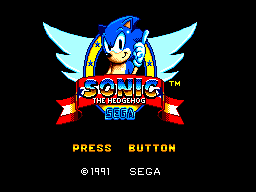
Ancient did not just shrink the game for the Game Gear. The handheld version is kinder overall: several bosses, the final one included, were reworked or swapped for easier fights, and slipping back down Jungle Zone’s waterfall no longer kills you. Other changes follow from the screen, which is narrower but shows more colours. Sonic is smaller and lighter to control, Green Hill gets warning signs before its fastest stretches, and Labyrinth was rebuilt with its Emerald in a new place. The bonus stages were redesigned too, and the handheld boots to its own Sega logo with a jumping Sonic. The Master System version, for its part, ended up built into some European Master System II consoles: switch one on with no cartridge and the game starts.
Firsts: what this game introduced
The 8-bit Sonic set up a parallel series of its own.
1The first handheld SonicThe Game Gear version made Sonic portable before 1991 was out.
2The first 8-bit SonicThe start of the Master System and Game Gear series that ran until Sonic Blast in 1996 (a year later on Brazil’s Master System).
3Ancient’s first gameThe studio was founded to make it, its first collaboration with Sega.
4Bridge, Jungle and Sky BaseThree zones that exist only in this game.
5An airship finaleChasing Eggman aboard a zeppelin, a year before Sonic 2’s Wing Fortress.
6A prize-giving Bonus PanelThe end-of-act sign becomes a wheel of fortune with rings, lives and a door to the Special Stage.
7An Emerald ending that cleans the islandCollect all six and the gems scrub the pollution off South Island.
8Yuzo Koshiro’s SonicNew Sonic music by the composer of The Revenge of Shinobi, alongside his arrangements of Masato Nakamura’s themes.
Glitches, exploits and oddities
Ancient’s Sonic is solid, but it has its share of bugs, and the Game Gear version fixed a good number of them.
Outrun the camera
Jungle Zone on the Game Gear.Screenshot via Sonic Retro
Green Hill and Jungle both have ramps at the foot of steep drops. Roll into one, hold Right in the air and Sonic keeps gaining speed until the screen cannot keep up: he sails over the scenery, ignores anything off-screen and can skip most of Green Hill’s first two acts, sometimes landing outside the level altogether. The Game Gear still lets you outrun the camera, but not escape the map.
Shortcuts to the end
Sky Base Act 2 has a huge shortcut over the walls just after the opening turrets. In the final fight a well-timed jump puts you inside Eggman’s glass booth for easy hits, and hopping onto the teleporter alongside him gets you to the ending sooner, which speedrunners love. All three work in both versions.
Wedged in the walls
Two spots let you jam Sonic into the scenery and free him with a button press: a sideways spring in the Master System’s Green Hill Act 2 (roll into it, then jump), and the left edge of Labyrinth’s rising underwater platforms, where the escape launches him upwards far faster than the platform could, which can be a lifesaver.
Small oddities
On the Master System, ending an act with exactly 30 rings and winning the ring prize turns the Bonus Panel back to Eggman. In the Game Gear’s second revision, Eggman’s hurt animation lasts a single frame, so you barely see it. And one Spikes Badnik in the Game Gear’s Bridge Act 2 is placed below the floor, out of reach and out of sight.
Videos & media
A look at all of Sonic’s Game Gear outings from Gaming Historian, and a complete Master System run with all six Emeralds and all eight Special Stages.
Gaming Historian’s 2016 tour of every Sonic game released on the Game Gear in North America, starting with this one.
A complete Master System playthrough with all six Emeralds and all eight Special Stages, from the World of Longplays archive.
Trivia & facts
Most of the zone music is Yuzo Koshiro’s own; Masato Nakamura’s Green Hill theme is one of the few Mega Drive tunes carried over.
Bridge Zone on the Game Gear.Screenshot via Sonic RetroBridge Zone Act 2 scrolls by itself, so it cannot be finished in less than 1 minute 53 seconds.
On the Master System, falling back down Jungle Zone’s waterfall costs a life; the Game Gear just drops you to the level below.
The flashing electric fields of Sky Base Act 1 came back in Sonic CD’s Wacky Workbench.
Finish an act in 19 seconds or less and the time bonus is 300,000 points.
The end-of-game Special Bonus can reach 500,000 points: 50,000 each for all six Emeralds, all eighteen 1-Up monitors, playing all eight Special Stages and finishing them, 100,000 for not losing a life, and 200,000 more for doing the lot.
Eggman’s hurt animation was cut to a single frame in the Game Gear’s second revision, for no obvious reason.
Electronic Gaming Monthly gave the Game Gear version its Editors’ Choice Gold award, and GamesRadar later ranked it fourth among the best Game Gear games ever.
Media & artwork
Box art from Sonic Scene’s own galleries, plus screenshots. Select any image to view it larger.
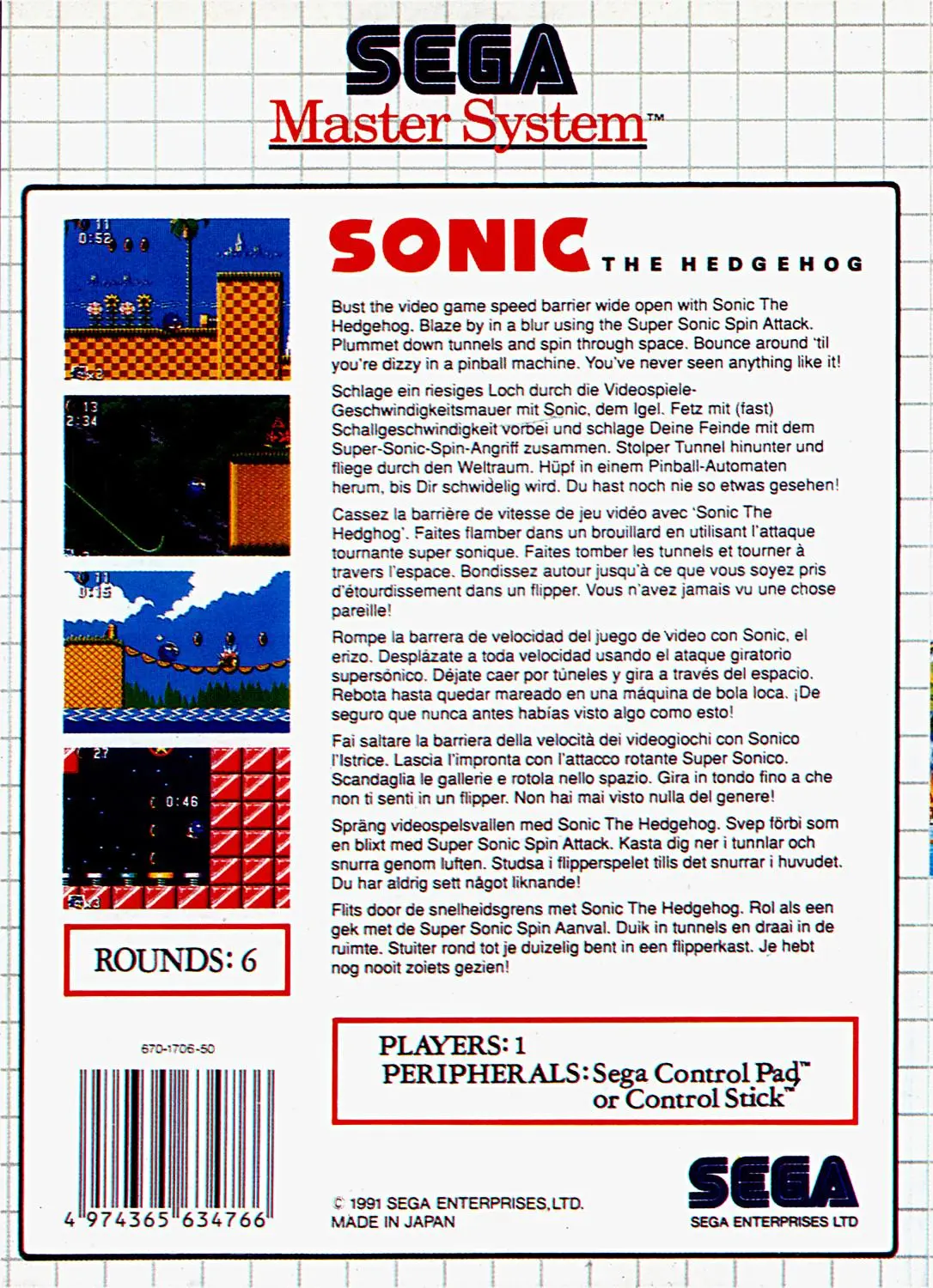
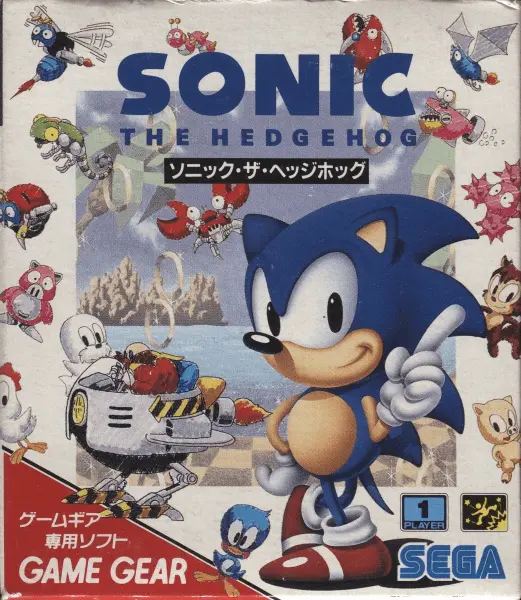
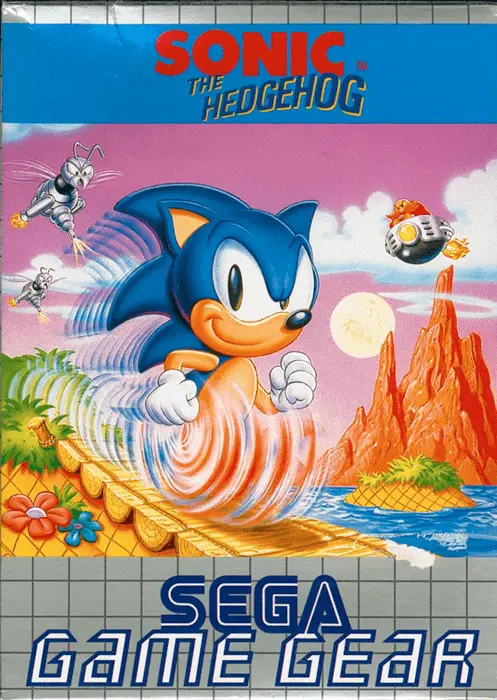
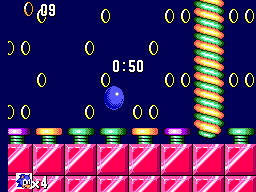
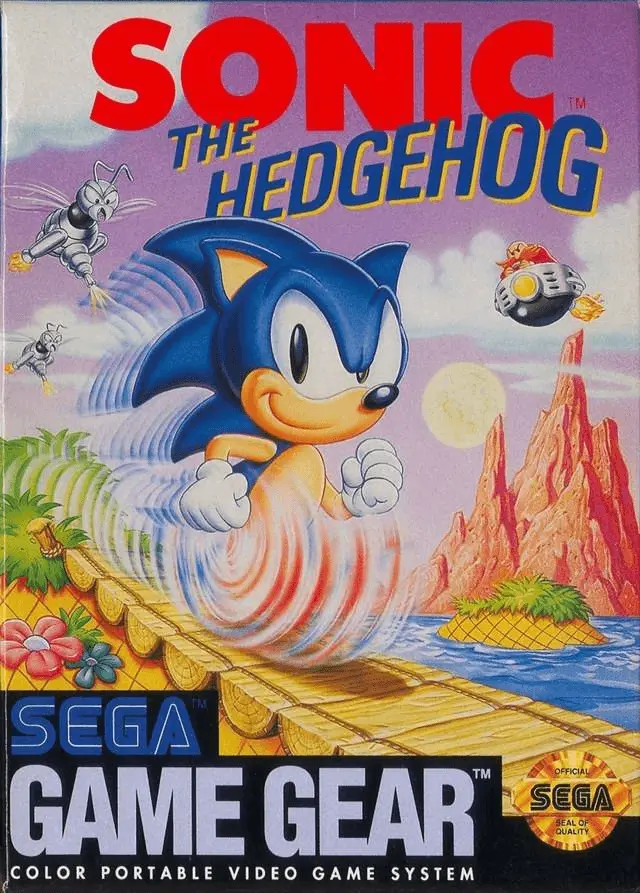
European Master System box.Back of the Master System box.North American Game Gear box.Japanese Game Gear box.Game Gear box.The Bonus Panel.A Special Stage.Green Hill boss.Bridge boss.Jungle boss.Labyrinth boss.Sky Base.
The 8-bit Sonic proved the hedgehog could work on Sega’s smaller machines and started a series of its own, from the 8-bit Sonic 2 to Sonic Blast.
Releases and re-releases
Master System (Europe)25 October 1991 – UK shops from 8 November.
Master System (North America)November 1991 – US$29.95.
Game Gear (Japan)28 December 1991 – With North America in December 1991 and Europe in January 1992.
Master System II1990s – Built into some European consoles.
Palm OS14 April 2003 – A US release for Palm handhelds.
Sonic Adventure DX: Director’s Cut2003–2004 – Game Gear version, GameCube and PC.
Sonic Mega Collection Plus2004–2005 – PlayStation 2, Xbox and PC.
Wii Virtual ConsoleAugust–September 2008 – The Master System version, emulated by M2.
Nintendo 3DS Virtual Console2013 – The Game Gear version.
Game Gear Micro (black)2020 – Built in.
Sonic Origins Plus23 June 2023 – One of twelve Game Gear games.
Where to play it today
Sonic Origins Plus (2023) has the Game Gear version on PlayStation, Xbox, Nintendo Switch and PC, and the black Game Gear Micro has it built in. Check what is still on sale on your platform.
Sales & reviews
Sales
Sega Retro has no sales figures for either version, and we have not found a reliable one, so we do not give one here.
91%Sega Retro average, Master System (23 reviews)
86%Sega Retro average, Game Gear (24 reviews)
96%Sega Pro, both versions
96%Sega Power, Master System (January 1992)
Reception and review scores
Period reviews from Sega Retro’s index of magazine scans; scores that were not out of 100 are shown as Sega Retro converts them.
JoypadFrance · Master System · December 1991
97%
Sega ProUK · Master System · December 1991
96%
Sega ProUK · Game Gear · February 1992
96%
GameProUS · Game Gear · February 1992 (converted)
96%
Sega ForceUK · Master System · January 1992
95%
Mega ForceFrance · Master System · November 1991
95%
Sega PowerUK · Game Gear · April 1992
94%
Game ZoneUK · Game Gear · March 1992
94%
Computer & Video GamesUK · Game Gear · January 1992
93%
Mean MachinesUK · Master System · December 1991
90%
Computer & Video GamesUK · Master System · December 1991
90%
VideoGames & Computer EntertainmentUS · Game Gear · February 1992
90%
Electronic Gaming MonthlyUS · Game Gear · February 1992 (converted)
88%
GameProUS · Master System · December 1991 (converted)
88%
Beep! MegaDriveJapan · Game Gear · January 1992 (converted)
73%
The 8-bit Sonic was a critical smash in Europe and America, where most reviewers scored it in the 90s and magazines including Games-X and Brazil’s Ação Games gave the Master System version full marks. Japan was cooler, with Famitsu and Beep! MegaDrive in the 50s to 70s. Revisiting the Wii release in 2008, IGN gave it 7.5 out of 10, and Nintendo Life scored the 3DS version 8 out of 10.
Honours
Electronic Gaming MonthlyEditors’ Choice GoldAwarded to the Game Gear version.
GamesRadarFourth-best Game Gear gameRanked fourth in GamesRadar’s all-time Game Gear top list.
Reader reviews
No reader reviews yet. Played it? Give it a score out of 10 and tell other fans what you think.
Every fact on this page was checked against the sources below (Sonic Retro pages were read through Wayback Machine copies from December 2024 to February 2025, because the live site shows a bot check; each link opens the nearest archived copy). Magazine scores come from Sega Retro’s review index, which links each score to a scan of the original page.
To provide the best experiences, we use technologies like cookies to store and/or access device information. Consenting to these technologies will allow us to process data such as browsing behavior or unique IDs on this site. Not consenting or withdrawing consent, may adversely affect certain features and functions.
Functional
Always active
The technical storage or access is strictly necessary for the legitimate purpose of enabling the use of a specific service explicitly requested by the subscriber or user, or for the sole purpose of carrying out the transmission of a communication over an electronic communications network.
Preferences
The technical storage or access is necessary for the legitimate purpose of storing preferences that are not requested by the subscriber or user.
Statistics
The technical storage or access that is used exclusively for statistical purposes.The technical storage or access that is used exclusively for anonymous statistical purposes. Without a subpoena, voluntary compliance on the part of your Internet Service Provider, or additional records from a third party, information stored or retrieved for this purpose alone cannot usually be used to identify you.
Marketing
The technical storage or access is required to create user profiles to send advertising, or to track the user on a website or across several websites for similar marketing purposes.

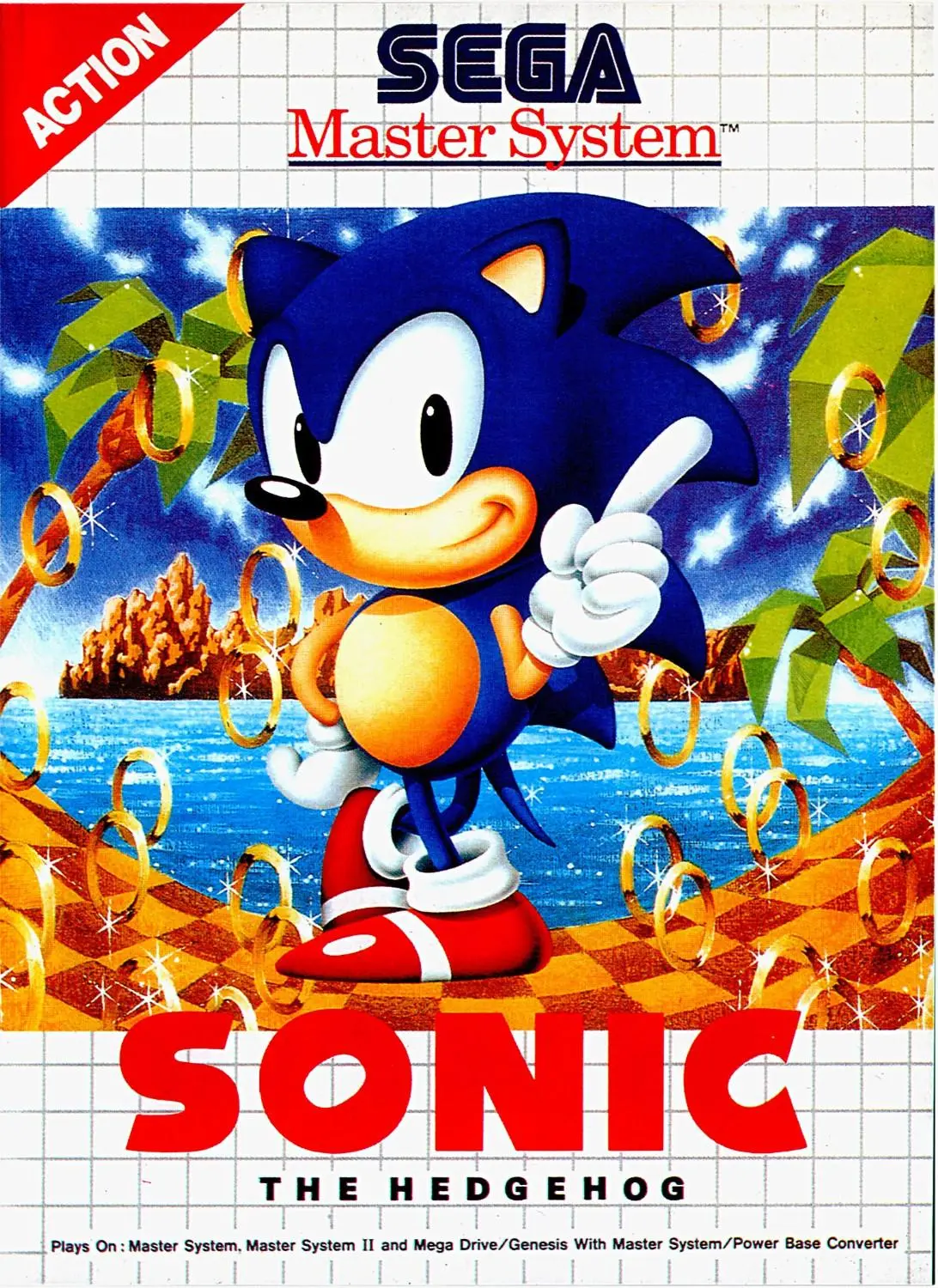
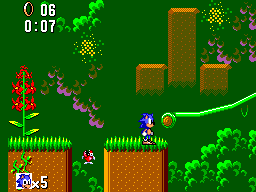 Jungle ZoneActs 1–3The second original zone: logs riding the waterfalls in Act 1, then a vertical Act 2 that climbs a giant waterfall. Slip back down it and the Master System takes a life; the Game Gear just lets you fall.
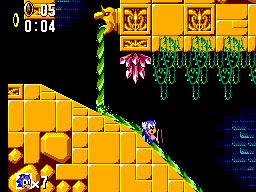 Labyrinth ZoneActs 1–3Flooded ruins again, with slow underwater lifts and air to find. The Game Gear has its own layout, with the Emerald moved.
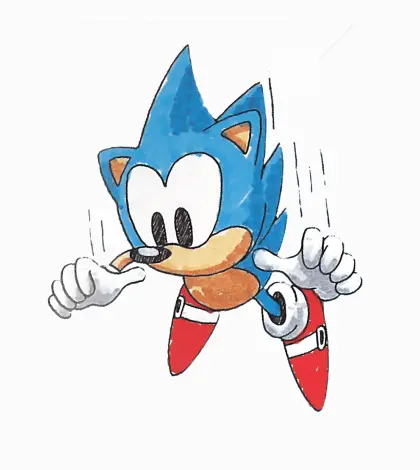 Sonic the HedgehogThe hero
 The animalsSouth Island’s residents
 The BadniksEggman’s robot army
 CrabmeatBadnikThe pincered crab.
 SpikesBadnikThe spiked-shell Badnik; one in the Game Gear’s Bridge Act 2 is stuck under the floor.
 OrbinautBadnikA core ringed by spiked balls.
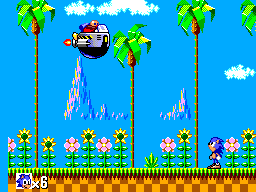 Green Hill bossBoss · Green HillThe first meeting with Eggman.
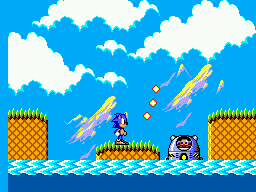 Bridge bossBoss · BridgeEggman fires on Sonic here. On the Game Gear, roll over the collapsing bridge fast enough and he cannot.
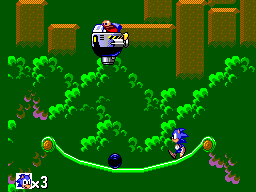 Jungle bossBoss · JungleEggman’s third machine.
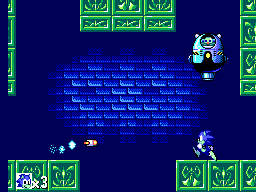 Labyrinth bossBoss · LabyrinthThe underwater showdown.