Tails has been kidnapped, Eggman has built six nasty robots, and the only way into the Crystal Egg is with all six Chaos Emeralds. The 8-bit Sonic 2 is its own game, and on the Game Gear one of the toughest Sonics ever made.
Released17 Nov 1992 (US) · 21 Nov 1992 (JP) · Nov 1992 (EU)
DeveloperAspect, for Sega
ZonesSeven, three acts each
Players1
FirstsTails and Mecha Sonic
Cartridge4 megabits
Title
Sonic the Hedgehog 2 ソニック・ザ・ヘッジホッグ2
Platforms
Sega Master System, Sega Game Gear
Developer
Aspect Co., Ltd. (Sega Retro credits Sega CS2, with Aspect on programming)
Publisher
Sega
Compose
Tomozou, Simachan, Ray (credited by nickname)
Program
Ko.Ko, Semimaru, Tea Tea, Tosiyan (Game Gear: Hiro SSS in place of Semimaru)
Art
Jly King, Noburin, Tez, U.D.K
Sound
Gatao, Nao Chan, Dawasa; sound driver by Tokuhiko Uwabo
Genre
Platform
Players
1
Released (Master System)
Europe: 16 October 1992 in our original listing; Sega Retro dates the UK launch to 24 November 1992 (£32.99). Brazil: 16 October 1992 (our listing), released by Tec Toy.
Released (Game Gear)
USA: 17 November 1992 (US$39.99) · Japan: 21 November 1992 (¥3,800, G-3321) · Europe: 29 October 1992 in our original listing; Sega Retro gives 24 November 1992 for the UK · Brazil: 1992–1993
Virtual Console
Wii (Master System version): Japan 18 November 2008, USA 8 December 2008, Europe 26 December 2008. Nintendo 3DS (Game Gear version): Japan 31 October 2012, USA and Europe 27 June 2013
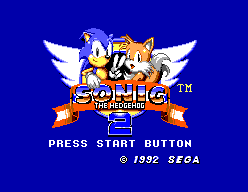
The 8-bit Sonic the Hedgehog 2 shares a name, a year and a two-tailed fox with its Mega Drive namesake, and almost nothing else. Aspect’s Master System and Game Gear game has its own seven zones, its own story and its own bosses, and because the Game Gear cartridge reached American shops a week before the Mega Drive game, it is where both Tails and Mecha Sonic made their first appearances.
It is faster than the first 8-bit Sonic and much closer in feel to the Mega Drive games. Sonic can grab back rings he drops, smash through walls, ride minecarts and a hang glider, hitch lifts in giant air bubbles and skim across water. What he cannot do is Spin Dash, and Tails, despite appearing on every title card, only turns up in the cutscenes.
It is also hard, especially on the Game Gear, where the small screen hides spikes and pits until it is too late and the first boss has broken many a young player. Magazines adored it all the same: Sega Retro’s average of the Master System reviews is 92%.
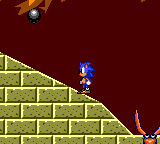
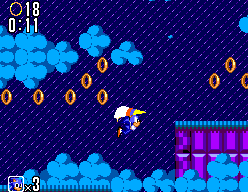
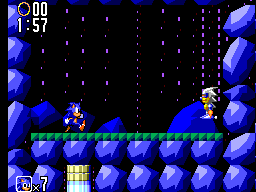
The opening: Eggman grabs Tails.Under Ground Zone, Game Gear.Sky High Zone’s hang gliders.
I don’t know what he has planned, but Sonic, please be careful!
Tails ends his letter with that plea in the story printed in the North American and European manuals. Sonic comes home from his travels to an empty South Island, and the letter, written at Robotnik’s dictation, explains the rest: the animals have been rounded up, Tails is being held in the Crystal Egg, the six Chaos Emeralds are the price of his freedom, and six nasty robots are waiting. Our original page reproduced that story; we retell it under Plot / Story.
— Official description: Sega, Sonic the Hedgehog 2 Game Gear / Master System instruction manual (North America and Europe, 1992). One line quoted; the rest summarised.
Quick Answers
The questions people ask about the 8-bit Sonic 2, answered first and explained further down the page.
Is the 8-bit Sonic 2 a port of the Mega Drive game?
No. It has a different story, different zones and different bosses. Only the name, the year and Tails are shared. More →
When did it come out?
The Game Gear version came out on 17 November 1992 in the US and 21 November 1992 in Japan. Europe got both versions in late 1992: Sega Retro dates the UK launch to 24 November, while our original listing gave October dates. More →
Can you play as Tails?
No. Tails appears on the title cards and in the opening and ending, but the player is always Sonic. Rescuing Tails is the whole point. More →
How do you get the good ending?
Find the Chaos Emeralds hidden in the second act of each of the first five zones, then beat Mecha Sonic in Scrambled Egg Zone. That earns the sixth Emerald and opens the secret final zone, Crystal Egg, where Eggman and Tails are waiting. More →
How many zones are there?
Seven, with three acts each. You start in Under Ground, climb to Sky High, dive into Aqua Lake, race across Green Hills, ride through Gimmick Mt. and get lost in Scrambled Egg; with every Emerald, Crystal Egg follows. More →
Why is the Game Gear version so hard?
It was finished later and has some different boss arenas and music, but mostly it is the small screen: you cannot see hazards coming. The Under Ground Zone boss is notorious. More →
Is there a level select?
Yes. On the Master System hold Left, 1 and 2 on controller 2 while switching on; on the Game Gear hold Down-Left, 1 and 2 from the SEGA screen. Details below. More →
Is Mecha Sonic the same as Silver Sonic?
The English manual calls the Scrambled Egg boss Silver Sonic; it is usually called Mecha Sonic. It is a different robot from the Silver Sonic in the Mega Drive Sonic 2. More →
Where can I play it today?
The Game Gear version is one of the twelve Game Gear games in Sonic Origins Plus (2023). It was earlier on the Wii and Nintendo 3DS Virtual Console. More →
Plot / Story
In the game’s opening, Eggman snatches Tails right in front of Sonic.Screenshot via Sonic Retro
The 8-bit Sonic 2 begins with a ransom note. Sonic has been off roaming since his first win over Robotnik, because a quiet island bores him stiff, and he comes home to find it empty. Waiting at his place is a letter from Tails, written at the doctor’s dictation.
Robotnik has rounded up the island’s animals and locked Tails away in somewhere called the Crystal Egg, and the only key is the full set of six Chaos Emeralds. Six robots have been built specially to finish Sonic off. Tails ends by begging Sonic to be careful, the line quoted at the top of this page.
Sonic is gone before the paper hits the floor. The Japanese manual tells the same story with a shorter letter signed with his real first name, Miles; the game itself, as the next section shows, prefers to show the kidnapping happen.
The kidnap, as the game tells it
The cartridge skips the letter and goes straight for the drama. In the opening, Eggman swoops in and carries Tails off while Sonic watches.
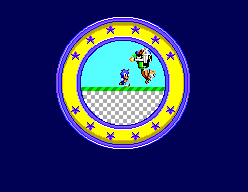
Eggman’s six robots turn out to be the Master Robots, one guarding the end of each zone, and several of them are robot animals, among them a bird, a circus sea lion and a sumo pig. The sixth is something new, a robot Sonic.
Two endings under the stars
The first five Emeralds are hidden in the second act of each zone, often somewhere awkward. The sixth belongs to Mecha Sonic, who waits at the end of Scrambled Egg. If you beat it without the other five, the adventure simply stops there: Sonic runs on alone, and when night falls he looks up to see Tails’ face picked out in the stars. It is about as bleak as an early Sonic ending gets.
Bring all five, though, and the sixth Emerald opens the way to the Crystal Egg, a glittering fortress with Eggman’s face on its walls. Beat the doctor in his dark machine room and he flees, Tails is free, and the two friends run off together and stop to watch a sky full of constellations shaped like the pair of them.
Mecha Sonic, guardian of the last Emerald.Crystal Egg, the secret final zone.The last fight with Eggman.
Zones in Sonic the Hedgehog 2 (8-bit)
Seven zones, each with three acts. The third act is a short run to the boss, with no rings to protect you. Emeralds are hidden in the second act of the first five zones; there are no Special Stages.
Under Ground ZoneActs 1–3 · boss: Pit MasterNo beach this time: the adventure opens in a lava-filled mine, the first opening zone in the series that is not a tropical island. On the Game Gear its boss, Pit Master, is one of the most notorious fights in any Sonic game.
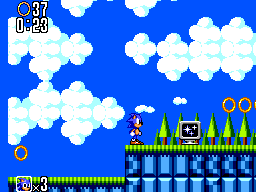
Sky High ZoneActs 1–3 · boss: Hiyoko MasterHang gliders make their series debut here: pull back to climb, but every tug costs speed. The clouds are the trap, as some hold your weight and some do not, and Act 2 brings a storm.
Aqua Lake ZoneActs 1–3 · boss: Balance MasterThe water level, and its party trick is the giant air bubble: hop inside one and float up to the surface. Being underwater slows everything down, but this zone’s Emerald, along the blue tubes of Act 2, is one of the easiest to find.
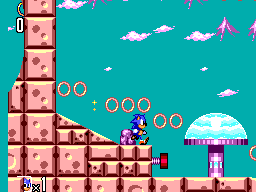
Green Hills ZoneActs 1–3 · boss: Dohyo MasterGreen Hill in all but name, and a breather after three hard zones. Its tune went on to become Sonic CD’s “Sonic – You Can Do Anything”, and the zone came back, mechanised, in Sonic Chaos.
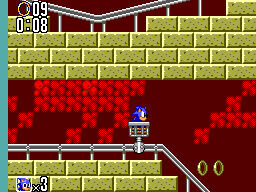
Gimmick Mt. ZoneActs 1–3 · boss: Charge MasterA mountain hollowed out and filled with machinery, where flywheels fling you upwards and the minecarts return. Act 1 is that rare thing, a level that finishes on the left.
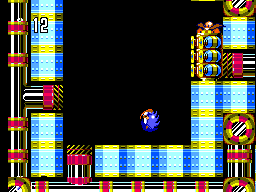
Scrambled Egg ZoneActs 1–3 · boss: Mecha SonicEggman’s hideout, and probably the toughest zone in the game. Its tubes form a maze that loves to send you backwards or onto spikes, and Mecha Sonic guards the exit.
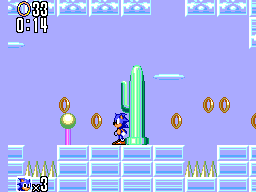
Crystal Egg ZoneActs 1–3 · boss: Dr. EggmanThe secret seventh zone, open only to players carrying every Emerald. Pretty crystal walls, some with the doctor’s face on them, hide plenty of spikes, and Eggman waits in a dark machine room.
Archie’s Sonic the Hedgehog #269Archie Comics · USScrambled Egg Zone turns up in Archie’s long-running series, in issue 269.
Sonic the Hedgehog 30th Anniversary SpecialIDW Publishing · US · 2021The 8-bit game’s Mecha Sonic makes an appearance in IDW’s anniversary one-shot.
Sega Shinsaku Soft Video Vol. 23Sega · Japan · VHSSega’s VHS of upcoming games showed an early build with Under Ground, Sky High (titled “Sky Hi”) and Aqua Lake.
Sonic the Hedgehog 1 & 2: Sega’s Official Player’s GuideBook · 1993Sega’s official guide to the first two games.
Mean Machines Sega #2UK · November 1992Reviewed the Master System version at 95%. Our scans of the review are in the magazine scans section.
Characters
Sonic’s second 8-bit adventure introduced two characters who would become series fixtures, though neither quite as you would expect.
Character
Who they are
In this game
Stats & abilities
Sonic the HedgehogThe hero
Sega’s blue mascot, created by Naoto Ohshima for the 1991 Mega Drive game and here in his second 8-bit platformer. The Western manual gives him the simplest motive going: boredom. Peace and quiet are no fun for a hedgehog who lives for action.
The only playable character. He crosses South Island to collect the Chaos Emeralds and free Tails and the island’s animals.
Spin Attack and rolling, but no Spin Dash
Can re-collect rings he drops
Breaks some walls with a spin
Rides minecarts, hang gliders and air bubbles
No shields and no checkpoints
Miles “Tails” ProwerFirst appearance
A young two-tailed fox and one of Sonic’s closest friends. The Japanese manual’s two-line profile makes him a small boy who idolises Sonic, with two tails to show how much energy he has. Because this game reached shops a week before the Mega Drive Sonic 2, it is Tails’ first appearance.
The hostage. Eggman holds him in the Crystal Egg. He shows up on each title card and nearly all of his sprites exist, so he may once have been meant to be playable.
Not playable. Unused sprites of Tails crying survive in the game.
Dr. EggmanDr. Ivo Robotnik in the West
Sega’s moustached mad scientist and Sonic’s nemesis since 1991. (The picture is his 1991 artwork.)
Kidnaps Tails and the animals, builds six Master Robots to finish Sonic off, and waits in the Crystal Egg for the final battle.
Final boss, Crystal Egg Zone
Worth 20,000 points
Only reached with all the Emeralds
Mecha SonicThe English manual’s Silver Sonic · first appearance
Eggman’s first robot copy of Sonic to reach the shops, a week ahead of the Mega Drive Sonic 2’s Silver Sonic. It is a different machine from that one, despite sharing a name in the manual.
The last of the Master Robots, guarding the sixth Chaos Emerald at the end of Scrambled Egg Zone. Beat it without the other five Emeralds and the game ends there.
Boss of Scrambled Egg Zone
Worth 10,000 points
Holds the sixth Emerald
The Master RobotsEggman’s six “really nasty robots”
The six robots Tails warns about in his letter, each guarding a zone.
Pit Master (Under Ground), Hiyoko Master (Sky High), Balance Master (Aqua Lake), Dohyo Master (Green Hills, the sumo pig in the picture), Charge Master (Gimmick Mt.) and Mecha Sonic (Scrambled Egg).
5,000 points each
Fought in Act 3, with no rings
Several arenas differ on the Game Gear
Badniks and bosses
The Badnik roster takes in New Motora, Taraban and Zaririn, Flying Chopper and Game-game, Meleon, Buton, Drillin and the trusty Bomb. The pictures below are Sonic Retro’s screenshots of the bosses.
Pit MasterUnder GroundLurks in a pit; infamously hard on the Game Gear.
Hiyoko MasterSky HighA bird robot, backed by a flock of Mecha Hiyoko chicks.
Balance MasterAqua LakeA robot circus sea lion.
Dohyo MasterGreen HillsA sumo pig that jumps and rolls.
Charge MasterGimmick Mt.Guards the machine-filled mountain.
Mecha SonicScrambled EggThe robot double with the last Emerald.
Dr. EggmanCrystal EggThe secret final boss.
The people who made it
The in-game credits list Aspect’s team by nickname. Several of them came back for Sonic Chaos.
Tomozou, Simachan, RayComposeThe game’s planners. Ray is also credited for Sonic Chaos’ game design.
Ko.Ko, Semimaru, Tea Tea, TosiyanProgramKo.Ko and Tosiyan (Toshiyan) also programmed Sonic Chaos.
Jly King, Noburin, Tez, U.D.KArtDrew the zones, Badniks and Master Robots.
Raizou, M.Shima, End, MariyuriEditM.Shima went on to design Sonic Chaos.
Gatao, Nao Chan, DawasaSoundThe sound team. Sonic Retro credits the Green Hills theme to Naofumi Hataya, who also worked on Sonic CD.
How it was made
Our original page had no history section; this one is new, pieced together from Sonic Retro’s prototype research, the game’s hidden data and Sega’s own preview tape.
The AutoDemo
The earliest surviving build is the Sonic 2 AutoDemo, a self-playing demo whose footage fed the first magazine previews. Its Sky High and Green Hills still had the simple checkerboard ground of the first game, and one magazine pieced its screenshots into a level map that turned out to be close to the real thing.
Sega’s video magazine caught a later build. Volume 23 of the Sega Shinsaku Soft Video tapes shows a nearly finished Under Ground Zone next to a Sky High still spelt “Sky Hi” on its title card, complete with rolling boulders that were later cut, and an Aqua Lake whose water did not yet slow Sonic down.
Two versions, one harder
The Under Ground boss on the Game Gear.Screenshot via Sonic Retro
The Game Gear Sonic 2 has a fearsome reputation, and only part of it was planned. The handheld version was finished after the Master System one and picked up deliberate changes: its own boss music and reshaped boss arenas, with Under Ground’s Pit Master the most infamous of them.
The rest comes down to the screen. The Game Gear shows a much smaller slice of each level while scrolling the same way, so enemies and spikes arrive with little warning; on a television the same layouts feel far fairer. Like Aspect’s other Sonic games, both finished cartridges carry a build stamp in the code.
The Tails who was not playable
Tails is everywhere except under your thumb. Look inside the cartridge and you find most of a playable character’s worth of sprites for him, including unused crying frames that probably belonged to the rescue scene, and he appears on every title card. That is why Sonic Retro suspects he was meant to be playable until time ran out.
Firsts: what this game introduced
For an 8-bit sequel, Sonic 2 broke a lot of new ground, starting with its cast.
1Tails’ first appearanceOut in the US a week before the Mega Drive Sonic 2, so this is where Miles Prower began.
2Mecha Sonic’s first appearanceEggman’s first robot Sonic to reach players.
3VehiclesSonic’s first rides: minecarts in Under Ground and Gimmick Mt., and a hang glider in Sky High.
4Rideable air bubblesJump inside a giant bubble and float up to the surface. Triple Trouble and Sonic Mania revisited the idea.
5Rings you can win backThe first 8-bit Sonic where you can grab dropped rings again.
6A non-tropical first zoneUnder Ground is the first opening zone in the series that is not a sunny island.
7A secret final zoneCrystal Egg only opens to players holding every Emerald.
8Skimming waterGo fast enough and Sonic runs across the surface.
Cheats & secrets
Our original page had no cheats; these are new, checked against Sonic Retro’s hidden-content notes.
Zone select (Master System)
On controller 2, hold Left, 1 and 2 while switching the console on, and keep holding through the opening. When the title screen appears, let go and press 1 or 2 on controller 1.
Zone select (Game Gear)
Hold Down-Left, 1 and 2 from the SEGA screen onwards. Press Start to skip the intro, then press Start on the title screen at the exact moment Tails blinks for the third time, still holding the other buttons.
Hidden birds in Sky High
In Sky High Act 1, head for the extra-life monitor in the top-left corner and walk into its left side without breaking it: yellow birds fly out of the trees. Do it again once they have gone and more appear.
Left + Right
Pressing Left and Right at once gives Sonic enormous speed to the left. It is a favourite of tool-assisted speedruns, but an unmodified controller cannot press both.
Checked against Sonic Retro, November 2026.
Glitches, exploits and oddities
Most of the 8-bit Sonic 2’s bugs are harmless, one is very handy, and the Game Gear version quietly fixed several of the Master System’s.
A free supply of lives (Game Gear)
Sky High’s stormy Act 2.Screenshot via Sonic Retro
Unlimited lives are on offer early in Sky High Act 2, but only on the Game Gear. Break the 1UP monitor waiting below the opening cliff, spring back up and return the right way, and the game restores the monitor once it has scrolled out of the narrow view. Repeat as often as you like: the counter stops at nine, but the lives keep adding up. On the Master System the wider screen keeps the monitor in view, so it never comes back.
Momentum for free
Jump out of a roll, or just roll off a ledge, and Sonic gains far more speed in the air than a running jump gives him. Neither version fixed it.
Loops with a mind of their own
These loops are not built like the Mega Drive ones. Take one too slowly on the Master System and Sonic can get stuck in its top corner until the clock runs out; the Game Gear cured that. A perfectly timed tap of Left as he starts up the loop still sends him round backwards through the walls in both versions, though he comes out fine.
Master System only
The last pit before the Bonus Panel in Sky High Act 1 has an invisible floor if you stand on the collapsing bridge first, and a gap under its wall leads out of bounds into a softlock that needs a reset. In Gimmick Mt. Act 1 the final minecart can be jammed on its ramp by boarding it on the exact frame it leaves the rails. All three are gone on the Game Gear.
In both versions
If invincibility runs out after the Bonus Panel has landed, the zone music plays over the results. And in the last fight, hitting Eggman on the very frame he starts to charge leaves the arena crackling with an electric field that cannot hurt you.
Videos & media
A review of the Game Gear version from Classic Game Room’s CGRundertow, and a full Master System run with all six Emeralds and the good ending.
CGRundertow’s review of the Game Gear version, from Classic Game Room.
A complete Master System playthrough with all six Emeralds, from the World of Longplays archive.
Trivia & facts
The Green Hills Zone tune was later remixed with lyrics as “Sonic – You Can Do Anything”, the theme of the Japanese and European Sonic CD, and Sonic Chaos remixed it again for Mecha Green Hill.
Sonic Chaos also reuses this game’s title music and its losing-a-life jingle, in a higher key, and remixes the Scrambled Egg theme for Electric Egg Act 3.
Gimmick Mt.Screenshot via Sonic RetroThe Gimmick Mt. title card was meant to read “Gimmick Mountain”. The full word is still in the cartridge, but it would not fit on screen.
An unused tune in the Master System version became, on the Game Gear, the sound effect that plays while Sonic and Tails gaze up at the night sky after the credits.
A hidden Sonic monitor tucked into a wall in Crystal Egg gives a continue; it is real, but you cannot see it properly.
There are no Special Stages, no shields and no checkpoints: the Emeralds are hidden in the levels, as in the first 8-bit game.
Aspect’s build stamp at address $C0 reads “SONIC THE HEDGEHOG.2”, with the version and date.
Electronic Gaming Monthly named it the Best Game of the Year for portable systems.
Media & artwork
Box art, the Mean Machines Sega review and screenshots, mostly from Sonic Scene’s own galleries. Select any image to view it larger.
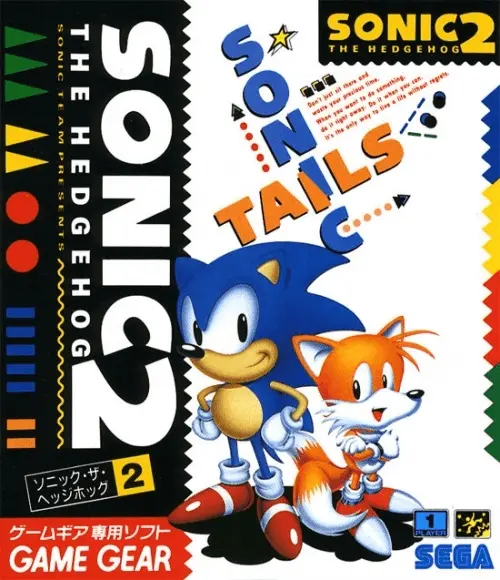
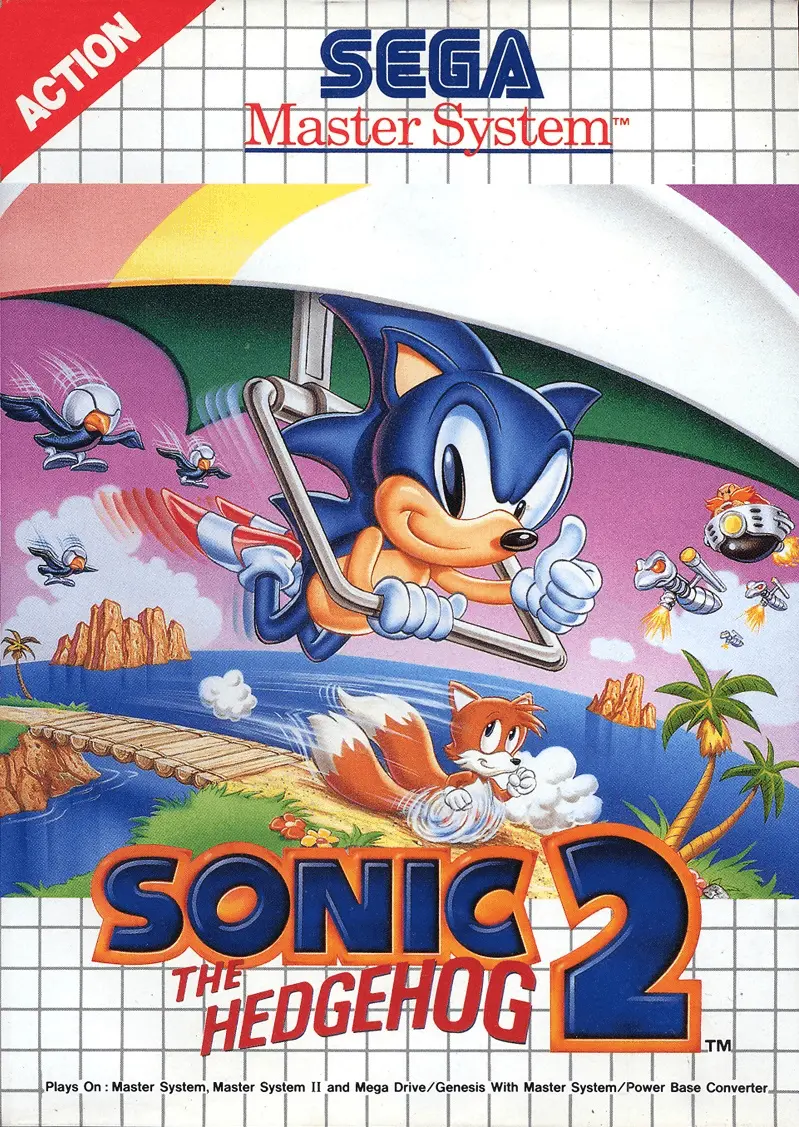
European Master System box.North American Game Gear box.European Game Gear box.Japanese Game Gear box.Mean Machines Sega #2, review page 2.Mean Machines Sega #2, review page 3.Sonic, 1992 artwork.Pit Master on the Game Gear.The Bonus Panel.Pit Master.Hiyoko Master.Balance Master.Charge Master.Sky High, Act 2.
The 8-bit Sonic 2 set up everything Aspect did next. Sonic Chaos kept some of its music, made Tails playable at last and gave Sonic the Spin Dash it was missing.
Releases and re-releases
Game Gear (US)17 November 1992 – A week ahead of the Mega Drive Sonic 2.
Game Gear (Japan)21 November 1992 – The same day as the Mega Drive game in Japan.
Master System and Game Gear (Europe)Late 1992 – UK launch 24 November 1992 according to Sega Retro; our original listing gave 16 and 29 October.
Sonic 2 in 11995 – A Game Gear compilation cartridge.
Sonic Adventure DX: Director’s Cut2003–2004 – Game Gear version, GameCube and PC.
Sonic Gems Collection2005 – GameCube and PlayStation 2.
Wii Virtual ConsoleNovember–December 2008 – The Master System version.
Nintendo 3DS Virtual Console2012–2013 – The Game Gear version, Japan first.
Sonic Origins Plus23 June 2023 – One of twelve Game Gear games.
Mecha Sonic’s comic career
The robot that guarded Scrambled Egg has outlived its game. Archie’s comics made it the prototype of a later Silver Sonic and staged an ambush in Scrambled Egg Zone, and IDW brought it back for the 30th anniversary.
Where to play it today
Sonic Origins Plus (2023) includes the Game Gear version on PlayStation, Xbox, Nintendo Switch and PC. Check what is still on sale on your platform.
Sales & reviews
Sales
Sega Retro has no sales figures for either version, and we have not found a reliable one, so we do not give one here.
92%Sega Retro average, Master System (25 reviews)
86%Sega Retro average, Game Gear (26 reviews)
95%Mean Machines Sega, Master System
100%Sega Power buyer’s guide, Master System (1993)
Reception and review scores
Mean Machines Sega issue 2 (November 1992): the Master System review, from our original gallery.
Period reviews from Sega Retro’s index of magazine scans; scores that were not out of 100 are shown as Sega Retro converts them.
JoypadFrance · Master System · November 1992
98%
JoystickFrance · Game Gear · January 1993
98%
Sega PowerUK · Game Gear · January 1993
97%
Mean Machines SegaUK · Master System · November 1992
95%
Consoles +France · Master System · January 1993
95%
Player OneFrance · Master System · November 1992
95%
Sega ProUK · Game Gear · Christmas 1992
95%
Computer & Video GamesUK · Master System · November 1992
93%
Sega PowerUK · Master System · December 1992
93%
GameProUS · Game Gear · March 1993 (converted)
93%
Sega ForceUK · Game Gear · December 1992
93%
Sega ForceUK · Master System · December 1992
92%
Sega ZoneUK · Master System · December 1992
90%
Mean Machines SegaUK · Game Gear · December 1992
80%
Weekly FamitsuJapan · Game Gear · November 1992 (converted)
60%
Europe went wild for it. The 25 Master System reviews on Sega Retro average 92%. Sega Power gave the Master System version 93% and the Game Gear version 97%, and its later buyer’s guide awarded the Master System game full marks. The Game Gear version scored a little lower, with Mean Machines Sega at 80%, and Japanese magazines were cooler still. Looking back on the Wii release in 2008, IGN called it a hidden gem and gave it 8 out of 10.
Honours
Electronic Gaming MonthlyBest Game of the Year: Portable Game SystemsFrom the magazine’s year-end awards.
Reader reviews
No reader reviews yet. Played it? Give it a score out of 10 and tell other fans what you think.
Every fact on this page was checked against the sources below (Sonic Retro pages were read through Wayback Machine copies from December 2024 to February 2025, because the live site shows a bot check; each link opens the nearest archived copy). Magazine scores come from Sega Retro’s review index, which links each score to a scan of the original page.
To provide the best experiences, we use technologies like cookies to store and/or access device information. Consenting to these technologies will allow us to process data such as browsing behavior or unique IDs on this site. Not consenting or withdrawing consent, may adversely affect certain features and functions.
Functional
Always active
The technical storage or access is strictly necessary for the legitimate purpose of enabling the use of a specific service explicitly requested by the subscriber or user, or for the sole purpose of carrying out the transmission of a communication over an electronic communications network.
Preferences
The technical storage or access is necessary for the legitimate purpose of storing preferences that are not requested by the subscriber or user.
Statistics
The technical storage or access that is used exclusively for statistical purposes.The technical storage or access that is used exclusively for anonymous statistical purposes. Without a subpoena, voluntary compliance on the part of your Internet Service Provider, or additional records from a third party, information stored or retrieved for this purpose alone cannot usually be used to identify you.
Marketing
The technical storage or access is required to create user profiles to send advertising, or to track the user on a website or across several websites for similar marketing purposes.


 Aqua Lake ZoneActs 1–3 · boss: Balance MasterThe water level, and its party trick is the giant air bubble: hop inside one and float up to the surface. Being underwater slows everything down, but this zone’s Emerald, along the blue tubes of Act 2, is one of the easiest to find.
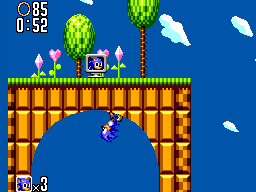 Green Hills ZoneActs 1–3 · boss: Dohyo MasterGreen Hill in all but name, and a breather after three hard zones. Its tune went on to become Sonic CD’s “Sonic – You Can Do Anything”, and the zone came back, mechanised, in Sonic Chaos.
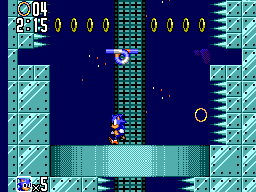 Gimmick Mt. ZoneActs 1–3 · boss: Charge MasterA mountain hollowed out and filled with machinery, where flywheels fling you upwards and the minecarts return. Act 1 is that rare thing, a level that finishes on the left.
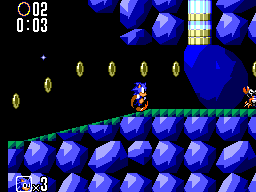 Scrambled Egg ZoneActs 1–3 · boss: Mecha SonicEggman’s hideout, and probably the toughest zone in the game. Its tubes form a maze that loves to send you backwards or onto spikes, and Mecha Sonic guards the exit.
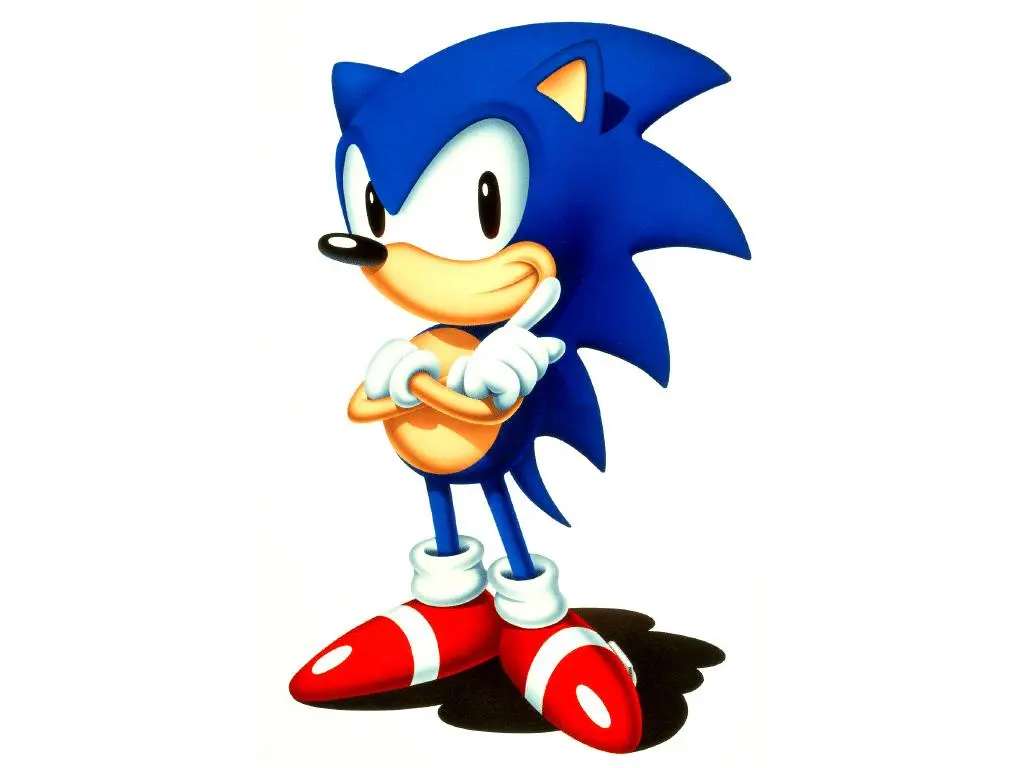 Sonic the HedgehogThe hero
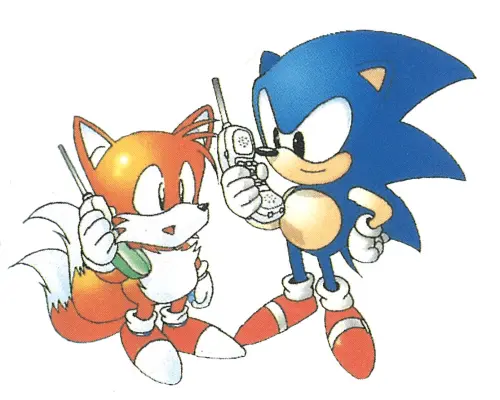 Miles “Tails” ProwerFirst appearance
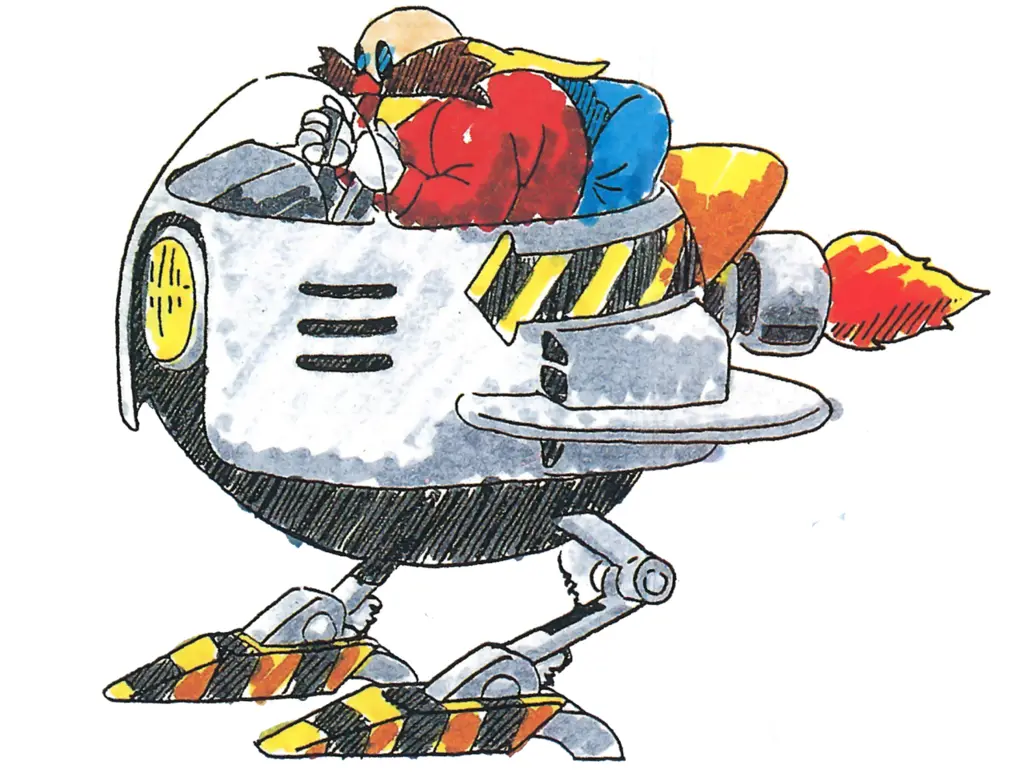 Dr. EggmanDr. Ivo Robotnik in the West
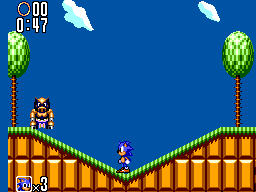 The Master RobotsEggman’s six “really nasty robots”
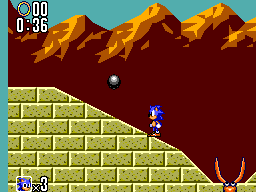 Pit MasterUnder GroundLurks in a pit; infamously hard on the Game Gear.
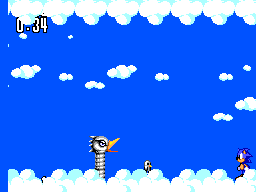 Hiyoko MasterSky HighA bird robot, backed by a flock of Mecha Hiyoko chicks.
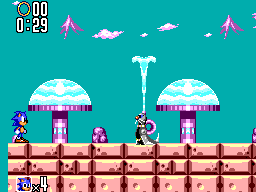 Balance MasterAqua LakeA robot circus sea lion.
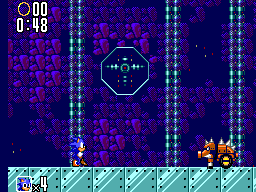 Charge MasterGimmick Mt.Guards the machine-filled mountain.