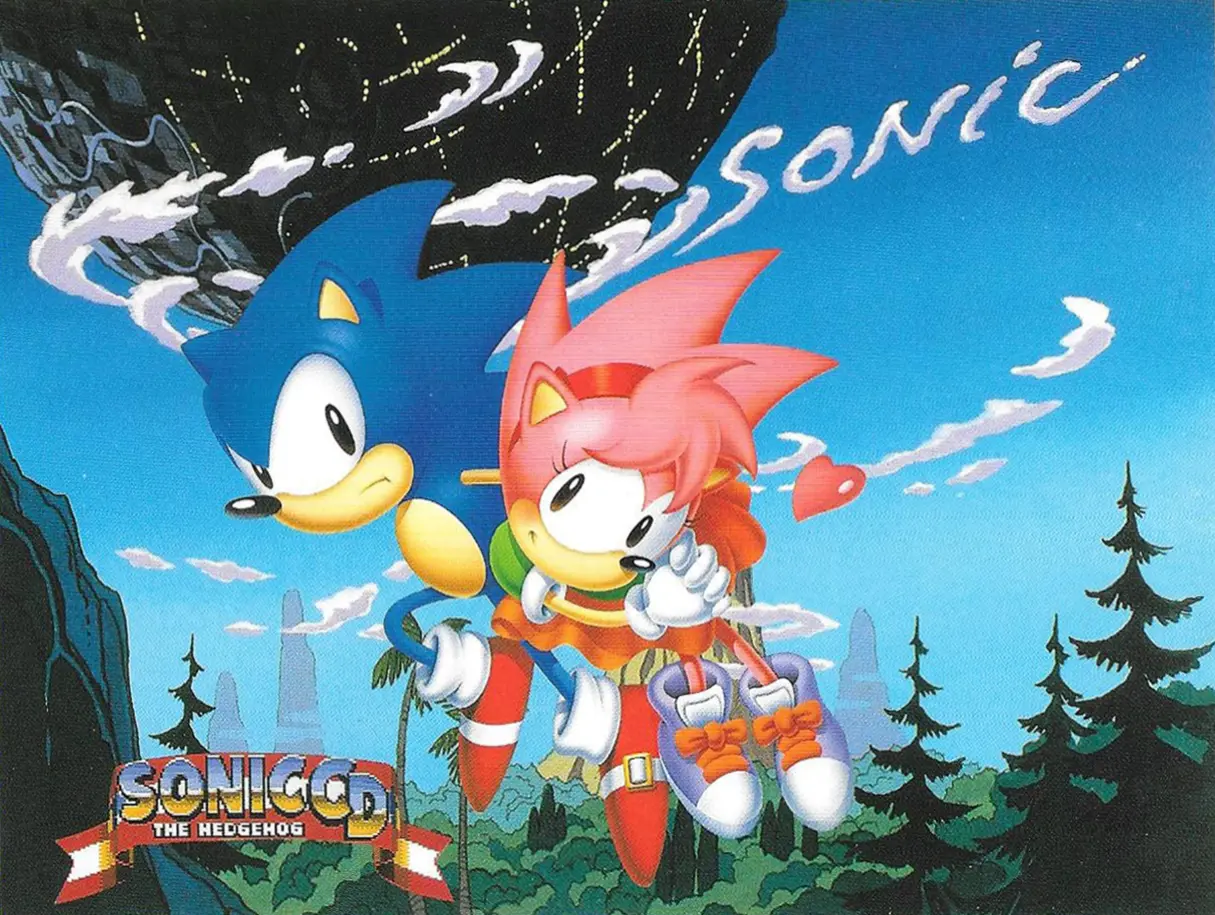
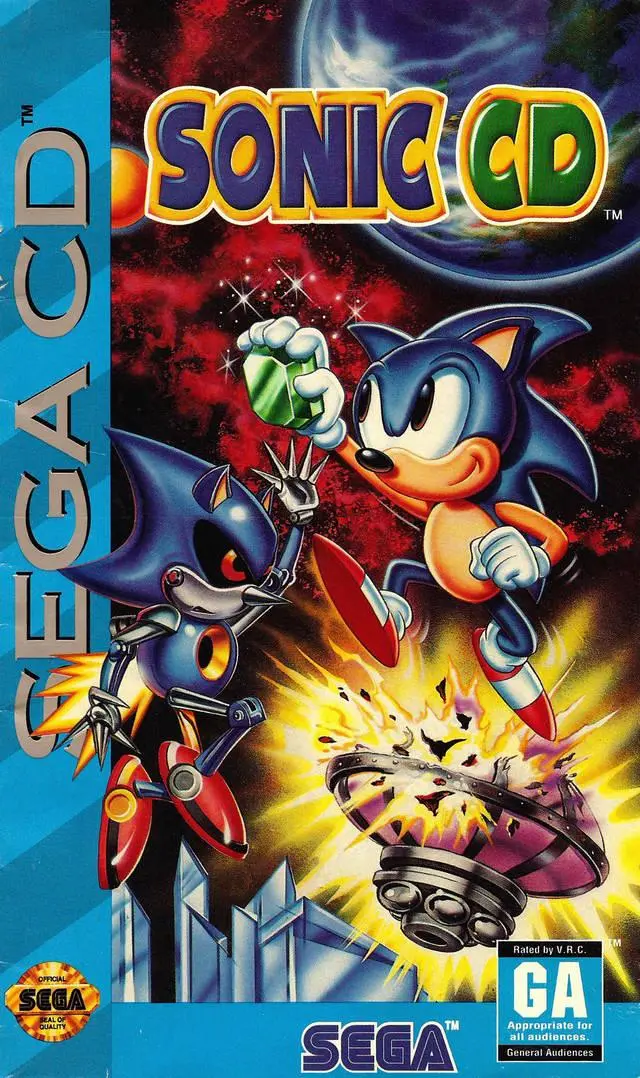
Sonic’s creator takes him through time: a planet in chains, Past and Future signposts, an anime opening, CD-quality music, and the first appearances of Amy Rose and Metal Sonic.
Released23 September 1993 (JP) · 23 November 1993 (US/UK)
DirectorNaoto Ohshima
IntroducesAmy Rose and Metal Sonic
RoundsSeven, three zones each
Players1
MusicTwo soundtracks: Japan/Europe and US
Title
Sonic the Hedgehog CD ソニック・ザ・ヘッジホッグCD
Platforms
Sega Mega-CD / Sega CD; Windows PC (1996)
Developer
Sega (Sega CS3 / Sonic Team, Japan); opening and ending animated by Toei Animation
Publisher
Sega
Director
Naoto Ohshima (credited as “BigIsland”)
Producers
Minoru Kanari, Makoto Oshitani
Art director
Hiroyuki Kawaguchi
Character designer
Kazuyuki Hoshino
Chief programmer
Matsuhide Mizoguchi
Music (Japan & Europe)
Naofumi Hataya and Masafumi Ogata; vocals by Keiko Utoku
Music (North America)
Spencer Nilsen and David Young
Players
1
Released (Japan)
23 September 1993 (¥8,800, product code G-6021)
Released (North America)
23 November 1993 (US$59.99)
Released (Europe)
October 1993 in Germany; 23 November 1993 in the UK (£44.99)
PC version
Japan 9 August 1996; North America 26 September 1996; Europe 3 October 1996
While Yuji Naka and Hirokazu Yasuhara were in California making Sonic 2, Sonic’s designer Naoto Ohshima stayed in Japan and was handed a different job: a brand-new Sonic game to show off Sega’s CD add-on. The result is the odd one out of the classic games.
Sonic CD sends Sonic to Little Planet, a tiny world that appears over Never Lake for one month a year, now chained to a mountain carved with Eggman’s face. Its gimmick is time travel: run past a Past or Future sign and the level around you changes era, and what you do in the past decides whether the future is a garden or a scrapyard. It also introduced Amy Rose and Metal Sonic, two characters who have been part of the series ever since.
Being on CD, it came with an animated opening by Toei Animation, vocal theme songs and CD-quality music, though which music depends on where you bought it: North America got a completely different soundtrack from Japan and Europe. Few Mega Drive owners had the add-on, which helped make Sonic CD a cult classic; it reached far more people through later PC, console and mobile versions.
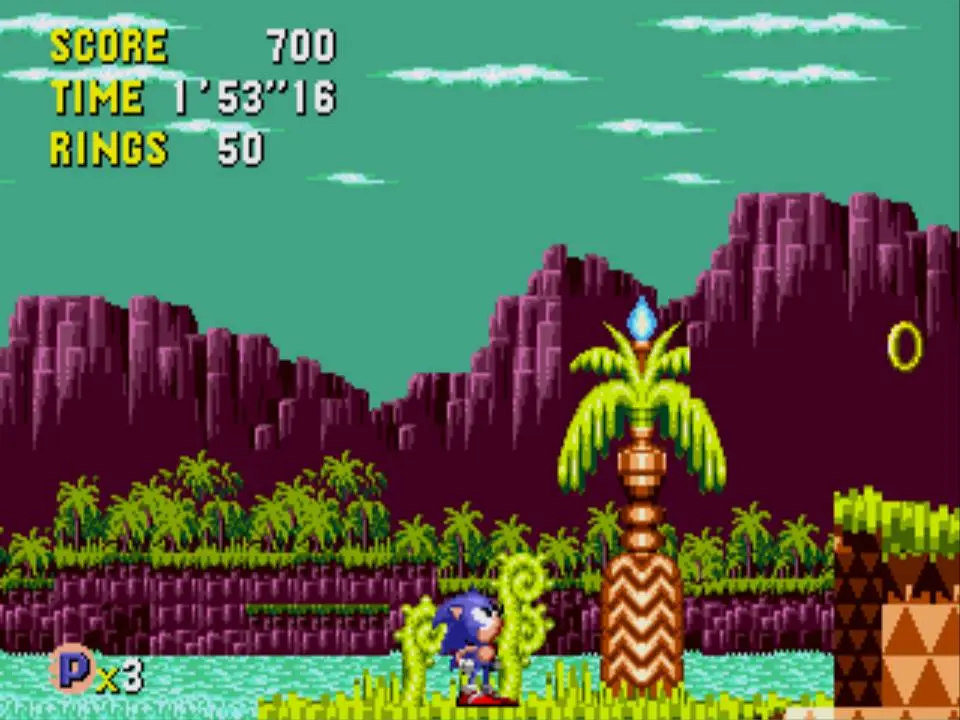
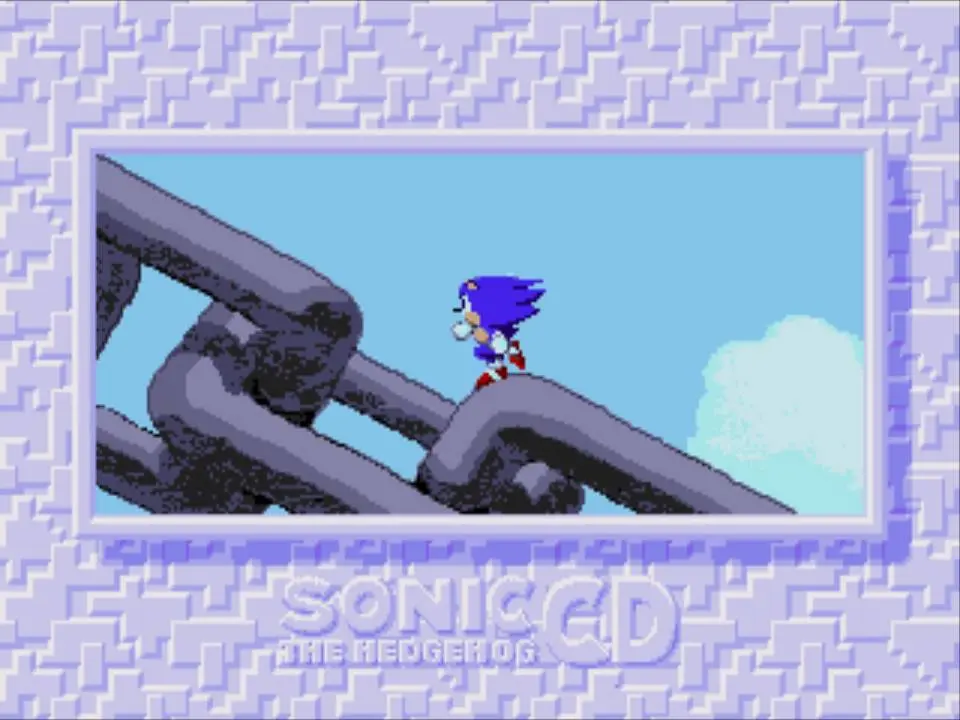
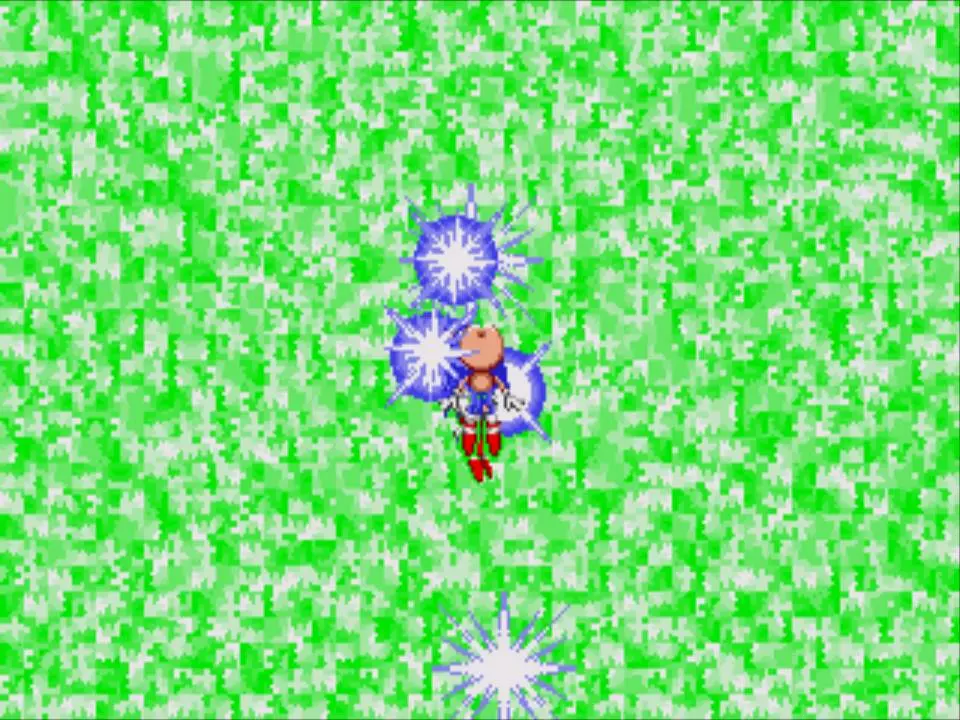
Palmtree Panic, the first Round.Sonic runs up the chain to Little Planet.Travelling through time.
Quick Answers
Quick answers, with links to the full story.
When did Sonic CD come out?
On 23 September 1993 in Japan, October 1993 in Germany, and 23 November 1993 in North America and the UK. A Windows version followed in 1996. More →
Where does Sonic CD fit in the story?
Between Sonic the Hedgehog and Sonic 2, according to Sonic 2 artist Yasushi Yamaguchi, as later confirmed in the Encyclo-speed-ia and Sonic Origins. More →
How does time travel work?
Run past a Past or Future sign, and Sonic jumps to that era of the zone. Destroy Eggman’s robot transporter in the Past and the zone’s future turns good. More →
How do you get the good ending?
Either make a Good Future in every Round by destroying all fourteen robot transporters, or collect all seven Time Stones in the Special Stages. More →
Who are Amy Rose and Metal Sonic?
Both debut here. Amy is a fortune-telling fan of Sonic who follows him to Little Planet; Metal Sonic is Eggman’s robot copy of Sonic, who kidnaps her. More →
Why are there two soundtracks?
Sega of America replaced most of the Japanese score by Naofumi Hataya and Masafumi Ogata with new music by Spencer Nilsen and David Young. Europe kept the Japanese music. The 2011 remake lets you choose. More →
Is there a level select?
Yes. On the title screen, press Up, Down, Down, Left, Right, B. More →
What is the Super Peel-Out?
A Sonic CD move: hold Up and press a button to rev, then let go to shoot off faster than a normal run. More →
Where can I play it today?
In Sonic Origins (2022), using the 2011 remake, and in its original Mega-CD form on the Mega Drive Mini 2. More →
Plot / Story
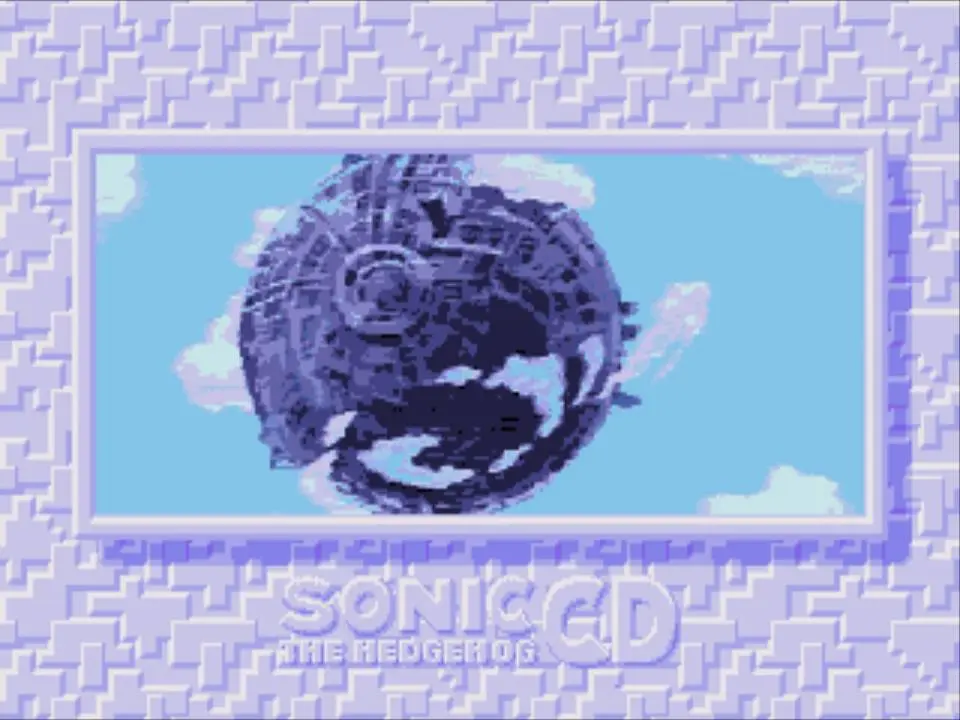
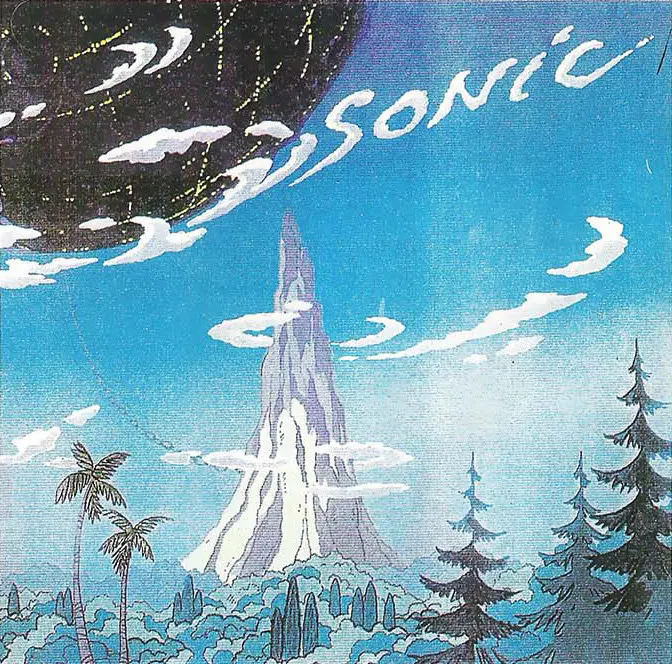
Little Planet, chained to Eggman’s mountain.Art: SEGA, via Sonic Retro
Sonic CD has a kidnapping at its centre. Somewhere on the edge of Collision Chaos, a robot built in Sonic’s image swoops down, grabs Amy Rose and is gone. That robot is Metal Sonic, Eggman’s newest and proudest invention, made to answer every move Sonic can make.
How everyone got there begins with Little Planet. For one month each year this tiny world floats above Never Lake, and on it time is unreliable: whole landscapes can change in a moment, because of the seven Time Stones hidden there, gems said to let their owner travel through time. Eggman arrived first. He has chained the planet to a mountainside carved into his own grinning face, covered it in machinery, and built an army that runs on the energy of its flowers rather than on trapped animals, all to dig out the Time Stones.
Sonic had come to sightsee. From the shore of Never Lake he sees the planet smothered in metal and tethered to the ground, recognises the face on the mountain, and runs straight up the chain. Waiting in Palmtree Panic is Amy, who calls herself his girlfriend: her tarot cards had promised a “destined encounter” at Never Lake, so here she is. Sonic is not thrilled, until Metal Sonic takes her and the trip becomes a rescue as well as a race for the Time Stones.
Past, Present and two Futures
Revving up in Palmtree Panic.Screenshot via Sonic Retro
Each Round has three zones. The first two can be played in four eras: you always start in the Present, and running across a sign marked “Past” or “Future” sends Sonic hurtling through time, into a version of the zone with new scenery and a slightly different layout. The third zone is a short one set in the future, with Eggman waiting at the end.
Hidden in each Past is one of Eggman’s robot transporters, the machine that turns the planet’s flower seeds into Badniks. Destroy it and the robots fall apart, flowers bloom, and the zone’s future becomes a bright Good Future instead of a polluted, mechanical Bad one. Destroy both machines in a Round and the boss fight happens in a Good Future too. The Pasts also hide projectors showing Metal Sonic bullying the animals; smash all twelve for a special message after the credits.
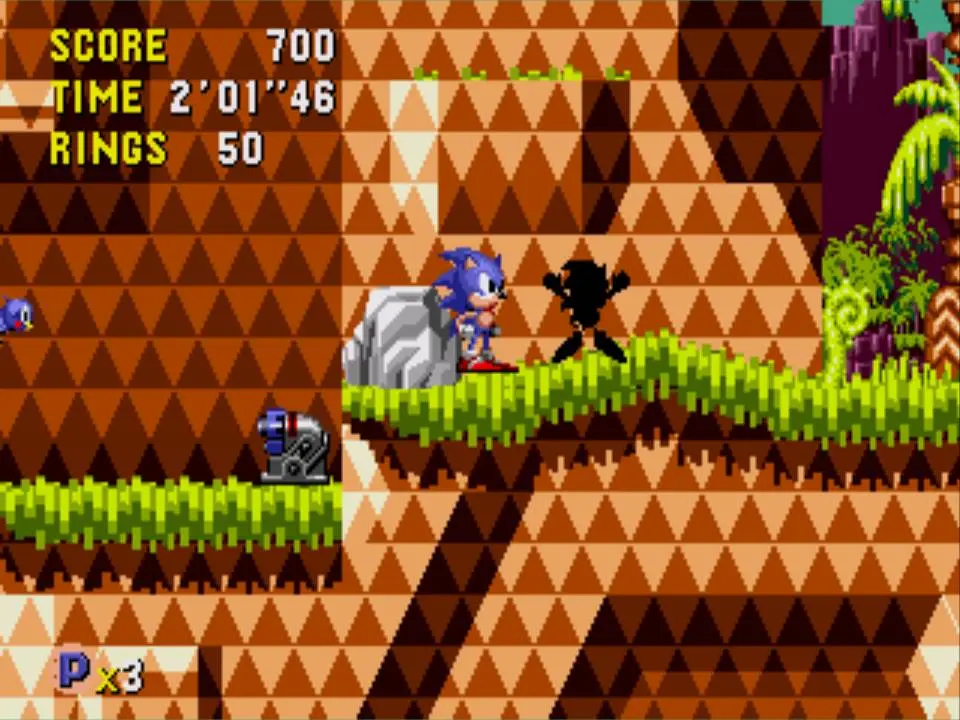
There are two ways to the good ending: create a Good Future in all seven Rounds by destroying all fourteen machines, or collect the seven Time Stones. Finish a zone with 50 rings and jump into the giant ring by the signpost to reach the Special Stage, a flat world with a pseudo-3D floor, where the job is to destroy every UFO before time runs out; with 20 seconds left, a blue UFO appears that gives you extra time.
Sonic has two ways to build up speed from a standstill. His Spin Dash works differently here: you press the button once and hold Down until it is ready. The new Super Peel-Out has him hold Up instead, legs spinning in a figure of eight, then rocket off faster than his normal top speed. There are five kinds of monitor, as in Sonic 1: Super Ring, Shield, Invincibility, Power Sneakers and an extra life.
Rounds in Sonic CD
Sonic CD calls its levels Rounds rather than Zones. Each Round has two zones that can be visited in every era and a third, set in the future, with the boss. The game numbers them 1 and 3 to 8: Round 2 was cut during development (see below).
Palmtree PanicRound 1A tropical island of palm trees, waterfalls and many routes, with a pseudo-3D loop at the start. Anton, Mosqui, Pata-Bata, Taga-Taga and Tamabboh.
Collision ChaosRound 3Amy catches up with Sonic here, until Metal Sonic bursts in and carries her off. Ga, Kama-Kama and Tentou.
Tidal TempestRound 4A water Round with time-coloured water. Amenbo, Taga-Taga, Tonbo and Yago.
Quartz QuadrantRound 5A mine full of quartz and machinery, ending with a boss fought on a treadmill. Kemusi, Kumo-Kumo, Noro-Noro and Sasori.
Wacky WorkbenchRound 6Known early on as “Crazy Toy Box”; electrical conduits and a secret statue room. Bata-pyon, Minomusi, Poh-Bee and Semi.
Stardust SpeedwayRound 7The famous race against Metal Sonic. Dango, Hotaru, Kabasira and Kanabun.
Metallic MadnessRound 8The final Round and Eggman’s last stand. Bigbom, Mecha-Bu, Poh-Bee, Scarab, Dango and Hotaru.
Amy’s manga originsShogaku Yonensei · Japan · 1992Before the game, Amy was the girlfriend of Nicky, a boy who could turn into Sonic, in a Sonic manga. She began as a brown hedgehog and had already turned pink before Sonic CD redesigned her.
Archie’s Sonic the Hedgehog #25Archie Comics · USArchie’s take, published a year after the British one, folds Amy’s kidnapping and a Stardust Speedway race with Metal Sonic into its cartoon-flavoured world, with Collision Chaos and Stardust Speedway built by Robotnik as artificial zones.
Sonic the Comic: “The Sonic Terminator”Fleetway · UK · issues 24–28, 1994Fleetway renamed the robot Metallix. Amy is taken to the Miracle Planet, and Sonic’s battle with his double jumps between time zones.
Characters
Sonic CD added two characters who have been with the series ever since.
Character
Who they are
In this game
Stats & abilities
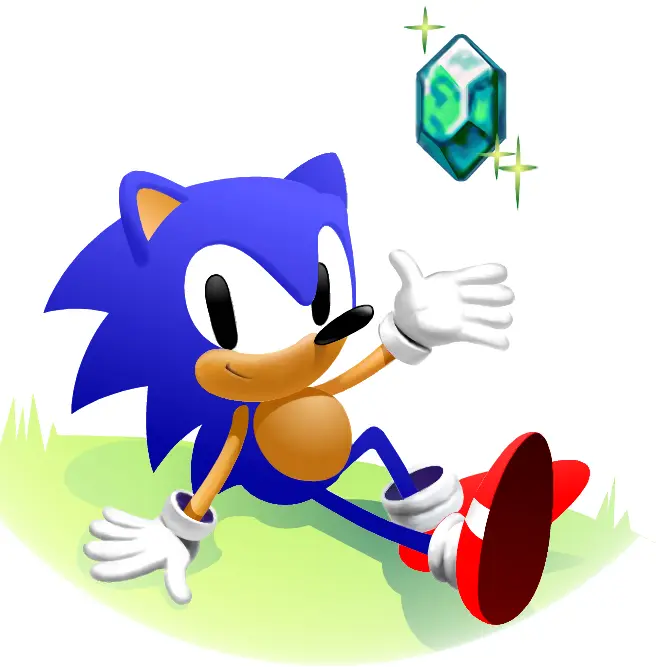
Sonic the HedgehogThe hero
Sonic as Naoto Ohshima, his designer, wanted to show him, between his first adventure and the second.
Visits Little Planet, finds it in chains and sets off to stop Eggman, find the Time Stones and rescue Amy.
New: the Super Peel-Out (hold Up, press a button)
Spin Dash: press once, hold Down
Time travel via Past and Future signs
Five monitor types, as in Sonic 1
Amy RoseDebut
A fan of fortune-telling who has decided Sonic is her destiny; Sonic is far less keen. Kazuyuki Hoshino redesigned her for the game from a Sonic manga of 1992. The team wanted to turn the usual romance plot around, so it is Amy who is besotted while Sonic treats rescuing her as one more job. The Japanese manual played down her real name in favour of the nickname “Rosy the Rascal”.
Follows a tarot reading to Little Planet, meets Sonic in Palmtree Panic and is kidnapped by Metal Sonic in Collision Chaos.
Not playable in the original
Clings to Sonic if she catches him
Playable in Sonic Origins Plus (2023)
Renamed Sally in the US manual
Metal SonicDebut
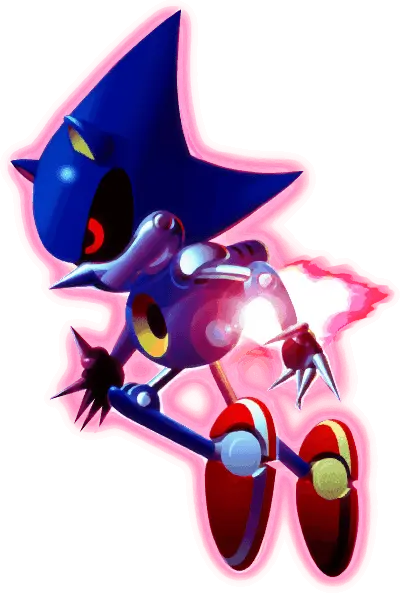
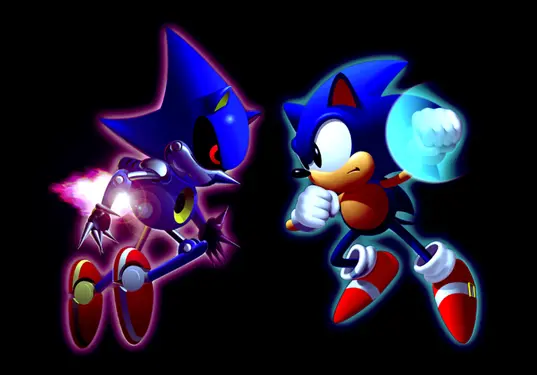
Eggman’s robot double of Sonic, built to counter his every move. Hoshino gave him a streamlined look, nothing like the boxy Mecha Sonic concept from Sonic 2, and Sega’s advertising made him a villain to rival Eggman himself.
Kidnaps Amy at Collision Chaos and races Sonic through Stardust Speedway; his image torments the animals on holographic projectors in the Past.
Built to match Sonic move for move
Called Metallix in Sonic the Comic
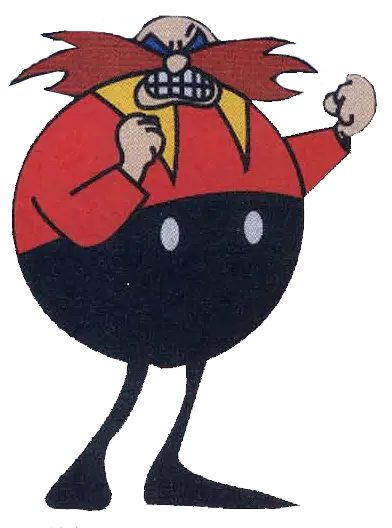
Dr. EggmanDr. Robotnik in the West
Wants the Time Stones and the power to move through time. He chains Little Planet to a mountain carved with his face and covers it in machines.
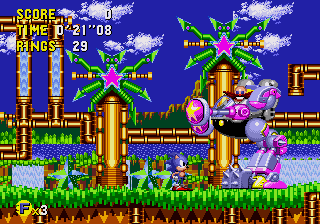
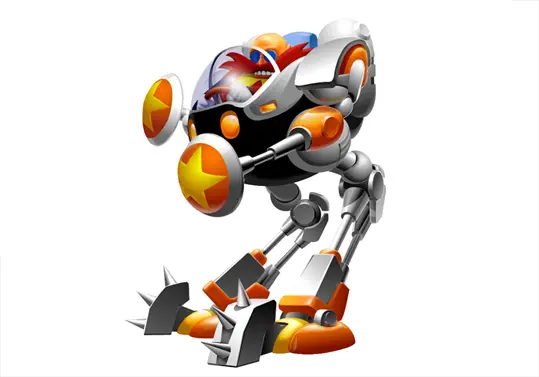
His robot transporters turn the planet’s flower seeds into Badniks. He fights Sonic at the end of every Round in a different machine.
Machines include the EGG-HVC-001
Quartz Quadrant boss: a treadmill race
Boss machines look different in Good and Bad Futures
The BadniksFlower-powered robots
Run on flower energy rather than captured animals, and different in every era: shiny and new in the Past, worn out in the Present, broken down in the Bad Future, and gone entirely from a Good Future.
Twenty-six kinds across the seven Rounds, listed below.
Destroy a Round’s robot transporter in the Past and its Badniks fall apart.
The Badniks
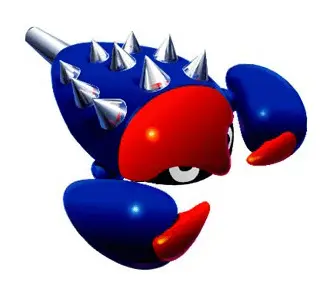
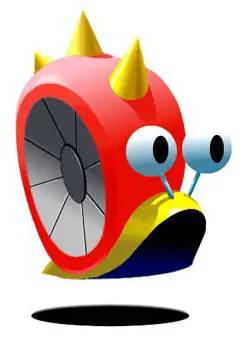
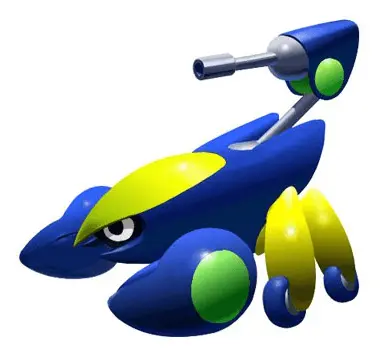
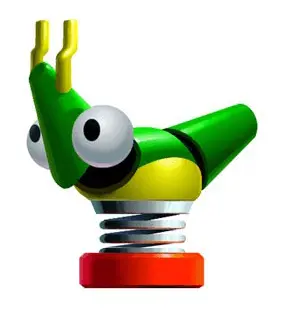
Every Badnik in Sonic CD and the Round it lives in. Many have no official name; these are the names used in the game’s code. Pictures are Sega’s artwork from Sonic Scene’s gallery or game sprites.
AntonPalmtree PanicAn ant on a unicycle, rolling back and forth.
MosquiPalmtree PanicA mosquito that dives on you as you pass underneath.
Pata-BataPalmtree PanicA fluttering butterfly.
Taga-TagaPalmtree Panic · Tidal TempestA hopping water robot.
TamabbohPalmtree PanicA stink bug.
GaCollision ChaosA sparkling moth.
Kama-KamaCollision ChaosA mantis that rolls along and fires its claws.
TentouCollision ChaosA ladybird that drops bombs.
AmenboTidal TempestA water strider that walks on the surface and fires missiles.
TonboTidal TempestA dragonfly that zigzags about and never attacks.
YagoTidal TempestA dragonfly larva that swims along the bottom.
Kumo-KumoQuartz QuadrantA springy spider that leaps high.
Noro-NoroQuartz QuadrantA slow, squirming snail.
SasoriQuartz QuadrantA scorpion with a gun in its tail.
Bata-pyonWacky WorkbenchA grasshopper that springs about.
MinomusiWacky WorkbenchA bagworm that lowers itself from the ceiling.
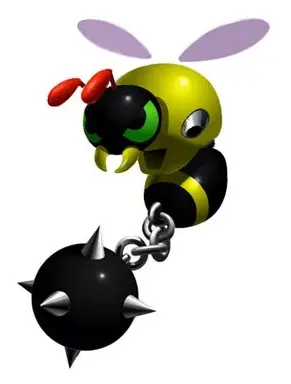
Poh-BeeWacky Workbench · Metallic MadnessA chunky bee that fires flashing shots; swings maces in Metallic Madness.
SemiWacky WorkbenchA cicada.
DangoStardust Speedway · Metallic MadnessA rolling pill bug.
HotaruStardust Speedway · Metallic MadnessFireflies that hunt in pairs.
KabasiraStardust SpeedwayA mosquito that leaves a trail of smoke.
KanabunStardust SpeedwayA propeller beetle that zigzags widely.
BigbomMetallic MadnessA giant version of Sonic 1’s Bomb.
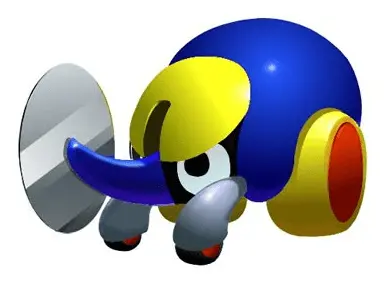
Mecha-BuMetallic MadnessA beetle with razor-wheel horns.
ScarabMetallic MadnessCrawls along and can trap you in its rear claws.
The people who made it
Names and roles from the credits of the Japanese and European release.
Naoto OhshimaDirector · “BigIsland”Sonic’s designer, given free rein. He called Sonic CD a CD version of the original rather than a Sonic 2, and suspected his team had more fun than the one making the numbered sequel.
Hiroyuki KawaguchiArt director · “Hiro.K”Set out to make every level look unlike anything in the series so far.
Kazuyuki HoshinoCharacter designerRedesigned Amy Rose and created Metal Sonic.
Matsuhide MizoguchiChief programmerConcluded that an instant time warp was impossible on the hardware, hence the warp sequence.
Keiichi YamamotoProgram directorAlso programmed the Special Stage.
Minoru Kanari & Makoto OshitaniProducersCredited as the game’s producers.
Naofumi Hataya & Masafumi OgataMusicWrote a Present theme for each Round and remixed it for the Past and both Futures.
Spencer Nilsen & David YoungNorth American musicWrote the replacement US score in about a month.
Yukio KaizawaAnimation directorDirected the opening and ending at Toei Animation.
How it was made
Sonic CD was made in Japan, in parallel with Sonic 2, by the man who drew Sonic in the first place, and it went its own way.
From port to new game
The Mega-CD needed a showcase, and the obvious candidate was Sega’s mascot. While Yuji Naka was in California making Sonic 2 with STI, a team in Japan led by Sonic’s designer, Naoto Ohshima, with veterans of Streets of Rage, Golden Axe II and The Revenge of Shinobi, started from the original game’s code. It began as an enhanced Sonic 1 for the add-on, provisionally called “CD Sonic the Hedgehog”, and drifted into a game of its own, at a time when upgraded ports were becoming the Mega-CD’s staple. Naka was not on the team, though he swapped design ideas with Ohshima.
Where STI pushed Sonic 2 towards speed, Ohshima wanted a bigger world with more to explore and more reason to replay. Art director Hiroyuki Kawaguchi set out to make each Round look unlike the series so far, and artist Kazuyuki Hoshino wanted a CG-like finish: the title-screen Sonic is based on a photographed and scanned figurine made by Taku Makino. Ohshima has never treated the result as a sequel to either Mega Drive game.
Time travel without the wait
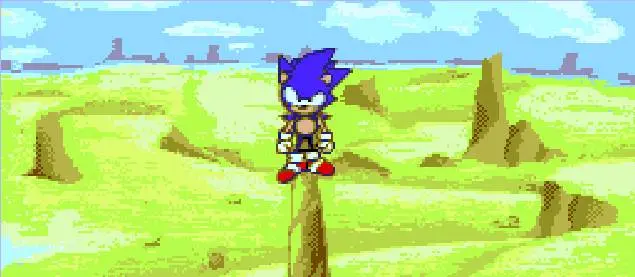
The time-warp sequence.
Time travel was the hook, and Ohshima made no secret of the inspiration: Back to the Future. Every stage was drawn in several versions, one for each era. What he really wanted was a switch with no pause at all, the scenery changing around Sonic in a flash, but chief programmer Matsuhide Mizoguchi told him the hardware could not manage it, and the compromise is the short warp of Sonic flying through stars. Ohshima never quite let it go, and years later still believed Naka would have found a way. He also felt Sega leaned on his team less than on the Sonic 2 crew, because Sonic CD was not a numbered sequel.
Amy and Metal Sonic
Sonic and Amy.
Both newcomers came from Hoshino. Metal Sonic answered Ohshima’s request for a rival with real menace; Hoshino said he could picture the robot from the moment he was briefed, and the design was settled within a few sketches, a streamlined machine nothing like the boxy Mecha Sonic concept from Sonic 2. Sega’s advertising then put him front and centre, one reason he has outlasted every other robot Sonic.
Amy was not entirely new: she had already appeared in a 1992 Sonic manga. Her headband and trainers reflected Ohshima’s taste, and her story turns the usual rescue round. She is the one with the crush, and Sonic saves her mainly because doing so wrecks Eggman’s plans.
The missing Round
Collision Chaos is Round 3 because Round 2 does not exist. The stage, which fans long called “R2” and which now goes by Dubious Depths, was dropped before any prototype that has surfaced, so the stage select goes straight from Palmtree Panic to Collision Chaos. Concept art for it was eventually shared by the Taxman, who made the 2011 remake; one sketch shows an antlion enemy that also appears in an uncut version of the ending animation.
Two soundtracks
Sonic CD was the first Sonic game to play music straight from the disc. Naofumi Hataya and Masafumi Ogata wrote a theme for each Round’s Present and remixed it for the Past, the Good Future and the Bad Future, drawing on house and dance samples; the Past tracks are played by the PCM sound chip rather than streamed from the disc. Keiko Utoku sang the opening, “Sonic – You Can Do Anything”, and the ending, “Cosmic Eternity”.
Sega of America decided to replace it. Spencer Nilsen and his team wrote a new score in about a month, with “Sonic Boom” as both opening and ending theme. The Past tracks, built into the game data, could not be swapped so easily and stayed. Europe kept the Japanese music, and the two scores still divide fans. The US manual made changes too, placing Little Planet in orbit around Mobius and turning Amy into Sally Acorn.
Release
Sonic CD went on sale in Japan on 23 September 1993, and in North America and the UK on 23 November. It is now remembered as the best reason to have owned a Mega-CD, but it could not turn the add-on into the hit Sega needed.
Firsts: what this game introduced
A lot started on Little Planet:
1Amy RoseSonic’s most persistent admirer makes her game debut.
2Metal SonicThe robot rival who became one of the series’ great villains.
3Time travelFour versions of every main zone, and futures you can change.
4The Super Peel-OutA figure-of-eight dash from a standstill, faster than a normal run.
5Time AttackA mode just for speedrunning, with unlockable extras.
6CD-quality musicThe first Sonic soundtrack streamed from disc.
7An anime openingAnimated by Toei Animation, with vocal theme songs.
8Time StonesSeven stones in place of the Chaos Emeralds.
Cheats & secrets
Most of Sonic CD’s secrets are on the title screen and in the sound test.
Stage Select
On the title screen, press Up, Down, Down, Left, Right, B. (There is no Round 2: the menu jumps from Palmtree Panic to Round 3, Collision Chaos. Clearing a level or time-travelling takes you back to the title screen.)
Sound Test
On the title screen, press Down, Down, Down, Left, Right, A.
Tails’ picture
In the sound test, set FM to 40, PCM to 12 and DA to 11, then press Start for a picture of Tails by his creator, Yasushi Yamaguchi, posing with his favourite car, a Lotus Super Seven.
Batman parody
In the sound test, set FM 42, PCM 04 and DA 21, then press Start for a picture drawn by Takumi Miyake.
Edit Mode (European version)
While the demo is playing, press Start on the second controller. B toggles object placement, A picks the next object and C places it.
Time Attack unlocks
Get your total Time Attack time under 37′27″57 to unlock D.A. Garden, a sound test with animations; under 30′21″05 for Special Stage Time Attack; and under 25′46″12 for Visual Mode, which plays the opening, both endings and a pencil test.
Checked against Sonic Retro’s hidden content and main pages, November 2026.
Glitches, exploits and oddities
Sonic CD’s quirks, several of which survived until the 2011 remake.
Stuck in time
Because layouts change between eras, time travel can leave Sonic inside a wall. Sometimes he can jump out; sometimes you have to restart, and in Stardust Speedway he can even land over a bottomless pit.
“I’m outta here!”
Leave the controller alone for three minutes and Sonic jumps off the screen, ending the game. On the way down he can still hit objects such as speed tunnels, and occasionally the game carries on as if nothing happened.
Hovering hedgehog
Sonic’s running frames sit two pixels too high, so he never quite touches the ground. It is easiest to see from Tidal Tempest onwards.
Escaping Amy
Press jump on the exact frame Amy grabs Sonic and he shoots out of her arms, still standing upright; the 2011 remake fixed it.
The 3D loop
In Palmtree Panic’s first zone, jump into the cross-shaped booster of the pseudo-3D loop too slowly and Sonic zigzags upwards; let go of jump early and the background breaks. Fixed in 2011.
Blue arms
Squeezing Toei’s animation on to the Mega-CD meant dropping frames and recolouring, and a few frames of the opening show Sonic with blue arms.
Videos & media
Two official trailers: SEGA Europe’s for the 2011 remake, and the one for Sonic Origins Plus, which made Knuckles and Amy playable in Sonic CD.
SEGA Europe’s second trailer for the 2011 Sonic CD remake.
The announcement trailer for Sonic Origins Plus (2023), from the official Sonic the Hedgehog channel.
Trivia & facts
Sonic CD is set between Sonic 1 and Sonic 2, according to Yasushi Yamaguchi, as Sonic Origins and the Encyclo-speed-ia book later confirmed.
Little Planet only appears over Never Lake for one month each year.
Wacky Workbench was called “Crazy Toy Box” during development, and a vocoded sample a few seconds into its Japanese Present theme still says “crazy toy box”.
Metal Sonic.Kazuyuki Hoshino said Metal Sonic’s design came together after only a few sketches.
Amy’s Japanese manual favoured the nickname “Rosy the Rascal”; Europe used Amy Rose from the start.
The US score was written in about a month, and its music later appeared on Sonic the Hedgehog Boom, a CD given to people who pre-ordered Sonic 3.
Destroy all twelve Metal Sonic projectors and a message after the credits hails you as a super player.
Media & artwork
Box art, artwork and screenshots, mostly from Sonic Scene’s own galleries. Select any image to view it larger.
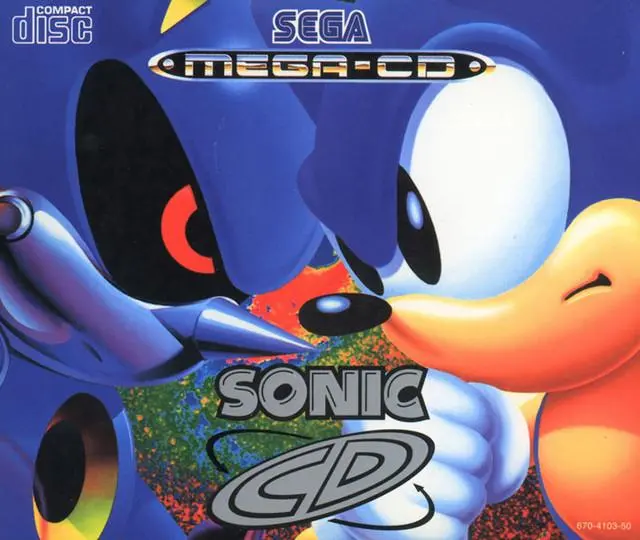
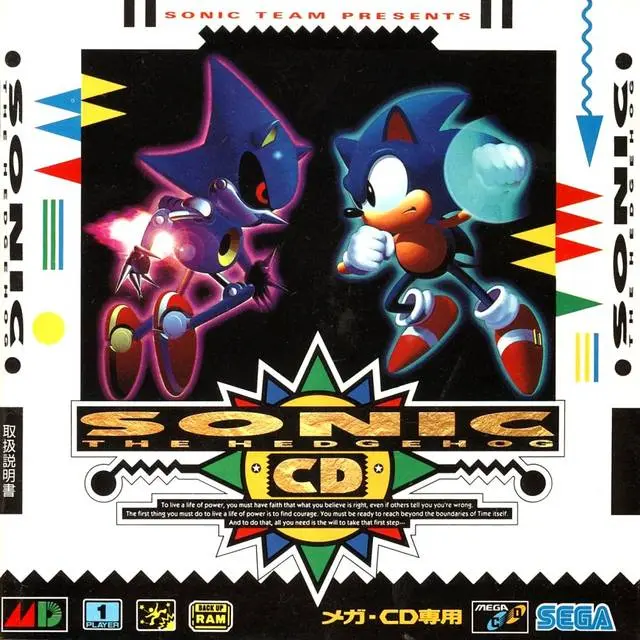
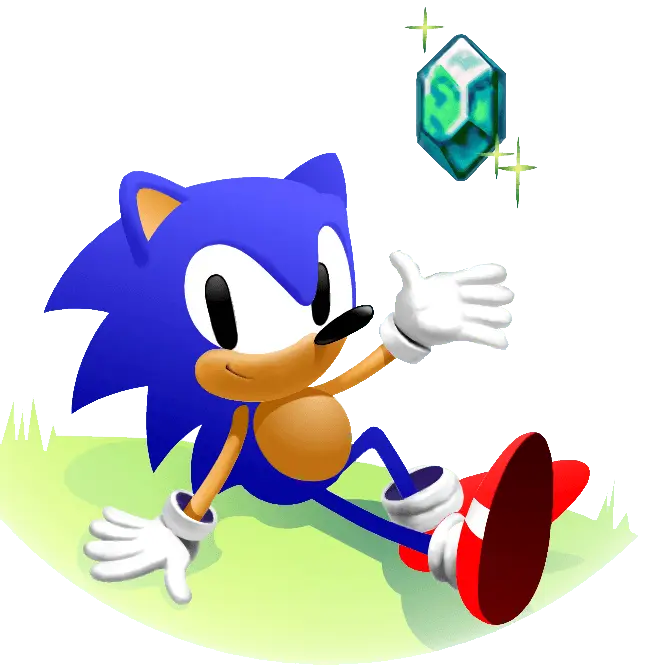
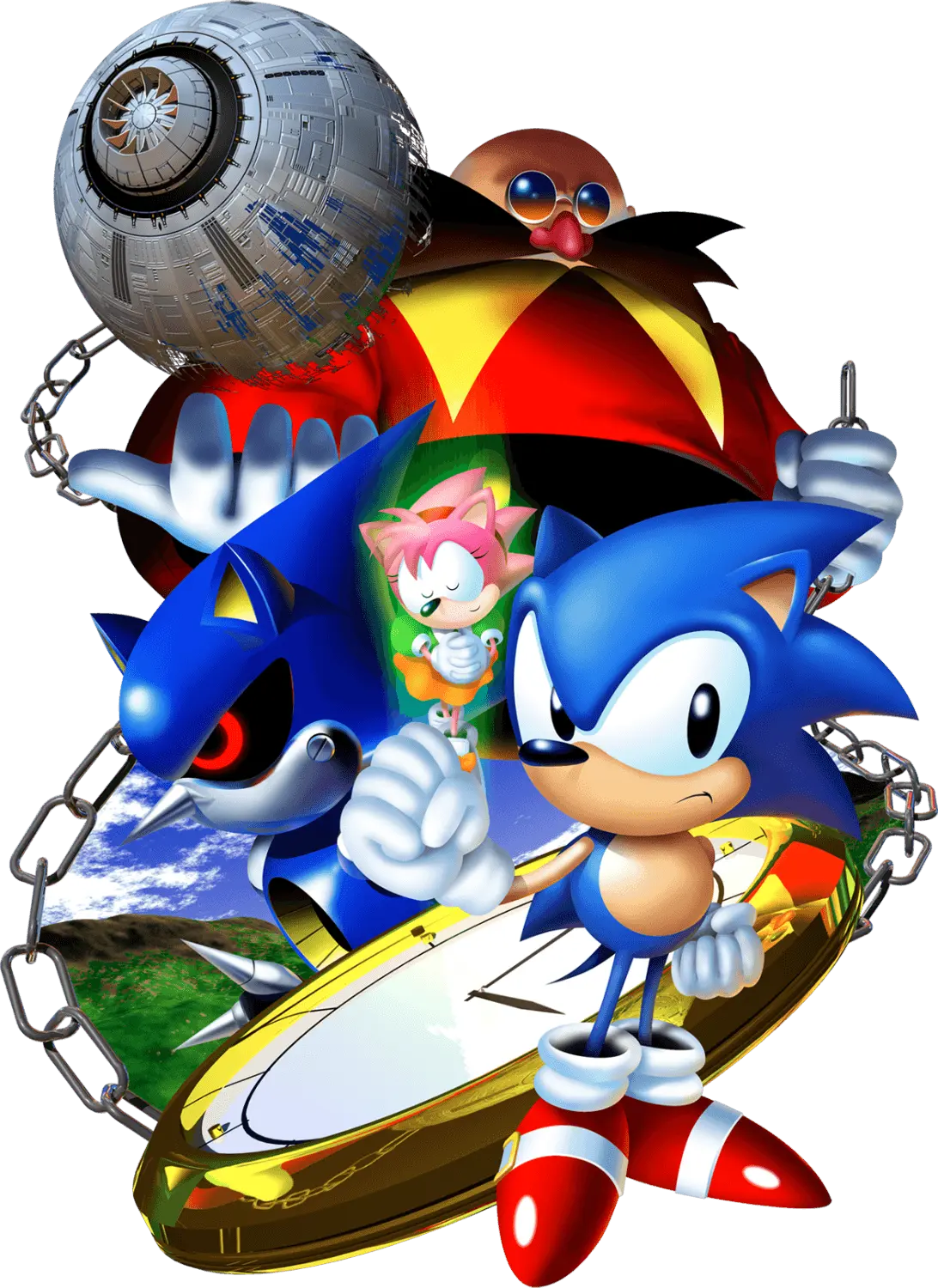
North American Sega CD box.Back of the North American box.European Mega-CD box.Japanese Mega-CD box.Sonic, 1993 artwork.Sonic, 1993 artwork.Sonic, 1993 artwork.Japanese PC release artwork.Little Planet postcard art.The logo.The animated opening.The animated opening.Little Planet in chains.The EGG-HVC-001, in a Good Future.On Little Planet.Japanese key art.
A niche release in 1993, Sonic CD has been brought back again and again, and Amy and Metal Sonic became series regulars.
From Mega-CD to Sonic Origins
Mega-CD / Sega CD1993 – Japan 23 September; North America and UK 23 November.
Windows PC1996 – Japan in August, North America in September, Europe in October; an OEM edition, the “Dino” release, had already been bundled in the US from October 1995.
Sonic Gems Collection2005 – GameCube and PlayStation 2, based on the PC version.
Sonic CD (2011)2011 – A rebuilt remake for PlayStation 3, Xbox 360, Android and iOS, then Steam in 2012: choose either soundtrack or Spin Dash, and unlock Tails.
Sonic Origins23 June 2022 – Based on the 2011 version; Sonic Origins Plus (2023) adds Knuckles and Amy.
Mega Drive Mini 22022 – The original Mega-CD game, emulated.
Where to play it today
Sonic Origins on PlayStation, Xbox, Nintendo Switch and PC has the 2011 version, with both soundtracks. For the original Mega-CD release, the Mega Drive Mini 2 includes the Mega-CD game.
Sales & reviews
Reception and review scores
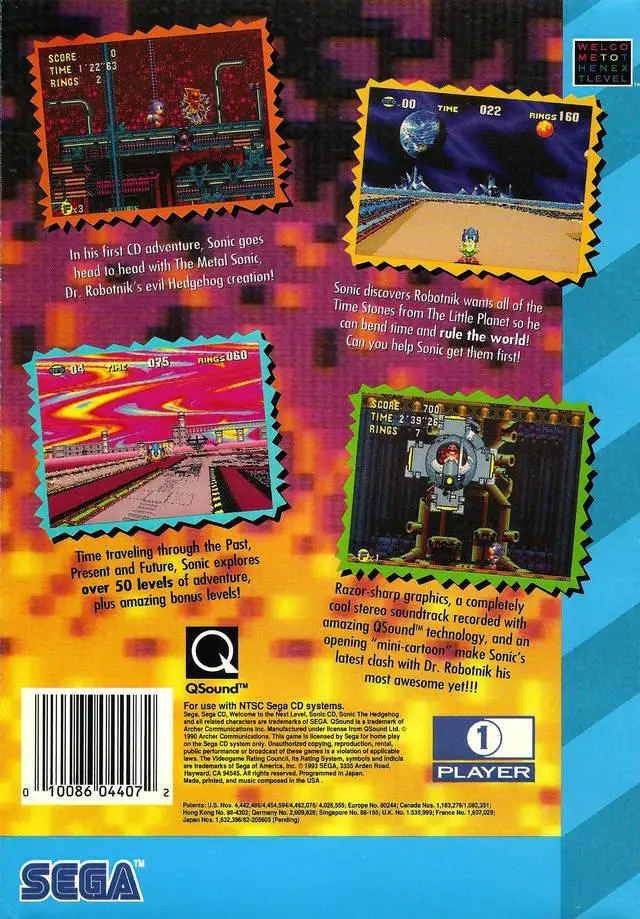
The European Mega-CD box, from Sonic Scene’s gallery.
Period reviews from Sega Retro’s index of magazine scans; scores not out of 100 are shown as Sega Retro converts them.
GamePro gave it a perfect score, but opinion was more divided than for the Mega Drive games: British magazines mostly scored it in the 80s, and Japan’s Beep! MegaDrive gave the equivalent of 73%. No sales figures for the original release could be confirmed for this page.
Honours
Mega-CDThe system’s killer appIn hindsight, the add-on’s must-have game.
GamePro · 1993A perfect scoreFull marks from GamePro.
Series historyTwo lasting debutsAmy Rose and Metal Sonic, both still regulars.
Reader reviews
No reader reviews yet. Played it? Give it a score out of 10 and tell other fans what you think.
Every fact on this page was checked against the sources below. Sonic Retro and Sega Retro are linked through the Wayback Machine copies we read (the live sites sit behind a bot check). Magazine scores come from Sega Retro’s review index, which links each score to a scan of the original page.
To provide the best experiences, we use technologies like cookies to store and/or access device information. Consenting to these technologies will allow us to process data such as browsing behavior or unique IDs on this site. Not consenting or withdrawing consent, may adversely affect certain features and functions.
Functional
Always active
The technical storage or access is strictly necessary for the legitimate purpose of enabling the use of a specific service explicitly requested by the subscriber or user, or for the sole purpose of carrying out the transmission of a communication over an electronic communications network.
Preferences
The technical storage or access is necessary for the legitimate purpose of storing preferences that are not requested by the subscriber or user.
Statistics
The technical storage or access that is used exclusively for statistical purposes.The technical storage or access that is used exclusively for anonymous statistical purposes. Without a subpoena, voluntary compliance on the part of your Internet Service Provider, or additional records from a third party, information stored or retrieved for this purpose alone cannot usually be used to identify you.
Marketing
The technical storage or access is required to create user profiles to send advertising, or to track the user on a website or across several websites for similar marketing purposes.

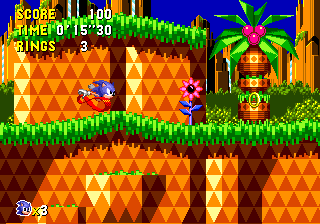
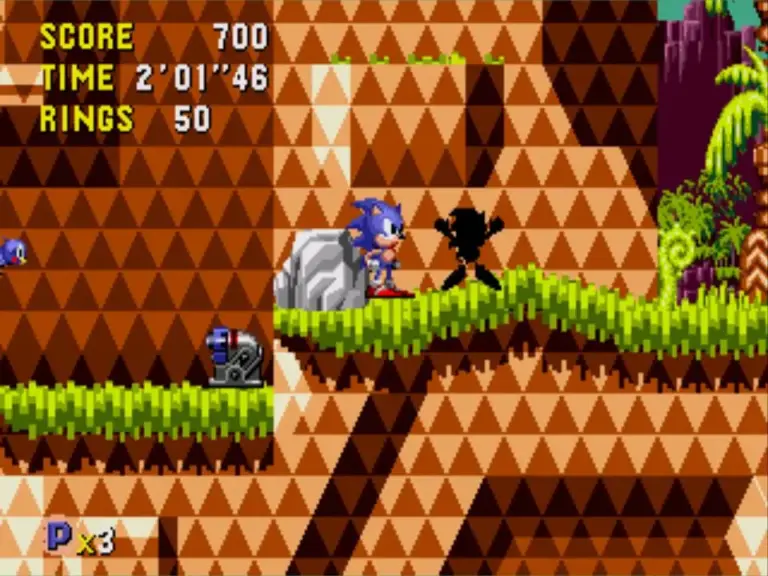 Palmtree PanicRound 1A tropical island of palm trees, waterfalls and many routes, with a pseudo-3D loop at the start. Anton, Mosqui, Pata-Bata, Taga-Taga and Tamabboh.
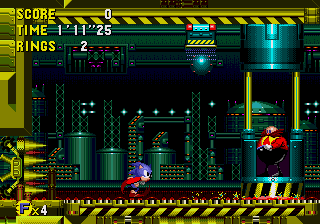 Quartz QuadrantRound 5A mine full of quartz and machinery, ending with a boss fought on a treadmill. Kemusi, Kumo-Kumo, Noro-Noro and Sasori.
 Sonic the HedgehogThe hero
 Amy RoseDebut
 Metal SonicDebut
 Dr. EggmanDr. Robotnik in the West
 The BadniksFlower-powered robots
 AntonPalmtree PanicAn ant on a unicycle, rolling back and forth.
 MosquiPalmtree PanicA mosquito that dives on you as you pass underneath.
 Pata-BataPalmtree PanicA fluttering butterfly.
 Taga-TagaPalmtree Panic · Tidal TempestA hopping water robot.
 TamabbohPalmtree PanicA stink bug.
 GaCollision ChaosA sparkling moth.
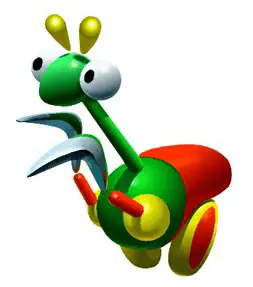 Kama-KamaCollision ChaosA mantis that rolls along and fires its claws.
 TentouCollision ChaosA ladybird that drops bombs.
 AmenboTidal TempestA water strider that walks on the surface and fires missiles.
 TonboTidal TempestA dragonfly that zigzags about and never attacks.
 YagoTidal TempestA dragonfly larva that swims along the bottom.
 KemusiQuartz QuadrantA Caterkiller-style caterpillar.
 Kumo-KumoQuartz QuadrantA springy spider that leaps high.
 Noro-NoroQuartz QuadrantA slow, squirming snail.
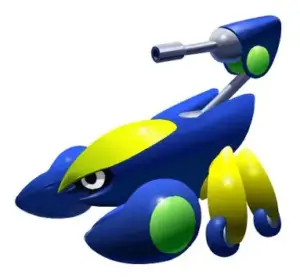 SasoriQuartz QuadrantA scorpion with a gun in its tail.
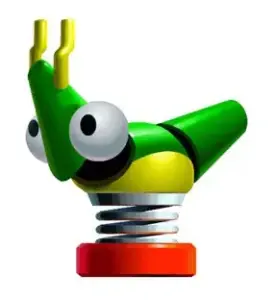 Bata-pyonWacky WorkbenchA grasshopper that springs about.
 MinomusiWacky WorkbenchA bagworm that lowers itself from the ceiling.
 Poh-BeeWacky Workbench · Metallic MadnessA chunky bee that fires flashing shots; swings maces in Metallic Madness.
 SemiWacky WorkbenchA cicada.
 DangoStardust Speedway · Metallic MadnessA rolling pill bug.
 HotaruStardust Speedway · Metallic MadnessFireflies that hunt in pairs.
 KabasiraStardust SpeedwayA mosquito that leaves a trail of smoke.
 KanabunStardust SpeedwayA propeller beetle that zigzags widely.
 BigbomMetallic MadnessA giant version of Sonic 1’s Bomb.
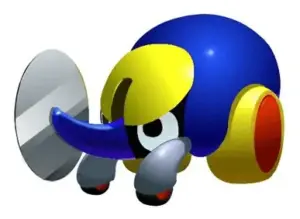 Mecha-BuMetallic MadnessA beetle with razor-wheel horns.
 ScarabMetallic MadnessCrawls along and can trap you in its rear claws.