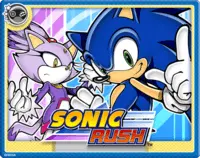
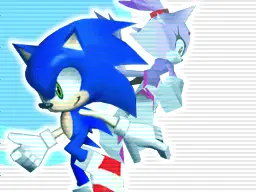
Two screens, two heroes, two worlds sliding into each other. Sonic meets a princess from another dimension, the Boost is born, and Hideki Naganuma turns the soundtrack into a mixtape.
Released15 Nov 2005 (NA) · Nov 2005 (EU) · 23 Nov 2005 (JP)
DeveloperSonic Team and Dimps
PublisherSega
ZonesSeven, plus two final zones
PlayableSonic and Blaze
DebutBlaze the Cat and Eggman Nega
Title
Sonic Rush Japan: ソニック・ラッシュ
Platform
Nintendo DS
Developer
Sonic Team and Dimps
Publisher
Sega (Sega of America and Sega Europe in the West)
Producers
Yuji Naka (Sonic Team); Kouichi Sakita (Dimps)
Director
Akinori Nishiyama
Art director
Yuji Uekawa
Music
Hideki Naganuma; sound director Teruhiko Nakagawa; Masayoshi “Chamy” Ishi and Hiroyuki Hamada of T’s Music
English voices
Jason Griffith (Sonic), Mike Pollock (Eggman and Eggman Nega), Amy Palant (Tails), Rebecca Honig (Cream); Blaze is credited to “Berra Hudson”
Players
1–2 (wireless race mode; DS Download Play demo)
Released (North America)
15 November 2005 (Sonic Retro’s release table gives 16 November)
Released (Europe and Australia)
18 November 2005 according to Wikipedia and our original page; Sega Retro’s release table gives 25 November for the UK, Germany, France, Spain and Italy
Released (Japan)
23 November 2005 (¥4,800)
Re-releases
Sega Fun Pack with Super Monkey Ball Touch & Roll (DS, 2009)
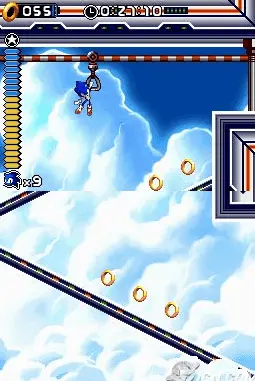
Sonic Rush is where Sonic moved to the Nintendo DS, and it did not tiptoe in. The levels stretch across both screens, with Sonic dropping from one to the other as he loops and falls; the heroes and bosses are 3D models on 2D stages; and a new Tension Gauge, filled by stringing tricks together, powers the first version of the Boost, the move Sonic Unleashed would later build its stages around.
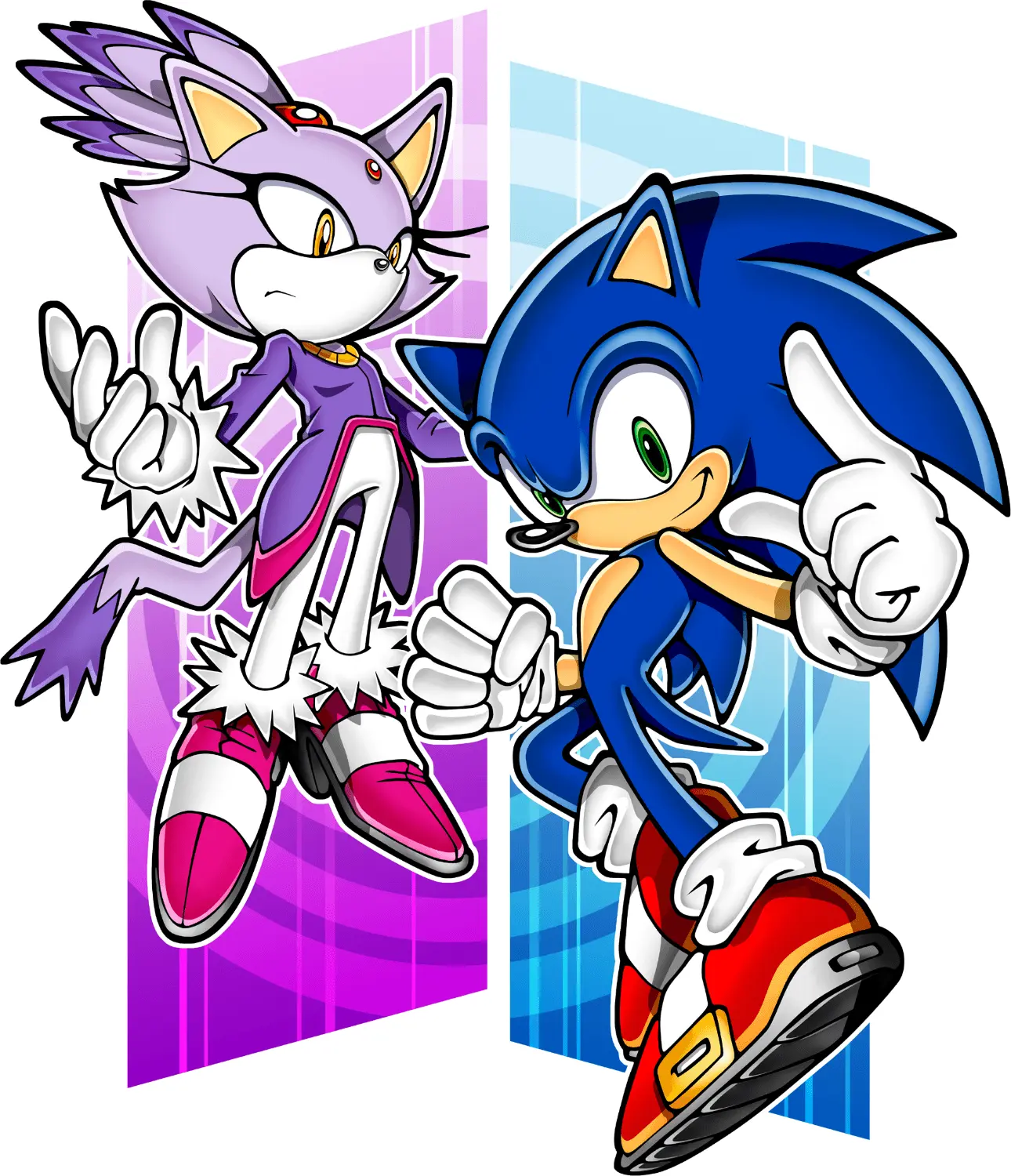
It also brought a second lead. Blaze the Cat is a princess from another dimension who arrives in Sonic’s world with her Sol Emeralds missing. Her story and Sonic’s run in parallel through the same seven zones in a different order, crossing over again and again until the two finally have it out, and then team up against a double act of villains: Eggman and his counterpart from Blaze’s world, Eggman Nega.
Developed by Dimps with Sonic Team, it was the last mainline Sonic produced by Yuji Naka before he left Sega. Critics loved the look, the speed and Hideki Naganuma’s scratch-heavy soundtrack, and grumbled that it was sometimes too fast to follow. It sold well over half a million copies outside Japan and spawned a sequel, Sonic Rush Adventure.
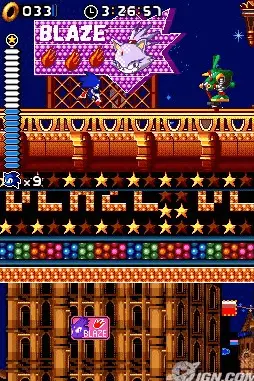
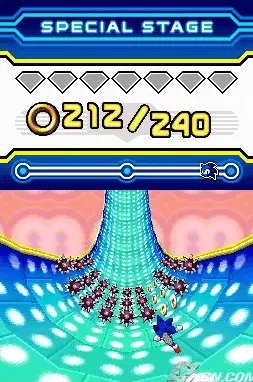
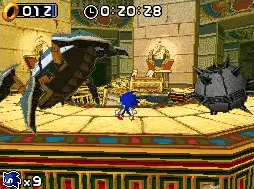
Night Carnival, across both screens.A Special Stage.A 3D boss battle.
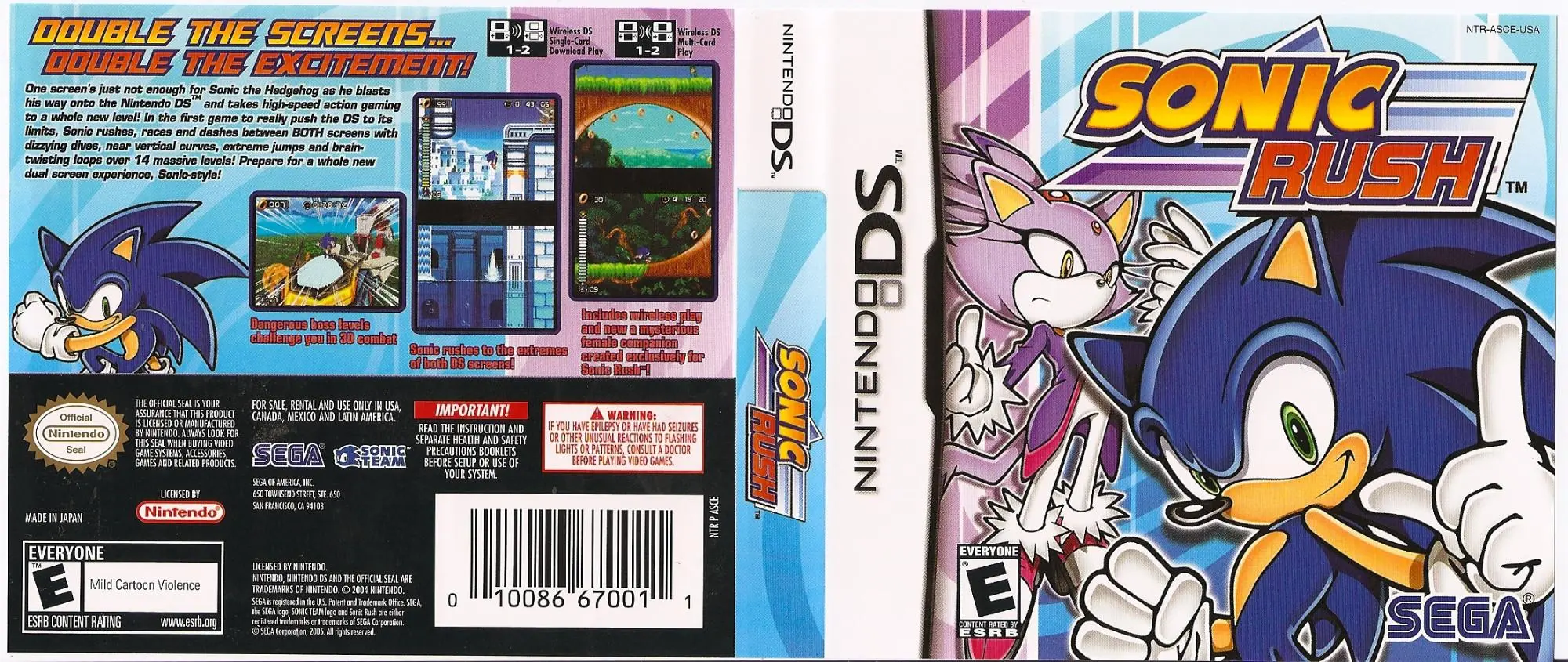
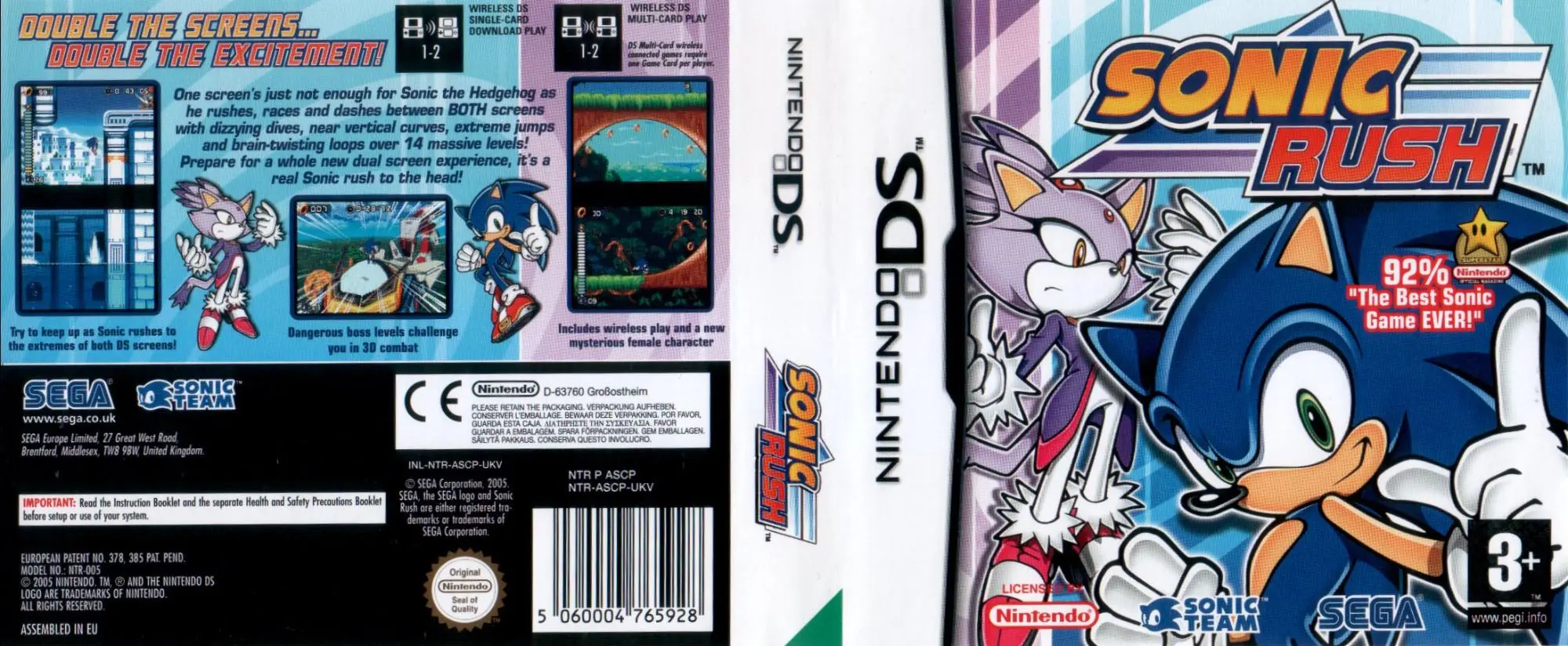
Double the screens… double the excitement!
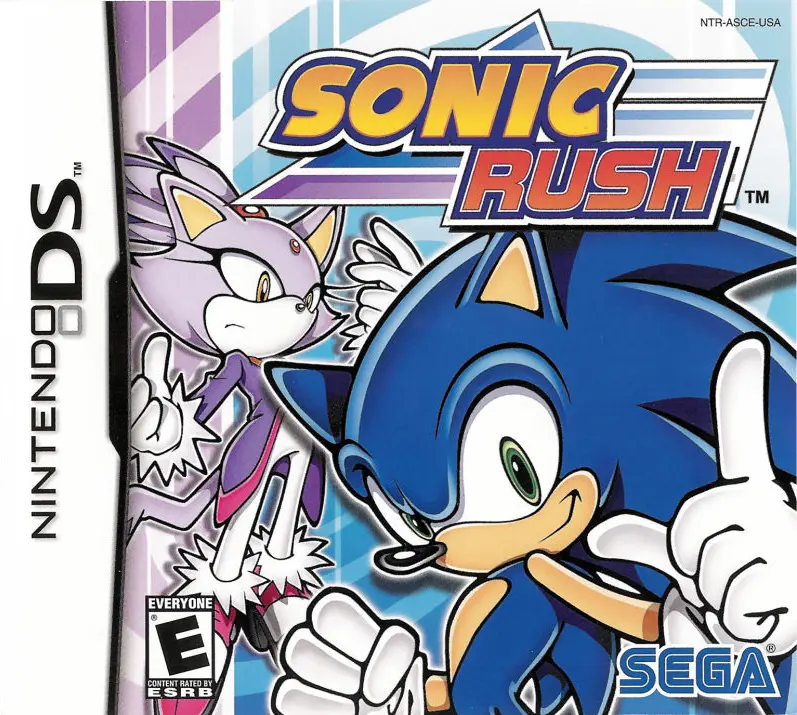
The headline on the back of the North American box. The copy underneath pitches Sonic Rush as the first game to really push the DS to its limits, with Sonic racing between both screens over fourteen huge levels. One bullet point on the same box contains a famous slip, promising “new a mysterious female companion”: Blaze.
— Official description: Sega, Sonic Rush North American box (2005), read from Sonic Scene’s own box-art scan. One line quoted; the rest summarised.
Quick Answers
The short answers, with the detail further down the page.
When did Sonic Rush come out?
On 15 November 2005 in North America, the same day as Shadow the Hedgehog, then in Europe that month and in Japan on 23 November. More →
Who is Blaze the Cat?
A princess from another dimension who arrives in Sonic’s world with her Sol Emeralds missing. Sonic Rush is her first game; she is playable throughout, with her own story. More →
Who is Eggman Nega?
Eggman’s counterpart from Blaze’s world. He first shows up at the end of Water Palace, where Sonic mistakes him for the usual Eggman. More →
Is this where the Boost comes from?
Yes. Tricks and defeated enemies fill the Tension Gauge, which powers bursts of speed. The Boost later became a core part of Sonic Unleashed. More →
How do you get the Chaos Emeralds?
As Sonic, swing around a Special Generator while boosting to reach a Special Stage, then collect enough rings with the stylus. Blaze wins her Sol Emeralds by beating bosses. More →
How do you unlock the true ending?
Collect all seven Chaos Emeralds with Sonic and all seven Sol Emeralds with Blaze. The extra zone, Exception, then appears on the character select. More →
Who wrote the music?
Mostly Hideki Naganuma of Jet Set Radio fame, with Teruhiko Nakagawa and T’s Music. More →
How well did it sell?
Sega’s reports add up to around 770,000 copies outside Japan by March 2007, and it went Platinum in the UK. More →
Plot / Story
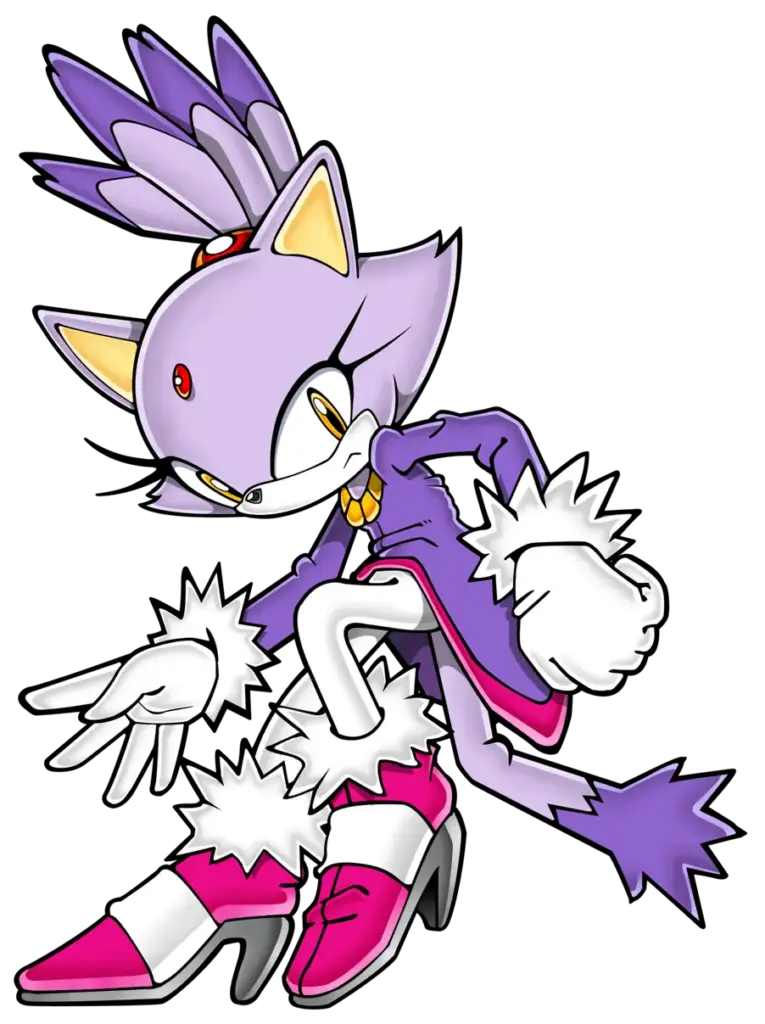
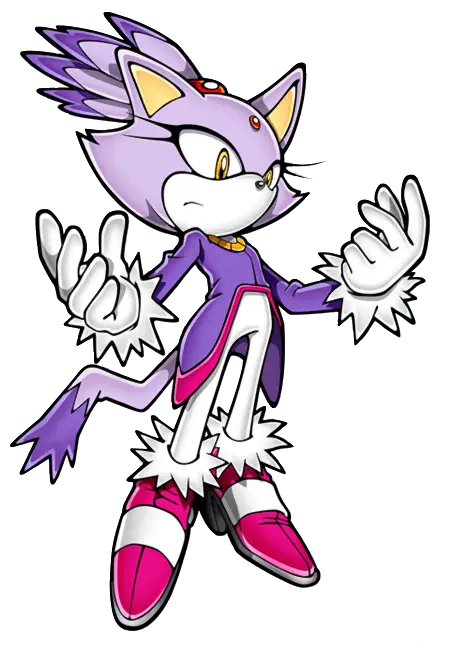
Blaze the Cat.
The story begins, chronologically, with Blaze. She wakes up at night in a strange city, having chased a moustached old man who stole the Sol Emeralds of her world, and she has no idea where she is. The thief turns out to be Dr. Eggman, who waves the gems in her face and talks about ultimate power. Blaze smashes his machine and wins back one Emerald. Then two new faces find her: Cream and her Chao, Cheese, who whisk her home to meet Cream’s mother, Vanilla. Everyone suggests asking Sonic for help. Blaze, who believes this is her burden alone, says no. Cream tags along anyway.
Sonic’s story starts with no cutscene at all: just Sonic, running through Leaf Storm. He beats Eggman, spots a strange gem left behind, and watches a cat in a burst of flame snatch it and vanish. At the end of the next zone he fights a man he takes for Eggman, but this is Eggman Nega, from Blaze’s world. Tails works out that time and space have been torn, and the two dimensions are slowly merging. If it is not stopped, both will collapse.
Two stories, one world
The two plots keep brushing past each other. Cream introduces Blaze to Knuckles, who senses her Emeralds and demands she hand the “Chaos Emeralds” over to Sonic, and gets buried in a rockslide for his trouble; later in Sonic’s story he digs himself out, still furious. Amy decides Blaze is after Sonic’s heart. Blaze insists she only wants her Emeralds, but notices how freely Amy shows her feelings, something a princess is not allowed to do. When Blaze asks what Sonic is like, Cream says he is “like the wind”, and Blaze has no idea what she means.
Slowly, Blaze thaws. She is caught smiling. Amy tells her she cannot do everything alone, Cream agrees, and when Knuckles turns up again looking for a rematch, Amy holds him off while Cream flies Blaze to safety. The two girls set out to find the last Sol Emerald together.
Water Palace.Huge Crisis.Altitude Limit.
Sonic vs. Blaze, and the true ending
By now the truth is out: the two doctors have been working together all along, collecting both sets of Emeralds. In the space station of Dead Line the heroes finally meet head-on. Blaze tells Sonic to stay out of her way and is willing to fight him to make the point, and she loses. Then Eggman kidnaps Cream. Blaze sets off to rescue her, leaving Nega to Sonic.
With every Chaos and Sol Emerald collected, the extra zone, Exception, opens. The doctors are draining the Sol Emeralds to power the Egg Salamander, and the two worlds are fusing into one, where they plan to build their empire. Sonic and his friends help Blaze understand what friendship means, the Emeralds respond, and she becomes Burning Blaze alongside Super Sonic. They take turns on the two screens against the Egg Salamander and its Nega form, then say goodbye. Blaze returns home with a more open heart. Cream is sad to see her go, but Sonic tells her Blaze promised to come back one day.
Dead Line.Exception.Sonic and Blaze.
Zones in Sonic Rush
Seven main zones, each with two acts and a 3D boss act. Sonic and Blaze visit them in different orders (Sonic’s first, Blaze’s second), then meet in the final zones.
Leaf StormSonic 1st · Blaze 2nd · boss: Egg Hammer MegaA green jungle that teaches the basics, with screen-spanning loops, vine rails, trampolines and a giant Eggman wheel chasing you downhill.
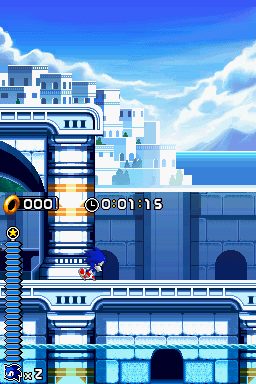
Water PalaceSonic 2nd · Blaze 4th · boss: Egg TurtleA flooded acropolis of white columns and fountains, home to the game’s only underwater sections.
Mirage RoadThird for both · boss: Egg ScarabDesert pyramids and tombs, Anubis statues that carry you through walls, and a raft ride that briefly goes fully 3D.
Night CarnivalSonic 4th · Blaze 1st · boss: Egg LibraA neon fairground with light-up rails, trapeze bars and street signs showing Sonic and Blaze.
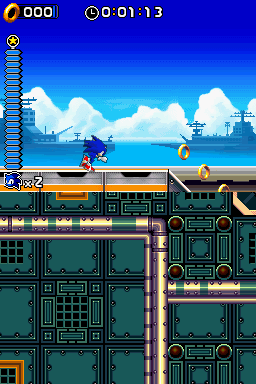
Huge CrisisSonic 5th · Blaze 6th · boss: Egg Hammer FortressAn aircraft carrier patrolled by G.U.N. robots, with pistons, steam jets and spin tubes in the style of Metropolis Zone.
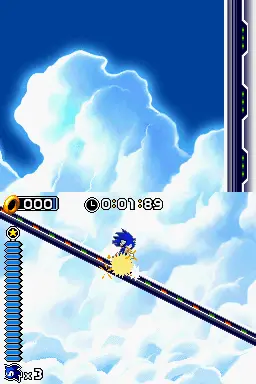
Altitude LimitSonic 6th · Blaze 5th · boss: Egg EagleA sky fortress of grind rails, parachute cannons and a 3D hang-glider section, with deadly lasers below.
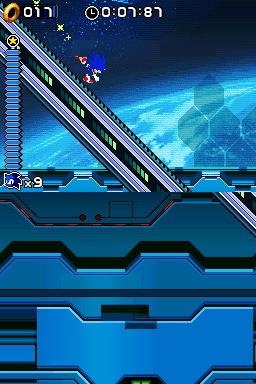
Dead LineSeventh for both · boss: Sonic or BlazeA Death Egg-style station where gravity flips between the screens and machines vacuum up your dropped rings.
The final zoneBoth stories · boss: Egg KingWhere the two stories meet, after Cream is kidnapped.
ExceptionExtra zone · Egg SalamanderThe rift where the two worlds are merging. Super Sonic takes the top screen, Burning Blaze the bottom.
Sonic’s Special Stages are reached by swinging around a Special Generator with a full Boost. They are half-pipes in the style of Sonic 2, steered with the stylus: grab enough rings before each checkpoint and dodge the bombs. Blaze never visits them; she takes her Sol Emeralds from the bosses she beats.
Sonic Rush AdventureNintendo DS · 2007The sequel, which sends Sonic and Tails to Blaze’s world and introduces Marine the Raccoon.
Sonic the Hedgehog2006Blaze’s second appearance, a year after her debut.
Sonic Unleashed2008Builds its high-speed stages around the Boost, a mechanic first used in the Rush series.
Shadow the HedgehogConsole · 2005Released in North America on the very same day as Sonic Rush.
Characters
Two heroes with separate stories, a supporting cast that cheers them on, and two Eggmen. Sonic Rush and Shadow the Hedgehog, released in North America on the same day, were the first Sonic games voiced by the English cast of Sonic X.
Character
Who they are
In this game
Stats & abilities
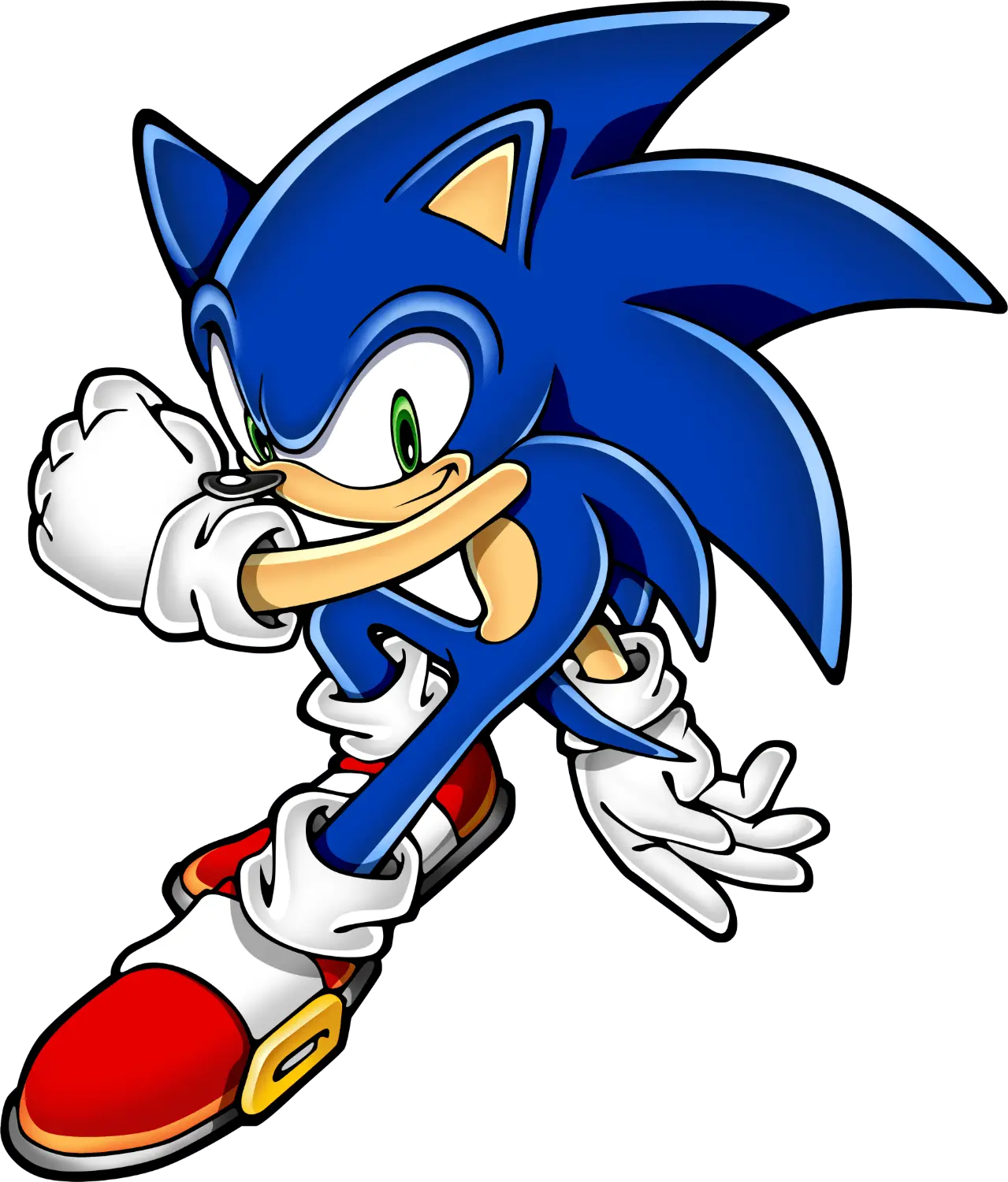
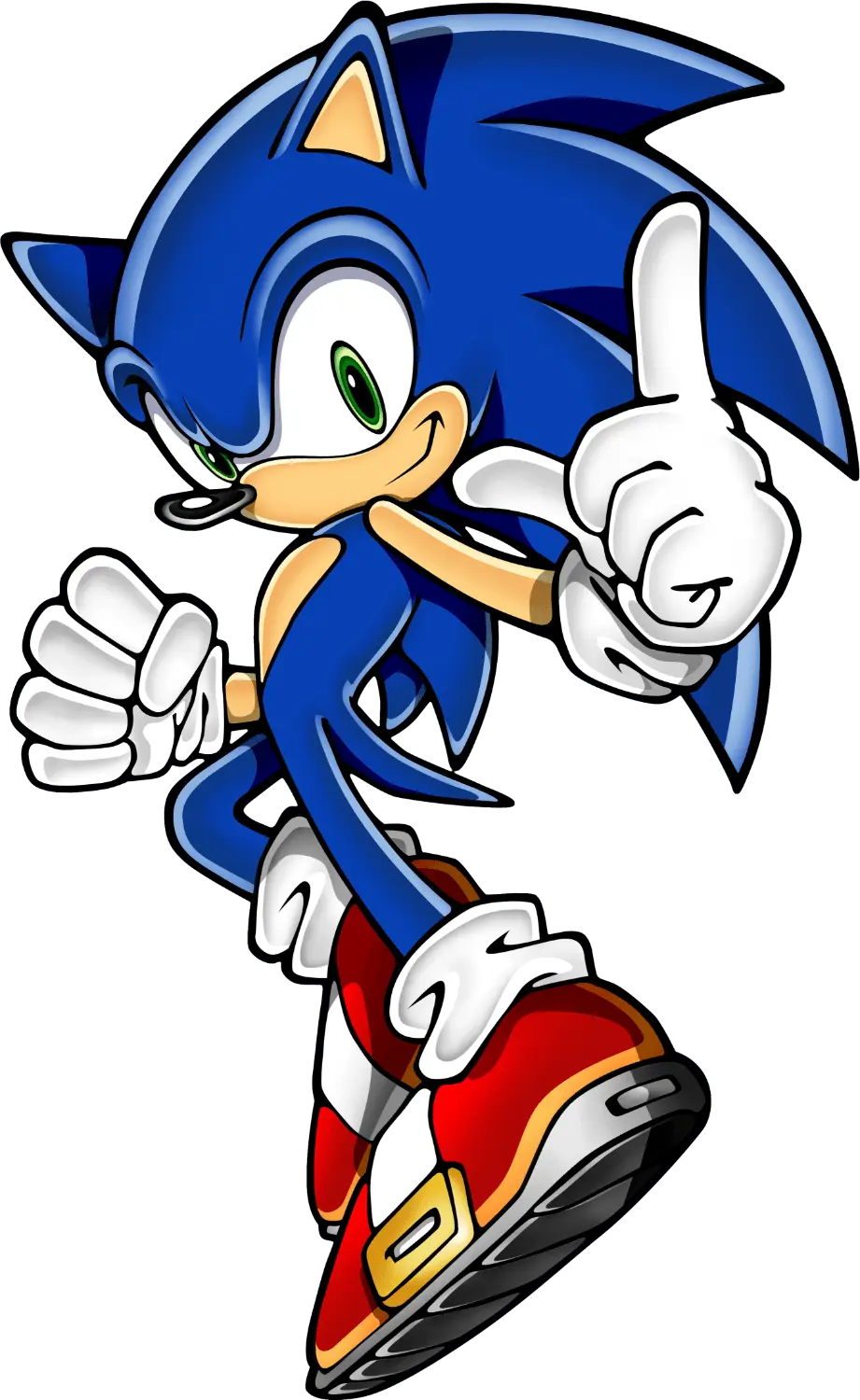
Sonic the HedgehogPlayable · Super Sonic in the finale
The hero, on the trail of Eggman and of the mysterious cat who keeps stealing his prizes.
His story starts in Leaf Storm without a word of introduction. Only he can enter the Special Stages and win the Chaos Emeralds.
Super Boost, fuelled by the Tension Gauge
Mid-air tricks to fill the gauge
Spin Dash
English voice: Jason Griffith
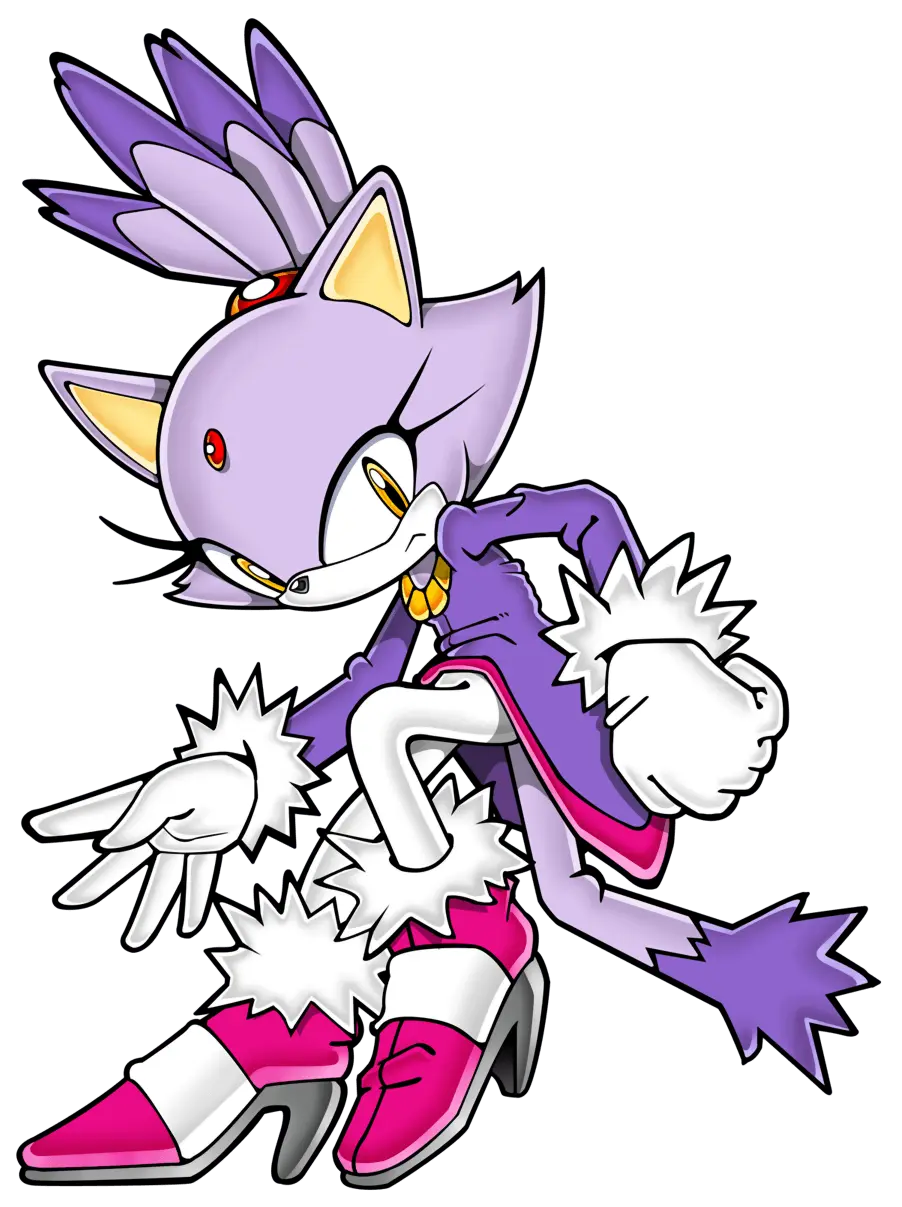
Blaze the CatDebut · Burning Blaze in the finale
A fire-wielding princess from another dimension, whose world’s Sol Emeralds have been stolen. Serious, proud and convinced she must manage alone.
Her story comes first chronologically. Across the game she learns, through Cream, Amy and finally Sonic, to accept help.
Fire Boost and Burst Dash
Wins a Sol Emerald from each boss
No Special Stages
English voice credited to “Berra Hudson”
Cream the Rabbit & CheeseBlaze’s companion
The polite young rabbit and her Chao, first seen in Sonic Advance 2.
Finds Blaze, adopts her as a friend whether she likes it or not, and is kidnapped by Eggman near the end. Cheers Blaze on in boss fights.
Not playable.
Miles “Tails” ProwerSonic’s companion
Sonic’s best friend and resident genius.
Discovers the tear in space-time and the merging dimensions. Cheers Sonic on during boss fights.
Not playable. English voice: Amy Palant.
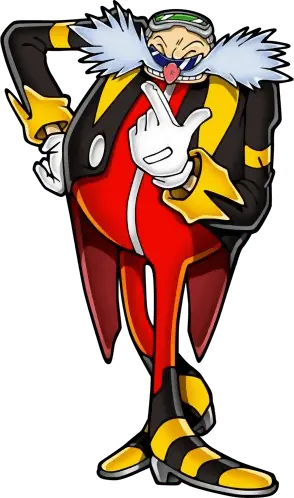
Eggman NegaDebut · villain
Eggman’s counterpart from Blaze’s dimension, who wants Sonic’s world for himself.
Sonic’s recurring opponent, first fought at the end of Water Palace. Secretly in league with Eggman.
Pilots the Egg Salamander Nega in the finale. Voiced, like Eggman, by Mike Pollock.
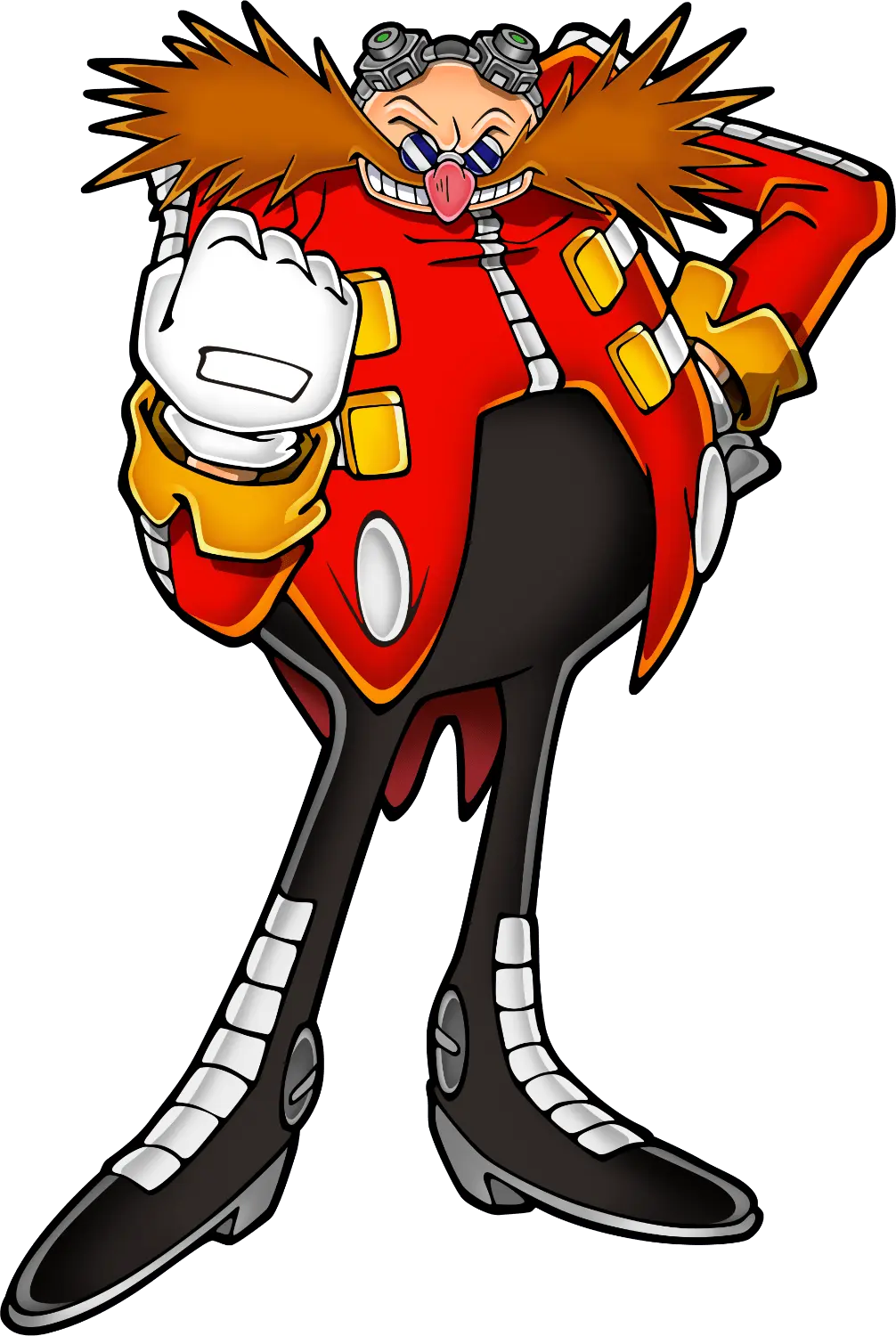
Dr. EggmanVillain
The original doctor, after “ultimate power” once again.
Steals the Sol Emeralds, is Blaze’s main opponent, kidnaps Cream, and builds the Egg Salamander with Nega.
English voice: Mike Pollock.
Knuckles the EchidnaCameo
Guardian of the Master Emerald, and as easy to wind up as ever.
Mistakes Blaze’s gems for Chaos Emeralds, ends up under a rockslide, and spends the rest of the game wanting a rematch.
Not playable.
Amy RoseCameo
Sonic’s self-declared girlfriend.
Suspects Blaze is a love rival, then gives her the advice that matters most: you cannot always do things alone.
Not playable.
Vanilla the RabbitCream’s mother
Cream’s mother, first seen in Sonic Advance 2.
Welcomes Blaze into her home, and later points Sonic and Tails in the right direction.
Not playable.
Bosses
Every boss is a 3D battle. Names from Sonic Retro’s boss list; the order shown is Sonic’s.
Egg Hammer MegaLeaf StormSonic’s first boss, Blaze’s second.
Egg TurtleWater PalaceWhere Sonic first meets Eggman Nega.
Egg ScarabMirage RoadFought third by both heroes.
Egg LibraNight CarnivalBlaze’s very first fight.
Egg Hammer FortressHuge CrisisAboard the carrier.
Egg EagleAltitude LimitHigh above the clouds.
Sonic vs. BlazeDead LineEach hero fights the other.
Egg KingFinal zoneThe final boss of the main story.
Egg SalamanderExceptionEggman on top, Nega below.
The people who made it
Credits from the game, as listed by Sega Retro.
Yuji NakaProducer · Sonic TeamAnnounced the game at E3 2004; his last mainline Sonic before leaving Sega.
Akinori NishiyamaDirectorDirected the Advance trilogy, then went looking for a faster, simpler style for the DS.
Yuji UekawaArt directorSonic Team’s character designer of the era.
Kouichi Sakita, Yukihiro HigashiProducer and line producer · DimpsLed the Dimps team.
Hideki NaganumaComposerThe Jet Set Radio composer, who wrote most of the score.
Teruhiko NakagawaSound directorWrote additional tracks, with T’s Music.
How it was made
Our original page had no history section. This one combines Wikipedia’s development summary, the credits and release data on Sega Retro, and Sonic Retro.
Speed first: from Sonic DS to Sonic Rush
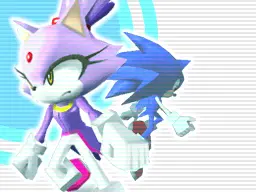
Sonic and Blaze.
Akinori Nishiyama, who directed it with Yuji Naka producing for Sonic Team and Kouichi Sakita for Dimps, came to the project feeling that Sonic had grown too complicated while he was making Sonic Advance 3. On the DS he wanted speed and spectacle above all: the strengths of the 2D games, plus ideas borrowed from the 3D ones. That became the 2.5D design, with 3D models for the characters and bosses running through 2D stages stretched across both screens.
Naka, then Sega’s executive managing director, had first mentioned a Sonic for the new handheld at E3 2004, as Sonic DS, in the same breath as Project Rub. By E3 2005 it had its new name and a playable demo that earned IGN’s Biggest Surprise award, and Blaze the Cat was revealed at the Tokyo Game Show in the autumn.
Naganuma’s soundtrack
Hideki Naganuma, the Jet Set Radio composer, wrote most of the music, with more tracks from sound director Teruhiko Nakagawa and T’s Music. Fitting his sample-heavy style into the DS’s sound chip was a challenge, and the zone themes have song titles of their own: Leaf Storm is “Right There, Ride On”, Night Carnival “Ska Cha Cha” and Dead Line “What U Need”. Each zone has a second version for Blaze, the final boss plays to “Wrapped in Black”, and the soundtrack came out on CD as Sonic Rush Original Groove Rush.
Release
Sonic Rush reached North America on 15 November 2005, the same day as Shadow the Hedgehog, then Europe later that month and Japan on 23 November. Its English voices were recorded at 4Kids Productions with the Sonic X cast, who made their game debut in both titles that day. France got a Pack Exceptionnel reissue in 2007, and in 2009 the game came back in the Sega Fun Pack with Super Monkey Ball Touch & Roll.
Firsts: what this game introduced
Sonic Rush introduced a surprising amount for a handheld game.
1Blaze the CatThe fire-wielding princess from another dimension, playable from her very first game.
2Eggman NegaEggman’s dimensional counterpart, who returned in later games.
3The BoostSpeed bursts powered by the Tension Gauge, later central to Sonic Unleashed.
4Sonic on the DSSonic’s first game for the Nintendo DS, with levels spanning both screens.
5The Sonic X castWith Shadow the Hedgehog, released the same day in North America, one of the first two games voiced by the 4Kids actors from Sonic X, led by Jason Griffith and Mike Pollock.
6Burning BlazeBlaze’s super form, partnering Super Sonic in the finale.
Cheats & secrets
Our original Sonic Rush page had no cheats section. Sonic Rush has no button codes, so this is a guide to its unlockables and extras, checked against Sonic Retro.
Unlocking Blaze
Sonic is the only choice at the start. Beat the first boss and Blaze becomes playable.
The extra zone
Collect all seven Chaos Emeralds with Sonic and all seven Sol Emeralds with Blaze, and Exception appears on the character select screen.
Special Stages
Each zone has a Special Generator. Swing around it while boosting for long enough and you enter that zone’s Special Stage. One Emerald per stage.
Ranks
Every act and boss is graded from C up to S. There is no reward for getting S ranks everywhere, just bragging rights.
Multiplayer and demo
Two players can race as Sonic and Blaze over wireless, and owners can send a playable demo to other DS consoles.
Checked against Sonic Retro and Wikipedia, November 2026.
Glitches, exploits and oddities
Sonic Retro has no bug list for Sonic Rush, but the game has plenty of quirks, and one printing error.
Poke the hero
Blaze.
Tap Sonic or Blaze on the touch screen while they stand still and they react. Sonic waves you on; Blaze jumps like a startled cat, stamps her foot and turns her back on you.
“New a mysterious female companion”
The North American box promises wireless play and “new a mysterious female companion”, with two words the wrong way round. You can see it on our own scan in the gallery below.
Ring thieves
In Dead Line, machines in the walls suck up any rings you drop, so even a single hit can leave you with nothing. The acts are packed with rings to compensate.
Leftover sprites
The game files still hold a seal sprite from the first Sonic Advance and a full sheet for two Sonic Advance 3 badniks, Akatento and Aotento, neither of which appear in the game.
Videos & media
A complete run of the game, and IGN’s footage from June 2005, five months before release.
A full playthrough from the World of Longplays archive.
Pre-release gameplay footage from IGN, dated 27 June 2005.
Trivia & facts
Sonic Rush launched in North America on the same day as Shadow the Hedgehog.
Blaze the Cat.Every zone has two versions of its music, one for Sonic and one for Blaze.
Huge Crisis takes place on a carrier crewed by G.U.N. robots.
Sonic’s story starts straight in Leaf Storm, with no opening cutscene.
IGN ranked Sonic Rush 17th in its 2008 list of the 25 best DS games.
Media & artwork
Box art, artwork and screenshots, from Sonic Scene’s own galleries and Sonic Retro. Select any image to view it larger.
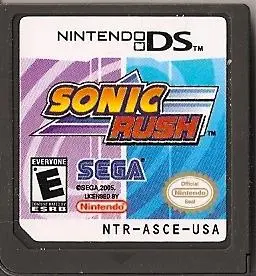
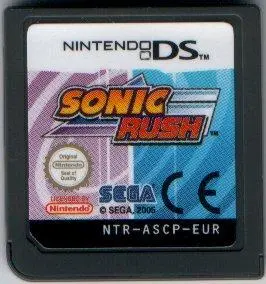
The box art.North American box, front and back.European box, front and back.North American game card.European game card.The logo.Sonic.Cheese the Chao.The title screen.Altitude Limit.The zone map.Cream’s house on the map.The battle menu.Sonic on the menu.Leaf Storm.Mirage Road.Night Carnival.
Sonic Rush gave the series two things it kept: Blaze the Cat, who returned in Sonic the Hedgehog (2006), Sonic Rush Adventure and many later games, and the Boost, which Sonic Unleashed later made central. A direct sequel, Sonic Rush Adventure, followed in 2007.
Releases and re-releases
Nintendo DS (North America)15 November 2005 – Launched alongside Shadow the Hedgehog.
Nintendo DS (Europe)November 2005 – 18 November per Wikipedia; 25 November per Sega Retro.
Nintendo DS (Japan)23 November 2005 – ¥4,800.
Pack Exceptionnel (France)26 October 2007 – A French bundle edition.
Sega Fun Pack2009 – Bundled with Super Monkey Ball Touch & Roll.
Where to play it today
On a Nintendo DS or 3DS with the original game card, or the Sega Fun Pack double pack.
Sales & reviews
Sales
Sega’s financial reports, as compiled by Sonic Retro, show 410,000 copies sold outside Japan by the end of 2005 and a running total of 770,000 by March 2007. Wikipedia adds that it sold 360,000 in Europe in the 2006–07 financial year and earned a Platinum award from ELSPA, meaning at least 300,000 copies in the UK.
770kCopies outside Japan by March 2007 (Sega figures)
PlatinumELSPA award, UK
87%Sega Retro average of 10 magazines
94%Play, US
Reception and review scores
Magazine scores from Sega Retro’s review index, which links each score to a scan.
PlayUS
94%
Nintendo Official MagazineUK
92%
Nintendo PowerUS
90%
NGC MagazineUK
90%
The Official Nintendo MagazineUK
90%
HyperAustralia
81%
Electronic Gaming MonthlyUS
80%
Game StationUK
80%
GameProUS
78%
Reviewers heard the Mega Drive in it, and meant it kindly: GameSpot, IGN and Nintendo Power all compared it to the 16-bit classics, and GameSpy raved about the graphics. The music got special mention, with 1UP calling it bright and buoyant, GameSpot hearing Jet Set Radio in it, and GameSpy enjoying how catchy and unconventional it was.
The common complaint was the speed itself. GameSpy, which liked the game overall, found it moved so fast that it was hard to see what was happening, and 1UP and GamePro said much the same. Wikipedia summarises the Metacritic verdict as generally favourable, and IGN later named it one of the best games on the system.
Honours
IGN, E3 2005Biggest SurpriseFor the Sonic Rush demo.
ELSPAPlatinum sales awardAt least 300,000 copies sold in the UK.
IGN, 2008Top 25 DS gamesRanked 17th.
Reader reviews
No reader reviews yet. Played it? Give it a score out of 10 and tell other fans what you think.
Every fact on this page was checked against the sources below. Sonic Retro and Sega Retro pages were read through Wayback Machine copies from late 2024 to early 2026, because both live sites show a bot check; each Sonic Retro link opens the nearest archived copy. Magazine scores come from Sega Retro’s review index, which links each score to a scan of the original page.
To provide the best experiences, we use technologies like cookies to store and/or access device information. Consenting to these technologies will allow us to process data such as browsing behavior or unique IDs on this site. Not consenting or withdrawing consent, may adversely affect certain features and functions.
Functional
Always active
The technical storage or access is strictly necessary for the legitimate purpose of enabling the use of a specific service explicitly requested by the subscriber or user, or for the sole purpose of carrying out the transmission of a communication over an electronic communications network.
Preferences
The technical storage or access is necessary for the legitimate purpose of storing preferences that are not requested by the subscriber or user.
Statistics
The technical storage or access that is used exclusively for statistical purposes.The technical storage or access that is used exclusively for anonymous statistical purposes. Without a subpoena, voluntary compliance on the part of your Internet Service Provider, or additional records from a third party, information stored or retrieved for this purpose alone cannot usually be used to identify you.
Marketing
The technical storage or access is required to create user profiles to send advertising, or to track the user on a website or across several websites for similar marketing purposes.

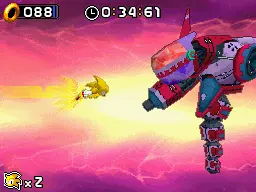
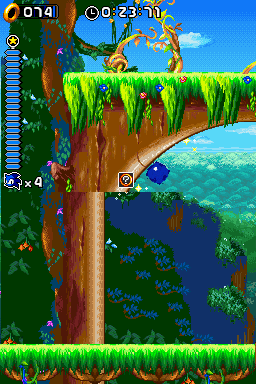 Leaf StormSonic 1st · Blaze 2nd · boss: Egg Hammer MegaA green jungle that teaches the basics, with screen-spanning loops, vine rails, trampolines and a giant Eggman wheel chasing you downhill.
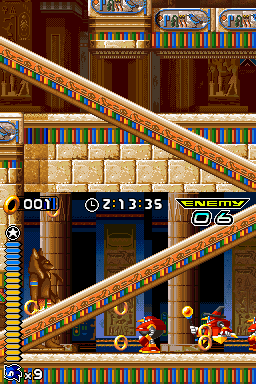 Mirage RoadThird for both · boss: Egg ScarabDesert pyramids and tombs, Anubis statues that carry you through walls, and a raft ride that briefly goes fully 3D.
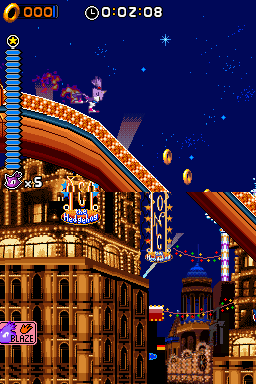 Night CarnivalSonic 4th · Blaze 1st · boss: Egg LibraA neon fairground with light-up rails, trapeze bars and street signs showing Sonic and Blaze.
 Sonic the HedgehogPlayable · Super Sonic in the finale
 Blaze the CatDebut · Burning Blaze in the finale
 Cream the Rabbit & CheeseBlaze’s companion
 Miles “Tails” ProwerSonic’s companion
 Eggman NegaDebut · villain
 Dr. EggmanVillain
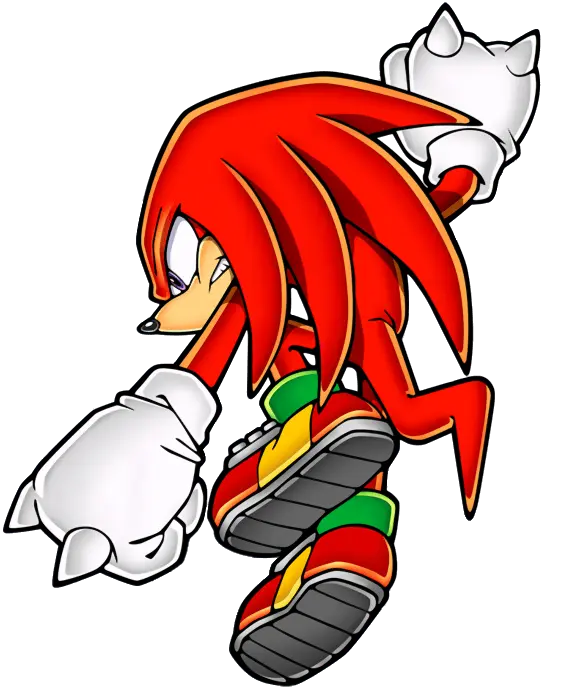 Knuckles the EchidnaCameo
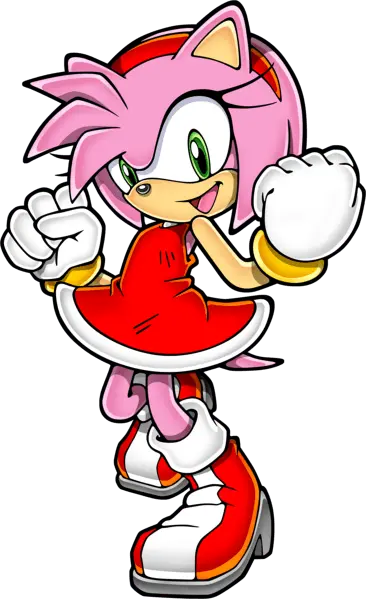 Amy RoseCameo
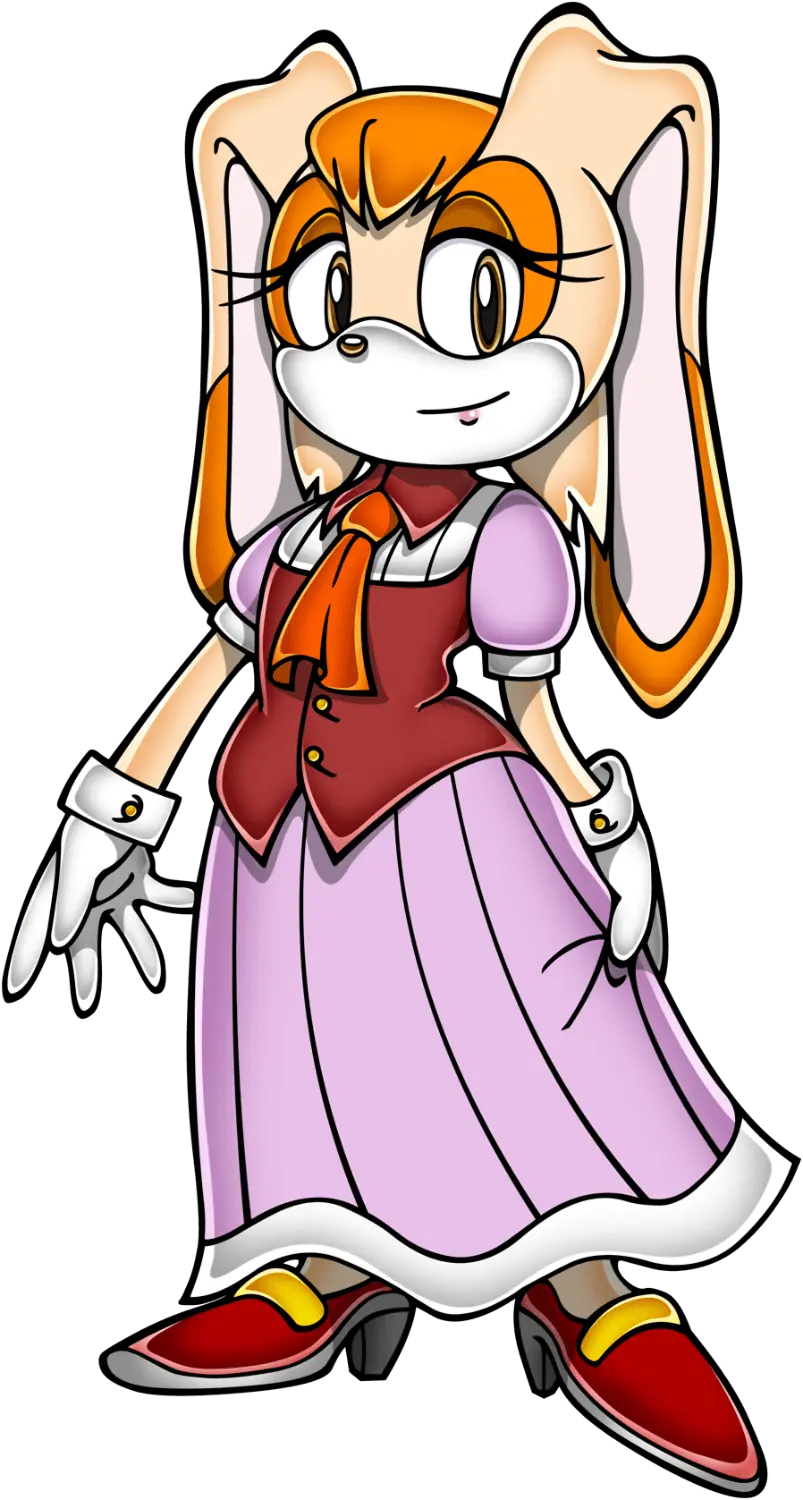 Vanilla the RabbitCream’s mother