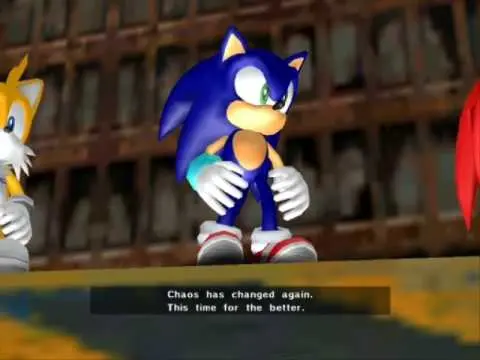
A water god sealed for three thousand years, a city about to be flooded and six heroes with six very different stories. Sonic’s first full 3D adventure launched the Dreamcast and redesigned the whole cast for a new century.
Released23 Dec 1998 (JP) · 9 Sep 1999 (NA, Dreamcast launch) · 14 Oct 1999 (EU)
DeveloperSonic Team
DirectorTakashi Iizuka; producer Yuji Naka
PlayableSonic, Tails, Knuckles, Amy, Big, E-102 Gamma, plus Super Sonic
VillainsDr. Eggman and Chaos
Sales2.5 million by 2006, the Dreamcast’s best seller
Title
Sonic Adventure; Japanese: ソニックアドベンチャー. Early in development it was called Sonic RPG
Platforms
Dreamcast; GameCube and PC as Sonic Adventure DX: Director’s Cut (2003–2004); Xbox 360, PlayStation 3 (2010) and PC via Steam (2011) as a download
Developer
Sonic Team (Sega CS3); Sonic Team USA localised the Western version
Publisher
Sega
Producer
Yuji Naka
Director
Takashi Iizuka
Art
Art director Kazuyuki Hoshino; character designer Yuji Uekawa
Story
Scenario writer and story event director Akinori Nishiyama
Main programmer
Tetsu Katano
Music
Sound director Jun Senoue, with Fumie Kumatani, Kenichi Tokoi and Masaru Setsumaru; vocals by Johnny Gioeli and others
Players
Single player (two players in Sonic Adventure DX’s Game Gear games)
Released (Dreamcast)
Japan 23 December 1998 (¥5,800); North America 9 September 1999 (US$49.95, launch title); Europe 14 October 1999 (UK £39.99; France 12 October); Australia 30 November 1999 by Sega Retro, 3 December by Sonic Retro and our original page
Sonic Adventure International
Japan 14 October 1999: the Western version, sold in Japan
Sonic Adventure DX (GameCube)
North America 17 June 2003; Japan 19 June 2003; Europe 27 June 2003
Sonic Adventure DX (PC)
Japan 18 December 2003; Europe and Australia 6 February 2004; North America 14 September 2004
Peripherals
Visual Memory Unit, Jump Pack, modem, keyboard, VGA Box
After years without a proper new Sonic game, Sega’s mascot came back in style on the Dreamcast. Sonic Adventure was the first main Sonic game built entirely in 3D, a launch title for Sega’s new console and, by 2006, its best-selling game, with around 2.5 million copies sold.
It is also the most ambitious Sonic story told up to that point. Six characters each have their own campaign, playing through the same events from different angles: Sonic races through high-speed stages, Tails races Sonic, Knuckles hunts for shards of the Master Emerald, Amy runs from a relentless robot, Big goes fishing for his frog and the robot E-102 Gamma blasts his way towards a change of heart. Finish all six and a seventh, the Last Story, ties them together.
Between the action stages sit the Adventure Fields, explorable hubs full of people, secrets and upgrades, and hidden in them are the Chao Gardens, home to a virtual pet that went on to become a series fixture. Critics were dazzled by the graphics and the sense of speed, and grumbled about the camera, the glitches and the voice acting, which pretty much sums up how fans still feel about it.
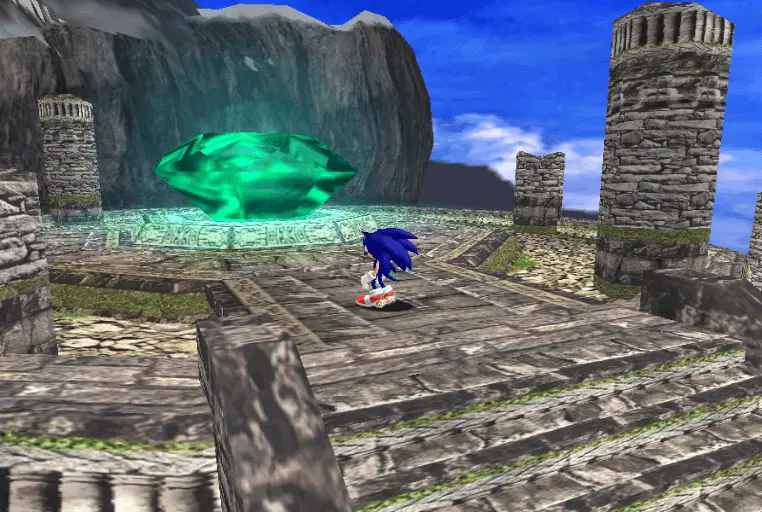
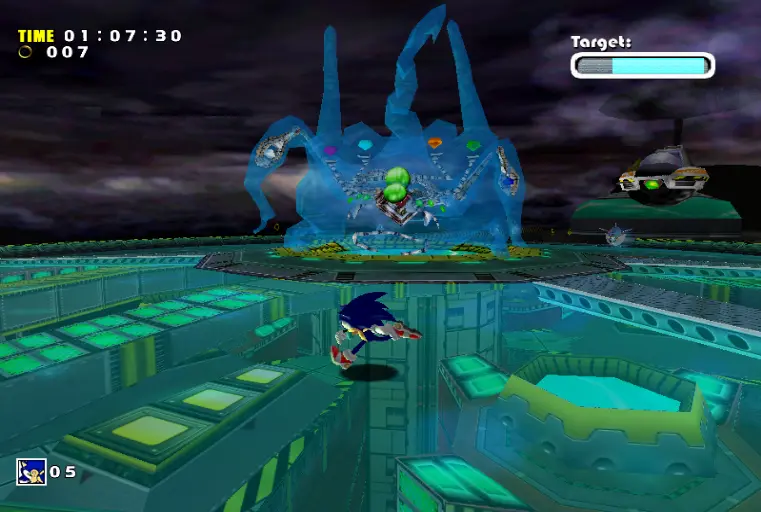
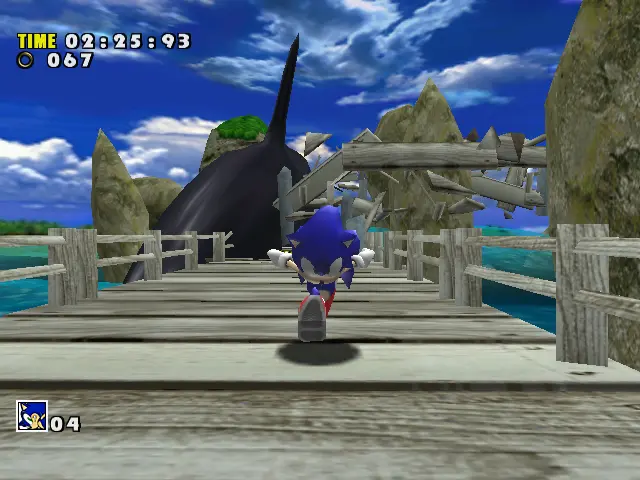
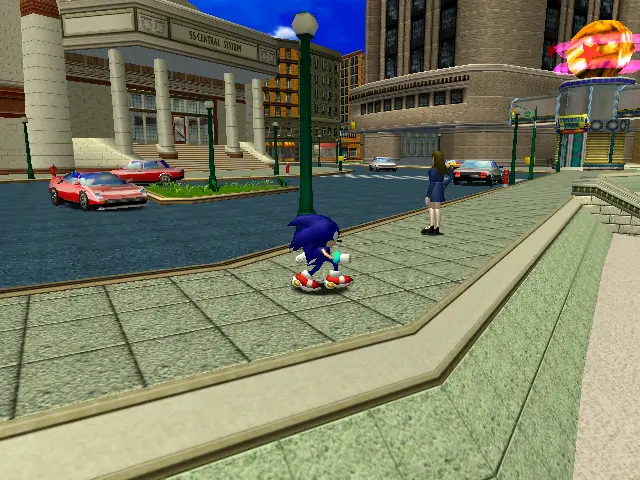
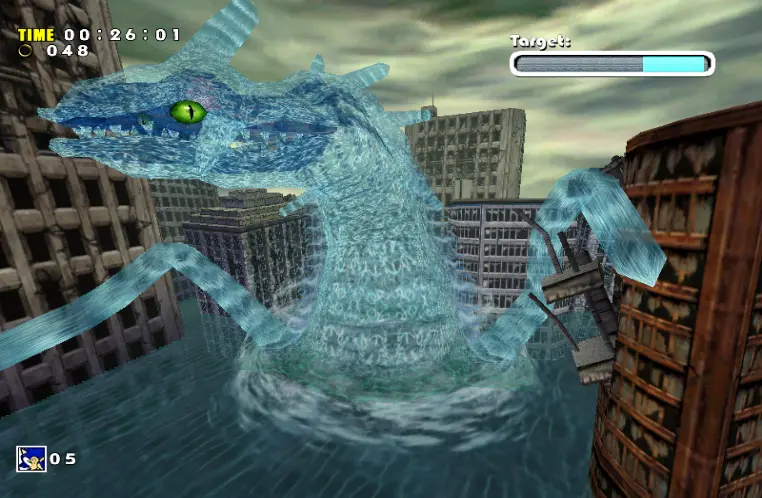
Emerald Coast, Sonic’s first stage.Station Square, the first Adventure Field.Super Sonic against Perfect Chaos.
an all-new full 3D thrill ride
That was Sega of America’s pitch in its list of Dreamcast launch games, which billed Sonic Adventure as an action and adventure game and Sonic’s debut on the new console.
— Official description: Sega of America press release, 2 September 1999, “Sega Dreamcast Launch Titles and Peripherals”, as archived by Sega Retro. One phrase quoted; the rest summarised.
Quick Answers
The short answers, with the detail further down the page.
When did Sonic Adventure come out?
In Japan on 23 December 1998, in North America on 9 September 1999 as a Dreamcast launch game, and in Europe on 14 October 1999. More →
Who are the playable characters?
Six: Sonic, Tails, Knuckles, Amy, Big and the robot Gamma, each with their own story and play style. Super Sonic stars in the Last Story once all six are complete. More →
Who is Chaos?
An ancient water god that once guarded the Chao and the Master Emerald. When an echidna tribe tried to seize the Emeralds it became Perfect Chaos and destroyed them, and was sealed inside the Master Emerald with the echidna girl Tikal. More →
How do you unlock Super Sonic?
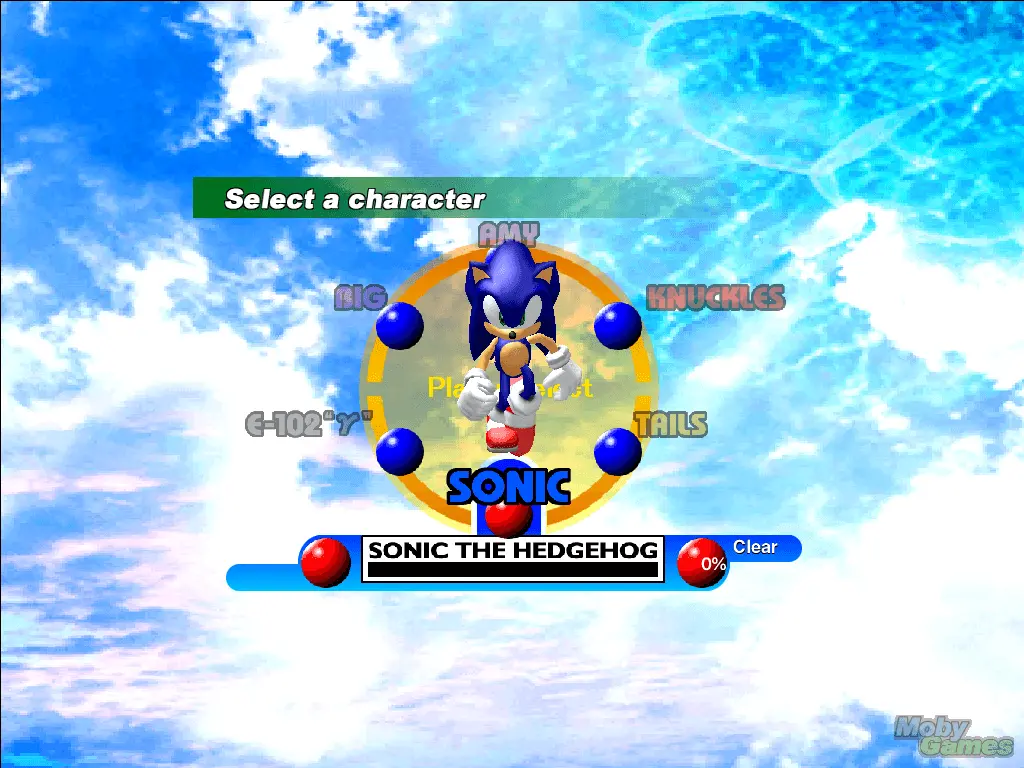
Complete all six character stories. A seventh slot, Super Sonic, appears on the character select screen and leads to the Last Story and the true ending. More →
What are the Chao?
Small creatures you can hatch and raise in hidden Chao Gardens, feeding them the animals you rescue from Badniks. They debuted here and are based on the A-Life system from Nights into Dreams. More →
How many Emblems are there?
130: three per action stage for each character who can play it, plus Emblems for sub-games, stories, Chao races and secrets hidden in the Adventure Fields. More →
How many copies did it sell?
About 2.5 million by August 2006, including 1.27 million in the US and 440,000 in Japan, making it the Dreamcast’s best-selling game. More →
What is Sonic Adventure DX?
A 2003 GameCube and PC version with remodelled characters, 60 extra missions, the 12 Game Gear Sonic games to unlock and a playable Metal Sonic. Later downloadable versions are based on it. More →
Where can I play it today?
On Steam (PC), and as a download for Xbox 360 and PlayStation 3 from 2010; the Xbox version also runs on Xbox One and Series X|S. More →
Plot / Story
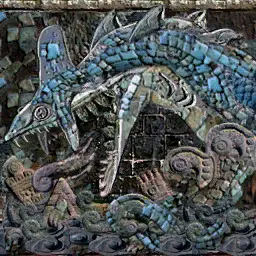
The ancient mural of Perfect Chaos.Screenshot via Sonic Retro
Sonic Adventure tells one story six times. Each character’s campaign covers the same few days in and around Station Square, crossing paths with the others, so a scene you watch as Sonic may be explained only when you replay it as Big or Gamma. Here is the whole tale in order.
The legend of Chaos
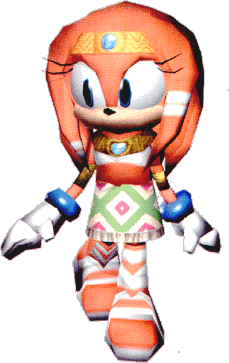
Tikal, the echidna princess.
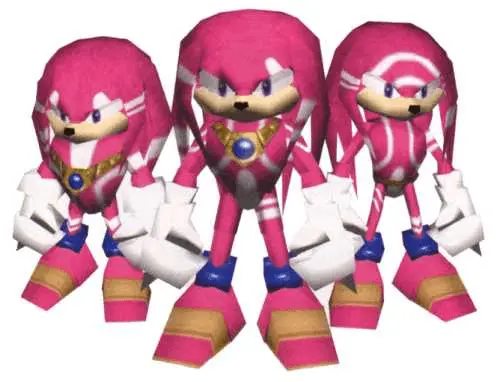
More than three thousand years ago an echidna tribe ruled the lands around the Mystic Ruins. Its chief, Pachacamac, had conquered his neighbours and wanted more, and his eyes fell on the seven Emeralds that stood at a sacred altar beside the Master Emerald. The altar was home to the Chao and their guardian, Chaos, a water spirit.
Pachacamac’s daughter Tikal befriended the Chao and pleaded with her father to leave the shrine alone. He ignored her, and his warriors trampled the altar. Chaos answered with the Emeralds’ power, becoming a monstrous god of destruction that destroyed Pachacamac and his army. Tikal begged the Master Emerald to stop it, and Chaos was sealed inside the gem, with Tikal’s spirit locked in alongside to watch over it. The few echidnas who survived used the Emerald’s power to lift their land into the sky: it became Angel Island, and Knuckles is the last of their line.
Sonic’s story
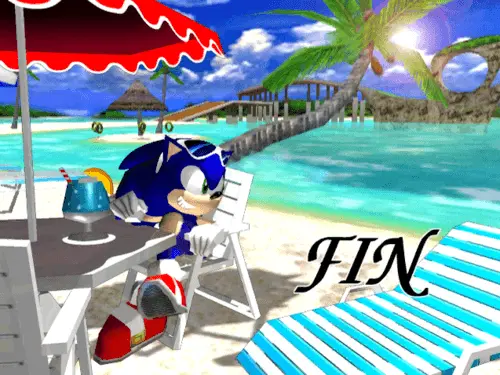
The closing image of Sonic’s story.
In the present day Dr. Eggman finds an inscription about the legend, flies to Angel Island and shatters the Master Emerald, freeing a watery creature that slips away as the island falls into the sea. That night Sonic, holidaying in Station Square, finds the police helpless against the same creature and sees it off in seconds. Eggman, watching from a rooftop, has his monster: Chaos grows stronger with every Chaos Emerald it absorbs.
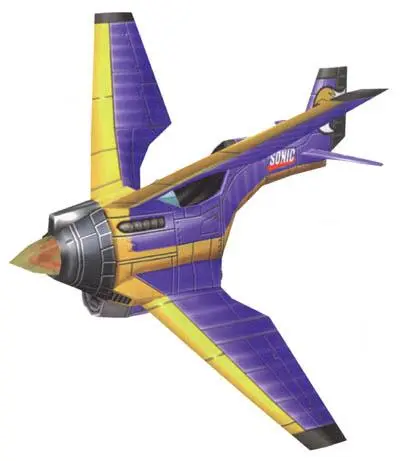
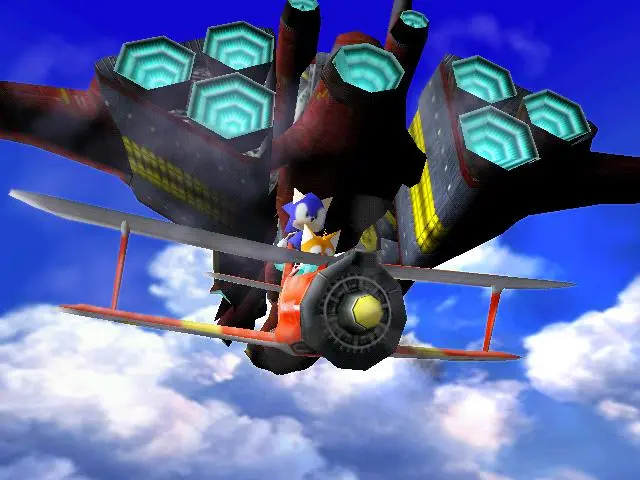
Sonic and Tails spend their story trying to keep the Emeralds away from Eggman. They beat his first machine, the Egg Hornet, come to blows with Knuckles thanks to the doctor’s meddling, take to the skies in the Tornado and the Tornado 2 to chase the doctor’s flying fortress, the Egg Carrier, and finally corner Eggman in his base, Final Egg. Sonic’s last battle is against the Egg Viper.
Tails’ story
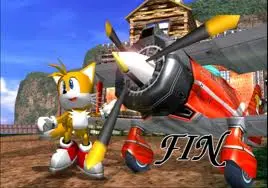
The closing image of Tails’ story.
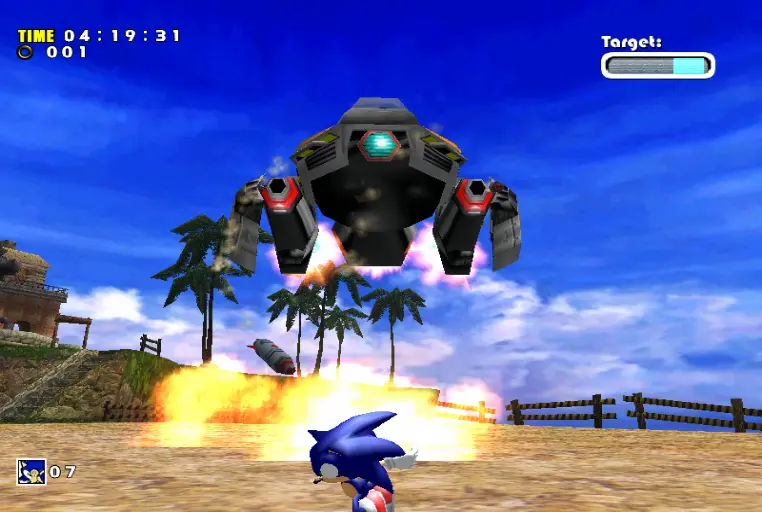
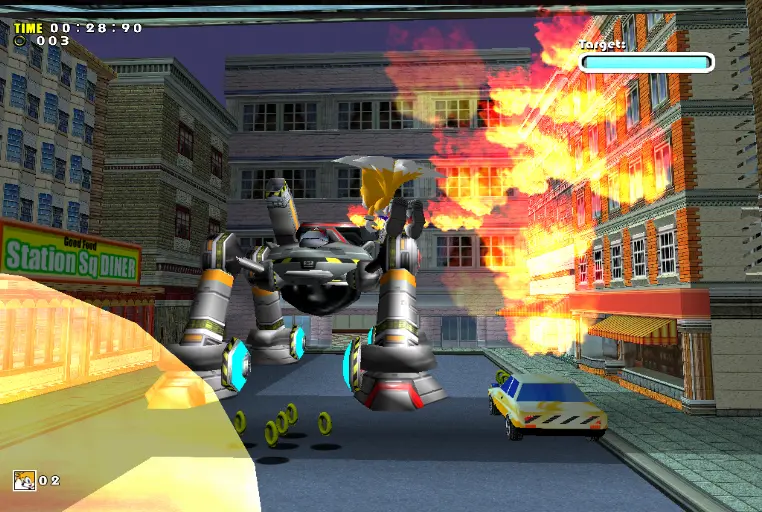
Tails crash-lands on the beach at Emerald Coast while testing a prototype of the Tornado 2, and Sonic comes to the rescue. His stages are races, against Sonic and, on Speed Highway, against Eggman himself, and his story ends with the biggest test of his young life: the doctor’s back-up plan is a missile strike on Station Square, and Tails has to stop him on his own, beating the Egg Walker straight after Speed Highway.
Knuckles’ story
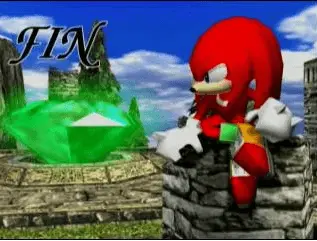
The closing image of Knuckles’ story.
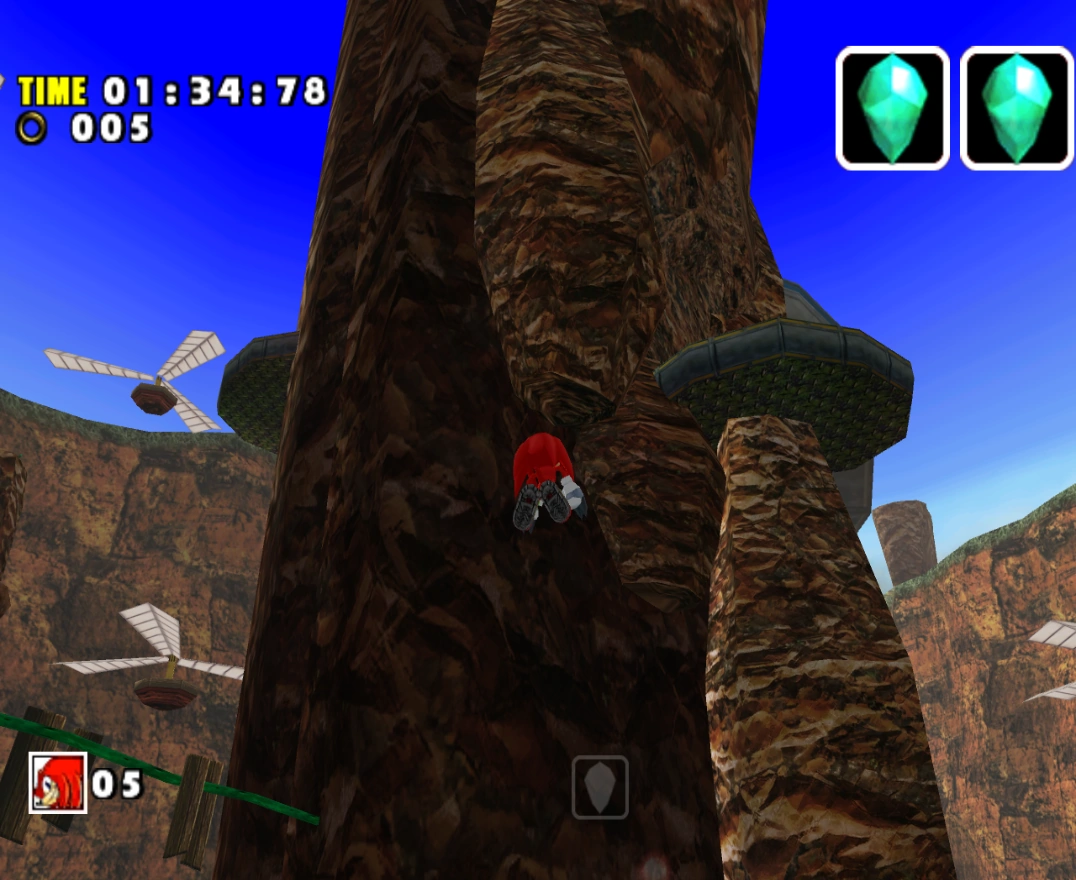
Knuckles wakes to find the Master Emerald in pieces and Angel Island sinking. As its guardian, and the last of his people, he sets off to collect the shards. Eggman lures him to a Station Square hotel with what looks like a shard and sets Chaos on him, and later he clashes with Sonic. Along the way strange visions pull him into the past, where he meets Tikal and learns what his ancestors did. He restores the Emerald, but not before Chaos has grown into something far worse.
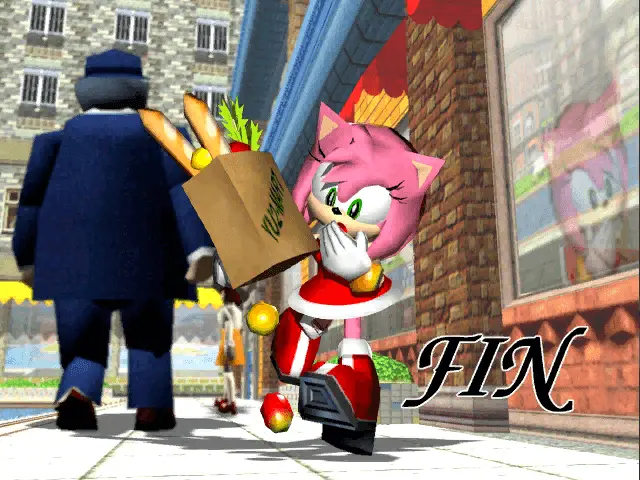
Amy’s story
The closing image of Amy’s story.
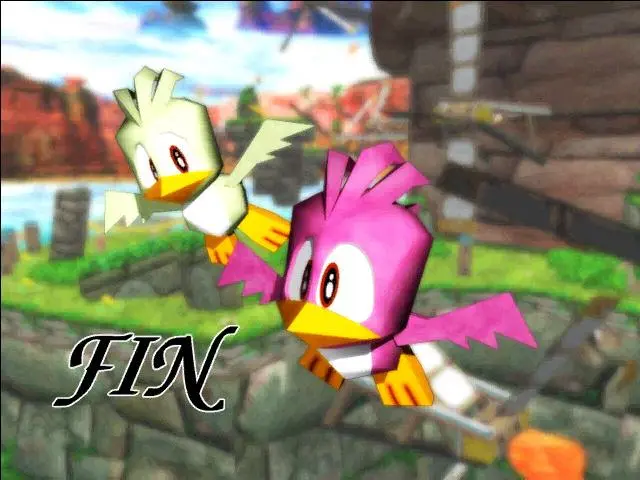
Amy is shopping in Station Square when a little Flicky that has escaped the Egg Carrier crashes into her. Eggman’s robot ZERO is chasing it, because the bird carries a Chaos Emerald, so Amy decides to protect it. Captured and taken aboard the Egg Carrier, she meets E-102 Gamma and talks him into letting them go. ZERO hounds her through every stage and shrugs off her hammer, until a final battle at the end of her story where she destroys it for good.
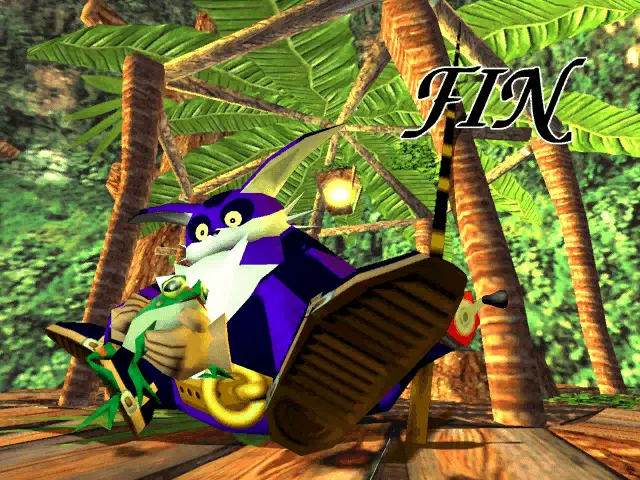
Big’s story
The closing image of Big’s story.
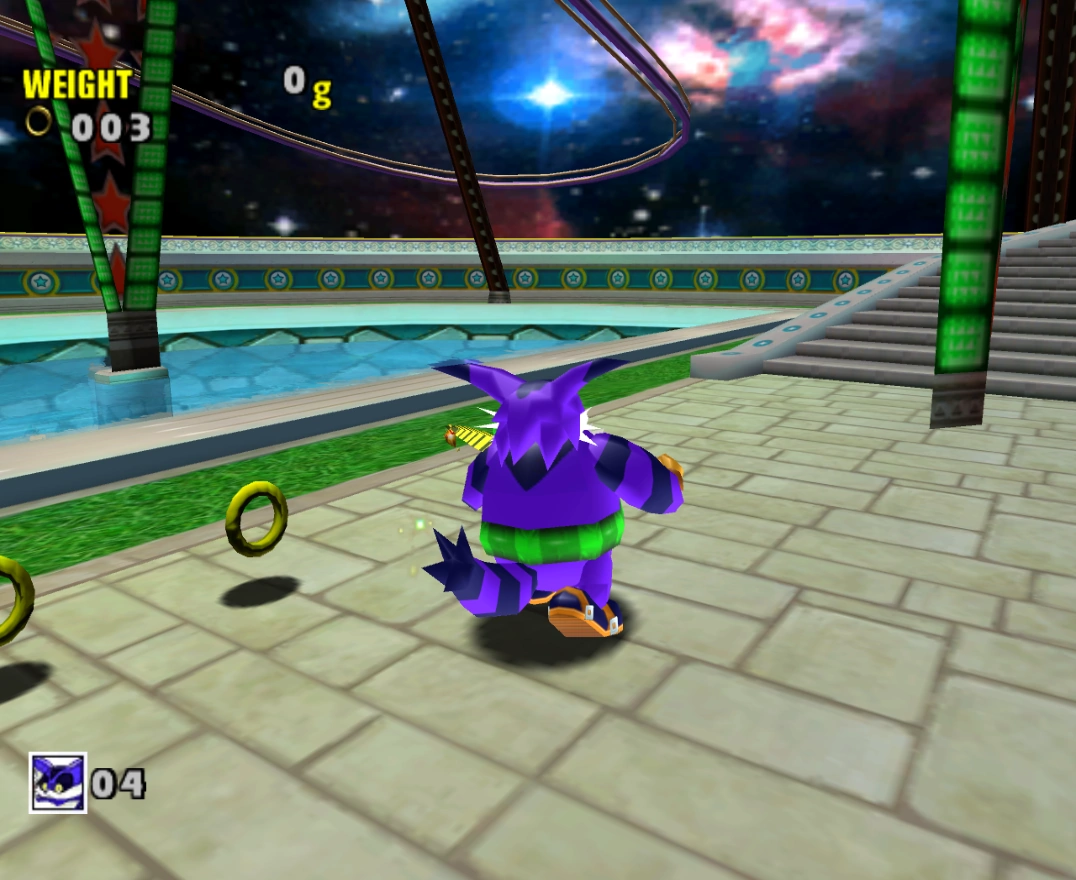
Big the Cat lives a quiet life in the jungle of the Mystic Ruins with his best friend, Froggy. When Chaos is released, a piece of its tail drops into the jungle and attaches itself to Froggy, who swallows Big’s lucky charm, a Chaos Emerald, and hops away. Big follows him with his fishing rod through four stages, and his only boss fight is against Chaos 6, which Sonic and Knuckles also take on.
E-102 Gamma’s story
The closing image of Gamma’s story.
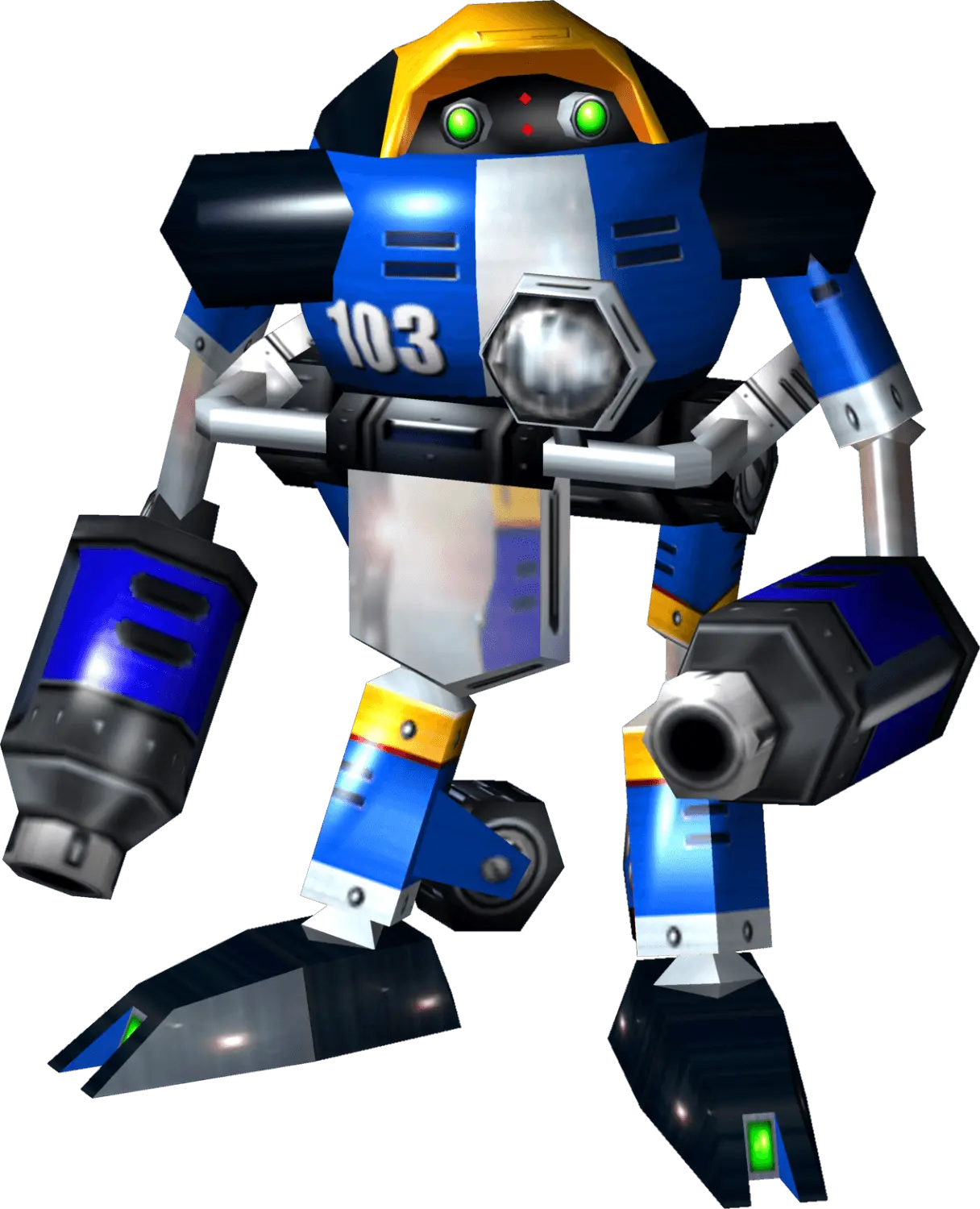
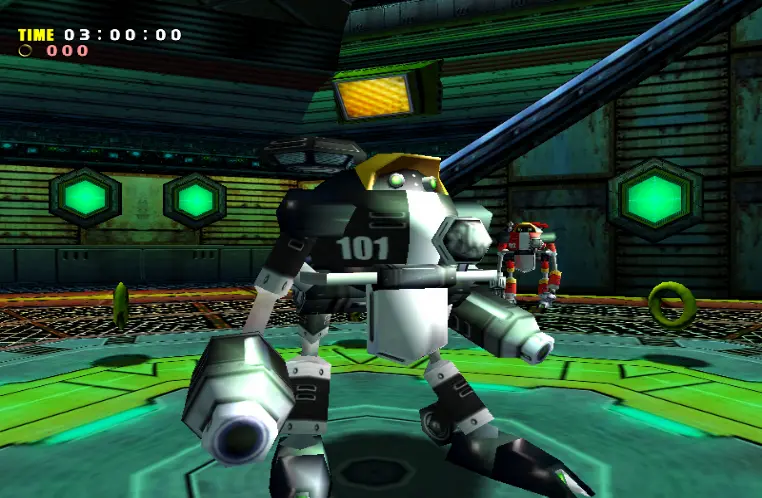
Gamma is built in Eggman’s base as the second of the E-100 series and proves himself by beating his older brother, E-101 Beta. Sent to hunt for Froggy, he is changed by meeting Amy: he realises the robots are powered by animals trapped inside them, turns against his maker and sets out to free the rest of his series, E-103 Delta, E-104 Epsilon and E-105 Zeta. His last fight is against a rebuilt Beta. He wins, but is fatally damaged; as his systems fail he remembers the Flicky inside him, and his destruction sets it free.
The Last Story
With every story complete, the pieces come together. Chaos takes the last of the Emeralds, turns on Eggman and becomes Perfect Chaos, laying waste to Station Square. Through Tikal’s visions Sonic learns that the creature is driven by grief and rage at what was done to the Chao, and that sealing it away again would solve nothing. Using the Emeralds’ power, he becomes Super Sonic and defeats Perfect Chaos, which calms when it sees Chao living happily in the ruined city. Tikal leads Chaos away to live in peace, and Sonic heads off after Eggman.
The closing image of the Last Story.Super Sonic against Perfect Chaos.
Action Stages and Adventure Fields
Eleven Action Stages are shared between the six characters, each of whom plays a different slice of them. The Adventure Fields of Station Square, the Mystic Ruins and the Egg Carrier link them together, with a fourth field, the past, reached only through Tikal’s visions.
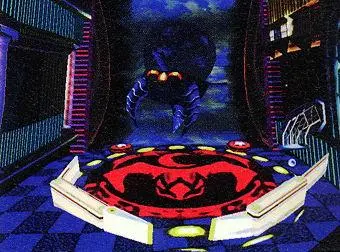
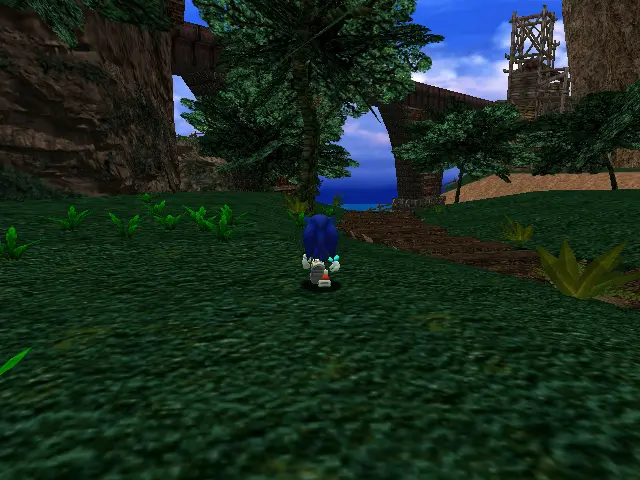
Emerald CoastSonic, Big, GammaA beach near the Station Square hotel, famous for the giant orca that chases Sonic.
Windy ValleySonic, Tails, GammaDizzying heights and giant fans; its music is a rearranged Sonic 3D Blast tune.
CasinopolisSonic, Tails, KnucklesA casino modelled on Sonic 2’s Casino Night, with a solid gold Sonic statue and pinball.
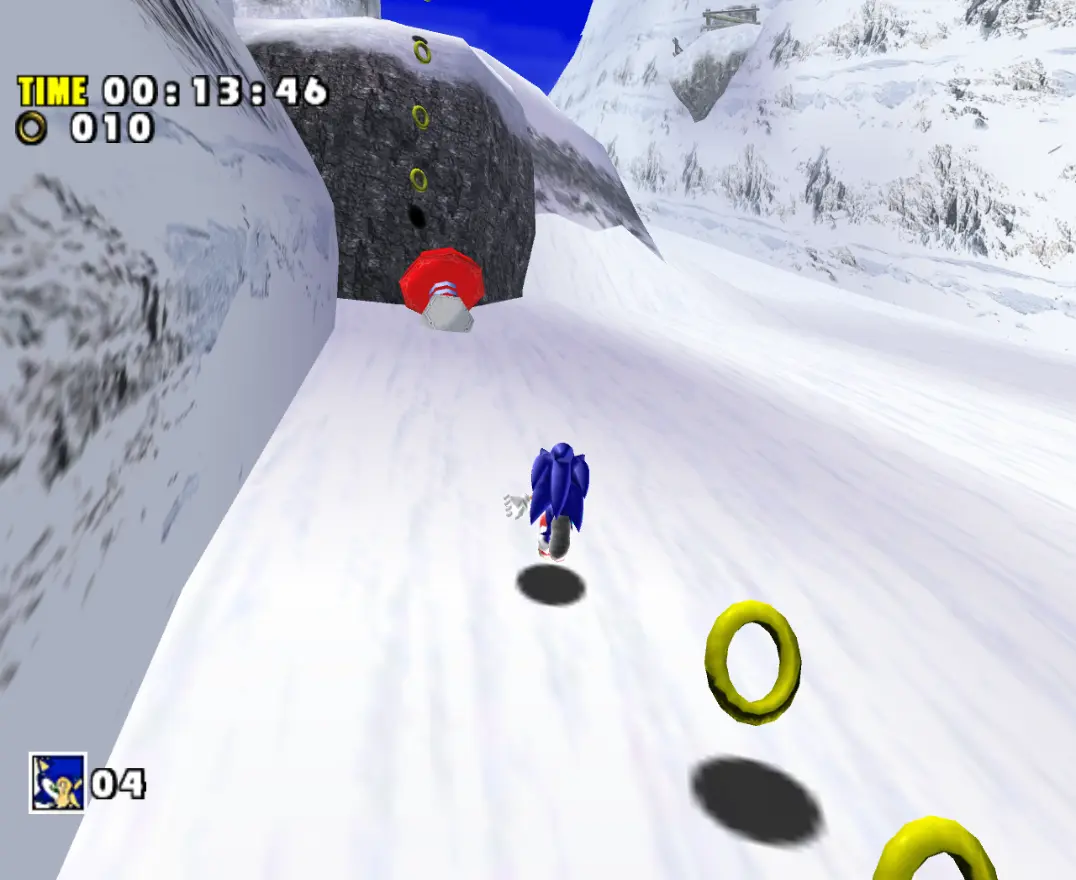
Ice CapSonic, Tails, BigIce caves ending in a snowboard run, a nod to Sonic 3’s Ice Cap.
Twinkle ParkSonic, Amy, BigA theme park in Station Square; its music also comes from Sonic 3D Blast.
Red MountainSonic, Knuckles, GammaThe mountains of Angel Island, ending inside a volcano.
Sky DeckSonic, Tails, KnucklesThe flight deck of the Egg Carrier, high above the sea.
Lost WorldSonic, KnucklesAncient ruins; the team rebuilt it dozens of times during development.
Final EggSonic, Amy, GammaEggman’s base, where the E-100 robots are built.
Hot ShelterAmy, Big, GammaDeep inside the Egg Carrier, the longest stage and the only one Sonic never plays.
Sky ChaseSub-game · Sonic, TailsTwo rail-shooter levels aboard the Tornado and Tornado 2, in the spirit of Panzer Dragoon.
Sand HillSub-game · Tails (Sonic in Trial)Sandboarding, inspired by sandboarders Sonic Team saw in Ica, Peru.
Twinkle CircuitSub-game · everyoneA three-lap kart race, open to every character once their story is done.
Amy also has her own sub-game on the Egg Carrier, Hedgehog Hammer, which is the key to her upgrades.
In comics, TV & other media
Sonic Adventure was retold in comics on both sides of the Atlantic and on television. More in Sonic in other movies and media.
Sonic the Hedgehog #79–84 and Sonic Super Special #13Archie Comics, US · 2000A seven-issue adaptation that fitted the game into the Saturday-morning world of the comics, explaining Amy’s new look and hiding Station Square beneath Mobius. It was meant to run across three titles until the Knuckles series was cancelled.
Sonic the Comic #175–184Fleetway, UK · 2000A loose, ten-issue retelling by returning writer Nigel Kitching, in which Chaos is recast as a renegade from the Drakon Empire, warped by the Emeralds’ power. It was the comic’s last original story before it switched to reprints.
Sonic X, episodes 27–32TMS Entertainment, anime · 2003A six-part adaptation running from The Beginning of the Disaster to The Scream of Perfect Chaos, the first game the show adapted. Cream and Chris join the story, and Amy’s Flicky gets a name, Lily.
Sonic UndergroundDIC Entertainment, TV · 1999Commissioned partly to help promote the game in the West.
Sonic the Hedgehog: The MovieStudio Pierrot OVA · US release 1999The American release of the 1996 anime was timed to coincide with Sonic Adventure’s Western launch.
Sonic Adventure “Digi-LOG Conversation”Soundtrack · January 1999The two-disc Japanese soundtrack, reissued in 2011 for Sonic’s 20th anniversary and pressed on vinyl by Brave Wave in 2018.
Characters
The biggest cast in a Sonic game at the time, redesigned by Yuji Uekawa: taller, leaner and, in Sonic’s case, green-eyed. Six heroes are playable, each with a story of their own.
Character
Who they are
In this game
Stats & abilities
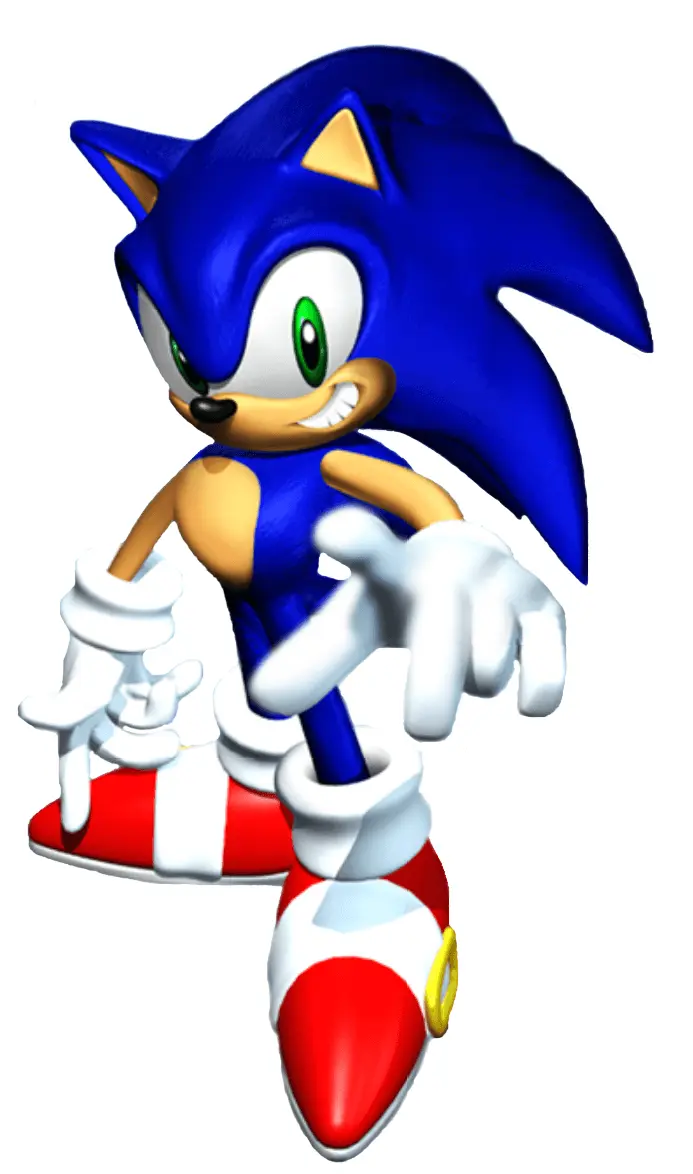
Sonic the HedgehogPlayable · voice: Ryan Drummond (EN), Jun’ichi Kanemaru (JP)
The hero, now taller, slimmer and longer-quilled, with green eyes in a nod to Green Hill.
On holiday in Station Square when Chaos appears. Plays ten of the eleven stages and has the longest story.
Homing Attack (jump twice)
Spin Dash
Light Speed Dash along trails of rings, with the Light Speed Shoes found in the Station Square sewers
Three upgrades in all, two of them essential
Super Sonic in the Last Story
Miles “Tails” ProwerPlayable · voice: Corey Bringas (EN)
Sonic’s best friend and the team’s engineer.
Races Sonic, and Eggman, through five stages, and saves Station Square from a missile on his own.
Flies and swims
Tail attack
Upgrades of his own in the Adventure Fields
Sandboards through Sand Hill
Knuckles the EchidnaPlayable · voice: Michael McGaharn (EN)
Guardian of the Master Emerald and the last of his tribe.
Hunts the shards of the shattered Master Emerald through five stages and sees his ancestors’ past.
Glides, climbs and punches
Emerald radar and hint orbs
Two upgrades of his own
Three shards per stage, 15 in all, in different places each time
Amy RosePlayable · voice: Jennifer Douillard (EN)
Sonic’s self-appointed girlfriend, in a new outfit and with her hammer.
Protects a Flicky from the robot ZERO through three stages, and changes Gamma’s mind.
Piko Piko Hammer attacks
Hides from ZERO, for example inside a barrel
Two possible upgrades, won through the Hedgehog Hammer game
More puzzle-solving than the others
Big the CatNew · voice: Jon St. John (EN)
A giant, gentle cat who has lived in the Mystic Ruins jungle for years. He grew out of a fishing rod the team had already built into the game.
Fishes for his friend Froggy across four stages and the Egg Carrier.
Casts and reels a fishing rod
Life Belt (needed) to float and dive
Power Rod and four lures
E-102 GammaNew · voice: Steve Broadie (EN)
The second robot of Eggman’s E-100 series, built in Final Egg.
Turns against his creator after meeting Amy and frees the animals inside his brothers.
Lock-on laser: more targets, more time
The only character with a countdown timer
Wheel mode and hover over water
Upgrades: Jet Booster, Laser Blaster
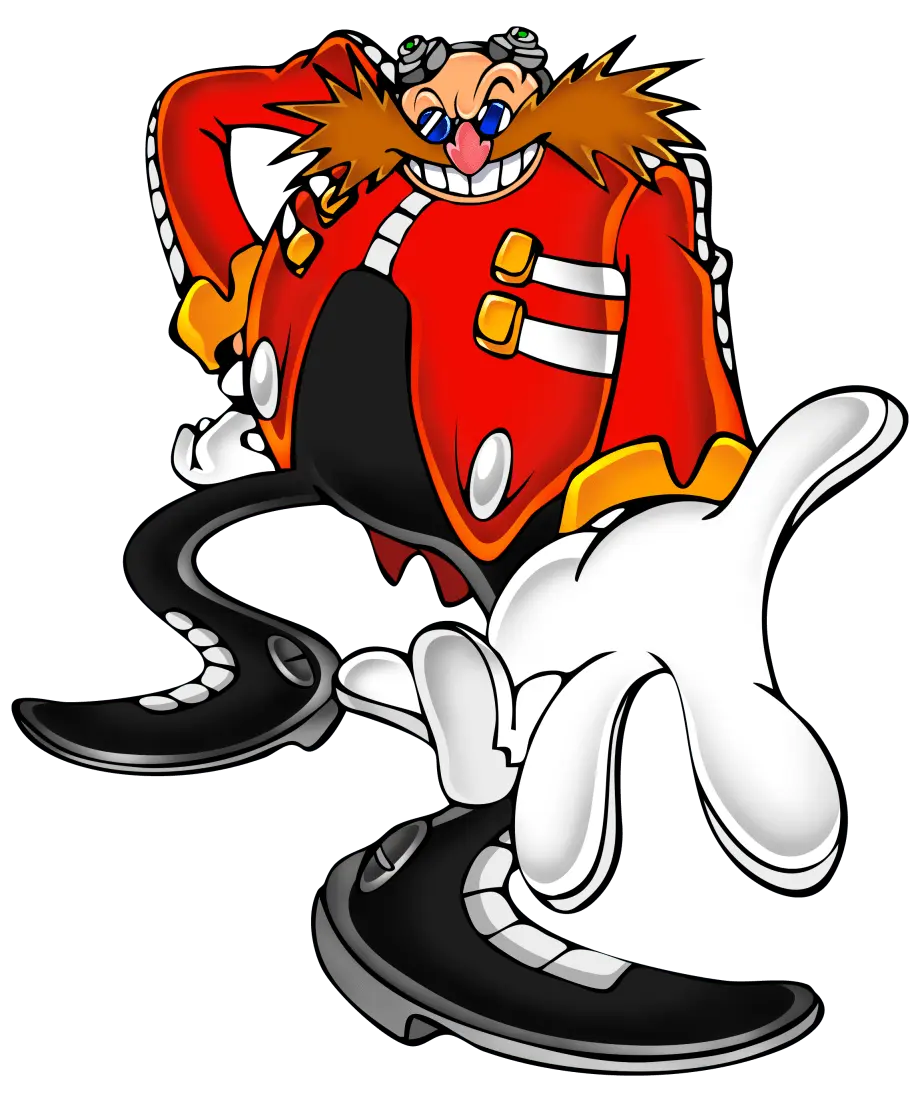
Dr. EggmanVillain · voice: Deem Bristow (EN)
Known as Robotnik in much of the West until now; this game introduced his Japanese name, Dr. Eggman, to Western players.
Frees Chaos to destroy Station Square and build his own city, Eggmanland, in its place, then loses control of it.
Egg Hornet, Egg Walker and Egg Viper
The Egg Carrier flying fortress
The E-100 robot series
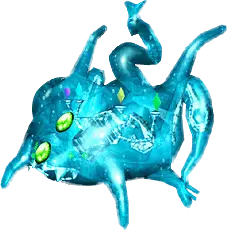
ChaosThe god of destruction
A water spirit that guarded the Chao, made of liquid and almost transparent; the idea dated back to Sonic X-treme.
Grows a new form with each Chaos Emerald, from Chaos 0 to Perfect Chaos.
Fought as Chaos 0, 2, 4 and 6, then Perfect Chaos
Fought by Sonic, Tails, Knuckles and Big
Tikal the EchidnaNew · guide
Pachacamac’s peace-loving daughter, named after the Maya ruins in Guatemala.
Sealed with Chaos; guides the player as the glowing hint orbs and shows the heroes the past.
Not playable in the main game; her voice guides the player through the hint orbs.
PachacamacNew · echidna chief
The warlike leader of Knuckles’ ancestors.
Tries to seize the Emeralds three thousand years ago and is destroyed by Chaos.
Appears only in the flashbacks.
ZEROE-100 Alpha
E-100 Alpha, the prototype of the E-100 series and, unlike its successors, not powered by an animal.
Chases Amy and her Flicky through every one of her stages and cannot be beaten until her final battle.
Goes into an overdrive mode if Amy hits it too often; later returns in Sonic Advance 2 as the Special Stage guardian.
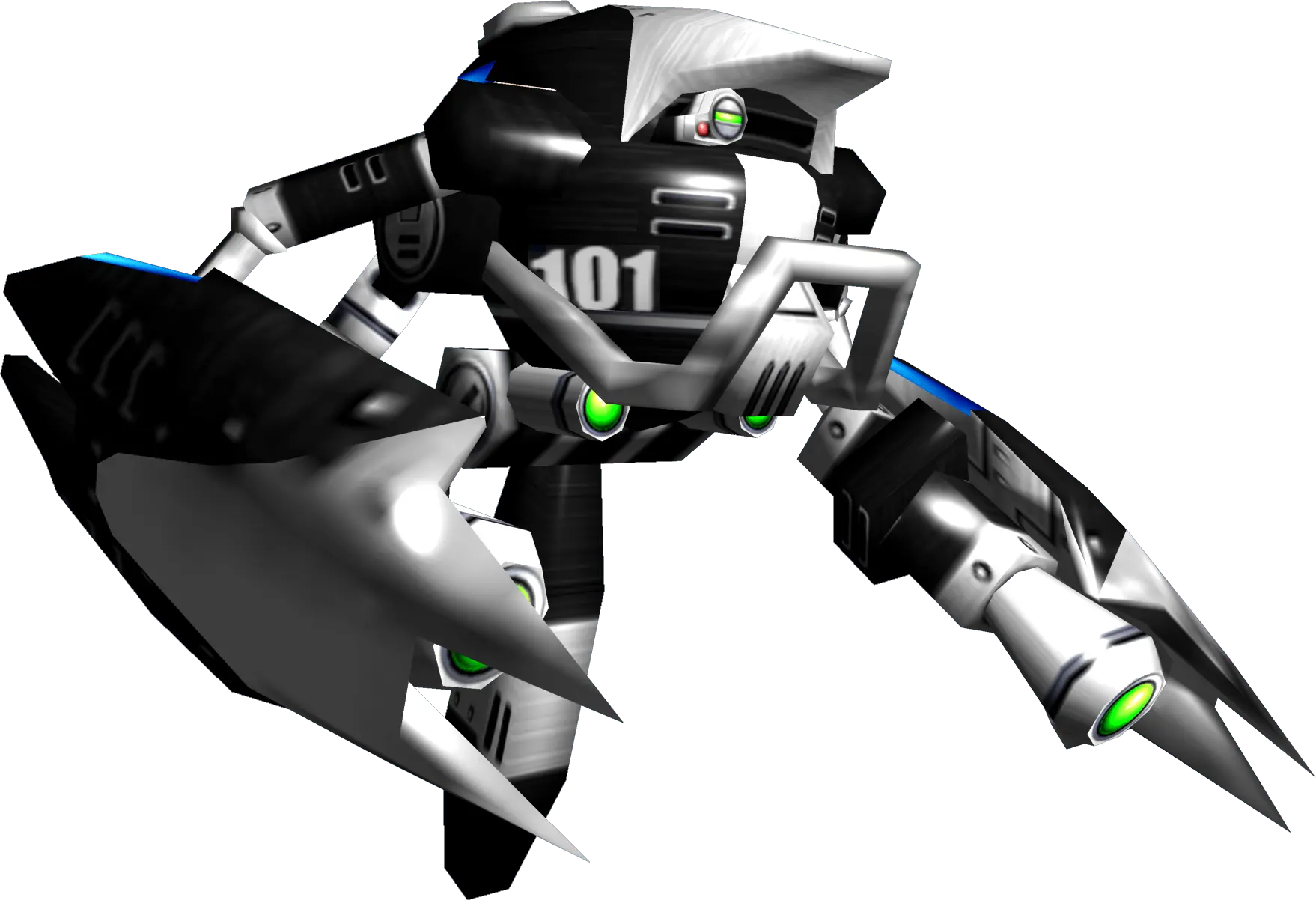
E-101 BetaE-100 series
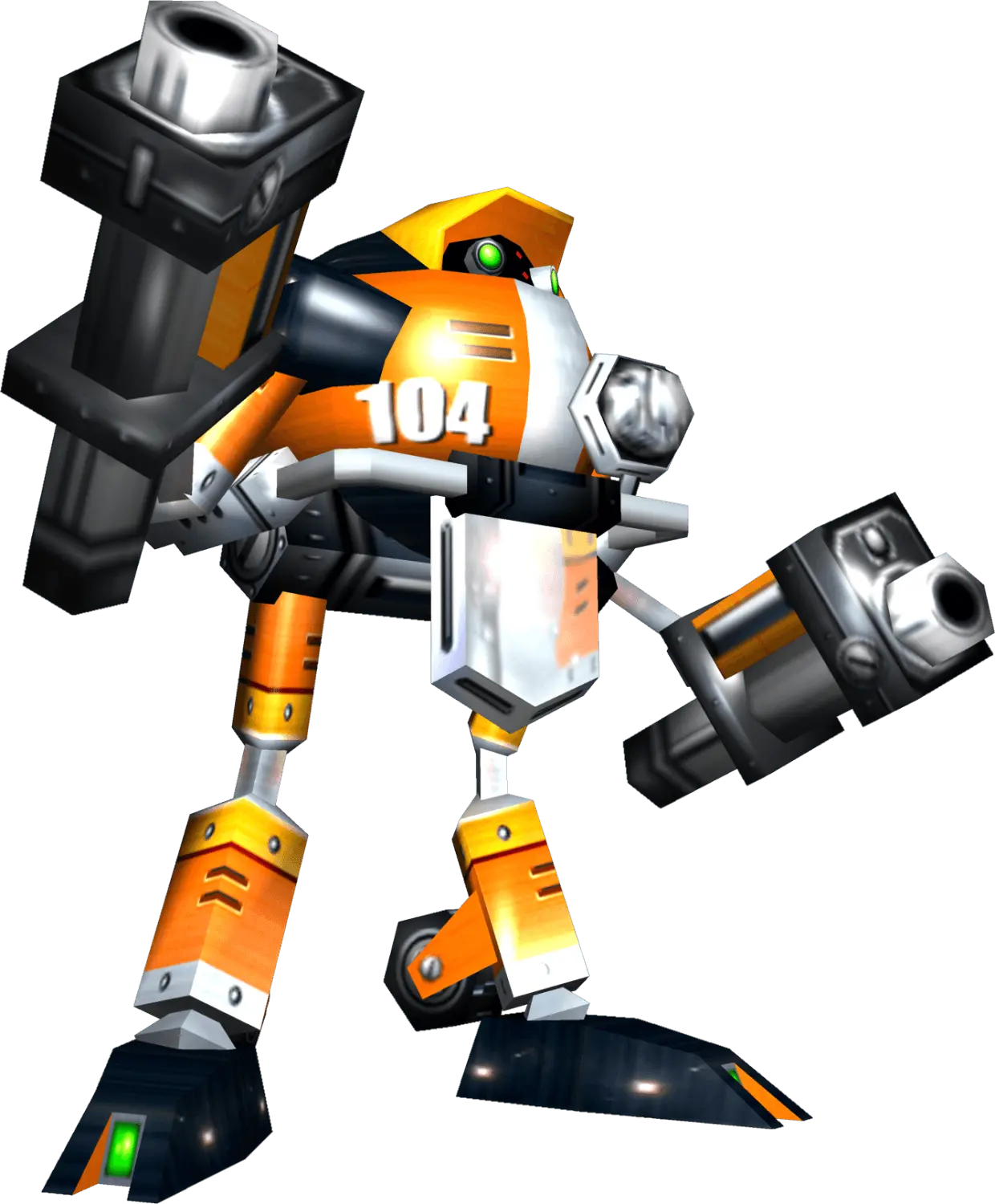
The first proper E-100 robot, Gamma’s older brother, armed with missile launchers.
Loses to Gamma in Final Egg, comes back rebuilt and is Gamma’s last opponent.
Starts the game as Gamma’s sparring partner.
FroggyBig’s best friend
A frog from the Mystic Ruins.
Picks up Chaos’ tail and a Chaos Emerald, sending Big on his journey.
Not playable; caught by Big at the end of his story.
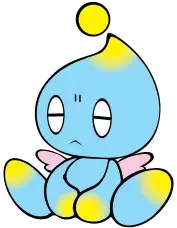
ChaoNew · virtual pets
Small, gentle creatures that lived at the Master Emerald shrine.
Raised in the Chao Gardens; their peaceful life is what finally calms Chaos.
Absorb the stats of animals you give them
Race in the Station Square garden
Can be taken out on the VMU in Chao Adventure
Bosses
Bosses come at fixed points in each story rather than at the end of every stage. Chaos and Eggman get most of the fights; Gamma takes on his own family.
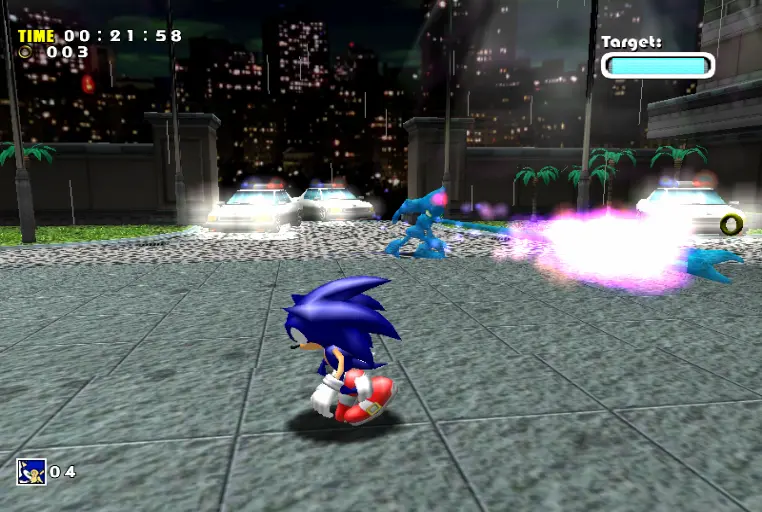
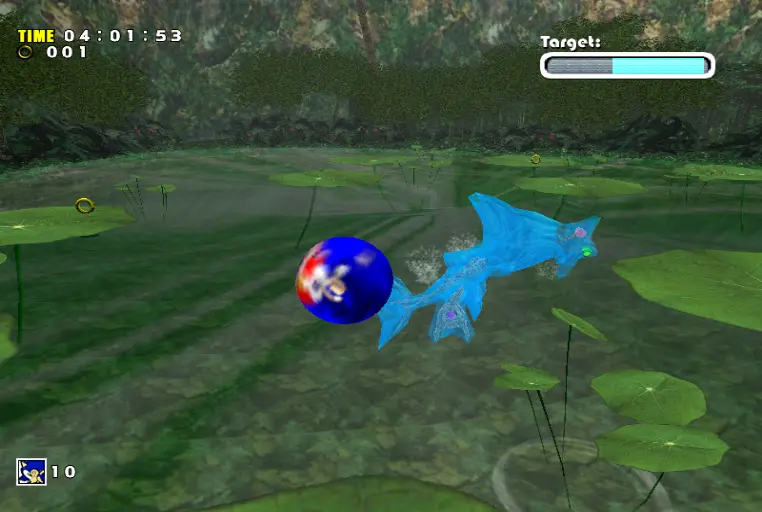
Chaos 0Station Square · SonicThe first fight, outside City Hall.
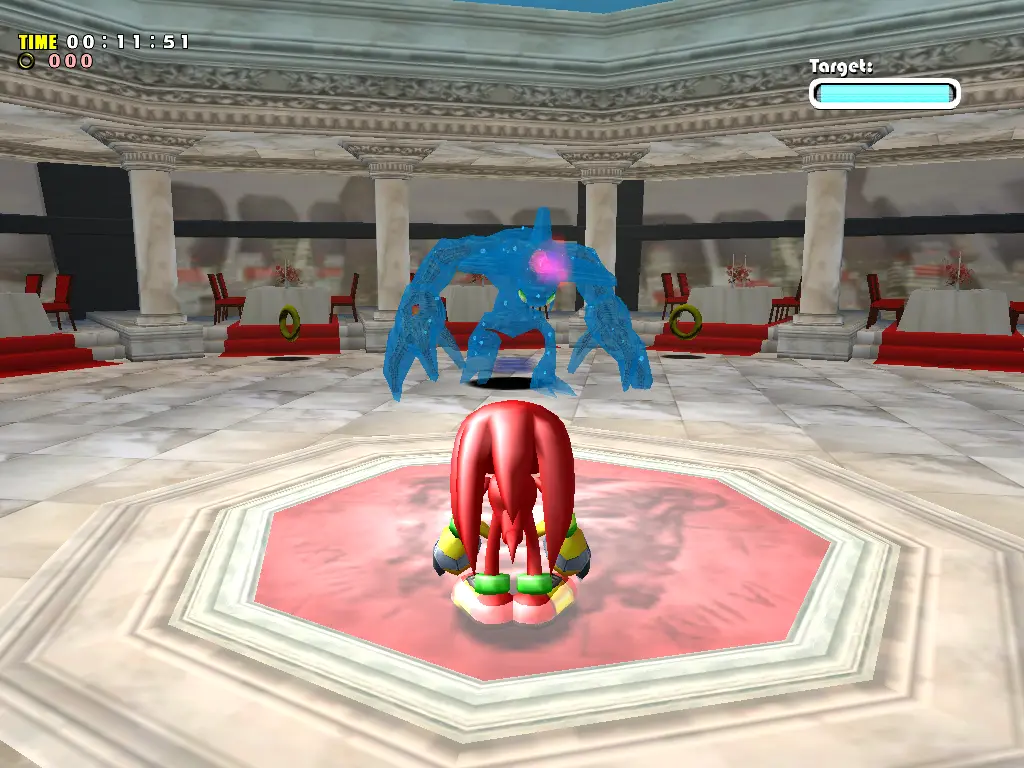
Chaos 2Station Square hotel · KnucklesKnuckles’ first boss, after Eggman lures him with a fake shard.
Egg HornetSonic, TailsThe first battle with Eggman himself.
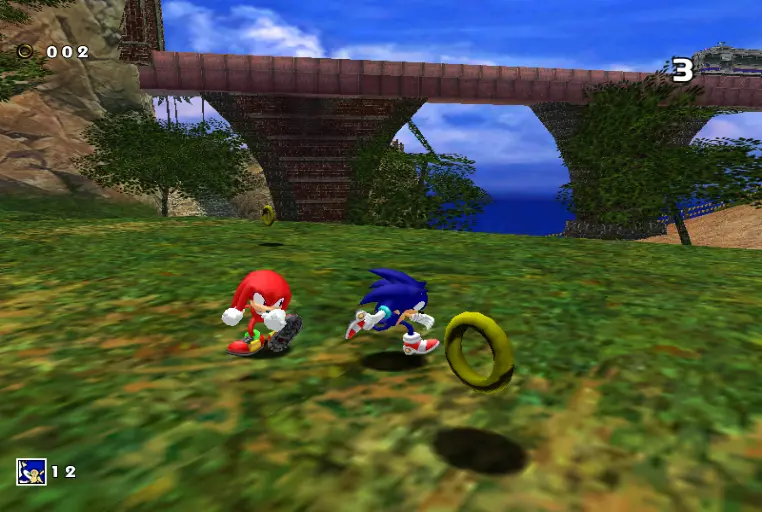
Sonic vs KnucklesSonic, KnucklesThe rivals clash, thanks to Eggman.
Chaos 4Sonic, Tails, KnucklesFought by all three of the main heroes.
Chaos 6Big, Sonic, KnucklesBig’s only boss; Sonic and Knuckles fight it too.
ZEROAmyAmy’s final battle.
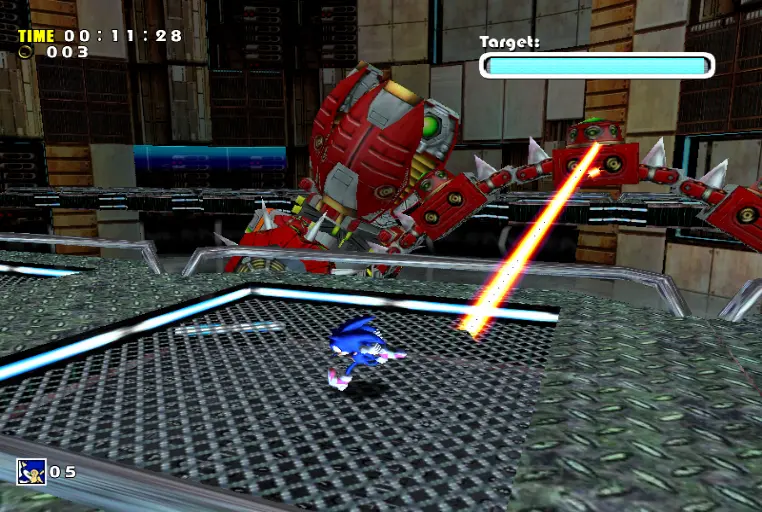
E-101 BetaFinal Egg · GammaGamma’s first test.
E-103 DeltaGammaWaits at the end of one of Gamma’s last three stages.
E-104 EpsilonRed Mountain · GammaTracked down by Gamma in Red Mountain.
E-105 ZetaGammaThe last brother before the rebuilt Beta.
Egg WalkerAfter Speed Highway · TailsTails’ final boss.
Egg ViperAfter Final Egg · SonicSonic’s final boss.
Perfect ChaosStation Square · Super SonicThe final battle, set to Open Your Heart.
The people who made it
Key credits, as listed by Sega Retro, with what Wikipedia’s cited sources say about their roles.
Takashi IizukaDirectorPitched a story-driven, role-playing-style Sonic in 1996 and directed the game.
Yuji NakaProducerSonic’s co-creator, who insisted that Sonic Team make the first 3D Sonic.
Yuji UekawaCharacter designerCreated the modern look of Sonic and his friends.
Kazuyuki HoshinoArt directorFelt Sonic had become outdated during the Saturn years and helped reinvent him.
Akinori NishiyamaScenario writerWrote the scenario and directed the story events.
Tetsu KatanoMain programmerLed the programming.
Jun SenoueSound directorHis first job as sound director; brought rock guitar to Sonic and met Johnny Gioeli, his future Crush 40 partner.
Naoto OhshimaStory event coordinatorSonic’s original designer, here producing the CG movies and coordinating the story events.
How it was made
Our original page had no history section. This one combines Wikipedia’s cited development history, Sonic Retro’s notes on the game’s technology and revisions, and the staff list in Sega Retro’s production credits.
Curtain up in Tokyo
Sega showed Sonic Adventure to the public on 22 August 1998 at the Tokyo International Forum, and the night ended with Open Your Heart played on stage. A lot was riding on it. Sonic had sat out the Saturn years without an original platformer after Sonic X-treme fell apart in 1996, and the Dreamcast needed its mascot.
Sonic Team felt it too. Takashi Iizuka, one of the Nights into Dreams designers, thought the fans had been let down, and art director Kazuyuki Hoshino worried that Sonic had begun to look old-fashioned. X-treme’s collapse even had a Sonic Team angle: Yuji Naka had refused the American team the Nights engine, convinced that a 3D Sonic was a job for his own studio.
Twenty people and a Saturn
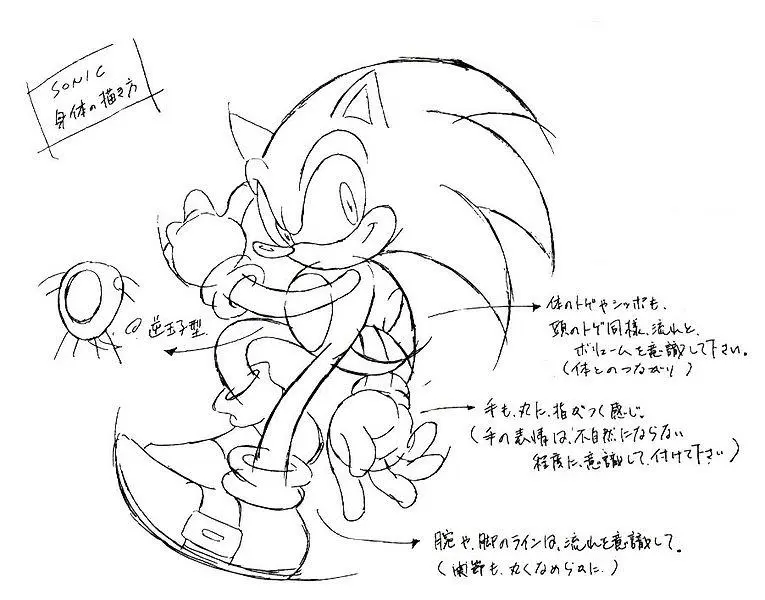
Concept sketch of the new Sonic.
It began as Iizuka’s pitch, in August 1996, for a Sonic with the storytelling and exploring of a role-playing game; Sonic Retro records that it was referred to as Sonic RPG, with the goal of an adventure feel and far more weight on characters and plot. About 20 staff started on the Saturn in April 1997, and the first prototype ran on the Nights engine.
The Saturn was not up to it. When word came that the Dreamcast was nearly ready, the team switched in July 1997, and its Saturn experiments surfaced later as a bonus in the compilation Sonic Jam. Building for unfinished hardware had one advantage: Iizuka has said he lobbied for the Dreamcast to have more memory with this game in mind.
The crew
The team swelled to 60 within ten months and passed a hundred before the end. Sega Retro’s credits name Iizuka as director and Naka as producer, with Hoshino on art direction, Tetsu Katano as main programmer, Akinori Nishiyama writing the scenario and directing the story events, Naoto Ohshima coordinating them and Manabu Kusunoki directing the CG movies. The deadline was fixed from the start: Japan in December 1998, with any remaining problems to be patched up afterwards.
Real places, redrawn heroes
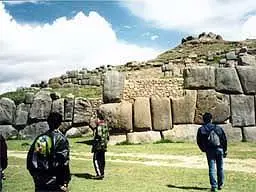
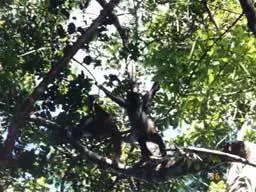
A photograph from Sonic Team’s research trip.
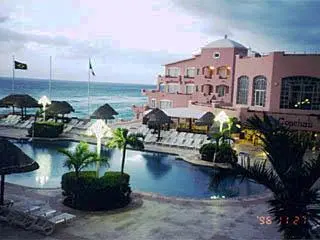
For the scenery, core staff took cameras to Mexico, Guatemala and Peru, and their shots of jungle, temples and ruins went into the game as textures; Sonic Retro names Emerald Coast and Lost World as stages based on real locations. The Maya ruins at Tikal and Machu Picchu made the strongest impression, Tikal gave the echidna princess her name, and sandboarders the team saw in Ica, Peru, turned into Tails’ Sand Hill.
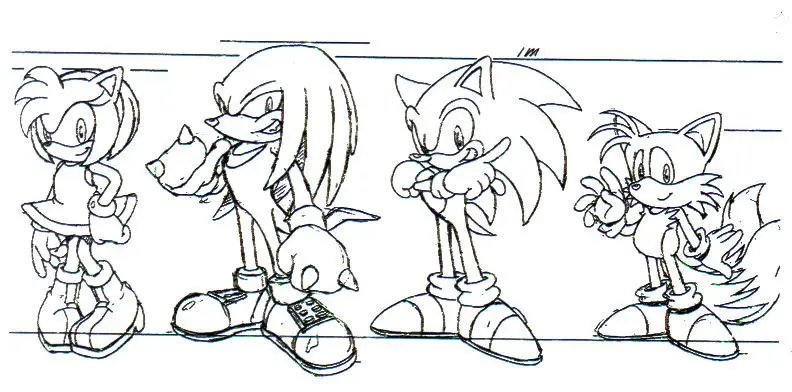
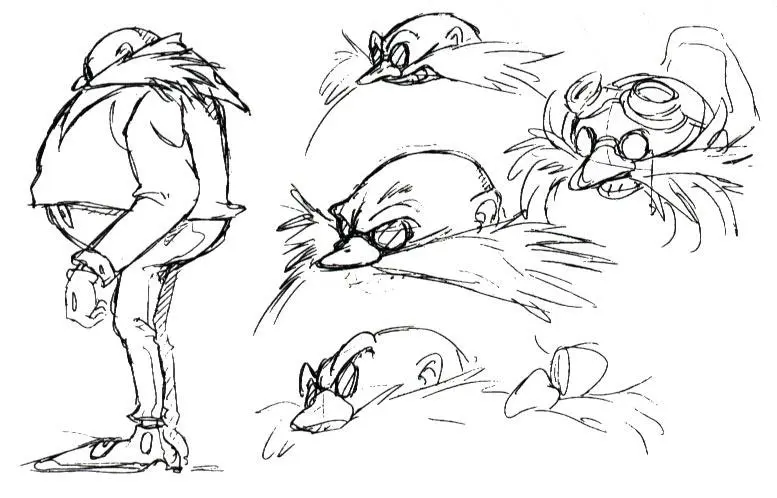
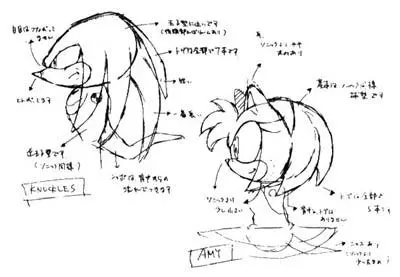
The cast needed the same treatment. Stubby Mega Drive bodies with outsized heads read poorly from a free 3D camera, so Yuji Uekawa redrew everyone, looking to Disney and Looney Tunes for a sharper, more Western, comic-book attitude. His Sonic is taller and leaner, with longer quills, a deeper blue and green eyes.
Newcomers
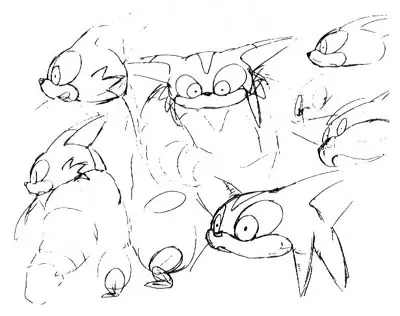
Concept art of Big the Cat.
Some of the new faces came from practical decisions. Big is there because a fishing rod had already been built into the game with nothing to do, and E-102 Gamma gave shoot-’em-up fans something to play; neither was meant to carry much of the adventure, which is why their stories are brief. Amy became playable in a Sonic platformer for the first time, hiding and running instead of fighting, and Chaos was an X-treme idea brought back to life: Iizuka wanted a watery, see-through villain that older consoles could never have drawn.
Sonic speaks
No earlier Sonic game had used voice acting on anything like this scale. For the Japanese Sonic, the team passed over anime specialists and chose Jun’ichi Kanemaru; the English cast, recorded once Sonic Team USA existed, was led by Ryan Drummond. The script also settled the villain’s name for Western players, because Iizuka had Sonic throw “Eggman” at Robotnik as an insult when they first meet.
Guitars and vocal themes
Jun Senoue ran the sound for the first time and swapped the electronic pop of the Mega Drive era for live, guitar-driven rock, with a vocal theme for each hero. Johnny Gioeli of Hardline sang Open Your Heart, which comes back in the final battle, and his partnership with Senoue became the band Crush 40. Japanese players heard something new to them as well: two of Senoue’s pieces from the Mega Drive Sonic 3D Blast, never released in Japan, were rearranged for Windy Valley and Twinkle Park.
A Dreamcast showpiece
The game was meant to sell the hardware, and Sonic Retro notes one boast in particular: the real-time cutscene before Sonic’s first stage throws up to 50,000 polygons at the screen in a single scene, against roughly 15,000 for Quake III Arena at the time.
Fixed up for the West
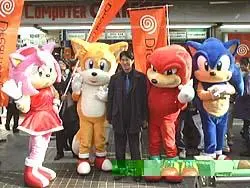
The Japanese launch event.
Japan got the game on 23 December 1998, bugs and all. Several staff then moved to Sega of America to found Sonic Team USA, and nine months of fixing and translating followed; Sonic Retro lists some of the changes, such as the neon cowgirl sign removed from Casinopolis and the Burger Man statue that could no longer be stood on.
Americans could try it early through Hollywood Video, which rented out Dreamcasts with a Limited Edition of the game from 15 July 1999. The full release followed on 9 September 1999 in North America, where it launched with the console, and on 14 October in Europe, with English or Japanese voices, five text languages and online extras. Japan received the same build as Sonic Adventure International.
Firsts: what this game introduced
Sonic Adventure reinvented the series, and much of what it introduced is still around.
1Sonic in full 3DThe first main Sonic game built entirely in 3D.
2The Homing AttackJump twice to lock on to the nearest enemy: Sonic Team’s answer to how you hit things in 3D, and a fixture ever since.
3Voice actingThe first Sonic game with a fully voiced story, introducing Ryan Drummond and Jun’ichi Kanemaru as Sonic.
4The ChaoDebut of the Chao and Chao Gardens, built on the A-Life from Nights and playable on the go through the VMU.
5Modern designsYuji Uekawa’s redesign of the cast, green eyes and all.
6New charactersFirst appearances of Big the Cat, E-102 Gamma, Tikal, Chaos and the E-100 series.
7Growing move setsThe first game where Sonic and friends gain new abilities through upgrades, such as the Light Speed Dash.
8Hub worldsAdventure Fields connect the stages, inspired by The Legend of Zelda.
Cheats & secrets
Our original page had no secrets section, so this one is new. Sonic Adventure has no classic button codes; its extras are earned.
Super Sonic and the Last Story
Finish all six character stories and a seventh, Super Sonic, appears on the character select screen.
Emblems
There are 130 to collect: three for each action stage per character, two per sub-game, one for each story, five for the Chao races and four hidden in each Adventure Field. On the Dreamcast they are just for bragging rights; in Sonic Adventure DX, all 130 unlock Metal Sonic for Trial mode.
Trial mode extras
Trial mode lets you replay any stage, boss or sub-game you have reached, and gives Sonic a go at Sand Hill, which he never plays in his story.
Sonic Adventure DX bonuses
The GameCube and PC version adds 60 missions and unlocks the 12 Game Gear Sonic games as you collect Emblems and complete missions.
Checked against Sonic Retro and Wikipedia, November 2026.
Glitches, exploits and oddities
Sonic Adventure was built against the clock, and it shows. Even its admirers call it buggy; Sonic Retro has catalogued the details.
Falling through Emerald Coast
Emerald Coast.Screenshot via Sonic Retro
After the cave section of Emerald Coast, keep to the right-hand side of the screen as you head for the loop and Sonic can drop straight through the floor. It was never fixed.
The Hedgehog Hammer crash
Load Amy’s Hedgehog Hammer game with any other character, which takes a little hacking, and the game crashes, because it borrows Sonic’s object layout from an old test level.
Purple hint boxes
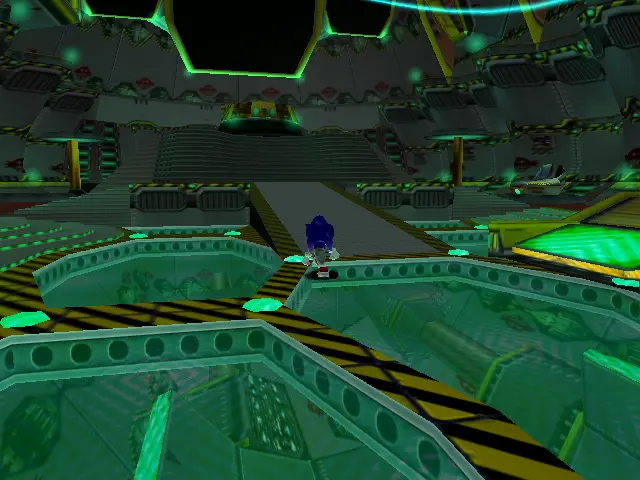
The hint boxes in the main hall of the Egg Carrier glow purple because of a quirk in the game’s palette-based lighting engine. Sonic Adventure DX fixed it.
Cut corners in the cutscenes
In the Egg Viper introduction a pose fires too early and overwrites Sonic’s animation; Sonic warps onto Tails’ plane after Red Mountain instead of jumping as he does in Tails’ story; and the special camera angles planned for the flashbacks never show because of a transition bug.
Changes for the West
The Japanese release let you stand on the Burger Man statue in Station Square and had a neon cowgirl sign in Casinopolis; both were removed when Sonic Team USA tidied the game up. After the US launch, a batch of discs from one factory would not load, and Sega swapped them through retailers.
Videos & media
Sega’s own trailer for the game, and a complete playthrough of the Dreamcast original.
The launch trailer from Sega’s official channel.
A complete Dreamcast playthrough of every story from FCPlaythroughs.
Trivia & facts
From Sonic Team’s research trip.Emerald Coast and Lost World were modelled on real places, and photographs Sonic Team took on its trip to Central and South America ended up in the textures.
Sonic Retro notes that the real-time cutscene before Sonic’s first stage pushes up to 50,000 polygons, far beyond typical PC games of 1999.
Tails has always been Miles in Japan, but Iizuka deliberately avoided the name so Western players would not be confused.
Amy’s story opens with her remembering how Sonic rescued her from Metal Sonic in Sonic CD.
In Europe, Sega and Reebok ran an online Sonic Speed Challenge from December 1999 to January 2000 on a special version of Emerald Coast, collecting pairs of Reebok trainers against the clock.
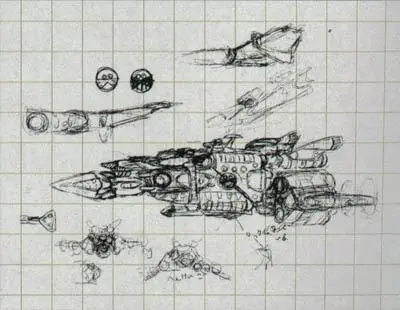
Egg Carrier concept art.A concept for Sonic Adventure 3 was eventually reworked into Sonic Unleashed (2008).
Big is often named the least popular character in the series, but he has kept turning up ever since.
Media & artwork
Box art, artwork, concept art and screenshots from Sonic Scene’s own galleries and Sonic Retro. Select any image to view it larger.
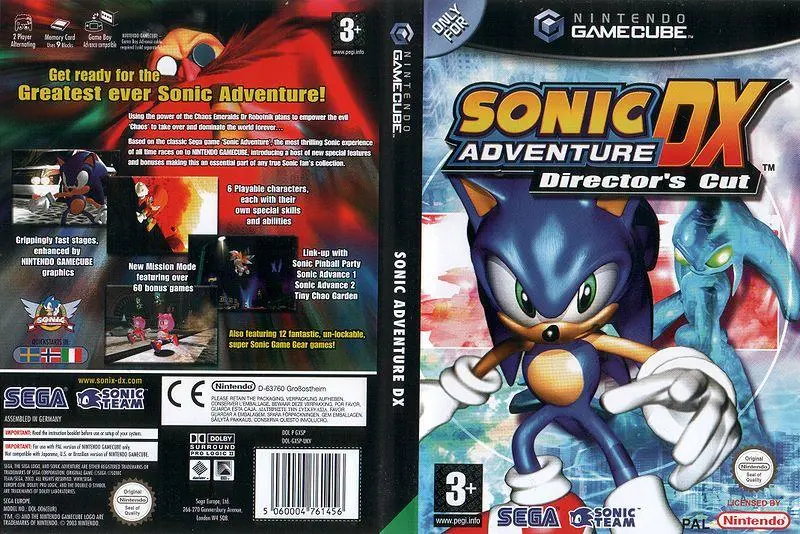
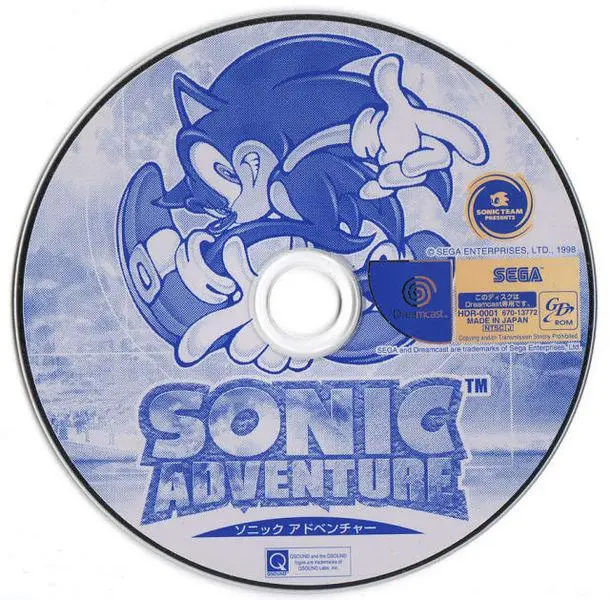
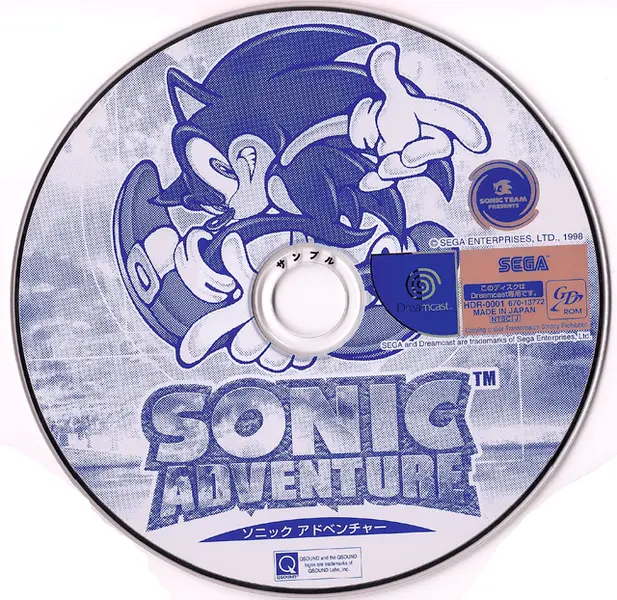
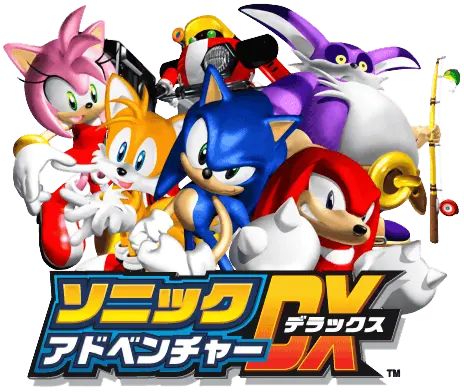
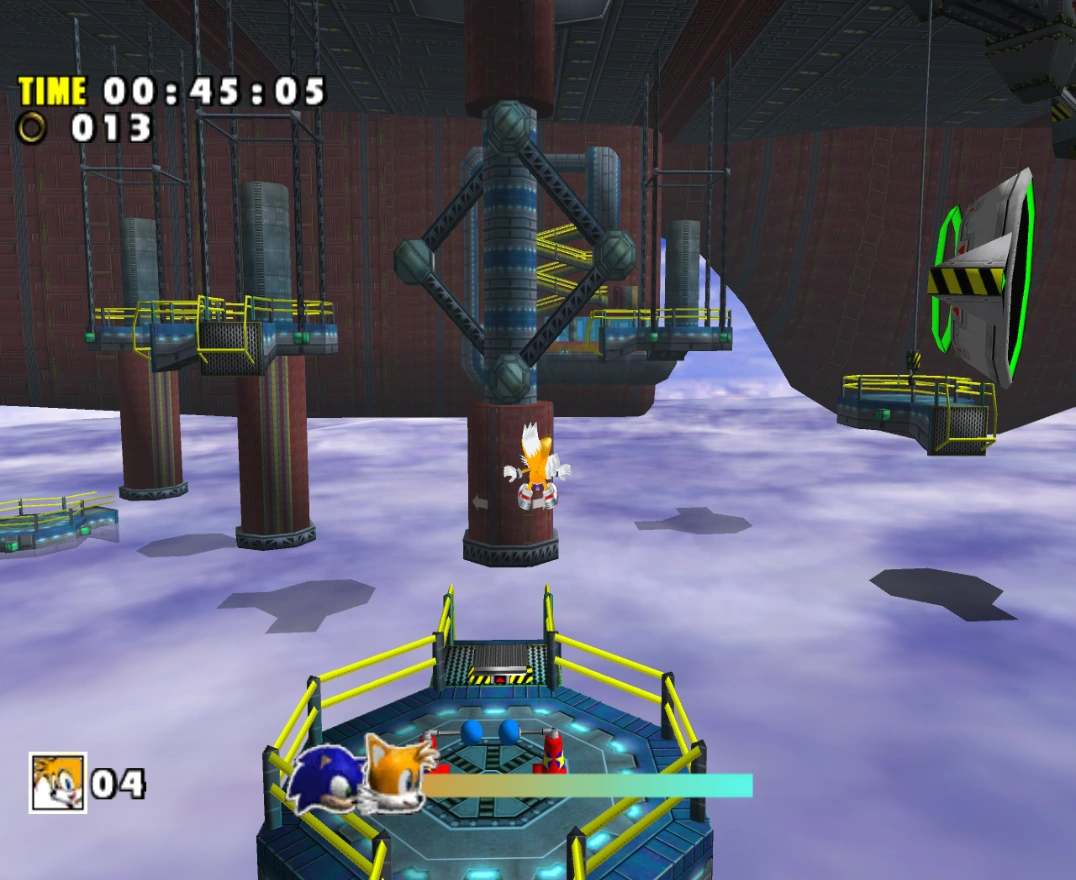
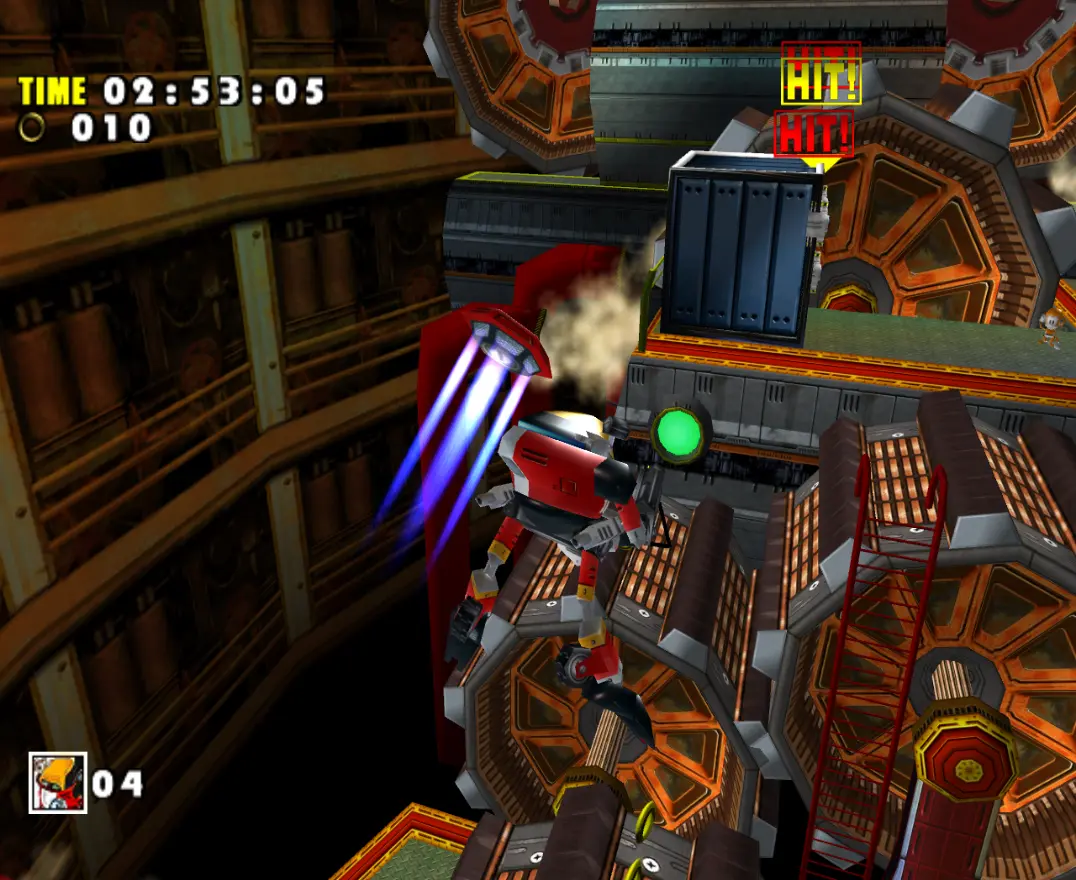
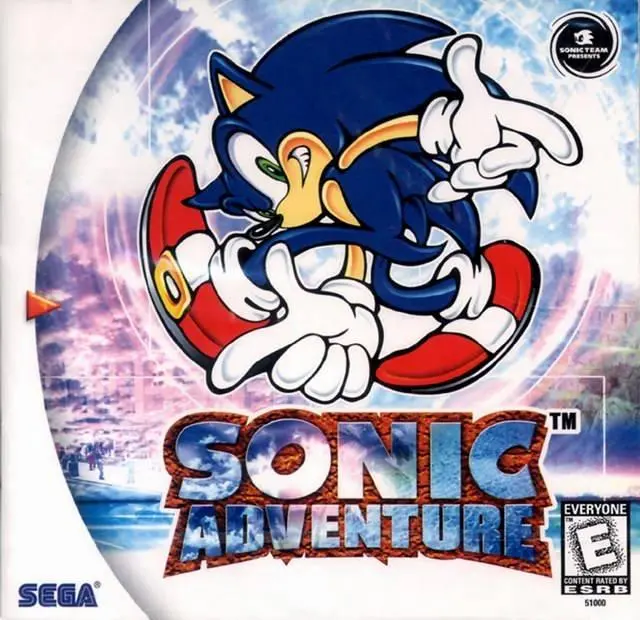
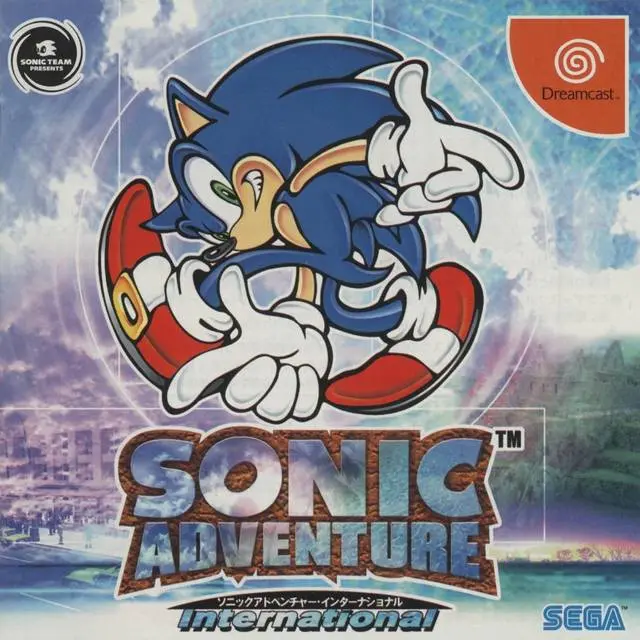
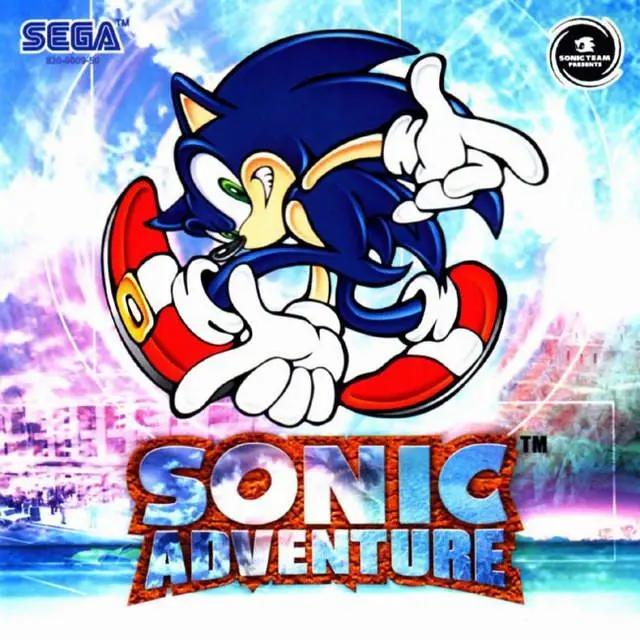
North American box.European box.Japanese box.Sonic Adventure DX, European GameCube box.The disc.An E3 trial disc.Sonic Adventure DX poster.The Sonic Adventure DX cast.Sonic.Dr. Eggman.A Chao.The echidna tribe.Character concepts.Eggman concept.Knuckles and Amy concepts.Tornado 2 concept.Casinopolis concept.Research trip photograph.The Mystic Ruins.Inside the Egg Carrier.The Master Emerald shrine.The Egg Carrier.Big fishing in Twinkle Park.Knuckles in Red Mountain.Tails in Sky Deck.Gamma in Hot Shelter.Chaos 0.Chaos 2.Chaos 4.Chaos 6.E-101 Beta.Sonic Adventure DX character select.Sonic Adventure DX.
Sonic Adventure set the template for Sonic’s 3D era: Uekawa’s designs, the Homing Attack, voiced stories and the Chao all stayed. A smaller team followed it with Sonic Adventure 2 in 2001, just as Sega was preparing to leave the hardware business.
Releases and re-releases
Dreamcast (Japan)23 December 1998 – ¥5,800.
Dreamcast (North America)9 September 1999 – A launch title, US$49.95; later a US$19.99 Sega All Stars budget release.
Dreamcast (Europe)14 October 1999 – UK £39.99.
Sonic Adventure International (Japan)14 October 1999 – The Western version, with its fixes and online features.
Sonic Adventure DX: Director’s Cut (GameCube)June 2003 – Remodelled characters, 60 missions, Game Gear games, Game Boy Advance link-up.
Sonic Adventure DX (PC)2003–2004 – Japan December 2003, Europe February 2004, North America September 2004.
Xbox 360 and PlayStation 3September 2010 – A download based on DX; its extra content sold separately.
PC (Steam)March 2011 – The same download version; also in the Dreamcast Collection (2011).
Where it went next
Sonic Generations rebuilt Speed Highway and the Perfect Chaos battle in 2011, and its 3DS version remade Emerald Coast, which had already been paid tribute in the first stage of the 2006 Sonic the Hedgehog. Chaos returned in Sonic Battle, Sonic Forces and Mario & Sonic at the Olympic Winter Games, and Gamma was playable in Sonic Battle. Sonic Team considered a Sonic Adventure 3, but its ideas were folded into Sonic Unleashed, and Iizuka has since said a straight remake would cost as much as a new game.
How it is remembered
It is regularly ranked among the best Sonic games and seen as a landmark for the series and for 3D platformers, with GamePro naming it the seventh-best platform game in 2009. The later versions fared worse: critics felt Sonic Adventure DX and the 2010 download were rough ports of a game that had aged badly, with an unstable frame rate and a troublesome camera.
Sales & reviews
Sales
Sega hoped to sell a million copies. By 4 August 2006 it had sold about 2.5 million, including 1.27 million in the United States and 440,000 in Japan, making it the best-selling Dreamcast game. In Europe 86,000 copies went in the first five days, and in the UK no Dreamcast launch game sold more; it went to number one on the chart covering every format.
2.5mCopies sold by August 2006
1.27mUS sales
440,000Japanese sales
90%Sega Retro average (56 reviews)
Reception and review scores
Period scores for the Dreamcast original, from Sega Retro’s review index, which links each one to a scan of the original page.
Computer and Video GamesUK · October 1999
5/5
GameProUS · October 1999
98%
Total ControlUK · February 1999 (import)
93%
Electronic Gaming MonthlyUS · October 1999
91%
Official Dreamcast MagazineUS · September 1999
90%
Official Dreamcast MagazineUK · 1999
90%
HyperAustralia · November 1999
90%
EdgeUK · February 1999 (import)
8/10
Game InformerUS · September 1999
75%
Next GenerationUS · October 1999
75%
The look of the game stopped critics in their tracks. IGN’s Brandon Justice called it the best-looking platformer yet, GameSpot rated only Soulcalibur’s graphics higher, and Edge saw it as the perfect showcase for the console. Computer and Video Games went further, ranking it among the best games ever made and wondering whether it could put Sega back on top.
The faults were just as widely noted. The automatic camera wrestled with the player, glitches let characters fall through scenery, and the voice acting split opinion, from fitting to, in IGN’s words, a joke. Comparisons with Super Mario 64 were inevitable; Edge thought Sonic held its own, while AllGame found it more linear and less ambitious.
Honours
Blockbuster Entertainment AwardsFavorite Sega Dreamcast GameWinner.
Every fact on this page was checked against the sources below. Sonic Retro and Sega Retro pages were read through Wayback Machine copies from late 2024 and 2025, because both live sites show a bot check; each Sonic Retro link opens the nearest archived copy. Magazine scores come from Sega Retro’s review index, which links each score to a scan of the original page.
To provide the best experiences, we use technologies like cookies to store and/or access device information. Consenting to these technologies will allow us to process data such as browsing behavior or unique IDs on this site. Not consenting or withdrawing consent, may adversely affect certain features and functions.
Functional
Always active
The technical storage or access is strictly necessary for the legitimate purpose of enabling the use of a specific service explicitly requested by the subscriber or user, or for the sole purpose of carrying out the transmission of a communication over an electronic communications network.
Preferences
The technical storage or access is necessary for the legitimate purpose of storing preferences that are not requested by the subscriber or user.
Statistics
The technical storage or access that is used exclusively for statistical purposes.The technical storage or access that is used exclusively for anonymous statistical purposes. Without a subpoena, voluntary compliance on the part of your Internet Service Provider, or additional records from a third party, information stored or retrieved for this purpose alone cannot usually be used to identify you.
Marketing
The technical storage or access is required to create user profiles to send advertising, or to track the user on a website or across several websites for similar marketing purposes.

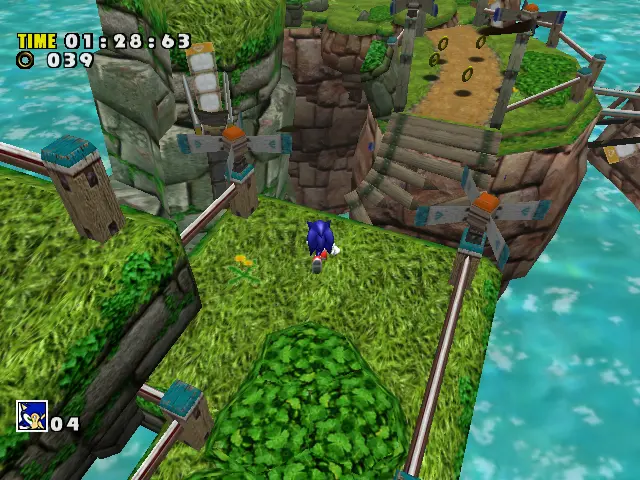 Windy ValleySonic, Tails, GammaDizzying heights and giant fans; its music is a rearranged Sonic 3D Blast tune.
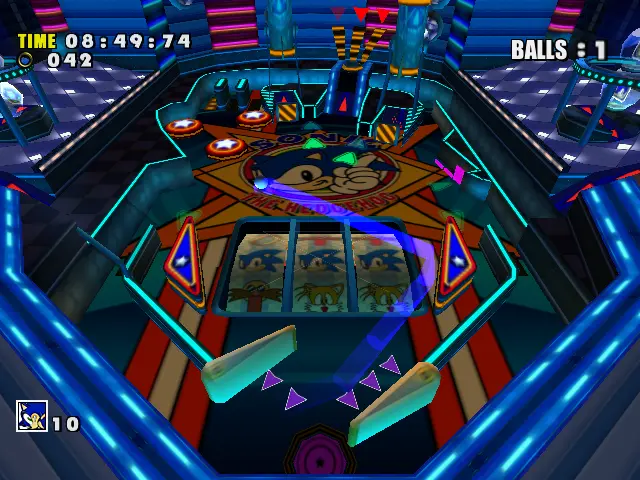 CasinopolisSonic, Tails, KnucklesA casino modelled on Sonic 2’s Casino Night, with a solid gold Sonic statue and pinball.
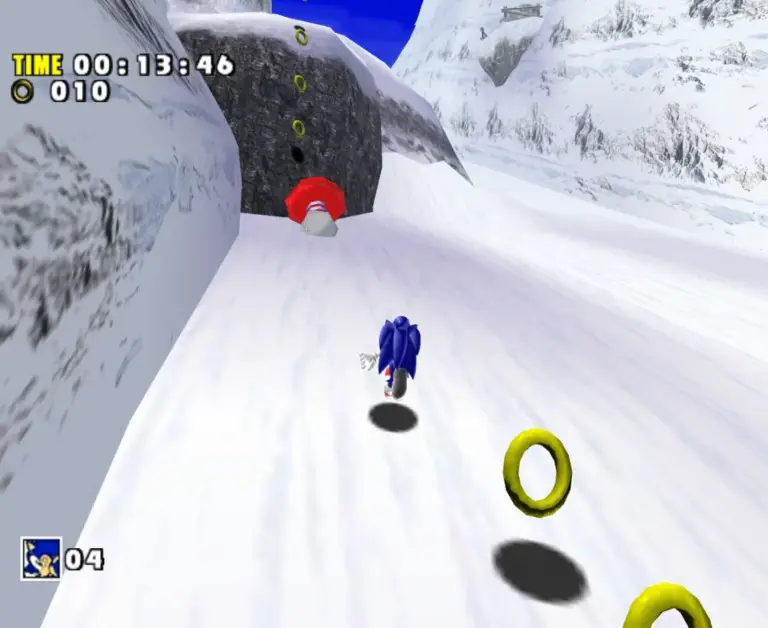 Ice CapSonic, Tails, BigIce caves ending in a snowboard run, a nod to Sonic 3’s Ice Cap.
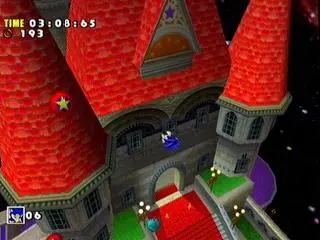 Twinkle ParkSonic, Amy, BigA theme park in Station Square; its music also comes from Sonic 3D Blast.
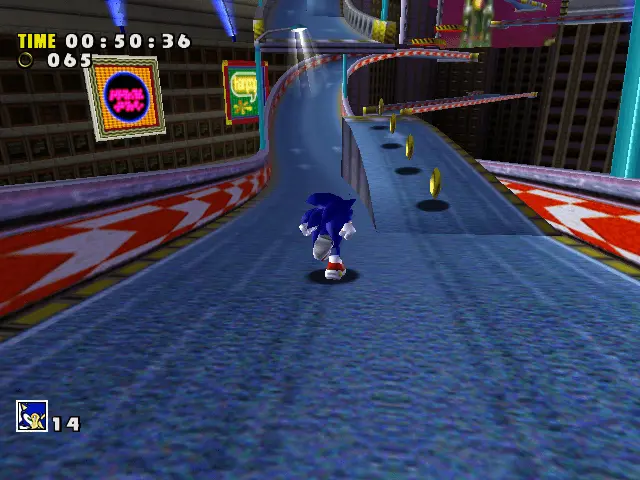 Speed HighwaySonic, Tails, KnucklesStation Square’s skyscrapers and roads; Tails races Eggman here.
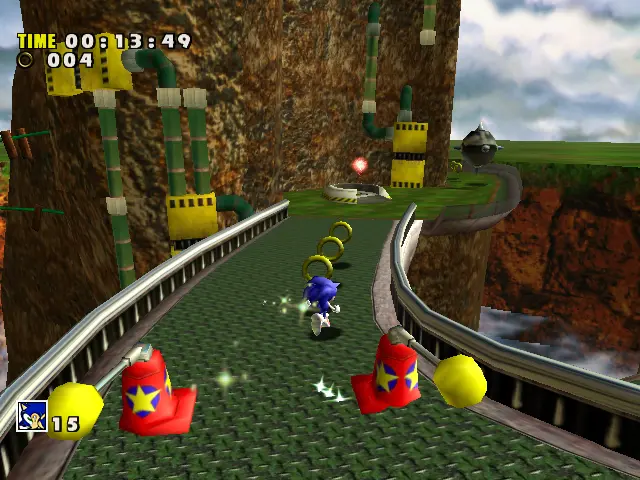 Red MountainSonic, Knuckles, GammaThe mountains of Angel Island, ending inside a volcano.
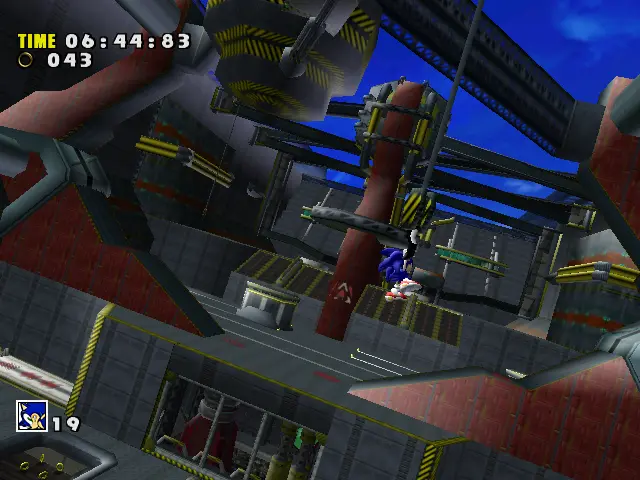 Sky DeckSonic, Tails, KnucklesThe flight deck of the Egg Carrier, high above the sea.
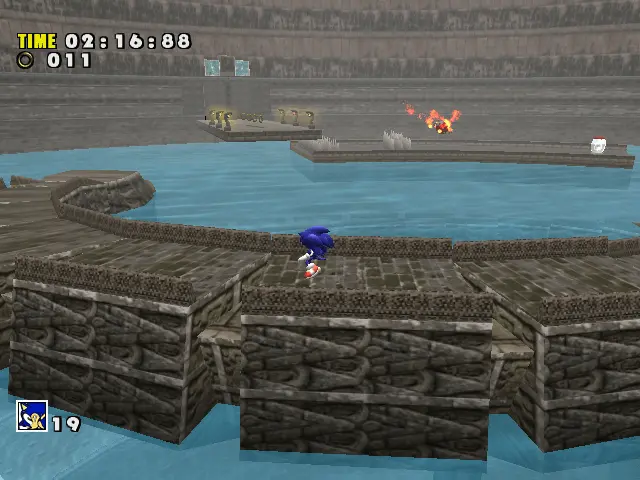 Lost WorldSonic, KnucklesAncient ruins; the team rebuilt it dozens of times during development.
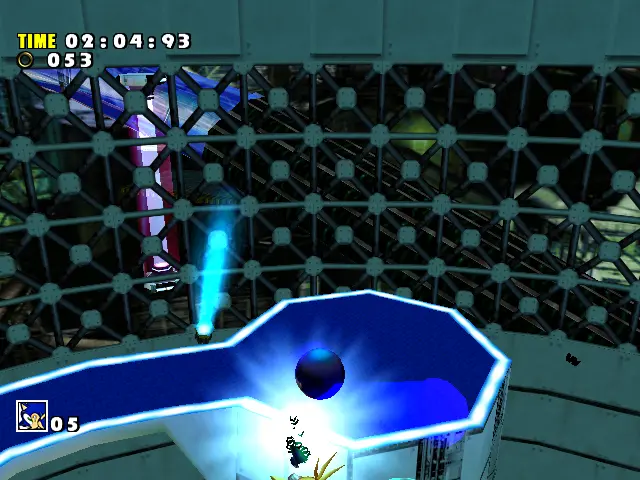 Final EggSonic, Amy, GammaEggman’s base, where the E-100 robots are built.
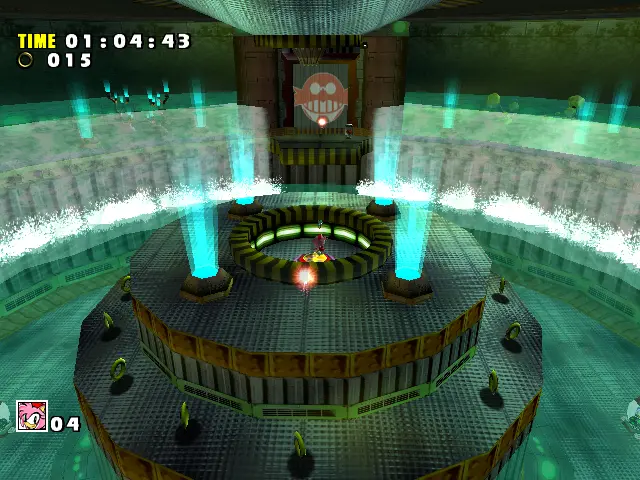 Hot ShelterAmy, Big, GammaDeep inside the Egg Carrier, the longest stage and the only one Sonic never plays.
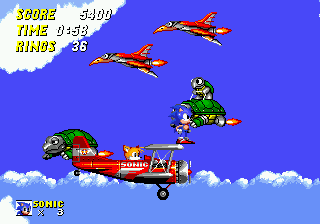 Sky ChaseSub-game · Sonic, TailsTwo rail-shooter levels aboard the Tornado and Tornado 2, in the spirit of Panzer Dragoon.
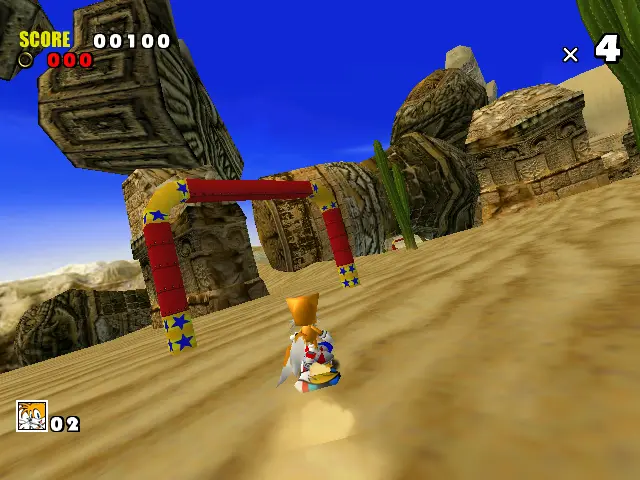 Sand HillSub-game · Tails (Sonic in Trial)Sandboarding, inspired by sandboarders Sonic Team saw in Ica, Peru.
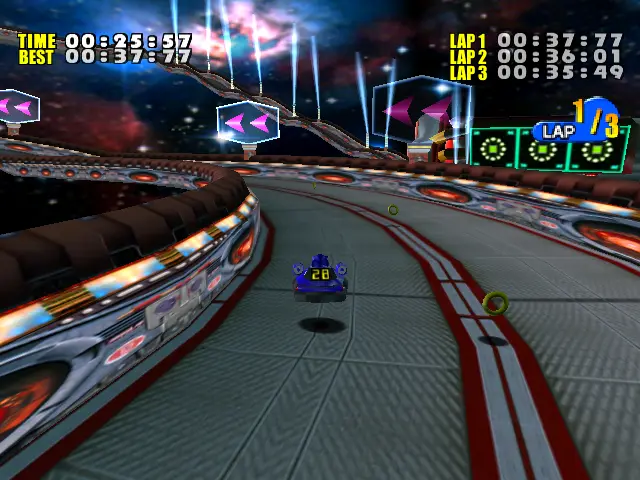 Twinkle CircuitSub-game · everyoneA three-lap kart race, open to every character once their story is done.
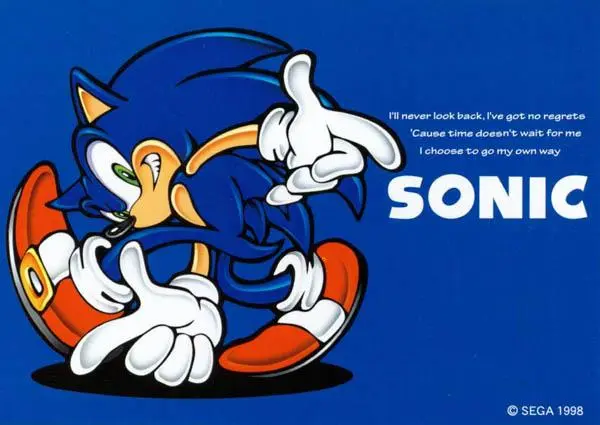 Sonic the HedgehogPlayable · voice: Ryan Drummond (EN), Jun’ichi Kanemaru (JP)
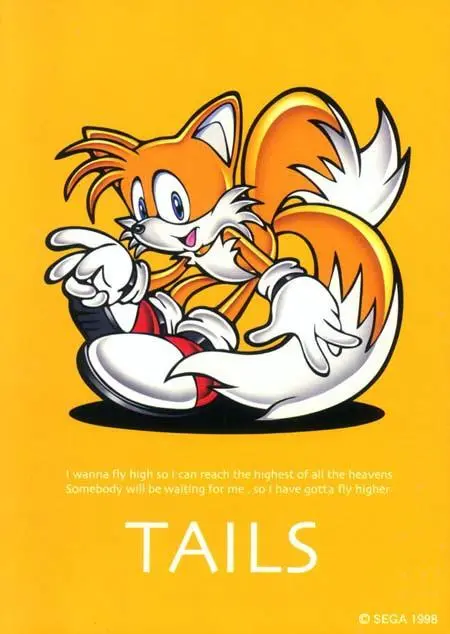 Miles “Tails” ProwerPlayable · voice: Corey Bringas (EN)
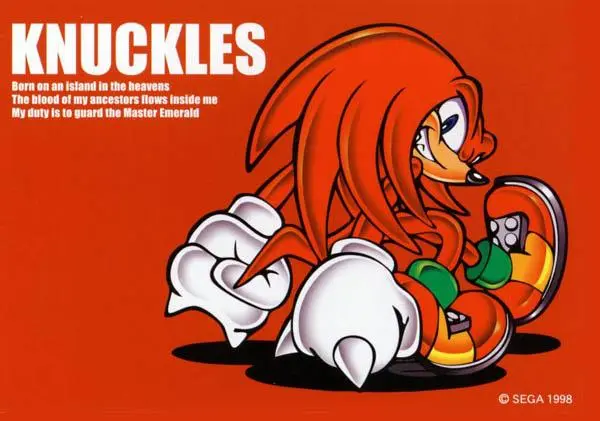 Knuckles the EchidnaPlayable · voice: Michael McGaharn (EN)
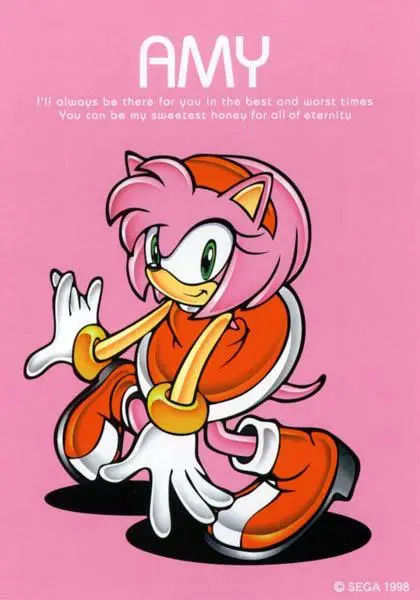 Amy RosePlayable · voice: Jennifer Douillard (EN)
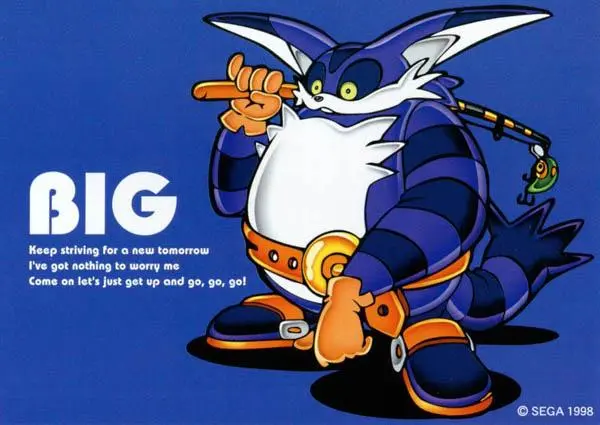 Big the CatNew · voice: Jon St. John (EN)
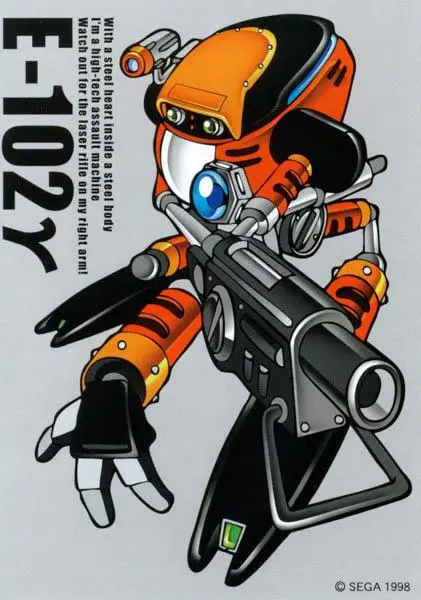 E-102 GammaNew · voice: Steve Broadie (EN)
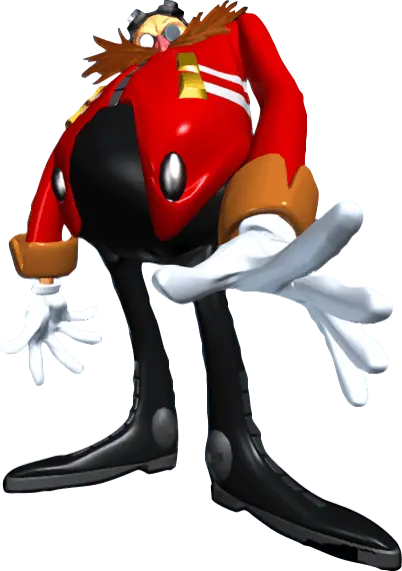 Dr. EggmanVillain · voice: Deem Bristow (EN)
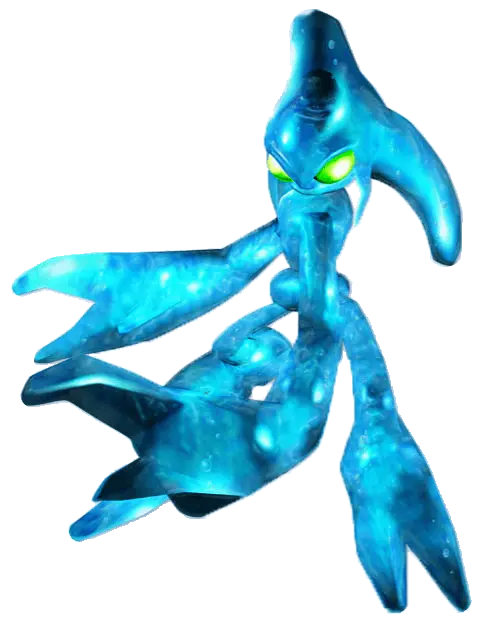 ChaosThe god of destruction
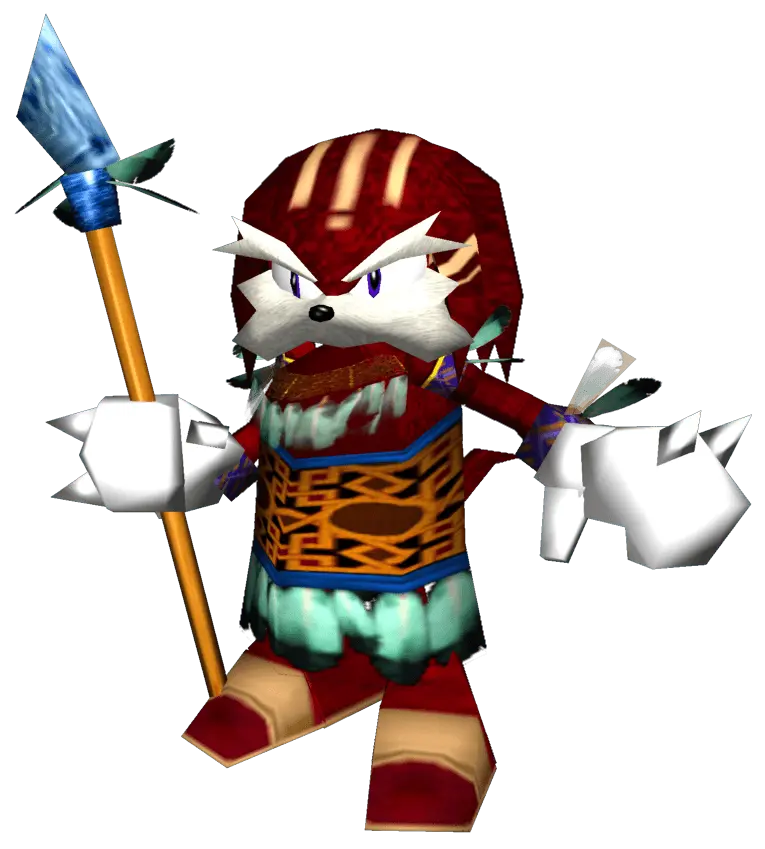 PachacamacNew · echidna chief
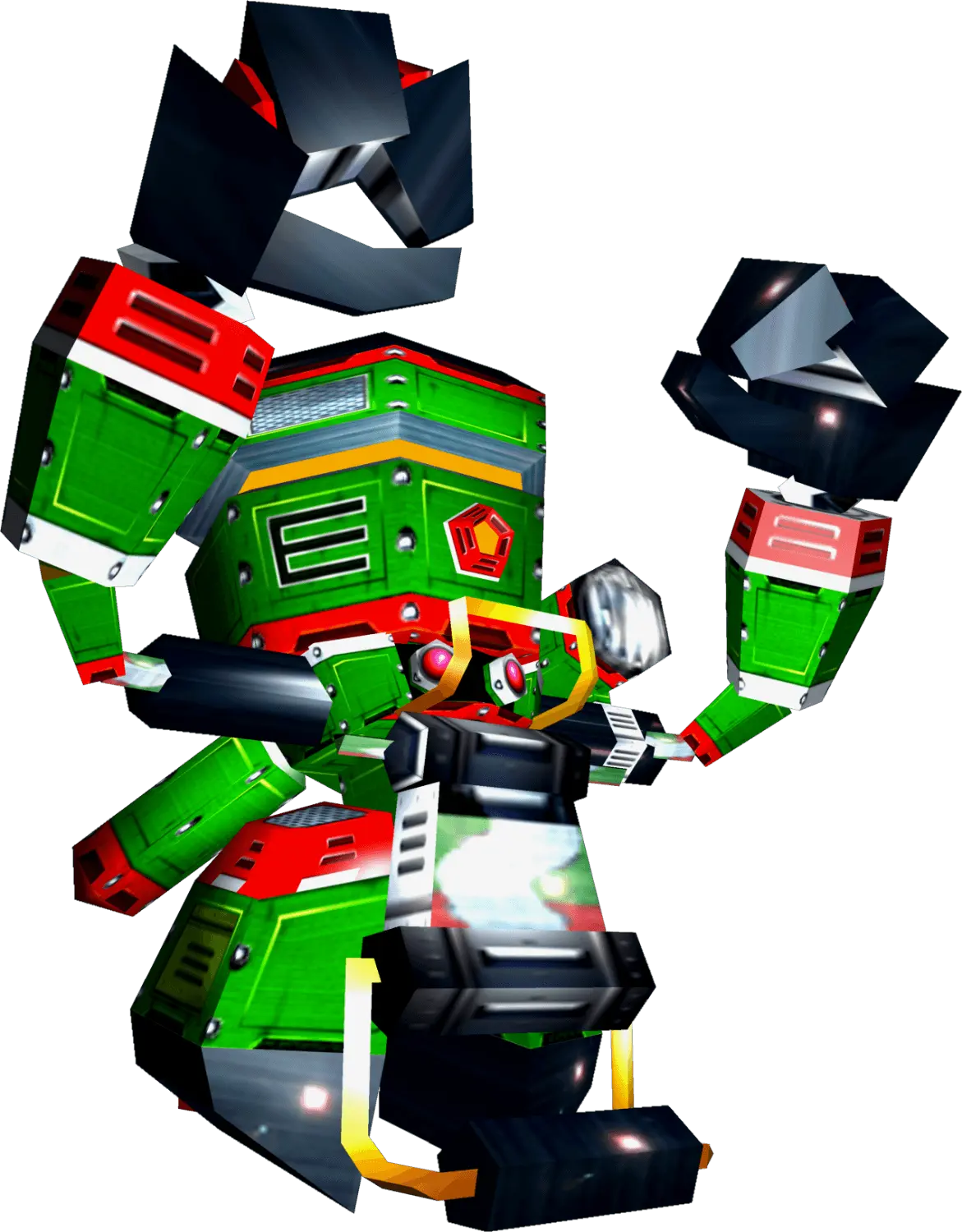 ZEROE-100 Alpha
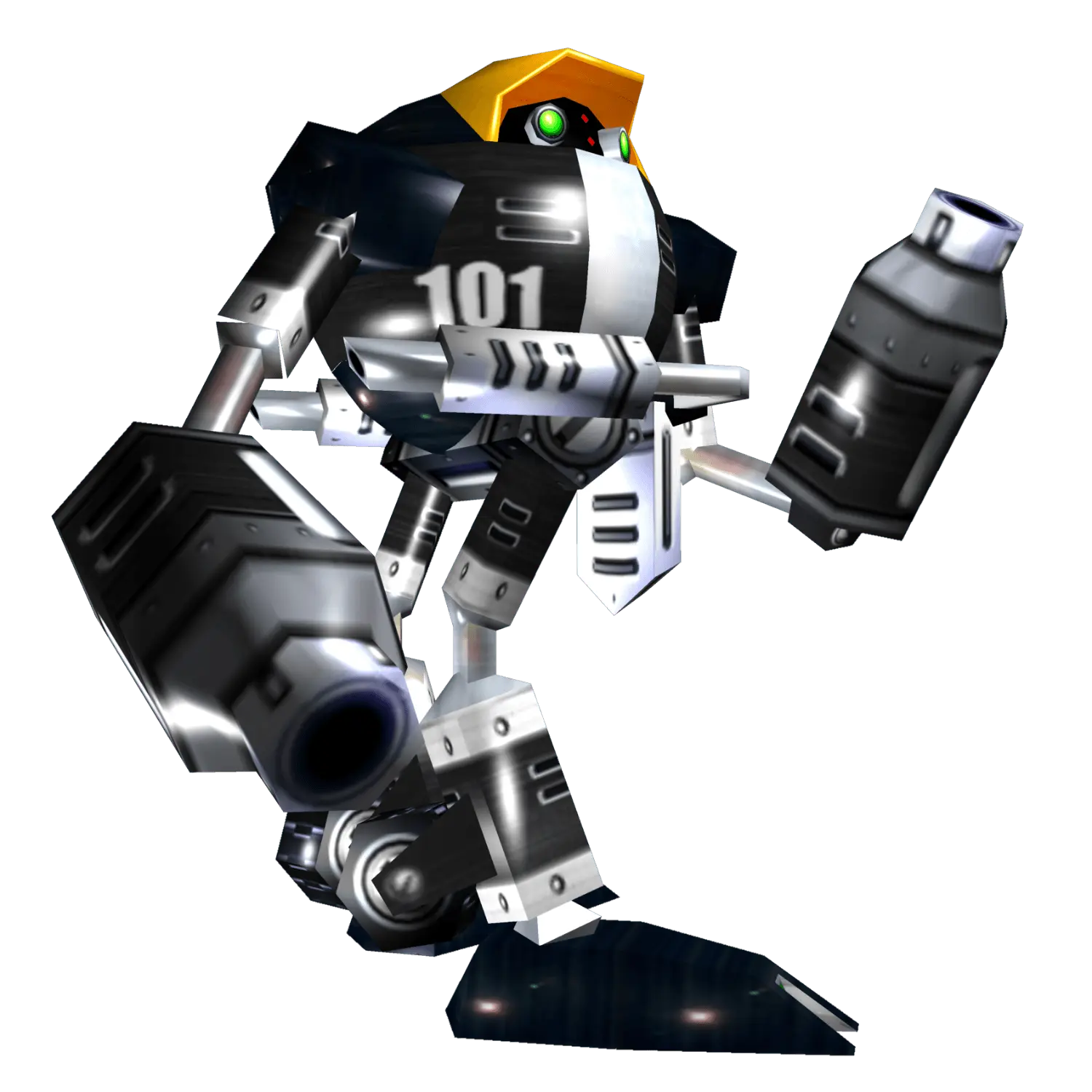 E-101 BetaE-100 series
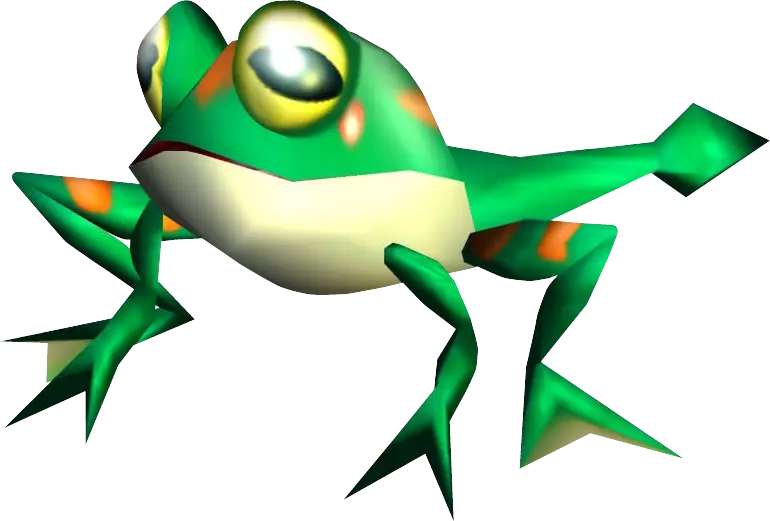 FroggyBig’s best friend
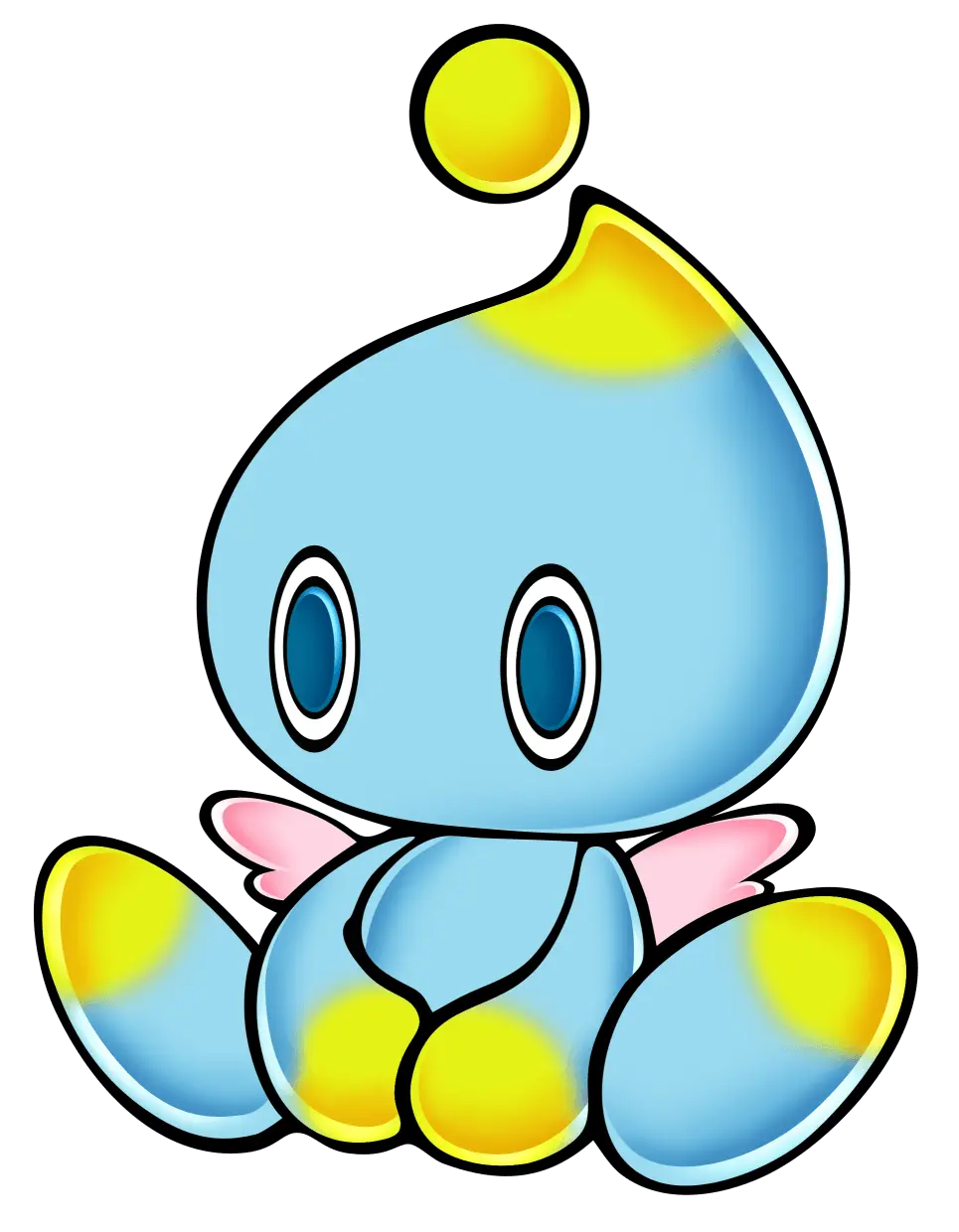 ChaoNew · virtual pets
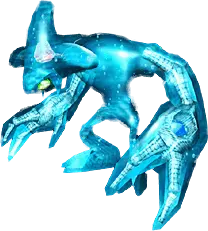
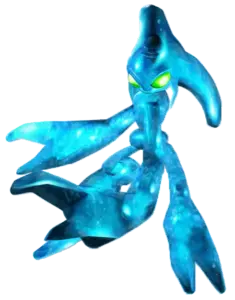 Chaos 0Station Square · SonicThe first fight, outside City Hall.
 Chaos 2Station Square hotel · KnucklesKnuckles’ first boss, after Eggman lures him with a fake shard.
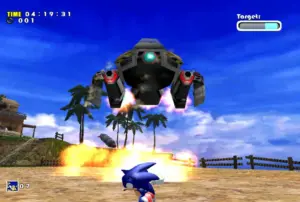 Egg HornetSonic, TailsThe first battle with Eggman himself.
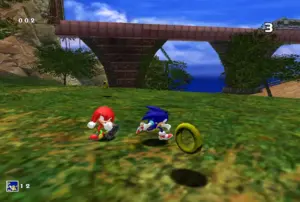 Sonic vs KnucklesSonic, KnucklesThe rivals clash, thanks to Eggman.
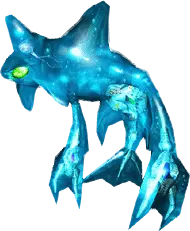 Chaos 4Sonic, Tails, KnucklesFought by all three of the main heroes.
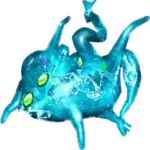 Chaos 6Big, Sonic, KnucklesBig’s only boss; Sonic and Knuckles fight it too.
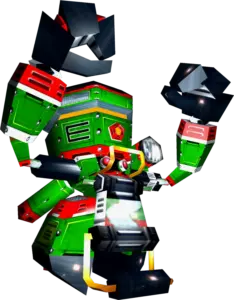 ZEROAmyAmy’s final battle.
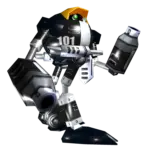 E-101 BetaFinal Egg · GammaGamma’s first test.
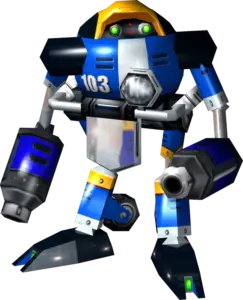 E-103 DeltaGammaWaits at the end of one of Gamma’s last three stages.
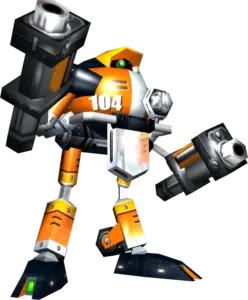 E-104 EpsilonRed Mountain · GammaTracked down by Gamma in Red Mountain.
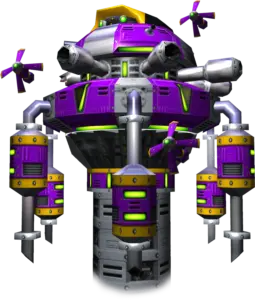 E-105 ZetaGammaThe last brother before the rebuilt Beta.
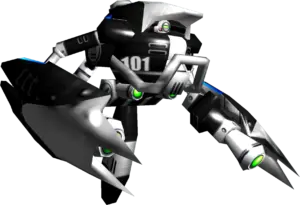 E-101 Beta, rebuiltGammaGamma’s final, fatal battle.
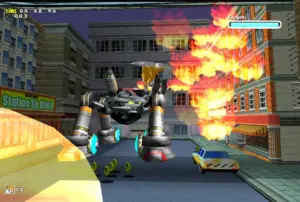 Egg WalkerAfter Speed Highway · TailsTails’ final boss.
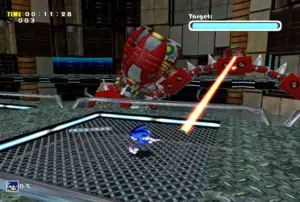 Egg ViperAfter Final Egg · SonicSonic’s final boss.
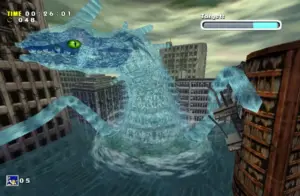 Perfect ChaosStation Square · Super SonicThe final battle, set to Open Your Heart.