Sonic trades his sneakers for a sports car. Sega’s first Sonic racer packs four drivers and eighteen courses themed on the original game into a Game Gear cartridge, then stays in Japan for almost a decade.
Released18 March 1994 (Japan)
DeveloperSega
PublisherSega
Courses18: six zones in three Chaos GPs
RacersFour
MusicMasayuki Nagao
Title
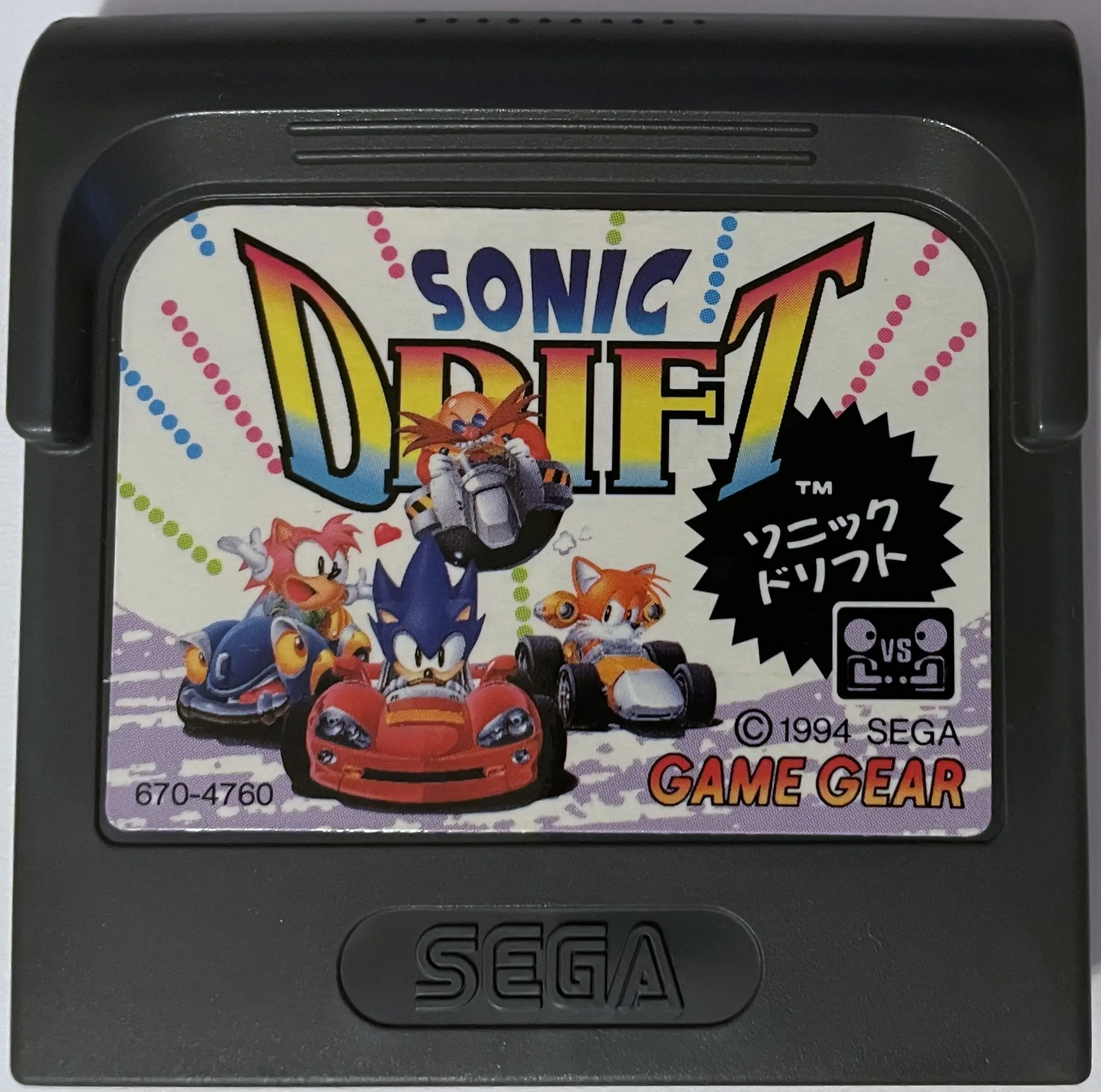
Sonic Drift; Japan: ソニックドリフト
Platforms
Sega Game Gear (1994). Later included in Sonic Adventure DX: Director’s Cut (GameCube, PC), Sonic Mega Collection Plus (PlayStation 2, Xbox, PC) and Sonic Origins Plus (2023)
Developer
Sega (in-house)
Publisher
Sega
Key staff
Katsuhiro Hasegawa (director); Hiroshi Aso (producer); Takako Kawaguchi, Gen Adachi and Shinichi Higashi (design); Yasushi Yamaguchi (box art and manual illustrations)
Music
Masayuki Nagao
Players
1–2 (Versus needs two Game Gears, two cartridges and a Gear-to-Gear Cable)
Released
Japan 18 March 1994 (¥4,800, G-3415). A Western release was planned and cancelled.
Genre
Racing
Overview
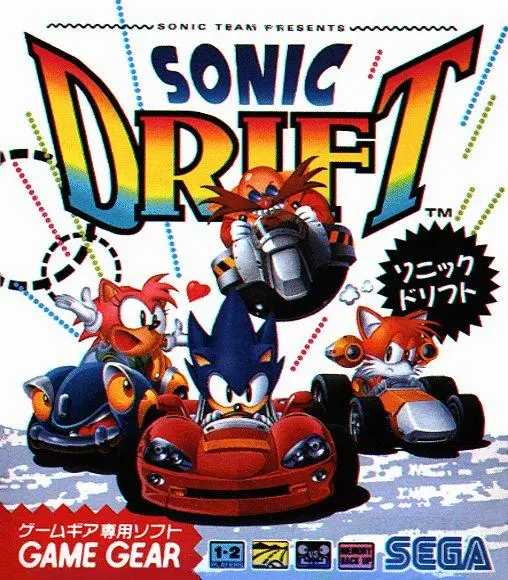
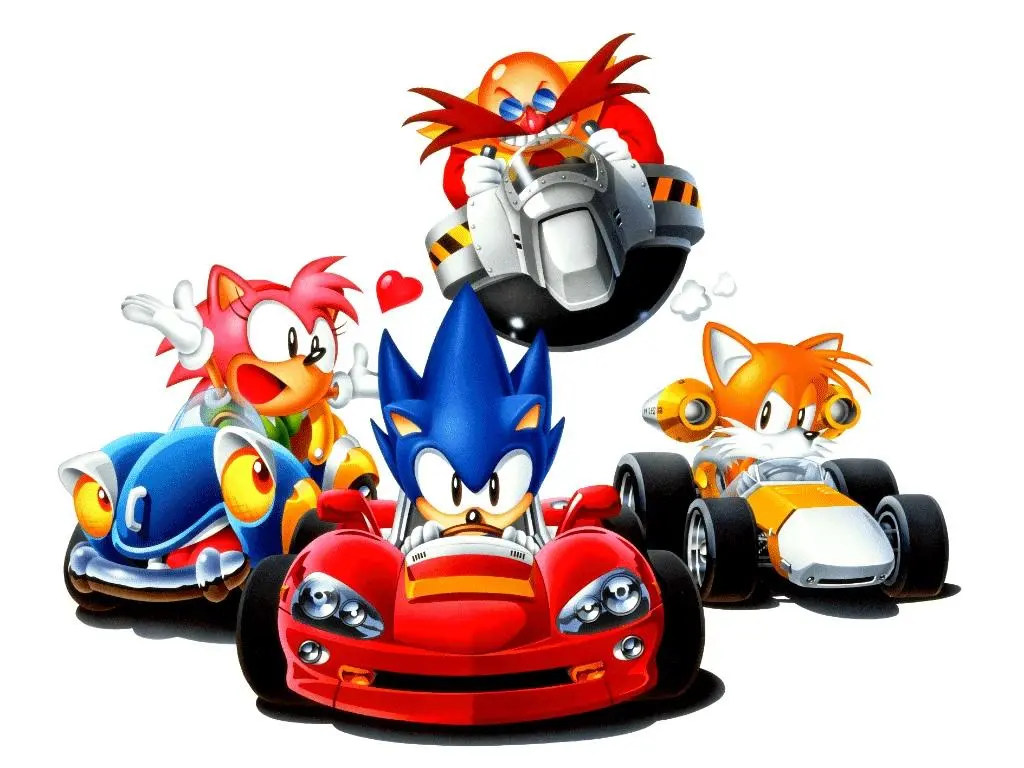
Sonic Drift was the first time Sonic raced on four wheels. Sega released it for the Game Gear in Japan on 18 March 1994, a handheld answer to Super Mario Kart built on the sprite-scaling style of Sega’s own arcade racers such as Out Run. Sonic, Tails, Amy and Dr. Eggman each drive their own car, with a special move paid for in rings.
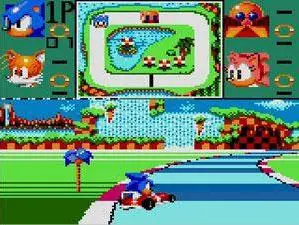
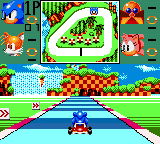
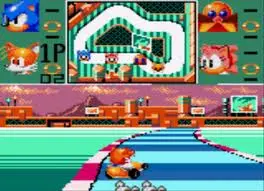
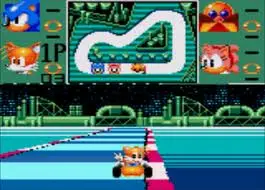
There are three Chaos GPs of six races each, and every one of them runs through the zones of the original Sonic the Hedgehog in order, from Green Hill to Scrap Brain. The top half of the screen shows the course map, the bottom half the race, and the knack is learning to brake into a drift without spinning out.
Reviewers were not impressed, and Sega quietly dropped plans for a Western release, sending the Game Gear version of Sonic Spinball overseas instead. Sonic Drift finally reached English-speaking players in 2003, hidden as a bonus to unlock in Sonic Adventure DX, and it remains the curious starting point of a line of Sonic racers that runs through Sonic Drift 2 and Sonic R to the present day.
Green Hill.Spring Yard.Star Light.
Today I’m going to compete with my car instead of my legs.
Sonic introduces himself in the manual’s comic-strip prologue, adding that he will win whichever way he races. Dr. Eggman is trying to make a grand speech about his genius, Tails is quietly confident about his driving, Amy only wants to know where Sonic has gone, and by the time anyone notices, Sonic has already set off.
— Official description: Sega, Sonic Drift Japanese instruction manual (1994), in the English translation by Windii hosted on Sonic Retro. One line quoted; the rest summarised.
Quick Answers
The short answers, with the detail further down the page.
When did Sonic Drift come out?
On the Sega Game Gear in Japan on 18 March 1994, priced at ¥4,800. More →
Was it released outside Japan?
Not at the time. Sega cancelled the Western release over concerns about its quality. It first reached Western players in 2003, as a bonus to unlock in Sonic Adventure DX: Director’s Cut. More →
Who can you play as?
Sonic, Tails, Amy Rose and Dr. Eggman, each with their own car and special move. More →
How many courses are there?
Eighteen: three Chaos GPs, each with six courses themed on the zones of the first Sonic game. More →
Is it like Mario Kart?
It borrows Super Mario Kart’s idea of character racers with special moves, but it drives more like Sega’s sprite-scaling arcade racers such as Out Run. More →
Who made it?
A team inside Sega, with Katsuhiro Hasegawa as director, Hiroshi Aso as producer and Masayuki Nagao writing the music. More →
Can I play it today?
It is included in Sonic Origins Plus (2023), and earlier in Sonic Mega Collection Plus (2004). It is also playable as a minigame in Yakuza Kiwami 3 & Dark Ties (2026). More →
Is there a sequel?
Yes: Sonic Drift 2 (1995), which added Knuckles, Fang and Metal Sonic and was released worldwide. More →
Plot / Story
The four racers.
There is not much plot, but the manual tells it with plenty of character. At the starting line Dr. Eggman launches into a speech about what a famous genius he is and keeps being cut off. Sonic greets the crowd, explaining that today he will race in a car rather than on foot, and that he expects to win either way. Tails says hello too: he is feeling fairly confident behind the wheel.
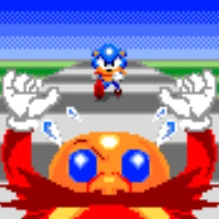
Eggman fumes at being ignored. Amy arrives looking for Sonic, only to learn from Tails that he has already gone, and the two of them race off after him. When Eggman finally rolls out his masterpiece, the Egg Typhoon, he finds the starting grid empty.
The Chaos GP
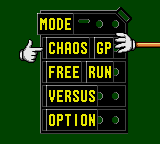
The main mode is the Chaos GP: three championships named after the green, yellow and red Chaos Emeralds. Every race is three laps against the other three drivers. First place scores 3 points, second 2, third 1 and fourth nothing, and the driver with the most points at the end of the six races takes the cup. Win all three and you see your character’s ending, followed by the credits.
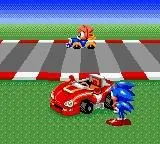
On the grid.Sonic’s ending.Dr. Eggman’s ending.
Courses
Each Chaos GP visits the six zones of the 1991 Sonic the Hedgehog in the same order as that game, with a different course layout in every cup, for eighteen courses in all. Leaving the tarmac slows you down, and the roadside scenery stops you dead if you hit it.
Green HillRace 1 in every Chaos GPChequered hills, palm trees and the opening race of each cup.
MarbleRace 2Themed on Marble Zone.
Spring YardRace 3Themed on Spring Yard Zone.
LabyrinthRace 4Themed on Labyrinth Zone.
Star LightRace 5A night-time city course, like Star Light Zone.
Scrap BrainRace 6Themed on Scrap Brain Zone, the final race of each cup.
Outside the Chaos GP there is Free Run, a solo practice mode on any course that records the best lap and race times, and Versus, a two-player race over the Gear-to-Gear Cable that keeps a win/loss tally until you switch off. The options screen sets the difficulty to Normal or Hard.
In comics, TV & other media
Sonic Drift borrows from the games before it and has turned up in some unexpected places since. More in Sonic in other movies and media.
Sonic the Hedgehog (1991)Every courseAll eighteen courses are themed on its six zones, raced in the same order.
Sonic CDMega-CD · 1993The invincibility music borrows from “Sonic – You Can Do Anything”, and Amy, who made her debut there, gets her first playable role here.
Sonic Spinball (Game Gear)Sega · 1994With Sonic Drift cancelled in the West, Sega released the Game Gear Spinball overseas instead.
Sonic Mega Collection PlusPlayStation 2, Xbox, PC · 2004Included among the Game Gear games in the compilation.
Sonic Origins PlusSega · 2023Released on 23 June 2023 as part of the expanded Sonic Origins.
Yakuza Kiwami 3 & Dark TiesSega · 2026Playable as a minigame alongside other Game Gear titles.
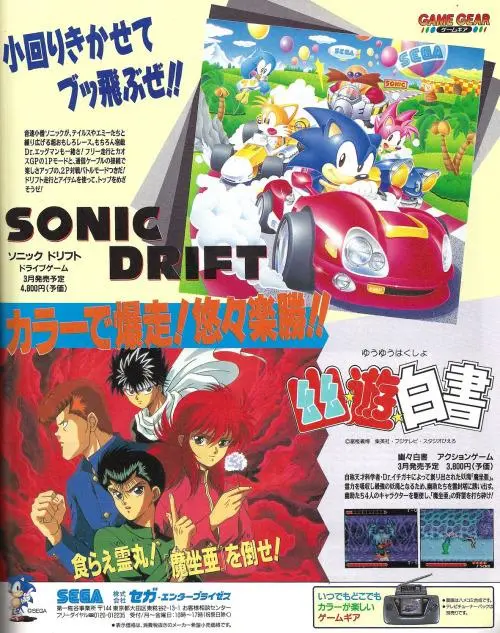
Japanese adverts1994Sega promoted the game with television commercials and a print advert in Beep! MegaDrive.
Seen from abroadSpring 1994Mean Machines Sega put a “Sonic Kart?” headline on its news story and reported that the name Sonic Drift was only provisional; Computer & Video Games likened it to Super Mario Kart; EGM and GamePro covered it as an import.
Characters
Four drivers, four cars, and a special move each. Every car is named after a wind. Artwork from Sonic Scene’s own gallery.
Character
Who they are
In this game
Stats & abilities
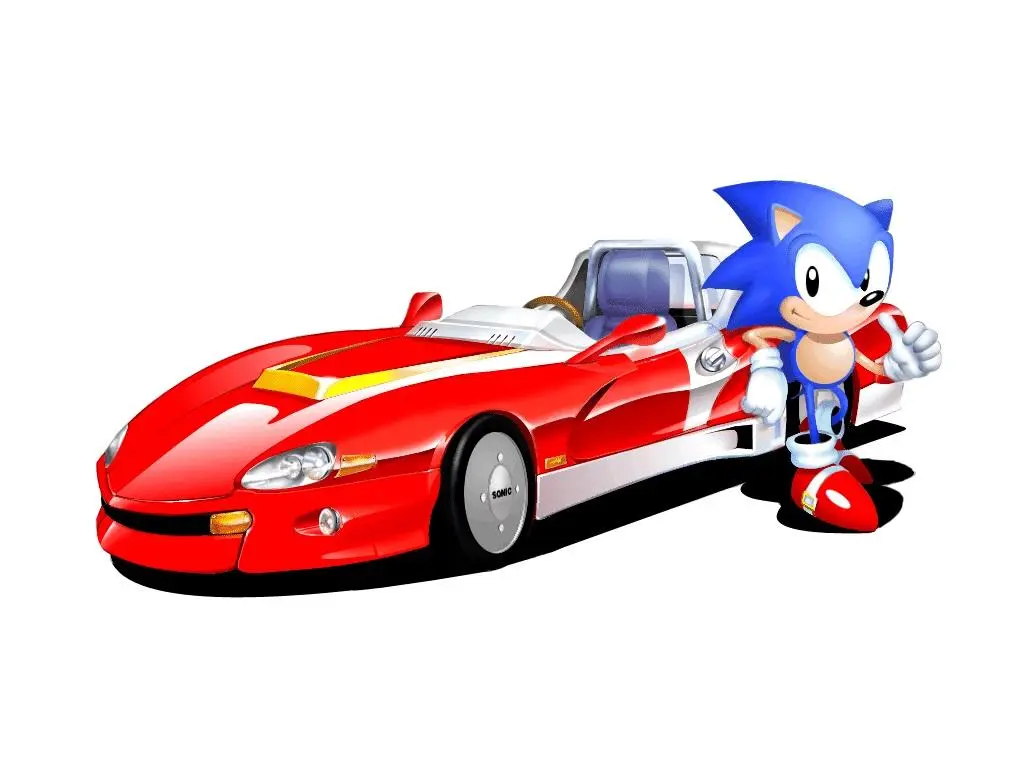
Sonic the HedgehogCar: Cyclone
Loves anything new, so this time he races in a car, and fully expects to win anyway.
The Cyclone is very fast but corners badly, so Sonic leans on drifting to get round bends.
Strong acceleration and top speed
Weak cornering
Special: a speed dash
Miles “Tails” ProwerCar: MTP-01 Whirlwind
Built his car by hand for this race. Tails was created by Yasushi Yamaguchi, who also drew this game’s box art.
A well-balanced car with excellent cornering.
Excellent handling
Lower top speed
Special: a jump
Amy RoseCar: Breeze
Introduced in Sonic CD the year before, Amy is playable for the first time here, and mostly interested in catching up with Sonic.
Breeze, says the manual, is a car with a mind of its own, and a gentle one at that.
Good acceleration and cornering
Low top speed
Special: throws a heart that slows rivals
Dr. Eggman (Dr. Robotnik)Car: Egg Typhoon
The self-proclaimed super-genius scientist, determined to beat Sonic on the track.
His Egg Mobile, rebuilt for racing. The manual wonders whether the mines it carries explain its slow start.
Built for top speed
Slow acceleration
Special: drops a mine
Power-ups
Items sit on every course and come back each lap.
RingCollect themSpend two to use your special move. Crashes cost you rings.
High SpeedRed monitorA short burst of speed.
InvincibleBlue monitorBrief protection from obstacles and rivals’ attacks.
Jump springOn the trackLaunches you into the air.
The people who made it
The in-game credits use nicknames; real names from Wikipedia’s development history and Sonic Wiki Zone’s staff list.
Katsuhiro HasegawaDirector · “Hase”Directed the game.
Hiroshi AsoProducer · “Asohy”Produced it.
Masayuki NagaoSound creator · “N.Gee”Composed the music.
Takako Kawaguchi, Gen Adachi, Shinichi HigashiDesigners · “Choko”, “Gen”, “East”Designed the game alongside planner “K’”.
Wa-Da and ShinchanProgrammersCredited only by these nicknames.
Yasushi YamaguchiArtistDrew the box art and the manual illustrations.
How it was made
Sonic Drift was made inside Sega at the height of the Game Gear years. This history draws on Wikipedia, Sonic Retro and Sega Retro.
A Sonic kart racer
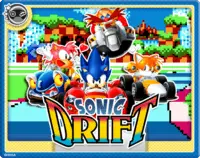
The logo.
Nintendo’s Super Mario Kart (1992) was the inspiration, and Sonic Drift borrows its recipe for the Game Gear: character racers, a points-based grand prix and special moves. Under the bonnet, though, it plays more like the sprite-scaling arcade racers Sega had made its name with, like Out Run or Super Monaco GP.
A Flicky was at first meant to be the fourth driver, before Amy took the seat. An early mock-up shown on Sonic Retro has a Flicky in the race, chequered verges and totem poles where the palm trees now stand; other early shots have a blank status display, different backgrounds, bigger map icons and a title screen where Sonic’s car performs a move it never does in the finished game.
Release in Japan
Promotional artwork.
Beep! MegaDrive covered the game in its Game Gear pages from early 1994, and it went on sale on 18 March 1994 at ¥4,800. Sega backed it with TV commercials and a print advert in the same magazine. Its readers’ rating, which carried on into Sega Saturn Magazine, settled at 7.156 out of 10 by September 1995.
The Western release that never was
Western magazines reported on the game in the first half of 1994; Mean Machines Sega thought “Sonic Drift” was only a working title. A Western release was planned but cancelled because of concerns about its quality, and Sega released the Game Gear version of Sonic Spinball in its place. The sequel, Sonic Drift 2, did reach North America and Europe the following year.
Firsts: what this game introduced
Small as it is, Sonic Drift started a few things.
1Sonic’s first racing gameThe first racer in the series, years before Sonic R and Sonic Riders.
2Amy’s first playable roleA year after her debut in Sonic CD.
Cheats & secrets
Sonic Drift has no built-in cheat codes. Sonic Retro lists these unofficial Pro Action Replay codes, which also work in most emulators.
Choose your driver
00D7AE:00 sets the character: change the last two digits to 00 for Sonic, 01 for Eggman, 02 for Tails or 03 for Amy.
Always invincible
00DA04:06
Infinite rings
00DA00:63
Codes checked against Sonic Retro, November 2026.
Videos & media
A full playthrough, and the opening as recorded by Sonic Scene.
The whole game from start to finish, from the World of Longplays archive.
The Japanese opening, from the SonicScene YouTube channel.
Trivia & facts
All four cars are named after winds: Cyclone, Whirlwind, Typhoon and Breeze.
Yamaguchi’s box art.Box artist Yasushi Yamaguchi is the designer who created Tails.
Beep! MegaDrive’s four reviewers could not agree: they gave it 8, 4, 6 and 6 out of 10.
Electronic Gaming Monthly liked what it saw in a preview, finding it quick and fun, though the flickering, choppy scrolling got in the way.
Sega Pro only reviewed it, as an import, in its December 1994 issue, nine months after the Japanese release.
Media & artwork
Box art, artwork and screenshots from Sonic Scene’s own galleries, with a few extras from Sonic Retro and Sonic Wiki Zone. Select any image to view it larger.
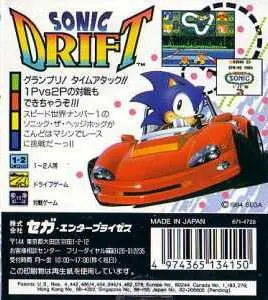
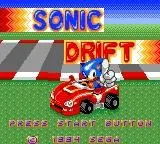
Japanese Game Gear box.Japanese box, back.Japanese cartridge.The logo.Sonic, Tails, Amy and Dr. Eggman.Sonic and the Cyclone.An online trading card.Promotional artwork.The title screen.The main menu.On the grid.Green Hill.Racing on Green Hill.Marble.Spring Yard.Labyrinth.Star Light.Scrap Brain.Sonic’s ending.Amy’s ending.Dr. Eggman’s ending.
A Japan-only handheld racer with poor reviews might have vanished. Instead it got a sequel straight away and has been re-released again and again.
Releases and re-releases
Game Gear18 March 1994 – Japan only.
Sonic Adventure DX: Director’s Cut2003–2004 – GameCube and PC; an unlockable extra.
Sonic Mega Collection Plus2004–2005 – PlayStation 2, Xbox and PC, later also in Xbox and PlayStation 2 bundles.
Sonic PC Collection2009 – PC.
Sonic Origins Plus23 June 2023 – PlayStation 4 and 5, Xbox One and Series X/S, Nintendo Switch and PC.
Yakuza Kiwami 3 & Dark Ties2026 – As a playable minigame.
Sonic Drift 2
The sequel arrived in 1995 and was not confined to Japan, released in Europe as Sonic Drift Racing. It brought in Knuckles, Fang and Metal Sonic. Read more on our Sonic Drift 2 page.
How it is remembered
Sonic Drift is mostly remembered as a curiosity: the first Sonic racer, and the reason Western Game Gear owners got Sonic Spinball in 1994. Sonic’s next racer after the two Drifts was the 3D Sonic R in 1997.
Sales & reviews
Sales
We have not found reliable sales figures for Sonic Drift.
18Courses
4Drivers
¥4,800Launch price
23/40Famitsu
Reception and review scores
Reviews of the Japanese release, from Sega Retro’s magazine index and Sonic Wiki Zone’s referenced Famitsu score, converted to percentages.
Sega Saturn MagazineJapan · Beep! MegaDrive readers’ rating
7.156/10
Mega FunGermany
65%
Beep! MegaDriveJapan · four reviewers
8, 4, 6, 6
FamitsuJapan
23/40
Hippon SuperJapan
5/10
Sega ProUK · import review
30%
Sega Pro’s three reviewers, writing about the import in December 1994, were the harshest: the courses felt too alike, cornering was clumsy and the game was far too easy, though they liked the graphics and sound. Mark Hill went as far as to say “only a complete idiot would purchase a copy.” Germany’s Mega Fun was kinder. Ulf Schneider thought it fell short of Super Mario Kart and disliked not seeing a corner until you were nearly on it, but found it fun and quick to learn.
Later critics, meeting it in compilations, were tougher still. GameSpy found it almost unplayable and Eurogamer’s Tom Bramwell said its flicker made him feel ill. USgamer blamed giving half the tiny screen to the map and called it “a poor man’s Out Run”, Jeuxvideo.com found it too simple and too short, and Hardcore Gaming 101 thought the driving decent but the courses dull, their zone themes only skin deep. GamesTM saw it as a cynical cash-in that missed what made Super Mario Kart work.
Reader reviews
No reader reviews yet. Played it? Give it a score out of 10 and tell other fans what you think.
Every fact on this page was checked against the sources below. Sonic Retro and Sega Retro pages were read through Wayback Machine copies, because both live sites show a bot check; each link opens the nearest archived copy. Quotes from reviews come from Wikipedia, which cites each magazine and website.
To provide the best experiences, we use technologies like cookies to store and/or access device information. Consenting to these technologies will allow us to process data such as browsing behavior or unique IDs on this site. Not consenting or withdrawing consent, may adversely affect certain features and functions.
Functional
Always active
The technical storage or access is strictly necessary for the legitimate purpose of enabling the use of a specific service explicitly requested by the subscriber or user, or for the sole purpose of carrying out the transmission of a communication over an electronic communications network.
Preferences
The technical storage or access is necessary for the legitimate purpose of storing preferences that are not requested by the subscriber or user.
Statistics
The technical storage or access that is used exclusively for statistical purposes.The technical storage or access that is used exclusively for anonymous statistical purposes. Without a subpoena, voluntary compliance on the part of your Internet Service Provider, or additional records from a third party, information stored or retrieved for this purpose alone cannot usually be used to identify you.
Marketing
The technical storage or access is required to create user profiles to send advertising, or to track the user on a website or across several websites for similar marketing purposes.


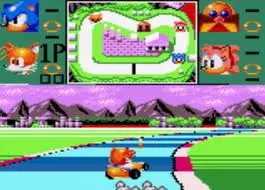 MarbleRace 2Themed on Marble Zone.
 LabyrinthRace 4Themed on Labyrinth Zone.
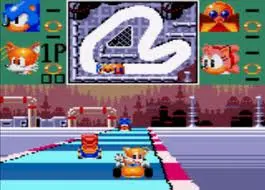 Scrap BrainRace 6Themed on Scrap Brain Zone, the final race of each cup.
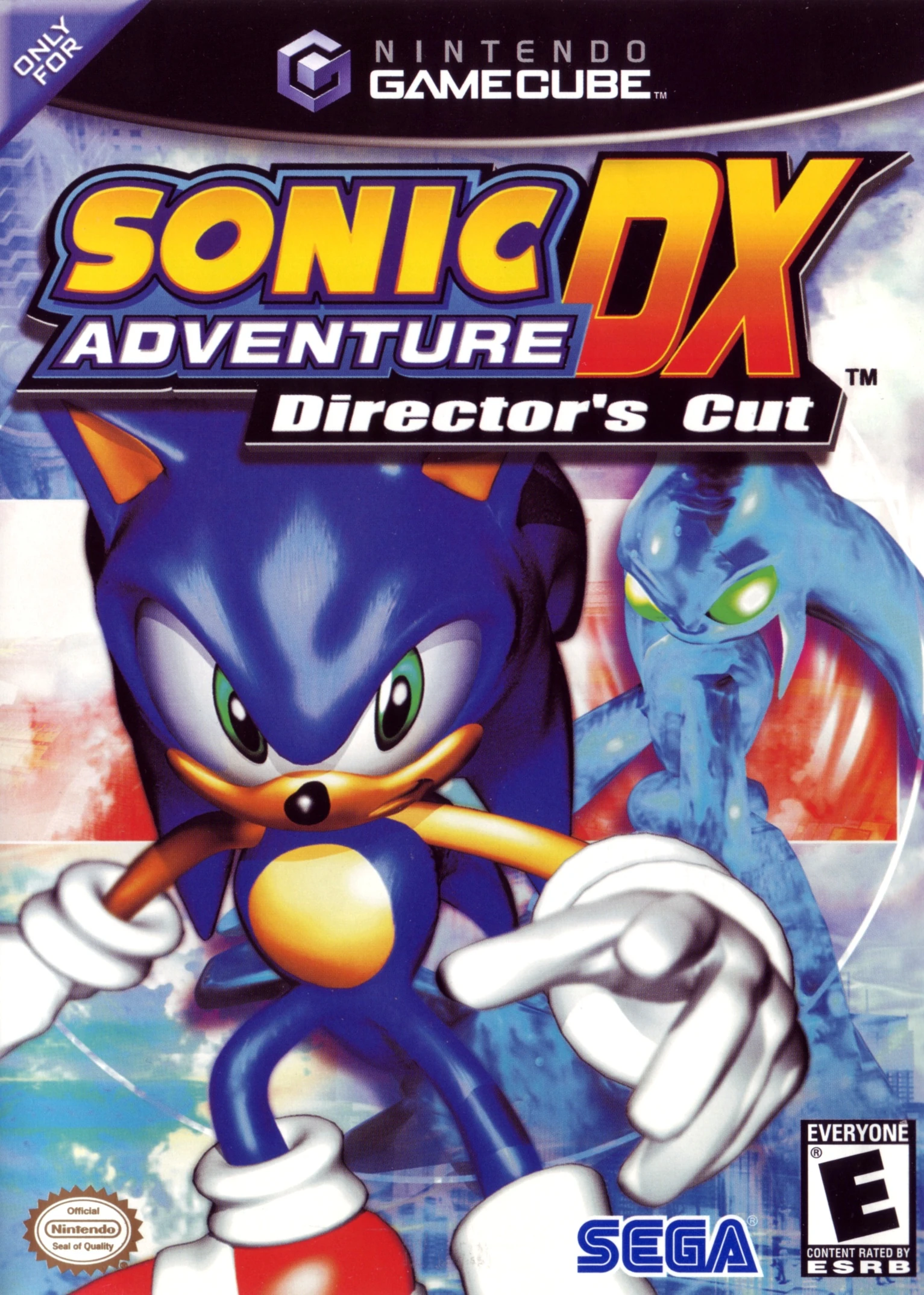 Sonic Adventure DX: Director’s CutGameCube and PC · 2003An unlockable extra, and the game’s first official release outside Japan.
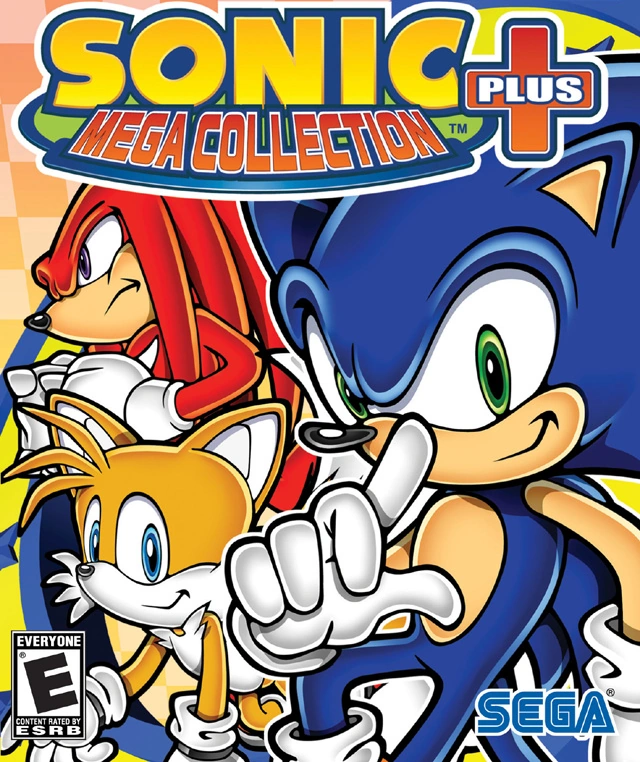 Sonic Mega Collection PlusPlayStation 2, Xbox, PC · 2004Included among the Game Gear games in the compilation.
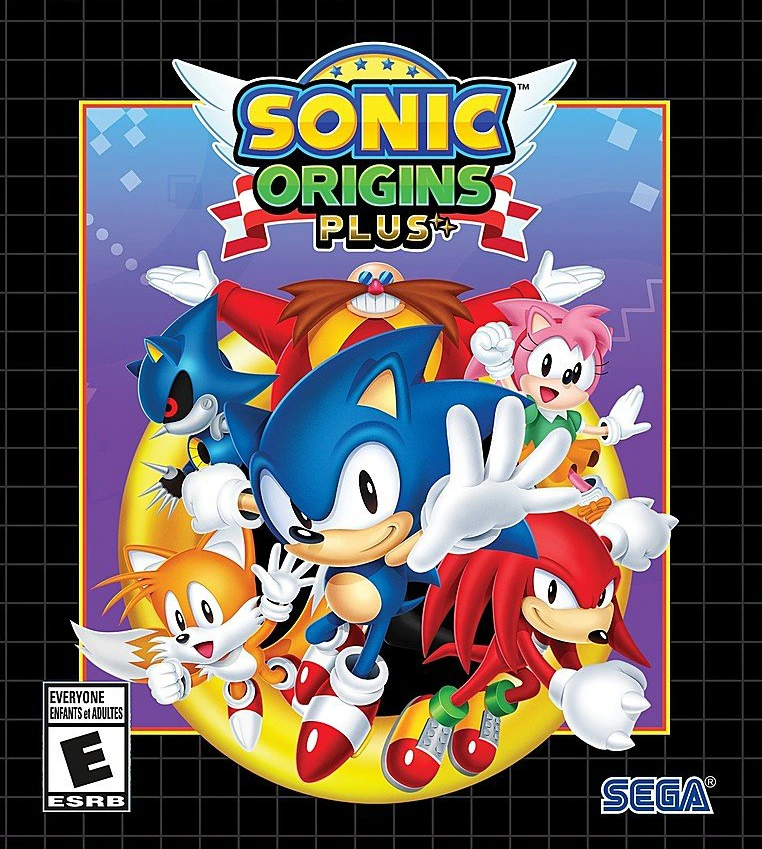 Sonic Origins PlusSega · 2023Released on 23 June 2023 as part of the expanded Sonic Origins.
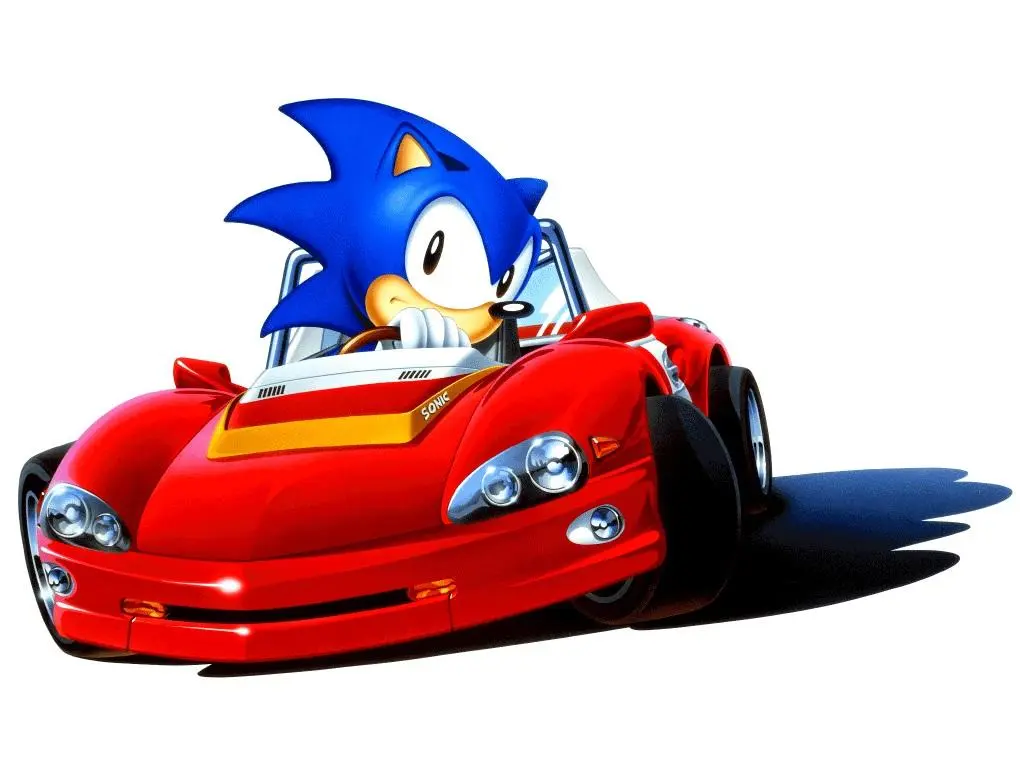 Sonic the HedgehogCar: Cyclone
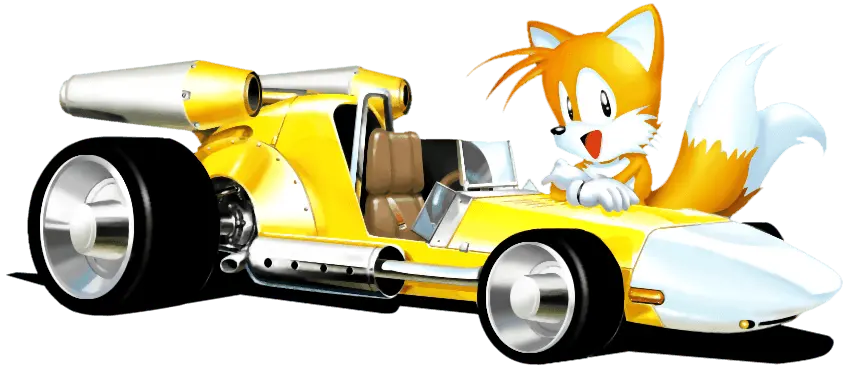 Miles “Tails” ProwerCar: MTP-01 Whirlwind
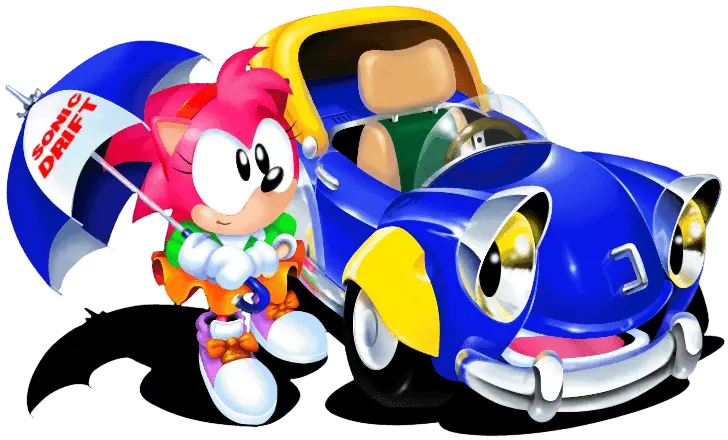 Amy RoseCar: Breeze
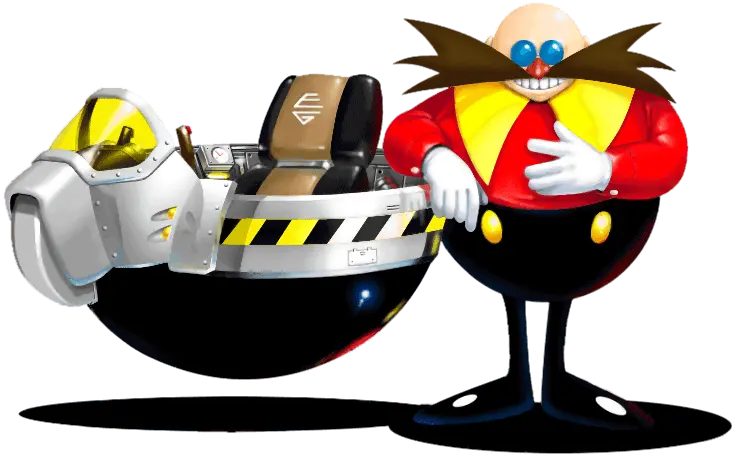 Dr. Eggman (Dr. Robotnik)Car: Egg Typhoon
 RingCollect themSpend two to use your special move. Crashes cost you rings.
 High SpeedRed monitorA short burst of speed.
 InvincibleBlue monitorBrief protection from obstacles and rivals’ attacks.
 Jump springOn the trackLaunches you into the air.