Sonic at the Olympic Games (the browser version was called Sonic at the Olympics)
Platform
Java (J2ME) mobile phones from LG, Motorola, Nokia and others; cut-down web browser version
Developer
AirPlay (UK); browser version by Mediatonic
Publishers
Sega Mobile, a division of Sega of America (North America); Glu Mobile (Europe, the Middle East, Africa, Australia and New Zealand)
Licence
Official Olympic Games licence, through International Sports Multimedia
Genre
Sports (track and field)
Players
1, with high-score boards
Announced
April 2008
Released
North America: 24 July 2008 (US$2.99–7.99, depending on the carrier); UK: out by 11 July 2008, when Pocket Gamer reviewed it
Events
1500m, 400m hurdles, triple jump, discus, javelin
Availability
No longer sold; Sega Mobile’s page for it survives only in the Wayback Machine
Overview
Sonic had already gone to Beijing 2008 with Mario on Wii and DS. For the phone in your pocket, Sega Mobile made something smaller and Sonic-only: Sonic at the Olympic Games, a Java game with five track and field events, one-thumb controls and no Nintendo characters in sight.
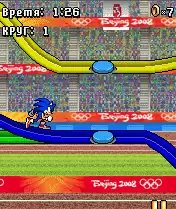
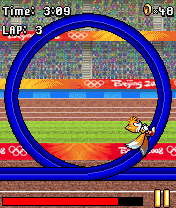
You pick Sonic, Tails, Knuckles or Amy and work your way up from the qualifying round, through the heats and semi-finals, to a final with a podium at the end. Every event is viewed side-on and decided by timing rather than button-bashing, rings are scattered along the way to fatten your score, and the 1500m course climbs, dips and even loops the loop like a proper Sonic stage.
British studio AirPlay built it. Sega Mobile sold it through North American carriers from 24 July 2008, Glu Mobile handled Europe, Australia and New Zealand, and Mediatonic later trimmed it to two events for a free browser version. Like almost every Java phone game of its day, it has long since vanished from sale.
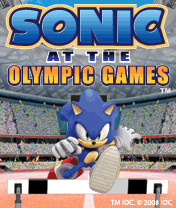
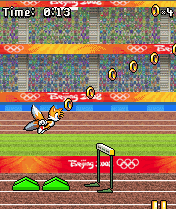
A loop on the running track.Knuckles in the hurdles.The title screen.
Sonic, Tails, Knuckles and Amy go for the gold!
Sega Mobile’s product page went on to list the five events, promise easy one-button controls and automatic saves, and describe the climb from qualifying round to final, with high-score boards to rise up.
— Official description: Sega Mobile, Sonic at the Olympic Games product page (segamobile.com, 2008, Wayback copy), first line quoted.
Quick Answers
The short answers, with the detail further down the page.
When did it come out?
Sega Mobile launched it on North American carriers on 24 July 2008. It was already out in the UK by 11 July, when Pocket Gamer reviewed it. More →
Who made it?
AirPlay, a British mobile developer, for Sega. Sega Mobile published it in North America and Glu Mobile in Europe, Australia and New Zealand. More →
Which events are in it?
Five: the 1500m, the 400m hurdles, the triple jump, the discus and the javelin. More →
Who can you play as?
Sonic, Tails, Knuckles or Amy. Pocket Gamer found that all four play exactly the same. More →
Is Mario in it?
No. This is a Sonic-only game, separate from Mario & Sonic at the Olympic Games on Wii and DS. More →
Was there a version you could play on a computer?
Yes. Mediatonic made Sonic at the Olympics, a free browser game with just the discus and javelin, to point people towards the phone version. More →
Can I still get it?
No. It was sold through phone networks and Sega Mobile’s own site, and neither offers it any more. More →
Plot / Story
Sonic goes for gold.
There is no plot as such. Sega’s pitch was that Team Sonic had come to the Olympic Games to make history, and the game turns that into a tournament: survive the qualifying round, the heats and the semi-finals, then win the final to reach the podium. Each stage is harder than the last, your progress is saved automatically, and good scores can be sent off to a high-score board to see how you rank against the rest of the country.
How it plays
Everything happens side-on and can be played with one thumb. The running events hinge on circular markers on the track: press 5 as your runner crosses one, and the colour you catch decides what happens next. Green builds momentum, yellow keeps your pace steady and red costs you speed, so the trick is rhythm, not bashing the keypad.
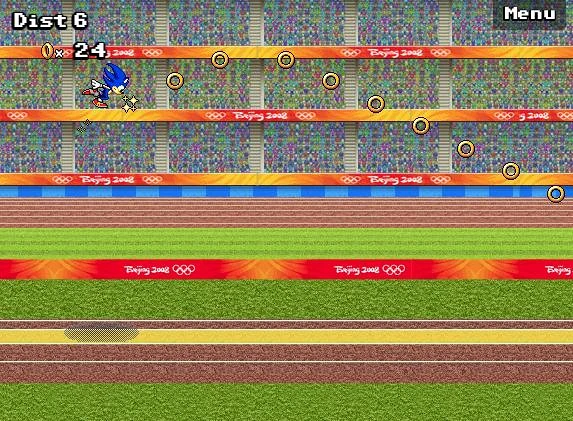
Rings turn up in every event and add to your total, and points come from finishing first as well as from what you collect. Pocket Gamer liked how neatly it all worked, but found that the events felt too alike and that most players would have seen everything within an hour.
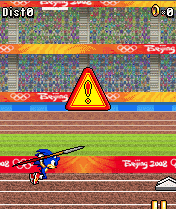
Tails over a hurdle.Tails in the hurdles.A hazard sign on the track.The stadium seen from above.
The five events
Sega listed five events. Four of them include a run-up; only the discus does not.
1500mRunningThe long race, on a Sonic-style track that rises, falls and loops the loop. Hit the green markers to keep your speed up.
400m hurdlesRunningSprinting and jumping: keep your pace with the markers and clear the barriers as they come.
Triple jumpJumpingPress 2 each time you land to bounce on to the next phase; 5 spends a small boost bar for extra air.
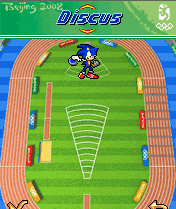
DiscusThrowingThe only event without a sprint. It was also one of the two events kept for the browser version.
JavelinThrowingRelease with 2, then steer the javelin’s flight with 2 and 8, weaving round balloons and picking up rings on the way down.
Mario & Sonic at the Olympic GamesWii, DS · 2007–08Sonic’s trip to Beijing 2008 with Mario on Nintendo’s machines. Pocket Gamer’s review pointed to it as Sonic’s earlier Olympic outing.
Beijing 2008 – The Official Mobile Phone Game of the Olympic GamesSega Mobile · 2008Its realistic sister game, launched the same day: table tennis, the 100m, the 200m freestyle and the hammer, with 32 nations and two modes, Quick Start and Go for the Gold.
Sonic at the OlympicsBrowser · MediatonicA free two-event web version (discus and javelin) that sent players off to buy the phone game.
Sonic at the Olympic Winter GamesiPhone · 2010The next Sonic-only Olympic game, for Vancouver 2010, made by Venan Entertainment and pulled from the App Store within a week.
Sonic at the Olympic Games – Tokyo 2020iOS, Android · 2020The title returned in 2020 for a new Sonic-only mobile game, which Sonic Retro files separately from this one.
Characters
Four athletes, one set of skills: Pocket Gamer found the characters identical, so the choice comes down to who you like. The artwork is from Sonic Scene’s own 2008 galleries; the game shows them as small sprites.
Character
Who they are
In this game
Stats & abilities
Sonic the HedgehogAthlete
The world’s fastest hedgehog, already a Beijing 2008 competitor in Mario & Sonic on Wii and DS.
Front and centre on the official artwork and the title screen, and one of the four athletes you can pick.
Same abilities as the other three
Runs, jumps and throws in all five events
Miles “Tails” ProwerAthlete
Sonic’s two-tailed fox sidekick and the team’s resident mechanic.
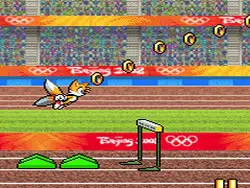
A selectable athlete. The tile from our old mobile games menu shows him clearing a hurdle.
Same abilities as the other three
Knuckles the EchidnaAthlete
Guardian of the Master Emerald and Sonic’s hot-headed rival turned friend.
A selectable athlete, seen in the screenshots tackling the hurdles.
Same abilities as the other three
Amy RoseAthlete
Sonic’s devoted, hammer-swinging admirer.
The fourth member of Team Sonic in Sega’s description.
Same abilities as the other three
The people who made it
The companies behind the phone game and its web spin-off.
AirPlayDeveloperA British mobile games studio. Sonic Retro, Sega Retro and Pocket Gamer all credit it with the game.
Sega MobilePublisher, North AmericaSega of America’s mobile division. Its vice president, Linda Chaplin, sold the two Olympic games as quick, bite-sized fun that was easy to start and hard to put down.
Glu MobilePublisher, Europe, Australia and NZSigned in June 2008 to publish both of Sega’s Olympic phone games in Europe, the Middle East, Africa, Australia and New Zealand, after earlier Sega mobile titles.
MediatonicBrowser versionThe British studio built the two-event web version and its online high-score system; years later it made Fall Guys.
How it was made
Our original page held only an infobox. This section is pieced together from Sega’s announcements and the press of the time.
An Olympic licence for phones
The game’s logo.Image via Sonic Wiki Zone
Sega Mobile worked with International Sports Multimedia, the official video game licensee of the Olympic Games, on two phone games for Beijing 2008. One was a straight sports sim, Beijing 2008 – The Official Mobile Phone Game of the Olympic Games, with four events and 32 nations. The other gave the licence a Sonic twist.
Pocket Gamer reported the pair on 2 April 2008, and days later Sega Mobile listed Sonic at the Olympic Games in its 2008 line-up alongside phone versions of Columns and Samba de Amigo, with the Sonic game due from June. The developer was AirPlay, a British studio that specialised in mobile games.
Two publishers, two launches
Sonic on a raised stretch of track.Image via Sonic Retro
In June 2008 Glu Mobile announced that it would publish both Olympic games for Sega Europe across Europe, the Middle East, Africa, Australia and New Zealand, continuing a partnership that already covered other Sega phone games. The game was out in Britain by 11 July, when Pocket Gamer reviewed the Java version.
North America followed on 24 July 2008, when Sega Mobile put both games on sale through most of the big carriers. The price depended on the network, anywhere from $2.99 to $7.99. Sega’s vice president of mobile, Linda Chaplin, pitched them as quick, bite-sized games that fitted the way people played on phones.
Sonic at the Olympics: the browser version
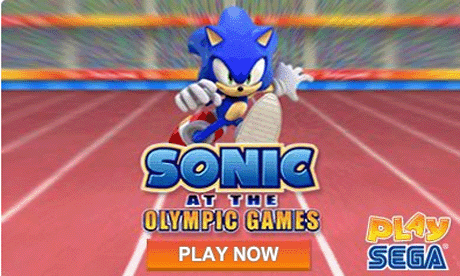
The browser version’s PlaySEGA banner.Image via Sonic Wiki Zone
Sonic at the Olympics was the version you did not need a phone for. Mediatonic, a British studio founded in 2005, stripped the game back to the discus and the javelin, let you compete against players around the world, and wired in its own online high-score table so that scores could be registered from any site the game was embedded on.
Copies went up on Samsung’s website and on Sega’s, and the studio’s page also pointed players to PlaySEGA, the free web games site Sega opened in October 2008. It was never meant to stand on its own: its job during the Olympics was to advertise the phone game and nudge players into downloading the full five-event version.
Glitches, exploits and oddities
No bugs are documented for this one, but it has a few oddities.
The phantom 1500m hurdles
Sonic Retro lists a “1500m Hurdles” event. Sega’s own product page and its North American press release both list a plain 1500m, followed by the 400m hurdles, so the hurdles belong only to the shorter race.
Four characters, one athlete
Knuckles in the hurdles.Image via Sonic Retro
Picking Sonic, Tails, Knuckles or Amy changes how you look, not how you play: Pocket Gamer found their abilities identical.
One game, dozens of phones
Sega Retro’s list of supported handsets runs to dozens of LG, Motorola and Nokia models, with screens from 128×128 up to 352×416 pixels. Most of the screenshots on this page come from the 176×208 version.
Videos & media
We could not find an official Sega upload, so here are the phone game’s trailer and a full playthrough of the Java version.
The trailer for the phone game, uploaded by Se9aStuff.
A complete playthrough of the Java version, from the JAVA Mobile Games channel.
Trivia & facts
A loop on the track.Image via Sonic Wiki ZoneRings in a track and field game: they line every event and boost your score, one of the Sonic touches Pocket Gamer pointed out.
Pocket Gamer’s review opened by suggesting that Sonic would have made a better mascot for Beijing 2008 than the official one.
The game launched in North America on the same day as Sega’s realistic Beijing 2008 phone game, and the two were announced, published and marketed as a pair.
There was no single price: each North American network set its own, from $2.99 to $7.99.
The whole game was tiny even by 2008 standards: Pocket Gamer listed the European Java version at 347KB.
Mediatonic, which made the browser version, went on to create Fall Guys in 2020 and was bought by Epic Games in 2021.
Media & artwork
Artwork, the logo, title screens and screenshots from the phone and browser versions. Select any image to view it larger.
Artwork from our original page.The tile from our old mobile games menu.Logo.Title screen.On the track.A hazard sign on the track.The stadium from above.A loop on the track.Tails in the hurdles.Knuckles in the hurdles.Sonic on a raised stretch of track.The browser version’s PlaySEGA banner.The browser version.
Legacy
A short-lived phone game with a long line of Olympic successors. Note: Sonic at the Olympic Games (2008) is no longer sold; Sega Mobile’s page for it survives only in the Wayback Machine.
Release history
Announced2 April 2008 – Pocket Gamer reports Sega Mobile’s two official Beijing 2008 phone games.
Sega Mobile line-up8 April 2008 – Listed among Sega Mobile’s 2008 games, due from June.
Glu deal17 June 2008 – Glu Mobile to publish it in Europe, the Middle East, Africa, Australia and New Zealand.
UK review11 July 2008 – Pocket Gamer reviews the Java version: 7/10.
North American launch24 July 2008 – On sale through most major carriers, $2.99–7.99.
Sonic at the Olympics2008 – Mediatonic’s two-event browser version.
Sonic at the Olympic Winter GamesJanuary 2010 – A Sonic-only iPhone game for Vancouver 2010.
Sonic at the Olympic Games – Tokyo 20202020 – The name returns for an iOS and Android game.
The Sonic-only Olympics that followed
The idea of a Sonic-only Olympic game for phones came back twice. In January 2010 Sega released Sonic at the Olympic Winter Games on iPhone, only to pull it from the App Store within days, and in 2020 the name Sonic at the Olympic Games was reused for a new iOS and Android game tied to Tokyo 2020. Meanwhile the main Olympic series stayed with Mario & Sonic, from London 2012 to Rio 2016.
Can you still get it?
No. The game was sold through mobile networks and Sega Mobile’s website, and neither has offered it for years. A full playthrough on YouTube (see Videos) is the easiest way to see it today.
Sales & reviews
Reception and review scores
Java phone games were rarely reviewed. Pocket Gamer’s review is the one we could find and check, read in its July 2008 form (the site’s current page shows the same verdict as 3.5 out of 5).
Pocket GamerUK · 11 July 2008
7/10
Jon Mundy enjoyed the slick presentation and the way timing replaced the usual button-bashing, and he liked the Sonic touches, from the looping 1500m track to the rings. His complaints were about size: five events was not much, they felt too similar, and the four characters played the same. His verdict was that it was “a sprint rather than a marathon”.
Reader reviews
No reader reviews yet. Played it? Give it a score out of 10 and tell other fans what you think.
Every fact on this page was checked against the sources below. Sonic Retro, Sega Retro, IGN, Sega’s own pages and Mediatonic’s page were read through Wayback Machine copies. Screenshots are credited to Sonic Retro and Sonic Wiki Zone in their captions.
To provide the best experiences, we use technologies like cookies to store and/or access device information. Consenting to these technologies will allow us to process data such as browsing behavior or unique IDs on this site. Not consenting or withdrawing consent, may adversely affect certain features and functions.
Functional
Always active
The technical storage or access is strictly necessary for the legitimate purpose of enabling the use of a specific service explicitly requested by the subscriber or user, or for the sole purpose of carrying out the transmission of a communication over an electronic communications network.
Preferences
The technical storage or access is necessary for the legitimate purpose of storing preferences that are not requested by the subscriber or user.
Statistics
The technical storage or access that is used exclusively for statistical purposes.The technical storage or access that is used exclusively for anonymous statistical purposes. Without a subpoena, voluntary compliance on the part of your Internet Service Provider, or additional records from a third party, information stored or retrieved for this purpose alone cannot usually be used to identify you.
Marketing
The technical storage or access is required to create user profiles to send advertising, or to track the user on a website or across several websites for similar marketing purposes.




 Sonic the HedgehogAthlete
 Miles “Tails” ProwerAthlete
 Knuckles the EchidnaAthlete
 Amy RoseAthlete