Wii · Nintendo DS2007Sega with NintendoOlympic sports
Mario & Sonic at the Olympic Games (Beijing 2008)
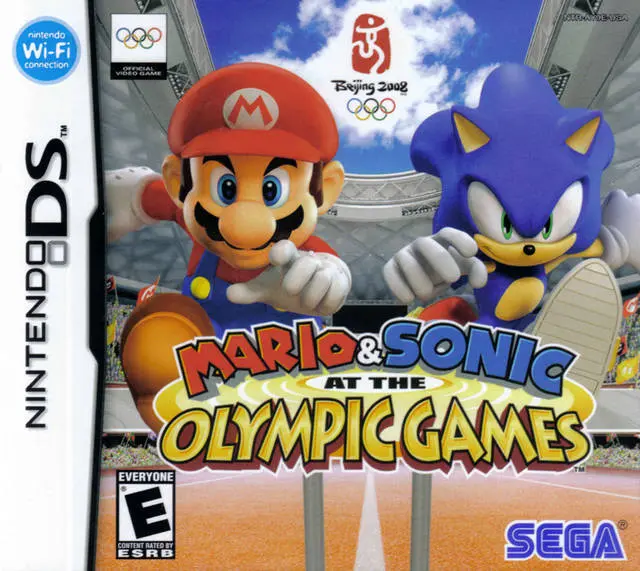
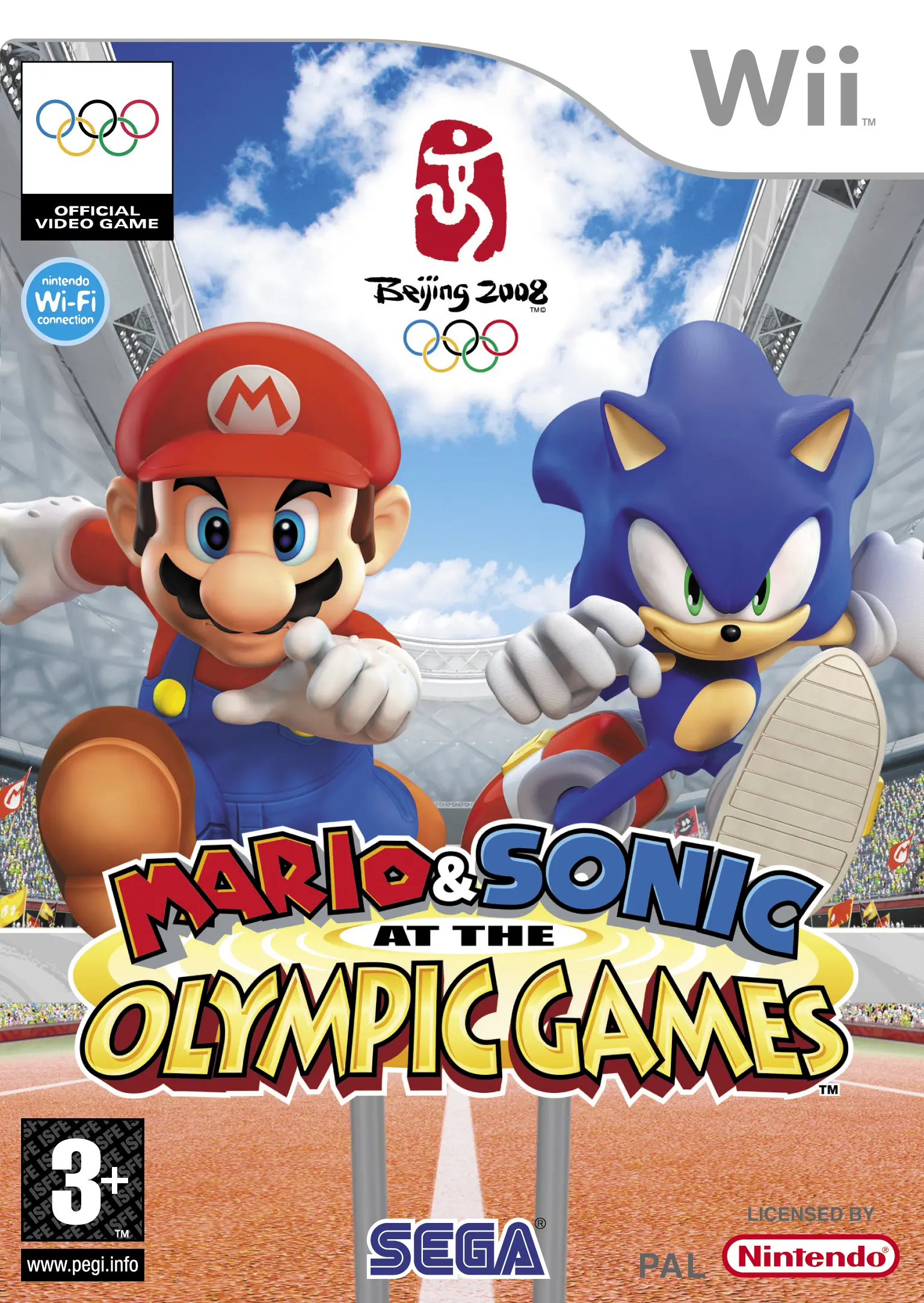
Some sixteen years after Sega created Sonic to take on Mario, the two finally meet, on the starting line of the Beijing Olympics. Sega made it, Shigeru Miyamoto watched over it, and more than ten million people bought it.
ReleasedWii: 6 Nov 2007 (NA) · DS: 17 Jan 2008 (JP)
DeveloperSega Sports R&D, supervised by Shigeru Miyamoto
Roster16 Olympians: eight from each side, plus Miis on Wii
Events24 per version, including fantasy Dream Events
SalesAbout 10 million (Sega, July 2008)
LicenceOfficial video game of Beijing 2008
Title
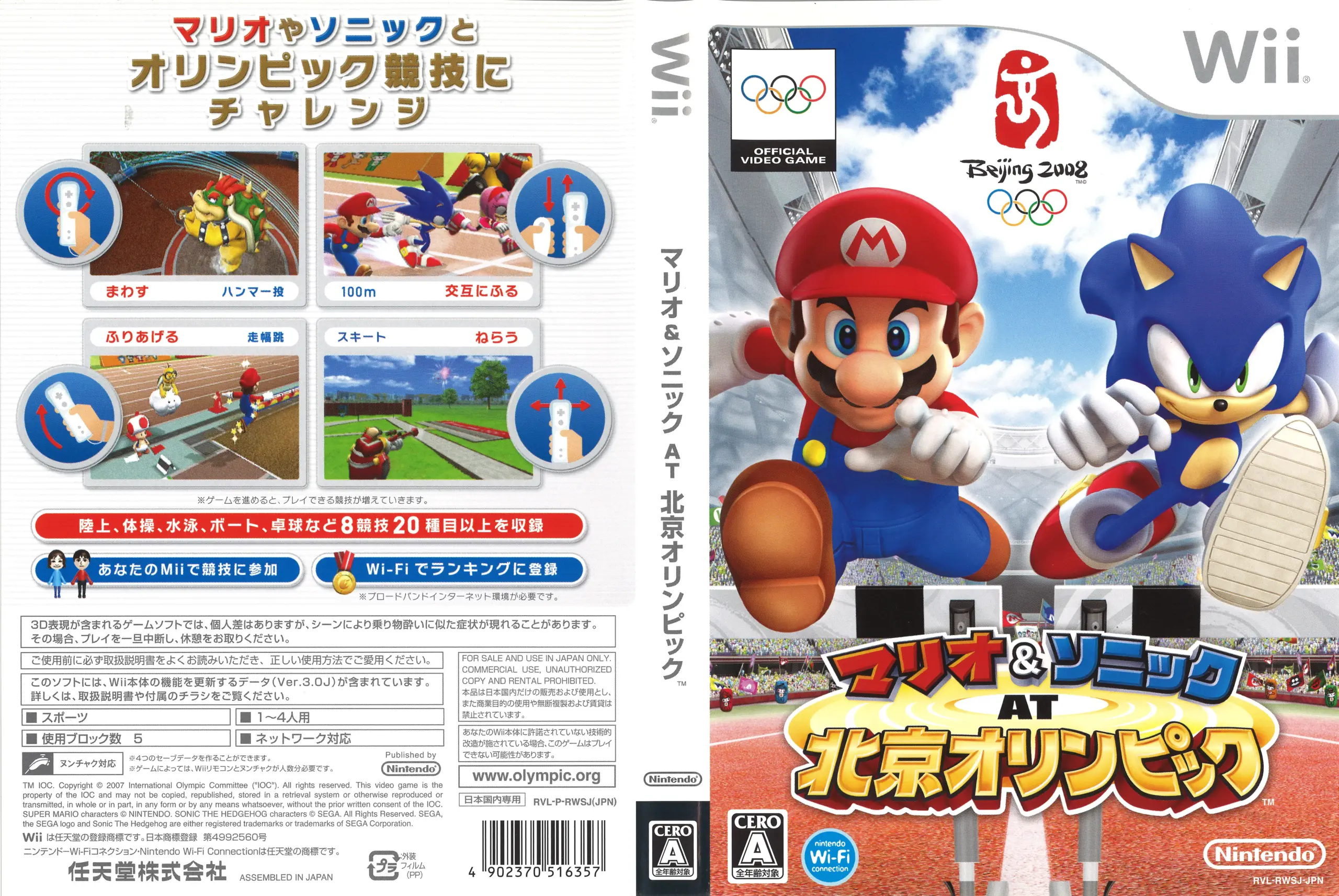
Mario & Sonic at the Olympic Games; Japan and Korea: Mario & Sonic at Beijing Olympics (マリオ&ソニック AT 北京オリンピック)
Platforms
Wii, Nintendo DS
Developer
Sega Sports R&D (Sega Japan), with help from Racjin (and, according to IGN, TOSE)
Publisher
Sega; Nintendo in Japan
Senior producer
Shigeru Miyamoto (Nintendo)
Producers
Osamu Ohashi (Sega), Hiroshi Sato (Nintendo)
Director
Eigo Kasahara
Music
Teruhiko Nakagawa, with remixed Mario and Sonic themes
Licence
Official video game of the Beijing 2008 Olympic Games, licensed by the IOC through International Sports Multimedia
Players
Wii: 1–4; DS: 1–4 wireless (Download Play: six events)
Released (North America)
Wii: 6 November 2007; DS: 22 January 2008
Released (Europe)
Wii: 23 November 2007; DS: 8 February 2008
Released (Australia)
Wii: 22 November 2007; DS: 7 February 2008
Released (Japan)
Wii: 22 November 2007; DS: 17 January 2008
Released (South Korea)
Wii: 29 May 2008; DS: 26 June 2008
Genre
Sports, party
Series
Mario & Sonic (first game)
Followed by
Mario & Sonic at the Olympic Winter Games (2009), then London 2012
Overview
For a generation of players the idea was a playground fantasy: Mario versus Sonic, Nintendo versus Sega, settled once and for all. When it finally happened, it was not a platform game or a race but the Olympics. Sega had won the licence for the Beijing 2008 Games and asked Nintendo if it could bring Mario along; Nintendo said yes, lent Shigeru Miyamoto as senior producer, and the two mascots shook hands on the track.
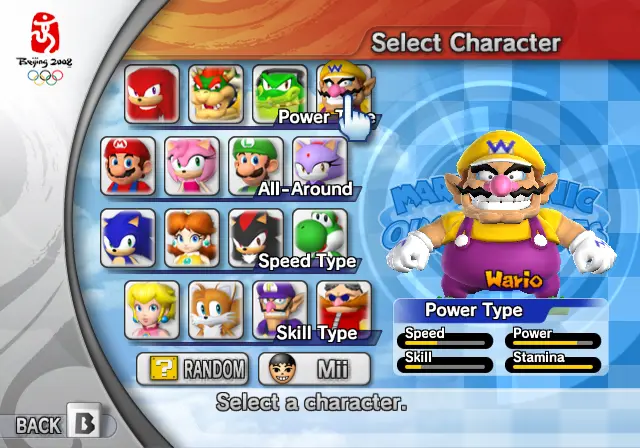
There are 24 events in each version, from the 100 metres to table tennis, plus over-the-top Dream Events set in places from both series. Sixteen characters take part, eight from each side, split into All-Around, Speed, Power and Skill types. On the Wii you flail, swing and drum the Wii Remote to run, throw and row; on the DS you scribble and tap with the stylus.
Reviews were lukewarm, but that barely mattered. The Wii version was named the best Wii game of 2007 at Leipzig’s Games Convention, sat at number one in the UK charts for weeks, and Sega put combined sales at around ten million within a year, enough to turn a one-off into a long-running series.
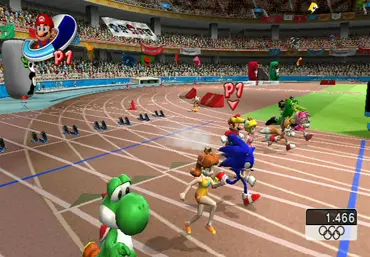
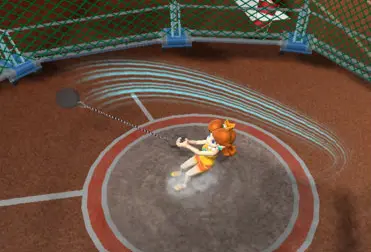
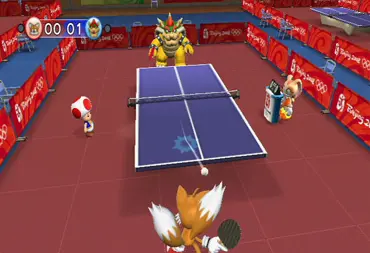
The 100m on Wii.Hammer throw.Table tennis.
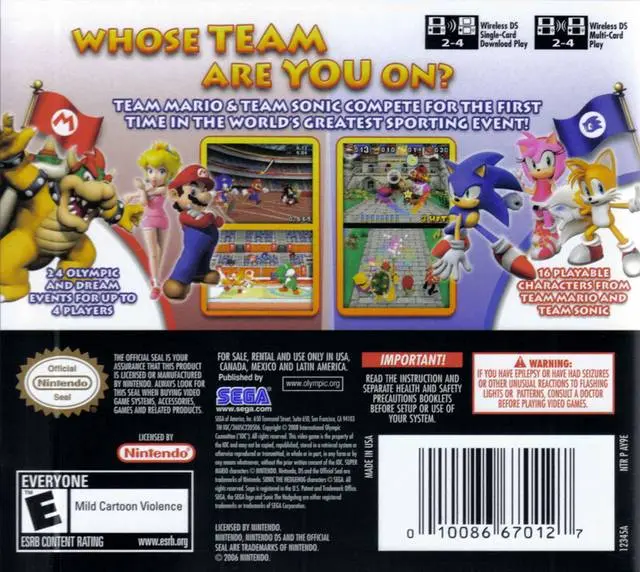
Team Mario & Team Sonic compete for the first time in the world’s greatest sporting event!
Under the banner “Whose team are you on?”, the box also promises 24 Olympic and Dream events for up to four players and 16 playable characters split between the two teams.
— Back of the North American Nintendo DS box (Sega of America, 2008), from Sonic Retro’s scan. One line quoted; the rest summarised.
Quick Answers
The short answers, with the detail further down the page.
When did it come out?
The Wii version on 6 November 2007 in North America, 22 November in Japan and Australia and 23 November in Europe. The DS version followed in January and February 2008. More →
Who made it, Sega or Nintendo?
Sega. Its Sega Sports R&D team developed it with Shigeru Miyamoto supervising as senior producer, and Nintendo published it in Japan. More →
Who can you play as?
Mario, Luigi, Peach, Daisy, Yoshi, Bowser, Wario and Waluigi for Nintendo; Sonic, Tails, Knuckles, Amy, Shadow, Blaze, Vector and Dr. Eggman for Sega. Wii owners can also use their Miis. More →
What are Dream Events?
Fantasy versions of Olympic sports, set in Mario and Sonic locations, where characters can use special abilities. More →
Is the DS version the same?
Mostly, but each version has events the other lacks. The DS has 10m platform diving, cycling and five extra Dream Events. More →
How many did it sell?
Sega said about ten million across both versions by July 2008; Guinness World Records later listed 7.09 million copies for Wii and 4.22 million for DS. More →
Plot / Story
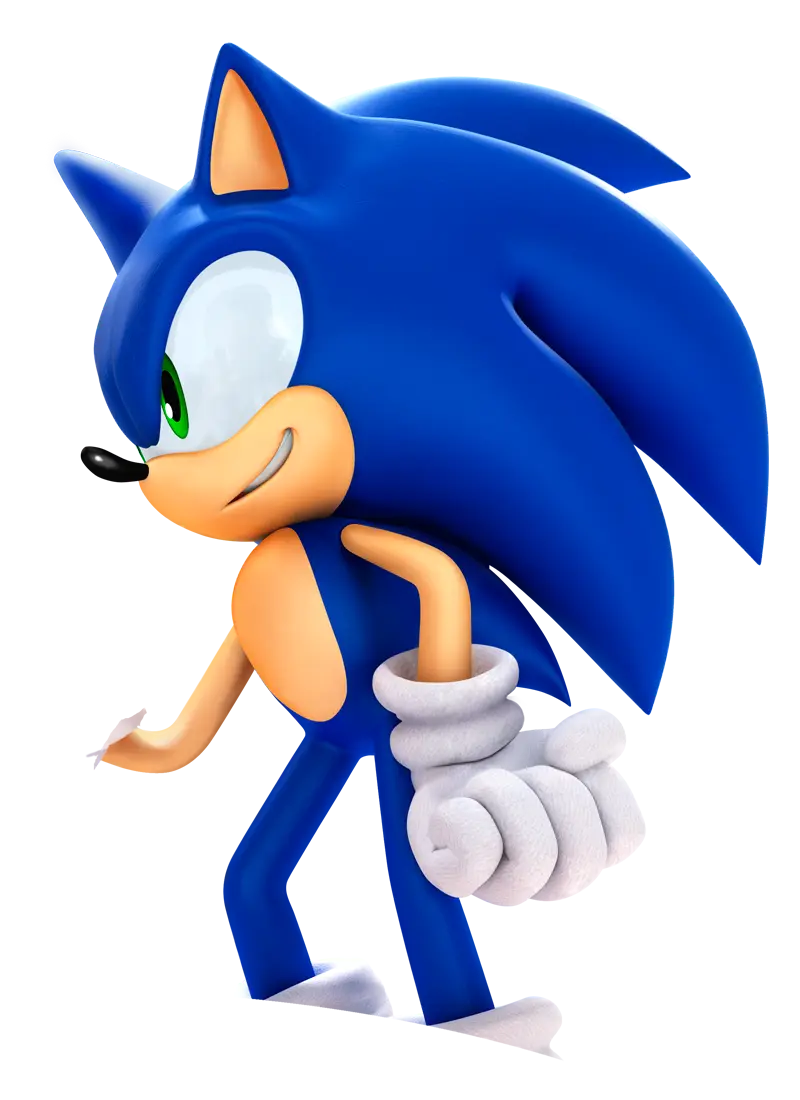
Sonic offers a handshake.Image via Sonic Retro
There is no story mode: the Olympics are the story. The venues are modelled on those of the real Beijing Games, restyled to suit both Sonic’s futuristic look and Mario’s cartoon world, and the events follow the real rules of each sport. Referees are drawn from both casts too: Espio, Charmy, Cream, Lakitu, Shy Guy, Toad and Koopa Troopa, with Big, a Pianta and Dry Bones joining them on Wii.
Modes
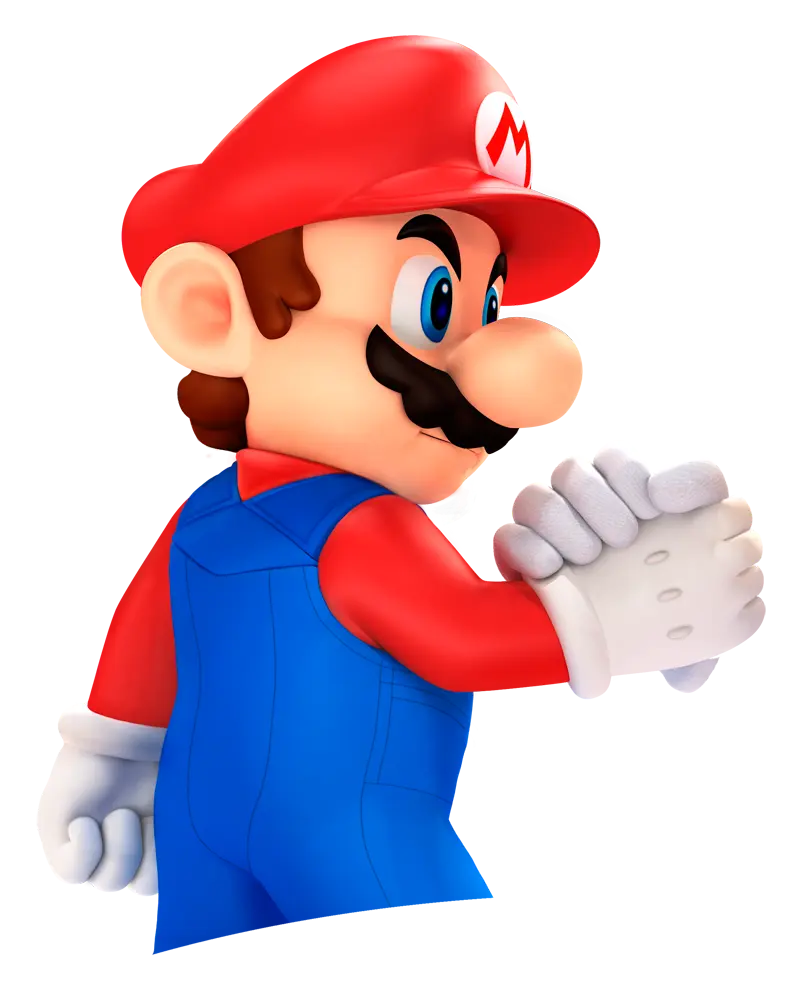
Mario returns it.Image via Sonic Retro
Circuit strings events together into a series, either a preset one or your own; Single Match lets you pick any one event; and Mission mode gives every character six personal challenges, made harder because the characters’ stats are less balanced there. Up to four can play together on Wii, and the DS has a dedicated Versus mode for four players over wireless, with Download Play offering six events to friends without the game.
A Gallery mode serves up Olympic history and athlete trivia in five categories, unlocked by beating minigames, and clearing all of them unlocks classic Mario and Sonic music. Both versions also post best times and scores to online leaderboards through the Nintendo Wi-Fi Connection.
Waggle, drum and stroke
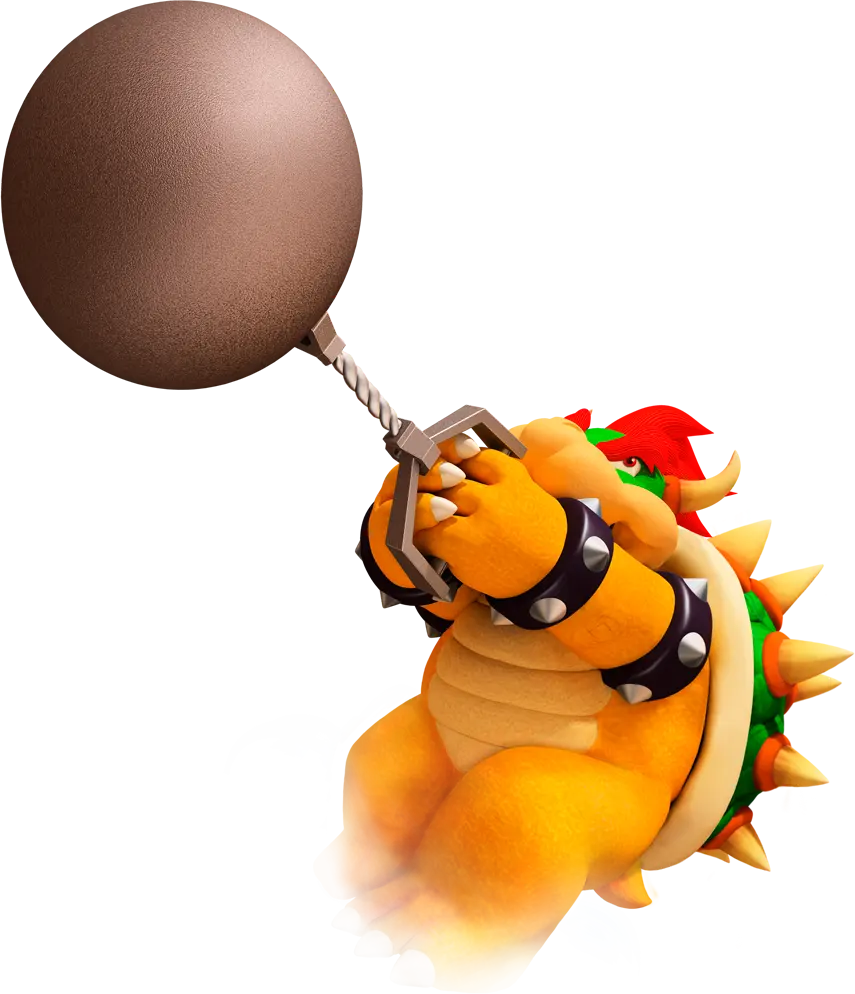
Bowser and the hammer.Image via Sonic Retro
On Wii the Remote stands in for the equipment: you swing it like a hammer, pull it back with the Nunchuk held out like a bow for archery, and drum it up and down as fast as you can in the five running events. Some things are automated; in table tennis the game moves your character and you just swing. The DS version is the same design without the motion controls, so running means rubbing the touchscreen as fast as you can instead.
Dream Events
Luigi on the vault.Image via Sonic Retro
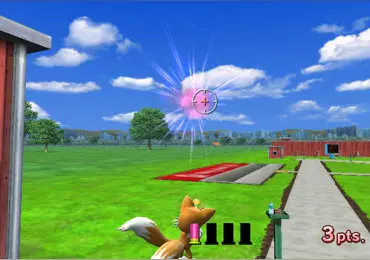
Alongside the real sports are Dream Events, exaggerated versions set in locations and using objects from older Mario and Sonic games. Here characters can use special abilities, and big moments play out in slow motion; in Dream Fencing and Dream Table Tennis special attacks hit harder. The DS adds five Dream Events of its own: boxing, canoeing, basketball, skeet and the long jump.
Beijing 2008 Olympic GamesIOC · International Sports MultimediaSega held the video game licence for the Games, and this was the first official game of Beijing 2008.
Sonic at the Olympic GamesSega · mobile phones · June 2008A Sonic-only spin-off by AirPlay with five events for Sonic, Tails, Knuckles and Amy.
F-Zero GXNintendo GameCube · 2003Amusement Vision’s racer for Nintendo’s GameCube, an early sign of how close the old rivals became once Sega stopped making consoles.
Guinness World RecordsGamer’s Edition 2010Listed as the best-selling crossover of gaming characters.
Sixteen Olympians, eight from each company, in four types of four (types as shown on Sonic Retro). Every character has six missions, a crown for winning gold in every event and an emblem for clearing their missions. Wii players can also compete as their Mii, which has no stats of its own.
Character
Who they are
In this game
Stats & abilities
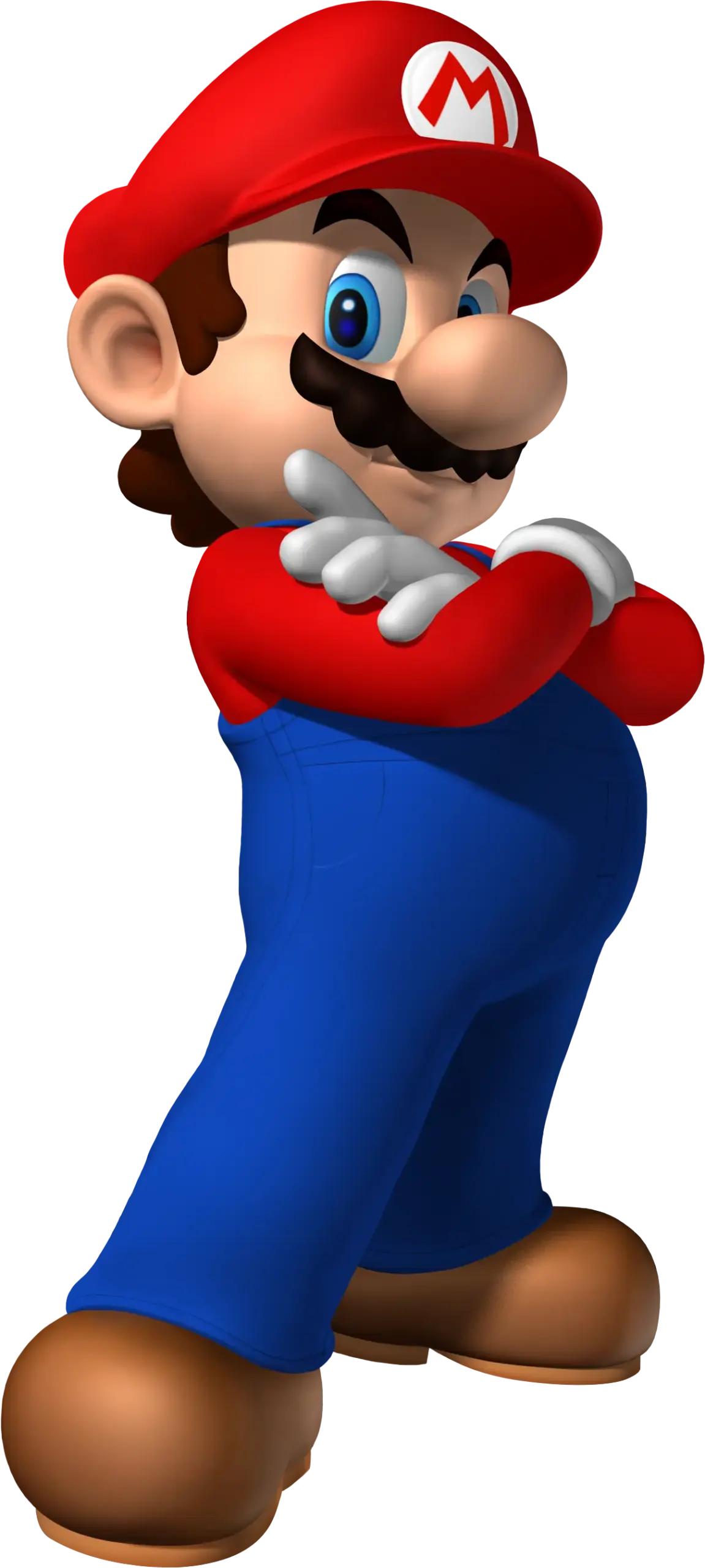
MarioTeam Mario · All-Around
Nintendo’s mascot, the plumber hero of the Mushroom Kingdom.
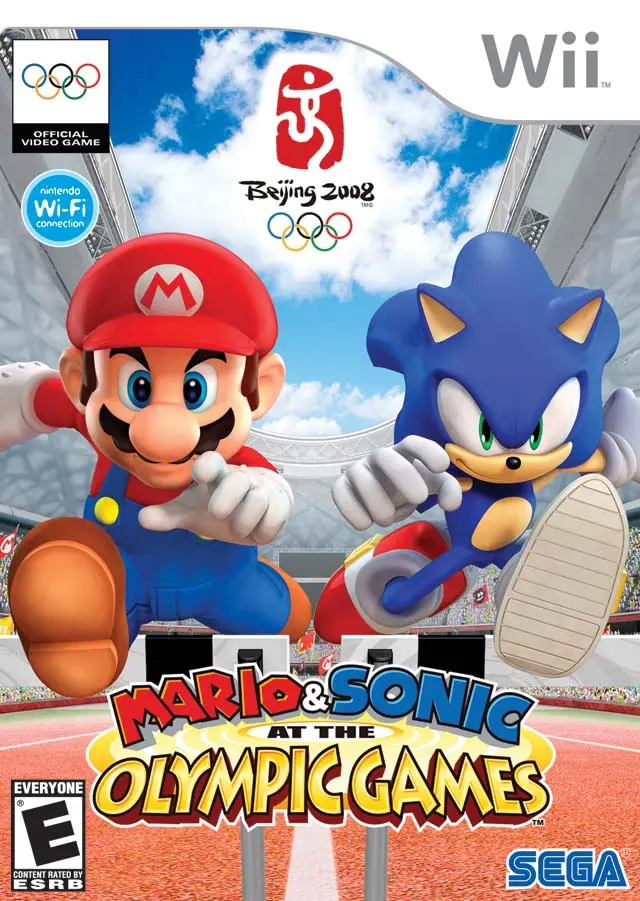
Shares the cover with Sonic and the first handshake between the two.
All-Around: no great strengths or weaknesses.
LuigiTeam Mario · All-Around
Mario’s younger brother.
A balanced all-rounder like his brother.
All-Around: no great strengths or weaknesses.
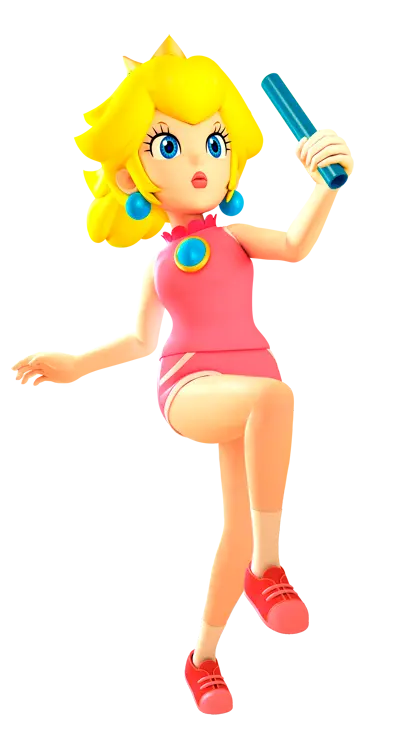
Princess PeachTeam Mario · Skill
Ruler of the Mushroom Kingdom.
One of the four Skill athletes.
Skill: above-average skill and stamina, but low power and top speed.
Princess DaisyTeam Mario · Speed
Princess of Sarasaland and Peach’s friend.
Lines up with Sonic, Shadow and Yoshi as a Speed type.
Speed: best at agility and stamina events.
YoshiTeam Mario · Speed
Mario’s loyal dinosaur companion.
A Speed type.
Speed: best at agility and stamina events.
BowserTeam Mario · Power
King of the Koopas and Mario’s arch-enemy.
The heavyweight of the Mario side.
Power: best at strength and endurance events.
WarioTeam Mario · Power
Mario’s greedy rival.
A Power type.
Power: best at strength and endurance events.
WaluigiTeam Mario · Skill
Wario’s lanky partner in crime.
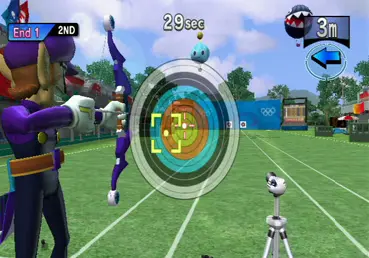
A Skill type; he is the archer in the event screenshot below.
Skill: above-average skill and stamina, but low power and top speed.
Sonic the HedgehogTeam Sonic · Speed
Sega’s mascot and Mario’s old rival.
Shares the cover with Mario; one of the fastest athletes.
Speed: best at agility and stamina events.
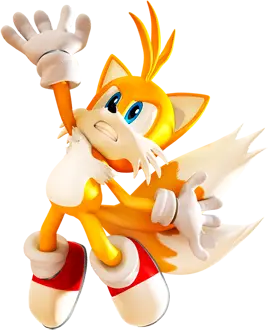
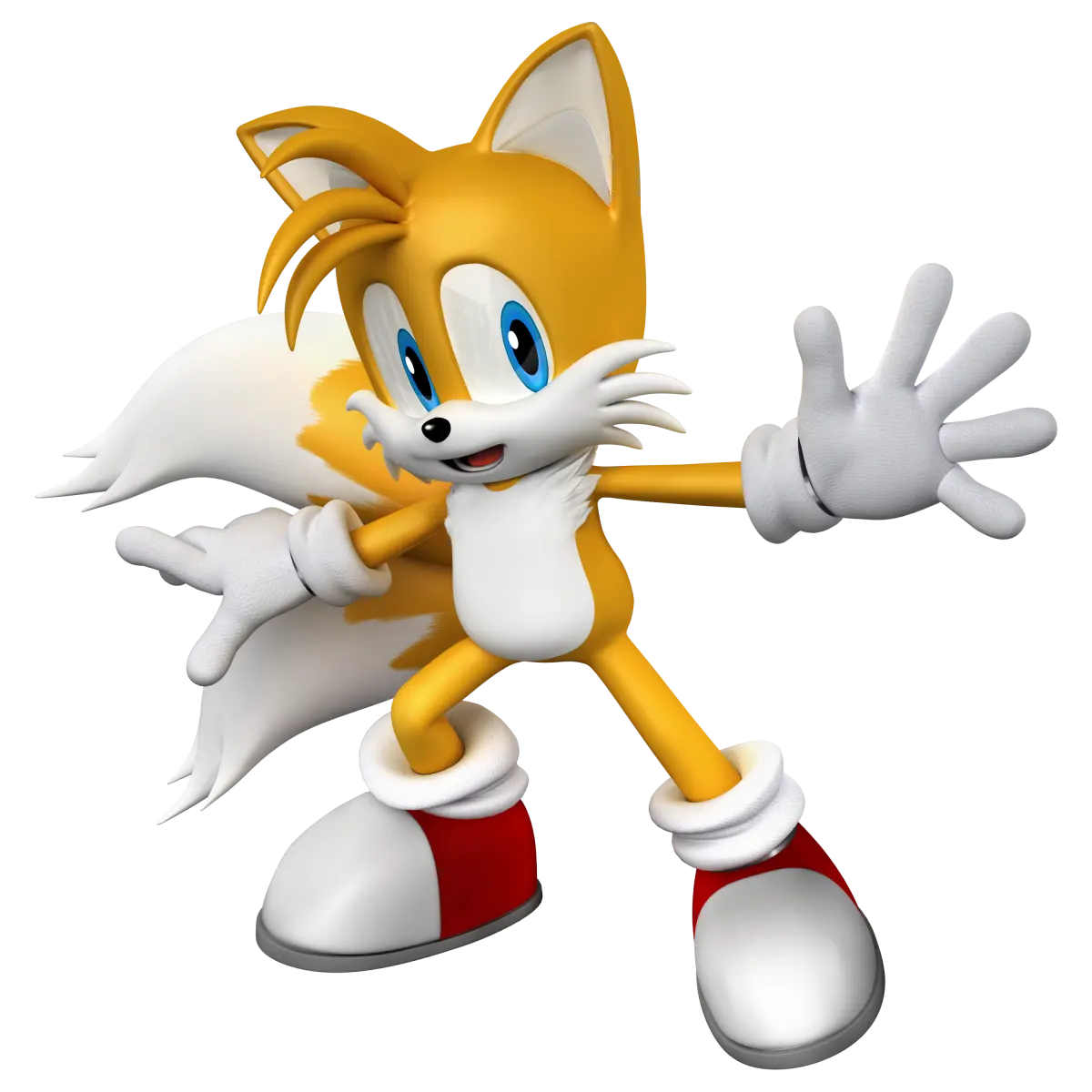
Miles “Tails” ProwerTeam Sonic · Skill
Sonic’s two-tailed fox friend.
A Skill type.
Skill: above-average skill and stamina, but low power and top speed.
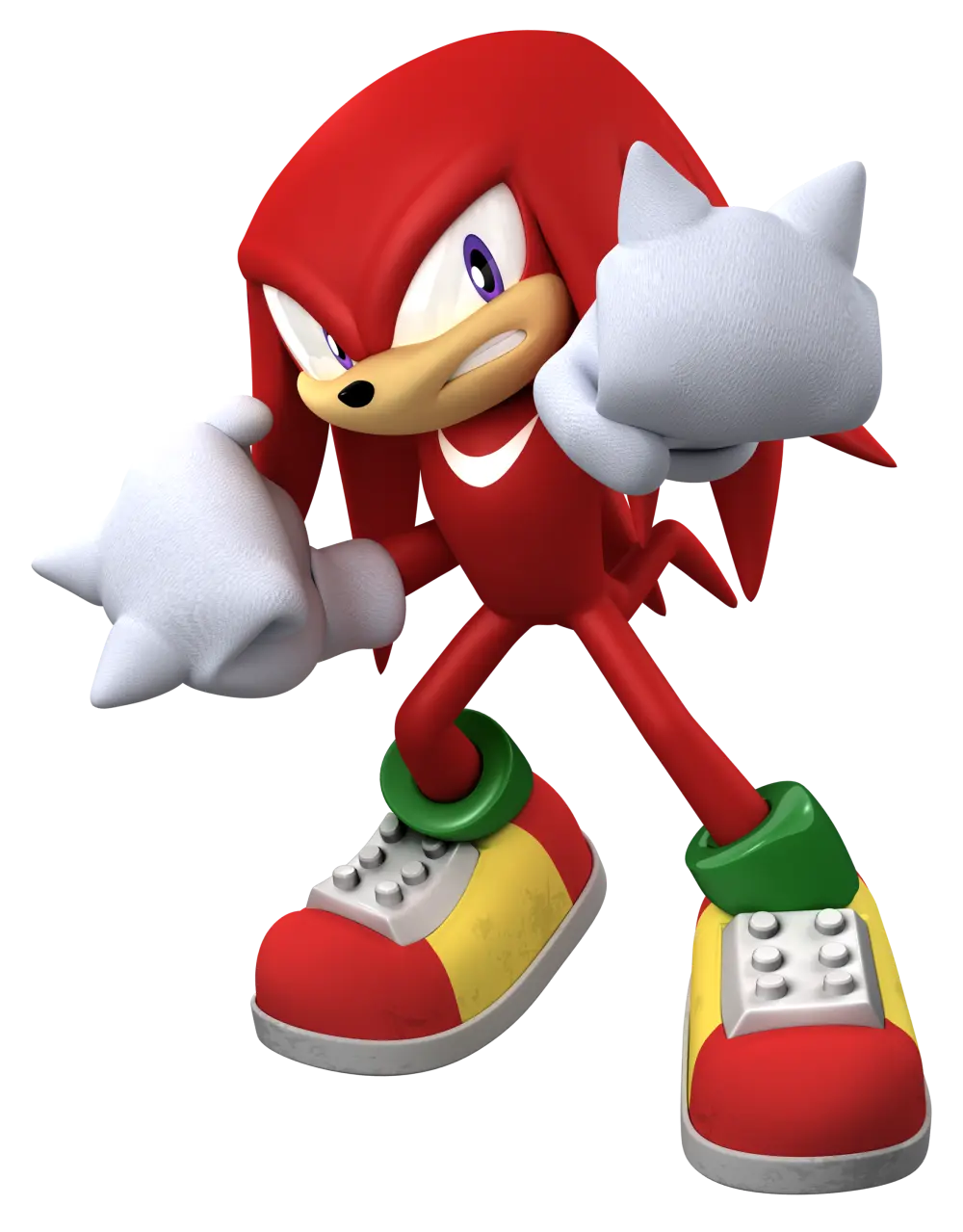
Knuckles the EchidnaTeam Sonic · Power
Guardian of the Master Emerald.
Sega’s strongest entrant alongside Vector.
Power: best at strength and endurance events.
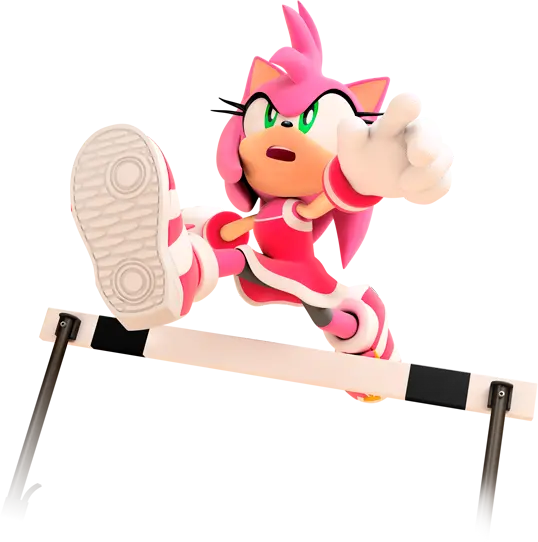
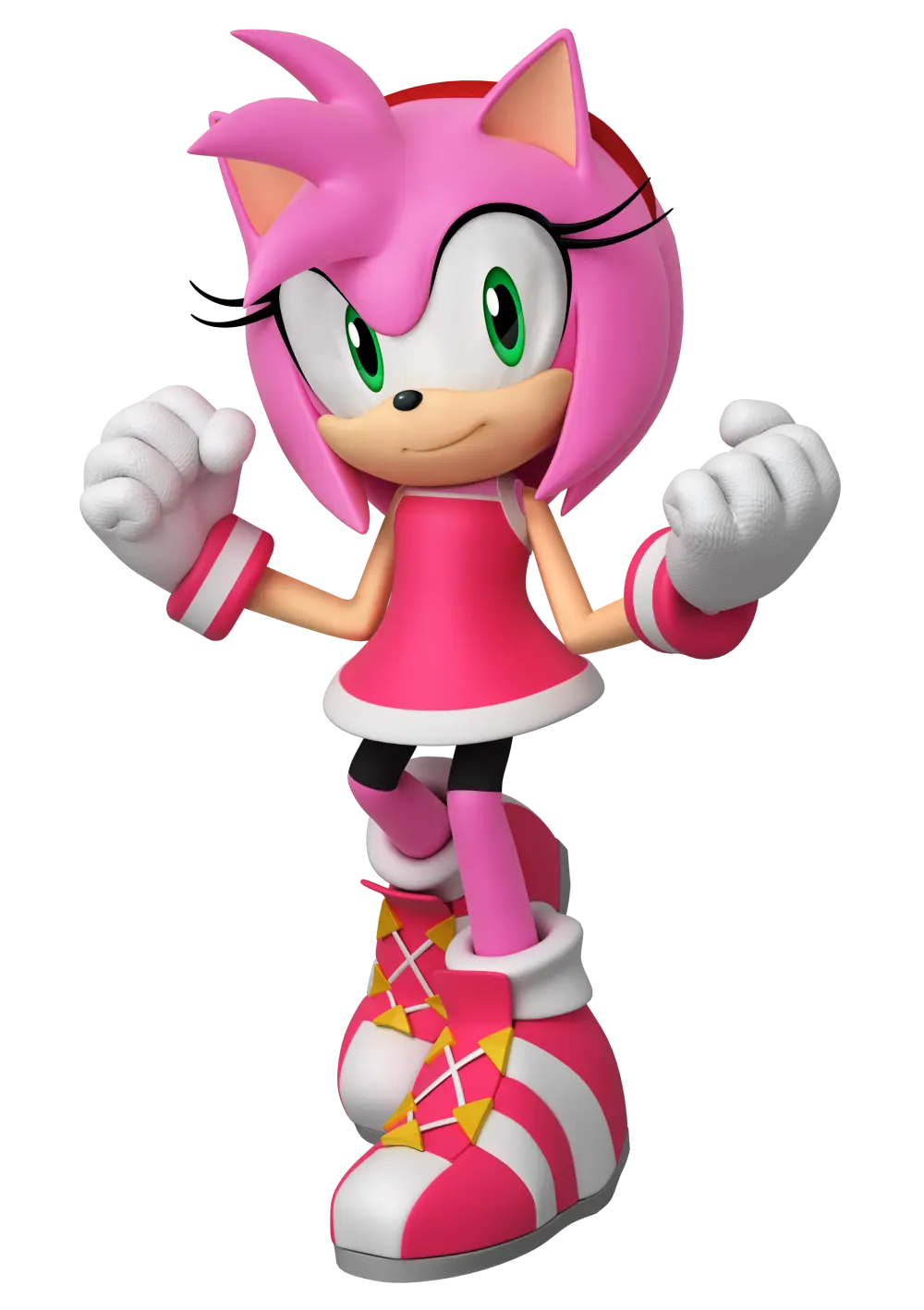
Amy RoseTeam Sonic · All-Around
Sonic’s biggest fan.
An All-Around type.
All-Around: no great strengths or weaknesses.
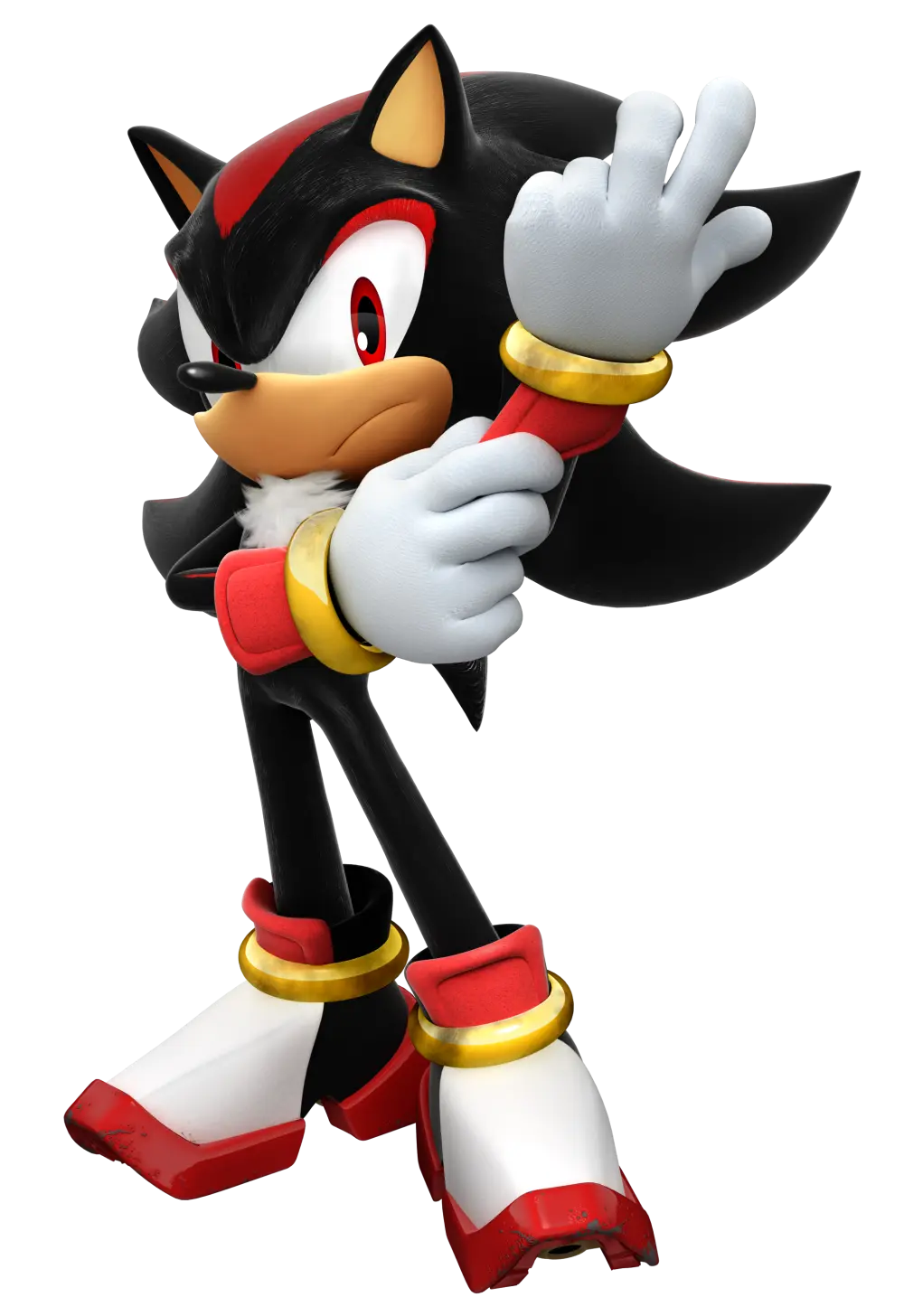
Shadow the HedgehogTeam Sonic · Speed
The ultimate life form.
A Speed type.
Speed: best at agility and stamina events.
Blaze the CatTeam Sonic · All-Around
A princess from another dimension, first seen in Sonic Rush.
An All-Around type.
All-Around: no great strengths or weaknesses.
Vector the CrocodileTeam Sonic · Power
Head of the Chaotix detective agency.
A Power type.
Power: best at strength and endurance events.
Dr. EggmanTeam Sonic · Skill
Sonic’s arch-enemy, competing for once instead of scheming.
A Skill type.
Skill: above-average skill and stamina, but low power and top speed.
The Wii events
The twenty Olympic events on Wii as listed by Sonic Retro, with its screenshots. Dream Events and the DS-only events are covered above.
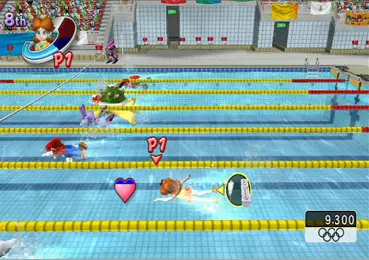
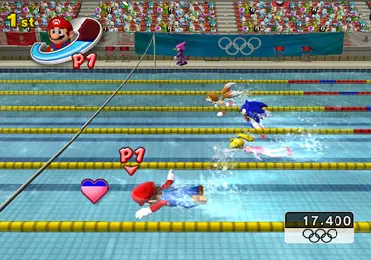
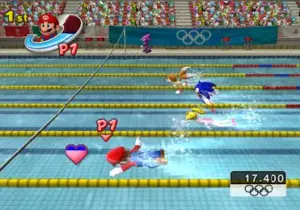
100m FreestyleAquaticsTwo lengths of the pool.
4 × 100m Freestyle RelayAquaticsFour swimmers, two lengths each.
ArcheryArcheryFour sets of three arrows at 70 metres.
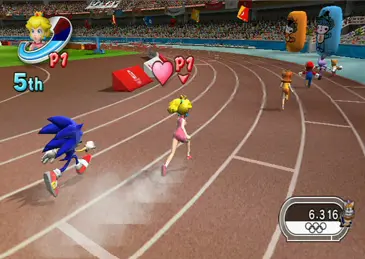
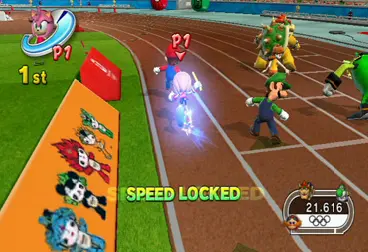
100mAthleticsA good start matters most here.
400mAthleticsOne lap from a staggered start.
4 × 100m RelayAthleticsPick any four characters for your team.
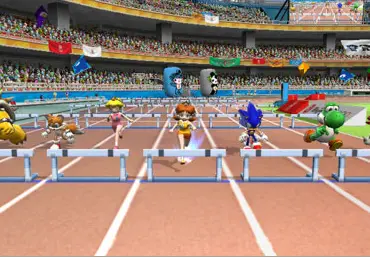
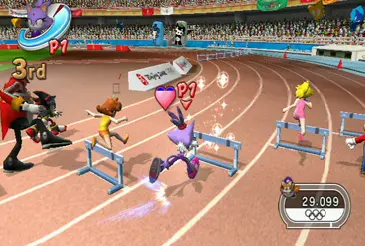
110m HurdlesAthleticsSprint and leap.
400m HurdlesAthleticsThe long hurdles.
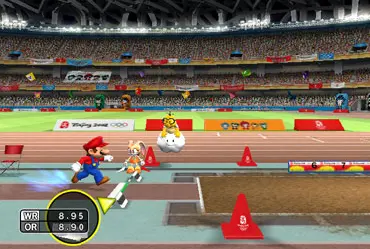
Long JumpAthleticsBest of three, no fouls.
Triple JumpAthleticsHop, step and jump.
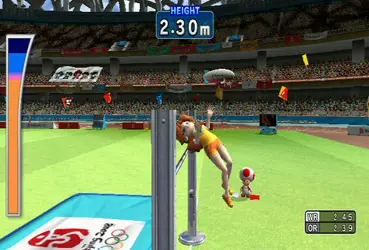
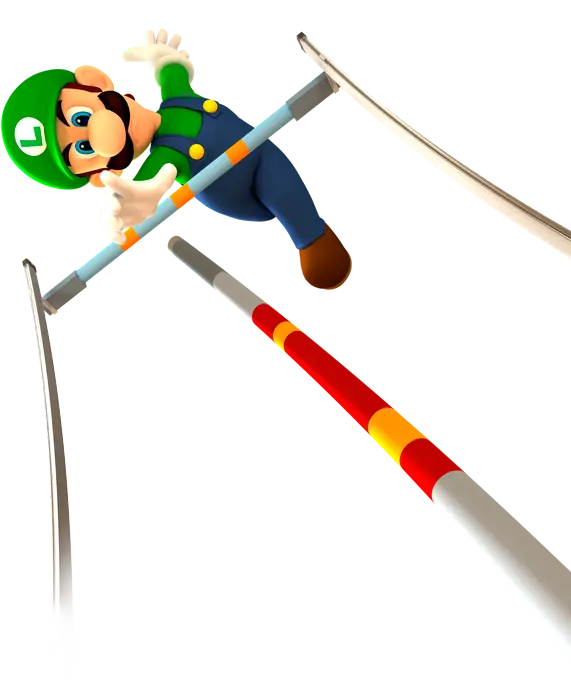
High JumpAthleticsThree failures and you are out.
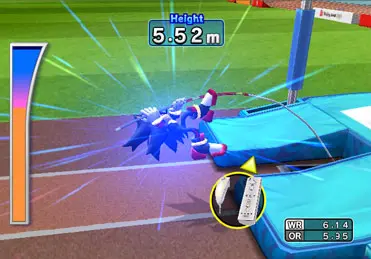
Pole VaultAthleticsPlant the pole and clear the bar.
Hammer ThrowAthleticsSpin, then let go.
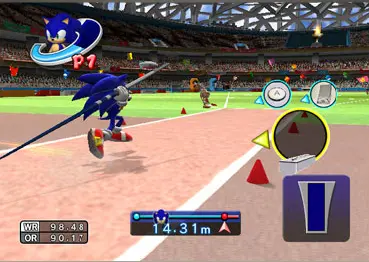
Javelin ThrowAthleticsDo not cross the line.
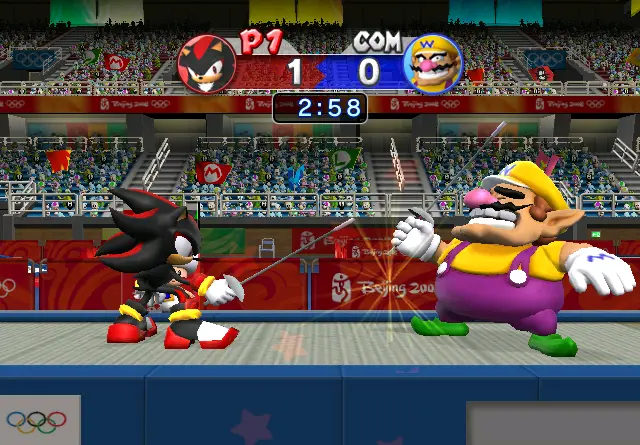
Individual ÉpéeFencingFirst to 15 touches.
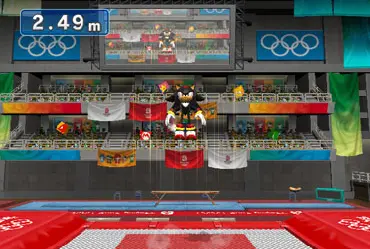
TrampolineGymnasticsSpins and somersaults, judged on precision.
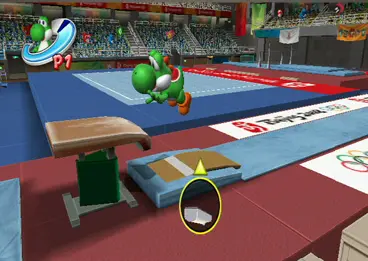
VaultGymnasticsUp to 10 points per attempt.
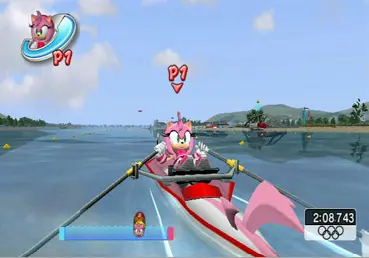
Single ScullsRowingKeep the boat straight.
SkeetShootingEight stations, one shot per target.
Table TennisTable TennisFirst to 11 points.
Who made it
Credits as reported by Wikipedia.
Sega Sports R&DDeveloperSega Japan’s sports team did most of the work.
Shigeru MiyamotoSenior producerMario’s creator supervised the project for Nintendo.
Osamu Ohashi & Hiroshi SatoProducersOne from Sega, one from Nintendo.
Eigo KasaharaDirectorSega’s director on the game.
Teruhiko NakagawaComposerWrote the music.
Racjin and TOSESupportSupport studios: Racjin assisted with development, and IGN also names TOSE.
How it was made
The idea of a Mario and Sonic game had been around for years; the Olympics gave it a reason to exist.
From rivals to partners
The 16 Olympians.Image via Sonic Retro
The rivalry thawed once Sega left the console business in 2001. One early sign was F-Zero GX, which Sega’s Amusement Vision built for Nintendo’s GameCube in 2003, and behind the scenes Yuji Naka and Shigeru Miyamoto had chatted about putting their mascots in the same game, a conversation that only came out in 2005. What the idea lacked, as they saw it, was a setting that would give it “an exclamation mark”.
The Olympic licence
The Beijing licence supplied one. Sega won the rights about a year later and chose not to make a realistic sports simulation: famous mascots, it reasoned, would do more to get young people interested in the Games, and that meant asking Nintendo for Mario. Nintendo said yes and worked alongside Sega as an extra check on quality, with Miyamoto confirming that he was supervising the project. The event list was once longer; Sega Europe’s president later said judo had been among the cuts.
Announcement and release
The two companies revealed the game together on 28 March 2007, and according to Sonic Retro many fans dismissed it as an early April Fool until Sega’s website confirmed it was real. It was playable at E3 that summer. The team finished ahead of schedule: Sega declared the game gold in October 2007 and pulled the Wii release forward by two weeks.
Firsts: what this game introduced
What this game started.
1Mario meets SonicThe first licensed game to feature characters from both the Mario and Sonic series.
2The Mario & Sonic seriesThe first of a run of Olympic crossovers for later Summer and Winter Games.
3Beijing 2008 on consolesBeijing 2008’s first official video game.
4Dream EventsFantasy events set in Mario and Sonic locations, a feature the later games kept.
5Characters by typeThe cast is split into All-Around, Speed, Power and Skill athletes, four in each type and two from each side.
6A Guinness recordListed in the Gamer’s Edition 2010 as the best-selling crossover of gaming characters.
Cheats & secrets
There are no button codes; the extras are earned by playing.
Unlock the classic music
Clear every level of the minigames behind the five doors in the Gallery to unlock all the Mario and Sonic tunes for the Gallery jukebox.
Crowns
Win gold (or first place) in every event with a character to earn that character’s crown, and do it with everyone for the Complete Crown.
Emblems
Emblems reward feats such as finishing a character’s Mission mode, a perfect 10 on the trampoline, 120 points in archery, a 5–0 table tennis win, a fault-free fencing win or setting a world record on your first attempt at an event.
Glitches, exploits and oddities
No famous bugs are documented, but there are a few oddities.
Hidden athletes in the files
People who looked inside the European version found data for Silver, Donkey Kong, Birdo and Jet, none of them playable. Some of them made the team in a later game.
Statless Miis
Miis do not appear to have stats at all, so they never gain or lose an edge from their type.
Missions that do not play fair
In Mission mode the characters’ stats are less balanced than in the main game, which is why some missions feel much harder.
Videos & media
An early Wii teaser, and a complete playthrough.
Wii teaser, via Nintendo Life.
Longplay by LongplayArchive.
Trivia & facts
Sonic Retro recalls that many fans took the late-March 2007 announcement for an April Fool, until Sega confirmed on its website that the game was real.
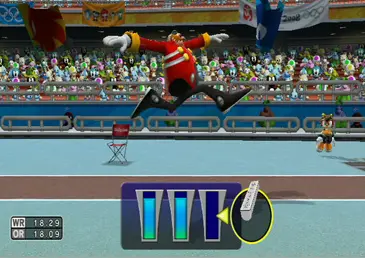
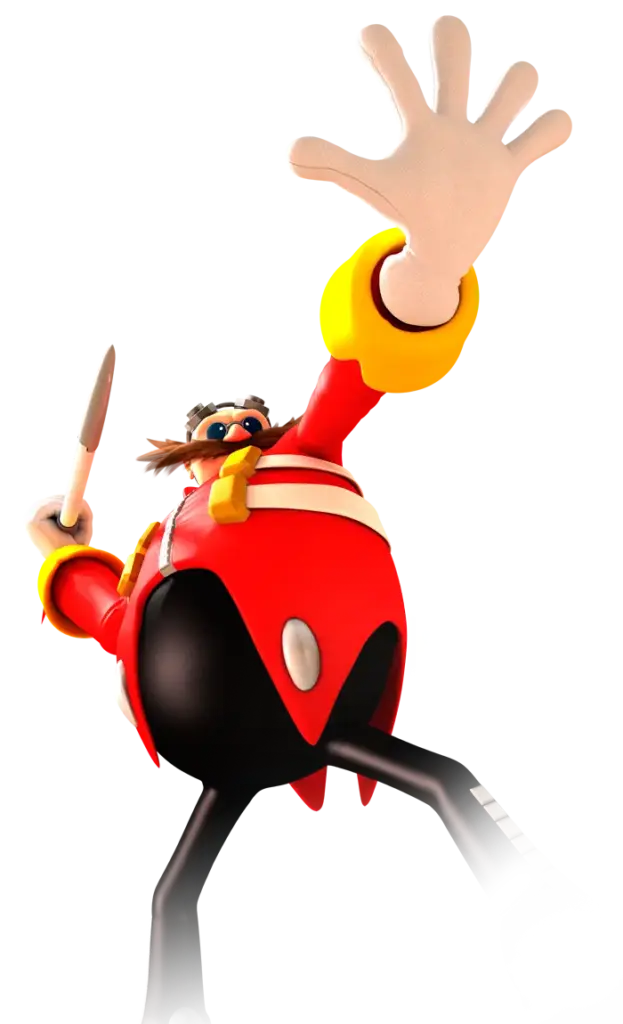
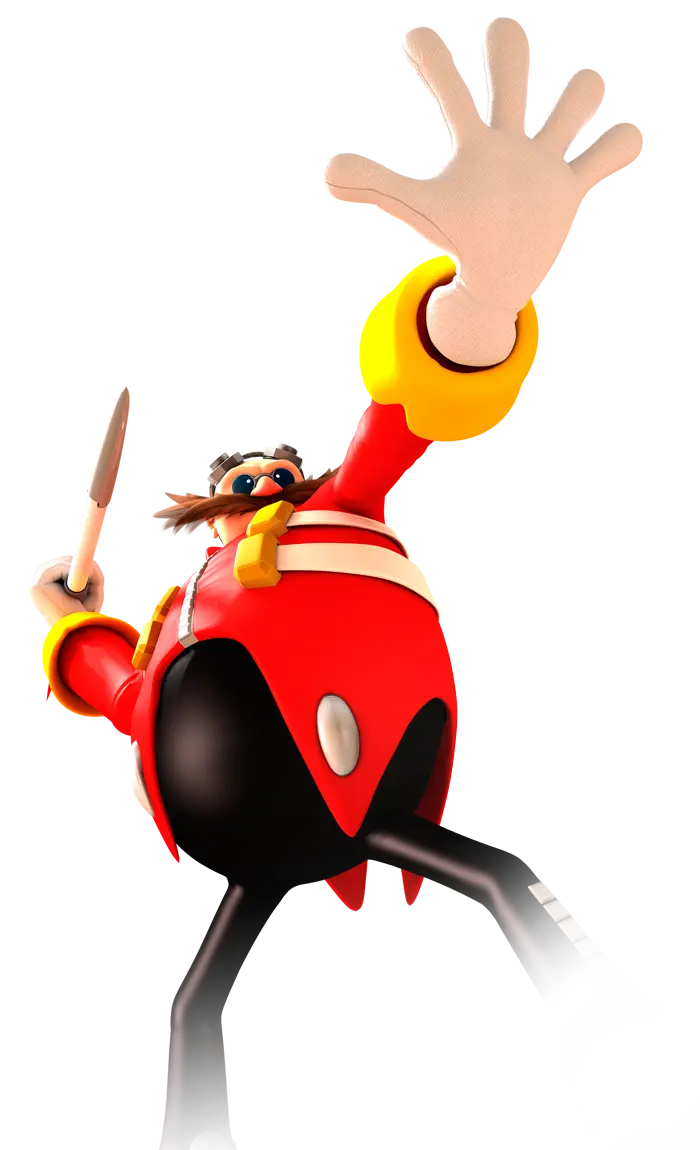
Eggman and the javelin.Image via Sonic RetroSega originally planned more events, including judo, before cutting the list down.
Big the Cat is not an athlete here: on Wii he is one of the referees.
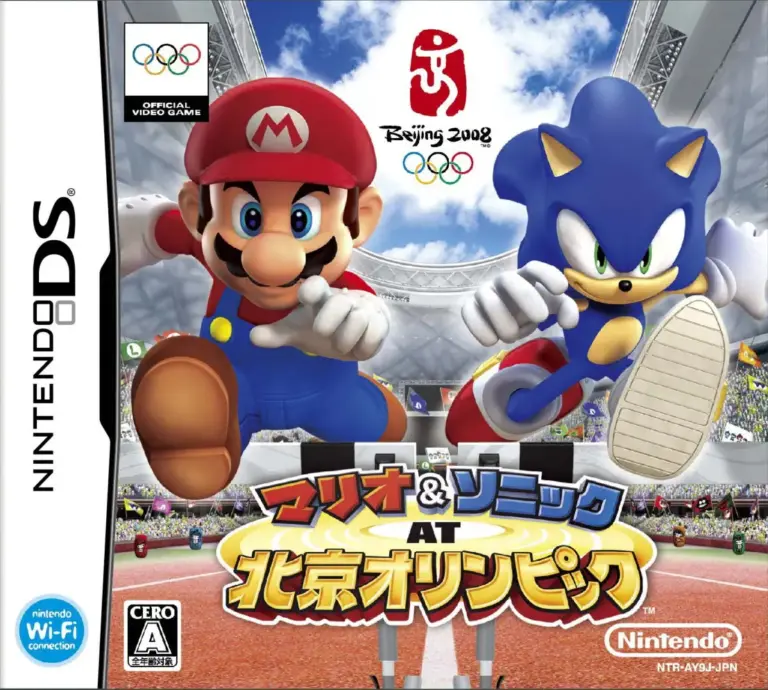
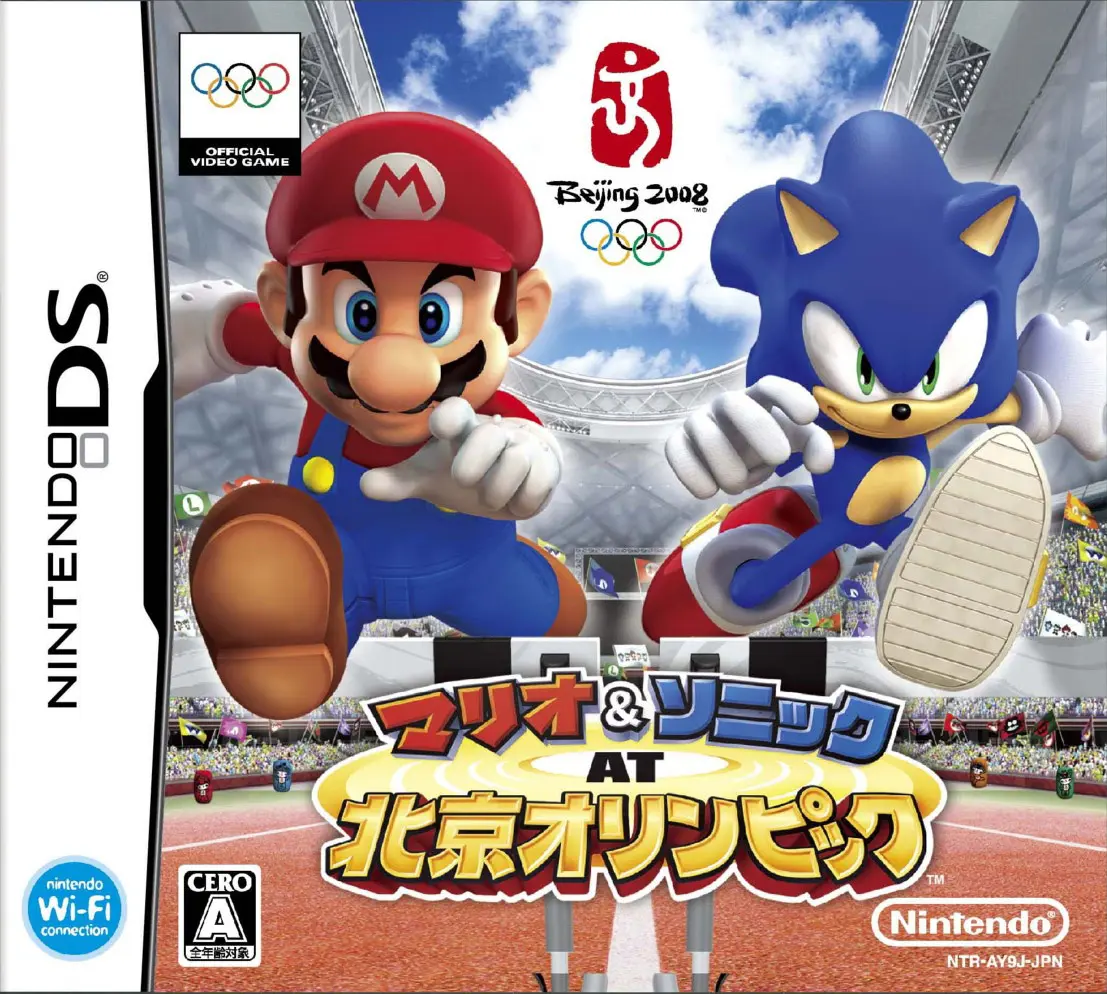
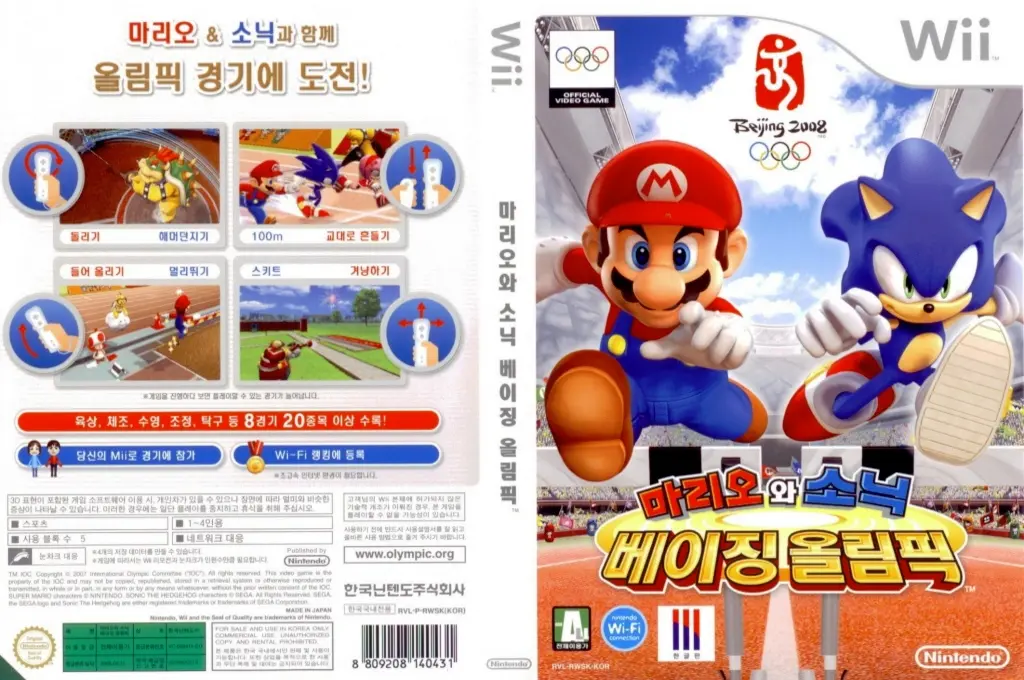
Japanese DS cover.Image via Sonic RetroIn Japan and South Korea the game is called Mario & Sonic at Beijing Olympics, and Nintendo published both versions there.
Analyst Jesse Divnich used the game as an example of brand power on Wii: it sold strongly in the US despite review averages below 70.
In the relays you can build a team from any four characters, so Mario and Sonic can run on the same side.
Media & artwork
Box art, artwork and screenshots, via Sonic Retro. Select any image to view it larger.
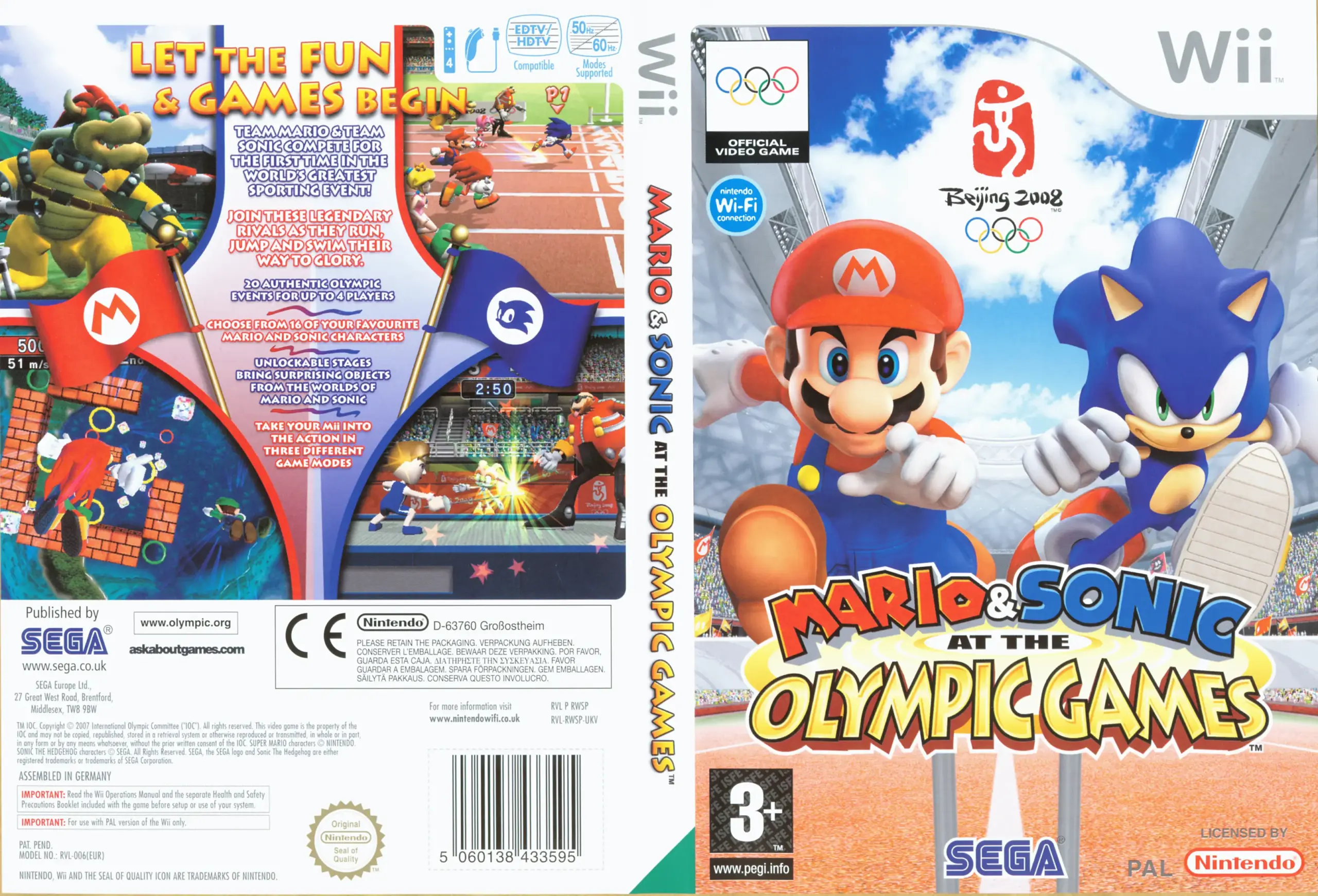
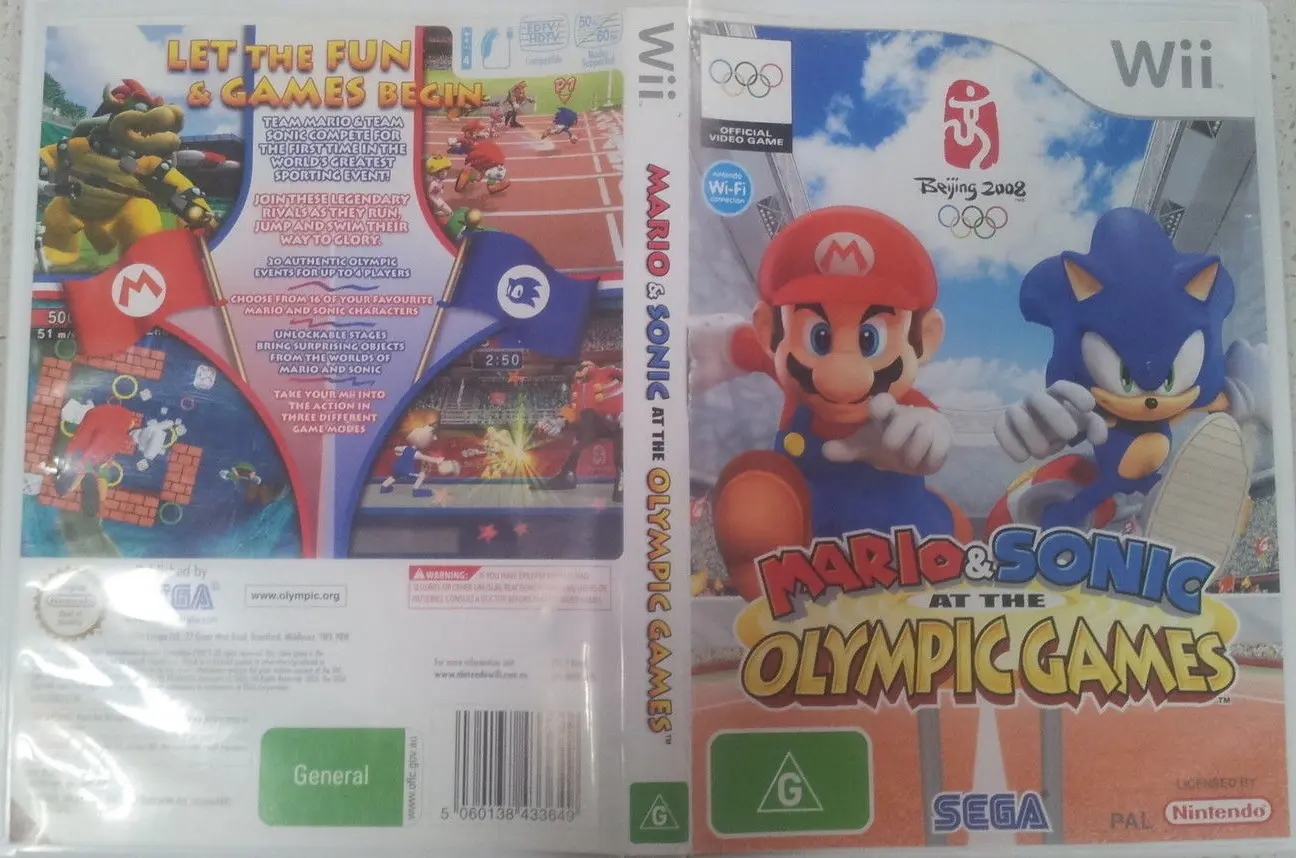
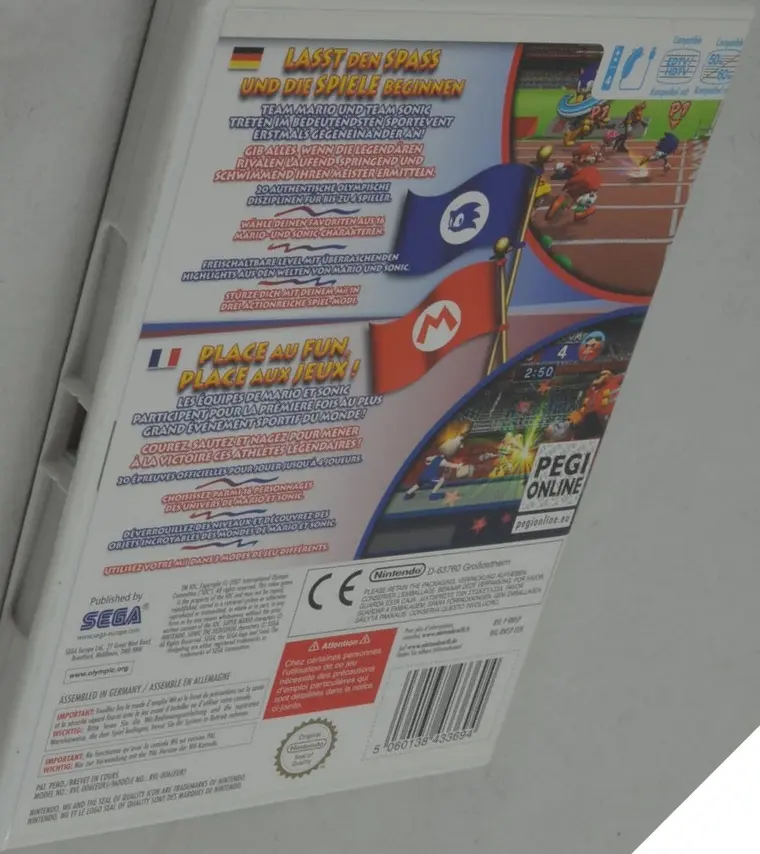
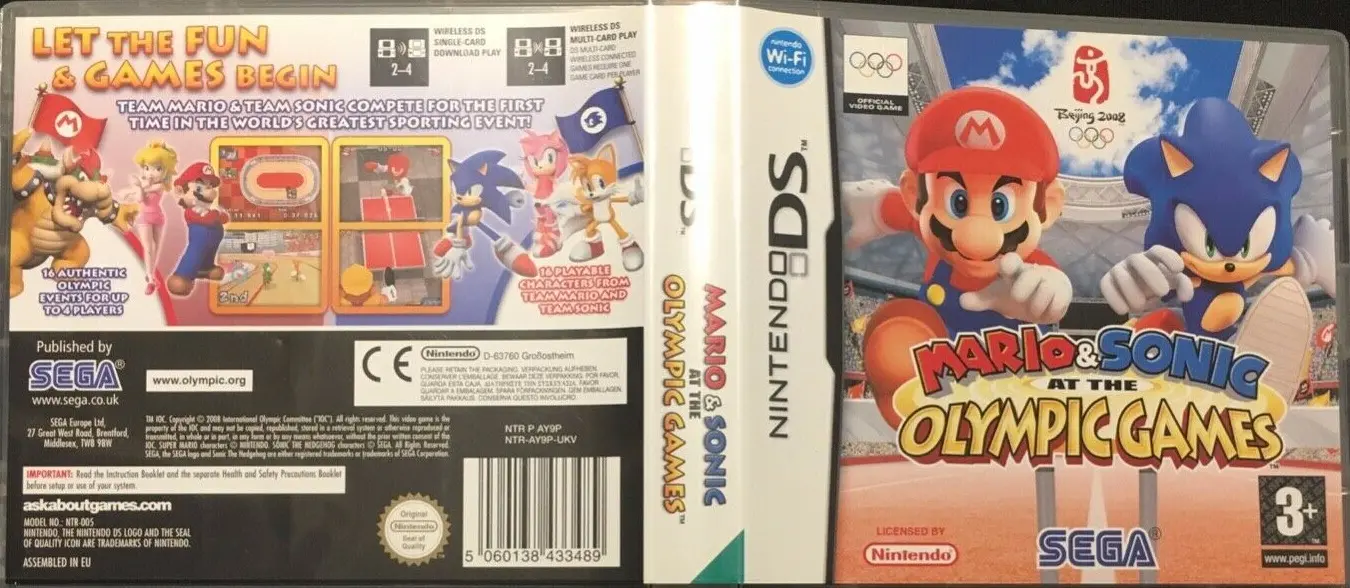
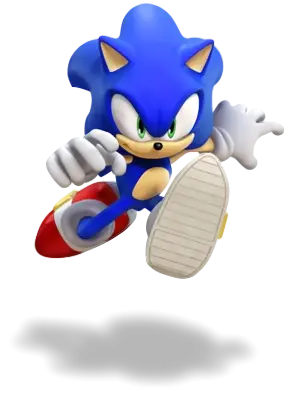
European Wii cover.Australian Wii cover.Back of the German/French Wii box.European DS cover.Back of the North American DS box.Sonic on the track.Tails in the long jump.Amy clears a hurdle.Peach runs the relay.
Legacy
Its success turned the meeting into a tradition, with new Mario & Sonic games for Vancouver 2010, London 2012, Sochi 2014 and Rio 2016.
Releases
Wii (North America)6 November 2007 – Brought forward two weeks after going gold.
Wii (Japan, Australia)22 November 2007 – Published by Nintendo in Japan.
Wii (Europe)23 November 2007 –
DS (Japan)17 January 2008 –
DS (North America)22 January 2008 –
DS (Australia / Europe)7 / 8 February 2008 –
Wii / DS (South Korea)29 May / 26 June 2008 –
The series that followed
Mario & Sonic at the Olympic Winter Games, set at Vancouver 2010, arrived in October 2009, and by the end of March 2010 Sega counted 6.53 million sold in the US and Europe. London 2012 arrived on Wii in November 2011 and on 3DS in February 2012, then came Sochi 2014 and Rio 2016. Sega of America’s Sean Ratcliffe summed up the plan simply: if the games kept selling and players kept enjoying them, the series would continue.
Sales & reviews
Sales
It was a runaway success. In July 2008 Sega of America’s president, Simon Jeffrey, put the two versions at about ten million combined; the running totals in Sega’s own sales reports, as tallied by Sonic Retro, reach 9.77 million for the US and Europe; and Guinness World Records’ Gamer’s Edition 2010 counted 7.09 million for the Wii version and 4.22 million for the DS one.
Market by market, Japan accounted for 594,157 Wii copies by 28 December 2008 and 383,655 on DS by 27 December 2009. In the US, NPD’s December 2007 top ten included the Wii version, at 613,000 copies. In Britain the game spent seven weeks at number one on the all-formats chart, in four separate spells starting with its first two weeks, and the Wii version sold half a million copies there in that time. UK sales of the two versions passed 1.2 million by June 2008 and later went beyond two million.
~10mWii + DS, Sega (July 2008)
7.09mWii (Guinness, 2010 edition)
4.22mDS (Guinness, 2010 edition)
7 weeksAt UK number one
Reviews
Scores from the review table on Wikipedia, which cites each publication. Metacritic: 67 (Wii), 70 (DS).
IGNUS · Wii
7.9/10
IGNUS · DS
7.8/10
EurogamerUK · Wii
7/10
GameProUS · Wii
3.5/5
GameProUS · DS
3.25/5
EdgeUK · Wii
6/10
GameSpotUS · Wii and DS
6/10
X-PlayUS · Wii
3/5
EurogamerUK · DS
5/10
The common complaint was that the long-awaited meeting came as a party game instead of the platformer fans had dreamed of; GamePro’s Tae Kim called it “a marketing tool”. The Wii controls drew most of the fire, with GameSpot, X-Play and EGM all finding them fiddly for a pick-up-and-play game, while IGN’s Mark Bozon enjoyed the variety but felt several events played almost alike. Most agreed it looked crisp and colourful.
The DS version split critics. 1UP thought the gentler stylus controls made events more fun, while Eurogamer and IGN missed the physical effort of the Wii version, and IGN called the lack of head-to-head online play a missed opportunity.
Honours
Games Convention, Leipzig · 2007Best Wii gameWon.
Guinness World Records · Gamer’s Edition 2010Best-selling gaming character crossoverListed.
Reader reviews
No reader reviews yet. Played it? Give it a score out of 10 and tell other fans what you think.
Every fact on this page was checked against the sources below. Sonic Retro was read through a Wayback Machine copy, because the live site shows a bot check; the link opens the copy we read.
To provide the best experiences, we use technologies like cookies to store and/or access device information. Consenting to these technologies will allow us to process data such as browsing behavior or unique IDs on this site. Not consenting or withdrawing consent, may adversely affect certain features and functions.
Functional
Always active
The technical storage or access is strictly necessary for the legitimate purpose of enabling the use of a specific service explicitly requested by the subscriber or user, or for the sole purpose of carrying out the transmission of a communication over an electronic communications network.
Preferences
The technical storage or access is necessary for the legitimate purpose of storing preferences that are not requested by the subscriber or user.
Statistics
The technical storage or access that is used exclusively for statistical purposes.The technical storage or access that is used exclusively for anonymous statistical purposes. Without a subpoena, voluntary compliance on the part of your Internet Service Provider, or additional records from a third party, information stored or retrieved for this purpose alone cannot usually be used to identify you.
Marketing
The technical storage or access is required to create user profiles to send advertising, or to track the user on a website or across several websites for similar marketing purposes.

 Beijing 2008 Olympic GamesIOC · International Sports MultimediaSega held the video game licence for the Games, and this was the first official game of Beijing 2008.
 Mario & Sonic seriesSega and Nintendo · 2007–Followed by Vancouver 2010, London 2012, Sochi 2014 and Rio 2016.
 MarioTeam Mario · All-Around
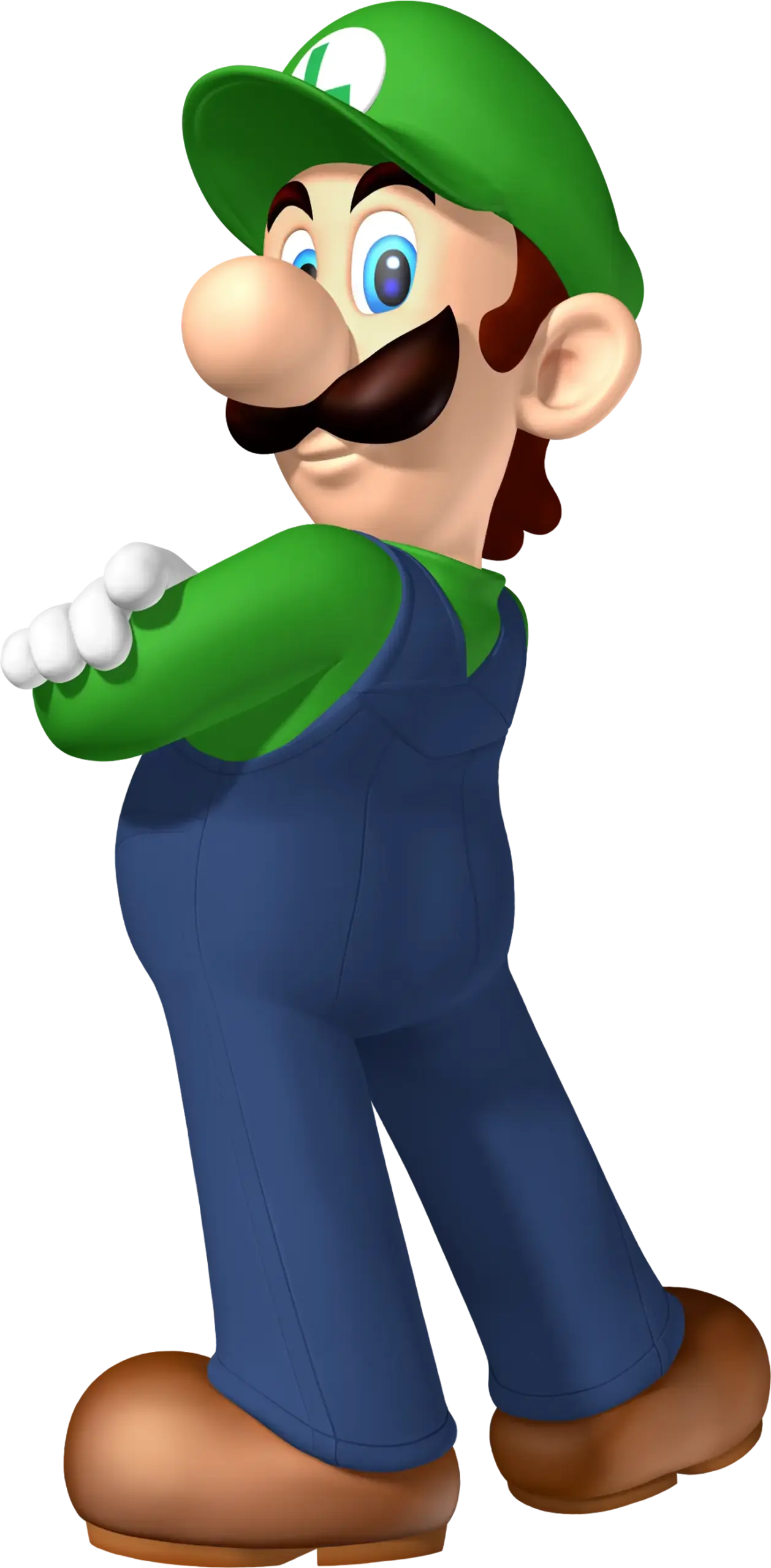 LuigiTeam Mario · All-Around
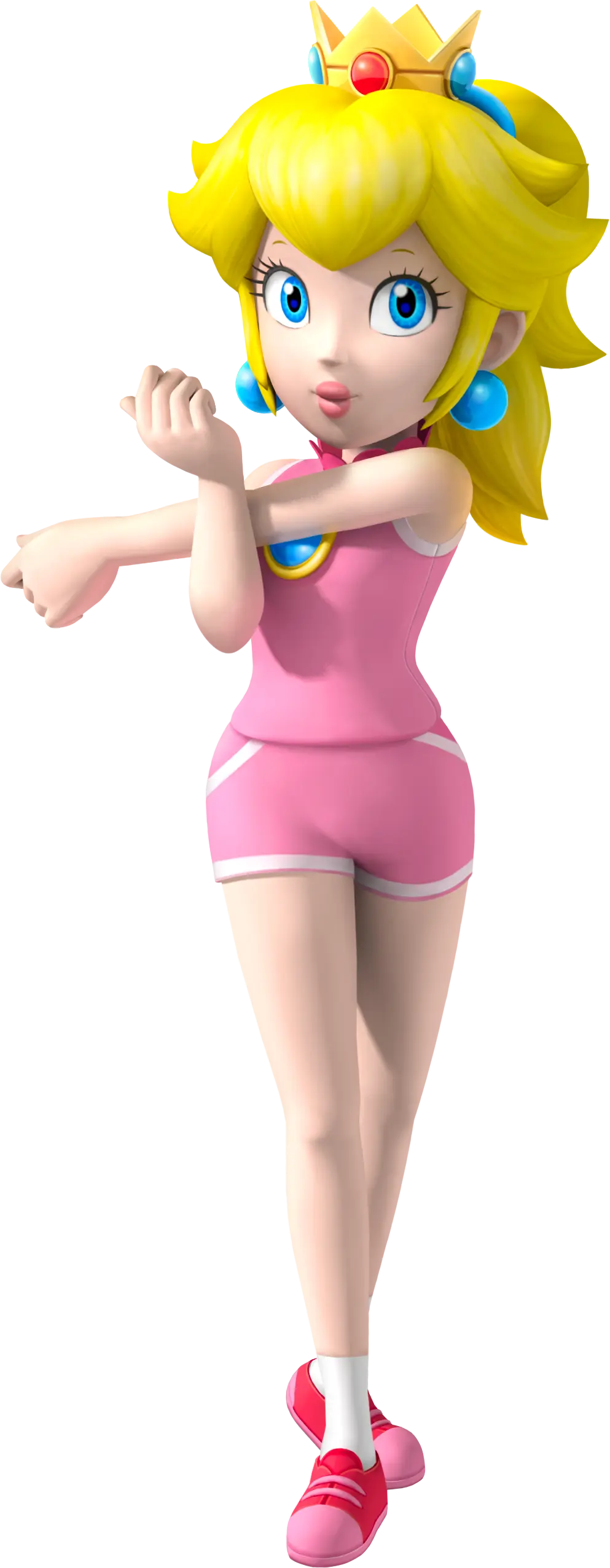 Princess PeachTeam Mario · Skill
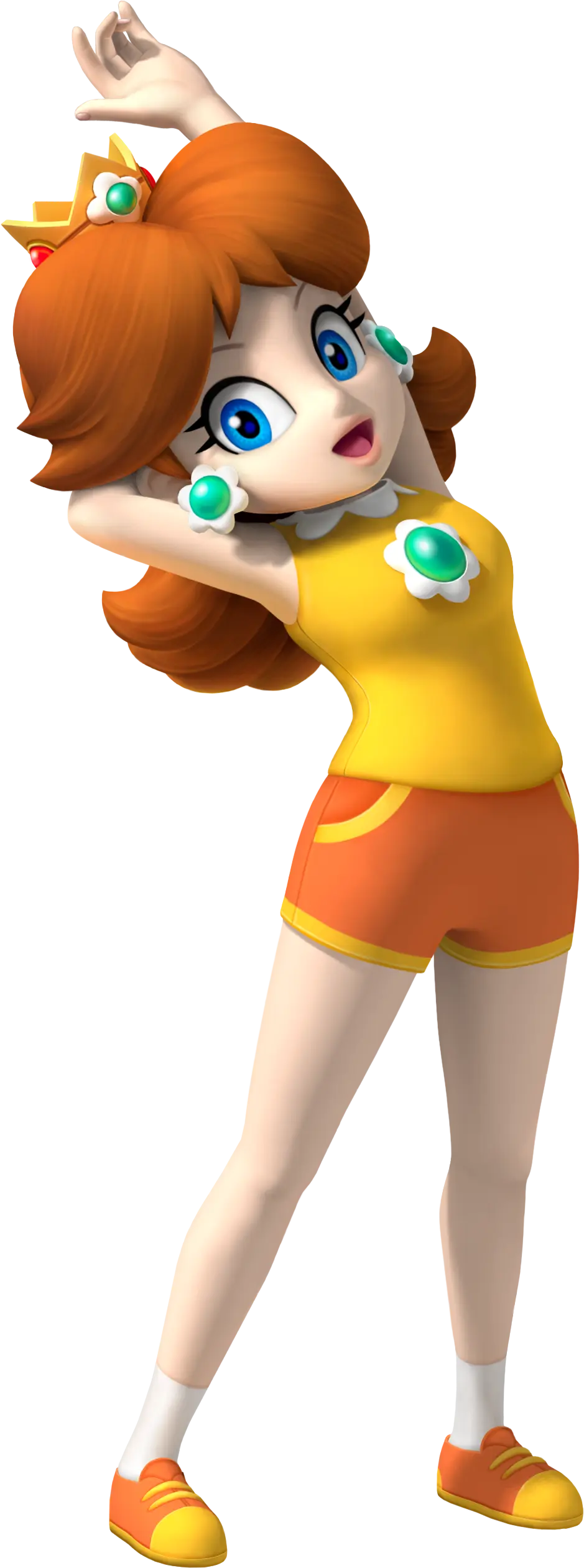 Princess DaisyTeam Mario · Speed
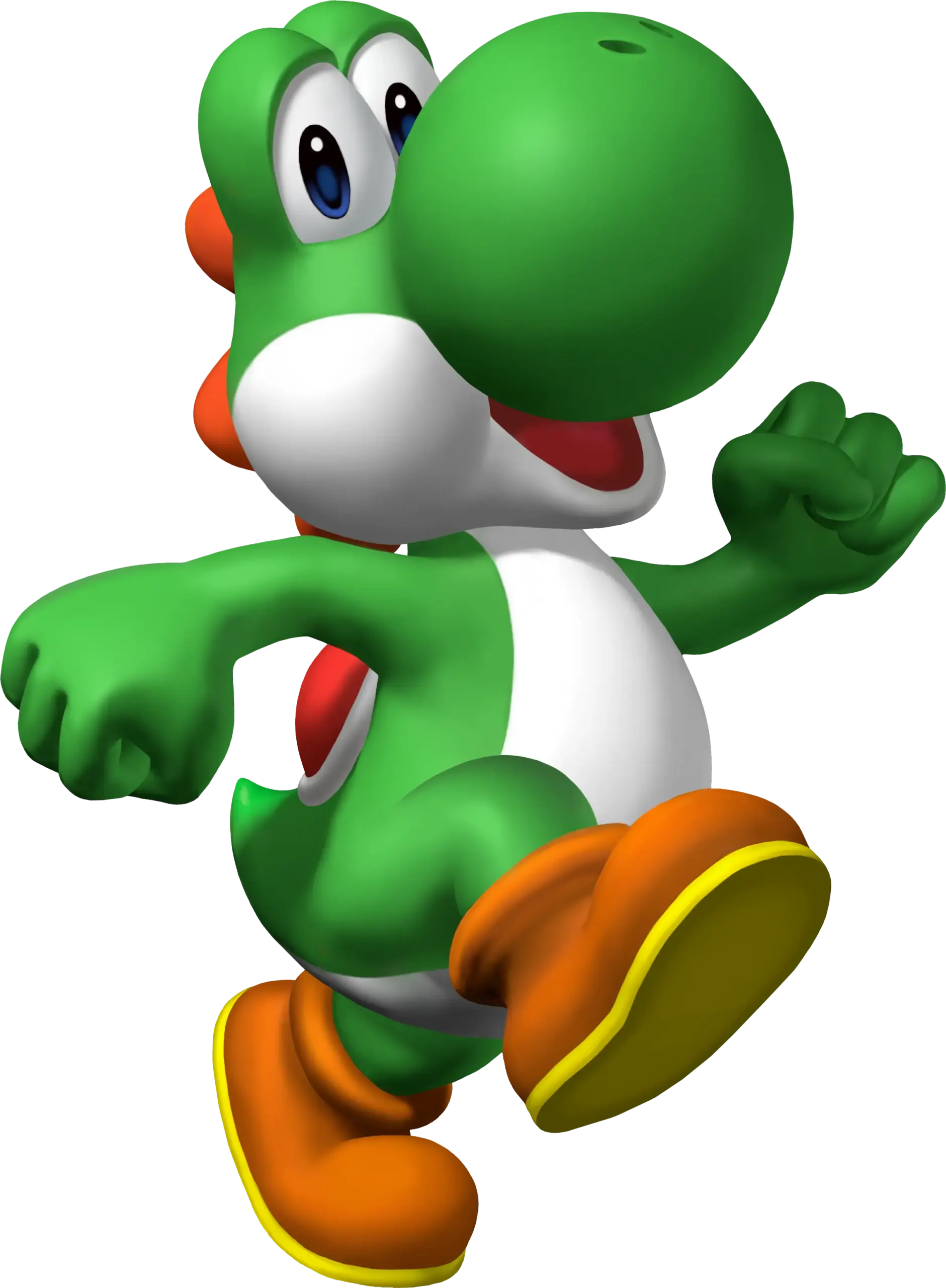 YoshiTeam Mario · Speed
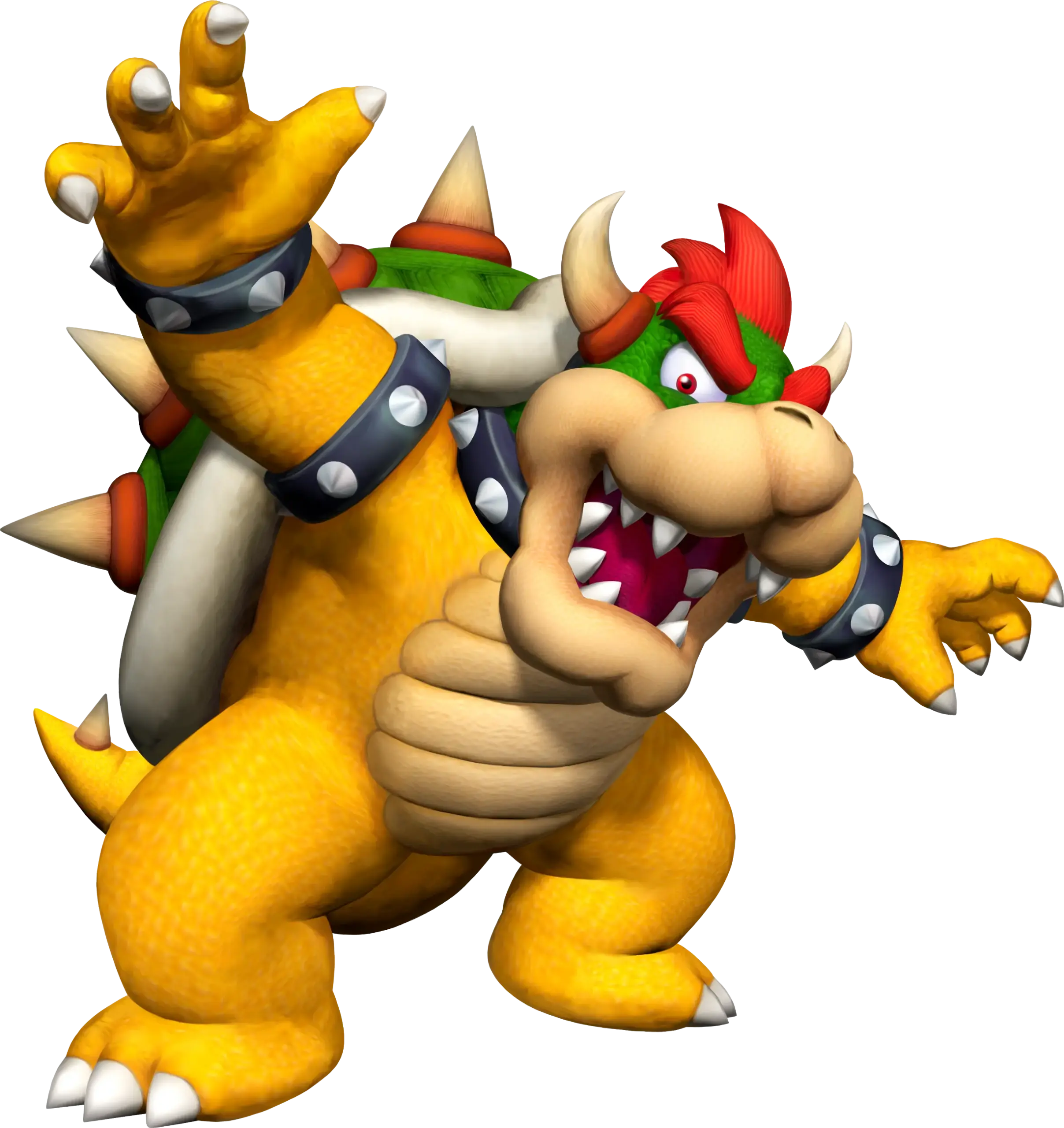 BowserTeam Mario · Power
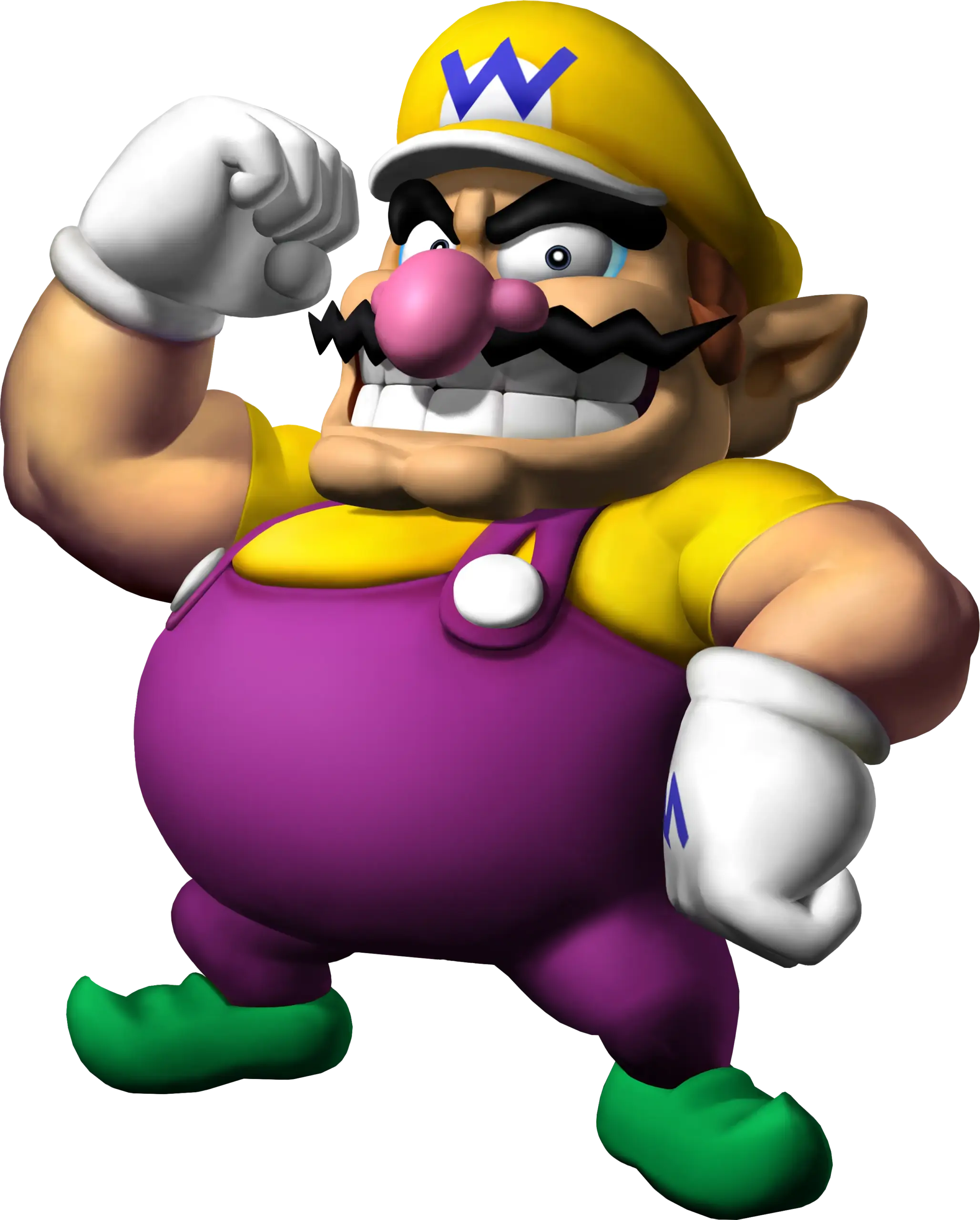 WarioTeam Mario · Power
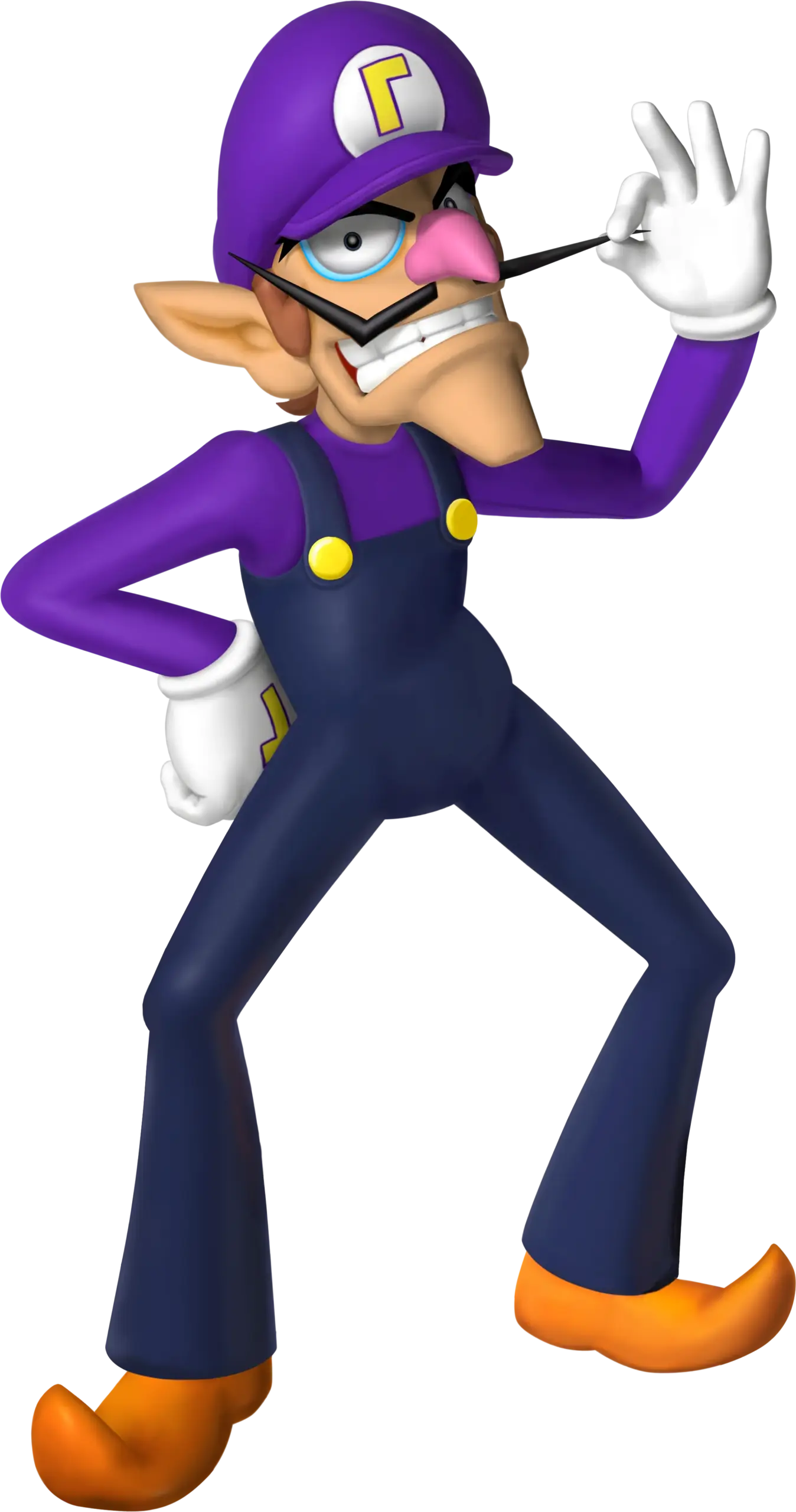 WaluigiTeam Mario · Skill
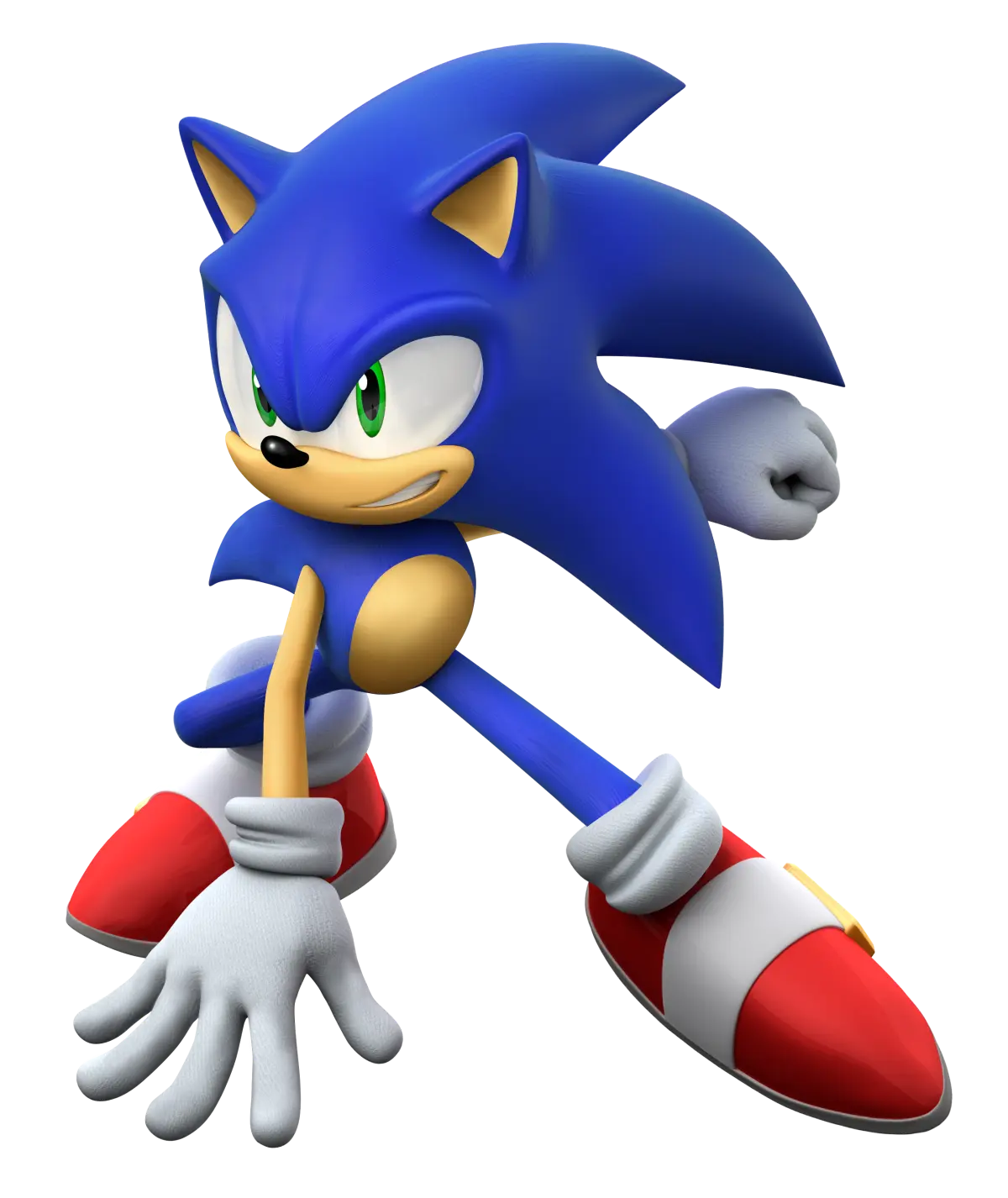 Sonic the HedgehogTeam Sonic · Speed
 Miles “Tails” ProwerTeam Sonic · Skill
 Knuckles the EchidnaTeam Sonic · Power
 Amy RoseTeam Sonic · All-Around
 Shadow the HedgehogTeam Sonic · Speed
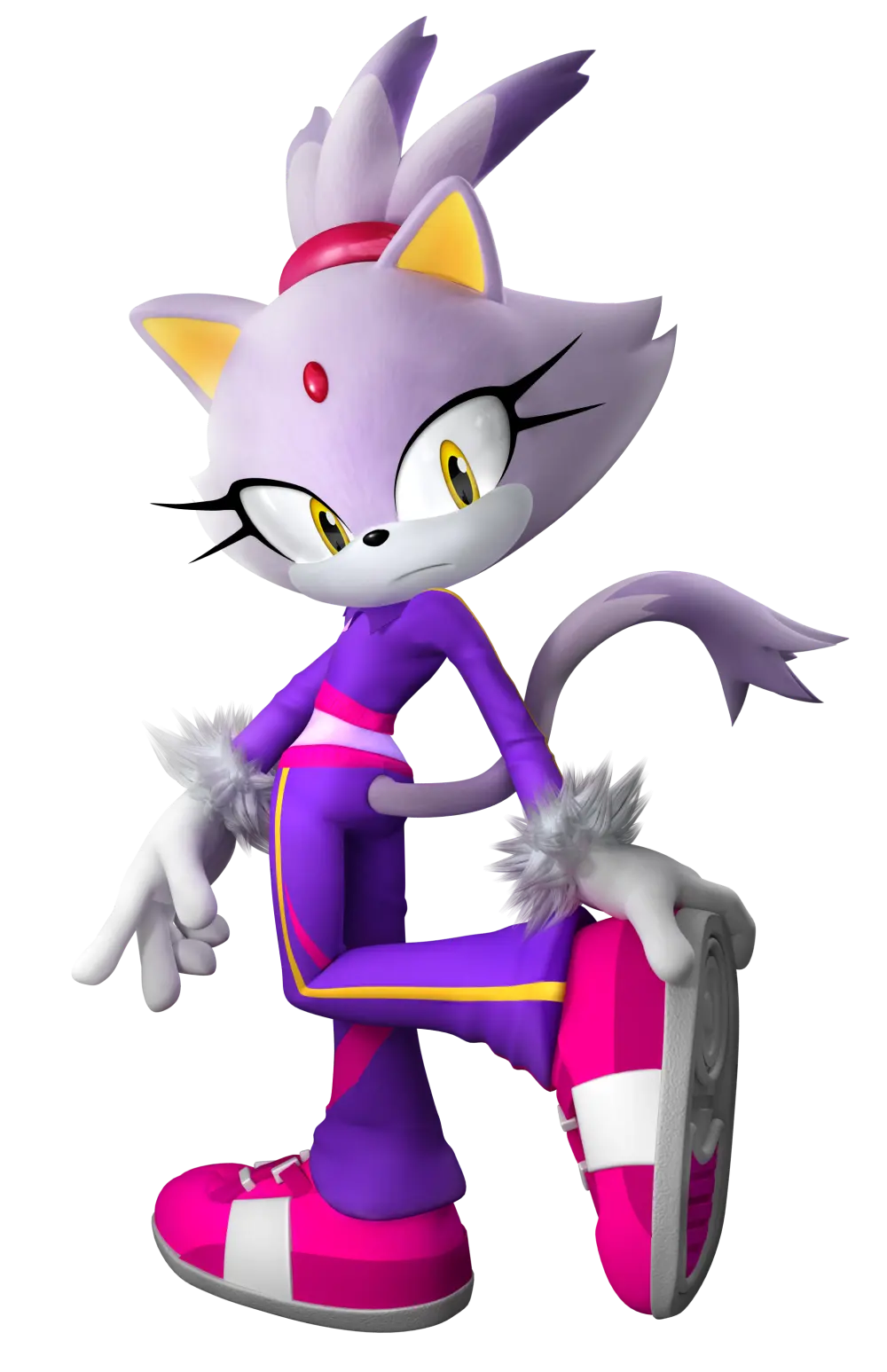 Blaze the CatTeam Sonic · All-Around
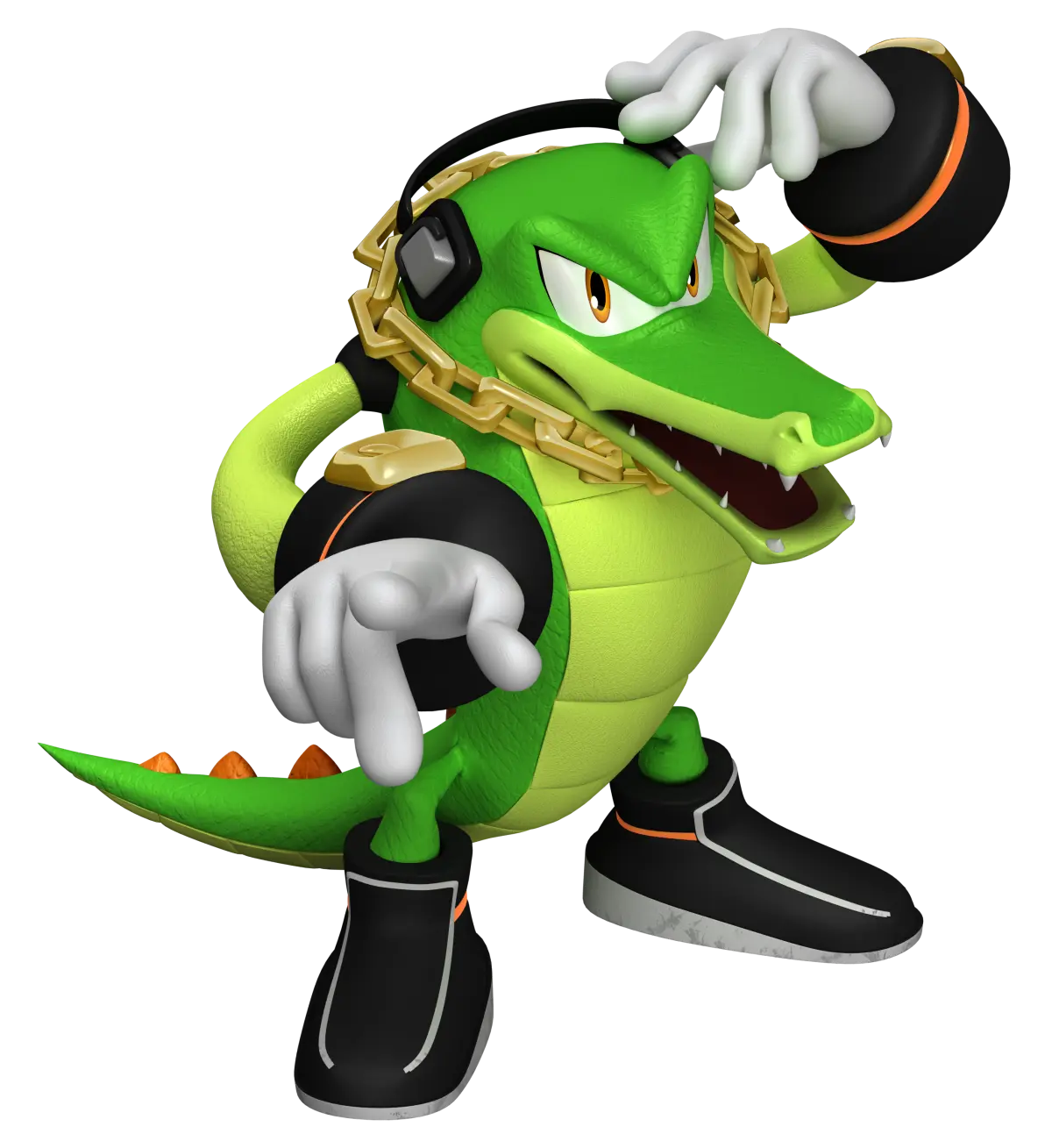 Vector the CrocodileTeam Sonic · Power
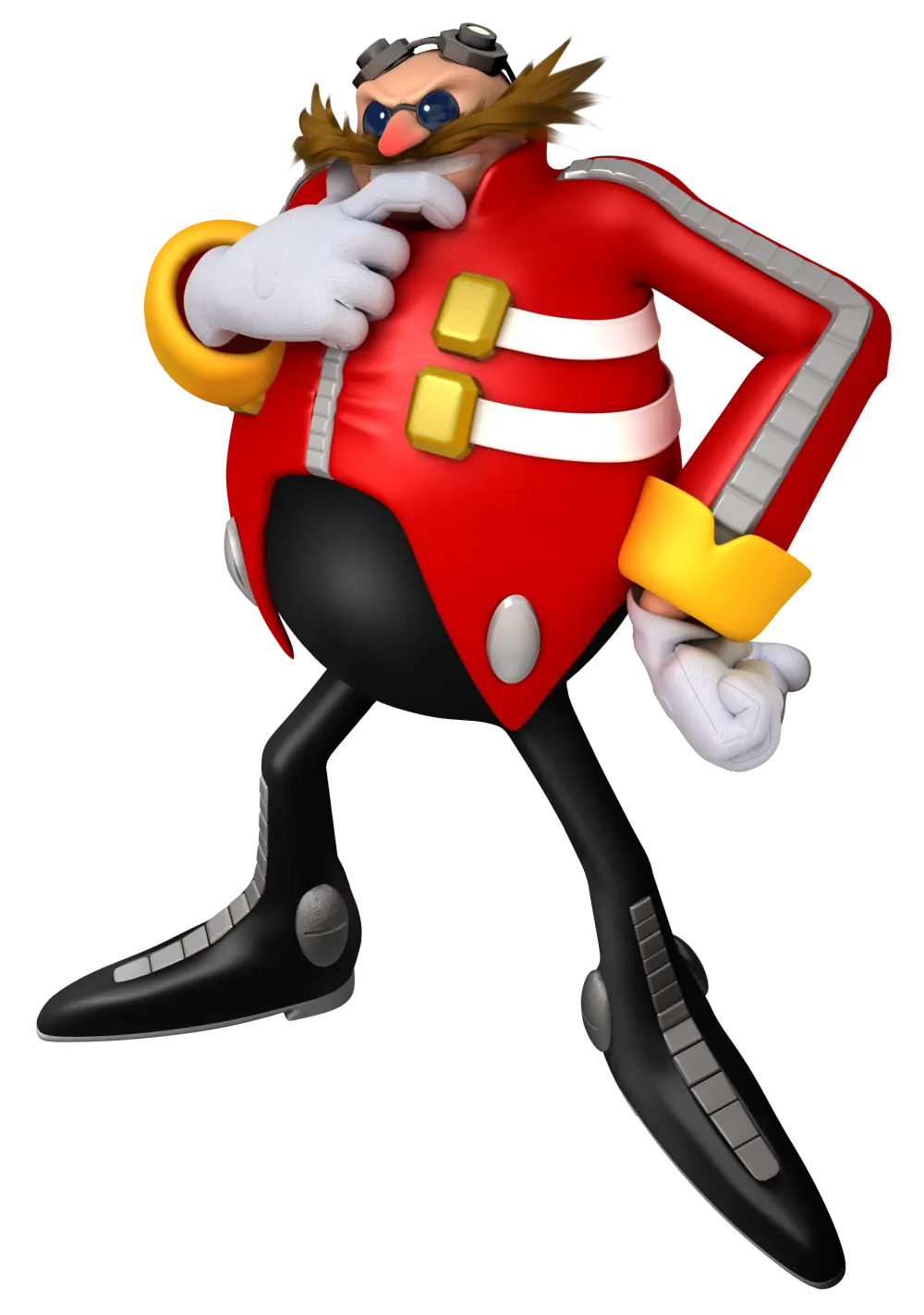 Dr. EggmanTeam Sonic · Skill
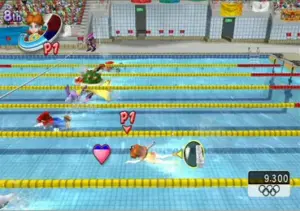 100m FreestyleAquaticsTwo lengths of the pool.
 4 × 100m Freestyle RelayAquaticsFour swimmers, two lengths each.
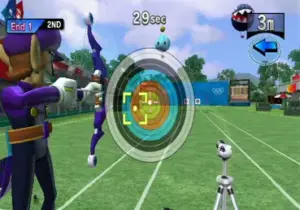 ArcheryArcheryFour sets of three arrows at 70 metres.
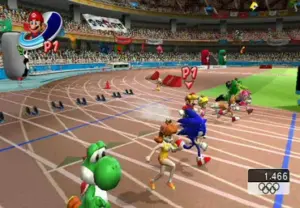 100mAthleticsA good start matters most here.
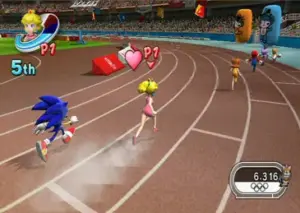 400mAthleticsOne lap from a staggered start.
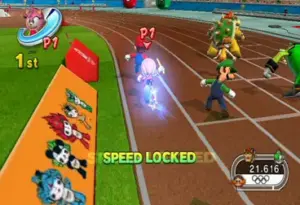 4 × 100m RelayAthleticsPick any four characters for your team.
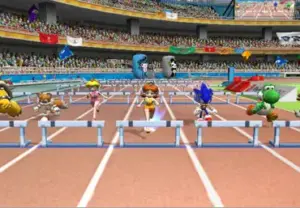 110m HurdlesAthleticsSprint and leap.
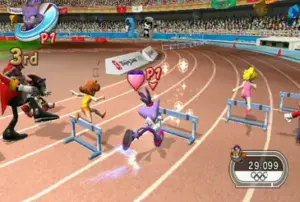 400m HurdlesAthleticsThe long hurdles.
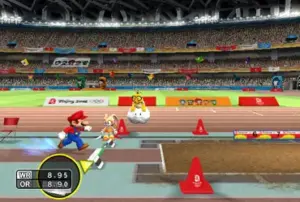 Long JumpAthleticsBest of three, no fouls.
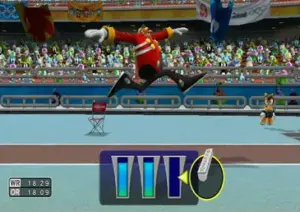 Triple JumpAthleticsHop, step and jump.
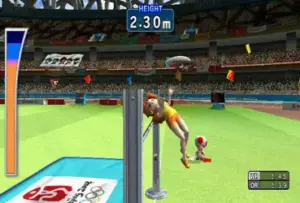 High JumpAthleticsThree failures and you are out.
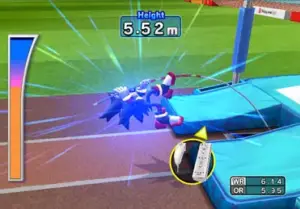 Pole VaultAthleticsPlant the pole and clear the bar.
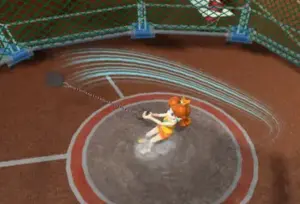 Hammer ThrowAthleticsSpin, then let go.
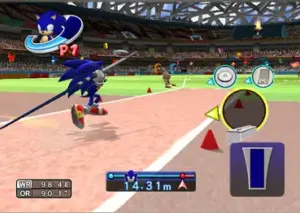 Javelin ThrowAthleticsDo not cross the line.
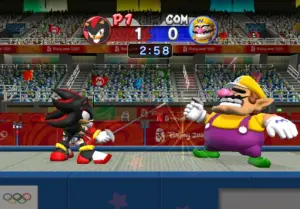 Individual ÉpéeFencingFirst to 15 touches.
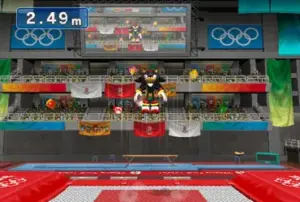 TrampolineGymnasticsSpins and somersaults, judged on precision.
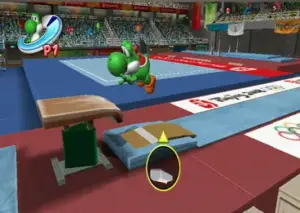 VaultGymnasticsUp to 10 points per attempt.
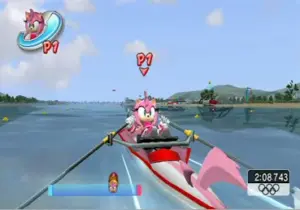 Single ScullsRowingKeep the boat straight.
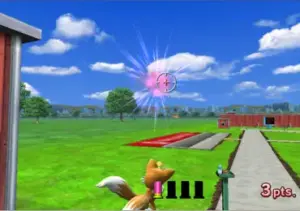 SkeetShootingEight stations, one shot per target.
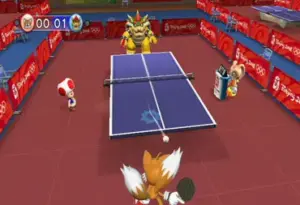 Table TennisTable TennisFirst to 11 points.