Sega Dreamcast2000Sega / Hudson SoftParty board game
Sonic Shuffle (2000)
Sega’s answer to Mario Party, made with help from Mario Party’s own developers. Sonic and friends play cards across five dreamlike boards to rebuild a shattered gem, in cel-shaded style, with a secret hand of cards hidden on each player’s VMU.
Released14 Nov 2000 (NA) · 21 Dec 2000 (JP) · 9 Mar 2001 (EU)
DeveloperSega with Hudson Soft, overseen by Sonic Team
Players1–4
SettingMaginaryworld, a world of dreams
VillainVoid
Mini-gamesAbout 50, plus around 30 mini-events
Title
Sonic Shuffle; Japanese: ソニックシャッフル; revealed as Sonic Square
Platform
Sega Dreamcast (Jump Pack, VMU and VGA Box supported)
Developer
Sega, with Hudson Soft and supervision from Sonic Team (our original page credits Sonic Team and Hudson Soft); Sonic Retro also lists A.I and JAM; some sources credit Smilebit
Opening and ending movies
Buildup Entertainment
Publisher
Sega
Producers
Hirokazu Kojima, Shuji Utsumi
Designer
Hidenori Oikawa
Programmer
Yasuhiro Kosaka
Artist
Hisashi Kubo
Players
1 in Story Mode; 1–4 in Versus Mode
Released (North America)
14 November 2000 (US$39.95)
Released (Japan)
21 December 2000 (¥5,800)
Released (Europe)
9 March 2001 (UK £39.99; Germany 1 March by Sonic Retro)
Released (Australia)
9 March 2001 by our original page; Sonic Retro lists 3 June 2001
By 2000 Nintendo had a hit on its hands with Mario Party, and Sega wanted one too. Its solution was direct: hire Hudson Soft, the studio that made Mario Party, to help build a Sonic board game for the Dreamcast, with Sonic Team keeping an eye on it. The result, Sonic Shuffle, came out in North America in November 2000, in Japan that December and in Europe in March 2001.
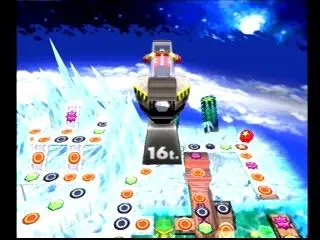
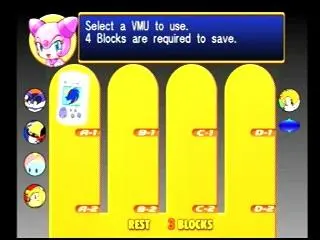
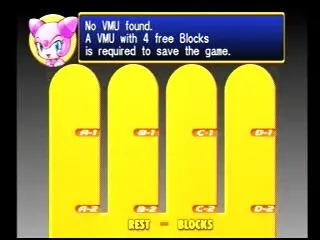
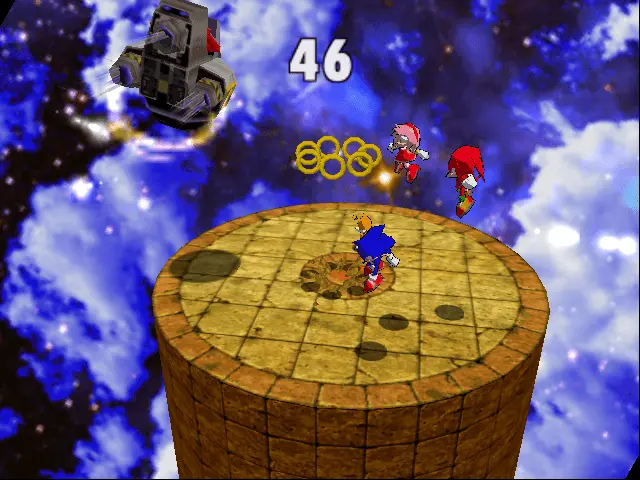
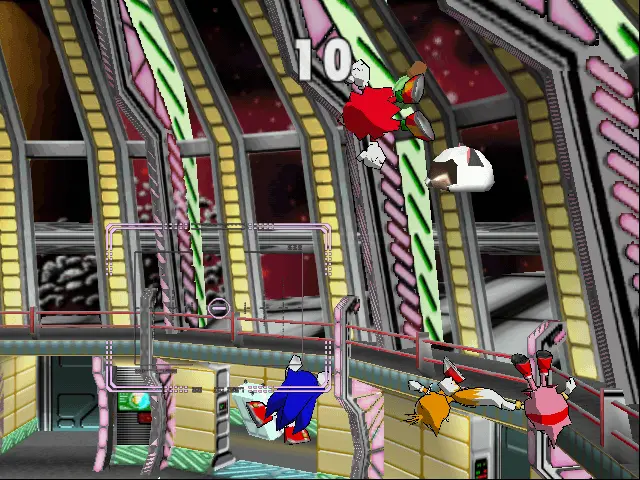
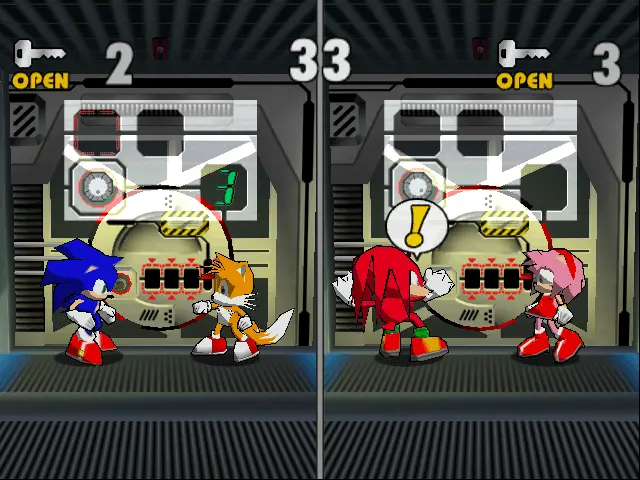
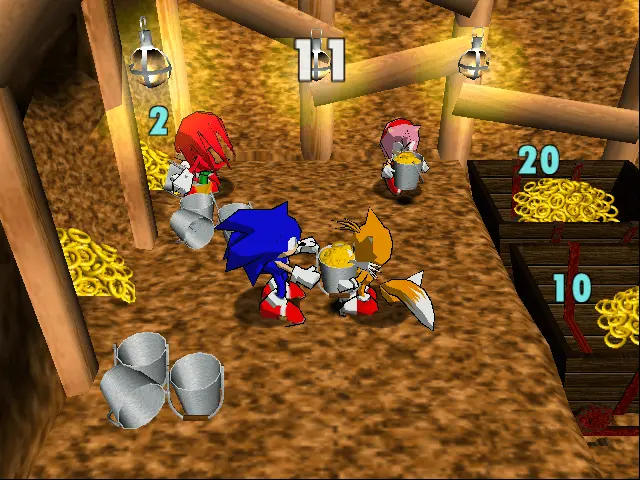
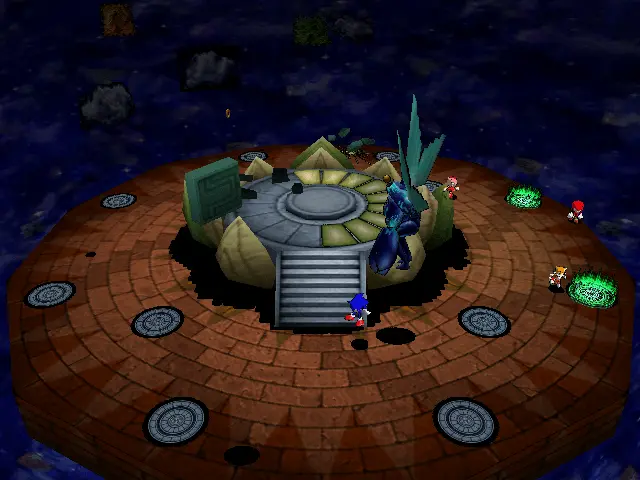
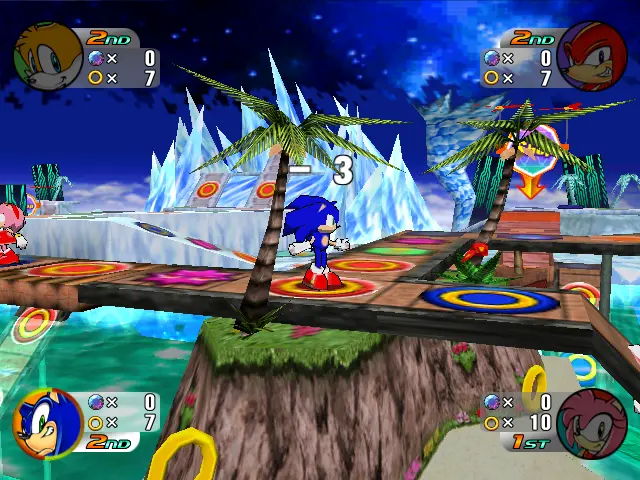
Instead of dice, you move with cards. Each player holds a hand of seven, kept secret on the memory card screen in their own controller, and plays one to move that many spaces, or gambles on a random card from a rival’s hand. Special cards let you swap or steal; the Eggman card brings trouble. Spaces hand out rings, start battles, trigger story events or launch some of the game’s 50-odd mini-games, and the aim on each board is to win the most Precioustones.
Its cel-shaded look, borrowed from Jet Set Radio, was widely praised, and so was the idea. The execution was not: critics complained about long loading, confusing mini-games, a computer that seemed to cheat and the loss of the promised online play, and most saw it as a lesser Mario Party. Still, as GamePro pointed out, it was the only party game Dreamcast owners had.
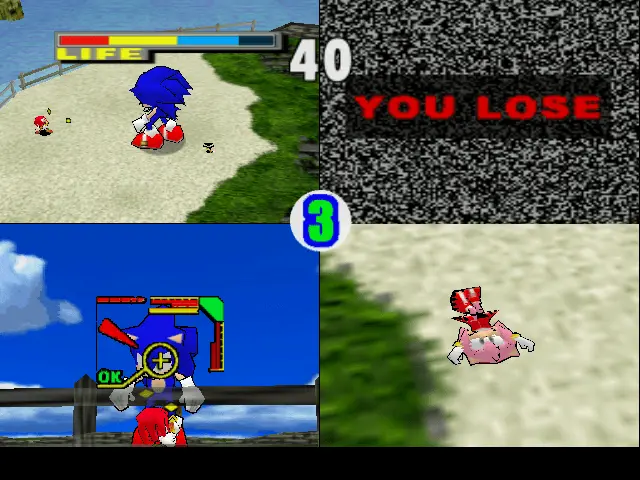
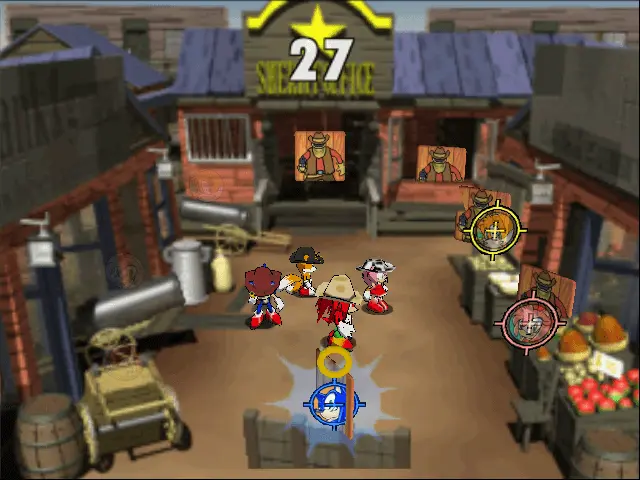
On the board.A battle.Sonic Gun Slinger.
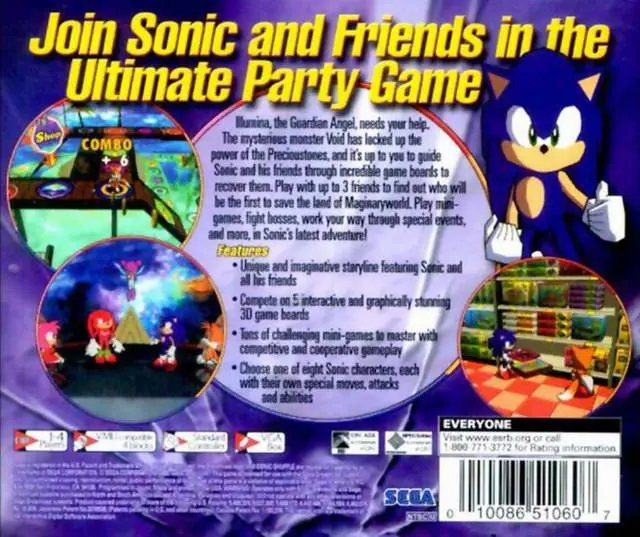
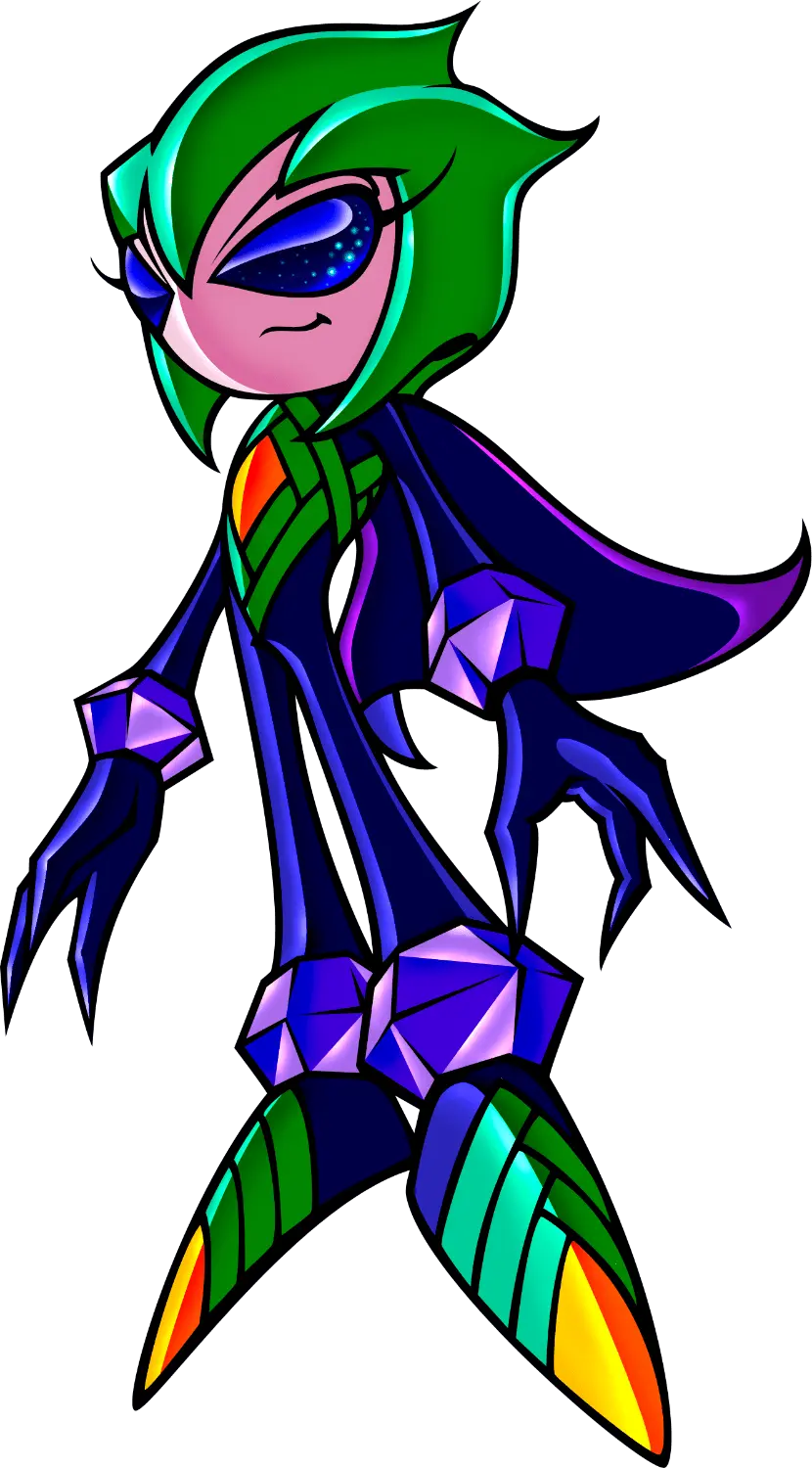
Illumina, the Guardian Angel, needs your help.
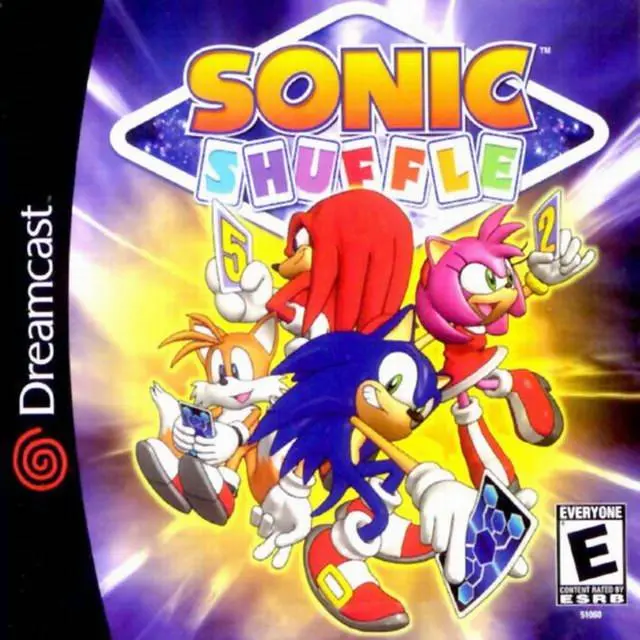
Under the banner “Join Sonic and Friends in the Ultimate Party Game”, the back of the North American box explains that the mysterious monster Void has locked away the power of the Precioustones, and invites you and up to three friends to race Sonic and company through incredible game boards to save Maginaryworld, playing mini-games, fighting bosses and working through special events. It promises five 3D boards and eight Sonic characters, each with special moves.
— Official description: Sega of America, Sonic Shuffle North American Dreamcast box (2000), from the scan in Sonic Scene’s own box art gallery. One line quoted; the rest summarised.
Quick Answers
The short answers, with the detail further down the page.
When did Sonic Shuffle come out?
On the Dreamcast in North America on 14 November 2000, Japan on 21 December 2000 and Europe on 9 March 2001. More →
Who made it?
Sega, with help from Hudson Soft, the developer of Mario Party, and supervision from Sonic Team. More →
How do you play?
Play numbered cards to move around the board, collect rings, fight monsters and play mini-games. Whoever collects the most Precioustones and Emblems wins the board. More →
Who is Void?
The villain who shattered the Precioustone. At the end, Void and the fairy Lumina both turn out to be Illumina, the goddess of Maginaryworld. More →
How many characters are there?
Eight: Sonic, Tails, Knuckles and Amy from the start, plus Big, E-102 Gamma, a Chao and Super Sonic to unlock for Versus Mode. More →
Could you play online?
No. Online play through SegaNet was planned but cut so the game could make the 2000 holiday season. More →
Was it well received?
Mixed. Metacritic scores it 54; critics liked the graphics but disliked the loading times and fiddly mini-games. More →
Plot / Story
Lumina Flowlight.
Sonic Shuffle drops Sonic, Tails, Knuckles and Amy into Maginaryworld, a world built from dreams. Its treasure is the Precioustone, and someone has smashed it to pieces. That someone is Void, a mysterious monster who has locked away the stones’ power, and the fairy Lumina Flowlight asks the four friends to gather them up and save her world. The Story Mode takes them across five boards in order, each one twisted by Void’s presence.
Five broken dreams
Fire Bird.Image via Sonic Retro
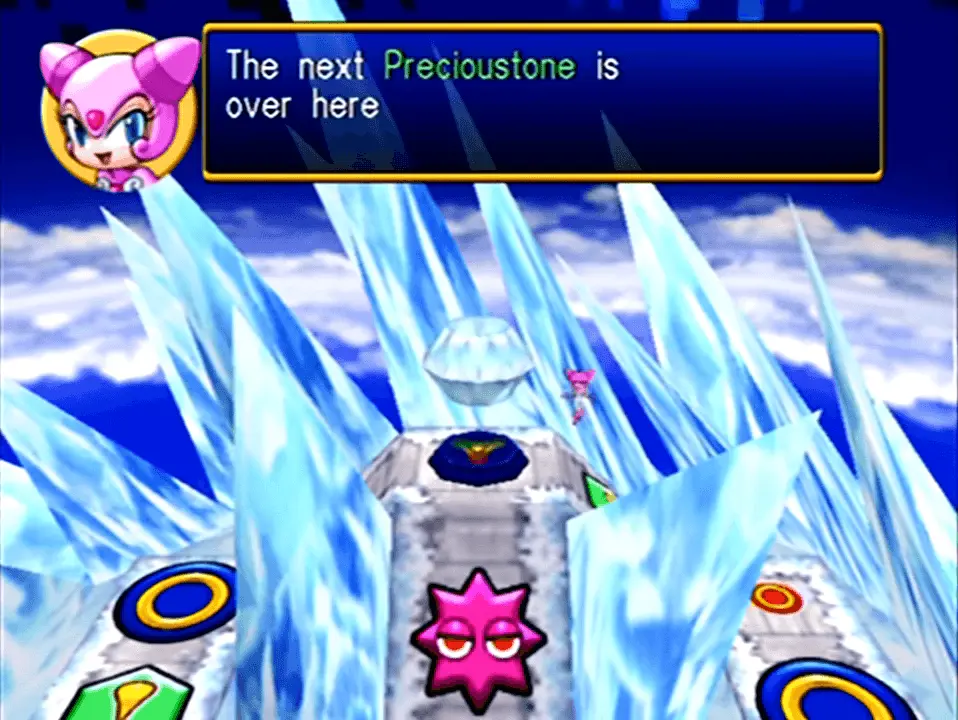
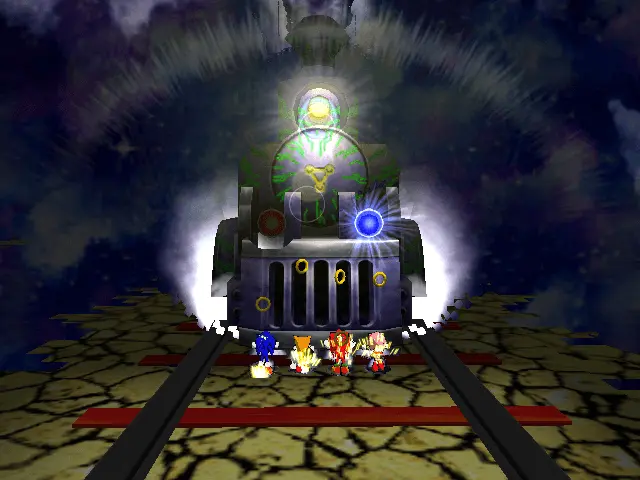
Emerald Coast, a tropical paradise, has frozen over in an ice age out of season, and only the Precioustones can thaw it. On Fire Bird a phoenix is imprisoned inside a mechanical shell; in Nature Zone strange pillars are choking the jungle to death; and on Riot Train a runaway locomotive will crash unless the heroes can bring it to a halt. Each board ends with a Stage Clear challenge.
Lumina, Void and Illumina
Void.
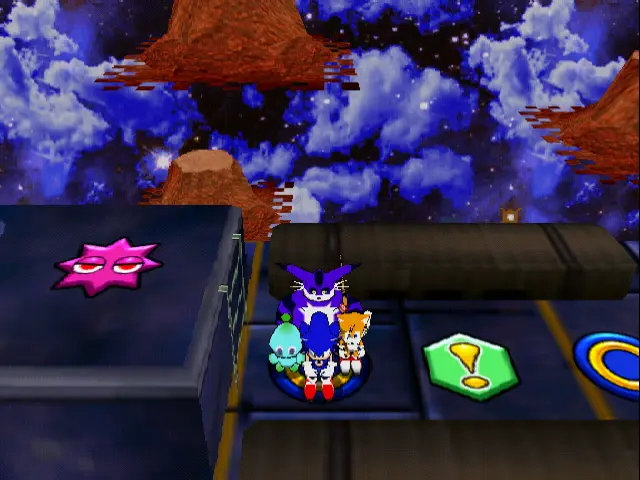
The last board is Fourth Dimension Space, the realm where everyone’s dreams are kept, and the story saves its twist for the end: Lumina and Void are not opposites at all, but two parts of the same being, Illumina, the goddess who guards Maginaryworld and who vanished when the Precioustone was shattered.
The boards of Sonic Shuffle
Five boards, played in order in Story Mode and all open in Versus Mode. Each hides class-specific routes: Tails can fly over Tails spaces and Knuckles can climb walls marked for him.
Emerald CoastBoard 1A beach resort trapped in a sudden ice age.
Fire BirdBoard 2A phoenix locked inside a machine.
Nature ZoneBoard 3A jungle being killed off by Void’s pillars.
Riot TrainBoard 4A train with no way to stop itself.
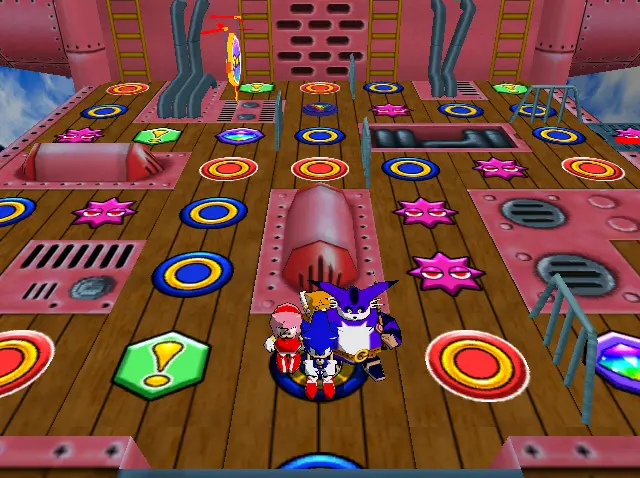
Fourth Dimension SpaceBoard 5The storehouse of everyone’s dreams.
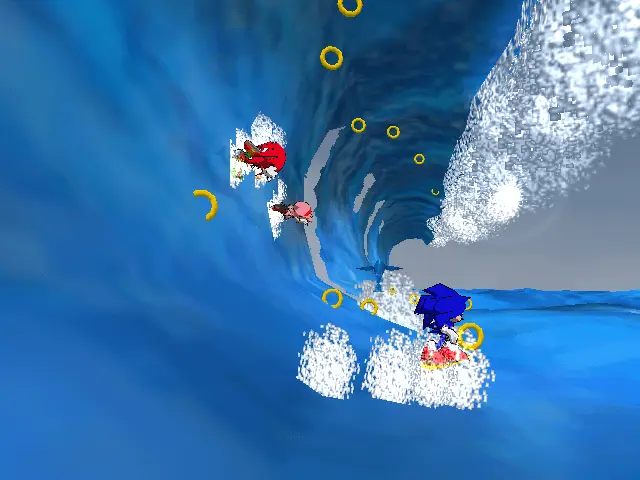
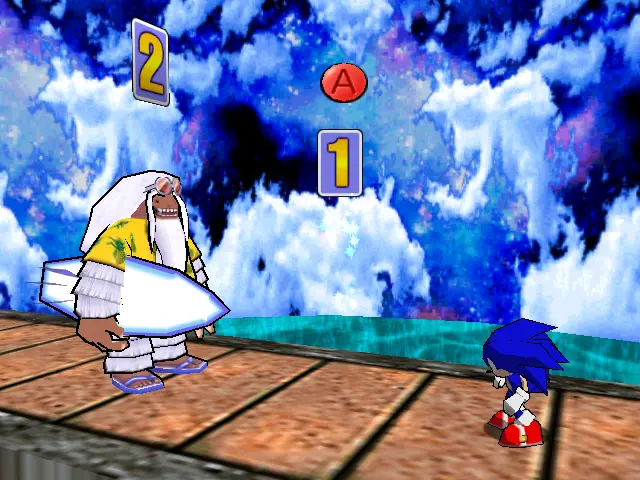
After the last Precioustone on each board is taken, everyone plays a Stage Clear game, such as Sky Diving, Sonic Surfing, Stop the Train, Earth Quake or the Void Battle, for one last chance at rings before the Emblems are counted.
Archie Sonic the Hedgehog #92Archie ComicsCarried an “Official Dreamcast Pre-Adaptation” of Sonic Shuffle as a back-up story, reprinted years later in Sonic: The Games – Millennium, a digital collection.
Mario PartyHudson Soft · Nintendo 64, 1998The game Shuffle was built to rival, by the same studio.
Samba de AmigoSonic Team · 1999Eurogamer reckoned Sega already had a better party game in its own maraca-shaking hit.
Sonic Mega CollectionSega · GameCube, 2002Shuffle was expected to appear in this compilation but was left out.
Characters
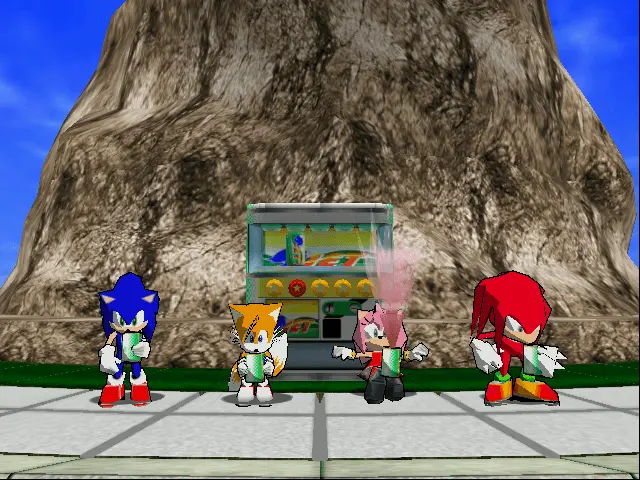
Eight playable characters, each with a special movement ability for the board and a special attack for battles, triggered by playing an S card. Sonic, Tails, Knuckles and Amy star in Story Mode; Big, Gamma, a Chao and Super Sonic are unlocked for Versus Mode only.
Character
Who they are
In this game
Stats & abilities
Sonic the HedgehogStory & Versus
The hero, summoned to a world of dreams.
Leads the hunt for the Precioustone shards.
Spin Dash: play the same number on two turns running and the second move is doubled
Light Speed Spin Attack: his battle roulette runs from 1 to 7
Miles “Tails” ProwerStory & Versus
Sonic’s flying best friend.
One of the four heroes Lumina calls on.
Propeller Flight across Tails spaces
Rapid Spin Attack: draws two cards and adds them together
Knuckles the EchidnaStory & Versus
Guardian of the Master Emerald.
One of the four heroes.
Climbs walls marked with Knuckles spaces
Maximum Heat Attack: two cards added together
Amy RoseStory & Versus
Sonic’s biggest fan.
The fourth hero; her own Amy spaces appear on the boards.
Has her own movement and battle abilities. Japanese voice by Emi Motoi, standing in for Taeko Kawata.
Big the CatUnlockable · Versus only
The fishing cat from Sonic Adventure.
Bought through the Sonic Room’s photo album.
Unique abilities of his own.
E-102 GammaUnlockable · Versus only
The robot with a conscience from Sonic Adventure.
Extra character.
Voiced by Steve Broadie in both the English and Japanese versions.
ChaoUnlockable · Versus only
The cute creatures from Sonic Adventure’s gardens.
Extra character.
Unique abilities of its own.
Super SonicUnlockable · Versus only
Sonic’s golden super form.
Extra character.
Voiced, like Sonic, by Ryan Drummond.
Lumina FlowlightNew · Guide
A fairy of Maginaryworld.
Asks the heroes to recover the Precioustones, and turns out to be Illumina herself.
Non-playable.
VoidNew · Villain
A mysterious monster who shattered the Precioustone.
His presence twists the boards; the Void Battle is one of the Stage Clear games. He, too, turns out to be Illumina.
The villain.
IlluminaNew · Goddess
The guardian goddess of Maginaryworld, the “Guardian Angel” of the box.
Vanished when the Precioustone broke; Lumina and Void both turn out to be her.
Revealed in the ending.
Dr. EggmanThe Eggman card
Sonic’s arch-enemy, here as a hazard.
Play his card and he steals rings or swaps positions; he also drops a weight on whoever is furthest from a Precioustone, halving their rings.
Playing his card in battle means instant defeat.
Board spaces
A few of the spaces you will land on.
Ring spaceCommonAdds or takes away rings.
Battle spaceFightA card battle with a monster.
Event spaceMini-eventA short story with a choice at the end.
Tails spaceCharacterLets Tails fly across.
Knuckles spaceCharacterWalls Knuckles can climb.
Amy spaceCharacterAmy’s own route.
The people who made it
Key credits from Wikipedia and Sonic Retro.
Hudson SoftCo-developerThe Mario Party studio, hired to help.
Hirokazu Kojima and Shuji UtsumiProducersProduced the game for Sega.
Hidenori OikawaDesignerDesigned the board game.
Yasuhiro KosakaProgrammerProgrammed the game.
Hisashi KuboArtistArt for the cel-shaded world.
Buildup EntertainmentMoviesMade the opening and ending movies.
How it was made
Our original page was an infobox only, so this history is new, built from Wikipedia’s cited sources and Sonic Retro.
Standing in for Sonic Adventure 2
Shuffle’s big debut was meant to be somebody else’s. For its June 2000 issue, a few weeks before E3, Electronic Gaming Monthly expected a first look at Sonic Adventure 2; Sega decided its sequel was not ready to be seen and handed over the party game instead, then called Sonic Square. Fans had known since October 1999 that some kind of Sonic Adventure side project was being built next to the sequel, and now they knew what it was.
Borrowing the Mario Party crew
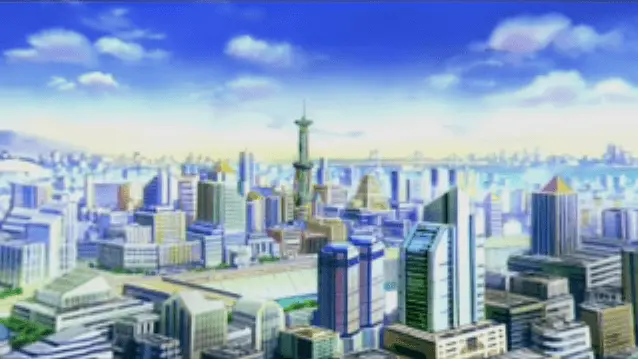
The opening movie.
Sega wanted a Mario Party of its own, so it went to the people who had made one. Hudson Soft’s Mario Party team worked on the game while Sonic Team looked after its characters, and Sonic Retro’s credits add two more studios, A.I and JAM, plus Buildup Entertainment for the opening and closing movies.
Ask who actually developed it and the answer depends on the source. Most simply say Sega; a few say Smilebit, which would explain the look, because Shuffle’s cartoon worlds use the cel-shading trick of that studio’s Jet Set Radio.
Voices
Ryan Drummond voiced Sonic and Super Sonic, and Knuckles too, a role Scott Dreier took over in Sonic Adventure 2. It was Corey Bringas’ last game as Tails, because his voice had deepened; his brother Connor took over. In Japan, Emi Motoi stood in for Amy while Taeko Kawata was on maternity leave. Unlike Sonic Adventure, there is no option to switch between English and Japanese voices.
Release, minus the internet
North America had it first, on 14 November 2000 for US$39.95; Japan followed on 21 December and Europe on 9 March 2001. Something was missing. Sega had planned internet play over SegaNet and dropped it to make the Christmas deadline, and the official Dreamcast magazines in Britain and America both noticed: Shuffle was far livelier with friends than with computer players, and they wished they could have taken it online.
Two years later it was tipped for Sonic Mega Collection but did not make the cut, and none of our sources lists a re-release of any kind since.
Firsts: what this game introduced
What Sonic Shuffle brought to the series.
1Lumina, Void and IlluminaDebut of Maginaryworld’s fairy guide, its monster and its goddess.
2Cards instead of diceMovement by hands of cards, with each player’s hand kept secret on their VMU screen.
3Cel-shaded SonicThe same cel-shading technique as Jet Set Radio, applied to Sonic’s cast.
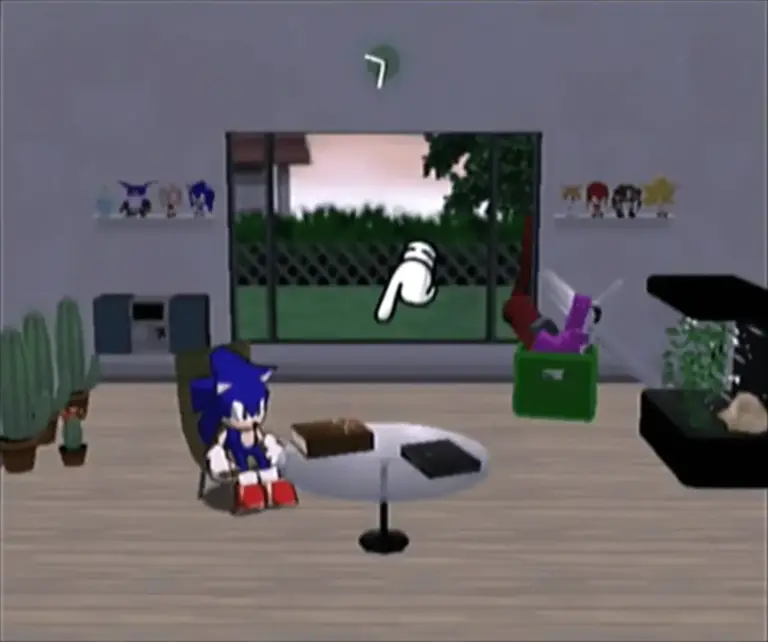
4The Sonic RoomA gallery room that fills up as you play, with a day and night cycle tied to the Dreamcast’s clock.
5Hudson Soft and SonicMario Party’s developers working on a Sonic game.
6Last of a voiceCorey Bringas’ final performance as Tails.
Cheats & secrets
Our original page had no secrets section, so this one is new. Shuffle’s extras live in the Sonic Room.
The Sonic Room
Rings earned in Story Mode go into the Sonic Bank. Spend them on pictures in the photo album on Sonic’s coffee table; some pictures unlock extra Versus characters and new features.
Toy Box and stereo
Buy the first picture on the album’s “Another” page and a toy box appears, letting you replay any mini-game you have seen. Certain pictures add a stereo that works as a sound test.
The appendix
Finish Story Mode once and a laptop on the table offers extra options, such as hiding everyone’s cards or showing board spaces in Chinese characters.
A room that grows
Fish fill the aquarium as you discover each kind of mini-game, plants appear for mini-events, and character dolls line the shelves when you win Versus Mode with each character.
Playing a 7
Time an S card right as its value spins and it counts as a 7.
Checked against Sonic Retro, November 2026.
Glitches, exploits and oddities
No famous bugs, but plenty of player complaints that feel like them.
A computer that cheats
Eggman.
Sonic Retro notes the AI’s reputation for helping itself to the player’s best cards whenever it can.
A game without mini-games
Mini-games only start from certain spaces, so GameSpot found you could play a whole board without seeing one.
Loading, loading
The pauses between the board, the mini-games and other scenes were the most common complaint in reviews.
Two and a half hours
A full game can last anywhere from about 20 minutes to two and a half hours; it all comes down to the number of Precioustones in play.
Videos & media
A period trailer, and a complete playthrough.
Period trailer, uploaded by TroniC.
A full playthrough from LJS.
Trivia & facts
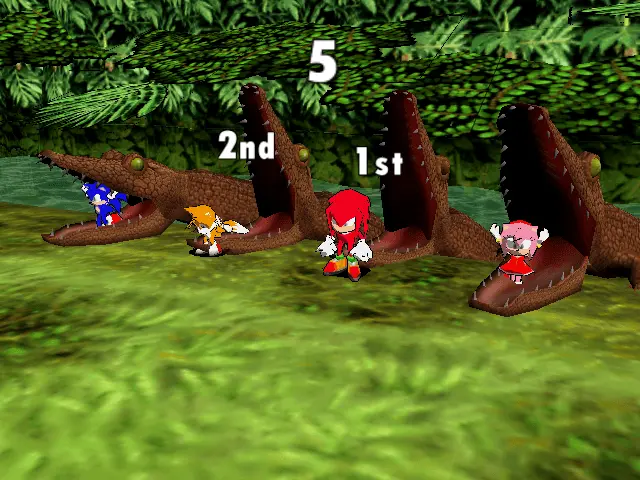
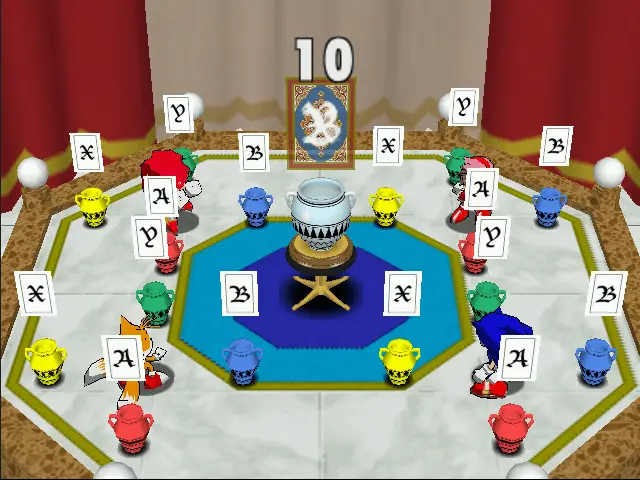
Croc-Attack.The mini-games come in neat families: free-for-alls, two-on-two, one-against-three, “accidents” such as Croc-Attack and Ring Lasso, Stage Clear finales and Play Order games like Sonic Darts.
The deck holds four of each card from 1 to 6, plus four wild cards: three S cards and a single Eggman card.
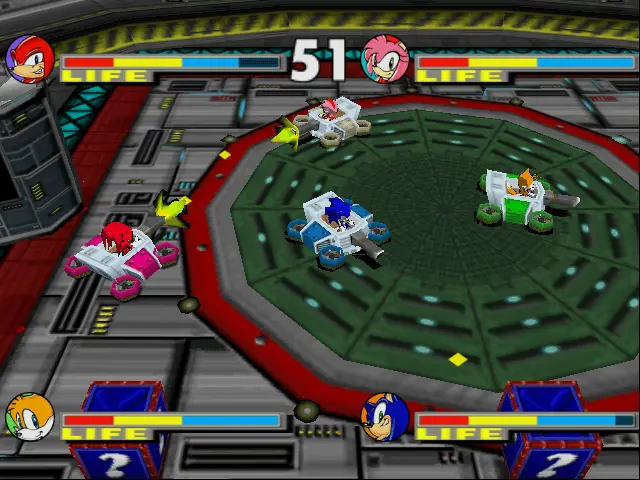
Win a battle with an exact roll and it is a critical hit: double the stolen rings in Versus Mode, or two Forcejewels in Story Mode.
The Sonic Room.The Sonic Room follows the Dreamcast’s clock, turning from day to night as it does outside, while Sonic’s friends wander past the window.
Lose a fight for a Precioustone and the damage you did stays on the monster, so the next player may finish it off.
Ryan Drummond, Sonic’s English voice, also played Knuckles here.
Media & artwork
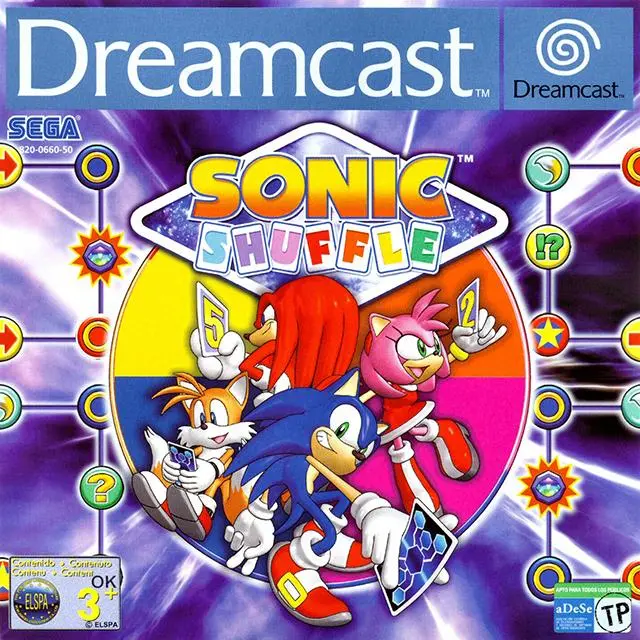
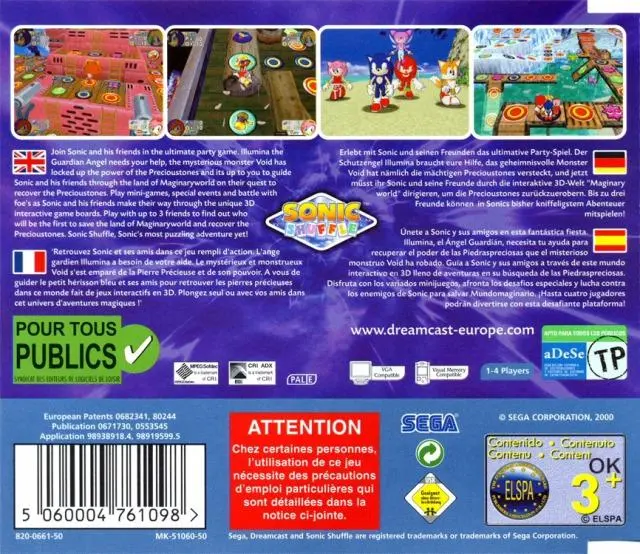
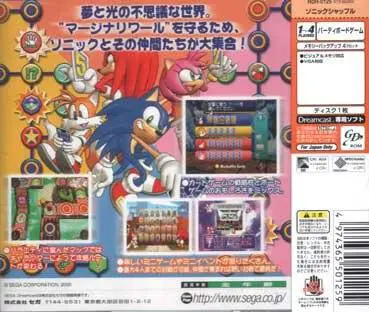
Box art, artwork and screenshots from Sonic Scene’s own galleries, with board shots from Sonic Retro. Select any image to view it larger.
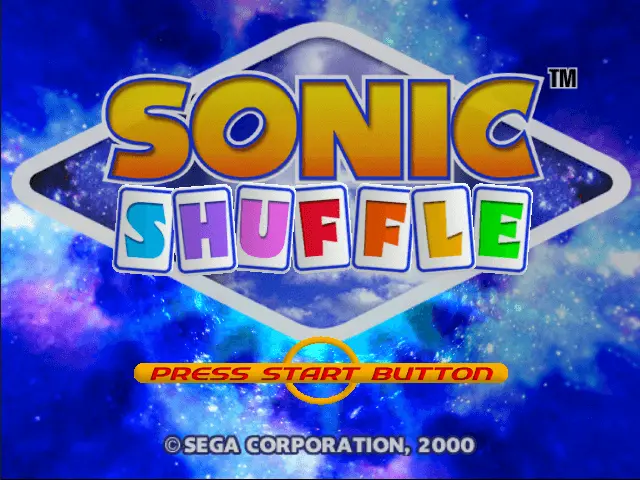
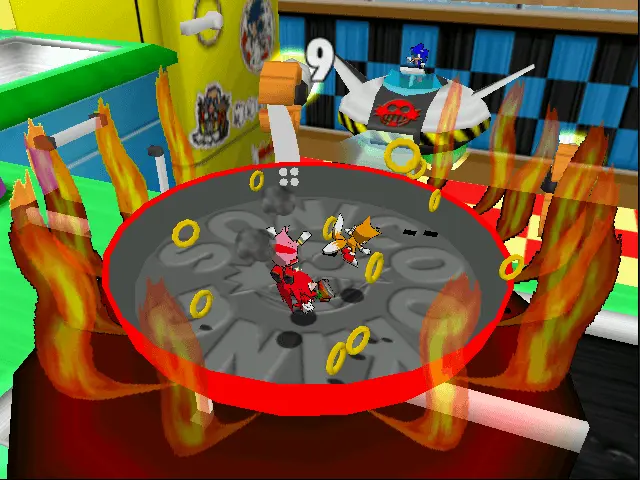
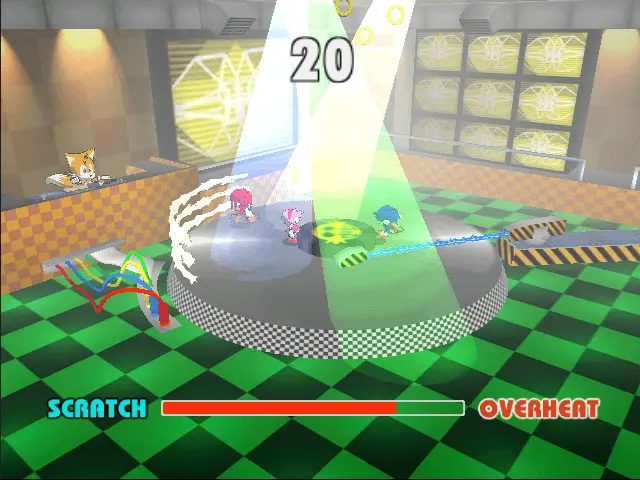
Back of the North American box.European box.Back of the European box.Japanese box.Back of the Japanese box.Sonic artwork.Illumina.Title screen.Void in the opening.The opening movie.Amy in the opening.Lumina.Illumina.A Precioustone space.On the board.On the board.The VMU display.Sonicola.Psychic Sonic.Sonic Tank.Thor’s Hammer.Zero G Snap Shot.Sonic the Thief.Bucket-O-Rings.Gargantua.Sonicooking.Sonic DJ.Sonic Surfing.Stop the Train.Void Battle.
Dreamcast (North America)14 November 2000 – US$39.95.
Dreamcast (Japan)21 December 2000 – ¥5,800.
Dreamcast (Germany)1 March 2001 – By Sonic Retro.
Dreamcast (UK, France, Spain)9 March 2001 – UK £39.99.
Dreamcast (Australia)2001 – 9 March by our original page; 3 June by Sonic Retro.
White Label2001 – European budget reissue.
Left on the shelf
Shuffle was due to join Sonic Mega Collection in 2002 but did not make the cut, and our sources list no later re-release, so the Dreamcast disc is the way to play it.
Sales & reviews
Aggregate score
Our sources give no sales figures for Sonic Shuffle, so we have not quoted any. Metacritic rates its reviews as mixed, at 54 out of 100, and Sega Retro’s index of 31 period reviews from around the world averages 63%.
54Metacritic
31Period reviews indexed by Sega Retro
63%Sega Retro’s average of all 31 reviews
7Precioustones per board, by default
Reception and review scores
A selection of 14 period scores from Sega Retro’s index of 31 (which averages 63% across all of them), sorted from highest to lowest.
SuperGamePowerBrazil
93%
GameProUS
90%
Consoles +France
82%
DorimagaJapan
78%
DreamzoneFrance
74%
HyperAustralia
72%
Game InformerUS
67%
Official Dreamcast MagazineUK
60%
Dreamcast MagazineUK
58%
Electronic Gaming MonthlyUS
52%
Next GenerationUS
50%
Official Dreamcast MagazineUS
50%
Gamers’ RepublicUS
42%
EdgeUK
40%
Almost everyone measured it against Mario Party and found it wanting. GameSpot and Eurogamer felt the mini-games were an afterthought, cropping up only now and then, and GameSpot added that they were needlessly baffling; Official Dreamcast Magazine in the UK thought they got in the way of the board game, and PlanetDreamcast wanted the option to switch them off. Long loading between scenes drew complaints across the board.
The cel-shaded graphics were the bright spot, with GameRevolution putting them on a par with Jet Set Radio, though Eurogamer called them deceptively good and Edge still found the game dull. Several magazines agreed it was better with friends than against the computer, and GamePro was the big fan, recommending it warmly for multiplayer.
Reader reviews
No reader reviews yet. Played it? Give it a score out of 10 and tell other fans what you think.
Every fact on this page was checked against the sources below. Sonic Retro and Sega Retro were read through Wayback Machine copies, because both live sites show a bot check; each link opens the copy we read. Magazine scores come from Sega Retro’s review index.
To provide the best experiences, we use technologies like cookies to store and/or access device information. Consenting to these technologies will allow us to process data such as browsing behavior or unique IDs on this site. Not consenting or withdrawing consent, may adversely affect certain features and functions.
Functional
Always active
The technical storage or access is strictly necessary for the legitimate purpose of enabling the use of a specific service explicitly requested by the subscriber or user, or for the sole purpose of carrying out the transmission of a communication over an electronic communications network.
Preferences
The technical storage or access is necessary for the legitimate purpose of storing preferences that are not requested by the subscriber or user.
Statistics
The technical storage or access that is used exclusively for statistical purposes.The technical storage or access that is used exclusively for anonymous statistical purposes. Without a subpoena, voluntary compliance on the part of your Internet Service Provider, or additional records from a third party, information stored or retrieved for this purpose alone cannot usually be used to identify you.
Marketing
The technical storage or access is required to create user profiles to send advertising, or to track the user on a website or across several websites for similar marketing purposes.


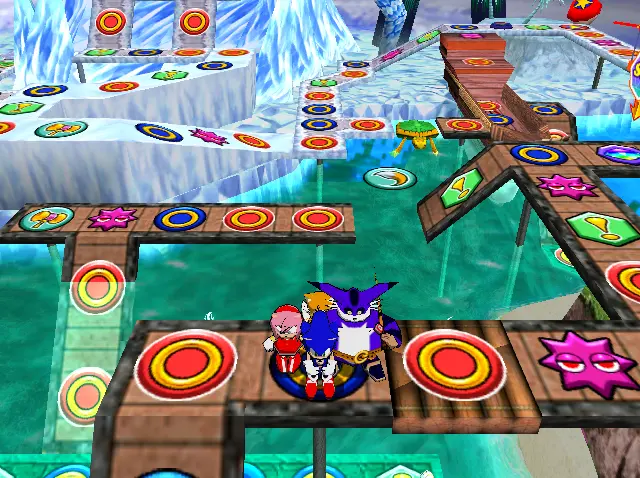 Emerald CoastBoard 1A beach resort trapped in a sudden ice age.
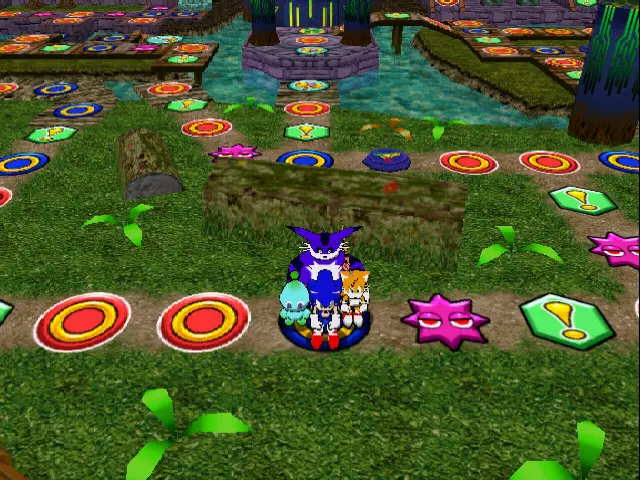 Nature ZoneBoard 3A jungle being killed off by Void’s pillars.
 Riot TrainBoard 4A train with no way to stop itself.
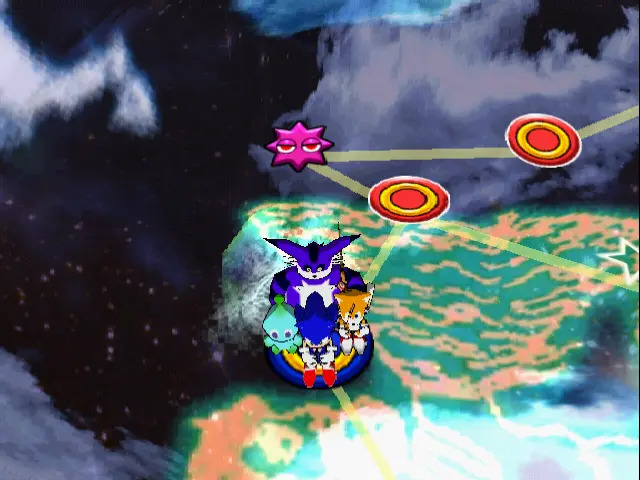 Fourth Dimension SpaceBoard 5The storehouse of everyone’s dreams.
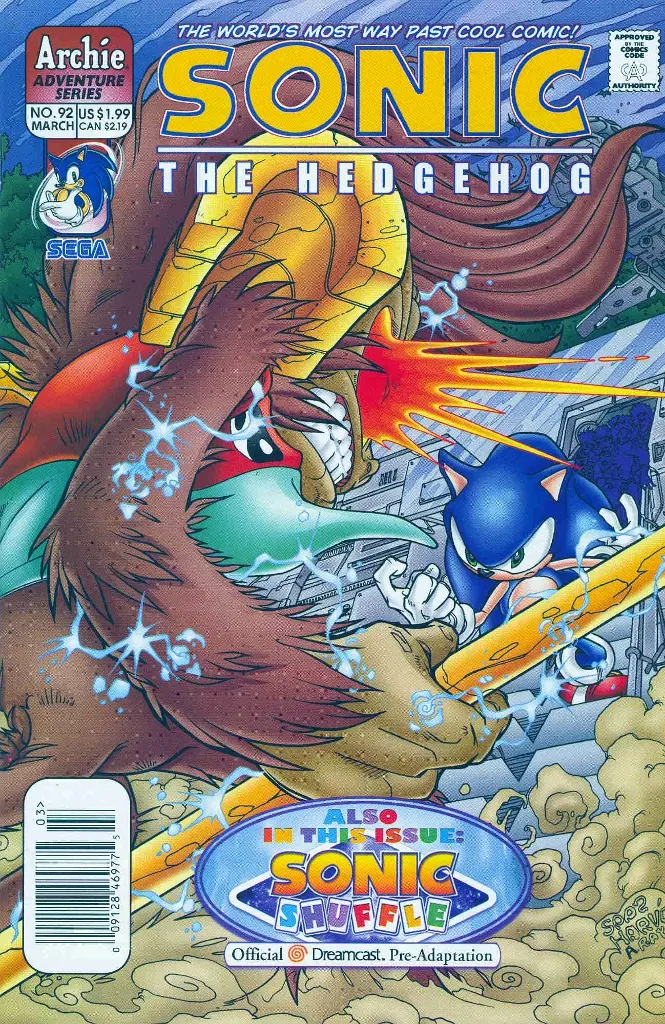 Archie Sonic the Hedgehog #92Archie ComicsCarried an “Official Dreamcast Pre-Adaptation” of Sonic Shuffle as a back-up story, reprinted years later in Sonic: The Games – Millennium, a digital collection.
 Sonic the HedgehogStory & Versus
 Miles “Tails” ProwerStory & Versus
 Knuckles the EchidnaStory & Versus
 Amy RoseStory & Versus
 Big the CatUnlockable · Versus only
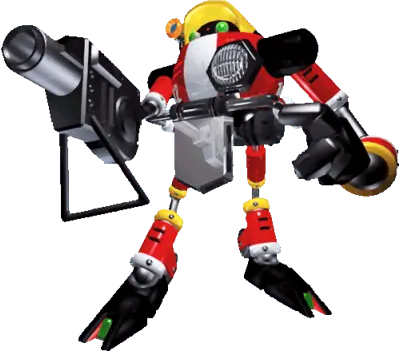 E-102 GammaUnlockable · Versus only
 ChaoUnlockable · Versus only
 Super SonicUnlockable · Versus only
 IlluminaNew · Goddess
 Dr. EggmanThe Eggman card
 Ring spaceCommonAdds or takes away rings.
 Battle spaceFightA card battle with a monster.
 Event spaceMini-eventA short story with a choice at the end.
 Tails spaceCharacterLets Tails fly across.
 Knuckles spaceCharacterWalls Knuckles can climb.
 Amy spaceCharacterAmy’s own route.