The Chao are vanishing, a fire-breathing beast is waiting behind a portal, and eight racers in four uneasy partnerships are all chasing the same man in an Eggman costume.
Released13 Nov 2007 (NA) · 6 Dec 2007 (AU) · 7 Dec 2007 (Europe)
DeveloperBackbone Entertainment, with Sega Studio USA
ZonesSix, with races, a battle and a boss
PlayableEight, in four teams of two
NewBattle Mode and Free Play
VillainEggman Nega and the Ifrit
Title
Sonic Rivals 2
Platform
PlayStation Portable (UMD); later sold as a download on the PlayStation Store
Developer
Backbone Entertainment, with Sega Studio USA
Publisher
Sega (Sega of America in North America, Sega Europe in Europe)
Director
Takashi Iizuka (also concept design and scenario)
Producers
Keith Palmer (Sega); Taylor Miller (Backbone Entertainment)
Lead designer
Eric Emery
Art supervisors
Kazuyuki Hoshino, Hiroshi Nishiyama
Music
Chris Rezanson; sound supervisor Jun Senoue
Voice recording
4Kids Productions
Genre
Racing platformer
Players
1–2 (wireless ad hoc, including Game Sharing)
Released (North America)
13 November 2007 (ULUS-10323)
Released (Australia)
6 December 2007
Released (Europe)
7 December 2007 (ULES-00940)
Budget editions
Greatest Hits (North America); Platinum and PSP Essentials (Europe and Australia)
PlayStation Store
1 October 2009 (North America, US$6.99); 18 August 2010 (UK £3.69, Europe €4.49, Australia A$6.75)
Collections
Sega Fun Pack: Sonic Rivals 2 & Sega Genesis Collection (2009); Double Rivals Attack Pack! (2011)
Overview
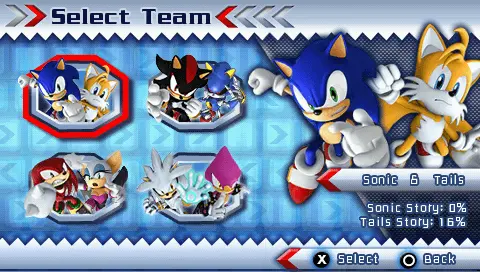
A year after the first game, Backbone Entertainment went back to Sony’s handheld with a bigger, stranger sequel. Sonic Rivals 2 keeps the head-to-head idea, where you win a stage by beating one rival to the goal, but grows the cast to eight and pairs them off: Sonic with Tails, Knuckles with Rouge, Shadow with Metal Sonic and Silver with Espio. Each team tells its own side of the story.
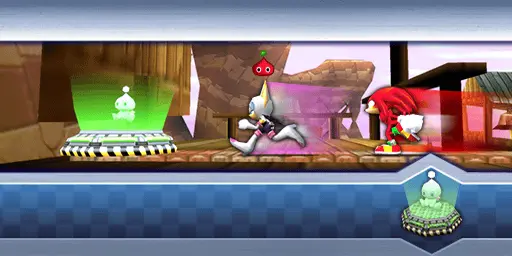
The structure grew too. Every zone now has three acts and a boss, and the middle act is a fight rather than a race: Knockout, Capture the Chao, Tag and the other new Battle Mode games are woven into the story mode. Signature moves charge up from a meter as you collect rings instead of waiting for a star item, and a Free Play mode lets you run the stages alone, Mega Drive style, hunting for hidden Chao.
Behind it all is Eggman Nega again, wearing his ancestor’s face and feeding stolen Chao to a monster called the Ifrit. Reviews were cooler than for the first game: 60 out of 100 on Metacritic. The game still earned a place in Sony’s budget ranges and later the PlayStation Store.
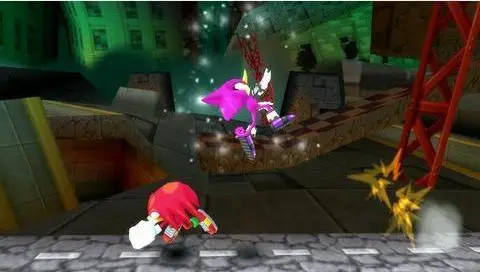
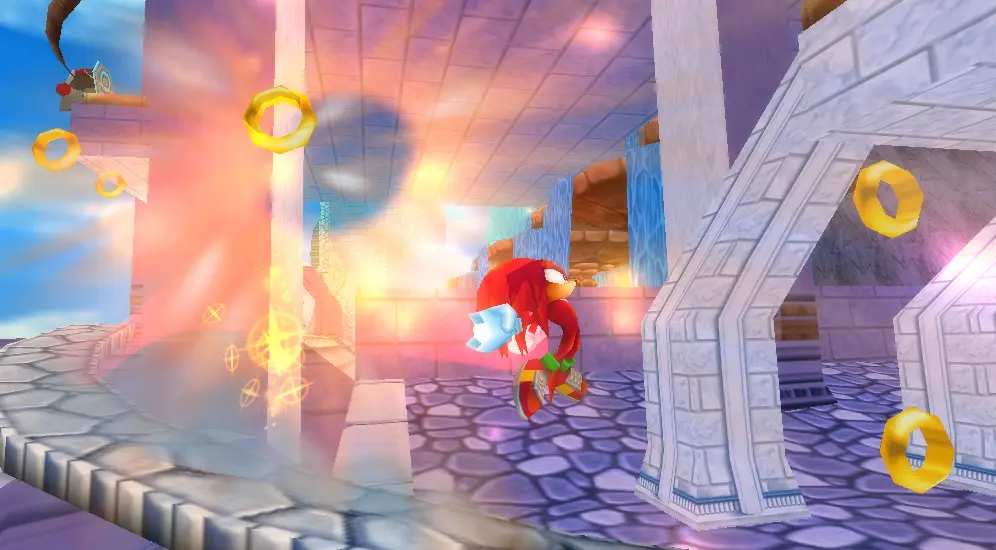
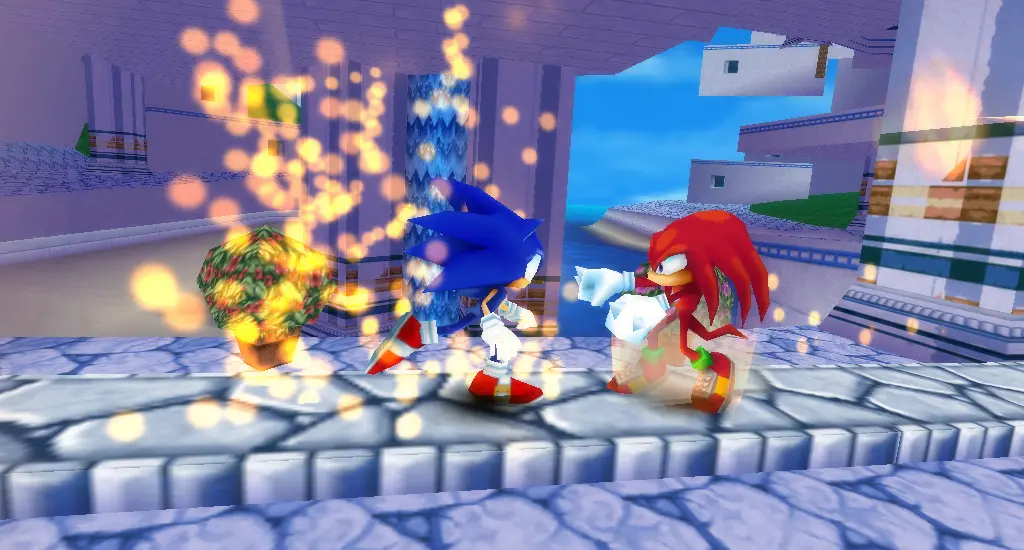
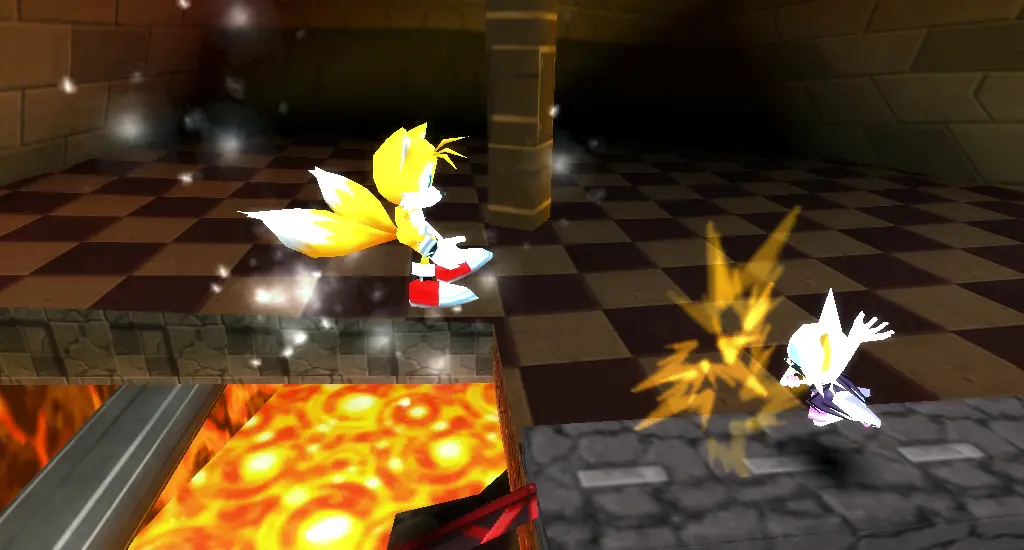
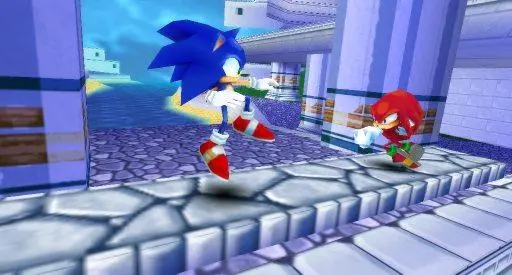
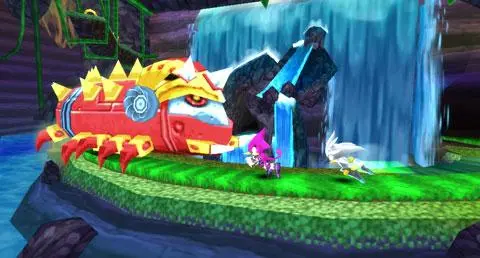
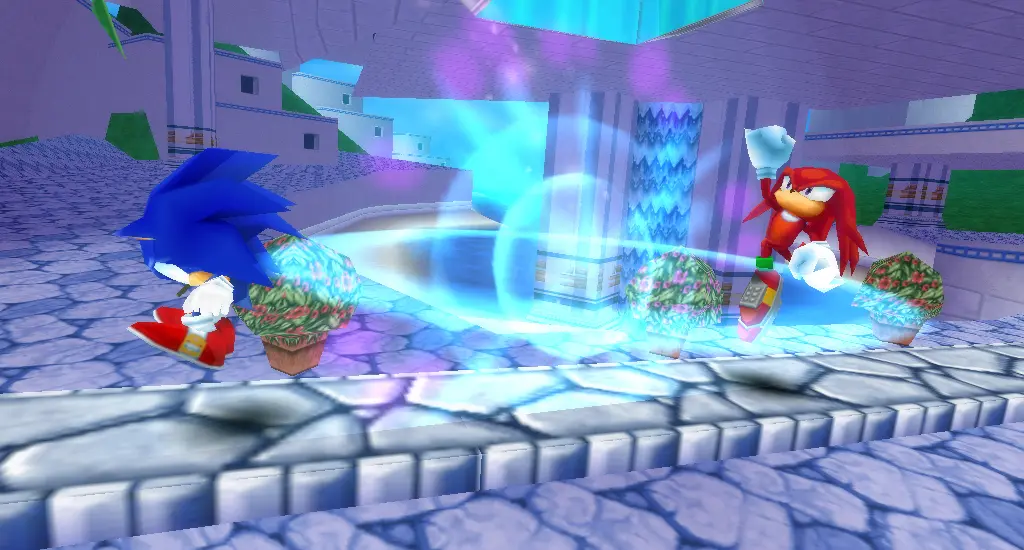
Sonic and Knuckles on a stone seafront.The Egg Crawler, a robot centipede.Battle Mode, in a Sega press shot.
When Sonic hears that the Chao have gone missing, the race is on to catch up with his old nemesis, Dr. Eggman.
So the North American manual introduces Sonic. Its other character notes set up the rest of the cast: Tails tagging along to solve the Chao mystery, Knuckles reluctantly partnered with Rouge, who has an Emerald of her own in mind, Shadow answering a call that seems to come from Eggman, Silver apparently hunting Chao, and Espio going undercover to find out where they have gone.
— Official description: Sega, Sonic Rivals 2 PSP instruction manual (North America, 2007), pages 9–11, as transcribed by Sonic Retro. One line quoted; the rest summarised.
Quick Answers
The short answers, with the detail further down the page.
When did Sonic Rivals 2 come out?
On the PSP in North America on 13 November 2007, in Australia on 6 December and in Europe on 7 December 2007. More →
Who made it?
Backbone Entertainment, the studio behind the first Sonic Rivals, with Sega Studio USA. Takashi Iizuka directed and wrote the scenario. More →
Who can you play as?
Eight characters in four teams: Sonic and Tails, Knuckles and Rouge, Shadow and Metal Sonic, Silver and Espio. Each pair has its own story. More →
What is different from the first game?
Three acts per zone instead of two, a battle in the middle of each zone, six Battle Mode games, a ring-powered signature meter, a solo Free Play mode and four outfits per character. More →
Who is the villain?
Eggman Nega, once more posing as Dr. Eggman. He wants all seven Chaos Emeralds to open a portal to the Ifrit, a fire beast he plans to fatten up on stolen Chao. More →
How many zones are there?
Six: Blue Coast, Sunset Forest, Neon Palace, Frontier Canyon, Mystic Haunt and Chaotic Inferno, each ending in a boss. More →
Can two people play with one copy?
Yes, through Game Sharing, but only in the battle games. Races and the card games need a second copy. More →
Was it well reviewed?
Mixed: 60 out of 100 on Metacritic and 63% on GameRankings, a step down from the first game. More →
Plot / Story
The Ifrit loading screen.
Chao are disappearing all over the world. Tails notices first and drags Sonic into the hunt; on the other side of town, Vector puts Espio on the case. Both trails lead to the same figure, a doctor who looks exactly like Eggman, and to an island crowded with ruins, casinos, canyons and a haunted mansion.
The doctor is not Eggman. It is Eggman Nega, the descendant from the future who caused all the trouble in the first Rivals, back with a new scheme. He has found the late Professor Gerald Robotnik’s notes on the Ifrit, a dragon-like beast of fire that lives in another dimension and can bend minds. Seven Chaos Emeralds will open the way to it, and a feast of Chao will make it unstoppable. Nega quietly hires Rouge to collect the Emeralds, hides the Chao in a secret room in Mystic Haunt, and lifts the Master Emerald from Angel Island to power a detector.
Four teams, four agendas
Nobody in the cast shares the same goal for long. Sonic and Tails just want the Chao home. Knuckles, robbed of the Master Emerald yet again, has to team up with Rouge, never noticing that she is the one working for Nega. Silver has come back from a future the Ifrit has already burned, and is snatching Chao himself to keep them out of Nega’s hands, which makes him look like the culprit when Espio catches up with him. Once the detective learns why, the two join forces.
Shadow’s story is the oddest. Metal Sonic turns up with orders from Dr. Eggman, using the robot as a walkie-talkie, and the real Eggman reveals that someone has been impersonating him. In Sunset Forest even that link breaks down: the forest canopy blocks the radio, leaving Shadow and Metal Sonic to work without instructions.
Sonic.Tails.Knuckles.Rouge.
Into the Ifrit’s world
All four teams converge on the haunted mansion of Mystic Haunt. Sonic sets the Chao free, but it is too late to stop the portal: Rouge has found only six Emeralds, and that turns out to be enough. Nega sends his own robot, Metal Sonic 3.0, through to wake the Ifrit, and the heroes follow him into Chaotic Inferno, a world that has already been burned to the ground.
The Ifrit fights back by taking over the minds of some of the heroes’ friends, but it falls. Shadow and Metal Sonic seal the portal from the inside, shutting themselves in with Nega, until Metal Sonic produces the seventh Emerald from inside his own body and Shadow uses it to warp them both home. Nega is left behind in the Ifrit’s realm. The Chao go back to a Chao Garden, Silver returns to his future hoping it has been saved, Espio goes to report to Vector, and Knuckles tracks down the Master Emerald with Nega’s own detector, whereupon Rouge promptly makes off with it.
The Ifrit.Chaotic Inferno Zone.
How it plays
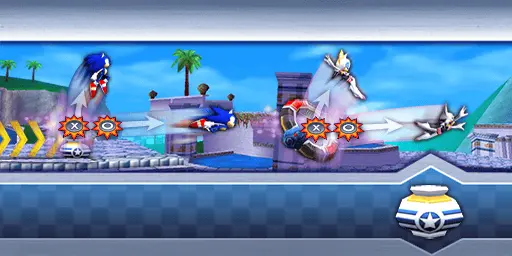
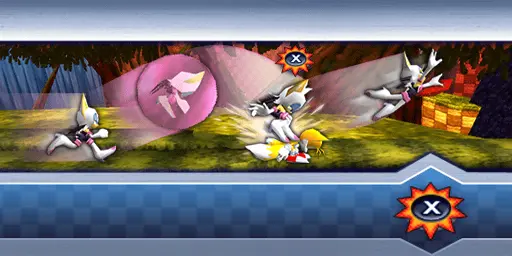
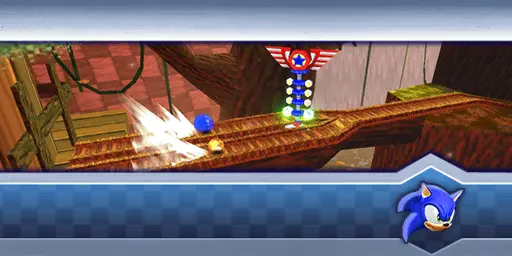
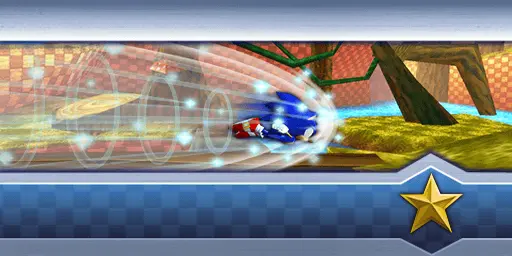
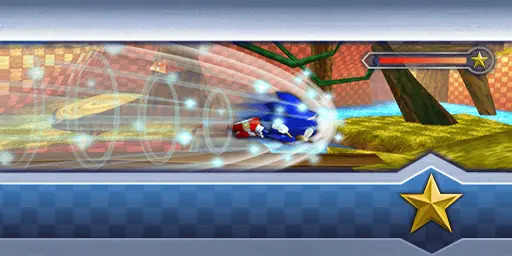
The racing is the same 2.5D sprint as before: run, boost and jump through a 3D-looking stage that plays on a 2D line, and touch the goal before your rival. On-screen prompts call for an Air Boost or a Speed Boost, catching up with an opponent lets you shove him, leap over him or strike him as you pass, and every hit knocks his rings loose and stuns him. Everyone now has a Homing Attack and a Spin Dash.
The big change is how specials work. Instead of grabbing a star item, each racer fills a signature meter by collecting rings or smashing enemies, and fires off his or her move when it flashes. Nine kinds of power-up still float around the courses, and as in the first game each one does something different depending on whether you are ahead or behind: fire, ice, lightning, mines, wind, illusions, a ring magnet and two new ones, an oil slick and a glue trap.
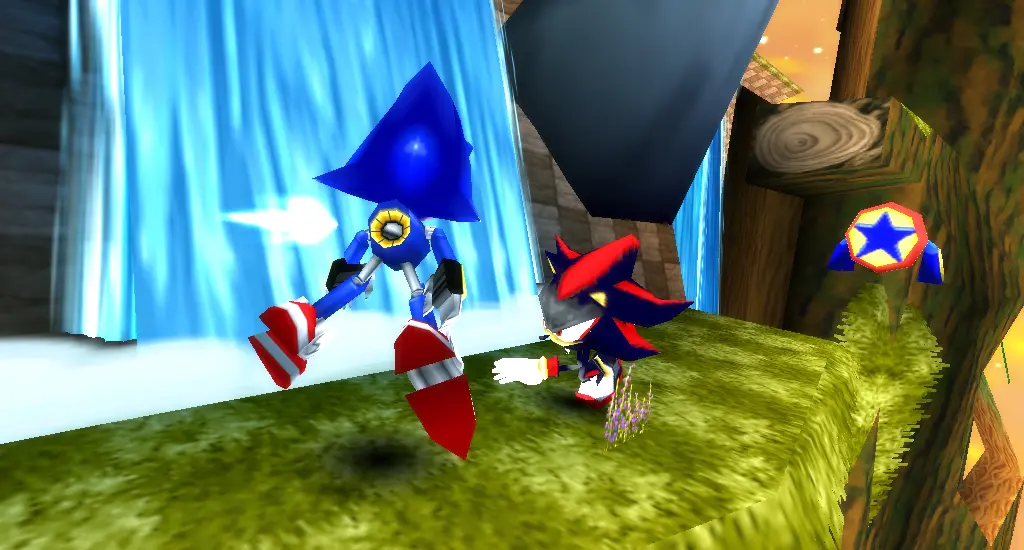
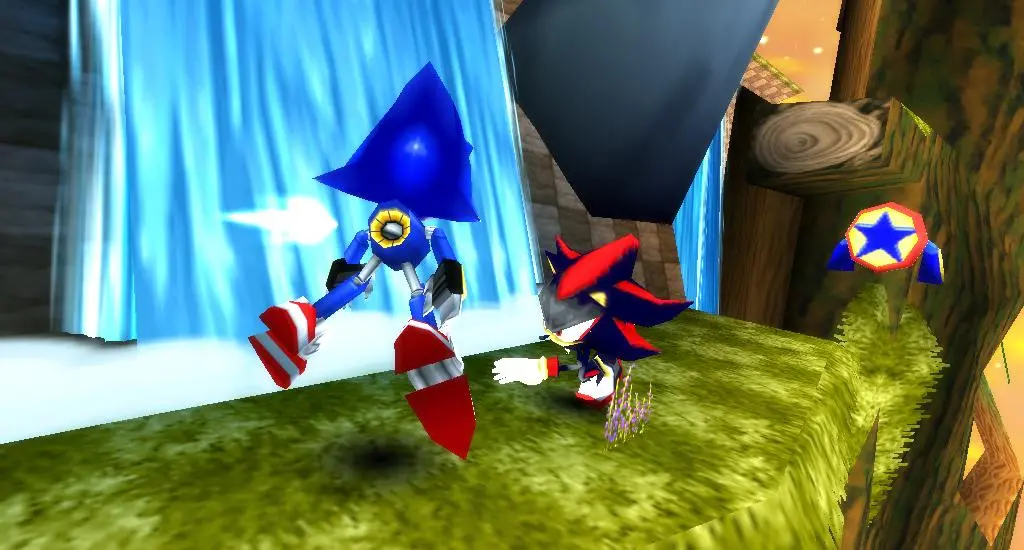
Metal Sonic and Knuckles by a waterfall.The signature move loading screen.
Battle Mode
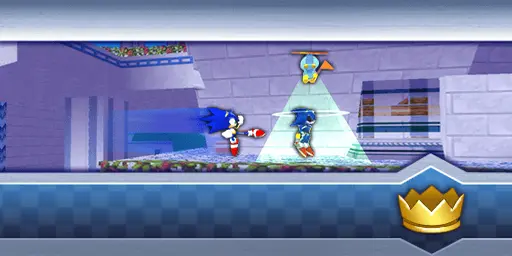
Six competitive games sit alongside the race, and story mode uses them for the middle act of each zone. Knockout gives both players three rings; you have to knock every one of them out of your opponent before a finishing blow counts. Rings Battle is a timed scramble for rings, Laps Race is exactly what it sounds like, and King of the Hill awards points for standing in the beam of light under an Omochao.
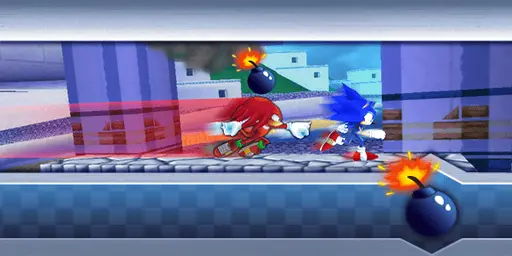
The other two borrow from the playground. Capture the Chao is Capture the Flag with Chao, won by stealing them from your rival’s base while keeping your own safe. Tag hands one player a bomb with a timer that only ticks while he holds it, and the only way to pass it on is to hit the other player. With Game Sharing, two people can play these battles from a single copy of the game; the races need two.
Knockout.Capture the Chao.Tag.King of the Hill.
Cards, outfits and Free Play
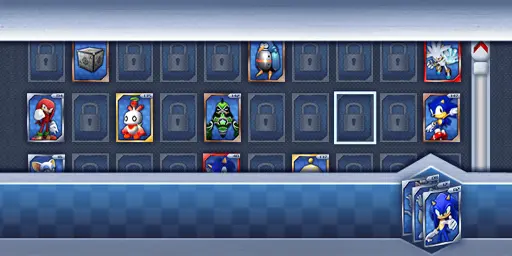
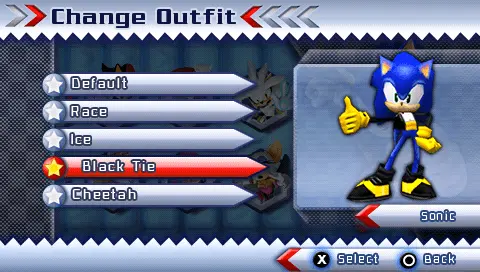
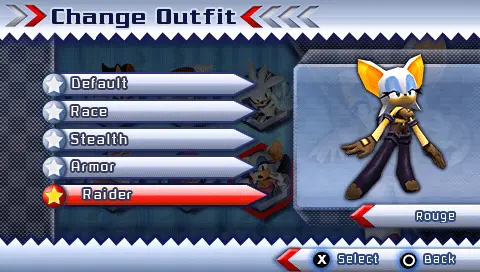
The collection is back, again 150 cards strong, each one earned by a particular feat: an S rank in Knockout, for example, is rewarded with Mephiles the Dark. Their pictures come from older Sonic games, and this time a single card is enough to unlock an outfit, with four per character instead of three. Cards also open the Cup Circuits and each zone’s Chao Detector, and friends can trade them or bet them on a race.
Free Play is the surprise. Pick any of the eight characters and run a stage with no rival at all, chasing a time or searching for the ten Chao hidden in each act. For much of the cast it was a rare chance at a classic-style solo run. Cup Circuit and Single Event modes round out the single-player options.
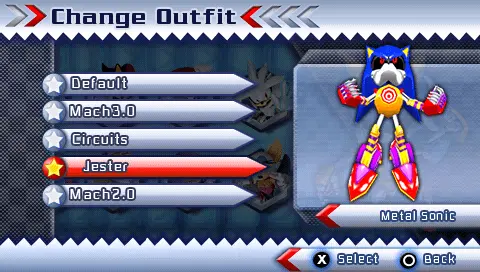
The card collection.Sonic’s Black Tie suit.Rouge’s Raider suit.Metal Sonic’s Jester suit.
Zones in Sonic Rivals 2
Six zones on an unnamed island and beyond it. Each has three acts, the second a battle, and a boss; Chaotic Inferno is the exception.
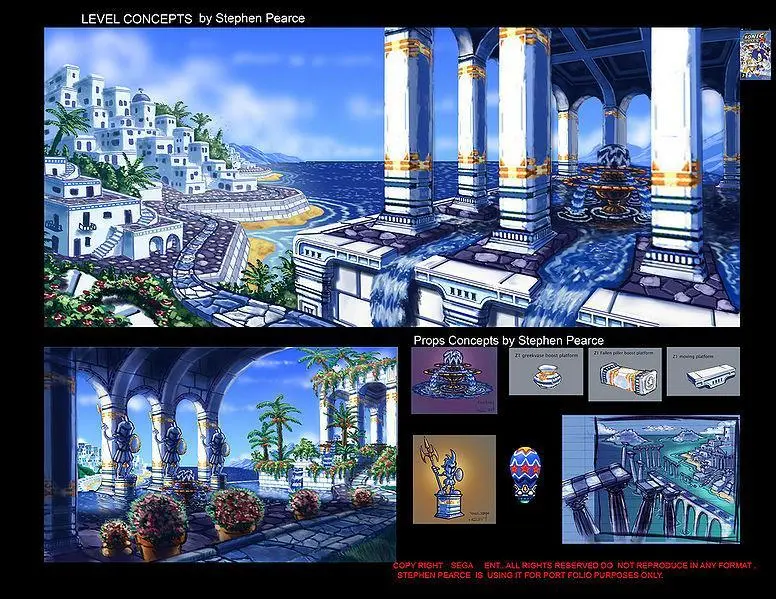
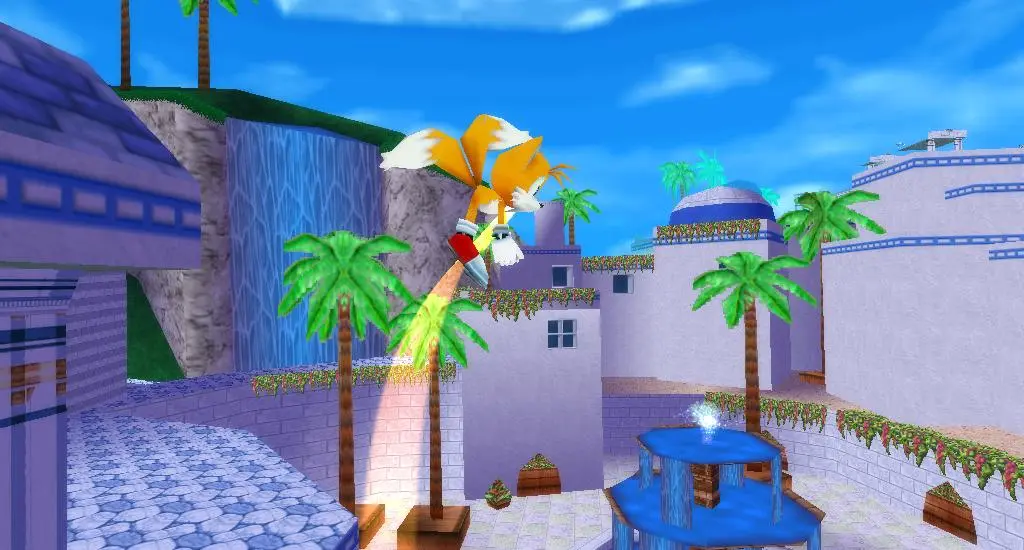
Blue Coast ZoneActs 1–3 · boss: Egg LinerA seaside opener where palm trees and beaches are almost lost among white Classical columns and blue-and-white paving.
Sunset Forest ZoneActs 1–3 · boss: Egg CrawlerChequered soil under a canopy so thick that it cuts off Eggman’s radio link to Shadow and Metal Sonic.
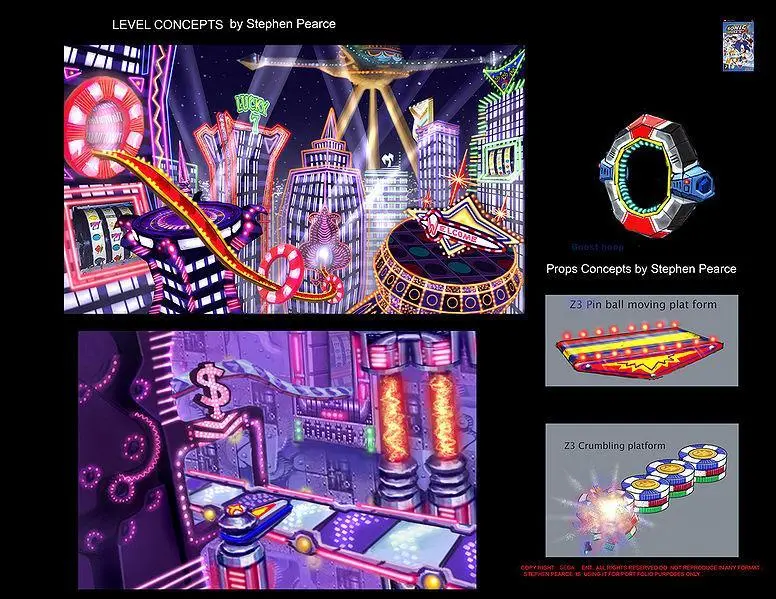
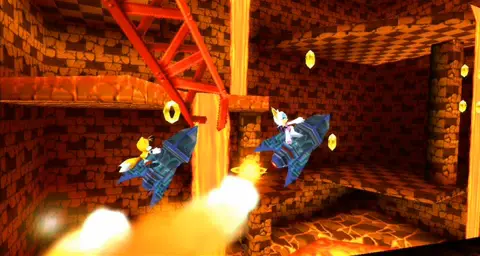
Neon Palace ZoneActs 1–3 · boss: Egg DealerOne more Eggman casino, mixing Casino Night’s flippers and slot machines with the bingo boards of Sonic Heroes.
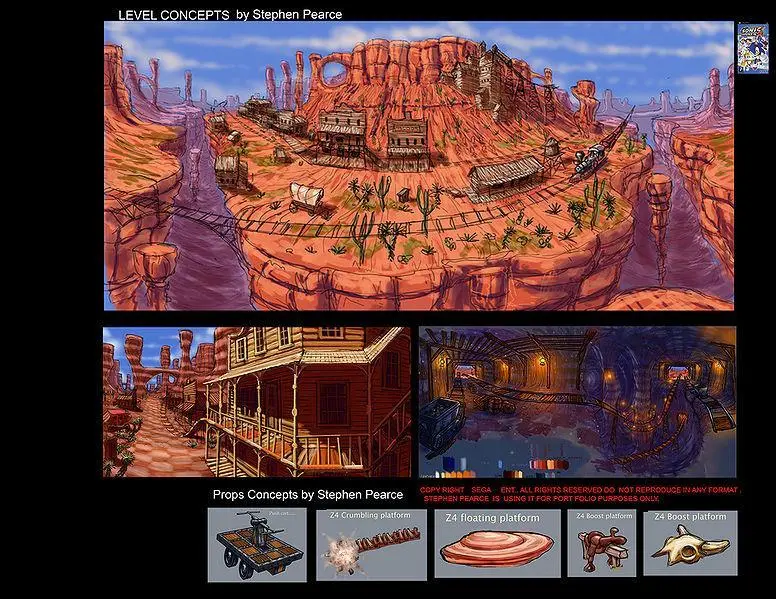
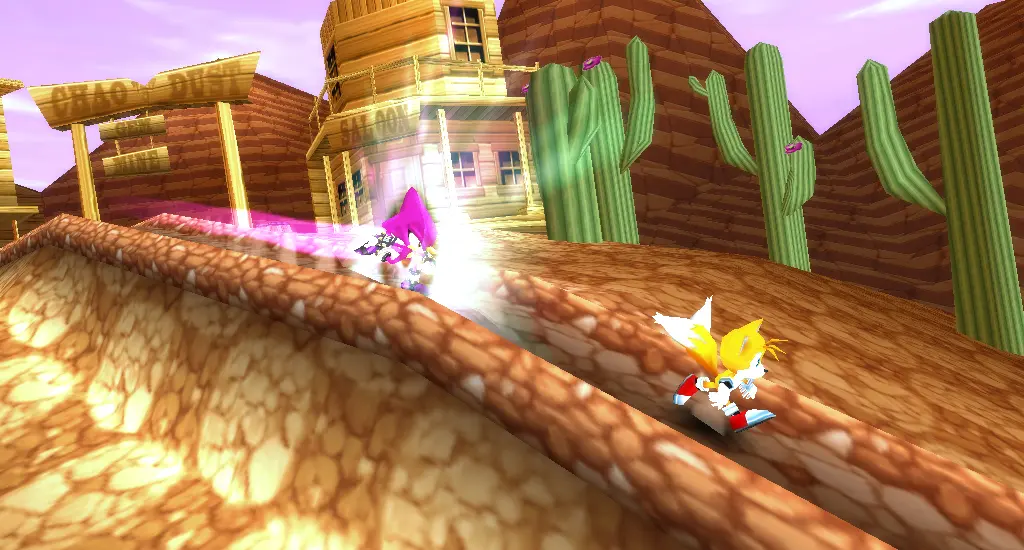
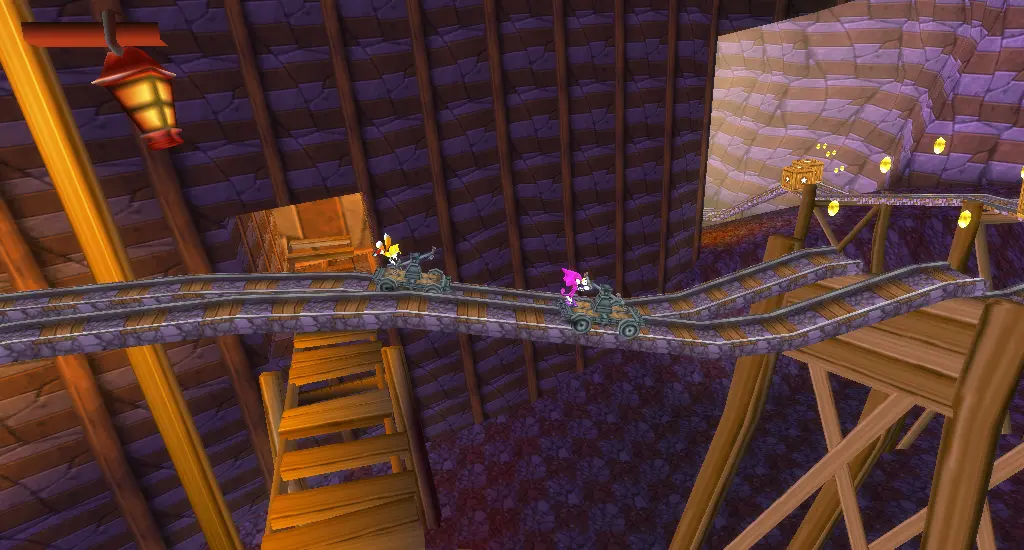
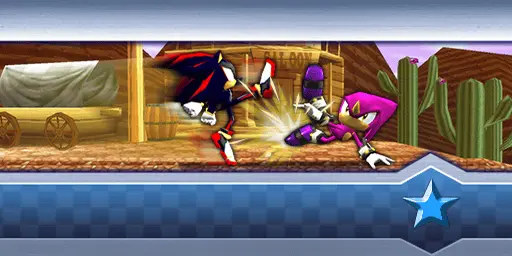
Frontier Canyon ZoneActs 1–3 · boss: Egg BullA Wild West stage, all saloons, rails, lassos and tumbleweed; the third act heads underground into a gem mine.
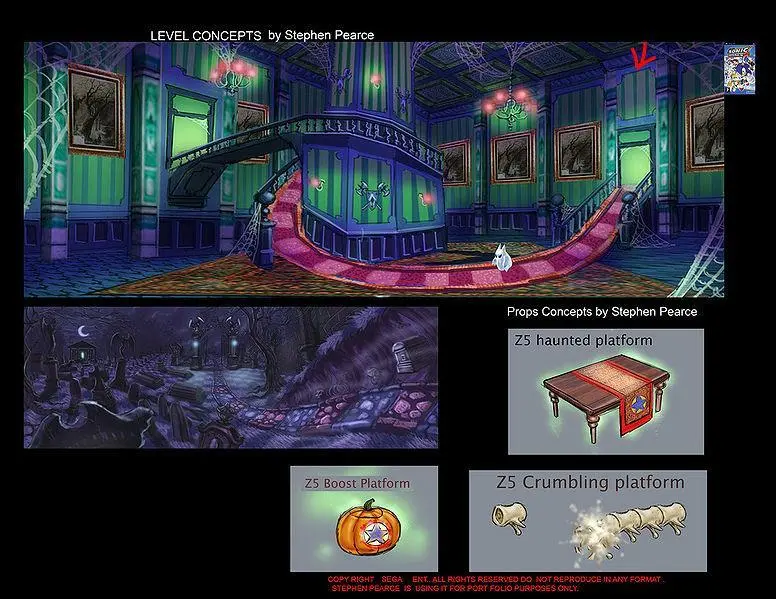
Mystic Haunt ZoneActs 1–3 · boss: Egg PhantomA haunted mansion and its graveyard, with bony floors and trees shaped like grasping hands. The Chao are hidden here, and so is the portal.
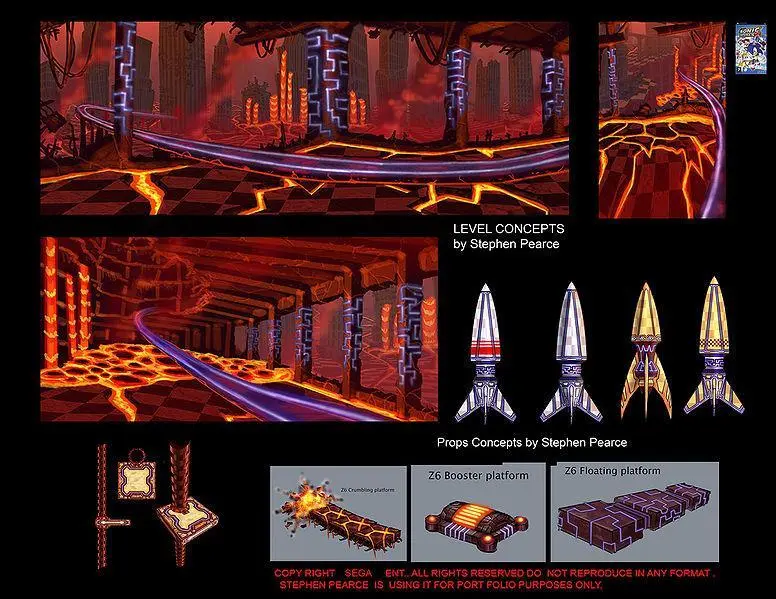
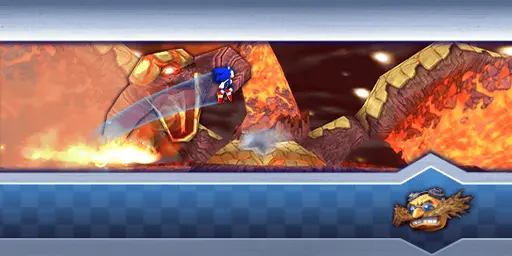
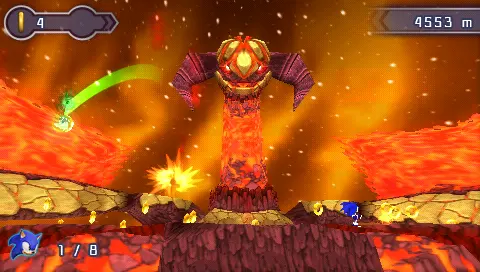
Chaotic Inferno ZoneActs 1 and 3 · boss: IfritThe Ifrit’s burnt-out home dimension, with lava seas and fire tornadoes. Only Shadow and Metal Sonic get an Act 2 here: a Knockout battle with Metal Sonic 3.0.
Bosses are described in the Characters table below.
In comics, TV & other media
Sonic Rivals 2 carries on directly from the first game, and it was packaged several times on the PSP. More in Sonic in other movies and media.
Sonic RivalsPSP · 2006The first game, in which Eggman Nega disguised himself as his ancestor and turned Sonic’s friends into cards.
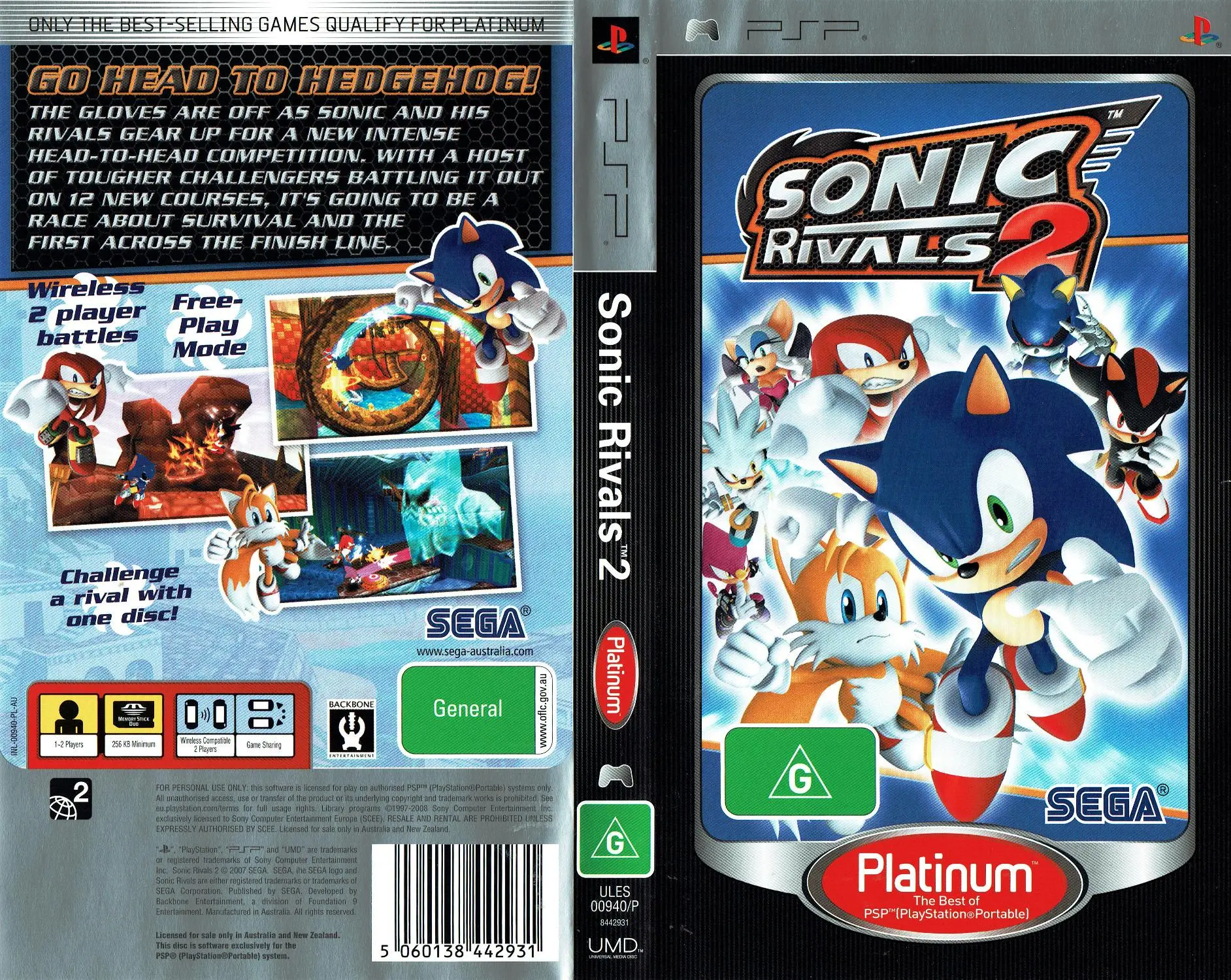
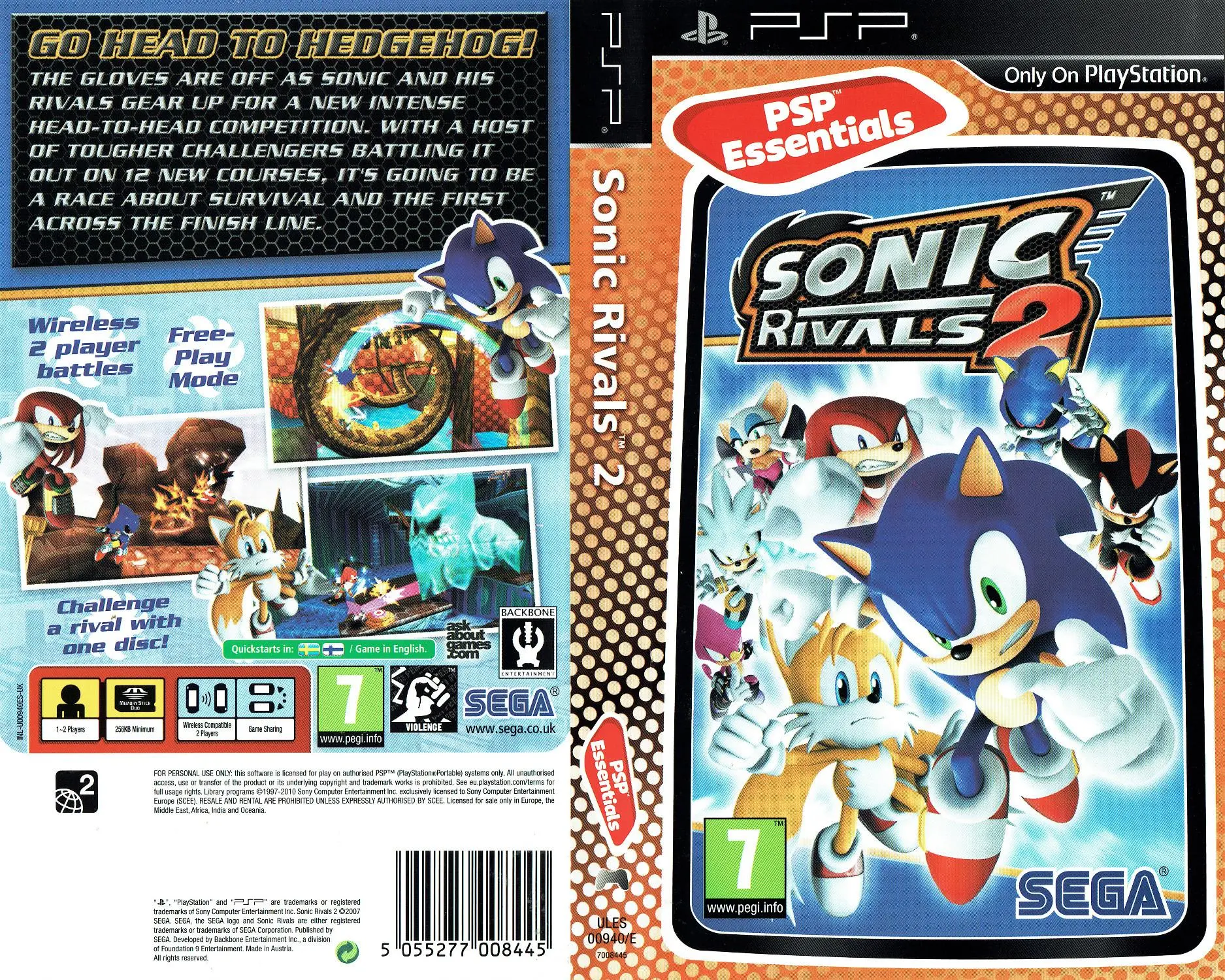
Platinum and EssentialsPSP · budget reissuesGreatest Hits in North America; Platinum and later PSP Essentials editions in Europe and Australia.
Sega Fun PackPSP · 2009Paired Sonic Rivals 2 with the Sega Genesis Collection.
Double Rivals Attack Pack!PSP · 2011Both Rivals games in one package.
PlayStation StoreDownload · 2009–10A download version arrived in North America in October 2009 and in Europe and Australia in August 2010.
Characters
Eight playable racers in four teams, a villain from the future, a beast from another dimension and the machines Nega pilots. GameSpot noted that all eight handle the same; what separates them is the signature move.
Character
Who they are
In this game
Stats & abilities
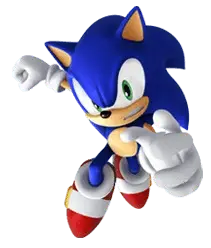
Sonic the HedgehogTeam Sonic
The world’s fastest hedgehog.
Hears the Chao are missing and races after the doctor he takes for Eggman; frees the Chao in Mystic Haunt.
Signature move: Sonic Boom, a burst of speed with brief invincibility
Outfits include Black Tie, Cheetah and Ice
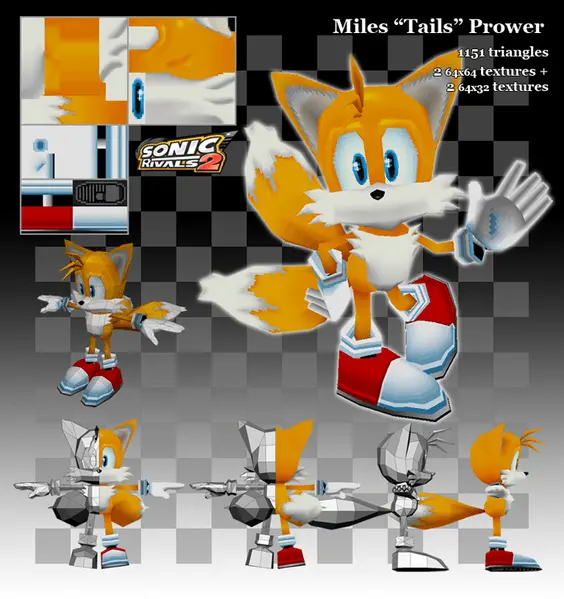
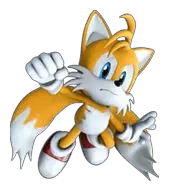
Miles “Tails” ProwerTeam Sonic
Sonic’s best friend, a gifted mechanic.
Spots the Chao disappearances and brings Sonic in.
Signature move: Tail Copter, which lets him fly for a while
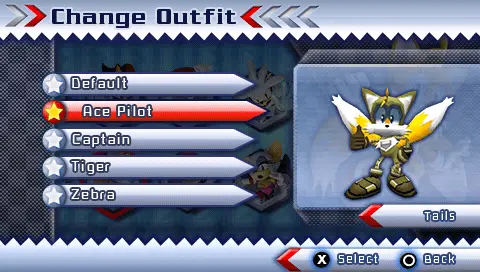
Outfits include Ace Pilot and Captain
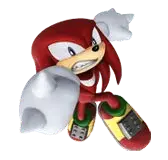
Knuckles the EchidnaTeam Knuckles
Guardian of the Master Emerald and a formidable fighter.
Has to work with Rouge to get the stolen Emerald back, and loses it to her at the very end.
Signature move: Knuckle Slam, which damages everything nearby
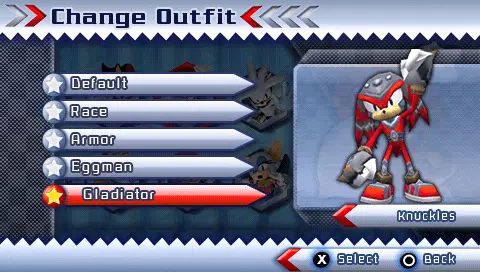
Outfits include Gladiator and an Eggman suit
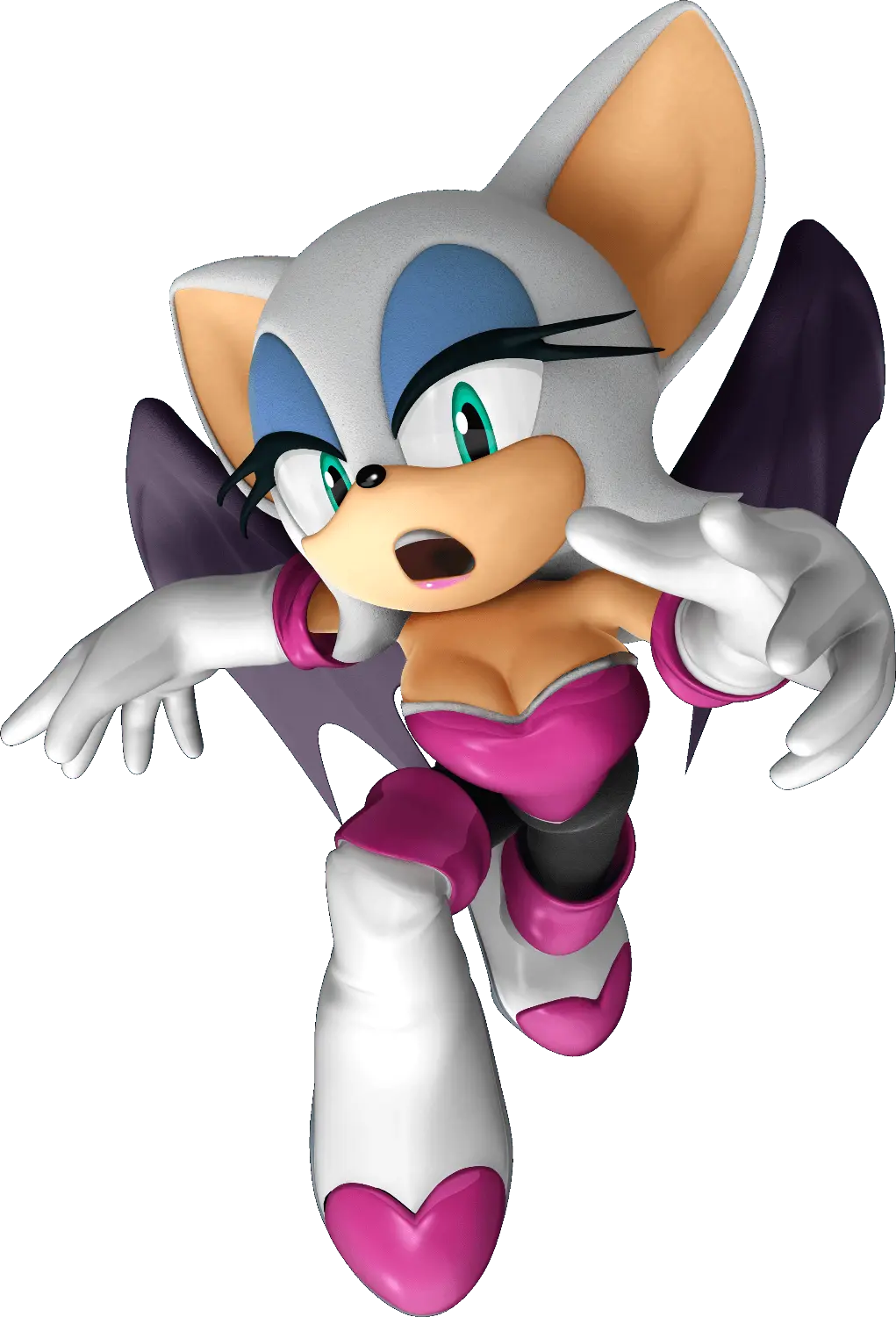
Rouge the BatTeam Knuckles
Treasure hunter and part-time government agent.
Secretly hired by Nega to collect the Chaos Emeralds; finds six of the seven.
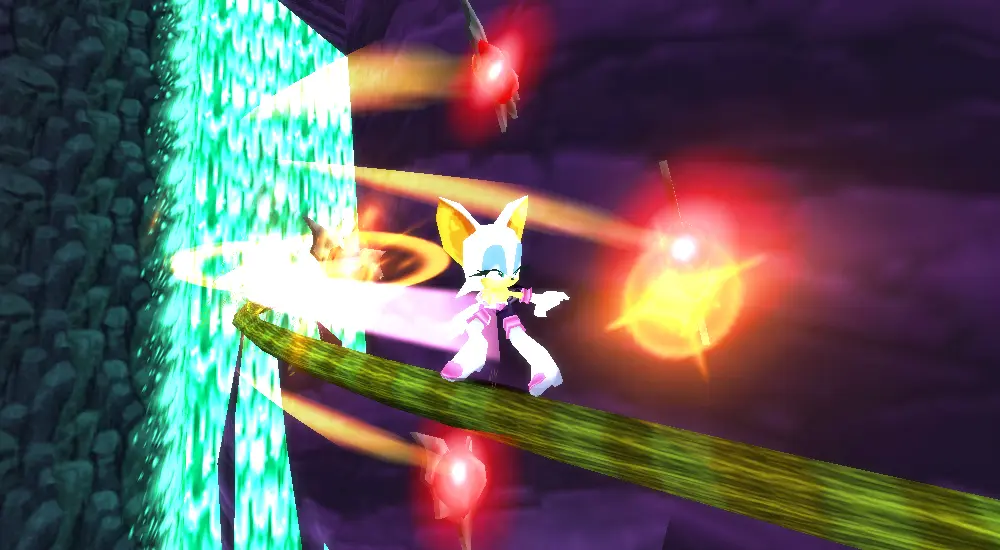
Signature move: Bat Guard, a swarm of bats that shields her and attacks
Playable for the first time in a Rivals game
Shadow the HedgehogTeam Shadow
Professor Gerald’s ultimate life form, gliding on hover shoes.
Works with Metal Sonic on Eggman’s orders to reach the Emeralds before Nega, and escapes the Ifrit’s world at the end.
Signature move: Chaos Control, which slows his rival
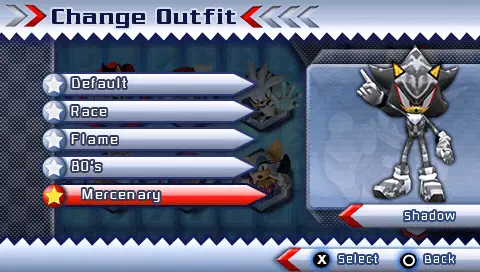
Outfits include 80’s, Flame and Mercenary
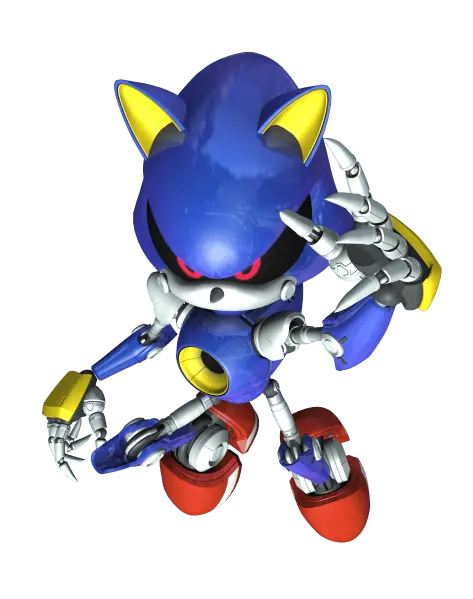
Metal SonicTeam Shadow
Eggman’s robot double of Sonic, determined to prove he is no mere copy.
Doubles as Eggman’s radio to Shadow and turns out to be carrying the seventh Chaos Emerald.
Signature move: Copycat, which copies his rival’s move
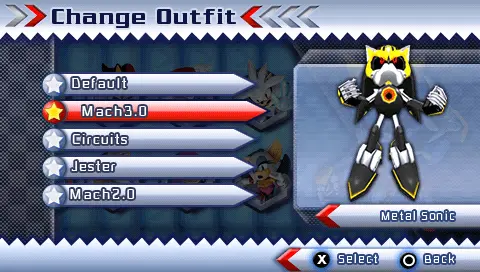
Outfits include Jester, Circuits and Mach 3.0
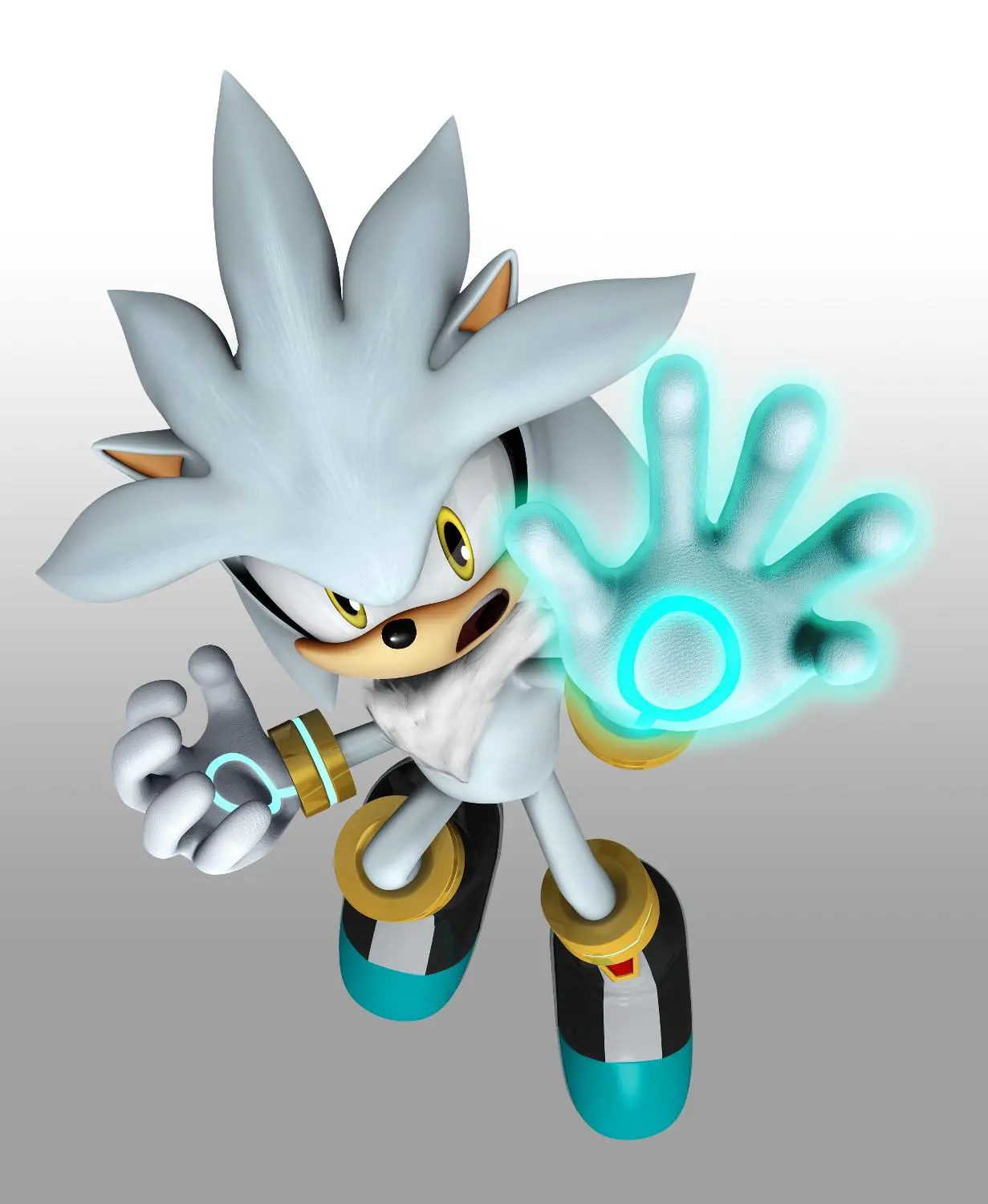
Silver the HedgehogTeam Silver
A psychic hedgehog from a ruined future.
Follows Nega back in time and hides Chao to keep them safe; goes home at the end.
Signature move: ESP, which scrambles his rival’s controls
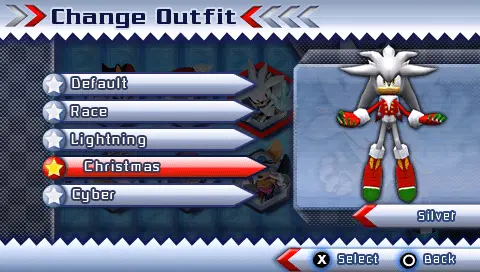
Outfits include Christmas, Cyber and Lightning
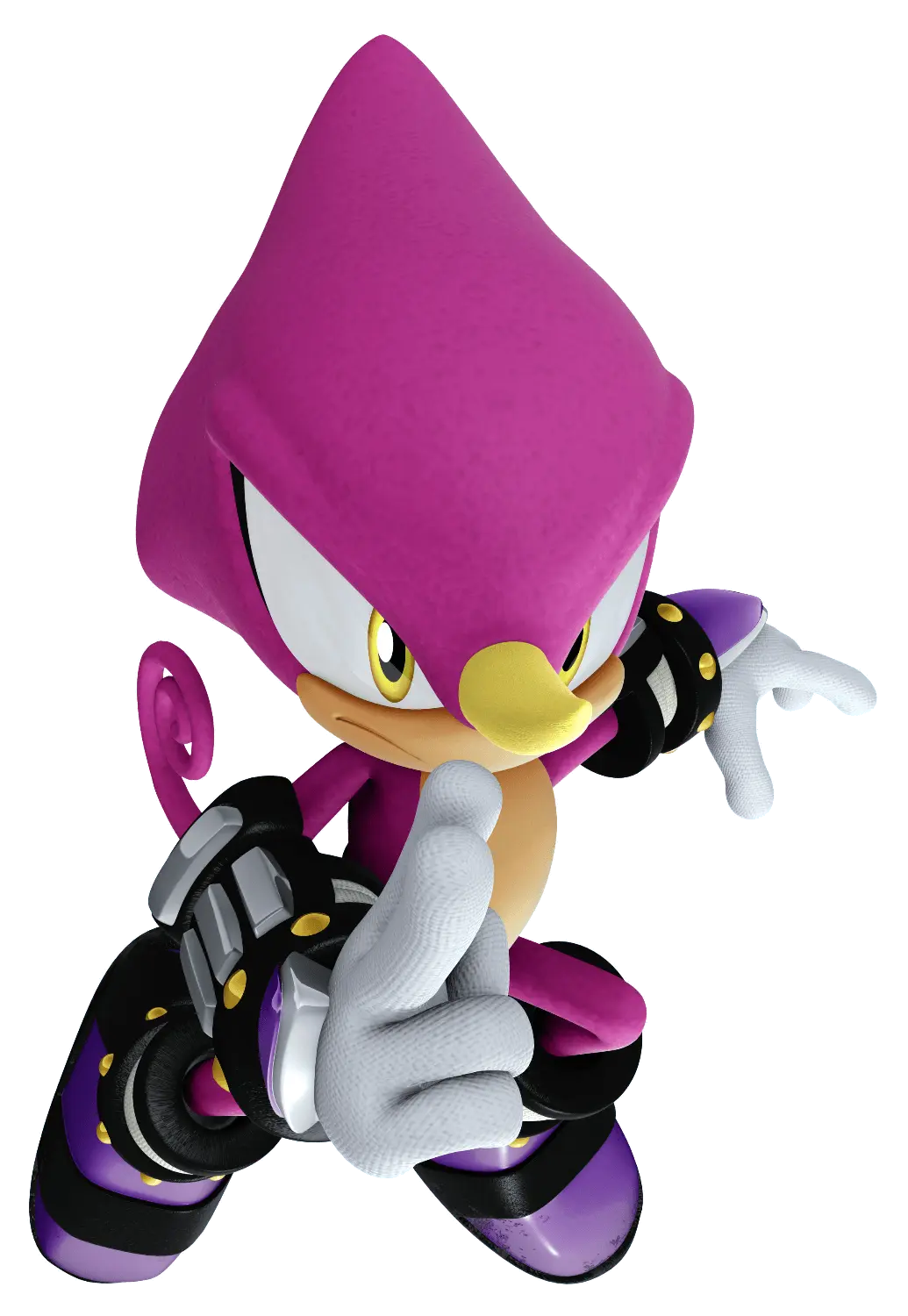
Espio the ChameleonTeam Silver
The Chaotix Detective Agency’s ninja.
Sent by Vector to investigate the missing Chao; suspects Silver, then teams up with him.
Signature move: Chroma Camo, invisibility with a burst of speed
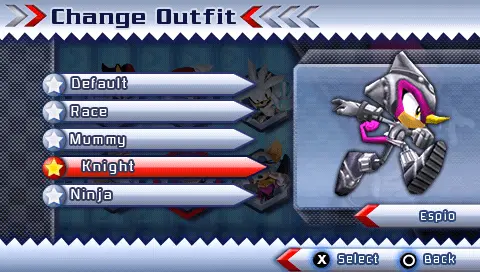
Outfits include Knight, Mummy and Ninja
Dr. EggmanNot playable
Sonic’s arch-enemy, for once not the one behind it all.
Talks to Shadow through Metal Sonic and exposes the impostor.
Gives Team Shadow its orders
Eggman NegaVillain, disguised as Dr. Eggman
Eggman’s descendant from the future, returning from the first Rivals.
Steals the Chao and the Master Emerald, hires Rouge, opens the Ifrit’s portal and ends up stranded in its world.
Pilots the five Egg bosses
Builds Metal Sonic 3.0, which he sends to wake the Ifrit and which fights Shadow and Metal Sonic in Chaotic Inferno
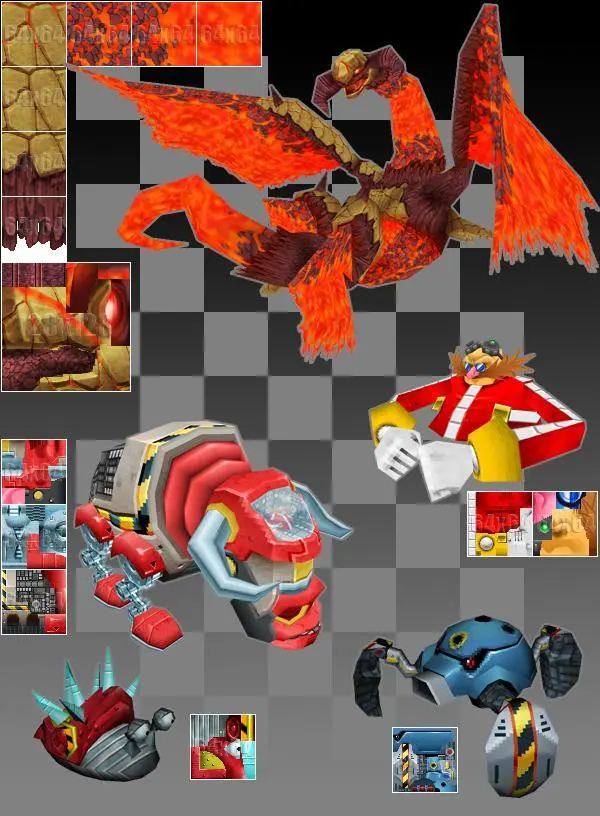
The IfritFinal boss · Chaotic Inferno
A dragon-like fire beast from another dimension, first described in Gerald Robotnik’s notes.
Nega’s living weapon; possesses some of the heroes’ friends during the fight.
Defeating it with each character wins that character’s Cup
Egg LinerBoss · Blue Coast
A dragster with a huge spiked ball on the front.
Swings the ball from side to side and lunges at the racers as they chase it.
First boss
Egg CrawlerBoss · Sunset Forest
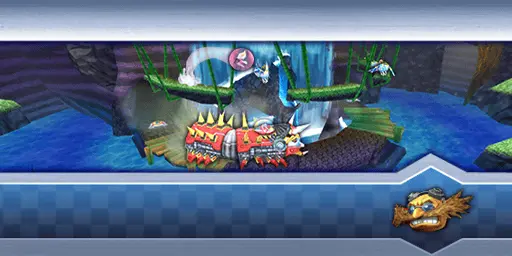
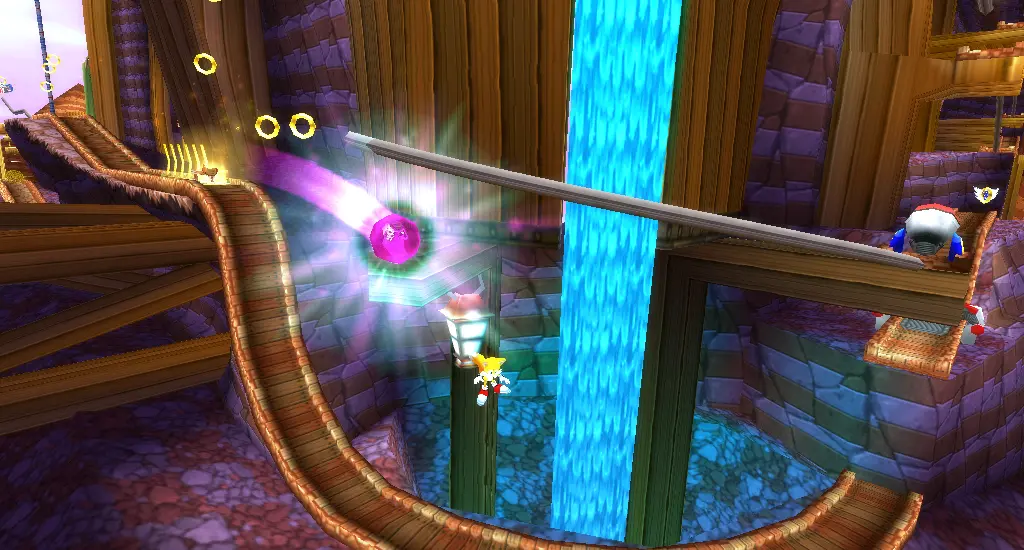
A robot centipede circling a cave behind a waterfall.
Hit the cockpit by jumping between platforms, or take the easier route and attack the Bombats it releases.
Second boss
Egg DealerBoss · Neon Palace
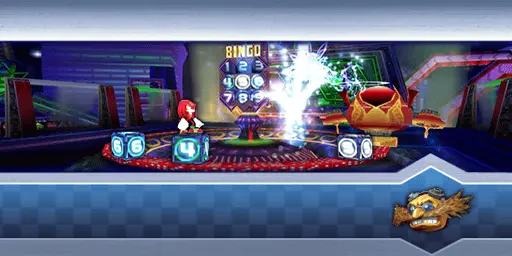
A casino machine fought on a roulette wheel around a bingo board.
Drops numbered blocks that light up the board and pay out rings.
Third boss
Egg BullBoss · Frontier Canyon
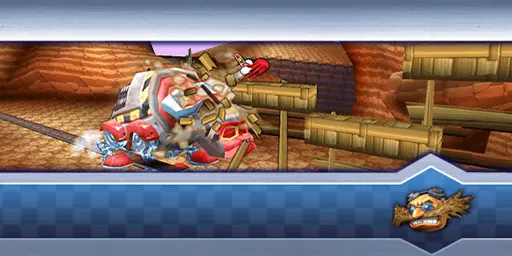
A mechanical bull.
Charges after the racers throwing dynamite and blowing tornadoes from its snout.
Fourth boss
Egg PhantomBoss · Mystic Haunt
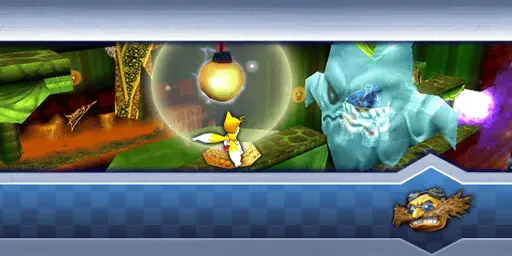
A ghost-shaped machine haunting a mansion room.
Hit the light switches to lure it into the light, which turns it see-through and exposes Nega’s Egg Mobile.
Fifth boss
Badniks and boss loading screens
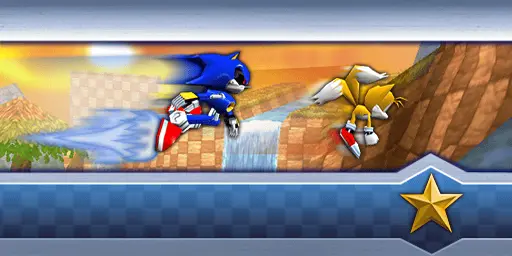
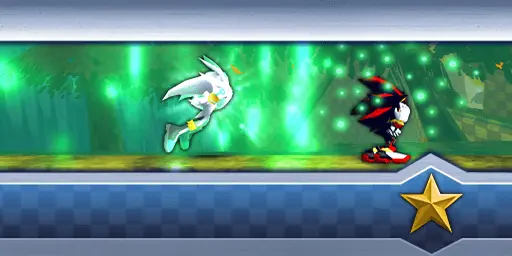
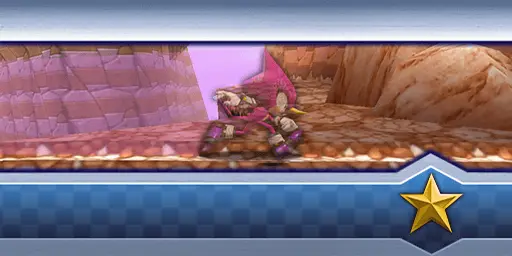
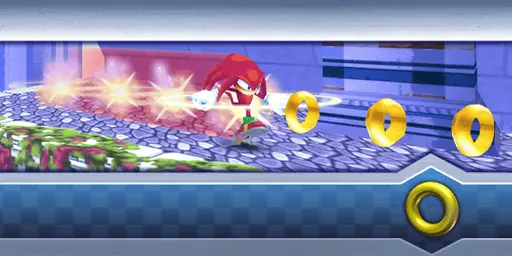
Sonic Retro lists five enemy types: Bombats, Cannon Flappers, Egg Pawns, Guardon Crabs and Hyudoro. Each boss also has its own loading screen, shown here from our original gallery.
Egg CrawlerLoading screenSunset Forest’s boss.
Egg DealerLoading screenNeon Palace’s boss.
Egg BullLoading screenFrontier Canyon’s boss.
Egg PhantomLoading screenMystic Haunt’s boss.
BombatBadnikReleased by the Egg Crawler, and the easy way to damage it.
HyudoroBadnikGhost enemies, fitting company for Mystic Haunt’s mansion.
Egg PawnBadnikEggman’s foot soldiers, also seen in the first Rivals.
The people who made it
From the credits in the North American manual, as listed by Sonic Retro.
Takashi IizukaProject director, concept design and scenarioAlso directed the first Rivals.
Keith PalmerProject producer, SegaProduced the game for Sega of America.
Taylor MillerProducer, Backbone EntertainmentReturned from the first game to lead Backbone’s team.
Eric EmeryLead designerWith Clint Forward as lead battle-mode designer and Cory Hasselbach as lead level designer.
Kazuyuki Hoshino and Hiroshi NishiyamaArt supervisorsKept the cast on model for Sega.
Stephen PearceArtistPainted the concept art for five of the six zones.
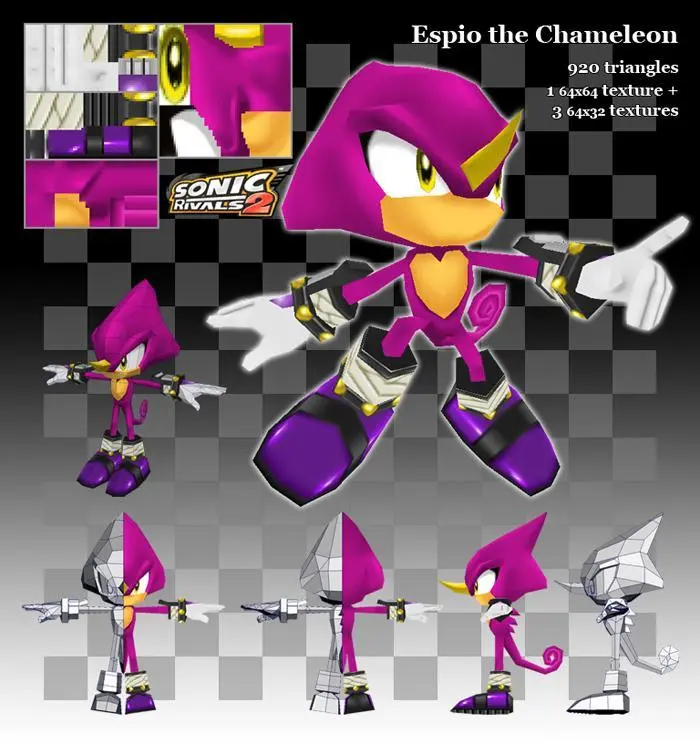
Matt OsnessArtistBuilt the polygon models, including Tails, Espio and Eggman.
Chris RezansonMusicComposer; Jun Senoue supervised the sound.
How it was made
Our original page had no history; this section draws on the credits, Sonic Retro’s development and prototype notes and the release records.
The same team, a bigger brief
Matt Osness’ model sheet for Espio.
Sega brought back the partnership behind the first game. Backbone Entertainment built it, Taylor Miller again produced for the studio, and Takashi Iizuka directed and wrote the scenario, with Keith Palmer producing for Sega. The credits list a lead battle-mode designer, Clint Forward, which shows how much weight the new modes carried. Kazuyuki Hoshino and Hiroshi Nishiyama supervised the art, Chris Rezanson composed the music under Jun Senoue, and 4Kids Productions recorded the English voices.
Concept art and models
Frontier Canyon Zone concept art.
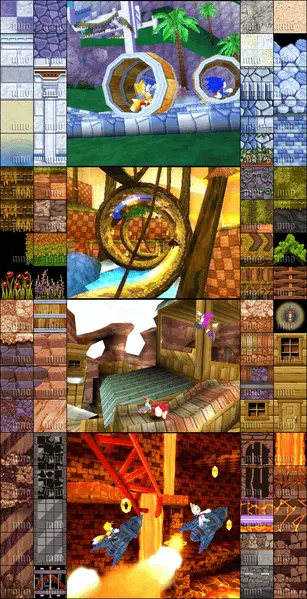
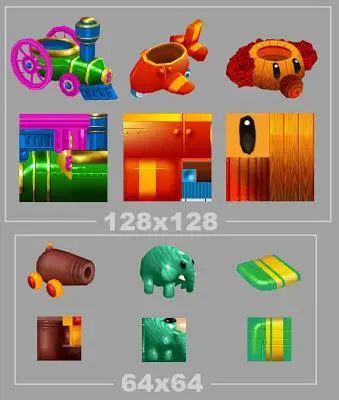
Stephen Pearce painted concept art for Blue Coast, Neon Palace, Frontier Canyon, Mystic Haunt and Chaotic Inferno, and Matt Osness produced the polygon models for Tails, Espio, Eggman and the enemies. Sonic Retro also preserves sheets of the textures used across the game. The pictures sit in our concept-art gallery, linked at the foot of this page.
Prototypes
A preview shot from July 2007.
Three builds from the last weeks of development have surfaced through Hidden Palace, dated 8, 22 and 30 October 2007; the earliest is labelled a test sample and the second a pre-production build. Two weeks after the last of them, the game was in North American shops.
Release
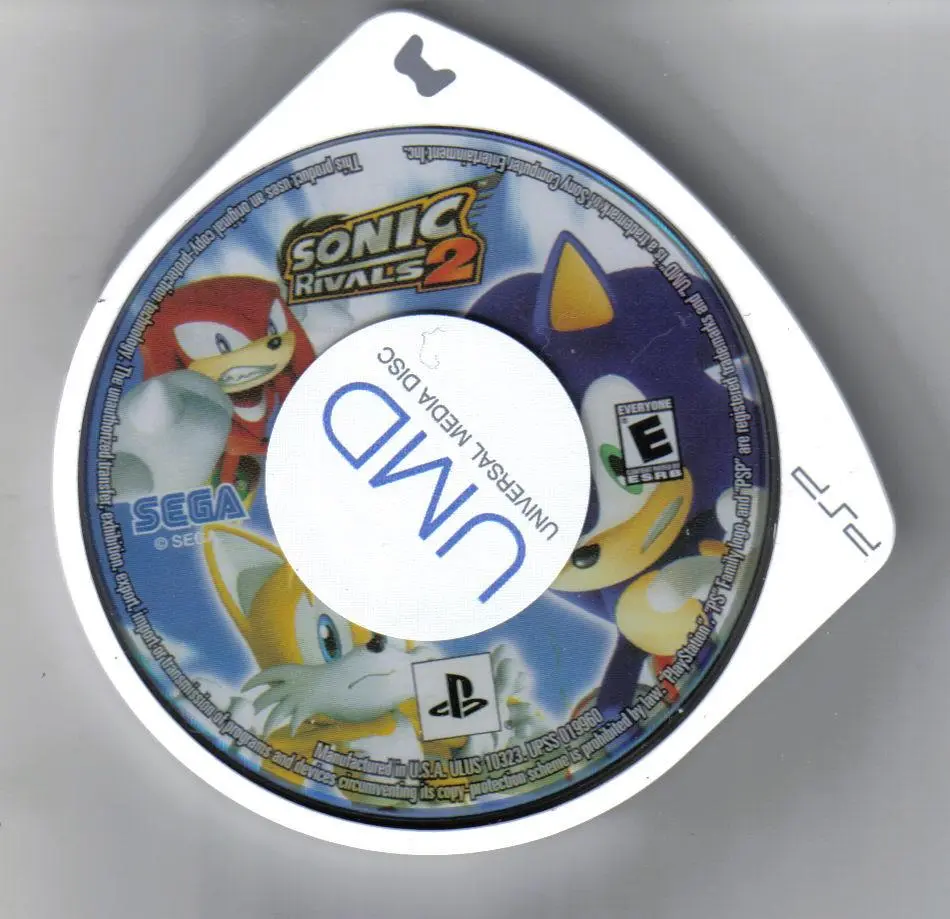
The North American UMD.
Sonic Rivals 2 came out in North America on 13 November 2007, in Australia on 6 December and in Europe on 7 December, published by Sega of America and Sega Europe. As with the first game, there was no Japanese release.
Firsts: what this game introduced
What the sequel added to the Rivals formula.
1Battle ModeSix competitive games beyond racing, built into story mode as each zone’s second act.
2Teams of twoFour partnerships, each with its own story of the same events.
3Signature meterSpecials charge from rings and defeated enemies instead of a star item.
4Free PlaySolo runs with no rival, time trials and ten hidden Chao per act.
5Three acts and a bossUp from two acts per zone in the first game.
6New racersTails, Rouge and Espio joined the Rivals roster.
Cheats & secrets
Our original page had no cheats section. These are the game’s unlockables, checked against Sonic Retro and Wikipedia.
Chao Detectors
Set the high score in Act 3 of a zone to unlock that zone’s Chao Detector, which helps track down the hidden Chao in Free Play.
Character Cups
Beat the Ifrit with a character to open his or her Cup in the Cup Circuit: one each for Sonic, Tails, Knuckles, Rouge, Shadow, Metal Sonic, Silver and Espio.
Outfits
Each outfit is unlocked by a single card, four per character, from Sonic’s Black Tie suit to Metal Sonic’s Mach 3.0 look.
Mephiles card
Earn an S rank in Knockout mode to win the card of Mephiles the Dark.
Checked against Sonic Retro and Wikipedia, November 2026.
Glitches, exploits and oddities
Sonic Retro’s bug and hidden-content pages for the game are empty, so these are oddities rather than glitches.
The missing Act 2
Chaotic Inferno Zone.Image via Sonic Retro
Chaotic Inferno skips straight from Act 1 to Act 3 for most of the cast. Only Shadow and Metal Sonic play an Act 2, their Knockout battle with Metal Sonic 3.0.
Two copies for a race
Game Sharing lets a friend join with no copy of their own, but only for the battle games; races and the card games need two UMDs.
Eight racers, one engine
GameSpot pointed out that the eight characters have no differences in speed or agility. Only the signature moves and outfits tell them apart.
Videos & media
Sega’s own trailer, and IGN’s overview trailer from 2007.
From SEGA’s official YouTube channel.
IGN’s overview trailer.
Trivia & facts
The start-up screen.The theme song is “Race to Win”.
Neon Palace borrows from two earlier casino stages at once: Casino Night Zone in Sonic 2, for its flippers and one-armed bandits, and BINGO Highway in Sonic Heroes, for its number grids.
Sonic Retro sees a resemblance between Chaotic Inferno and Crisis City from Sonic the Hedgehog (2006).
Two boss names are recycled: Shadow the Hedgehog (2005) has a final boss called the Egg Dealer, and Sonic the Hedgehog (2006) has robots called Egg Liners.
Mephiles the Dark, the villain of Sonic the Hedgehog (2006), appears on one of the 150 cards.
Nega learns about the Ifrit from the notes of Professor Gerald Robotnik, Shadow’s creator.
The credits end with special thanks to the “Sonic Committee”.
Media & artwork
Box art, discs, character art, concept art, loading screens, outfits and screenshots, from Sonic Scene’s own galleries and Sonic Retro. Select any image to view it larger.
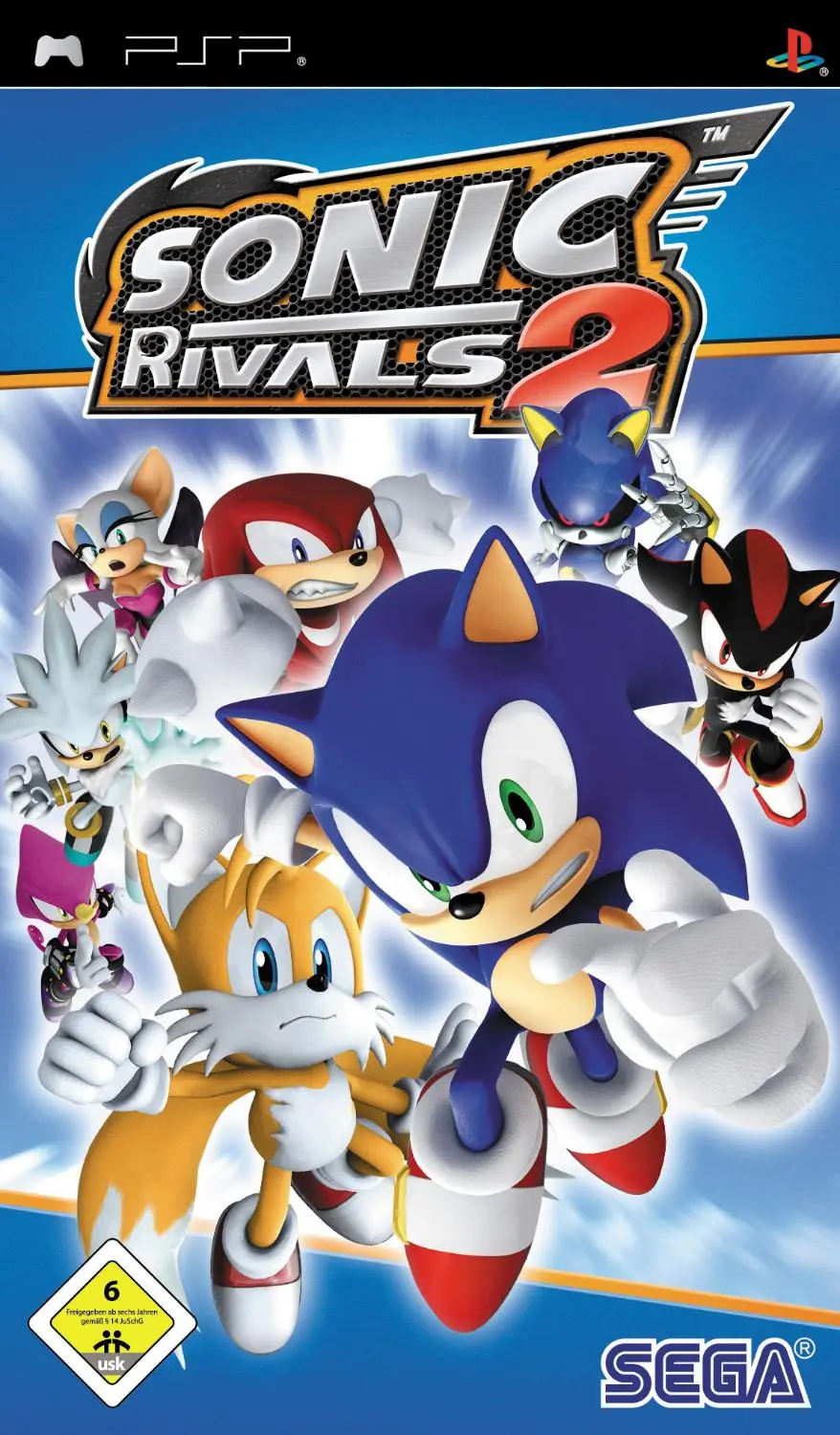
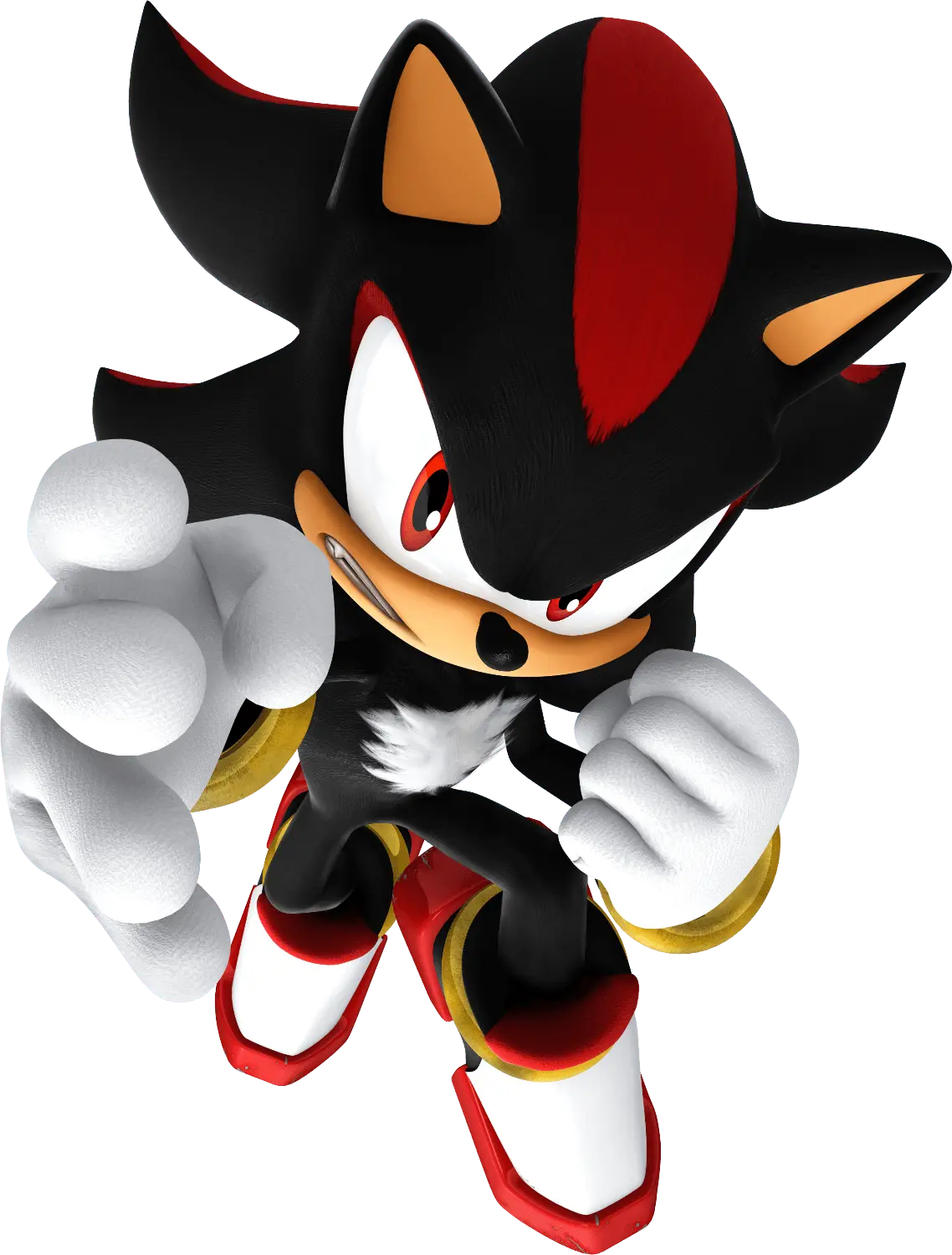
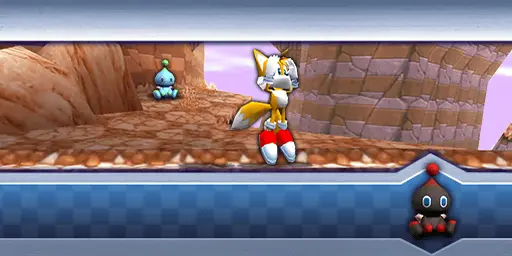
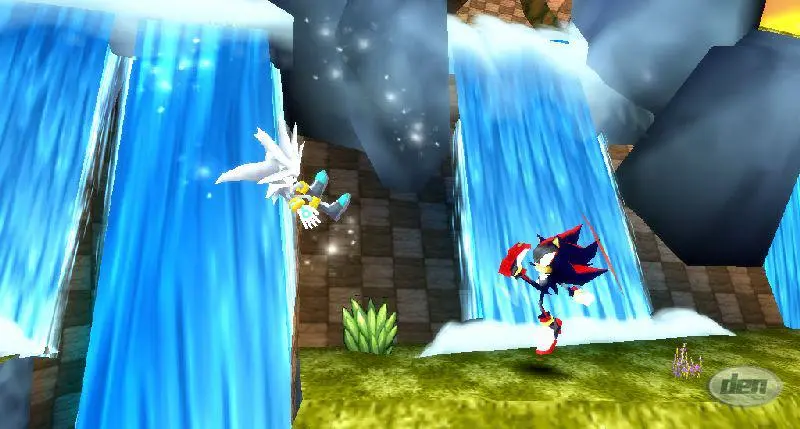
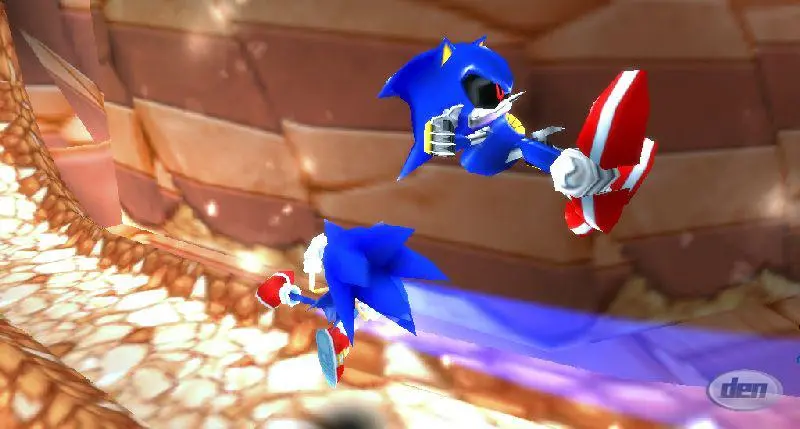
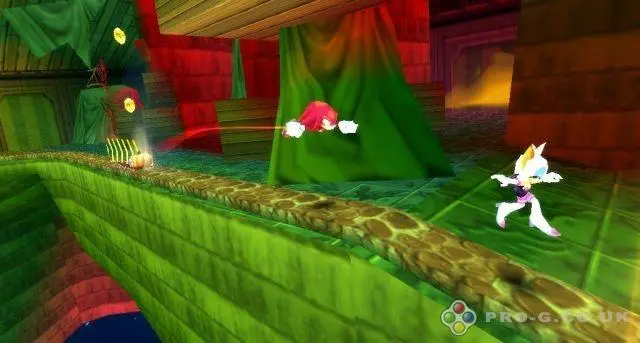
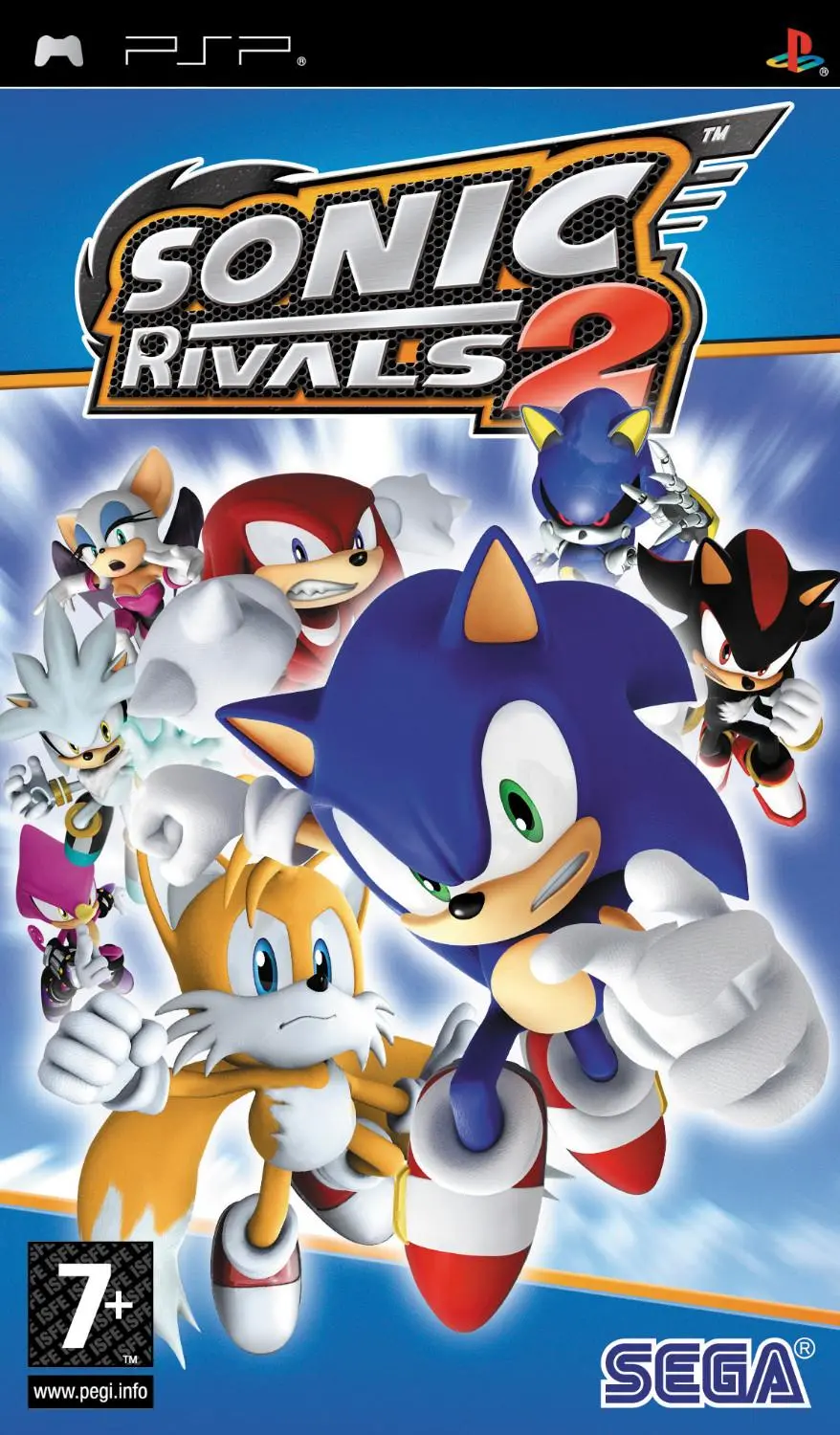
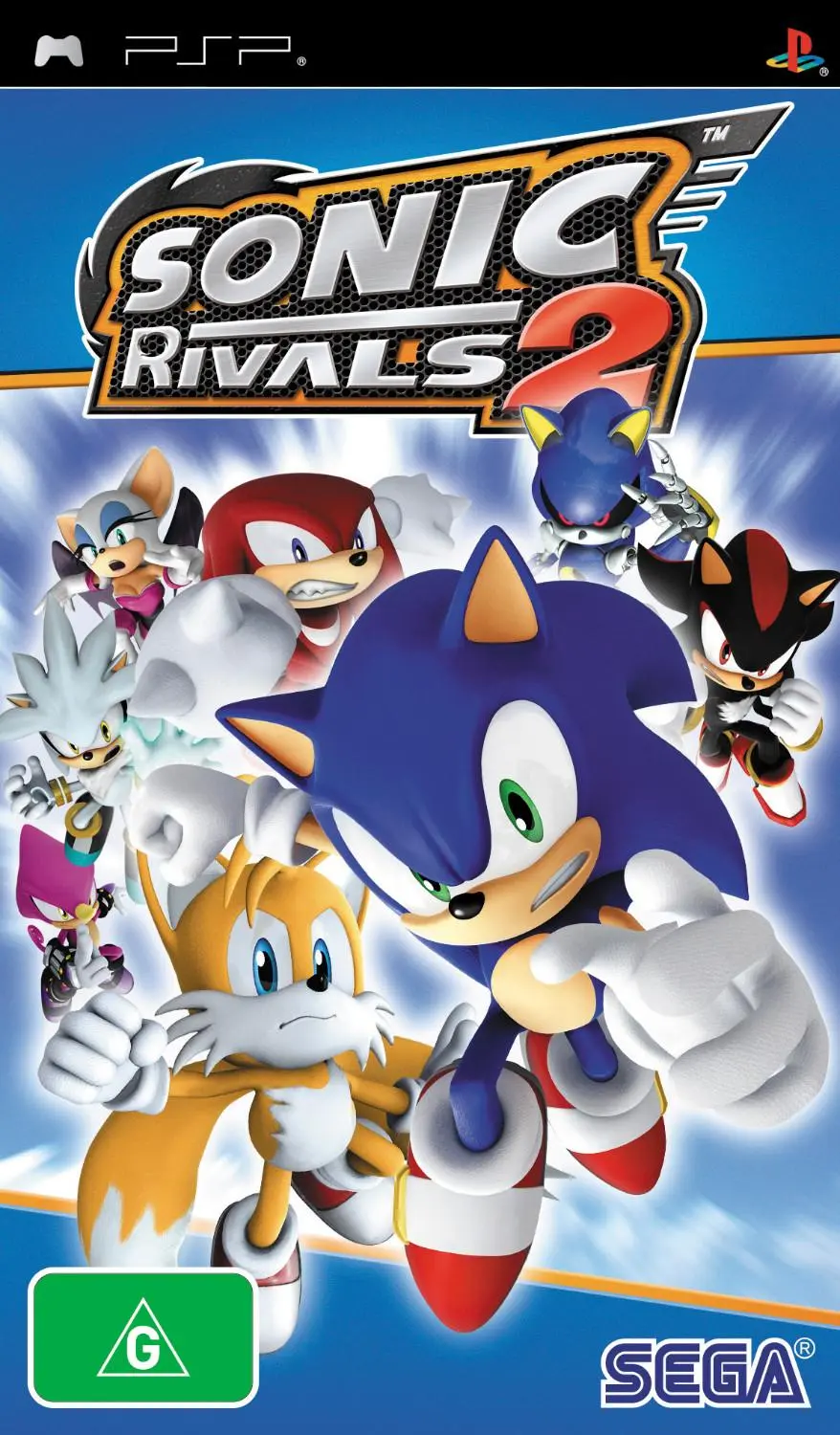
European box.Australian box.German box.Australian Platinum box.UK Platinum box.UK PSP Essentials box.North American UMD.Shadow render.Blue Coast concept art.Neon Palace concept art.Mystic Haunt concept art.Chaotic Inferno concept art.Tails model sheet by Matt Osness.A model sheet by Matt Osness.Low-poly textures.Enemy textures.Boost loading screen.Homing Attack loading screen.Spin Dash loading screen.Sonic Boom.Tail Copter.Knuckle Slam.Bat Guard.Chaos Control.Copycat.ESP.Chroma Camo.Rings Battle.Free Play.Tails’ Ace Pilot suit.Knuckles’ Gladiator suit.Shadow’s Mercenary suit.Silver’s Christmas suit.Espio’s Knight suit.Metal Sonic’s Mach 3.0 suit.Knuckles and Rouge indoors.Racing past a waterfall.Sonic and Knuckles in mid-air.A forest race.Tails among the palm trees.Knuckles on the run.A menu screen.Sega press shot.Sega press shot.Sega press shot.Sega press shot.Sega press shot.Battle Mode press shot.Battle Mode press shot.Battle Mode press shot.
Sonic Rivals 2 followed the first game within a year and was reissued, bundled and sold as a download for years afterwards.
Releases and re-releases
PSP (North America)13 November 2007 – ULUS-10323.
PSP (Australia)6 December 2007 –
PSP (Europe)7 December 2007 – ULES-00940; UK release the same day.
Budget editionsLater – Greatest Hits in North America; Platinum and PSP Essentials in Europe and Australia.
Sega Fun Pack2009 – With the Sega Genesis Collection.
PlayStation Store (North America)1 October 2009 – US$6.99.
PlayStation Store (Europe and Australia)18 August 2010 – £3.69, €4.49, A$6.75.
Double Rivals Attack Pack!2011 – Both Rivals games together.
After Rivals
Sonic Retro’s list of Sonic games for the PSP ends with this one and two bundles: the Sega Fun Pack of 2009, which paired it with the Sega Genesis Collection, and Double Rivals Attack Pack! in 2011, which put both Rivals games in one box. No third Rivals was made, and the series’ villain was left where this game abandoned him, stranded in the Ifrit’s world.
Sales & reviews
Sales
No sales figures have been published. The game’s Greatest Hits, Platinum and PSP Essentials editions show that it sold steadily enough to join Sony’s budget ranges.
60/100Metacritic
63%GameRankings
64%Average of the 7 scores below
50%Lowest: GameSpot
Reception and review scores
Online reviews cited by Wikipedia and the one magazine score in Sega Retro’s index, converted to percentages. 1UP.com gave it a C−.
EurogamerOnline · 4 December 2007
7/10
GameSpyOnline · 25 November 2007
3.5/5
PlayStation 2 Official MagazineUK · February 2008
70%
IGNOnline
6.5/10
GameZoneOnline · 24 November 2007
6/10
GameDailyOnline · 27 November 2007
6/10
GameSpotOnline · 9 January 2008
5/10
The sequel landed a little below the original. Eurogamer’s Ellie Gibson enjoyed Sonic’s speed burst and the look of the stages, but warned that the courses fly by so fast on the small screen that you have to replay them to learn where everything is, and that Game Sharing only covers the battles.
GameSpot’s Lark Anderson was far harsher, calling the game “rarely fun, often frustrating, and entirely forgettable”, finding the story baffling and noting that the eight characters all play the same. The highest scores, 70%, came from Eurogamer, GameSpy and the UK’s PlayStation 2 Official Magazine.
Reader reviews
No reader reviews yet. Played it? Give it a score out of 10 and tell other fans what you think.
Every fact on this page was checked against the sources below. Sonic Retro and Sega Retro pages were read through Wayback Machine copies, because both live sites show a bot check; each link opens the copy we read. Online review scores and the aggregate scores come from Wikipedia’s cited table; the two quoted reviews were read in full.
To provide the best experiences, we use technologies like cookies to store and/or access device information. Consenting to these technologies will allow us to process data such as browsing behavior or unique IDs on this site. Not consenting or withdrawing consent, may adversely affect certain features and functions.
Functional
Always active
The technical storage or access is strictly necessary for the legitimate purpose of enabling the use of a specific service explicitly requested by the subscriber or user, or for the sole purpose of carrying out the transmission of a communication over an electronic communications network.
Preferences
The technical storage or access is necessary for the legitimate purpose of storing preferences that are not requested by the subscriber or user.
Statistics
The technical storage or access that is used exclusively for statistical purposes.The technical storage or access that is used exclusively for anonymous statistical purposes. Without a subpoena, voluntary compliance on the part of your Internet Service Provider, or additional records from a third party, information stored or retrieved for this purpose alone cannot usually be used to identify you.
Marketing
The technical storage or access is required to create user profiles to send advertising, or to track the user on a website or across several websites for similar marketing purposes.

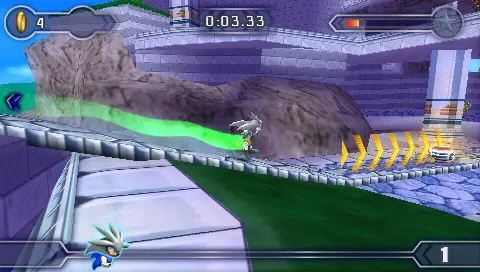 Blue Coast ZoneActs 1–3 · boss: Egg LinerA seaside opener where palm trees and beaches are almost lost among white Classical columns and blue-and-white paving.
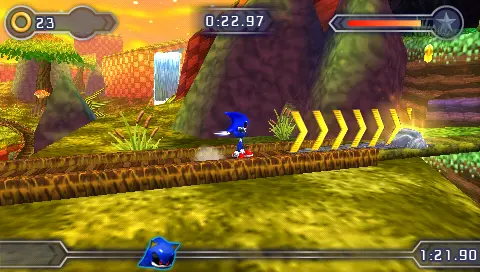 Sunset Forest ZoneActs 1–3 · boss: Egg CrawlerChequered soil under a canopy so thick that it cuts off Eggman’s radio link to Shadow and Metal Sonic.
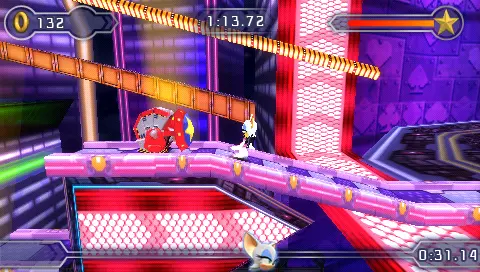 Neon Palace ZoneActs 1–3 · boss: Egg DealerOne more Eggman casino, mixing Casino Night’s flippers and slot machines with the bingo boards of Sonic Heroes.
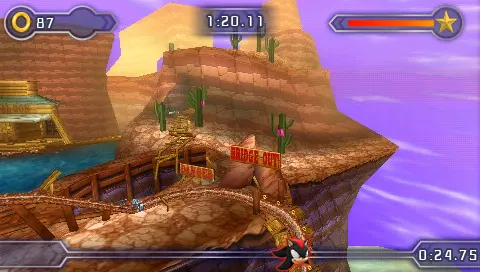 Frontier Canyon ZoneActs 1–3 · boss: Egg BullA Wild West stage, all saloons, rails, lassos and tumbleweed; the third act heads underground into a gem mine.
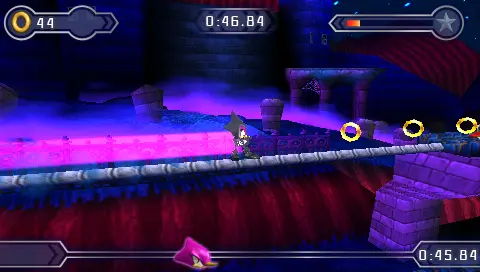 Mystic Haunt ZoneActs 1–3 · boss: Egg PhantomA haunted mansion and its graveyard, with bony floors and trees shaped like grasping hands. The Chao are hidden here, and so is the portal.
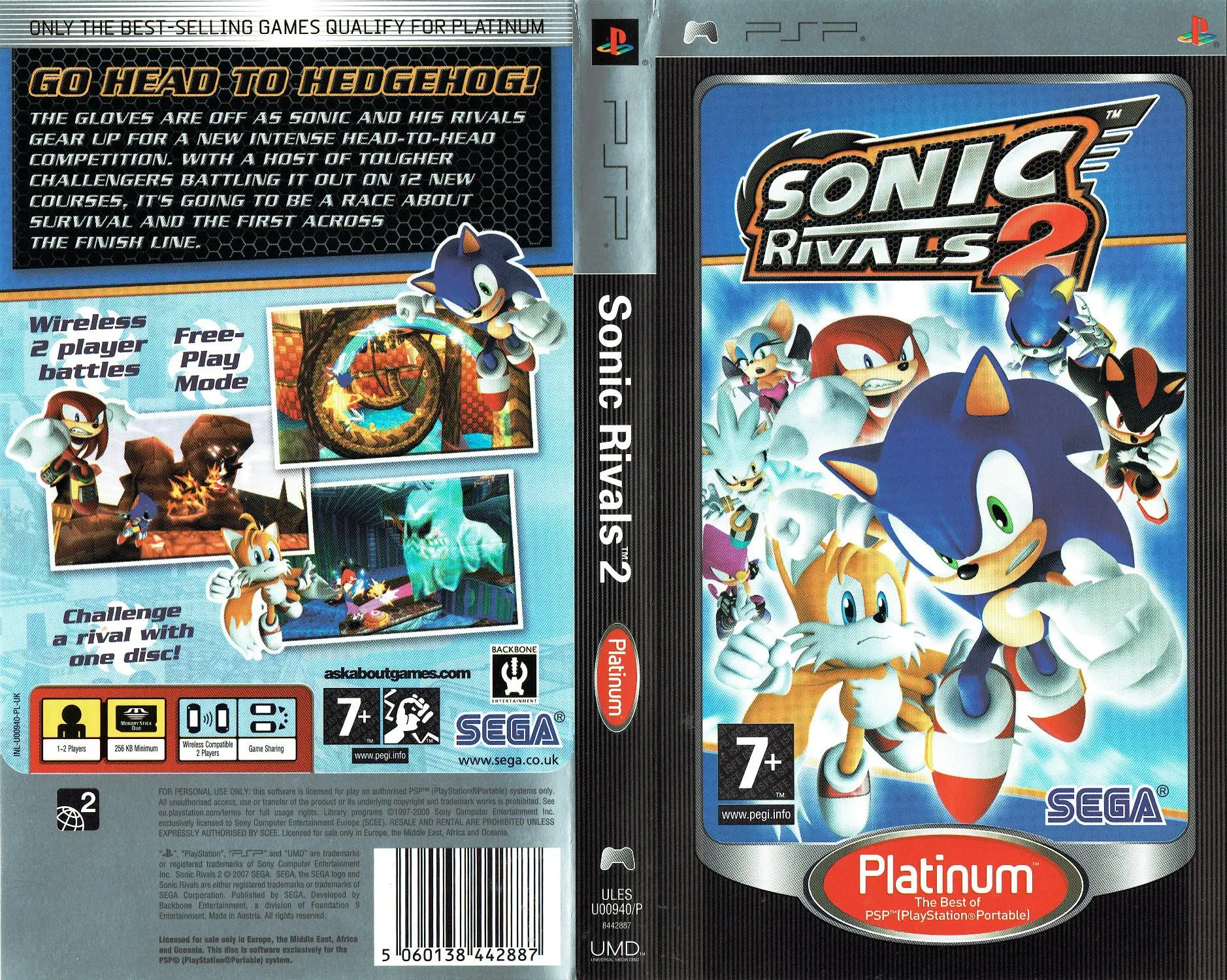 Platinum and EssentialsPSP · budget reissuesGreatest Hits in North America; Platinum and later PSP Essentials editions in Europe and Australia.
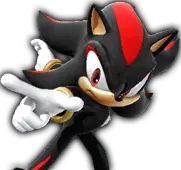 Shadow the HedgehogTeam Shadow
 Metal SonicTeam Shadow
 Silver the HedgehogTeam Silver
 Espio the ChameleonTeam Silver
 Dr. EggmanNot playable
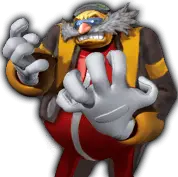 Eggman NegaVillain, disguised as Dr. Eggman
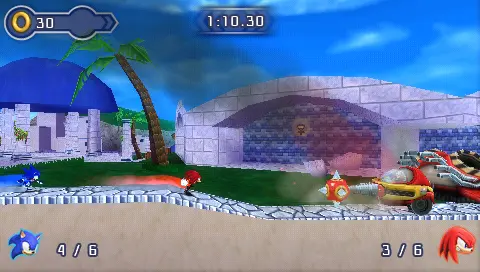 Egg LinerBoss · Blue Coast
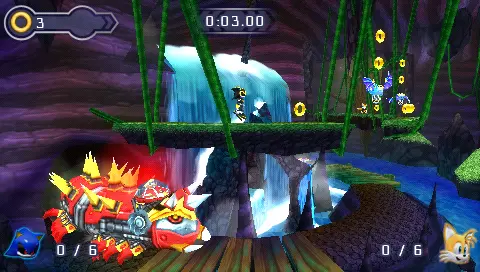 Egg CrawlerBoss · Sunset Forest
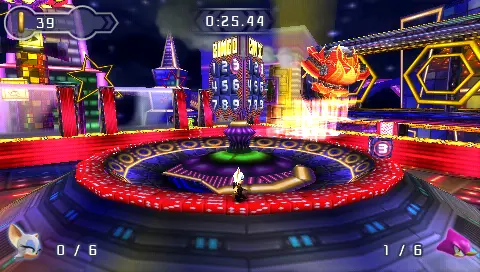 Egg DealerBoss · Neon Palace
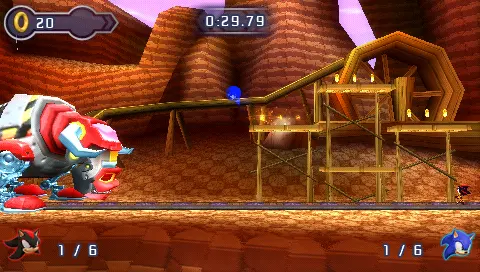 Egg BullBoss · Frontier Canyon
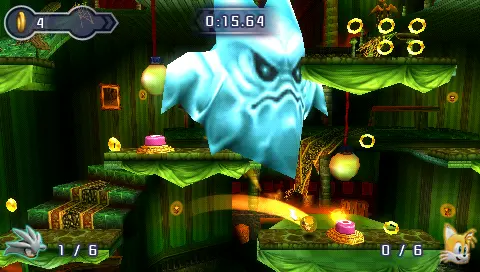 Egg PhantomBoss · Mystic Haunt
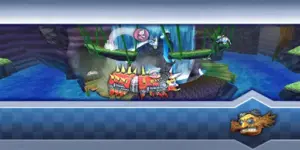 Egg CrawlerLoading screenSunset Forest’s boss.
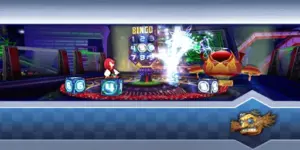 Egg DealerLoading screenNeon Palace’s boss.
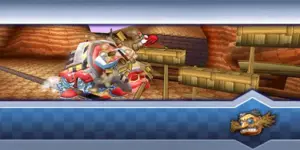 Egg BullLoading screenFrontier Canyon’s boss.
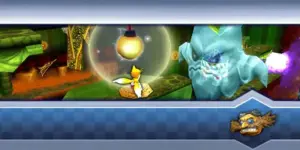 Egg PhantomLoading screenMystic Haunt’s boss.