Somebody has been turning Sonic’s friends into trading cards. Four heroes race each other across Onyx Island to catch the culprit first, and none of them is quite who he seems.
Released21 Nov 2006 (NA) · 1 Dec 2006 (Europe) · 7 Dec 2006 (AU)
DeveloperBackbone Entertainment, with Sega Studio USA
ZonesSix, two acts and a boss each
PlayableSonic, Knuckles, Shadow, Silver; Metal Sonic unlockable
Cards150 to collect
VillainEggman Nega, in disguise
Title
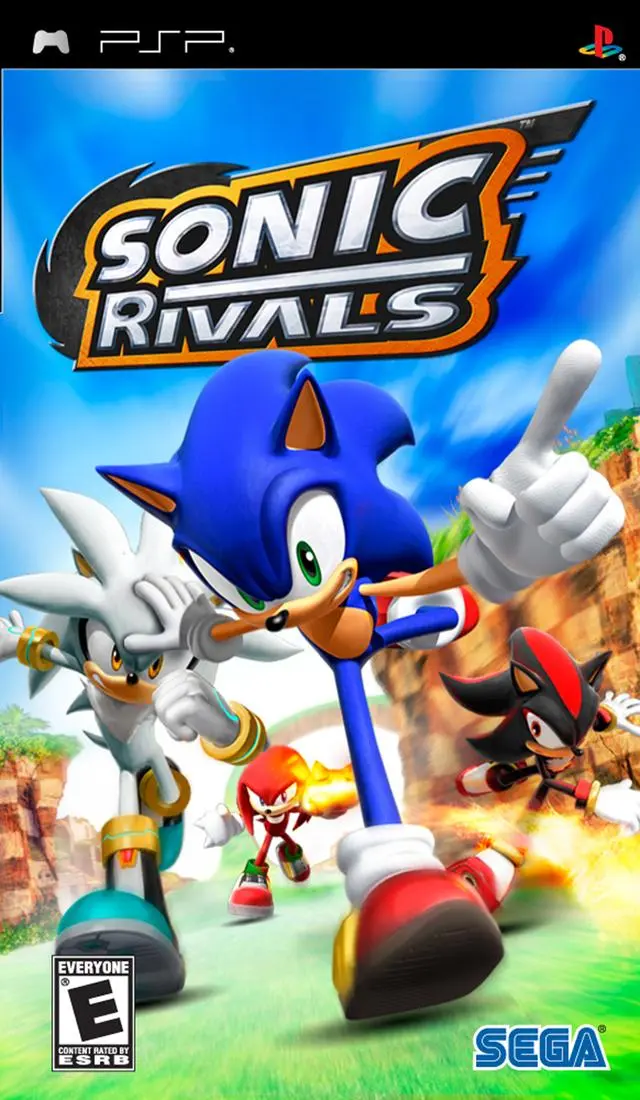
Sonic Rivals
Platform
PlayStation Portable (UMD); later sold as a download on the PlayStation Store
Developer
Backbone Entertainment (Vancouver studio, with its Emeryville studio), with Sega Studio USA
Publisher
Sega (Sega of America in North America, Sega Europe in Europe)
Director
Takashi Iizuka (also concept and scenario)
Producer
Taylor Miller (Backbone Entertainment)
Lead designer
Tyler Sigman
Character artwork
Kazuyuki Hoshino
Music
Chris Rezanson; sound supervisor Jun Senoue
Voice recording
4Kids Productions
Genre
Racing platformer
Players
1–2 (wireless ad hoc)
Released (North America)
21 November 2006 (ULUS-10195)
Released (Europe)
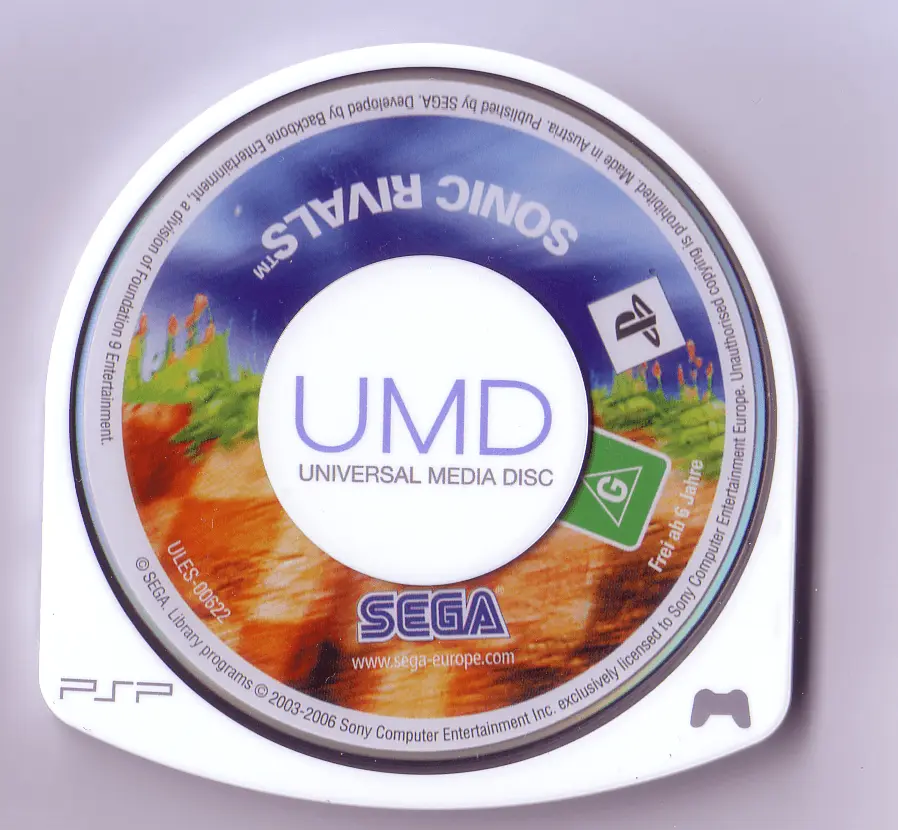
1 December 2006 (ULES-00622)
Released (Australia)
7 December 2006
Japan
Not released
Budget editions
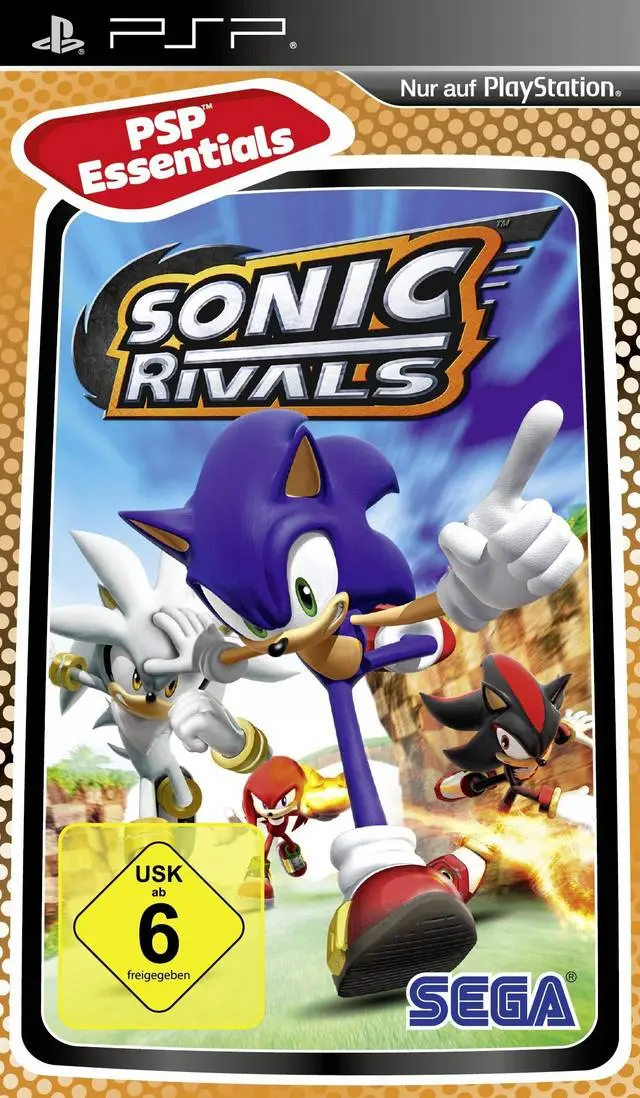
Greatest Hits (North America); Platinum (2007) and PSP Essentials (Europe)
PlayStation Store
1 October 2009 (North America, US$6.99); 18 August 2010 (UK £3.69, Europe €4.49, Australia A$6.75)
Collection
Double Rivals Attack Pack! with Sonic Rivals 2 (2011)
Overview
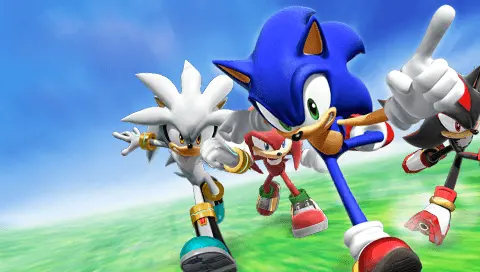
Sonic Rivals turns a Sonic game into a head-to-head sprint. Every act is a race against one rival to the goal, every boss is a contest to land the final blow first, and the losers have to try again. Sonic, Knuckles, Shadow and Silver each get a story of their own, and Metal Sonic waits as the reward for finishing all four.
It was the first Sonic game made for Sony’s PSP, made in Canada by Backbone Entertainment under the eye of Sega’s Takashi Iizuka. The levels are drawn in 3D but played on a 2D line, in the spirit of the Mega Drive games, and a collection of 150 cards, earned by meeting challenges, unlocks costumes and other extras.
The villain is a surprise. The doctor waving a card-making camera around Onyx Island is not Eggman at all but his descendant from the future, Eggman Nega, and the real Eggman is trapped inside one of his own cards. Critics liked the look and the sound and argued about the rubber-band racing; a sequel, Sonic Rivals 2, followed a year later.
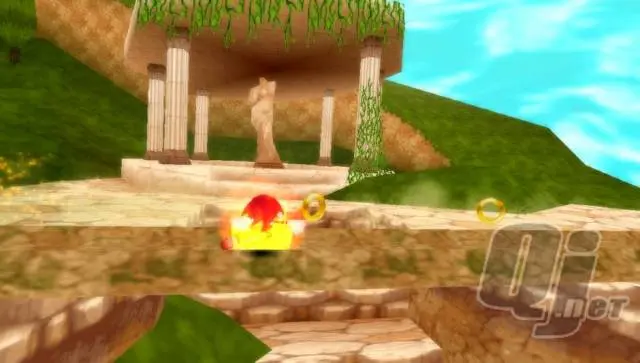
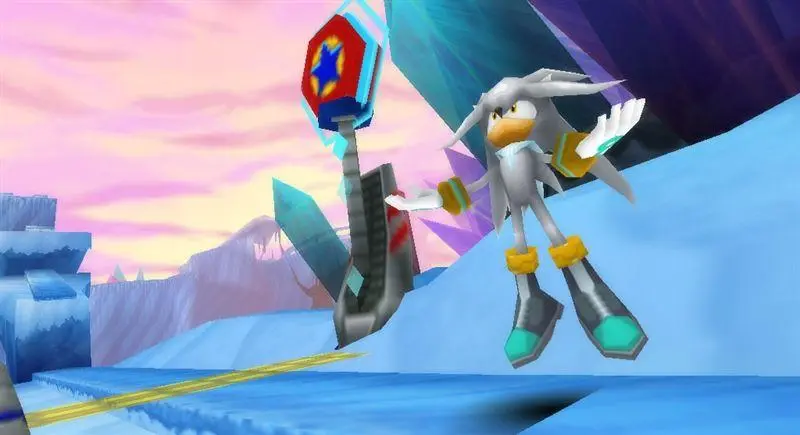
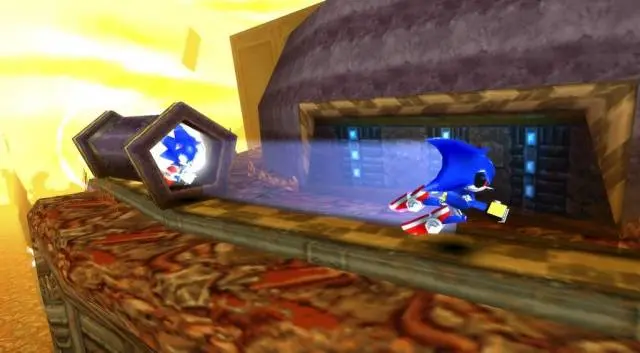
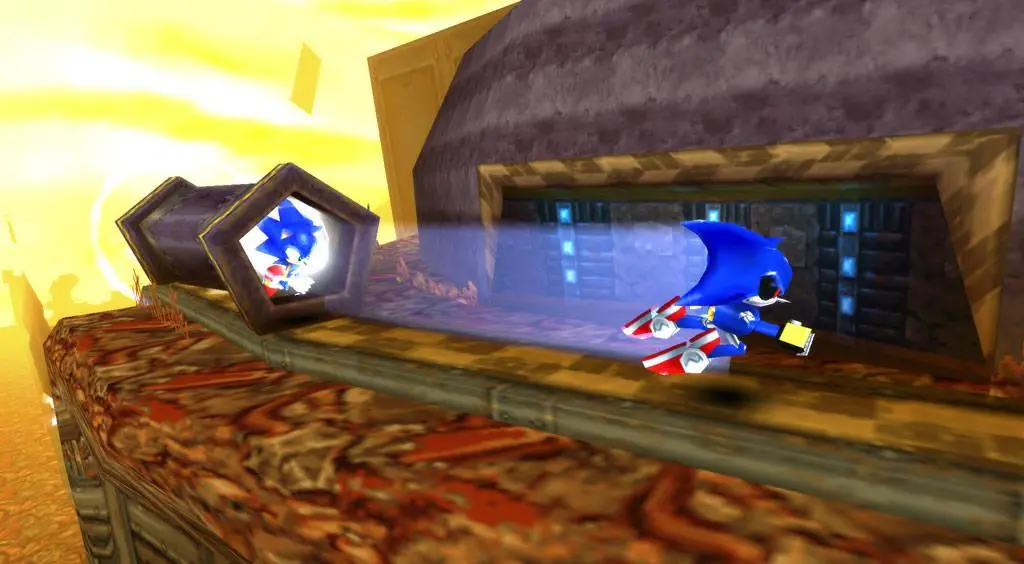
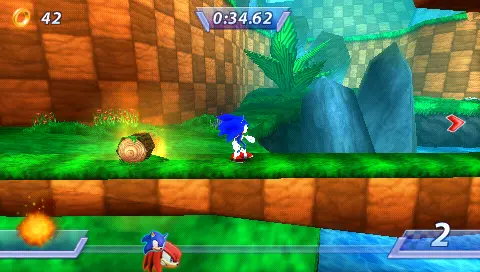
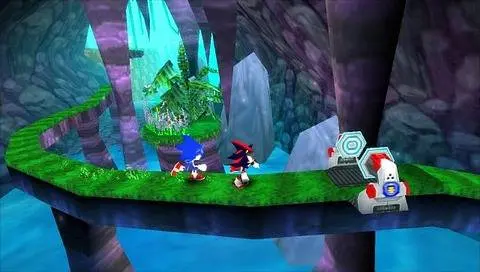
Racing a rival.The Egg Lynx boss.Forest Falls Zone.
Soon, everything in this world will be nothing more than another entry in my lovely card collection!
So the doctor boasts in the manual’s prologue, after turning Amy, Tails and the Master Emerald into cards in front of Sonic and Knuckles. Shadow and Silver arrive on the island soon after, and the question the manual leaves hanging is who will reach him first.
— Official description: Sega, Sonic Rivals PSP instruction manual (US and UK, 2006), as transcribed by Sonic Retro. One line quoted; the rest summarised.
Quick Answers
The short answers, with the detail further down the page.
When did Sonic Rivals come out?
On the PSP in North America on 21 November 2006, in Europe on 1 December and in Australia on 7 December 2006. It was never released in Japan. More →
Who made it?
Backbone Entertainment in Vancouver, with Sega Studio USA. Takashi Iizuka directed and wrote the story; Taylor Miller produced for Backbone. More →
Is it a racing game or a platformer?
Both. You run through 2D Sonic stages, but always against a rival, and you win an act by reaching the goal first. More →
Who can you play as?
Sonic, Knuckles, Shadow and Silver, each with his own story. Finish all four stories and Metal Sonic becomes playable. More →
Who is the villain?
It looks like Dr. Eggman, but it is Eggman Nega, a descendant from the future in disguise. The real Eggman has been turned into a card. More →
What are the cards for?
There are 150, won by completing challenges. They unlock costumes and other extras and can be traded or bet on races with a friend; they do not change how a character plays. More →
How many zones are there?
Six, from Forest Falls to Meteor Base. Each has two racing acts and a boss, except Sky Park, which has no boss. More →
Was it well reviewed?
Mixed: 64 out of 100 on Metacritic. Reviewers liked the graphics and music but disliked the way rivals always catch up. More →
Is there a sequel?
Yes. Sonic Rivals 2 came out on the PSP in 2007, made by the same developers. More →
Plot / Story
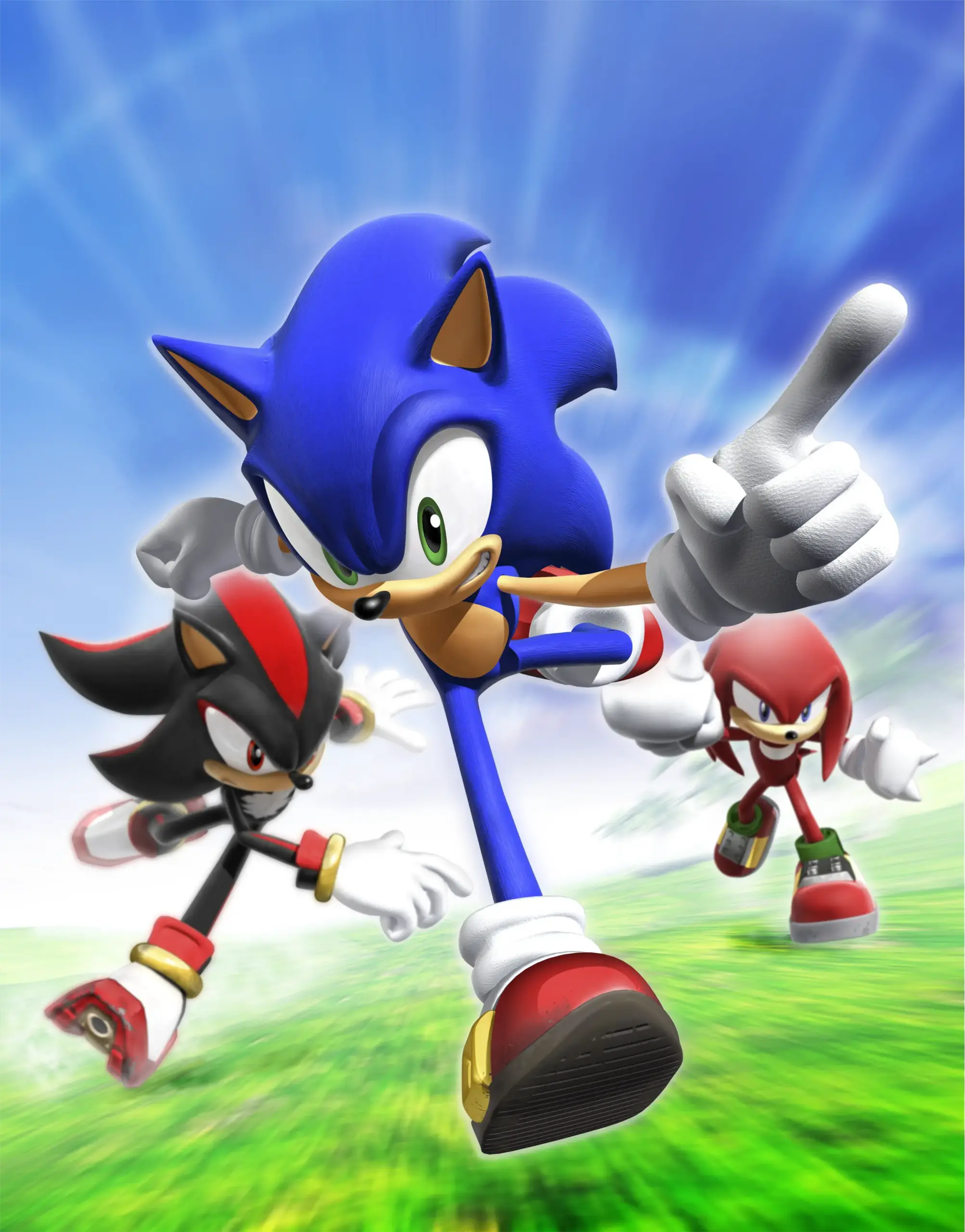
The four rivals.Image via Sonic Retro
Out of nowhere, an island rises in the southern seas. Sonic and Tails fly out to take a look, sure that Eggman must be behind it, and find the doctor waiting with a new toy: a camera that squeezes whatever it photographs into a playing card. He has already used it on Amy. Tails, always the scientist, tries to explain how matter might be broken down and stored as card data, and is promptly snapped into a card himself.
Knuckles turns up next, furious, because the Master Emerald is gone. The doctor cheerfully admits it is in his deck too, announces that everything in the world will follow, and flies off, daring anyone to stop him. Sonic and Knuckles set off after him, each determined to get there first. They are not the only ones. Shadow has been summoned by a cryptic call that seems to come from Eggman, and Silver has arrived from the future hunting someone, though he will not say who.
Four stories, one island
Each hero sees a different slice of the same adventure, and they spend most of it getting in each other’s way. Sonic wants Tails and Amy back. Knuckles wants his Emerald and has little patience for anything else, even when Sonic rescues Tails from his card at Crystal Mountain. Shadow keeps getting orders from the doctor that contradict each other, and messages from Rouge urging him on, until one of her transmissions is cut off mid-sentence: she has been carded too.
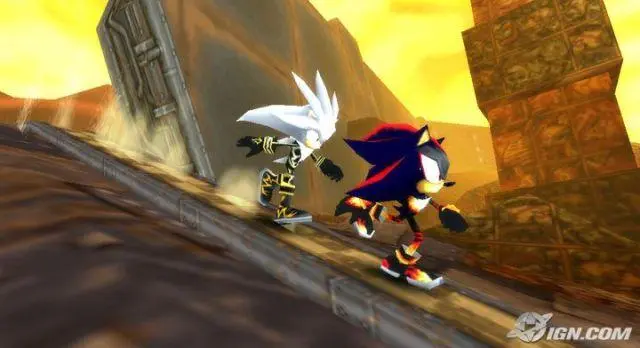
Silver is the one who knows the most. The doctor he is chasing, he realises, cannot be the real Eggman. At Crystal Mountain the impostor taunts Shadow with a card holding Dr. Eggman himself, and in Death Yard he drops the act for Shadow and Silver: he is Eggman Nega, from the future, and Onyx Island is Angel Island, dragged back from the future. Sonic and Knuckles only learn the truth at the very end.
Sonic.Knuckles.Shadow.Silver.
A villain rewriting his family history
Nega’s grudge is personal. He blames his ancestor’s endless failures for robbing his family of its destiny, and he means to use the camera to erase those failures from history. When the Egg Kong falls in Death Yard he gives up on fixing the past and decides to destroy it, by photographing the whole planet from space.
Only then do the four rivals stop racing one another. Tails, free again, flies Sonic and Knuckles up to Meteor Base in a new Tornado; the rescued real Eggman gives Shadow and Silver a lift in his own ship. Nega’s Egg Destroyer, powered by the cards of Amy, Rouge and the Master Emerald, is beaten on its own spine, Nega ends up trapped in a card of his own, and everyone else is set free. Silver goes home to the future with the island and Nega’s card.
The Egg Destroyer.Meteor Base, in orbit.
How it plays
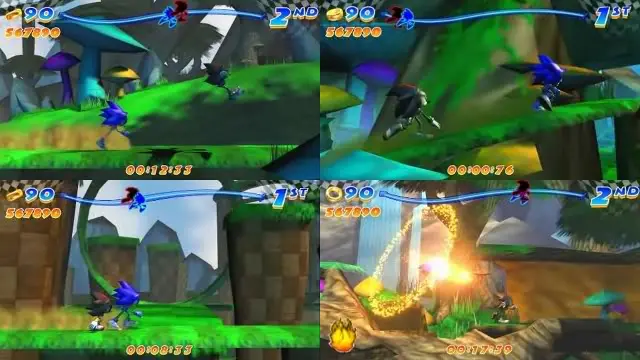
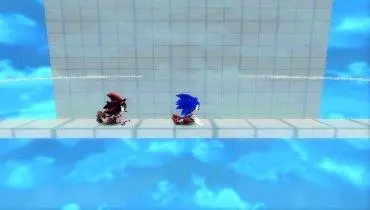
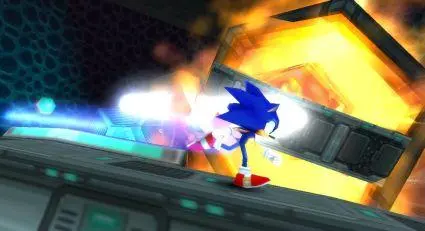
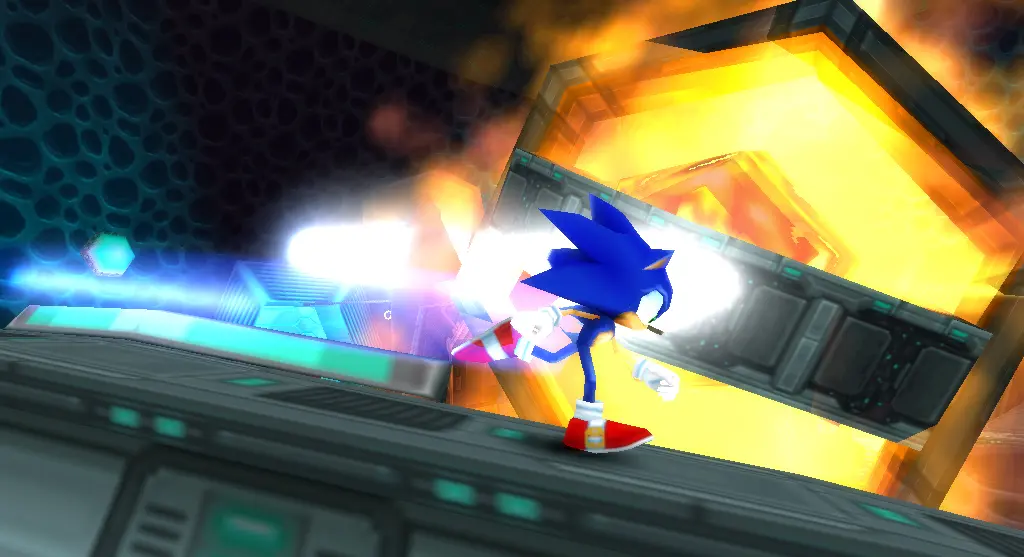
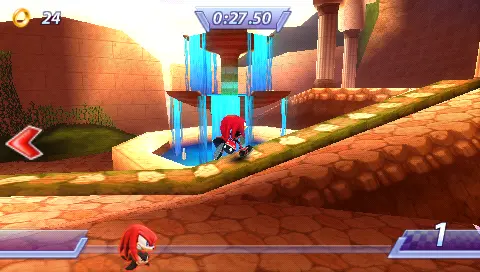
Every stage is a duel. Rings, springs, rails and loops are classic Sonic, but a bar at the bottom of the screen shows how far you and your rival have come, and the act is lost if he touches the goal first. Coming up right behind an opponent lets you shove him or leap over him, on-screen prompts call for an Air Boost or a Speed Boost to clear obstacles, and boss fights are scored by hits: whoever lands the winning blow takes the act.
Floating power-ups change meaning with the race. Collect fire, ice, a mine, wind or an illusion while you are behind and it becomes a weapon, such as a rolling fireball, a snow blast or a tornado; collect it in the lead and it turns into a shield, an ice block, a dropped mine or decoy rings. The star power-up gives you your signature move, and each character has his own.
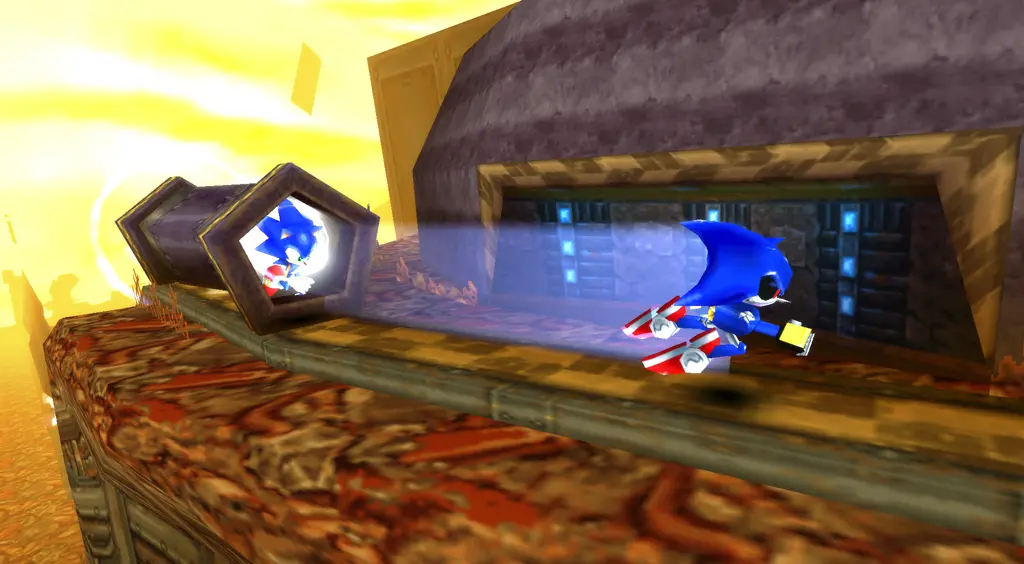
Neck and neck.Metal Sonic on the attack.
The card collection
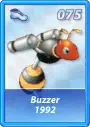
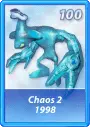
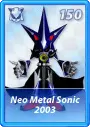
Almost everything you do can earn a card. Each stage sets challenges, such as finishing in a set time, collecting a certain number of rings or hitting your rival so many times, and meeting them adds to a numbered collection of 150. The cards show characters, Badniks, items and box art from Sonic games going back to 1991.
They are for show rather than strength. Cards unlock costumes and other extras that change how the racers look but not how they play, and over wireless play two friends can swap cards or put them up as the stake in a race.
Six zones, five on Onyx Island and the last in orbit. Each has two racing acts; all but Sky Park end in a boss.
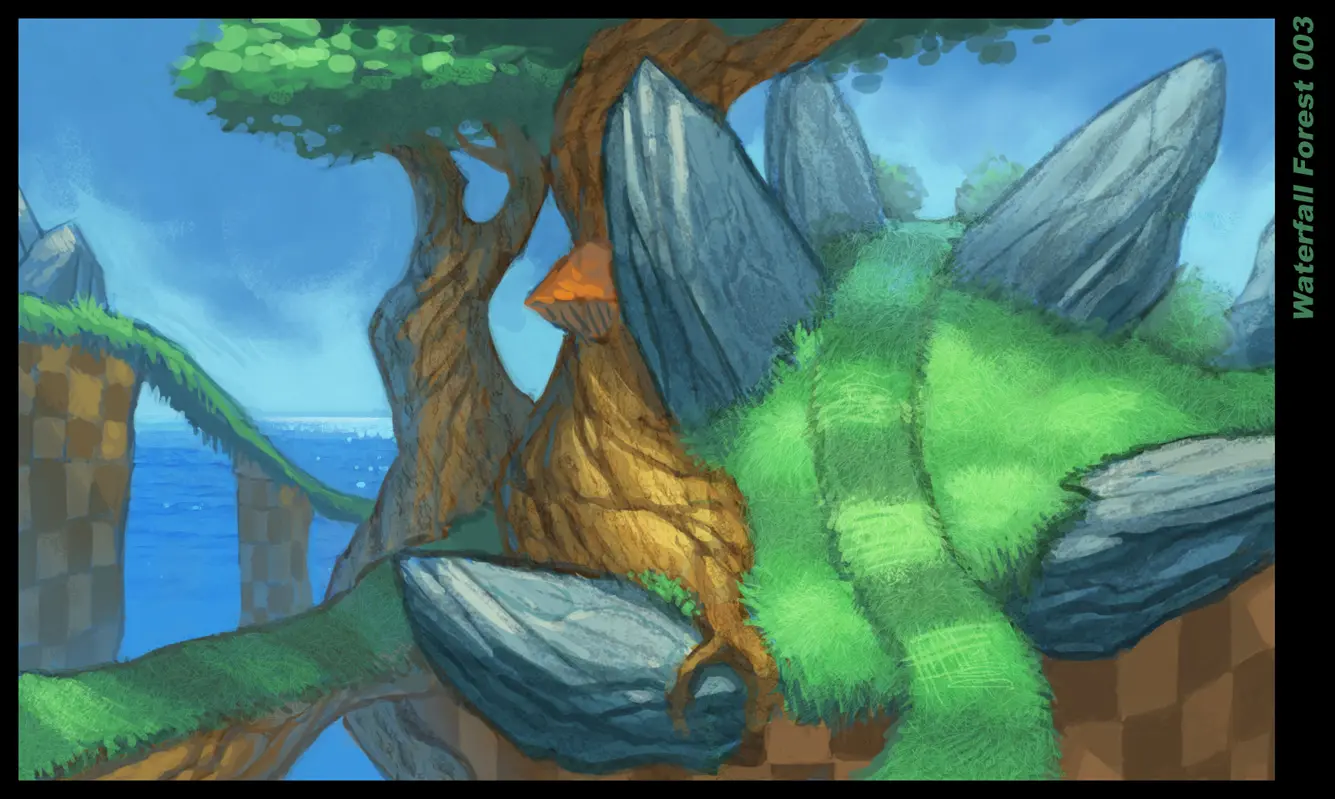
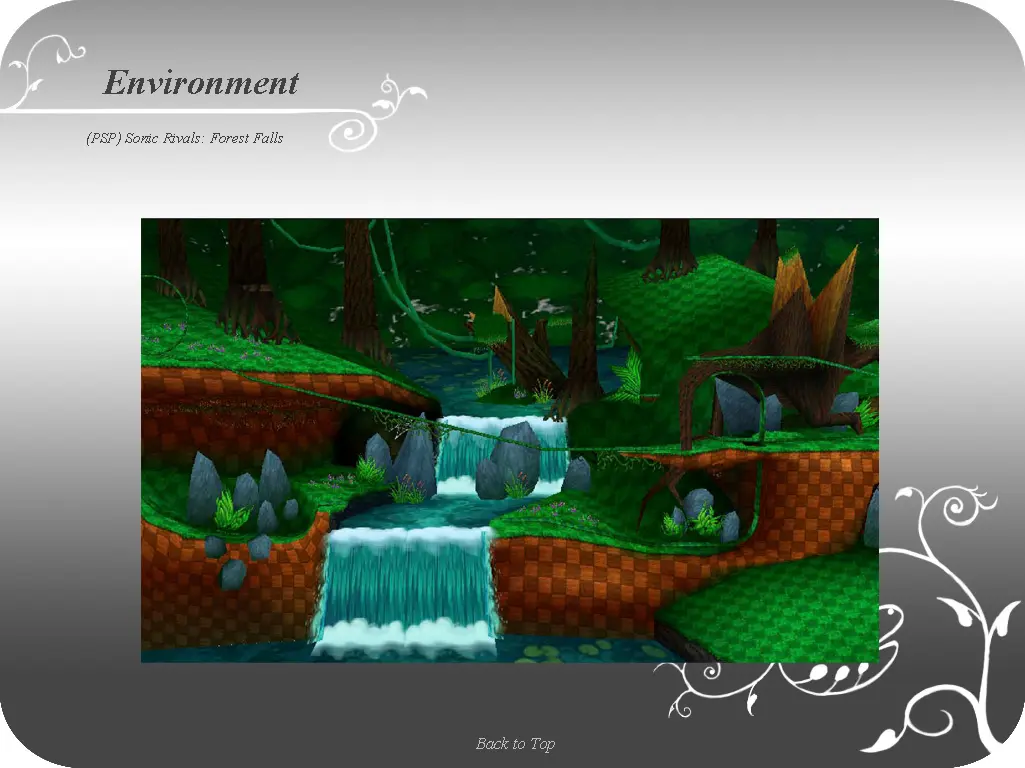
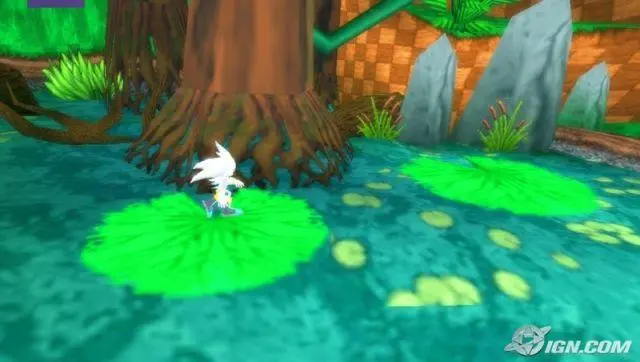
Forest Falls ZoneActs 1–2 · boss: Egg TurtleThe opener: chequered earth and waterfalls, in the Green Hill tradition. Early concept art called it Waterfall Forest.
Colosseum Highway ZoneActs 1–2 · boss: Egg FalconAncient Rome, with towering statues of centurions and rows of columns.
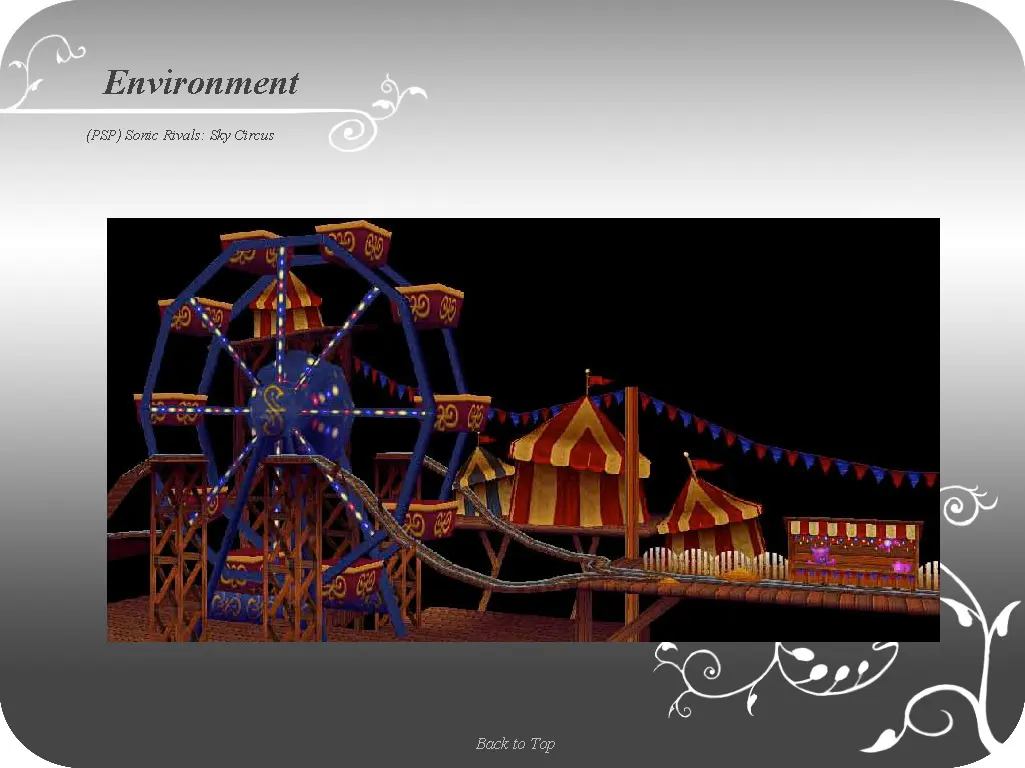
Sky Park ZoneActs 1–2 · no bossA wooden amusement park in the clouds, with roller coasters fronted by spikes and clown robots. It is the only zone with no boss. Its concept name was Sky Circus.
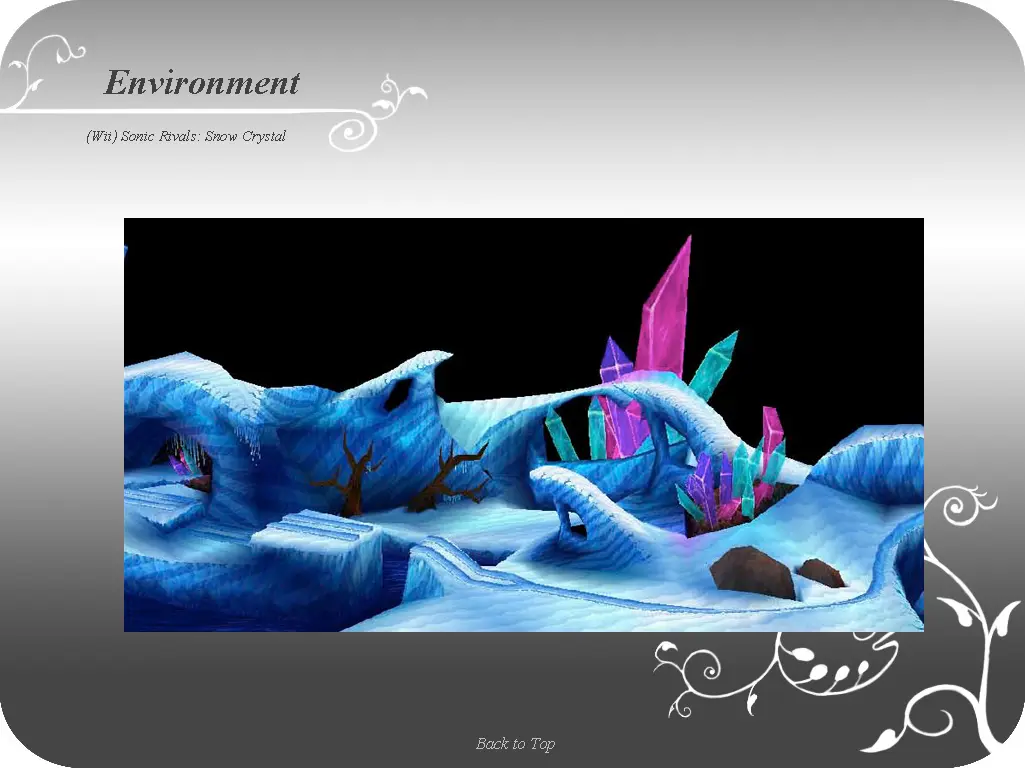
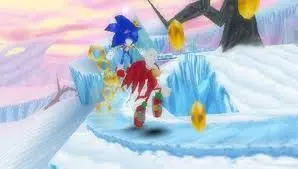
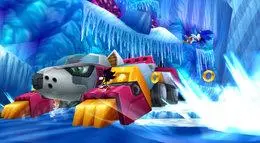
Crystal Mountain ZoneActs 1–2 · boss: Egg LynxSnowy peaks studded with giant ice crystals in many colours, and a lot of climbing. In concept art it was Snow Crystal.
Death Yard ZoneActs 1–2 · boss: Egg KongA rusting, polluted scrapyard, where Nega finally shows his face to Shadow and Silver.
Meteor Base ZoneActs 1–2 · boss: Egg DestroyerNega’s space station among the asteroids, high above the planet: the only zone that is not on Onyx Island.
Each zone also has its own set of challenges and a Chaos Cup to win; see Cheats and unlockables below.
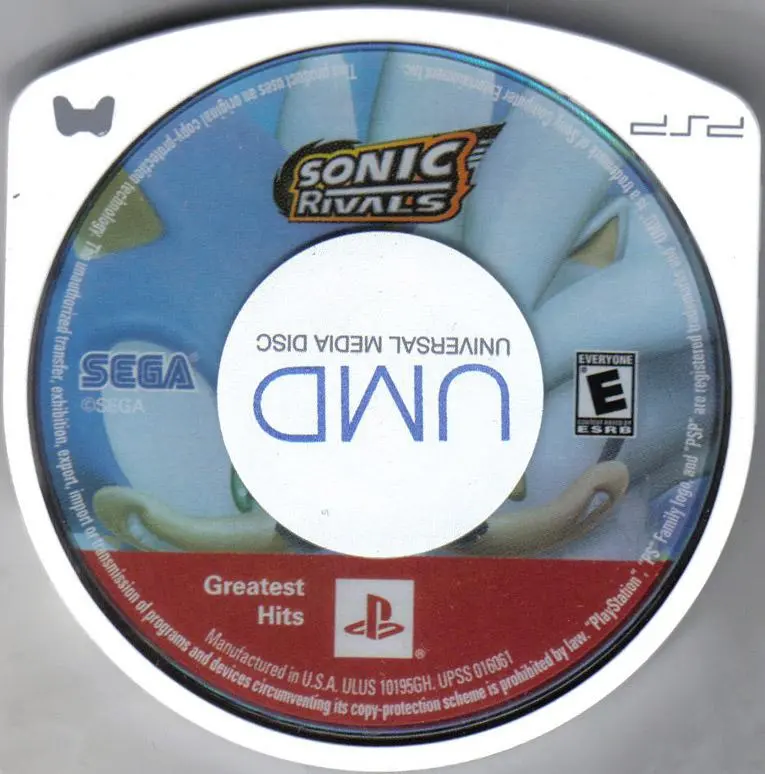
Greatest Hits and PlatinumPSP · 2007 onwardsBudget reissues followed: Greatest Hits in North America, Platinum and later PSP Essentials in Europe.
Sonic Rivals 2PSP · 2007The sequel, made by the same developers and released a year later for the same system.
Double Rivals Attack Pack!PSP · 18 October 2011Both Rivals games packaged together.
PlayStation StoreDownload · 2009–10A download version arrived in North America in October 2009 and in Europe and Australia in August 2010.
Characters
Four playable rivals, one hidden one, an impostor and five giant machines. Everyone races the same way; what sets the heroes apart is the signature move each one unleashes after collecting a star.
Character
Who they are
In this game
Stats & abilities
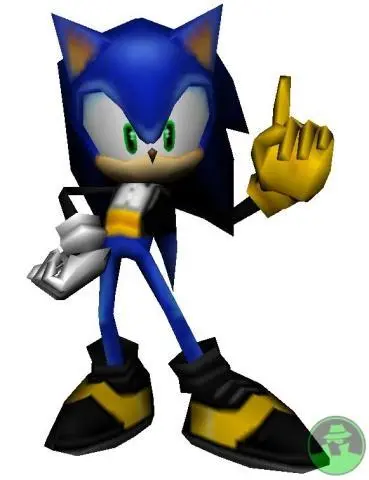
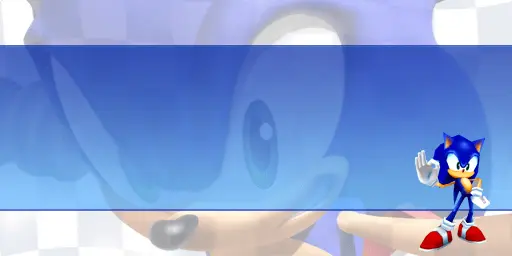
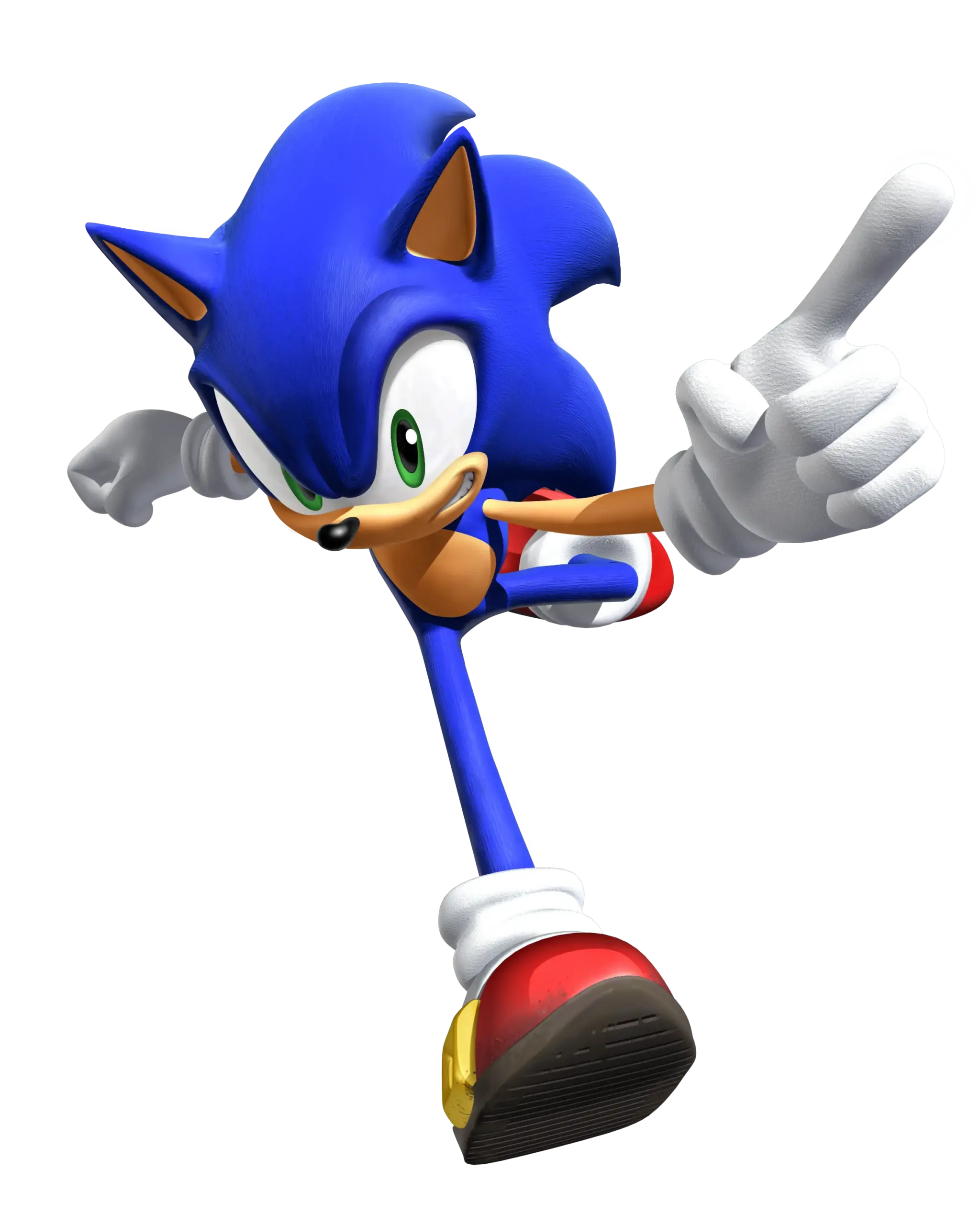
Sonic the HedgehogPlayable
The fastest thing alive, here racing to free his friends from Eggman’s deck.
Chases the doctor for Tails’ and Amy’s cards, clashing with Knuckles and Silver along the way.
Signature move: Sonic Boom, a burst of speed
Skin unlocked by finishing his story
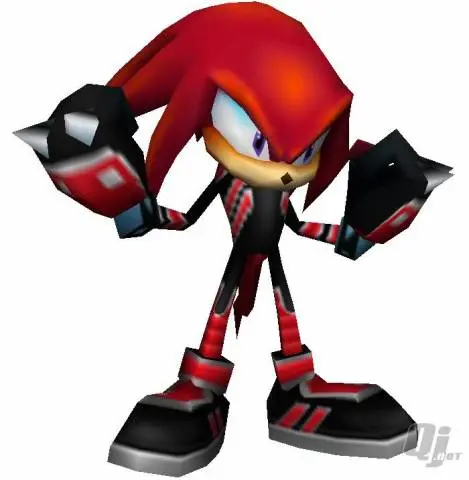
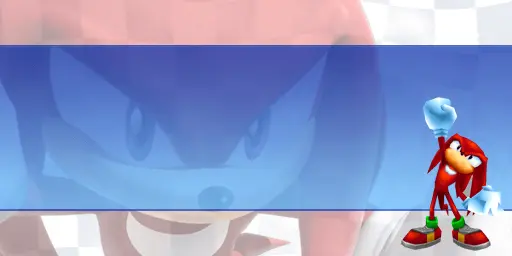
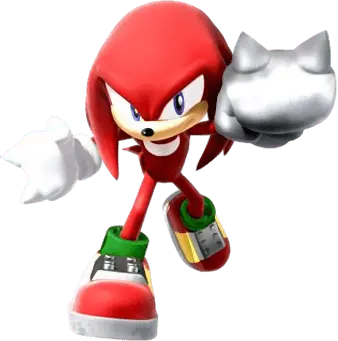
Knuckles the EchidnaPlayable
Guardian of the Master Emerald, which has been stolen yet again.
Wants the Emerald card back and little else, and is the last to work out where he is.
Signature move: Hammer Punch, which stuns his rival wherever he is
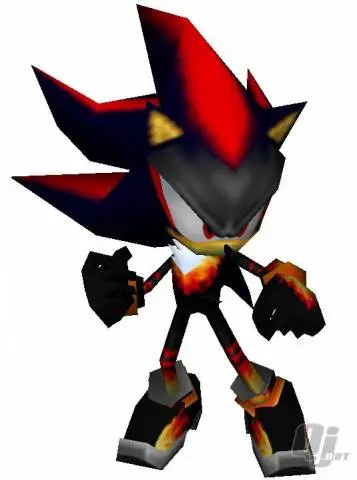
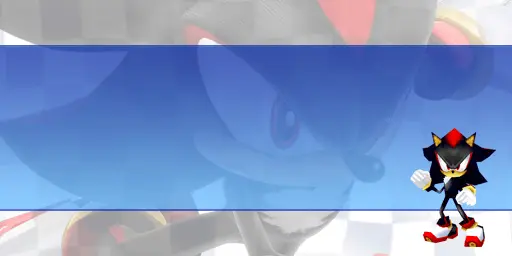
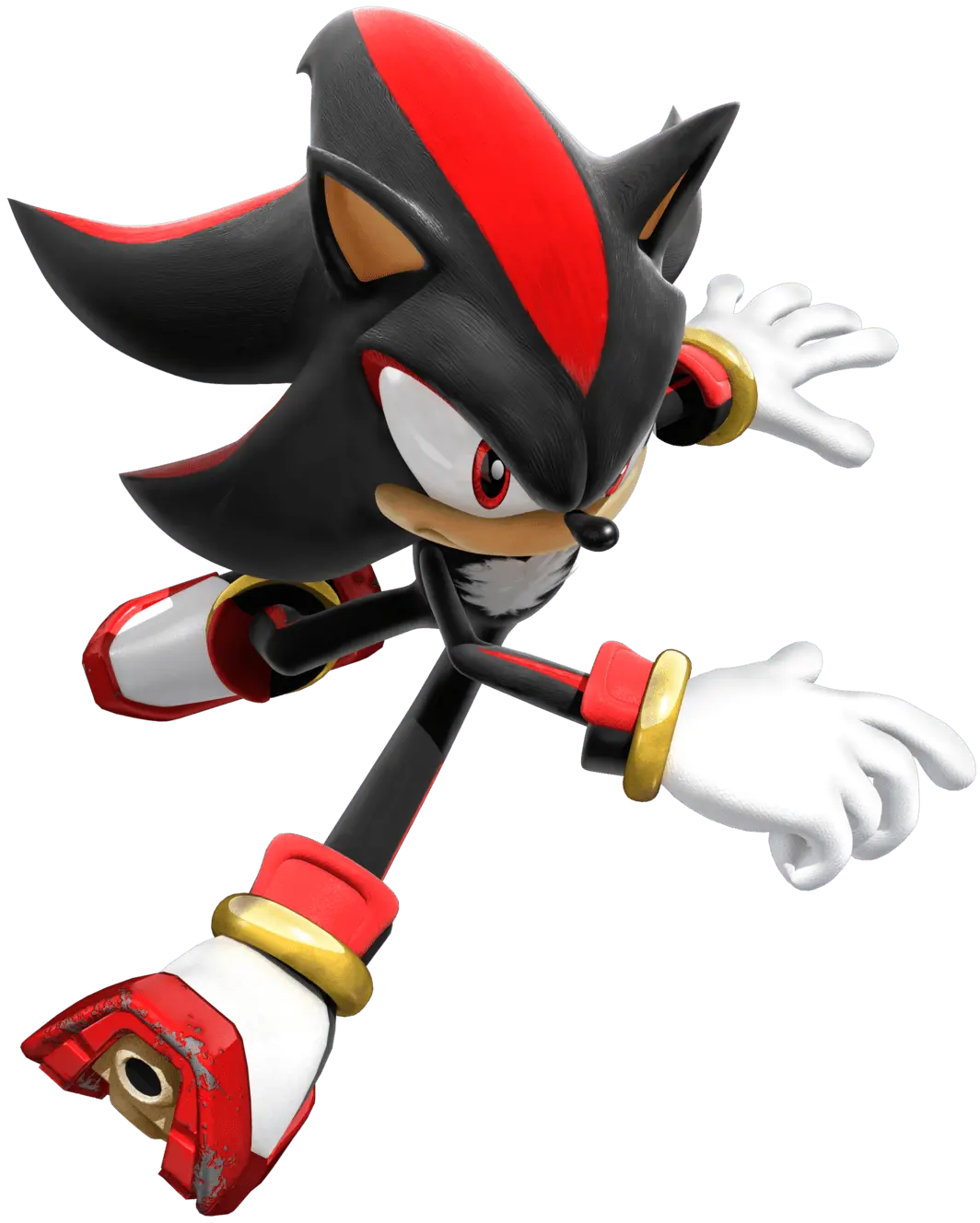
Shadow the HedgehogPlayable
The ultimate life form, summoned to the island by a call for help.
Follows contradictory orders and Rouge’s warnings until he learns who is really giving them.
Signature move: Chaos Control, which slows his rival
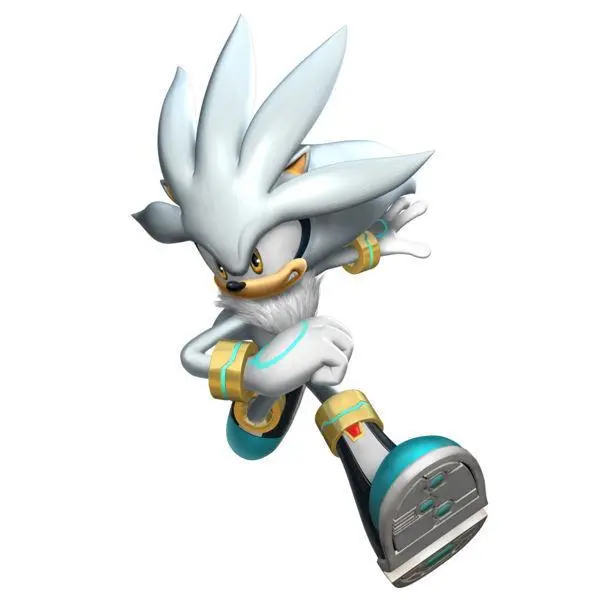
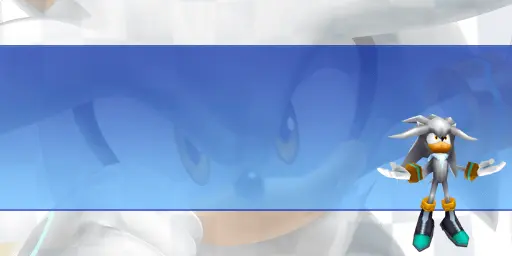
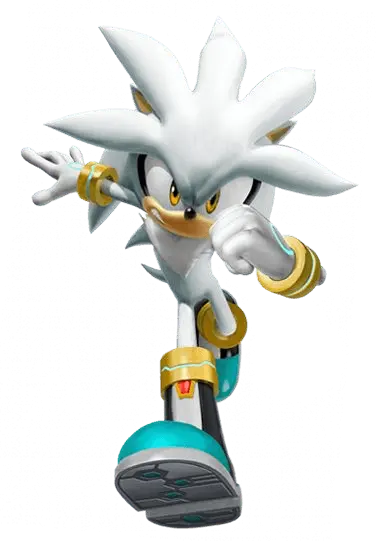
Silver the HedgehogPlayable
A psychic hedgehog from the future, then brand new to the series.
Hunts Nega through the past, and takes him and the island home at the end.
Signature move: Psychic Control, which scrambles his rival’s controls
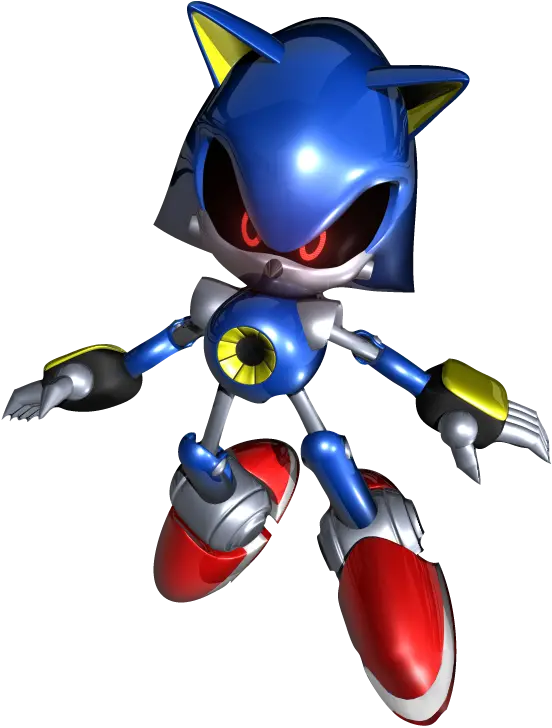
Metal SonicUnlockable
Eggman’s robot double of Sonic.
Turns up as a rival during the stories and becomes playable once all four have been finished, in any order.
Signature move: Copycat, which copies his rival’s move
Eggman NegaVillain, disguised as Dr. Eggman
Eggman’s descendant from the future, with a card-making camera.
Cards Amy, Tails, Rouge, the Master Emerald and the real Eggman, then tries to card the planet.
Pilots all five bosses
Unmasked in Death Yard
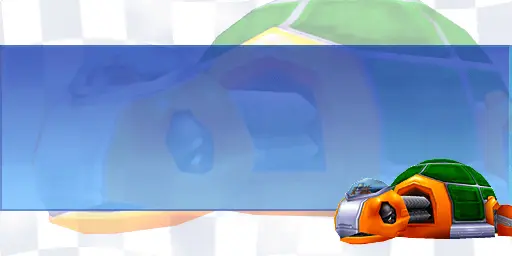
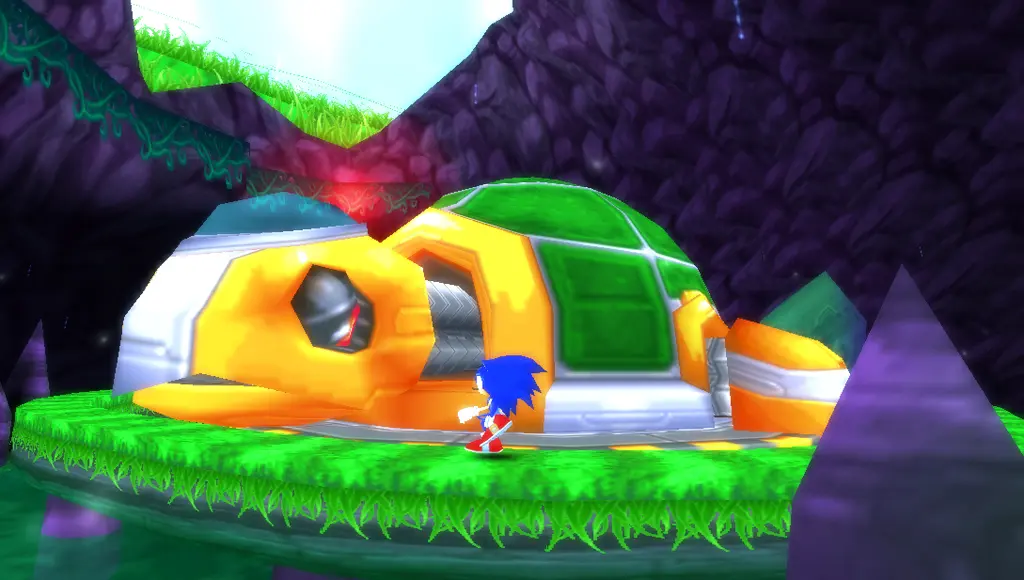
Egg TurtleBoss · Forest Falls
A giant robot turtle on a round arena.
Its head chases the racers; jump on the head to score, or on the tail to send a shockwave at your rival.
First to six hits wins
Spins faster as it takes damage
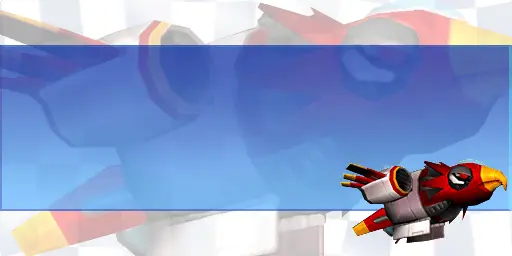
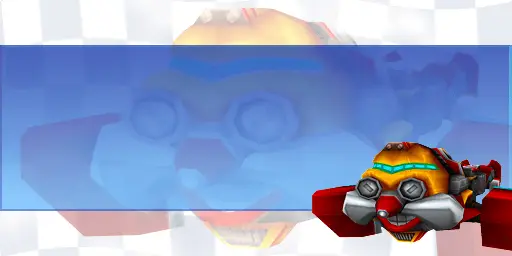
Egg FalconBoss · Colosseum Highway
A mechanical bird circling a field of floating platforms.
Drops bombs that set platforms alight, freeze them or shrink them.
First to six hits wins
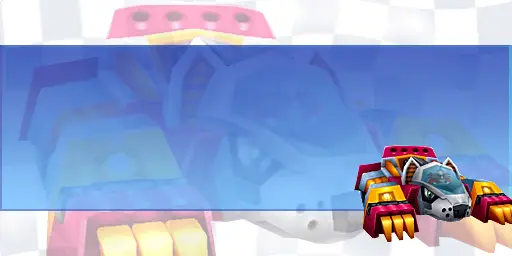
Egg LynxBoss · Crystal Mountain
A robot big cat in an icy cave.
Fires ice and slams its paws; climb a paw to reach the cockpit.
First to six hits wins
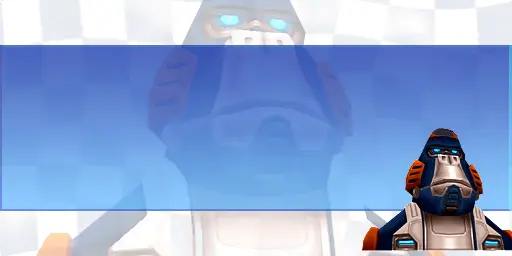
Egg KongBoss · Death Yard
A giant mechanical gorilla, with Metal Sonic sent in as a distraction.
Some of its shots leave dents to boost off, launching a missile that freezes whoever it hits first.
First to six hits wins
Egg DestroyerFinal boss · Meteor Base
A rocket carrying Nega’s camera, fuelled by captured cards.
Fought on a linear course along the ship itself rather than in an arena.
Eight hits in all
Nega’s pod is blown away at the end
Badniks and the people in the cards
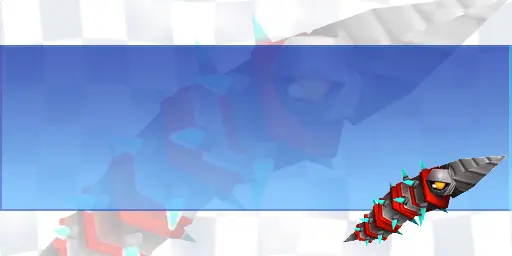
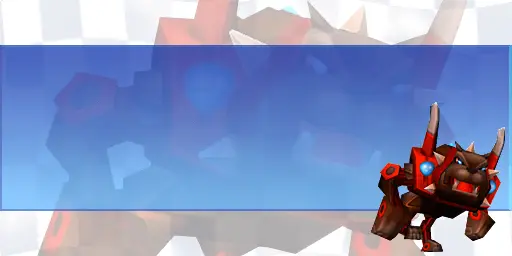
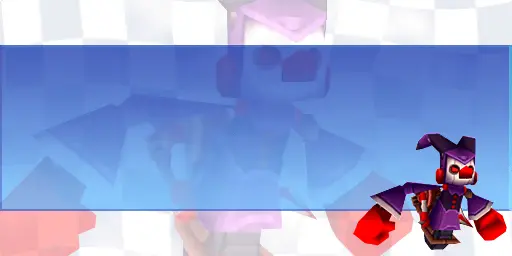
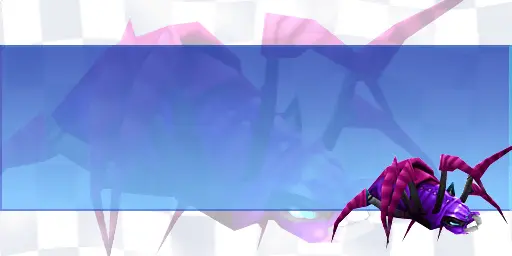
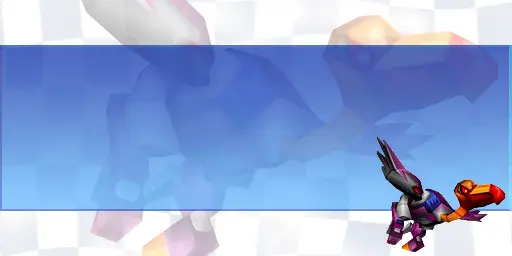
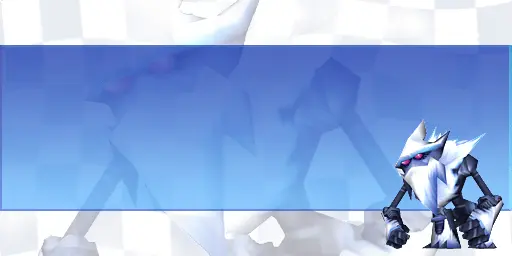
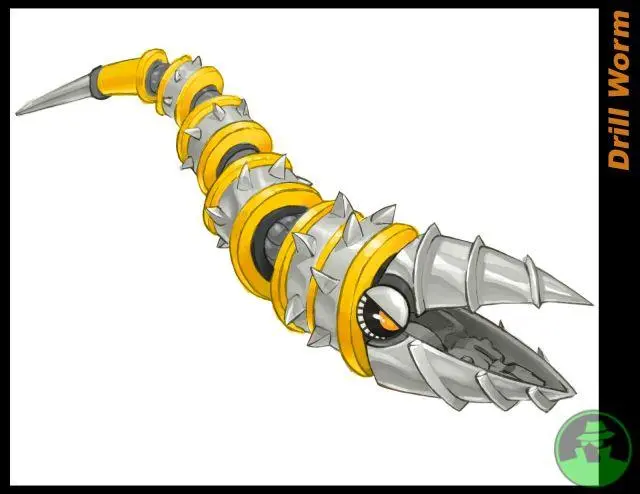
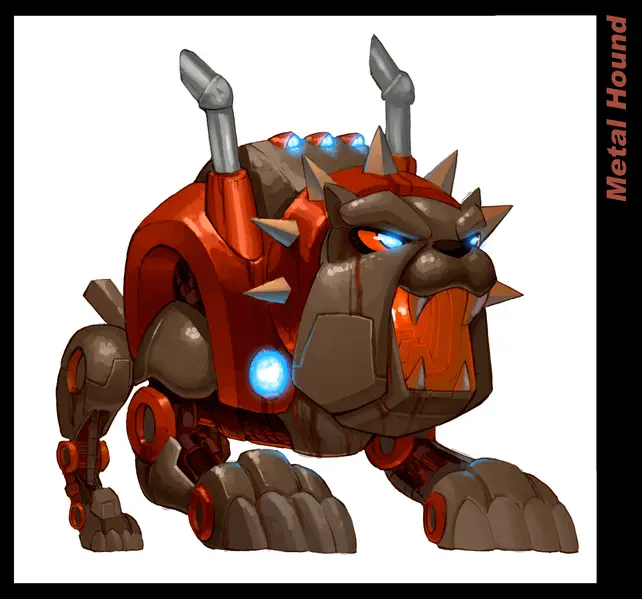
Each Badnik has its own loading screen, shown here from our original gallery and named as Sonic Retro lists them; Cannon Flapper and the Egg Pawn complete the set. Below them, the friends Nega turns into cards.
Drill WormBadnikConcept art of it survives from development.
Metal HoundBadnikAlso among the surviving concept drawings.
MonoClownBadnikOne of the eight Badnik types.
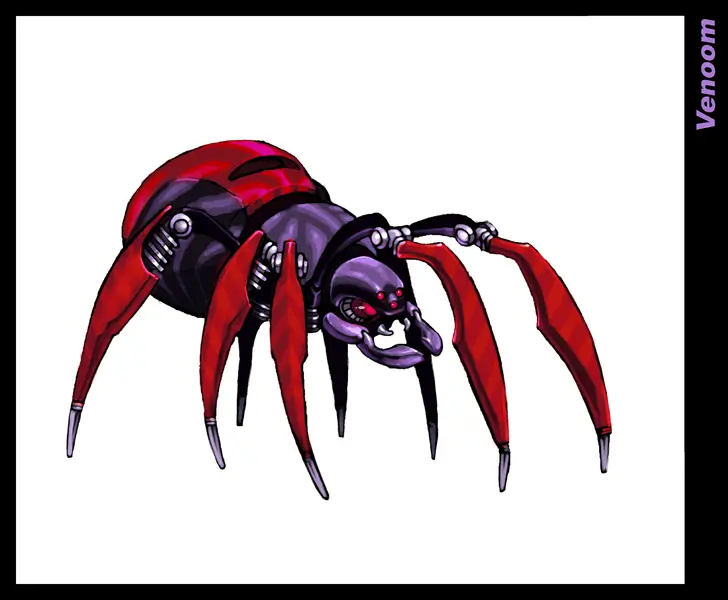
VenoomBadnikDrawn as concept art before release.
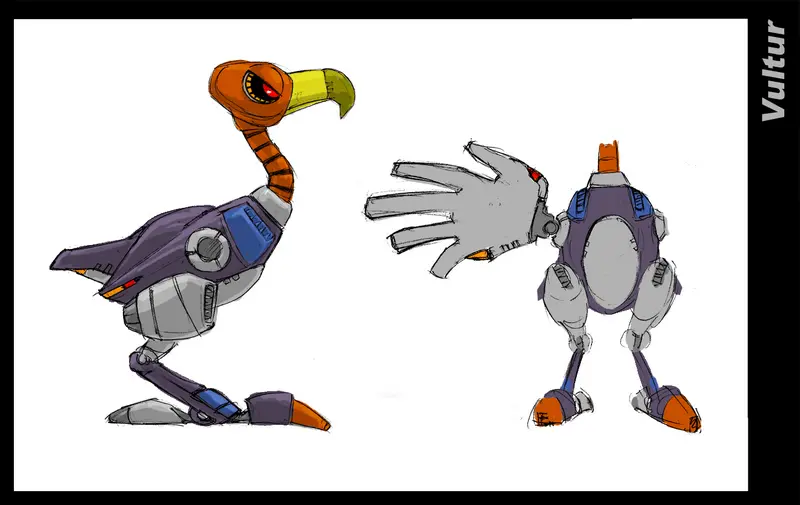
VulturBadnikAnother design that began as concept art.
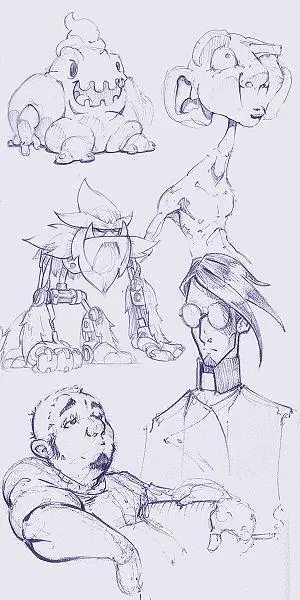
YeteeBadnikFirst sketched by Matt Osness.
Miles “Tails” ProwerCardedSonic’s friend and the game’s scientist. Freed at Crystal Mountain, he flies the heroes into space in a new Tornado.
Amy RoseCardedThe first victim of the camera, before the game even starts.
Rouge the BatCardedShadow’s informant, caught while warning him about the doctor.
Dr. EggmanCardedThe real one, trapped before the story begins and freed in time to help.
The people who made it
From the game’s credits as listed by Sega Retro, with the development story from Sonic Retro and Wikipedia.
Takashi IizukaDirector, concept and scenarioDirector of the Adventure games, Sonic Heroes and Shadow the Hedgehog, who steered the project towards racing.
Taylor MillerProducer, Backbone EntertainmentLed the Vancouver team and explained the game’s design in interviews.
Tyler SigmanLead designerWith Eric Emery as lead level designer.
Mabel ChanLead level artistPainted the zone concept art.
Kazuyuki HoshinoCharacter artworkAlso art supervisor, with Hiroshi Nishiyama.
Chris RezansonMusicComposer; Jun Senoue supervised the sound.
Mark PearceFront end artistMade the animated pitch video that sold the idea.
How it was made
Our original page had no history; this section draws on Sonic Retro’s development notes, the credits and Wikipedia.
From platformer to race
A still from Mark Pearce’s pitch video.Image via Sonic Retro
Backbone Entertainment’s first pitch was a conventional Sonic platformer, and it did its homework: Sega handed over the level maps of the 2D games, and the designers worked through the series as far as Sonic Rush. Takashi Iizuka then steered the project somewhere else. Rather than one more platformer, it would be a race, with head-to-head competition as the hook, which producer Taylor Miller later pitched as “something new and refreshing”.
Racing made the levels harder to build than a straight homage. Classic Sonic stages are full of side routes, but here every detour had to rejoin the main path so the two runners kept meeting. Backbone picked its cast for their famous rivalries, adding the newly introduced Silver to shake things up, while Sega kept hold of the story and sent Kazuyuki Hoshino and Hiroshi Nishiyama to guide the art.
Concept art
Waterfall Forest, later Forest Falls.Image via Sonic Retro
Three zones had different names on the drawing board: Forest Falls was Waterfall Forest, Sky Park was Sky Circus and Crystal Mountain was Snow Crystal. Several of the zone paintings are by lead level artist Mabel Chan, Matt Osness sketched the Yetee, and the Metal Hound, Drill Worm, Venoom and Vultur all exist as concept drawings. The game also had a different logo before release.
Why the PSP
The UMD.
Power decided the format: the 3D look the team had in mind needed Sony’s handheld rather than the Nintendo DS. So Rivals became the first Sonic game made for the PSP and, by Sonic Retro’s account, the first Sonic game from a Canadian developer.
Announcement and release
Sega unveiled Rivals in May 2006 and had it playable at E3 that month and at Leipzig’s Games Convention in August, a year after a GameStop listing had let the secret out (Sega denied it back then). North American shops had it on 21 November 2006, Europe on 1 December and Australia on 7 December; it was never released in Japan.
Firsts: what this game introduced
Two firsts, and the ideas the game was built around.
1First Sonic made for the PSPSonic Retro calls it the first Sonic game released on Sony’s handheld. It was certainly the first made for it; compilations of the Mega Drive games were arriving on the PSP at about the same time.
2First Canadian SonicBackbone’s Vancouver studio made it, which Sonic Retro notes makes it the first Sonic game from a Canadian developer.
3Every act a duelYou do not just finish a stage, you have to beat a rival to its goal.
4Bosses as contestsThe first racer to land the winning number of hits takes the fight.
5Signature movesEach character has a special move powered by the star item.
6150 cardsA card collection earned through challenges and tradable over wireless play.
Cheats & secrets
Our original page had no cheats section. These are the game’s unlockables, plus one cheat-device code, checked against Sonic Retro.
Metal Sonic
Finish the story with Sonic, Knuckles, Shadow and Silver, in any order, and Metal Sonic joins the roster.
Chaos Cups
Clear every challenge in a zone to earn its cup: Green for Forest Falls, Cyan for Colosseum Highway, Red for Sky Park, Yellow for Crystal Mountain, Blue for Death Yard and Purple for Meteor Base. Complete every challenge in the game for the Grey Chaos Cup.
Skins
Each character’s skin unlocks when you finish his story; Metal Sonic’s comes with Metal Sonic himself.
Test Room 2
Text on the UMD mentions eleven test rooms, but only Test Room 2 survives. With the CWCheat plug-in, 0x201533E8 0x74736574, 0x201533EC 0x6F6F725F and 0x201533F0 0x0000326D (three dword writes) load it, though there is no start point, so it cannot be played.
Checked against Sonic Retro, November 2026.
Glitches, exploits and oddities
Sonic Retro lists one bug; the rest are the game’s quirks.
The broken HUD
In Meteor Base Zone’s story mode, pressing a button just as you reach the point where another character arrives to help, then restarting or picking another level, breaks the on-screen display: the timer freezes and the numbers stick at wrong values. From then on every act counts as lost whatever your position, though bosses can still be won. It was never fixed.
The rival who always catches up
Freeze or blast your opponent and he drops back, only to reappear at your heels seconds later. Reviewers singled out this rubber-banding more than anything else.
A zone without a boss
Sky Park ends after its second act with no boss fight, the only zone that does.
Videos & media
Sega’s own trailer, and a full longplay of the game.
From the official Sonic the Hedgehog channel.
A full playthrough from the World of Longplays archive.
Trivia & facts
Sky Park Zone.Image via Sonic RetroOnyx Island is Angel Island, Knuckles’ home, brought back from the future by Nega. The doctor hints at it to a puzzled Knuckles in Sky Park long before the reveal.
The cards picture robots, heroes, minor characters, items and even box covers from across the series, back to the very first Sonic the Hedgehog.
Nega fuels his final weapon with the cards of Amy, Rouge and the Master Emerald.
Sonic and Knuckles reach the space station in Tails’ new Tornado, while Shadow and Silver ride with the real Eggman.
Metal Sonic’s Copycat makes him the only character whose signature move depends on who he is racing.
Voice recording for the game was handled by 4Kids Productions.
It is one of the few Sonic games never released in Japan.
Media & artwork
Box art, discs, artwork, costumes, cards and screenshots, from Sonic Scene’s own galleries and Sonic Retro. Select any image to view it larger.
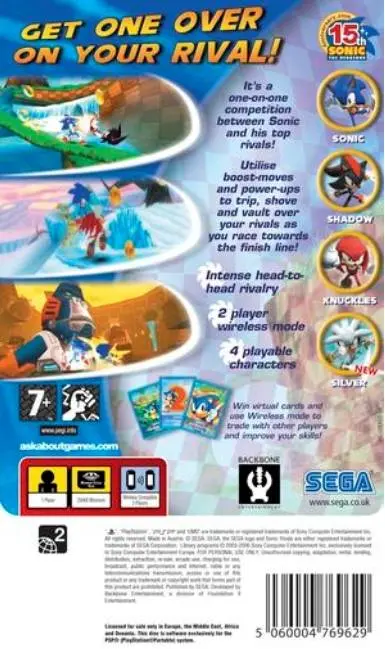
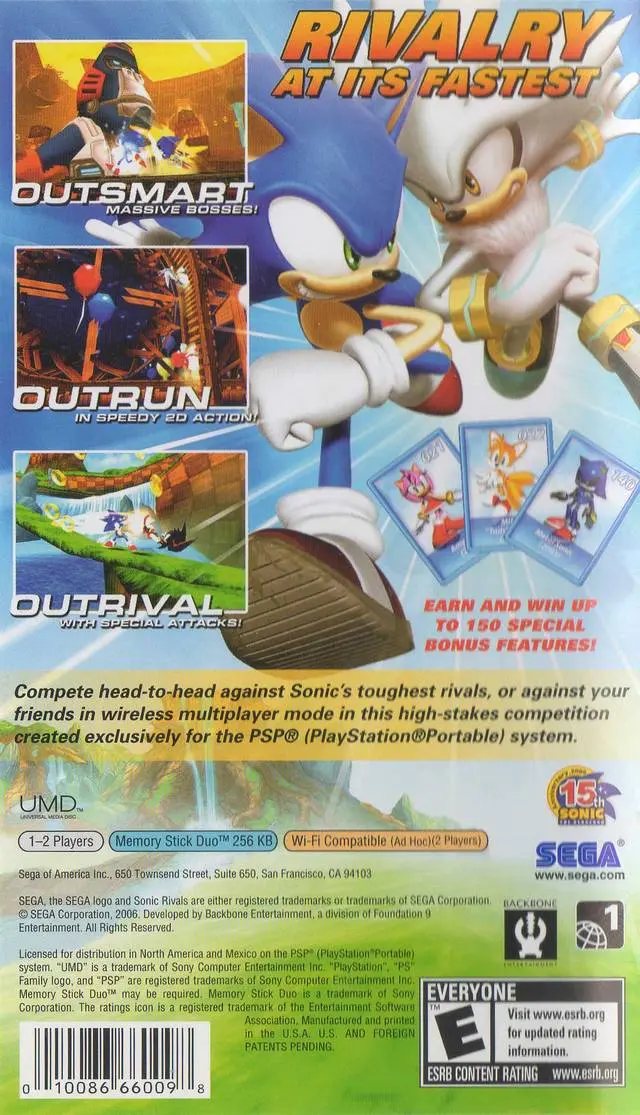
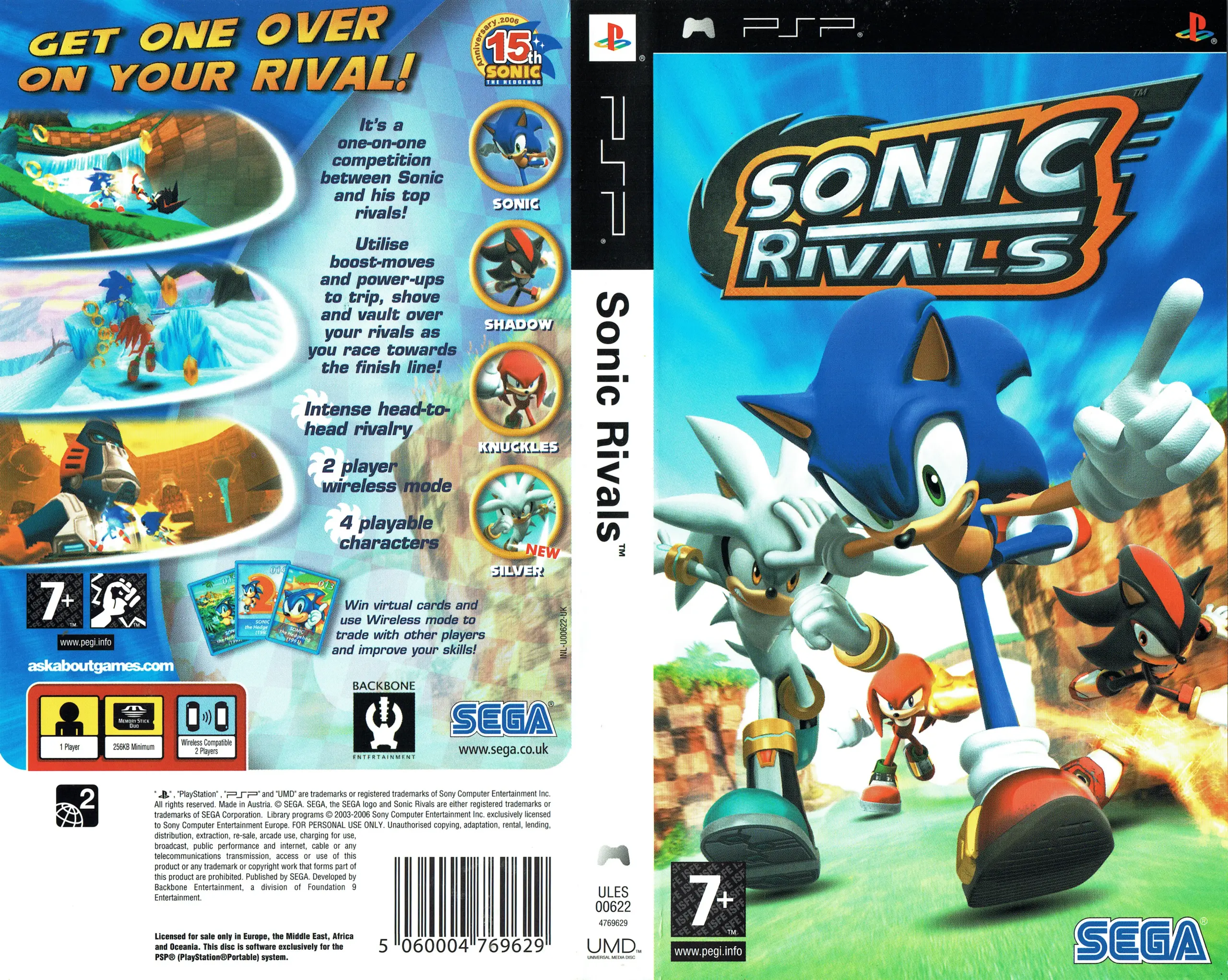
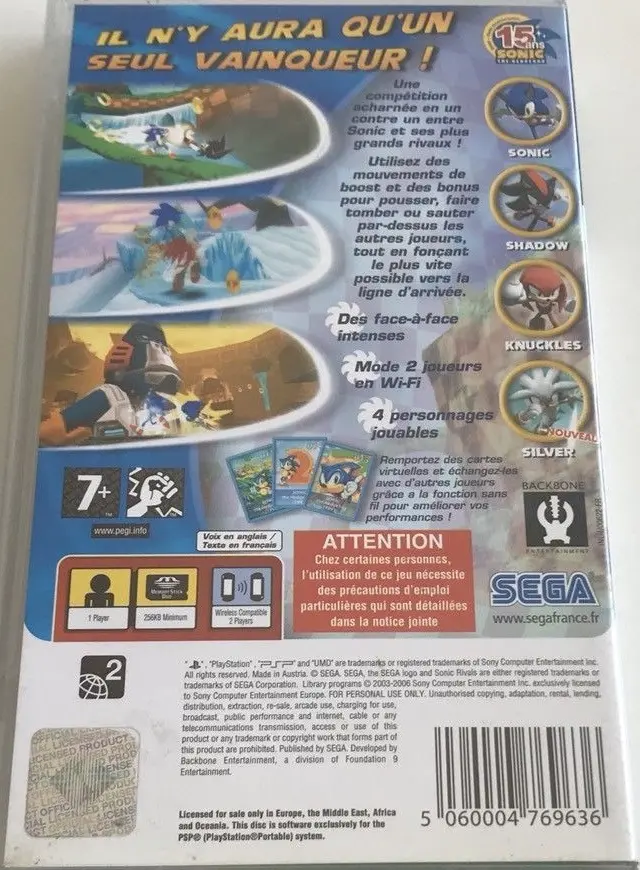
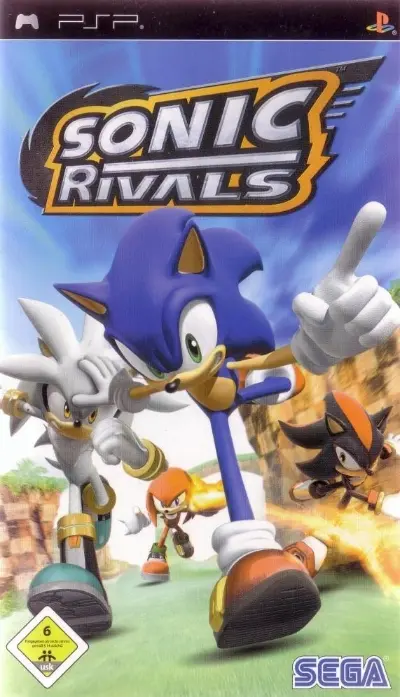
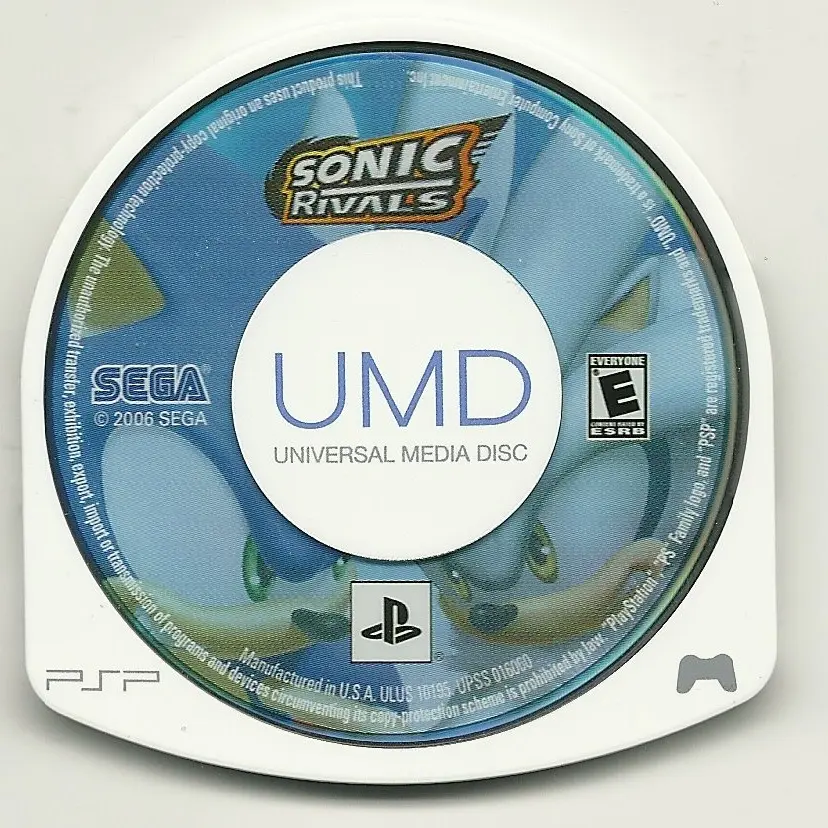
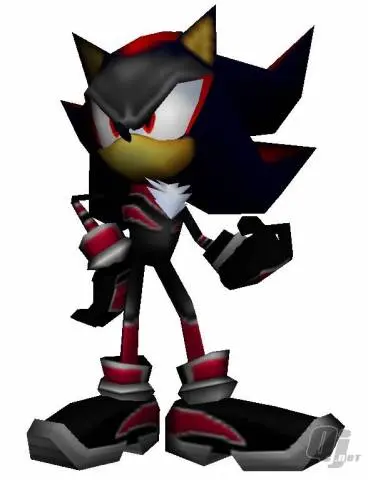
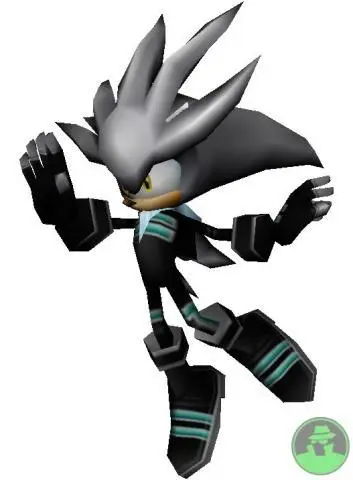
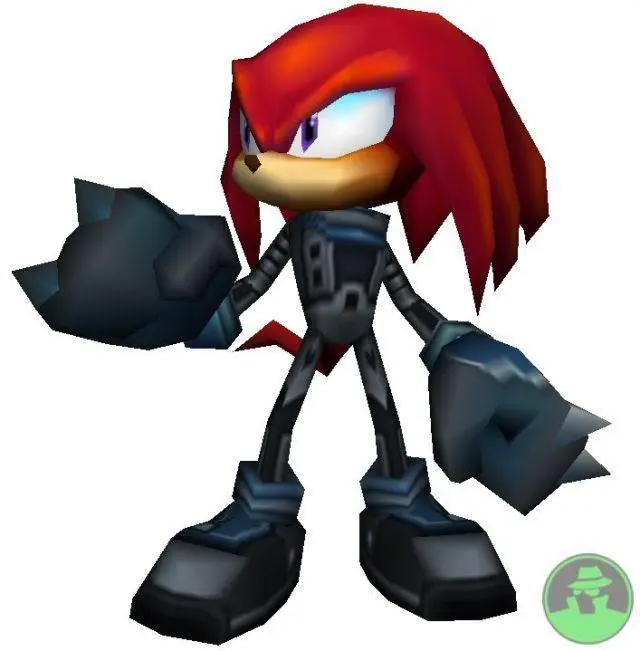
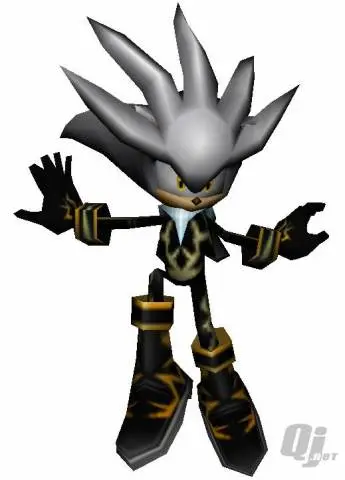
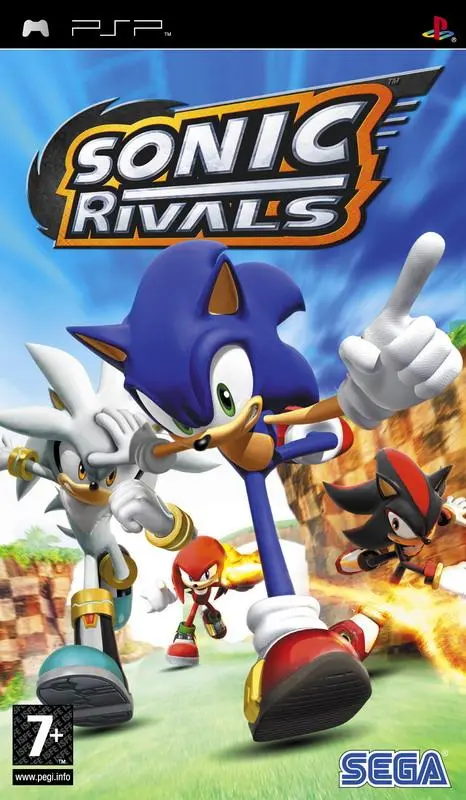
European box.Back of the European box.North American box.Back of the North American box.European PSP Essentials box.UK box.French box.German box.North American UMD.Greatest Hits UMD.PSP menu background.The final logo.Sonic and Silver.Knuckles.Shadow.Silver.Silver.Default loading screen.Egg Turtle loading screen.Egg Falcon loading screen.Egg Lynx loading screen.Egg Kong loading screen.Sonic in one of his unlockable costumes.A loading screen.Knuckles in leather.Shadow’s flame costume.Shadow in leather.A costume in play.A costume in play.Silver’s lightning costume.The original logo.Zone concept art by Mabel Chan.Zone concept art by Mabel Chan.Zone concept art by Mabel Chan.Matt Osness’ Yetee sketch.Test Room 2, loaded with a cheat code.Drill Worm concept.Metal Hound concept.Venoom concept.Vultur concept.The Egg Turtle in a press shot.The main menu.Mid-race.On the run.Sonic and a rival.A preview shot, August 2006.A shot from November 2006.Racing through a zone.Another race.
Sonic Rivals was the first of two PSP racers, and it kept coming back in budget editions and downloads.
Releases and re-releases
PSP (North America)21 November 2006 – ULUS-10195.
PSP (Europe)1 December 2006 – ULES-00622; UK release the same day.
PSP (Australia)7 December 2006 –
Platinum (Europe)2007 – Followed by PSP Essentials; Greatest Hits in North America.
Sonic Rivals 22007 – The sequel, from the same developers.
PlayStation Store (North America)1 October 2009 – US$6.99.
PlayStation Store (Europe and Australia)18 August 2010 – £3.69, €4.49, A$6.75.
Double Rivals Attack Pack!18 October 2011 – Both games together.
A quiet success
Sega has never published sales figures, but the game sold well enough to join Sony’s budget ranges. Wikipedia reads its Greatest Hits and Essentials reissues as a sign that more than 250,000 copies had been sold by the end of 2007, and a sequel was on shelves within a year of the original.
Sales & reviews
Sales
No official sales figures have been published. The reissues as a Greatest Hits and PSP Essentials title are the only public sign of how it sold; see Legacy above.
64/100Metacritic
64%Average of the 13 scores below
80%Highest: Game Station, UK
30%Lowest: Official U.S. PlayStation Magazine
Reception and review scores
Magazine scores from Sega Retro’s review index and online reviews cited by Wikipedia, converted to percentages. GameRankings averaged 66.17%.
Game StationUK
80%
GameProUS · January 2007 magazine
78%
IGNOnline · 23 November 2006
7.4/10
GameTrailersOnline
7.2/10
EurogamerOnline · 18 January 2007
7/10
GameSpyOnline
3.5/5
Yahoo! GamesOnline
3.5/5
GameSpotOnline · 8 December 2006
6.9/10
Jeuxvideo.comFrance · 5 December 2006
13/20
HyperAustralia · January 2007 issue
60%
PlayStation 2 Official MagazineUK · Christmas 2006
50%
Electronic Gaming MonthlyUS · January 2007
4/10
Official U.S. PlayStation MagazineUS · January 2007
30%
Looks and sound were the strong suit. For IGN’s Juan Castro the visual flourishes made it feel at home on the PSP, and GameSpot agreed while enjoying the upbeat tunes; GameSpy was the dissenter on the music, ranking it below earlier Sonic soundtracks.
Opinion on the racing was split, but one complaint united the reviews: however well you drive, the computer rival is never far behind. For Eurogamer’s Rob Fahey it was “one of the most blatant and annoying instances of rubber-banding AI we’ve ever seen”, and GameSpot noticed that a rival frozen solid by an ice attack is back on your tail within seconds. Scores ran from 80% in the UK’s Game Station down to 30% in the Official U.S. PlayStation Magazine.
Reader reviews
No reader reviews yet. Played it? Give it a score out of 10 and tell other fans what you think.
Every fact on this page was checked against the sources below. Sonic Retro and Sega Retro pages were read through Wayback Machine copies, because both live sites show a bot check; each link opens the copy we read. Magazine scores come from Sega Retro’s review index; online review scores and the aggregate scores come from Wikipedia’s cited table.
To provide the best experiences, we use technologies like cookies to store and/or access device information. Consenting to these technologies will allow us to process data such as browsing behavior or unique IDs on this site. Not consenting or withdrawing consent, may adversely affect certain features and functions.
Functional
Always active
The technical storage or access is strictly necessary for the legitimate purpose of enabling the use of a specific service explicitly requested by the subscriber or user, or for the sole purpose of carrying out the transmission of a communication over an electronic communications network.
Preferences
The technical storage or access is necessary for the legitimate purpose of storing preferences that are not requested by the subscriber or user.
Statistics
The technical storage or access that is used exclusively for statistical purposes.The technical storage or access that is used exclusively for anonymous statistical purposes. Without a subpoena, voluntary compliance on the part of your Internet Service Provider, or additional records from a third party, information stored or retrieved for this purpose alone cannot usually be used to identify you.
Marketing
The technical storage or access is required to create user profiles to send advertising, or to track the user on a website or across several websites for similar marketing purposes.

 Colosseum Highway ZoneActs 1–2 · boss: Egg FalconAncient Rome, with towering statues of centurions and rows of columns.
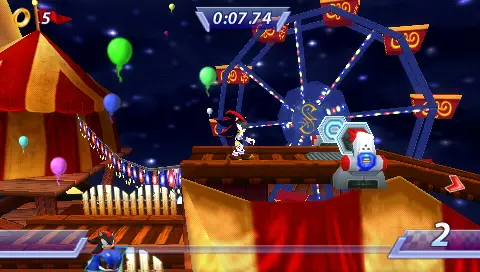 Sky Park ZoneActs 1–2 · no bossA wooden amusement park in the clouds, with roller coasters fronted by spikes and clown robots. It is the only zone with no boss. Its concept name was Sky Circus.
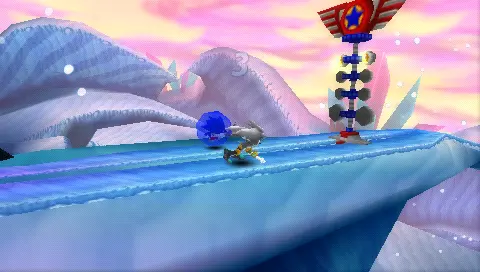 Crystal Mountain ZoneActs 1–2 · boss: Egg LynxSnowy peaks studded with giant ice crystals in many colours, and a lot of climbing. In concept art it was Snow Crystal.
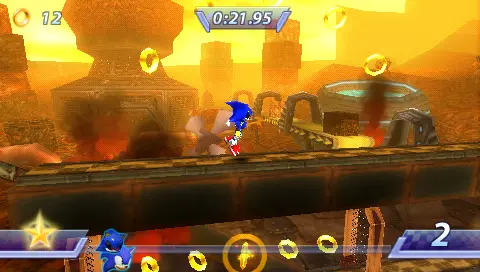 Death Yard ZoneActs 1–2 · boss: Egg KongA rusting, polluted scrapyard, where Nega finally shows his face to Shadow and Silver.
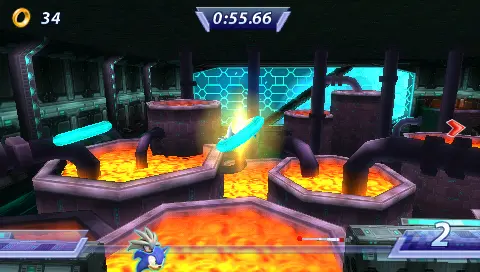 Meteor Base ZoneActs 1–2 · boss: Egg DestroyerNega’s space station among the asteroids, high above the planet: the only zone that is not on Onyx Island.
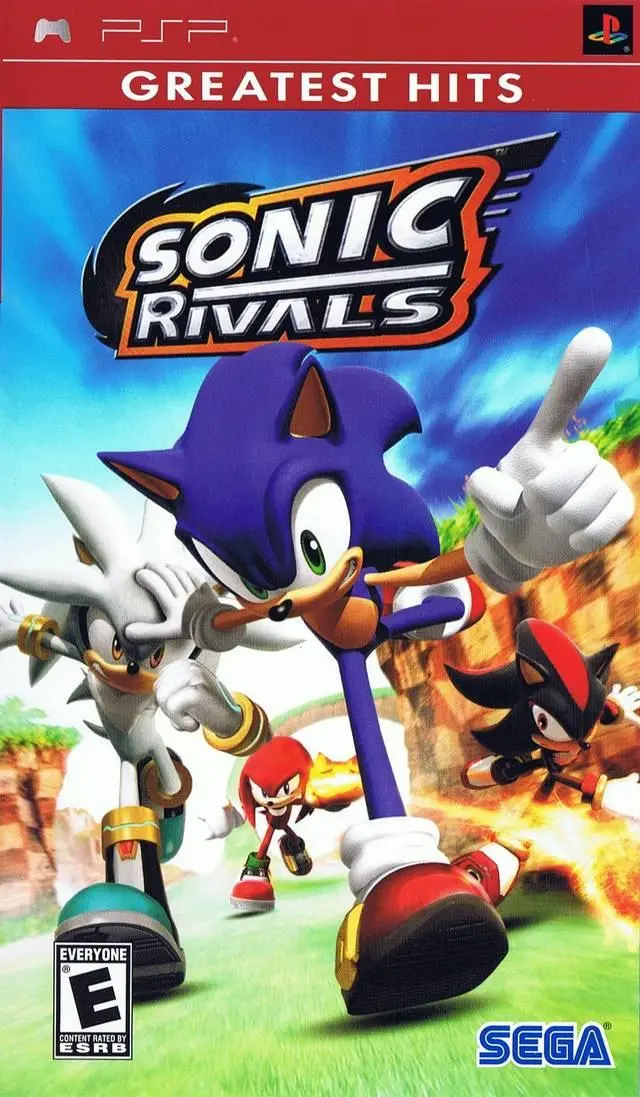 Greatest Hits and PlatinumPSP · 2007 onwardsBudget reissues followed: Greatest Hits in North America, Platinum and later PSP Essentials in Europe.
 PlayStation StoreDownload · 2009–10A download version arrived in North America in October 2009 and in Europe and Australia in August 2010.
 Sonic the HedgehogPlayable
 Knuckles the EchidnaPlayable
 Shadow the HedgehogPlayable
 Silver the HedgehogPlayable
 Metal SonicUnlockable
 Egg TurtleBoss · Forest Falls
 Egg FalconBoss · Colosseum Highway
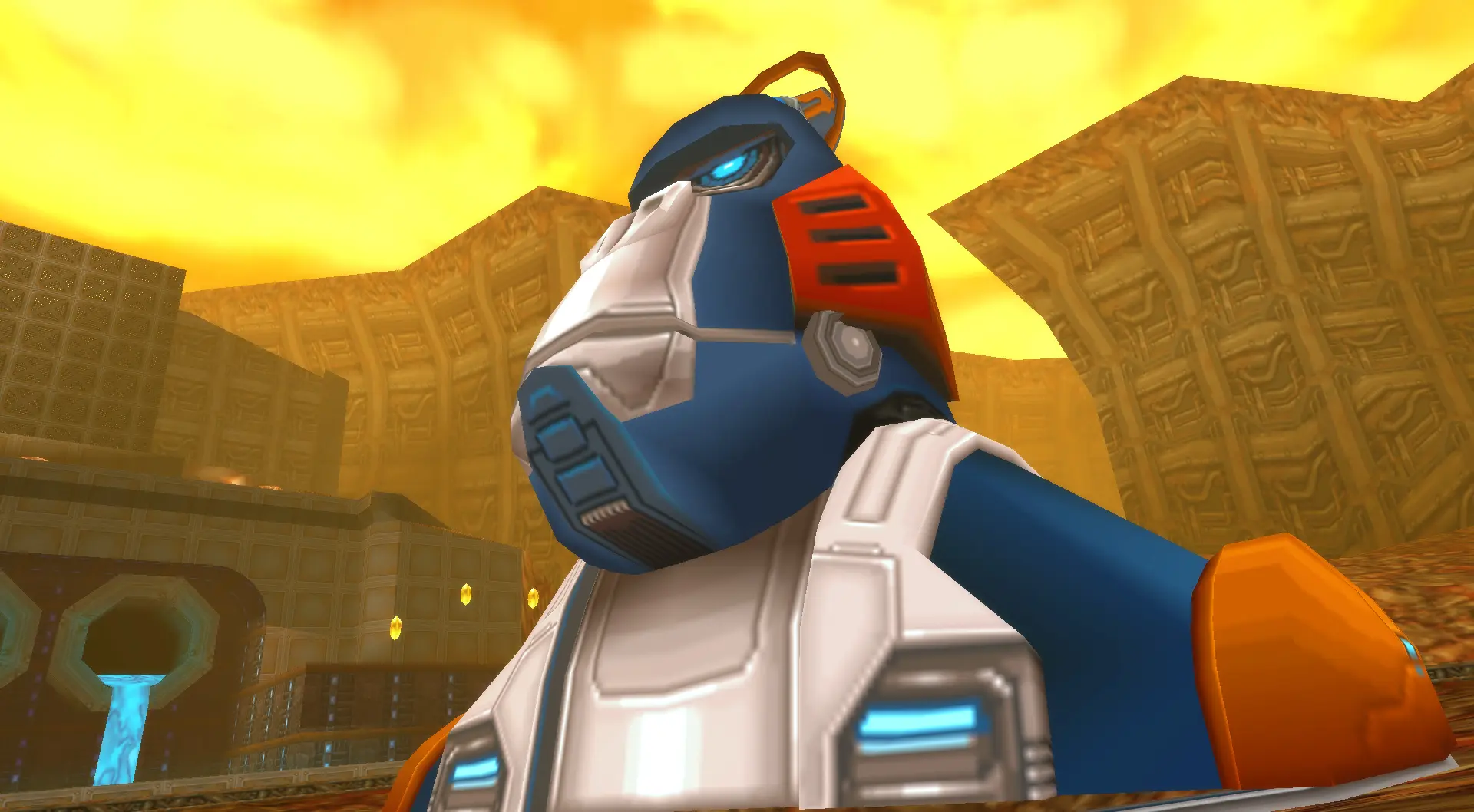 Egg KongBoss · Death Yard
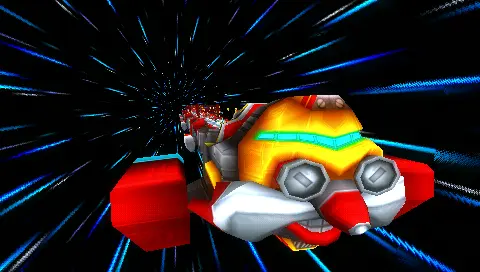 Egg DestroyerFinal boss · Meteor Base
 Drill WormBadnikConcept art of it survives from development.
 Metal HoundBadnikAlso among the surviving concept drawings.
 MonoClownBadnikOne of the eight Badnik types.
 VenoomBadnikDrawn as concept art before release.
 VulturBadnikAnother design that began as concept art.
 YeteeBadnikFirst sketched by Matt Osness.