Xbox 360 / PS3 / Wii / PS22008Sonic TeamDay and night 3D platformer
Sonic Unleashed (2008)
By day, the fastest Sonic in years. By night, a stretchy-armed brawler. Eggman cracks the world open, and Sonic and a little friend called Chip go round the globe putting it back together.
Released18 Nov 2008 (NA) · 28 Nov 2008 (Europe) · 18 Dec 2008 (Japan, Wii)
DeveloperSonic Team (with Dimps on Wii and PS2)
DirectorYoshihisa Hashimoto
VillainsDr. Eggman and Dark Gaia
NewThe Werehog, Chip and the Hedgehog Engine
Sales2.45 million
Title
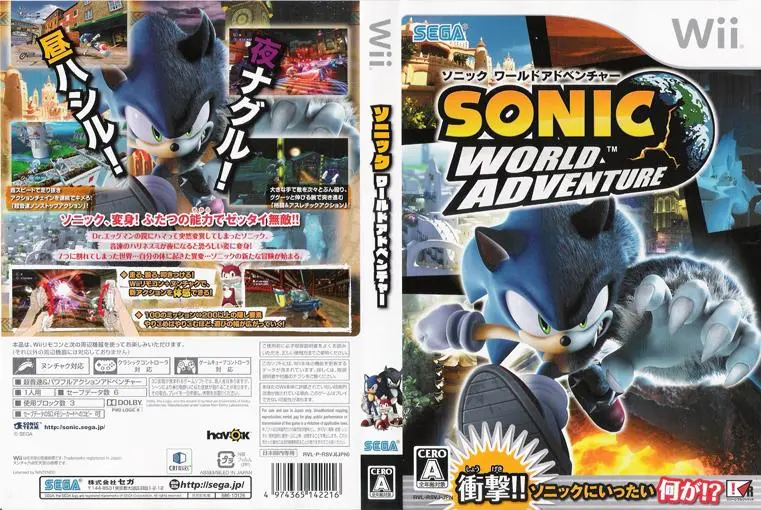
Sonic Unleashed; in Japan Sonic World Adventure (ソニック ワールドアドベンチャー)
Platforms
Xbox 360 and PlayStation 3 (Hedgehog Engine version); Wii and PlayStation 2 (separate version). A different side-scrolling game of the same name came to mobile phones from Gameloft in 2009
Developer
Sonic Team; the Wii and PlayStation 2 version with Dimps. Sonic Retro credits Dimps with day-stage design support and Xeen with night-stage support
Support
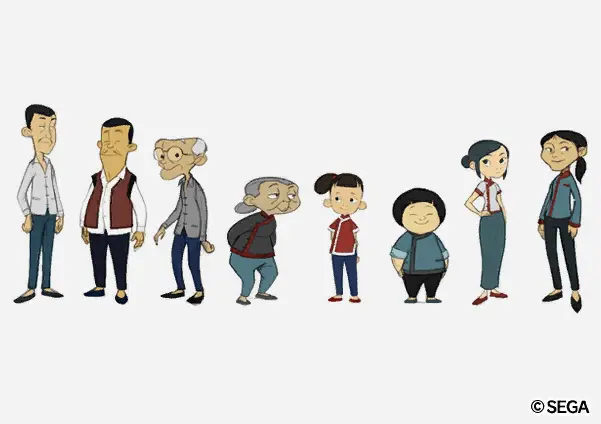
Townsfolk designed by Gurihiru; opening animated by Marza Animation Planet, directed by Shinji Aramaki; motion capture by Katsugekiza; audio recording at Onkio Haus
Publisher
Sega
Director
Yoshihisa Hashimoto
Music
Orchestral score; theme “Endless Possibility” written by Tomoya Ohtani and sung by Jaret Reddick of Bowling for Soup; ending “Dear My Friend” sung by Brent Cash
Players
1
Released (North America)
Wii, PlayStation 2 and Xbox 360: 18 November 2008; PlayStation 3: 9 December 2008. Sonic Retro lists the US Xbox 360 release as 24 November and the PlayStation 3 as 12 December
Released (Europe)
Wii, PlayStation 2 and Xbox 360: 28 November 2008; PlayStation 3: 19 December 2008
Released (Australia)
Wii, PlayStation 2 and Xbox 360: 27 November 2008; PlayStation 3: 18 December 2008 (Sonic Retro gives 28 November and 16 December)
Released (Japan)
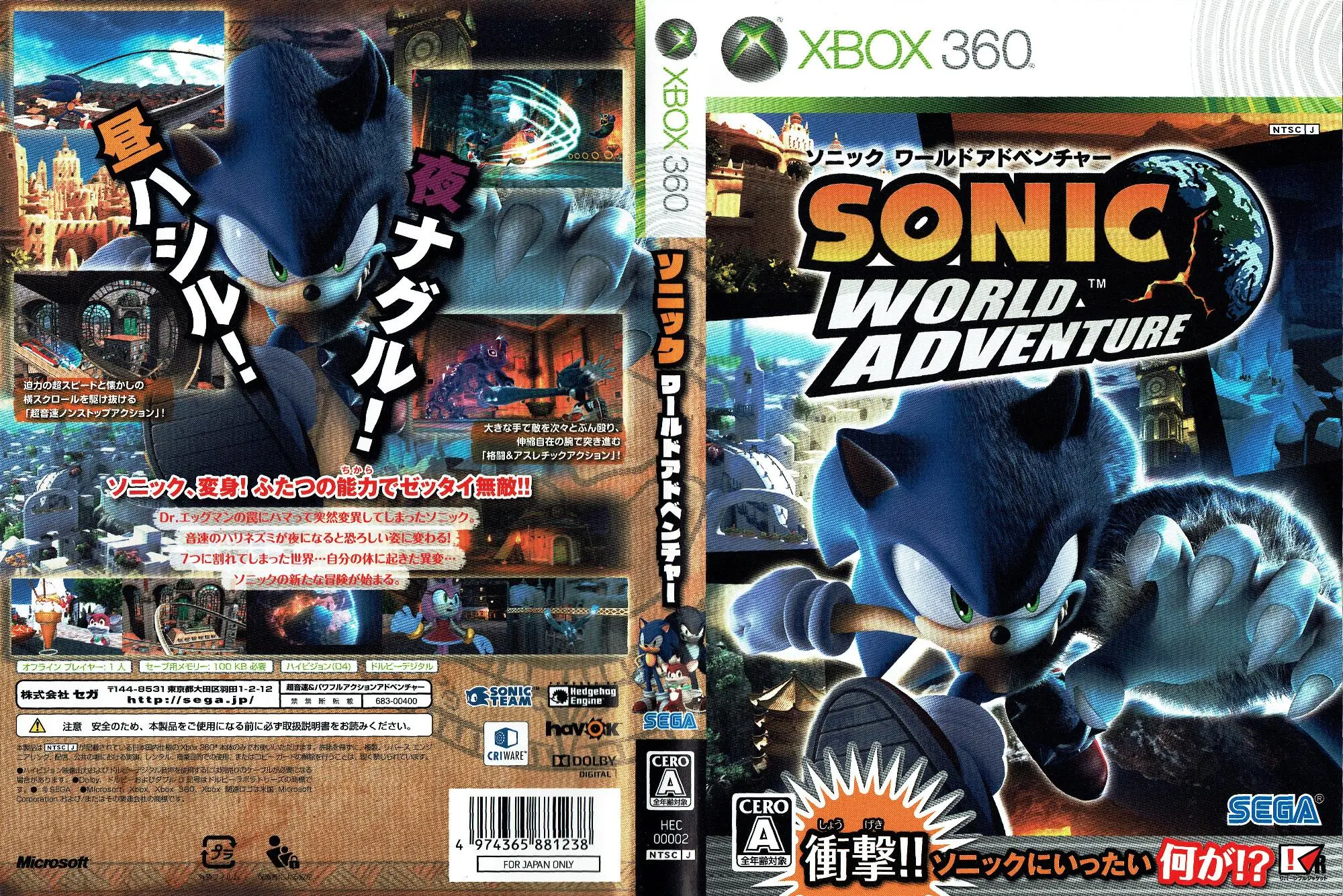
Wii: 18 December 2008 (¥5,800); Xbox 360 and PlayStation 3: 19 February 2009 (¥6,800), held back by manufacturing problems. No PlayStation 2 release
Later releases
Xbox 360 Platinum Hits (North America) and Classics (Europe), 2009; Games on Demand, 20 October 2009; PlayStation 3 Essentials (UK), 2012; PlayStation Store download, April 2014; PlayStation Now, 2017; Xbox One backward compatibility, 2018
Sonic and the Black Knight (2009); Sonic Colours (2010)
Overview
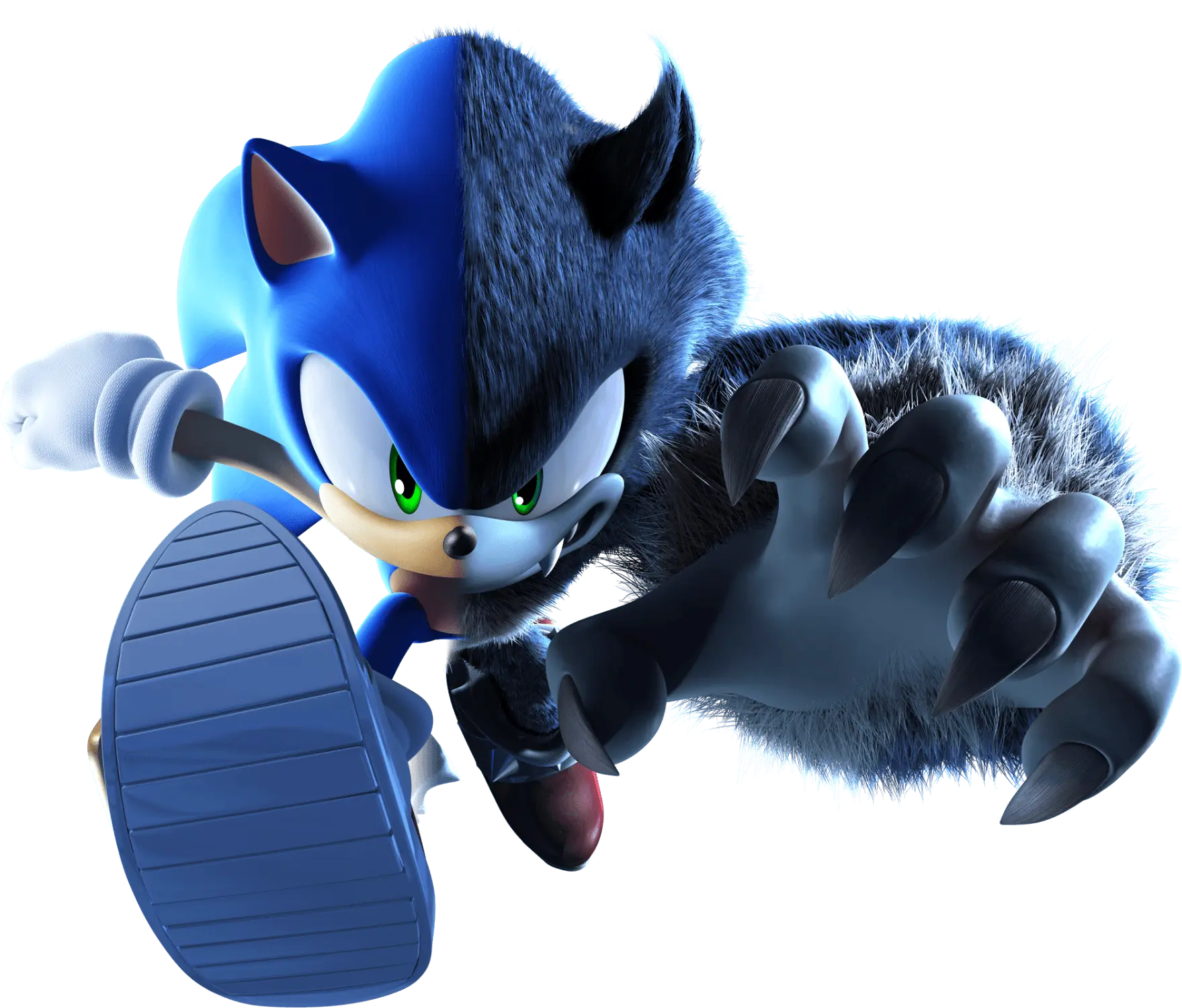
Two years after Sonic ’06, Sonic Team started again. Sonic Unleashed cut the cast down to one hero, built a new engine to make him look spectacular, and split every continent into two kinds of stage. By day Sonic boosts through sprawling, gorgeously lit levels that swing between 3D runs and side-on 2D sections. By night he turns into the Werehog, a slower, stronger beast with stretchy arms, and the game becomes a brawler with platforming in between.
The story is a globe-trotting road trip. Eggman shatters the planet to free an ancient monster, Dark Gaia, and Sonic travels from a Mediterranean island to snowy Holoska, a Chinese-inspired mountain range and a New York-style metropolis, with an amnesiac little creature called Chip as his guide, restoring each continent at its Gaia Temple.
Two quite different versions came out: a Hedgehog Engine game for Xbox 360 and PlayStation 3 with explorable towns, and a Wii and PlayStation 2 game made with Dimps, with motion-controlled Werehog fights and menu-driven towns. Critics loved the daytime stages and disliked the Werehog, and the game sold 2.45 million copies. Its daytime formula became the template for Sonic’s next decade.
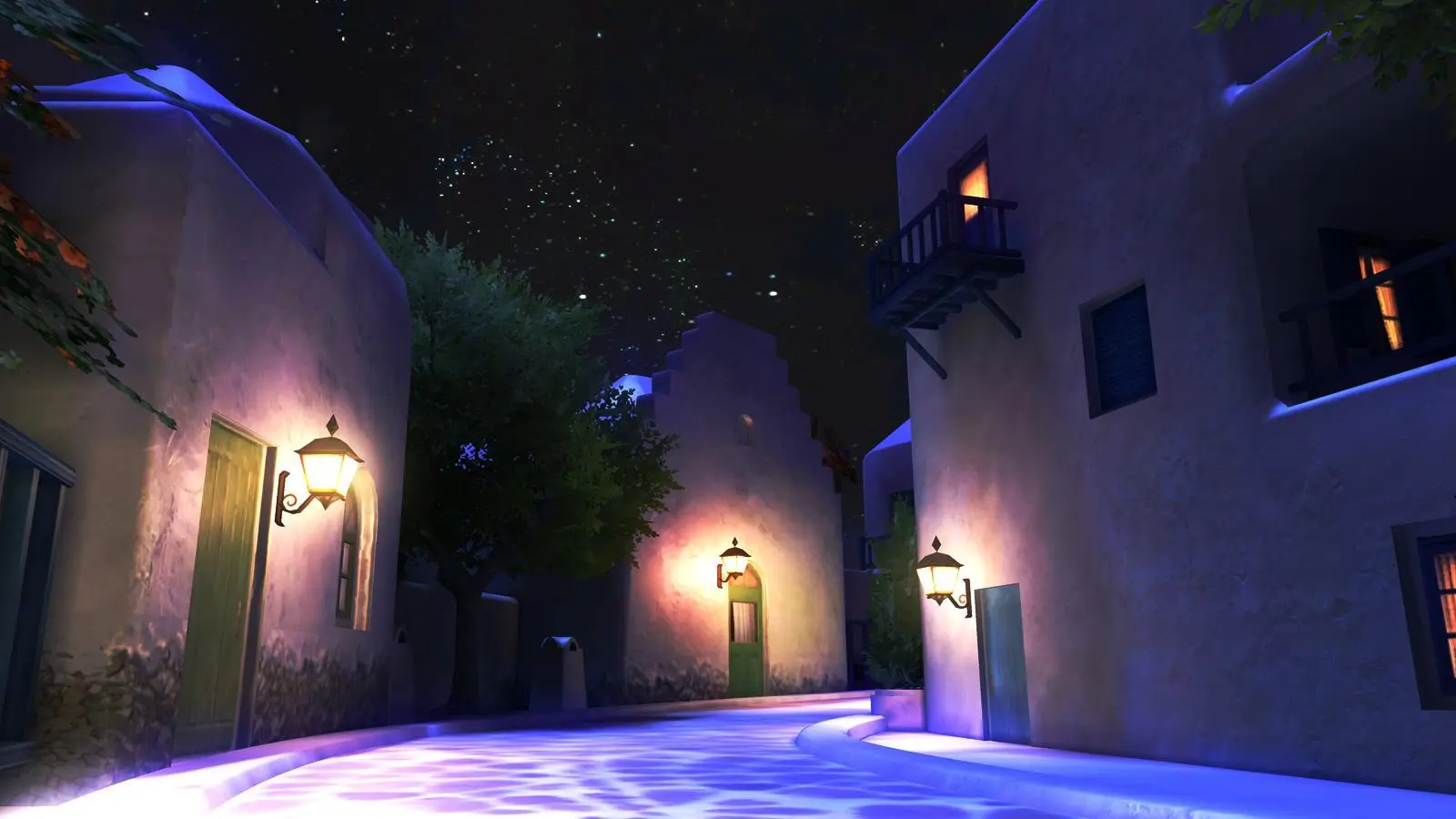
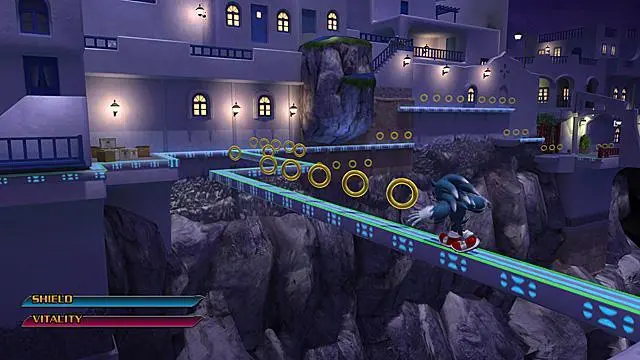
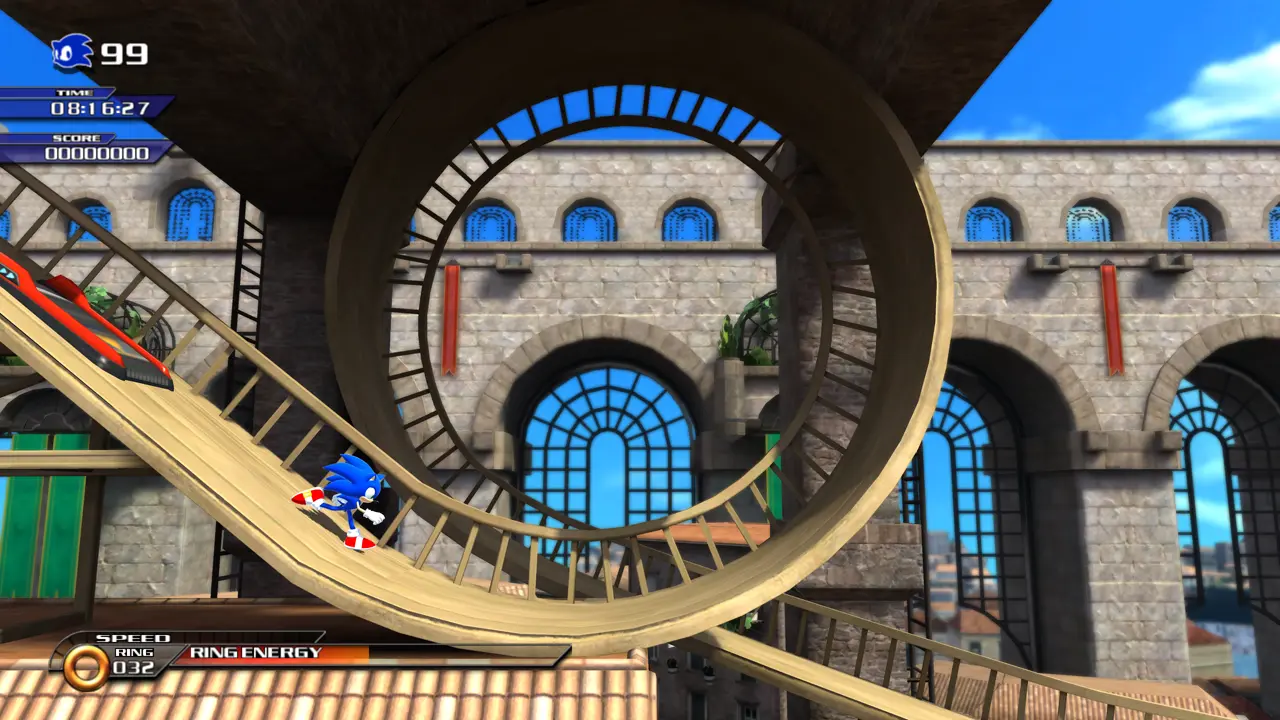
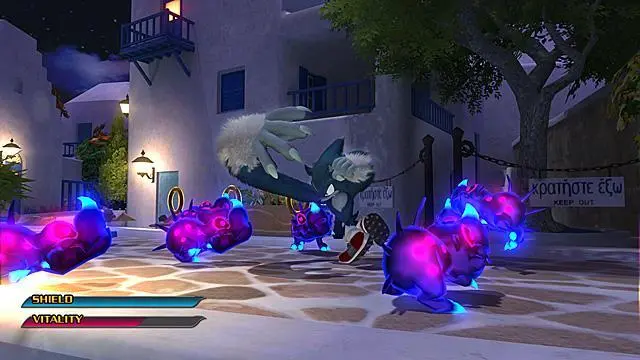
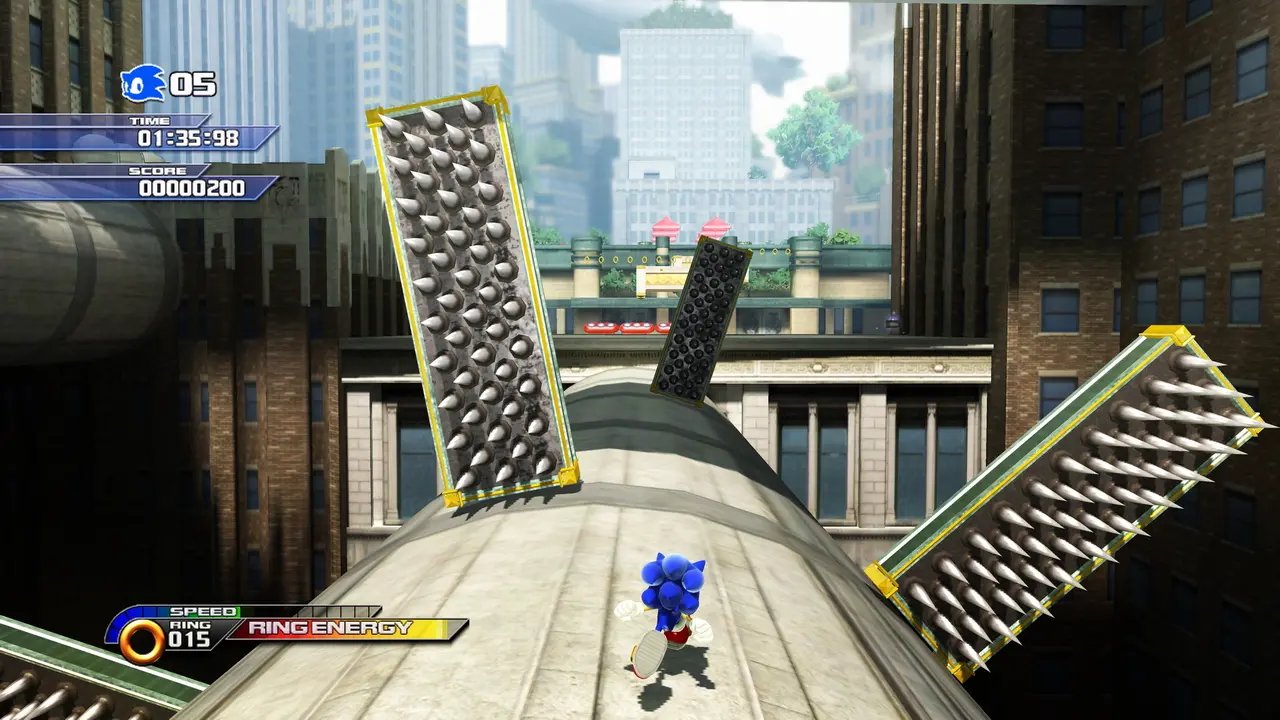
Rooftop Run in Spagonia, a fan favourite.The Werehog brawls at night.Day and night in Spagonia.
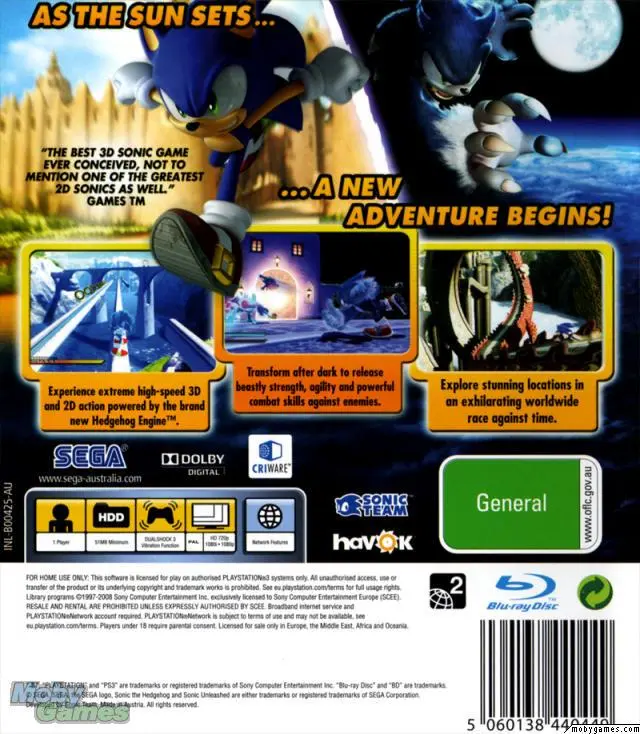
As the sun sets… a new adventure begins!
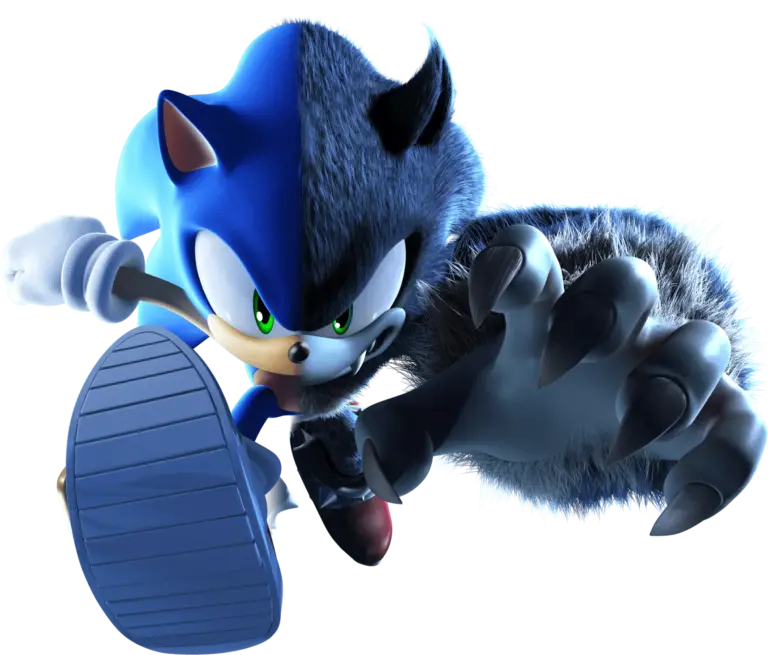
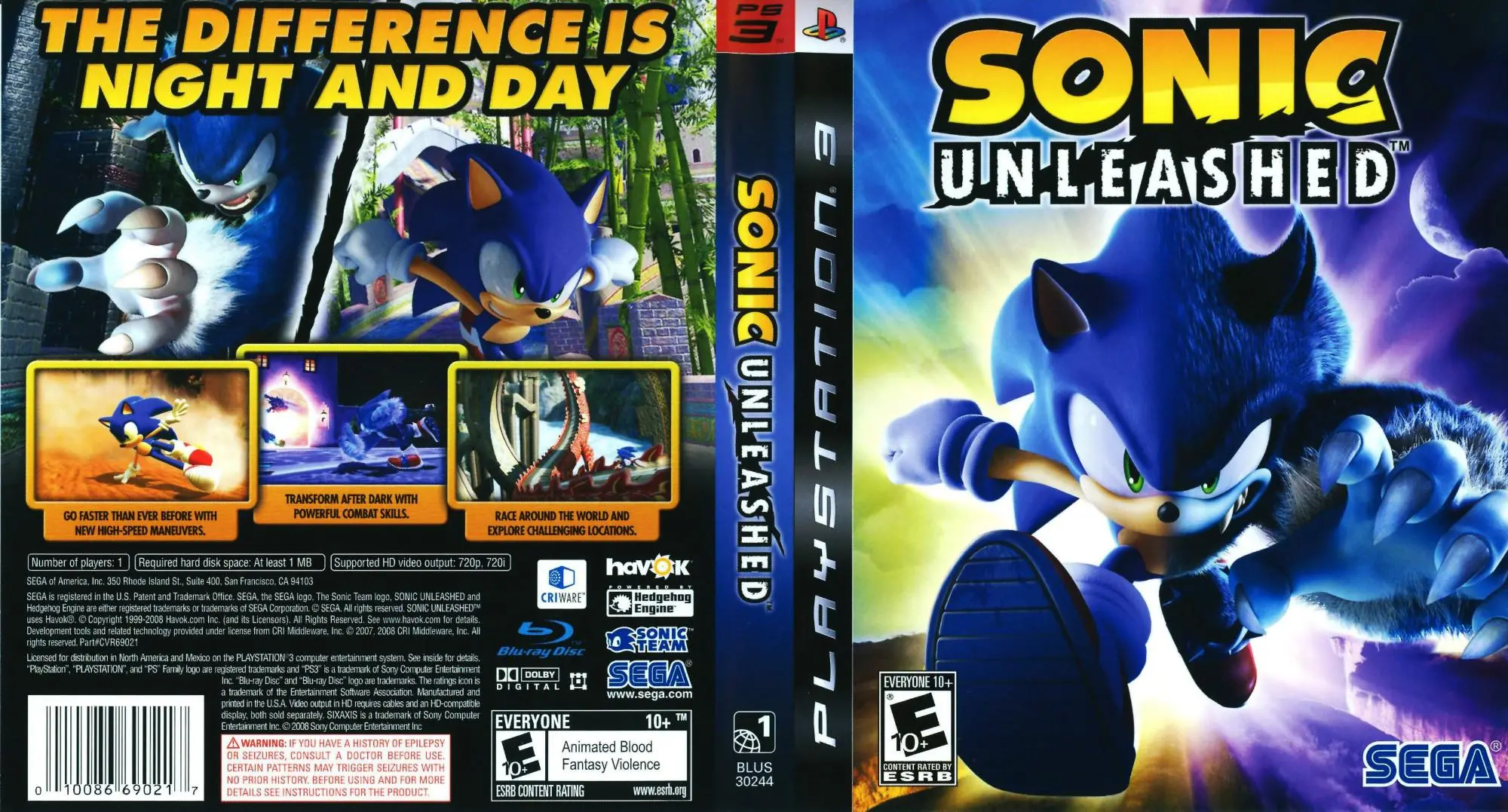
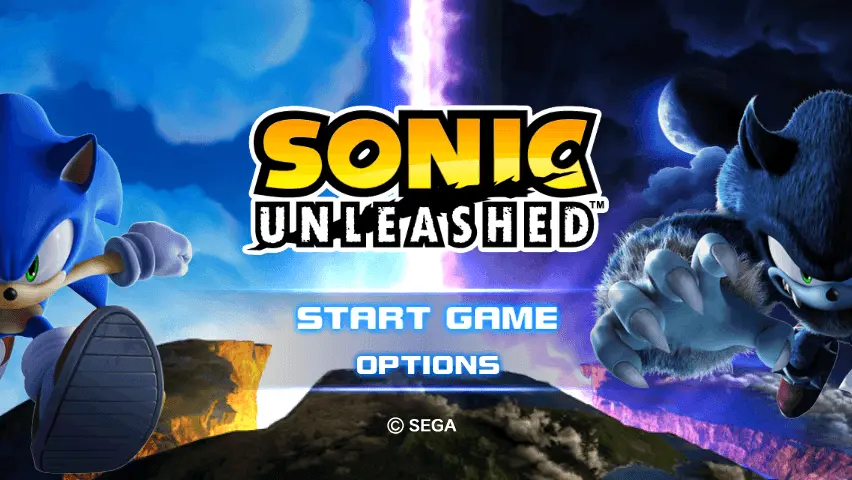
The back of the box splits the hedgehog down the middle, Sonic in daylight and the Werehog under the moon. Its captions promise high-speed 3D and 2D action powered by the new Hedgehog Engine, a night-time transformation bringing raw strength, agility and combat moves, and a race against time through striking locations around the world.
— Official description: back of the Australian PlayStation 3 box (Sega, 2008), from the scan in our box art gallery. One line quoted; the rest summarised.
Quick Answers
The short answers, with the detail further down the page.
When did Sonic Unleashed come out?
On Wii, PlayStation 2 and Xbox 360 in November 2008 (18 November in North America, 28 November in Europe), with the PlayStation 3 version following in December. Japan got the Wii version on 18 December 2008 and the HD versions in February 2009. More →
What is the Werehog?
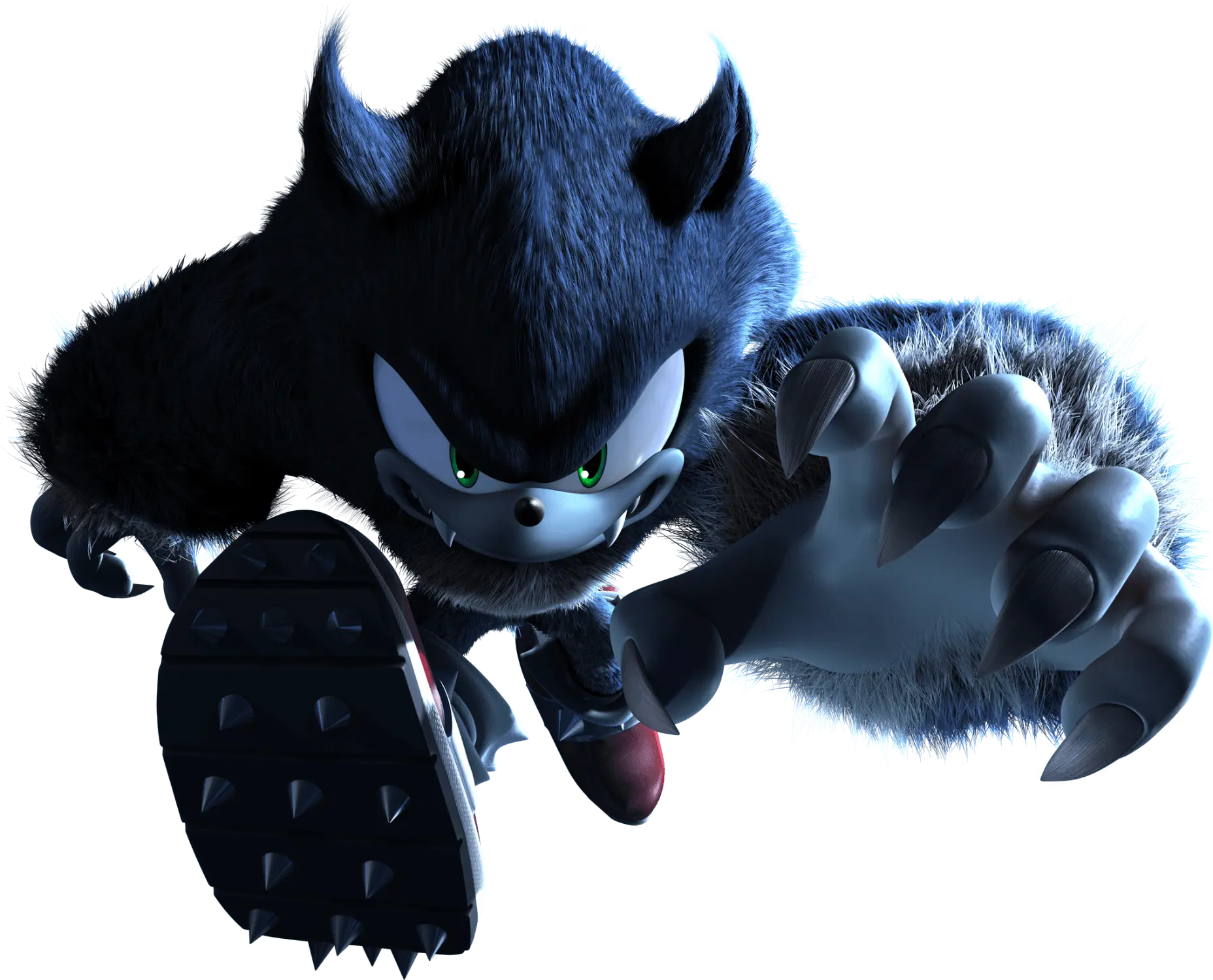
Sonic’s night-time form, a side effect of Eggman’s laser and the energy of Dark Gaia. It is slow but very strong, with arms that stretch to grab enemies and ledges. More →
Who is Chip?
A small flying creature with no memory whom Sonic meets after falling to Earth. He turns out to be Light Gaia, Dark Gaia’s opposite. More →
Is the Wii version different?
Very. The Wii and PlayStation 2 version uses a different engine, has menu-based towns instead of explorable ones, motion controls for the Werehog, far more night stages and fewer day stages, and leaves out Empire City and most of Mazuri. More →
What is the Hedgehog Engine?
Sonic Team’s in-house engine built for the game, using pre-calculated global illumination to give its huge stages their rich lighting. It was refined for later games and became Hedgehog Engine 2 with Sonic Forces. More →
Why is it called Sonic World Adventure in Japan?
That was the working title when the game was planned as a third Sonic Adventure. The West got Unleashed, after the Werehog; Japan kept the original name. More →
Did it sell?
Yes: 2.45 million copies, making it one of Sega’s best sellers of the year. More →
Can you play it today?
The Xbox 360 version runs on Xbox One and Xbox Series X|S, where an FPS Boost update in 2021 lets it reach 60 frames per second. The PlayStation 3 version came to PlayStation Now in 2017. More →
Plot / Story
Chip, Sonic’s travelling companion.
Unleashed is a gentler, sunnier story than the one before it: a quest around the world with a friend at your side, a giant monster at the bottom of it, and a goodbye at the end.
The planet in pieces
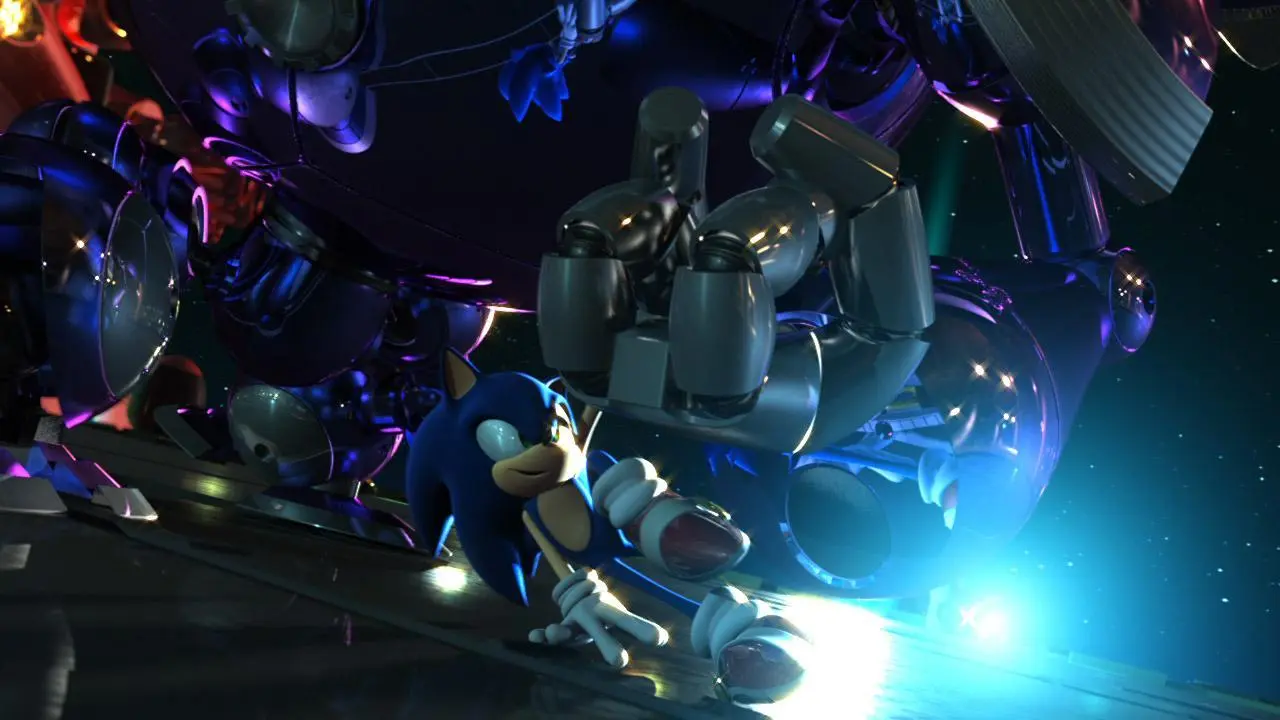
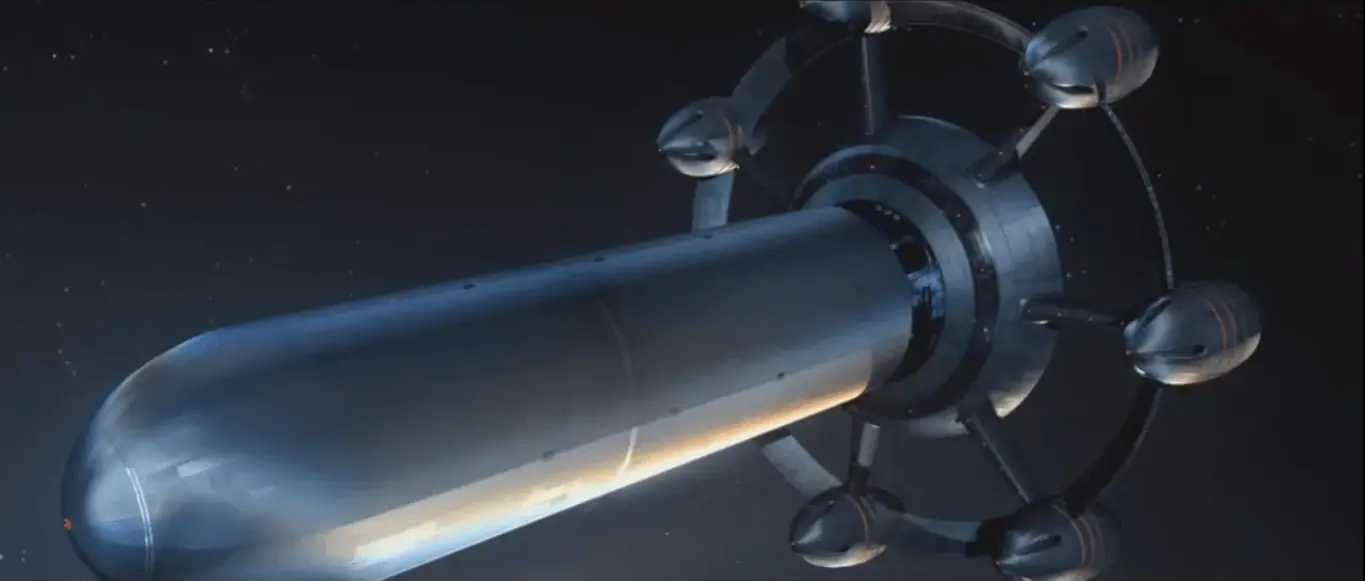
The game opens in orbit. Sonic tears through Eggman’s fleet, turns Super and chases the doctor into a space station, only to find it is a trap. The Chaos Energy Cannon pins Super Sonic, drains the seven Chaos Emeralds of their power and fires their energy at the planet below.
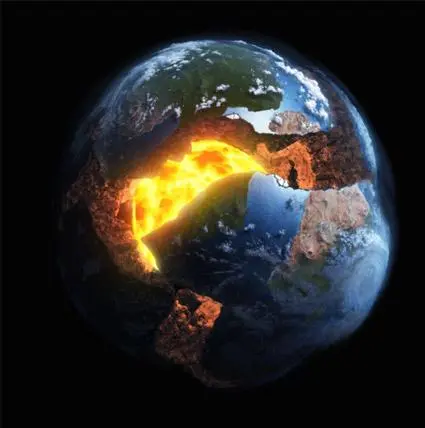
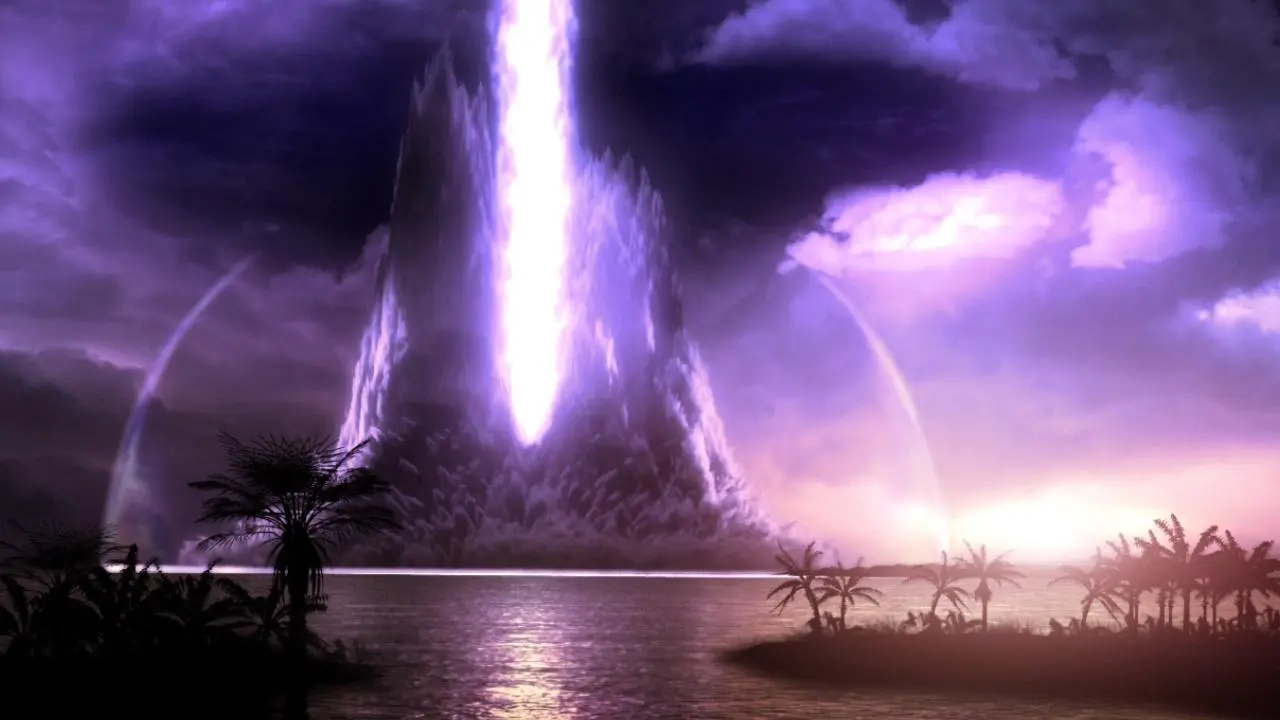
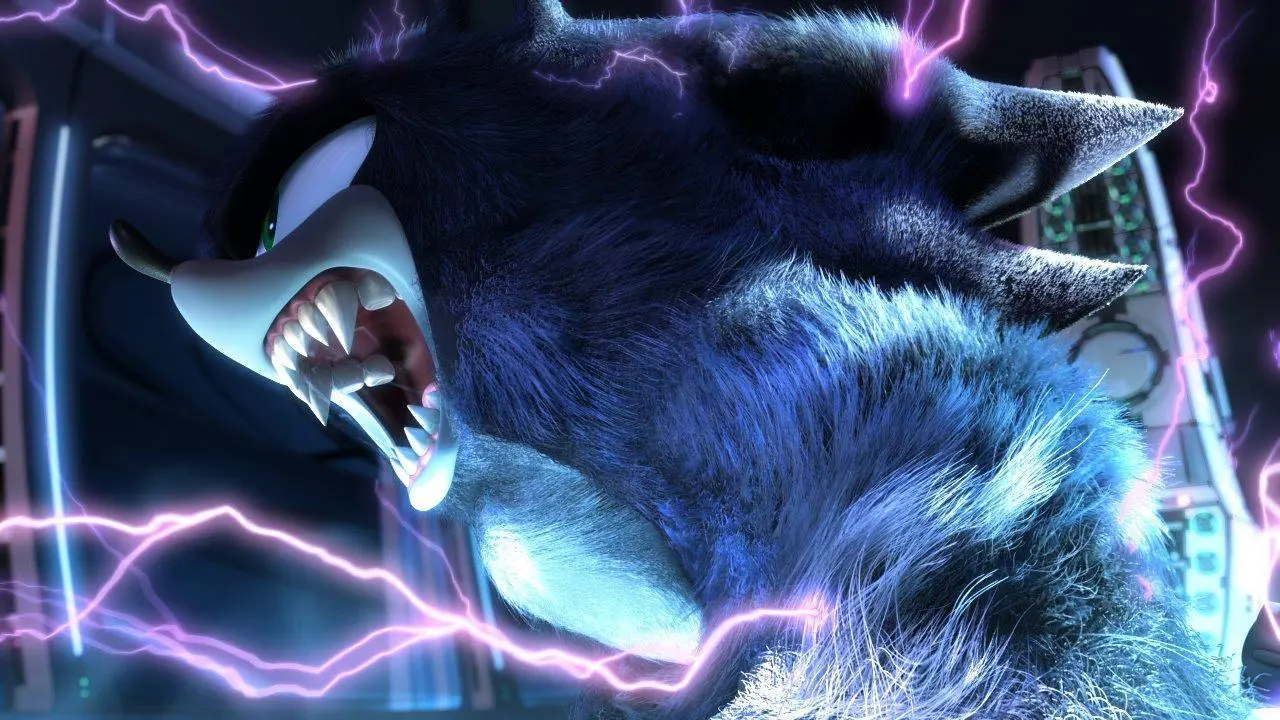
The blast cracks the world into seven pieces and wakes Dark Gaia, a monstrous being sleeping at the planet’s core, whose energy Eggman plans to use to build his Eggman Empire. It also has a side effect nobody planned for: when night falls, Sonic now turns into a hulking, fanged Werehog. Eggman throws him out of the station and he plummets to Earth.
The Chaos Energy Cannon.Eggman fires.
A friend with no memory
Sonic lands next to a small winged creature who cannot remember anything about himself. Suspecting he landed on the poor thing, Sonic decides to help him find out who he is and nicknames him Chip. The little fellow loves chocolate and happily shares it with anyone he likes.
Together they set out to restore the world. Each continent hides a Gaia Temple, and placing a drained Chaos Emerald in its shrine brings back the Emerald’s power and puts that piece of the planet back in place. Tails flies them between continents in the Tornado, the eccentric Professor Pickle lends a hand, and Amy turns up along the way to be rescued.
The first transformation.Chip’s chocolate.
Around the world
The trip takes Sonic from the windmills of Apotos to the savannah of Mazuri, the ice of Holoska, the rooftops of Spagonia, the mountain roads of Chun-nan, the desert of Shamar, the skyscrapers of Empire City and the jungles of Adabat. In each place the daytime stages lead to the temple, while at night the Werehog fights off Dark Gaia’s creatures, and Eggman keeps sending machines to stop him.
Sonic and the Werehog in Chun-nan.Empire City.
Chip remembers
With six continents restored, Chip’s memory finally returns in Adabat. He is Light Gaia, Dark Gaia’s opposite. Since the beginning of time the two have been locked in a cycle: Dark Gaia breaks the world apart and Light Gaia puts it back together. Eggman woke them both too early, which is why Chip lost his memory and why Dark Gaia came out in pieces.
Eggmanland and the core
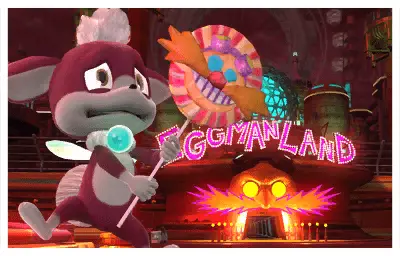
The last temple stands in Eggman’s new capital, Eggmanland, a sprawling theme park and factory. Sonic fights through it day and night and beats the Egg Dragoon, a machine running on Dark Gaia’s power, and the battle drops Sonic, Chip and Eggman into the planet’s core.
There Eggman orders Dark Gaia to destroy Sonic. The monster swats him aside instead and pulls its stolen energy back out of Sonic, curing him of the Werehog curse. Chip summons every Gaia Temple to form the Gaia Colossus, but Dark Gaia grows into its perfect form and wraps the planet in darkness. Chip hands Sonic the restored Emeralds, and Super Sonic and the Colossus drive Dark Gaia back into its sleep.
The fight leaves Super Sonic exhausted, so Chip sends him safely back to the surface before returning to the core himself. All that is left is Chip’s necklace, which Sonic wears as a bracelet before racing off with Tails.
The Gaia Colossus.Perfect Dark Gaia.
Stages in Sonic Unleashed
Each continent is a hub town, a day stage and a night stage, plus extra acts and, on the Xbox 360 and PlayStation 3, side missions from the locals. The continents are modelled on real parts of the world; the descriptions below follow the HD version.
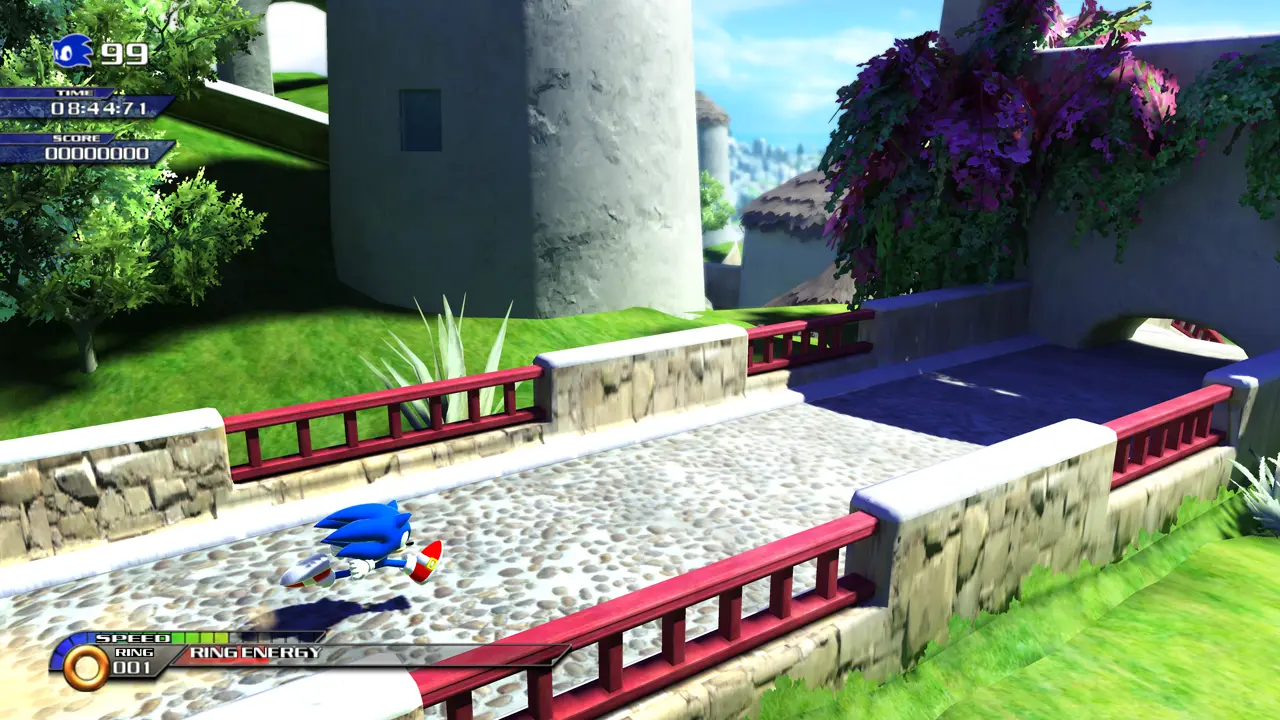
Windmill IsleApotosA whitewashed Mediterranean island town, home of the tutorials and the first Gaia Temple.
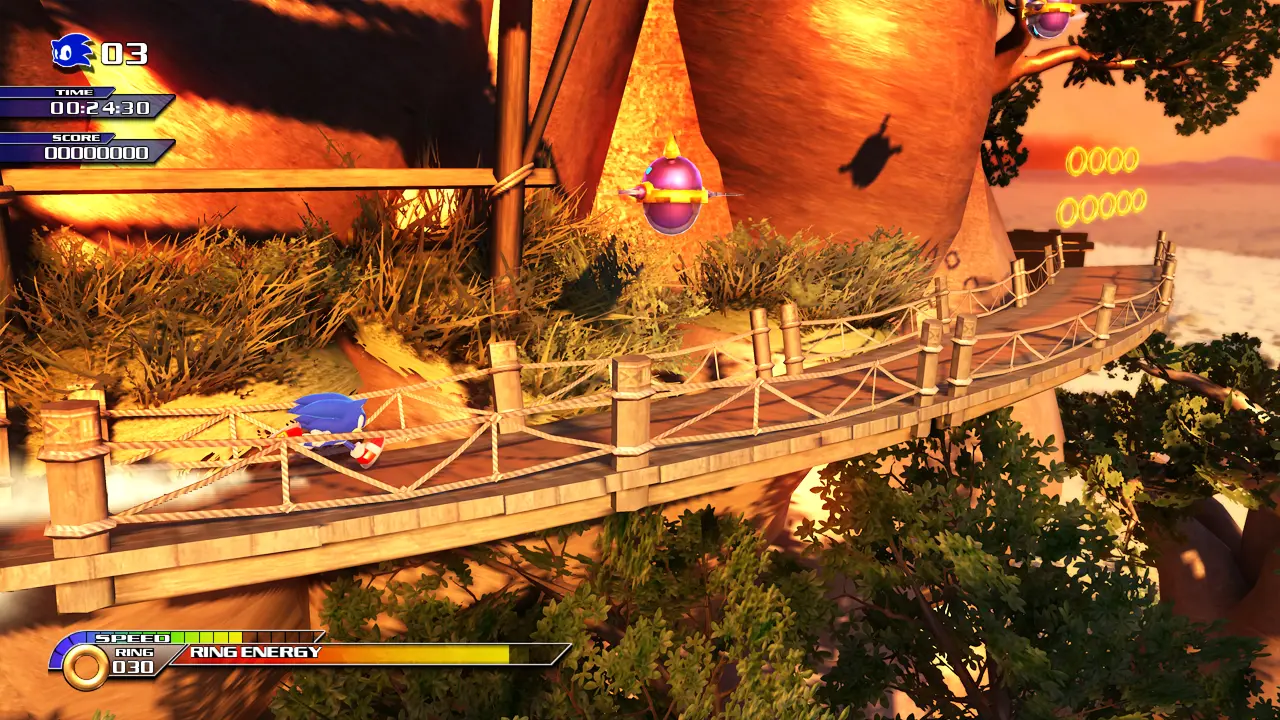
Savannah CitadelMazuriAfrican savannah around an earthen citadel, where Eggman sends the Egg Beetle. Only a cut-down Mazuri appears on Wii and PlayStation 2.
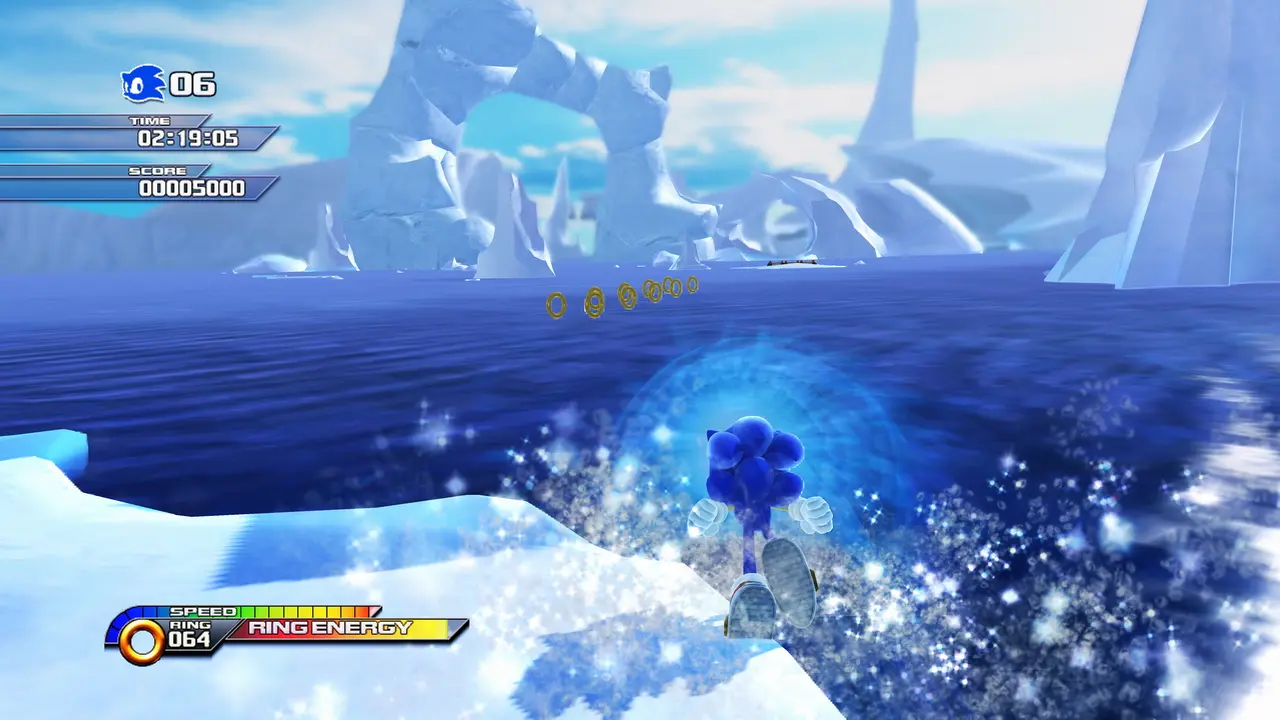
Cool EdgeHoloskaA frozen land of snow, ice and igloos; the Werehog meets the Dark Moray here.
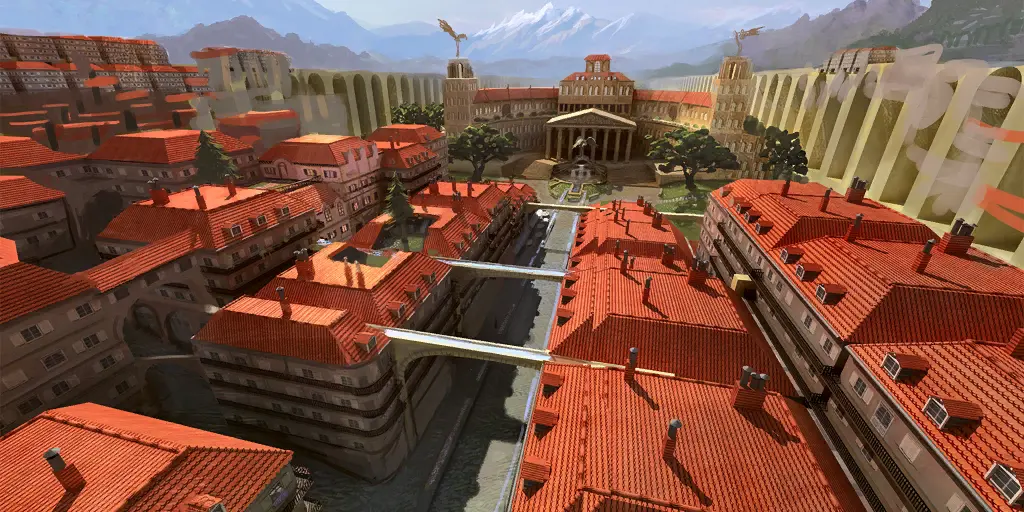
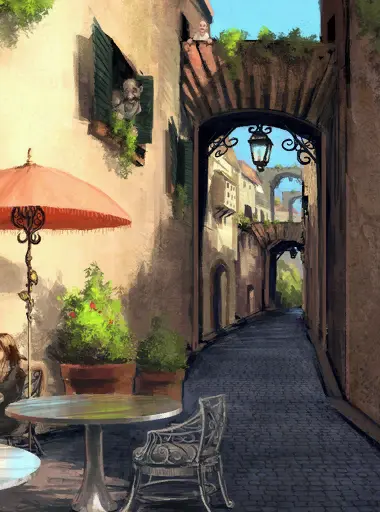
Rooftop RunSpagoniaA European city of towers and red rooftops. Eggman attacks with the Egg Devil Ray.
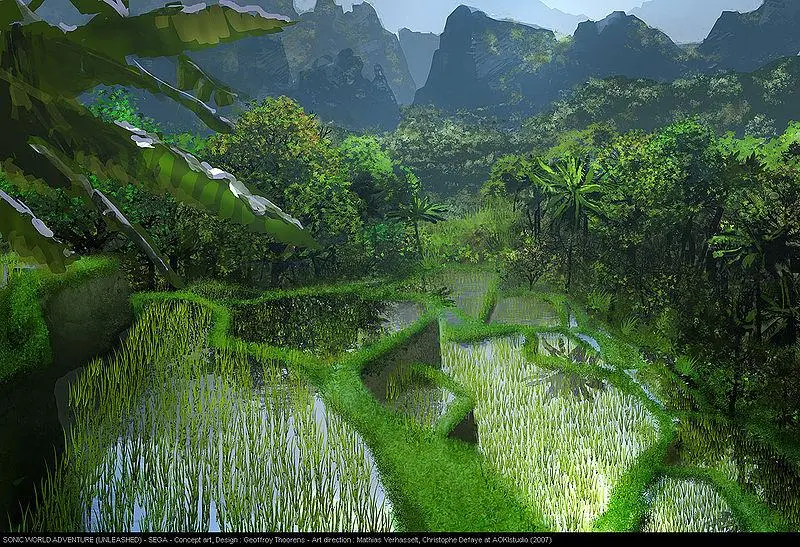
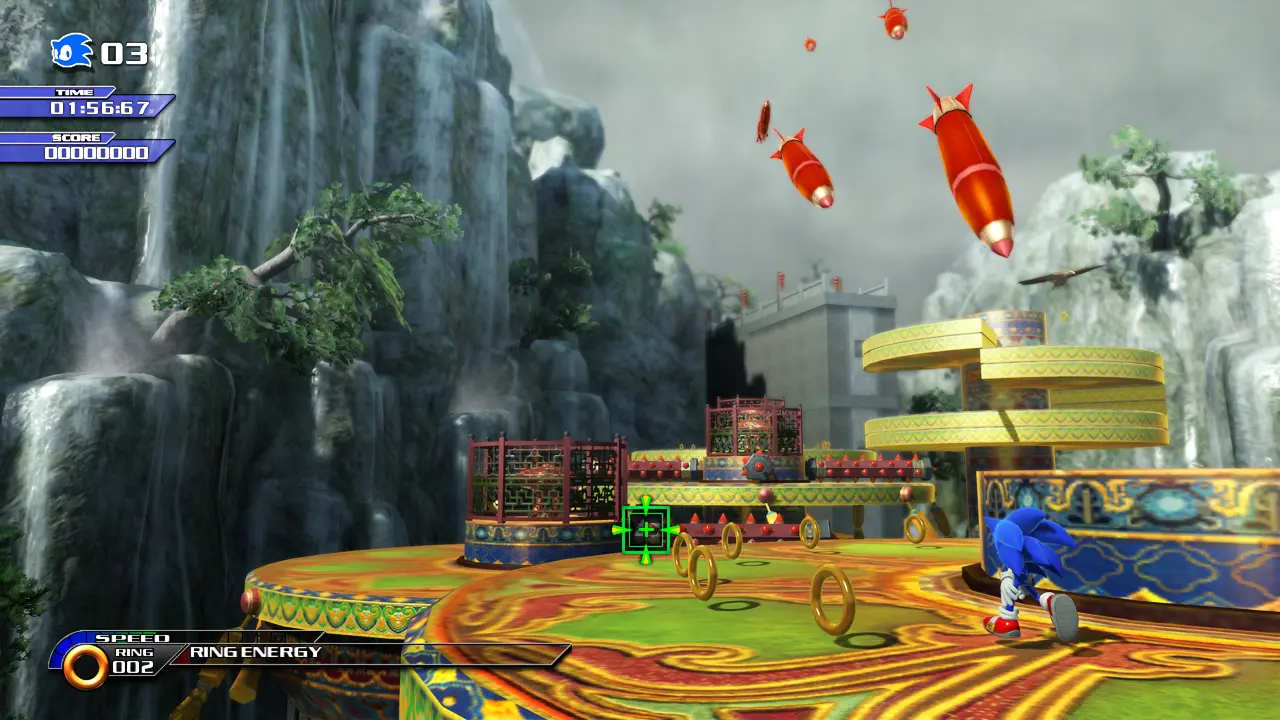
Dragon RoadChun-nanMountain roads and a great wall in a land inspired by imperial China; the Werehog battles the Dark Gaia Phoenix.
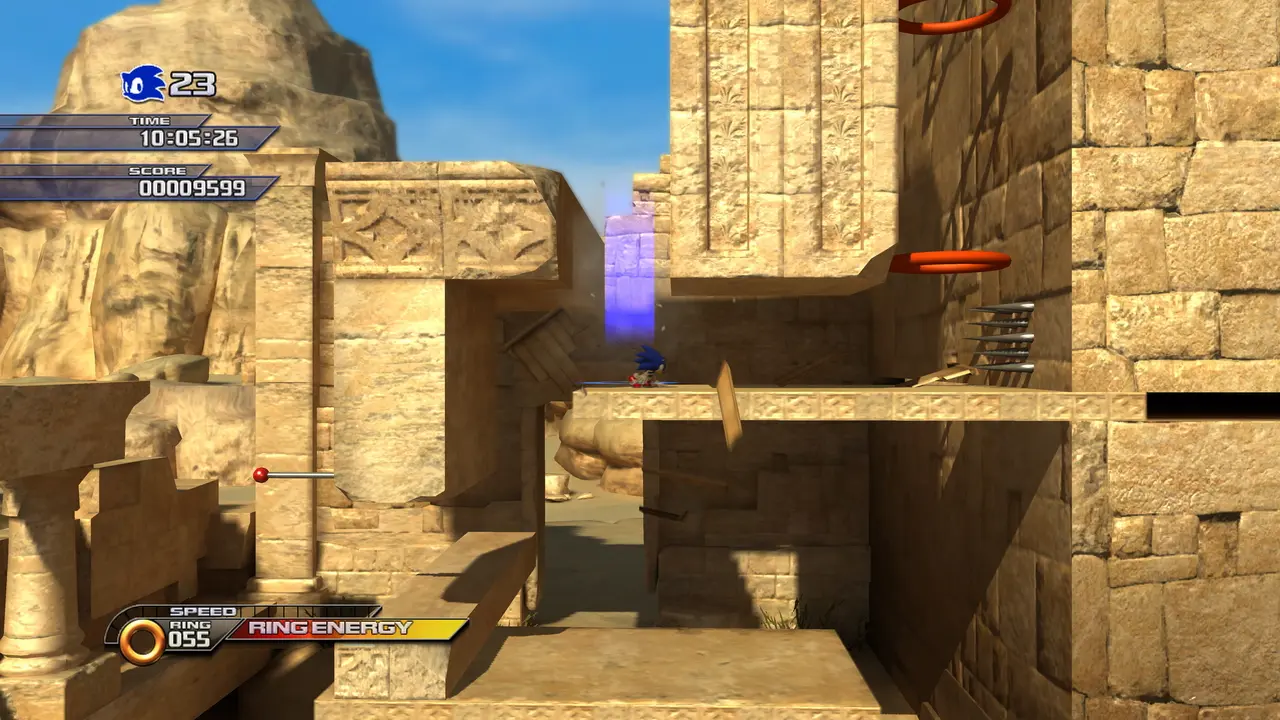
Arid SandsShamarA Middle Eastern desert of carved stone and sand, guarded at night by the Dark Guardian.
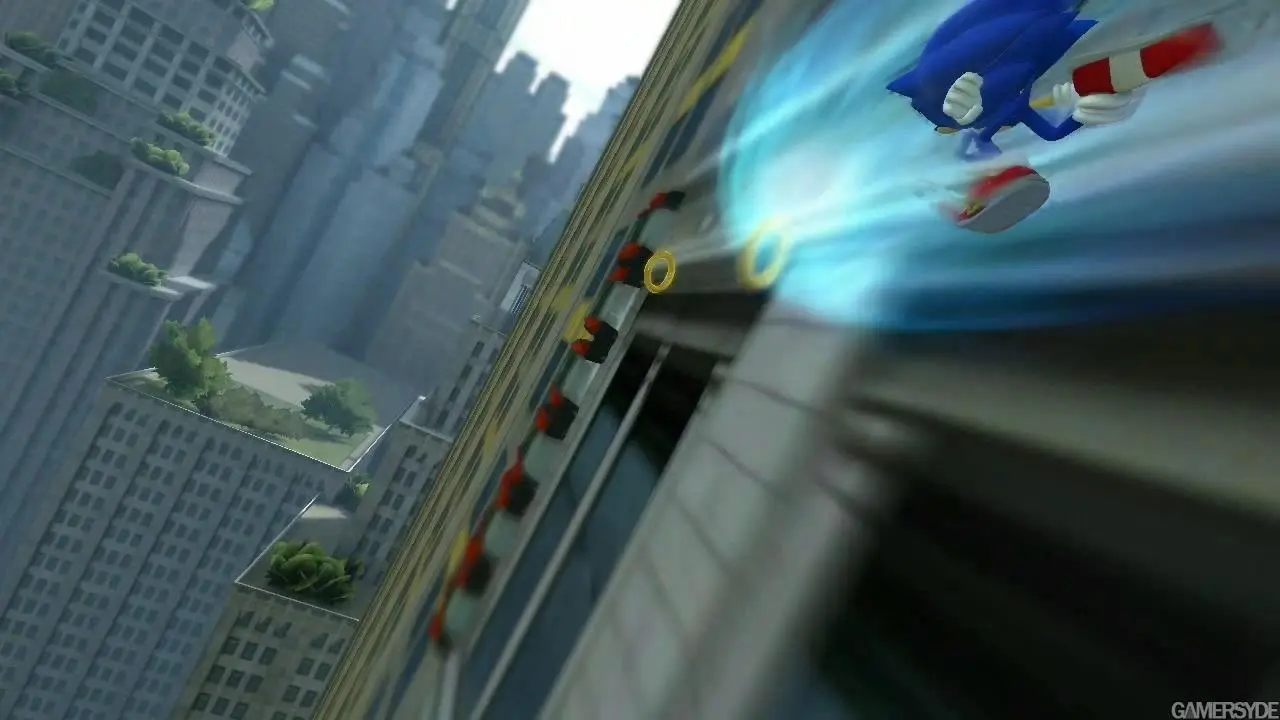
Skyscraper ScamperEmpire CityA New York-style metropolis, run across the tops of its towers. Xbox 360 and PlayStation 3 only.
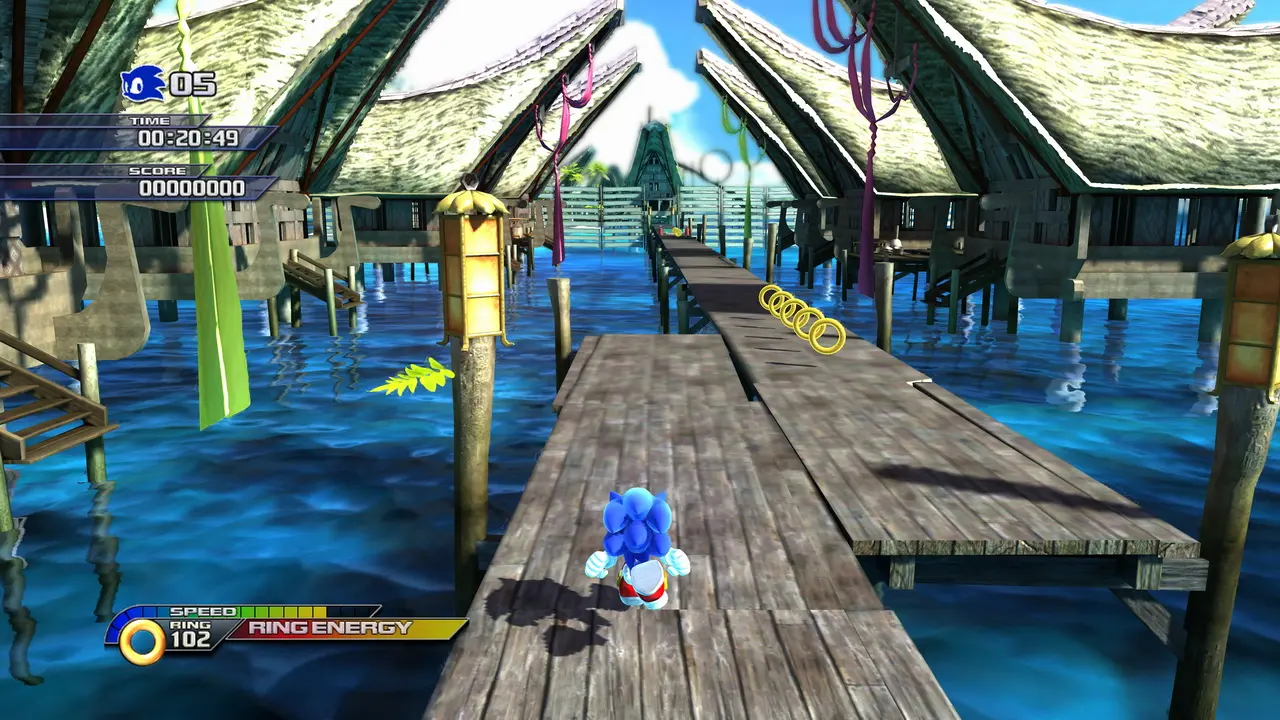
Jungle JoyrideAdabatSoutheast Asian jungle, rivers and cliffs, where Chip remembers who he is and Eggman brings the Egg Lancer.
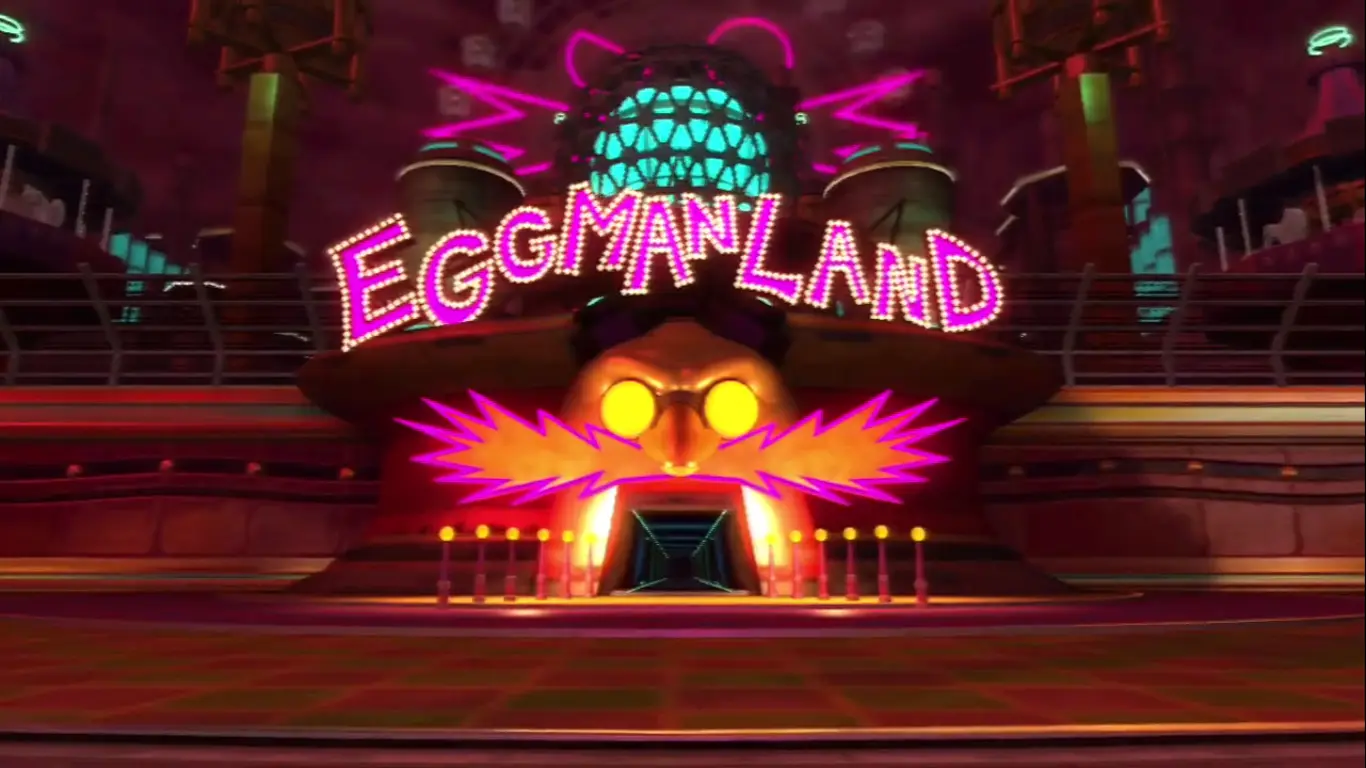
EggmanlandFinal stageEggman’s theme-park capital and factory. Sonic has to fight through it both by day and as the Werehog by night.
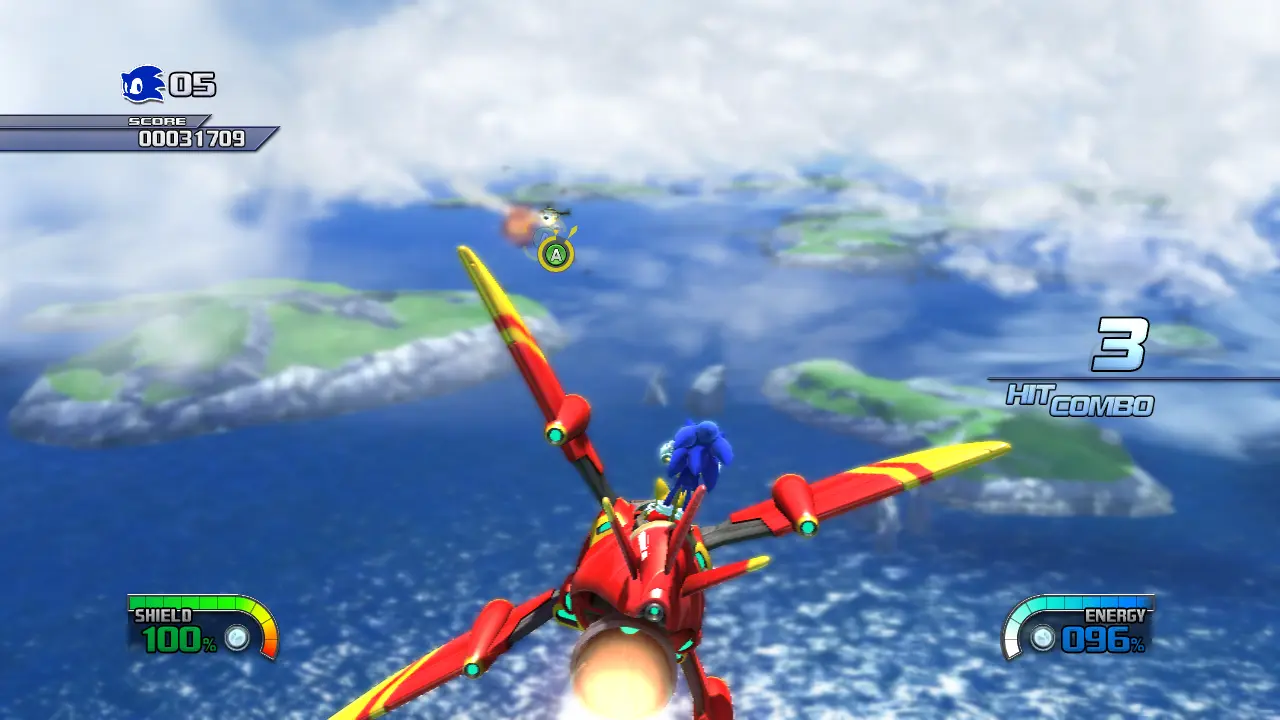
Tornado DefenseSky battlesShooting sections aboard Tails’s Tornado, ending with the Egg Cauldron. Xbox 360 and PlayStation 3 only.
Sonic: Night of the WerehogMarza Animation Planet · short film · 2008A CG short released online on 17 November 2008, in which Sonic and Chip spend a night in a haunted house full of ghosts. It also played free in nine Japanese cinemas for three weeks from 20 December.
Ghost TaleMarza Animation Planet · 2023A follow-up short starring the same ghosts, released on Halloween fifteen years after the first.
Archie’s Sonic the HedgehogArchie Comics · comicAdapted the game’s opening and Sonic’s first transformation into the Werehog.
Sonic Unleashed (mobile)Gameloft · 2009A separate side-scrolling game for mobile phones, released in June 2009 in PAL regions. Our mobile box art.
Sonic Generations and Sonic ForcesSega · 2011 and 2017Generations remade Rooftop Run and the Egg Dragoon fight, and Forces brought back a new take on the Egg Dragoon. Our Sonic Generations page.
Planetary PiecesSoundtrack · 28 January 2009The three-disc Japanese soundtrack album, Planetary Pieces: Sonic World Adventure Original Soundtrack.
Characters
Sonic Team deliberately cut the cast back after Sonic ’06: one playable hero in two forms, a handful of friends, two new companions and one ancient monster.
Character
Who they are
In this game
Stats & abilities
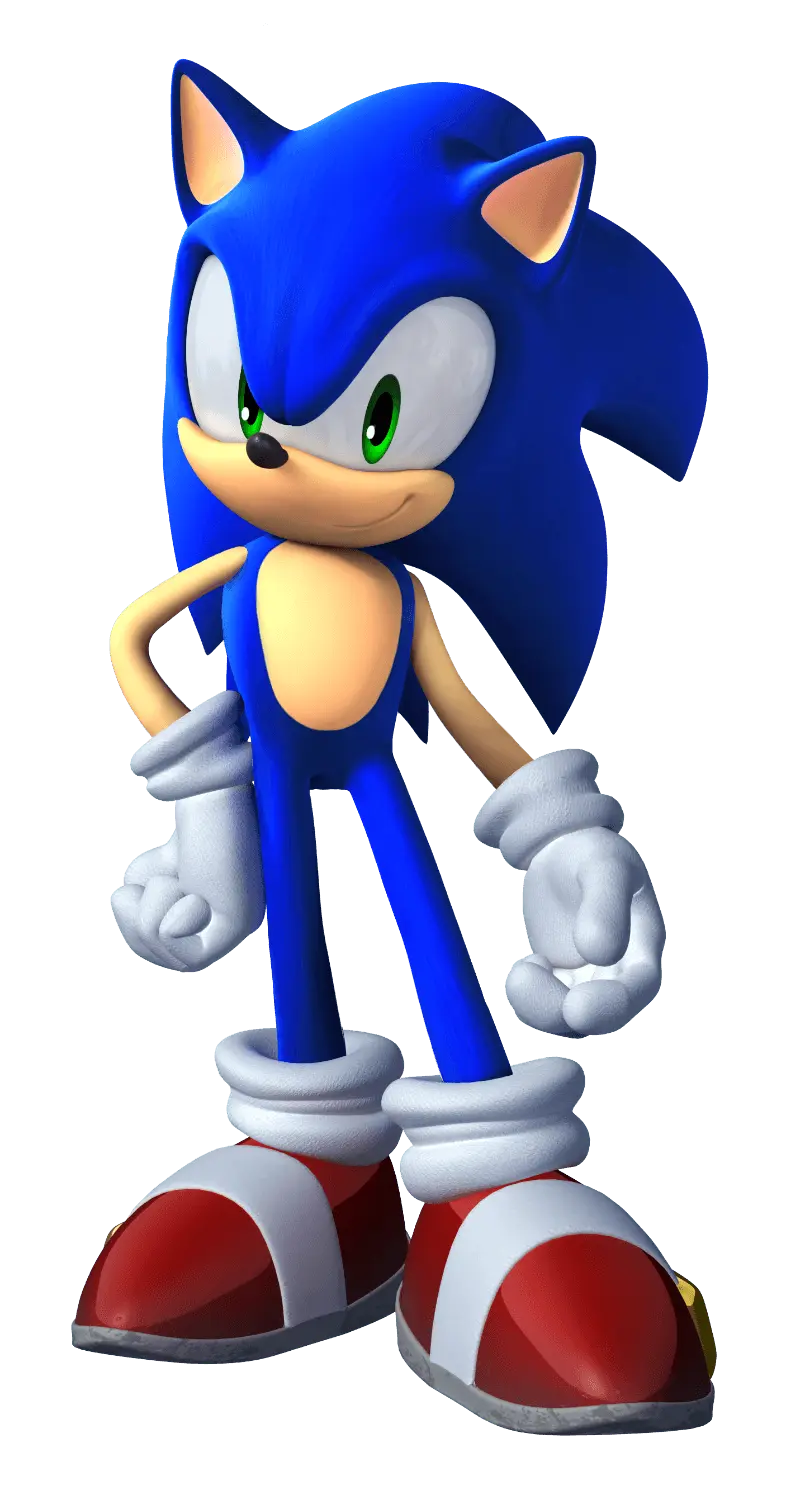
Sonic the HedgehogPlayable · day
The fastest thing alive, the only playable character this time.
Sets out to restore the shattered planet and cure himself, guided by Chip.
Boost, fuelled by Ring Energy on Xbox 360 and PS3
New Quick Step dodge and Drift
Homing attack and wall jump
Super Sonic for the finale
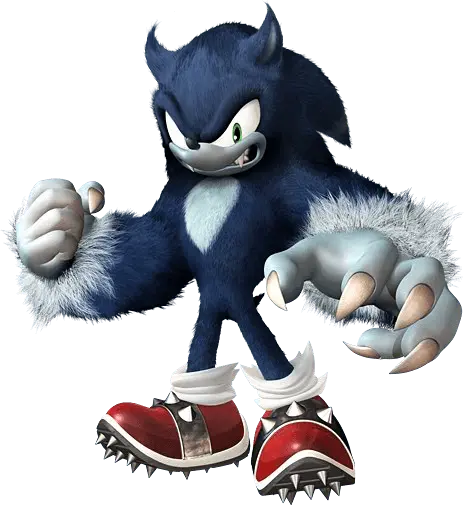
Sonic the WerehogNew · Playable · night
Sonic’s night-time form, created by Dark Gaia’s energy when Eggman’s cannon fires.
Fights Dark Gaia’s creatures in the night stages until Dark Gaia takes its power back.
Stretching arms to grab enemies, poles and ledges
Combo attacks, with extra moves unlocked as he gains experience
Unleashed Mode powers up his attacks for a short time
Rings restore his health
ChipNew · Companion
A small, cheerful flying creature who has lost his memory, and who is really Light Gaia.
Guides Sonic around the world, then forms the Gaia Colossus for the final battle and returns to the core.
Gives hints in stages and hands out chocolate; playable as the Gaia Colossus in the last fight.
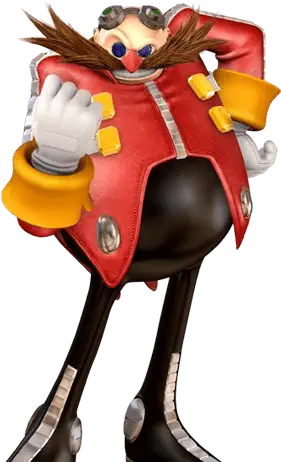
Dr. EggmanVillain
Sonic’s arch-enemy, back to his familiar look after Sonic ’06.
Breaks the planet to harness Dark Gaia and build Eggmanland, then loses control of the monster.
Bosses: Egg Beetle, Egg Devil Ray, Egg Lancer, Egg Dragoon, and the Egg Cauldron in Tornado Defense
Egg Fighters and other robots
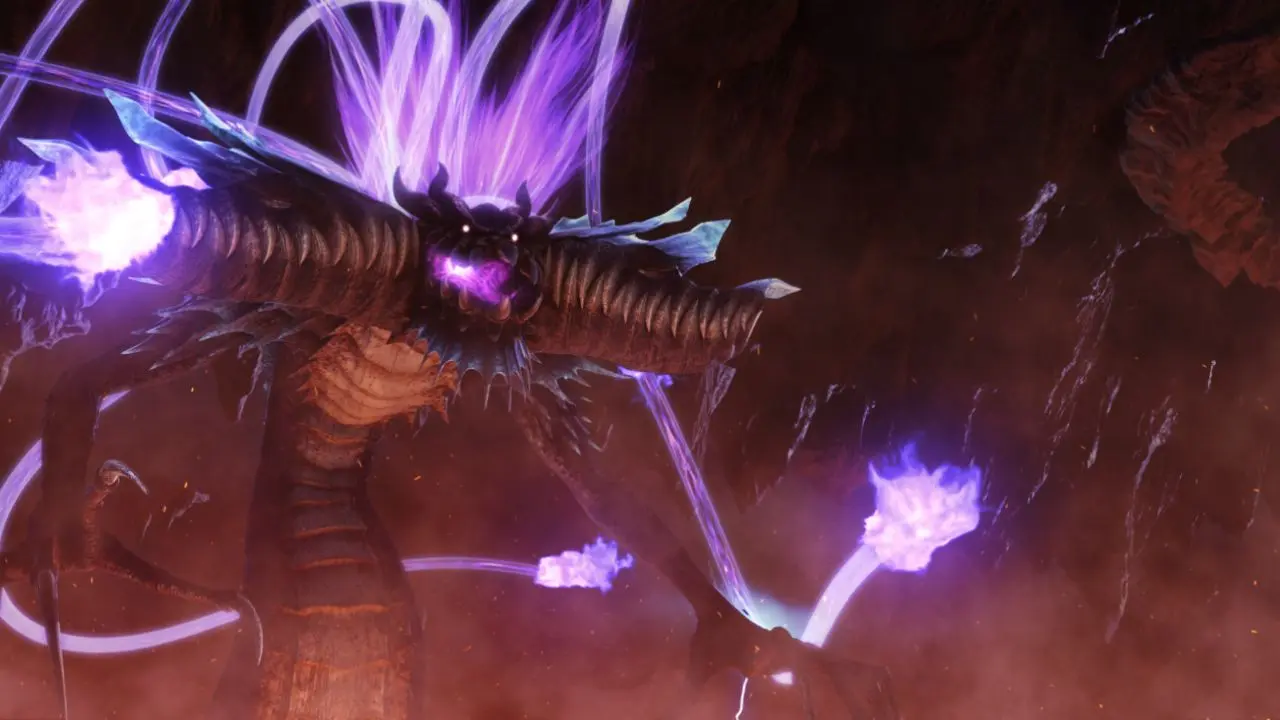
Dark GaiaNew · Final boss
An ancient being that sleeps at the planet’s core and breaks the world apart in an endless cycle with Light Gaia.
Awakened too early by Eggman’s cannon; its creatures roam every night stage.
Final boss twice: Dark Gaia, then Perfect Dark Gaia.
Miles “Tails” ProwerFriend
Sonic’s best friend and pilot.
Flies Sonic and Chip between continents in the Tornado and rescues Professor Pickle.
Playable only in mini-games.
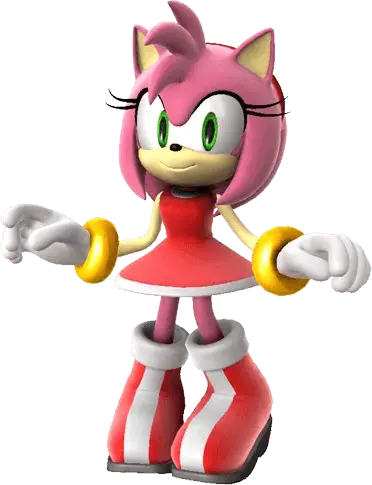
Amy RoseFriend
Sonic’s devoted admirer.
Appears in cutscenes and needs rescuing at one point in the journey.
Not playable.
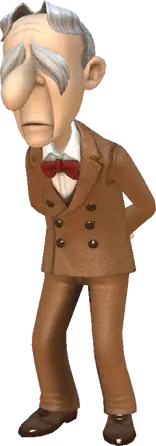
Professor PickleNew · Ally
An eccentric professor with a weakness for cucumber sandwiches.
Helps Sonic on his quest; captured by Eggman and freed by Tails.
Not playable.
Bosses
Sonic takes on Eggman’s machines by day and the Werehog meets Dark Gaia’s monsters by night. Listed by continent in the order Sonic visits them, from Sonic Wiki Zone’s boss table, with the Egg Cauldron of the Tornado Defense shooting stages at the end.
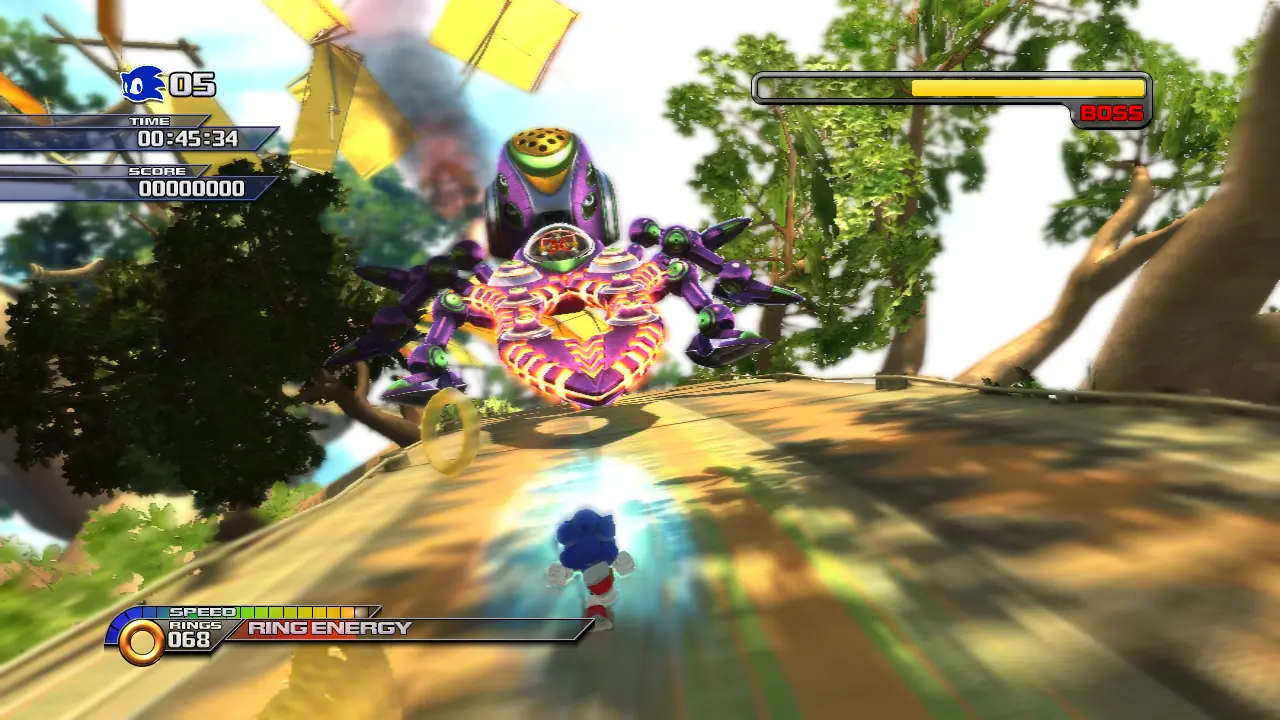
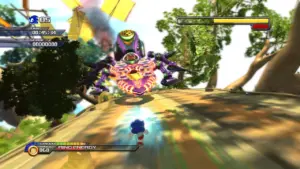
Egg BeetleMazuri · SonicEggman’s machine on the savannah.
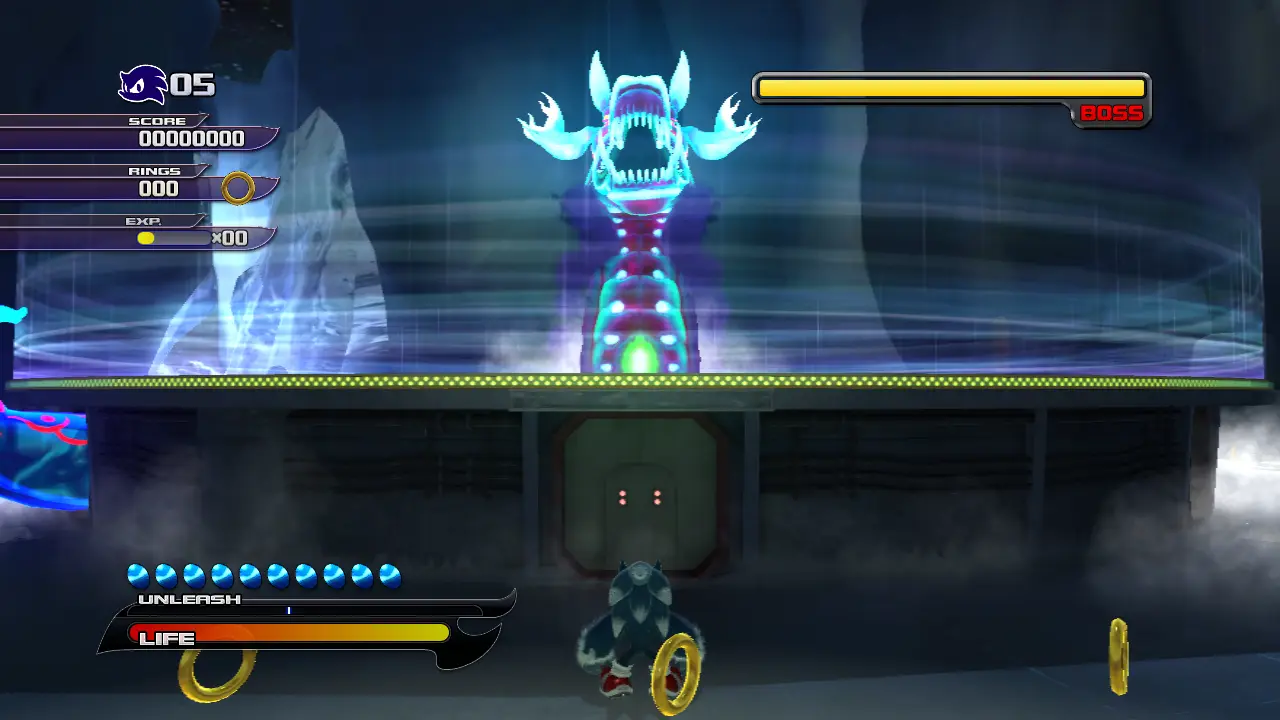
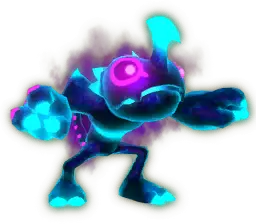
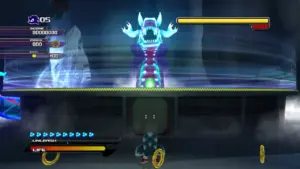
Dark MorayHoloska · WerehogA moray-like monster lurking in Holoska.
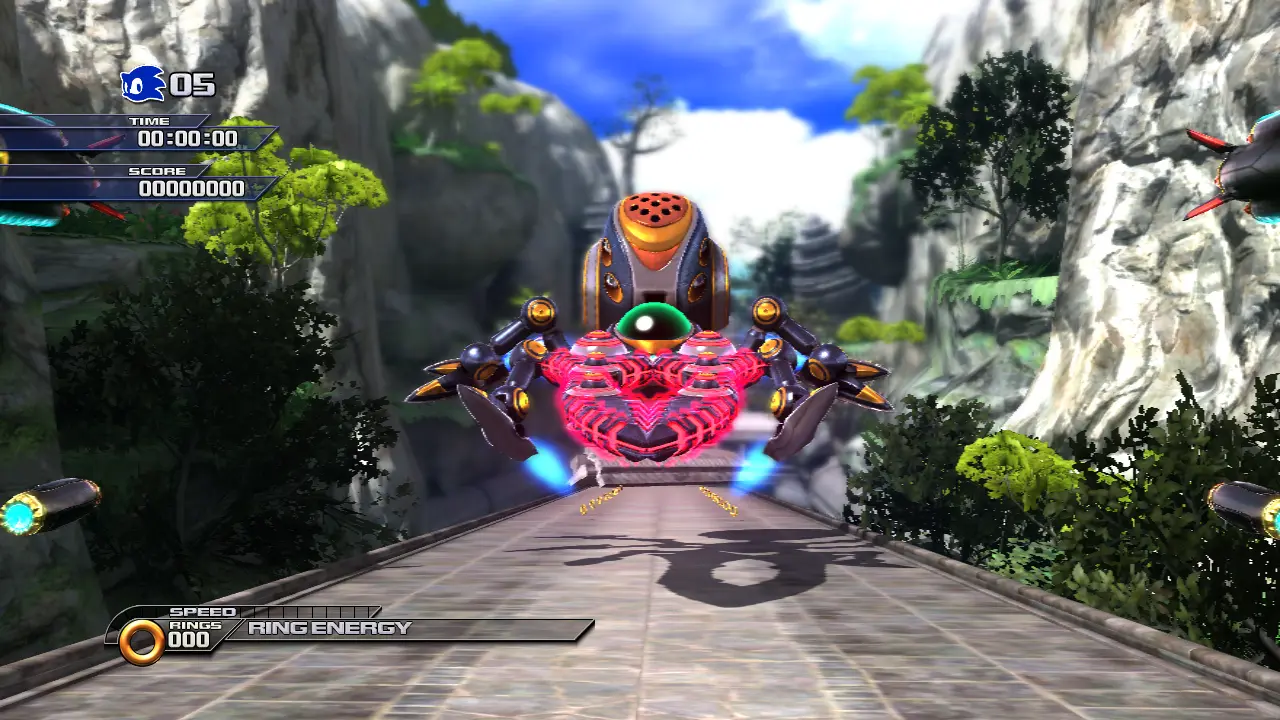
Egg Devil RaySpagonia · SonicEggman’s ray-shaped machine, fought in Spagonia.
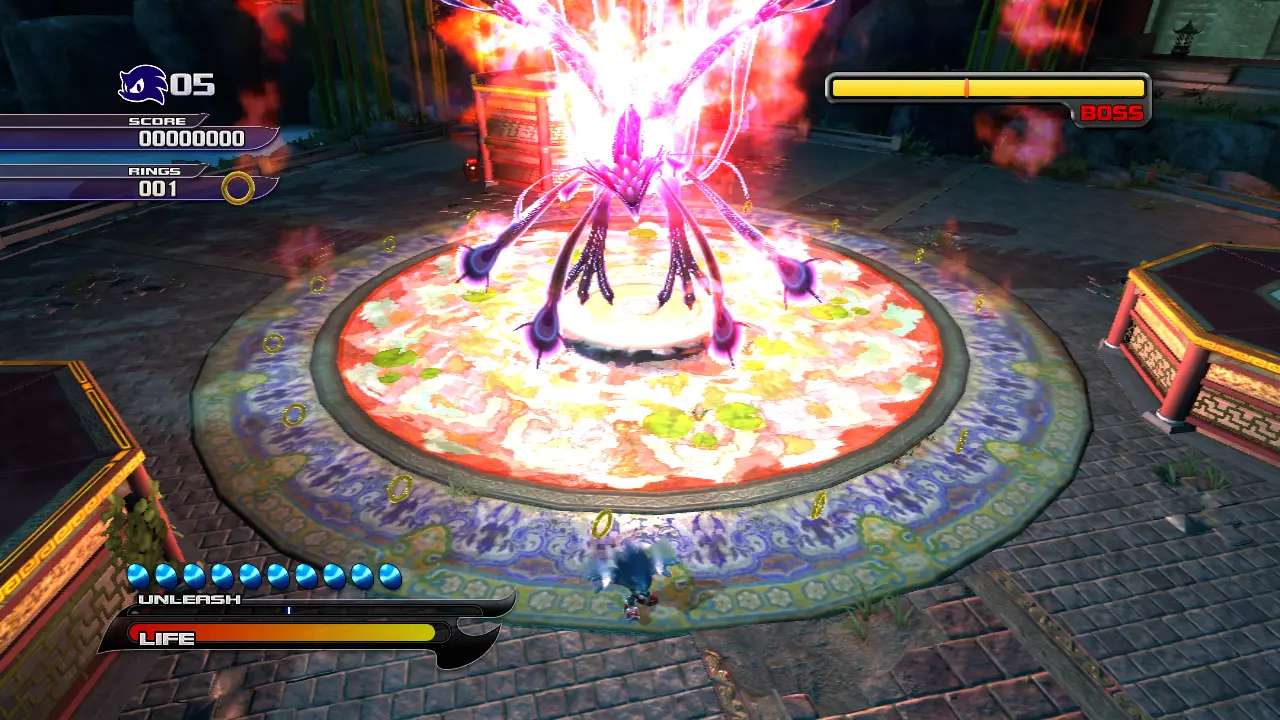
Dark Gaia PhoenixChun-nan · WerehogA phoenix-like monster of Dark Gaia.
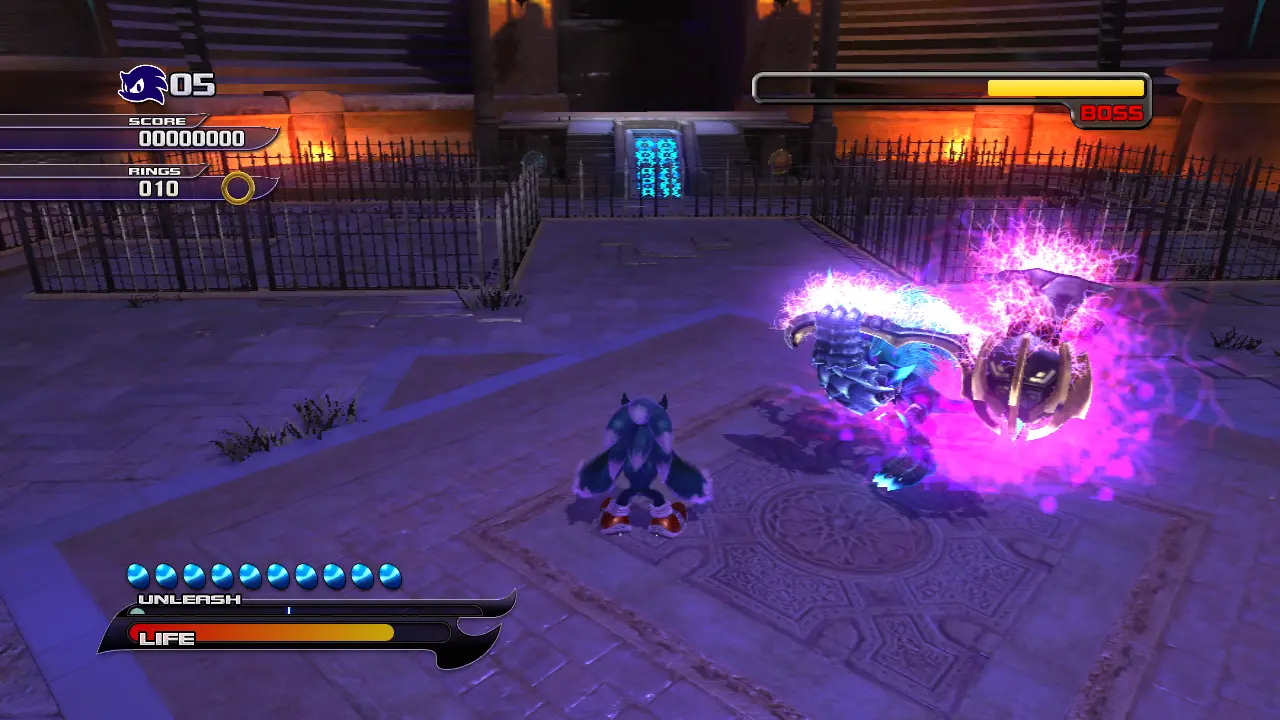
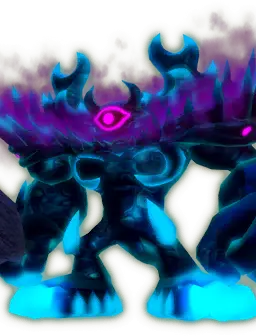
Dark GuardianShamar · WerehogA giant fought very differently in the two versions.
Egg LancerAdabat · SonicEggman’s last machine before Eggmanland.
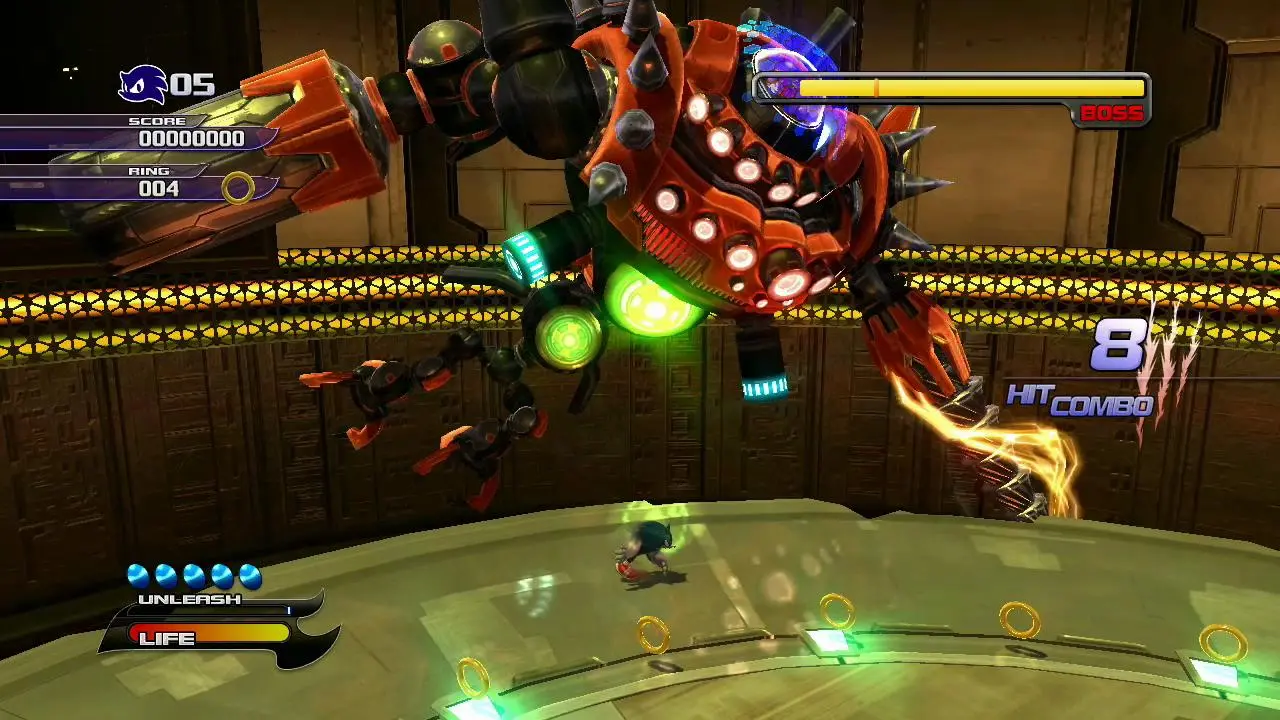
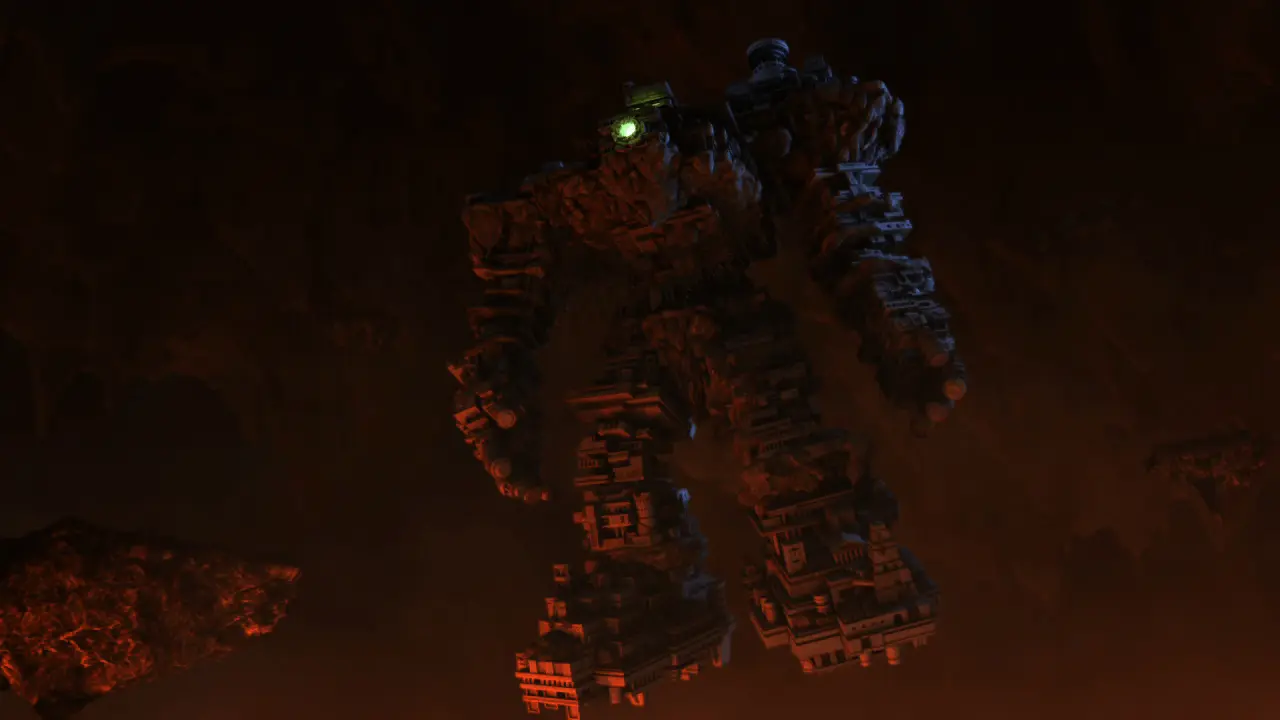
Egg DragoonEggmanland · WerehogEggman’s Dark Gaia-powered mech, later remade in Generations.
Dark Gaia and Perfect Dark GaiaPlanet’s core · Chip and Super SonicThe final battles, fought with the Gaia Colossus and Super Sonic.
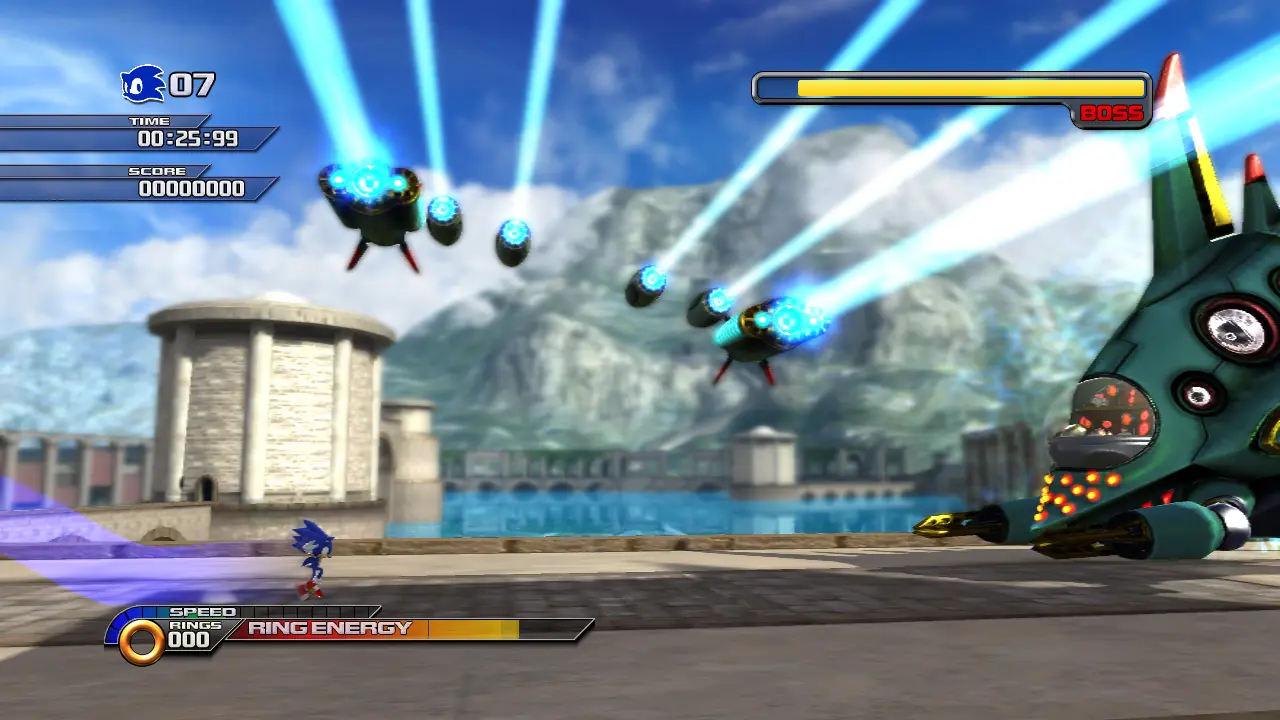
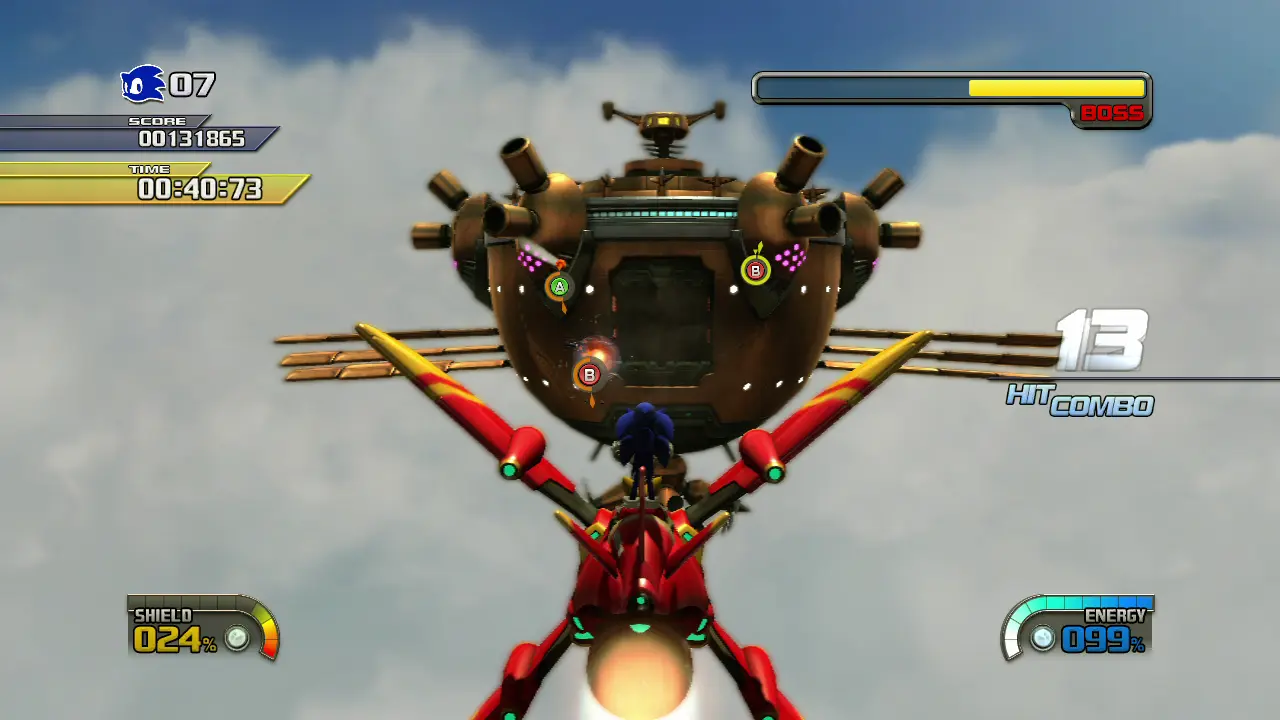
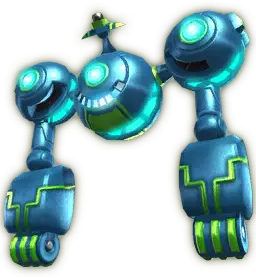
Egg CauldronTornado Defense · SonicEggman’s airborne machine, fought from the Tornado in both Tornado Defense acts.
The people who made it
Key credits from Wikipedia’s cited sources, Sonic Retro and Sega Retro.
Yoshihisa HashimotoDirectorHis first Sonic game as director. He led the Hedgehog Engine from 2005 and expected the Werehog to divide opinion.
Tomoya OhtaniComposerThe long-serving Sonic composer wrote the theme song, “Endless Possibility”.
DimpsCo-developerWorked with Sonic Team on the Wii and PlayStation 2 version, including its daytime stages.
GurihiruCharacter designThe Japanese artist team designed the human townspeople.
Marza Animation PlanetAnimationAnimated the opening, directed by Shinji Aramaki, and the short Night of the Werehog.
Jaret Reddick and Brent CashVocalsThe Bowling for Soup singer fronts “Endless Possibility”; Cash sings the ending, “Dear My Friend”.
How it was made
Our original page had no history section, so this one is new, built from Wikipedia’s cited development history, Sonic Retro and Sega Retro.
Two names, one game
The Sonic World Adventure logo.
In Japan the game is still Sonic World Adventure, the working title from the days when it was meant to be the third Sonic Adventure. Yoshihisa Hashimoto, directing a Sonic game for the first time, started work in mid-2005, and the new ideas soon added up to something that no longer fitted the Adventure mould. Everywhere else it became Sonic Unleashed: Sega registered the name on 12 March 2008, cutscene stills, artwork and a video escaped from a Sega FTP server ten days later, and the game was confirmed on 3 April.
That Western name came from the Werehog, a second style of play added to win over newcomers who had never touched a Sonic game. In return the cast was cut back, leaving Sonic as the only playable character, on the principle of quality over quantity. Hashimoto knew the mix would split opinion and said so, hoping long-time fans would see what the team was aiming for.
The Hedgehog Engine
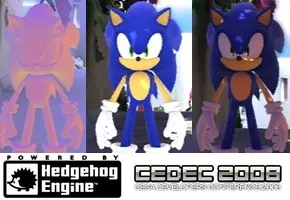
A Hedgehog Engine development image.
There were no tools for the new consoles, so Hashimoto and a few colleagues spent about a year building their own. His complaint was that the HD games of the day looked flat, and the answer was global illumination: instead of lighting each scene as you play, the way light bounces between surfaces was calculated ahead of time and stored in the stage, with Sonic, enemies and other moving objects lit live to match. Hundreds of networked computers shared the work, and a single stage, eight to twenty kilometres long, needed two or three days to process.
All that pre-baked light took space. At one point the Xbox 360 version looked like needing two or three discs, until the team lowered its resolution to fit on one, and the two HD versions ended up with different frame rates (see Glitches).
Two games in one
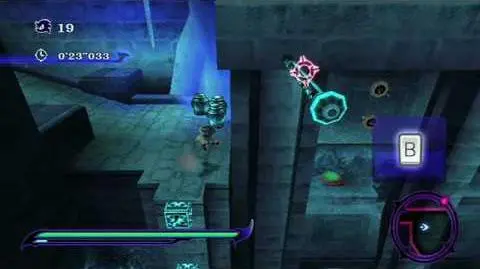
Holoska in the Wii version.
The Wii and PlayStation 2 could not run the Hedgehog Engine, so the project split in two. The HD game used the new engine, while the Wii and PS2 game ran on a modified in-house Sega engine and was co-developed with Dimps, who designed its daytime stages.
The differences are large. The Wii and PS2 game has menu-driven towns instead of explorable ones, far more night stages (twenty-five) and fewer day stages, no Empire City and only part of Mazuri, no Tornado Defense, and a simpler upgrade system for the Werehog alone. On Wii, players swing the Werehog’s arms with the Wii Remote and Nunchuk, and the GameCube and Classic controllers also work. Several bosses, including the Dark Guardian and Perfect Dark Gaia, are fought differently.
Release and downloads
North America had the Wii, PlayStation 2 and Xbox 360 versions on 18 November 2008 and Europe on the 28th, with PlayStation 3 a few weeks behind. Japan got the Wii game on 18 December, but manufacturing trouble pushed the HD versions back to 19 February 2009, and the PS2 version never appeared there.
There were no online features. A demo on Xbox Live and the PlayStation Store in December 2008 left the Werehog out entirely, and from 12 March 2009 Adventure Packs added new day and night acts to the HD versions, beginning with Chun-nan and eventually reaching every continent but Eggmanland.
Music
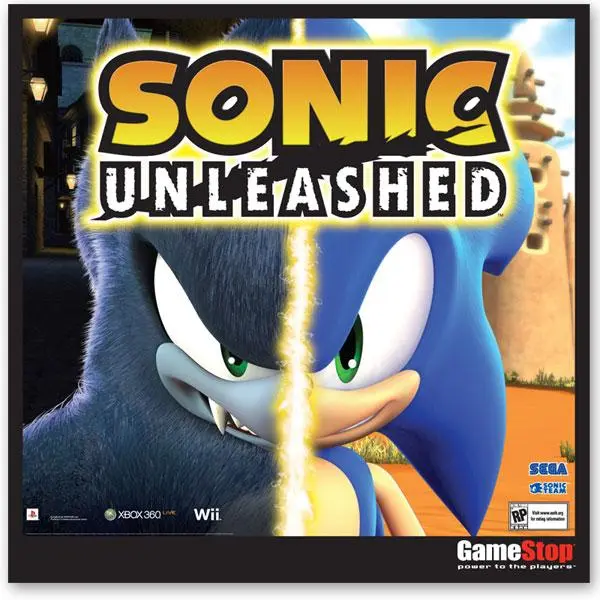
Promotional poster.
The soundtrack, released in Japan on 28 January 2009 as the three-disc Planetary Pieces: Sonic World Adventure Original Soundtrack, won critics over by going orchestral after years of rock. Tomoya Ohtani wrote the theme song, “Endless Possibility”, which Bowling for Soup’s Jaret Reddick sang, and Brent Cash performed the ending theme, “Dear My Friend”.
Firsts: what this game introduced
Unleashed introduced several things that shaped the series for years.
1The Hedgehog EngineDebuted here; reworked versions powered later Sonic games, and Hedgehog Engine 2 arrived with Sonic Forces.
2The boost formula in 3DThe boost itself debuted in Sonic Rush (Sonic Retro), but Unleashed’s boost-driven day stages, mixing 3D and 2D, became the template for Colours, Generations and Forces.
3The WerehogDebut of Sonic’s werewolf-like night-time form.
4Chip, Dark Gaia and Professor PickleAll three made their debuts here.
Cheats & secrets
Our original page had no secrets section, so this one is new. There are no cheat codes; Unleashed hides its extras behind medals and side quests.
Sun and Moon Medals
Medals hidden in stages and towns raise Sonic’s Sun and Moon levels on Xbox 360 and PlayStation 3, and enough of them are needed to open new stages. On Wii and PlayStation 2 they are earned by clearing stages and open doors in the Gaia Gates, which lead to puzzle rooms with bonus content.
Townsfolk and side quests
On Xbox 360 and PlayStation 3, talking to people in each town opens side missions that reward experience, artwork, videos and music.
Changing the time of day
In the HD versions you can move time forward in the towns to switch between Sonic and the Werehog; on Wii and PS2 the game does it for you.
Adventure Packs
Downloadable packs for the HD versions add extra day and night acts for each continent except Eggmanland.
Glitches, exploits and oddities
Unleashed is far more stable than its predecessor. These are its best-known quirks and version oddities.
Frame rate on Xbox 360
The Xbox 360 version never goes above 30 frames per second; on PlayStation 3 the frame rate is uncapped and can climb to 60. Reviewers also noticed slowdown in busy Werehog fights. The 2021 FPS Boost update for Xbox Series X|S finally runs the Xbox 360 version at 60.
The ring drain
On Xbox 360 and PlayStation 3 rings feed the Boost gauge, and a hit costs a large chunk of them: Sonic Retro gives the example of a hit at 330 rings knocking the count down to 60.
Two Interceptors
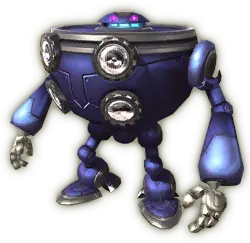
The Interceptor robot fires lasers and slams the ground in the HD version, but on Wii and PlayStation 2 it tries to run Sonic over with its wheels and can be destroyed by boosting into it.
Voices by disc
The HD versions carry both English and Japanese voices with a menu switch. The Wii and PS2 discs have room for only one voice track per region, so the PlayStation 2 version, never released in Japan, has no Japanese voices at all.
Videos & media
Sega’s launch trailer for the Xbox 360 and PlayStation 3 version, and a complete playthrough.
The launch trailer, from Sega’s official channel.
A full playthrough from LongplayArchive.
Trivia & facts
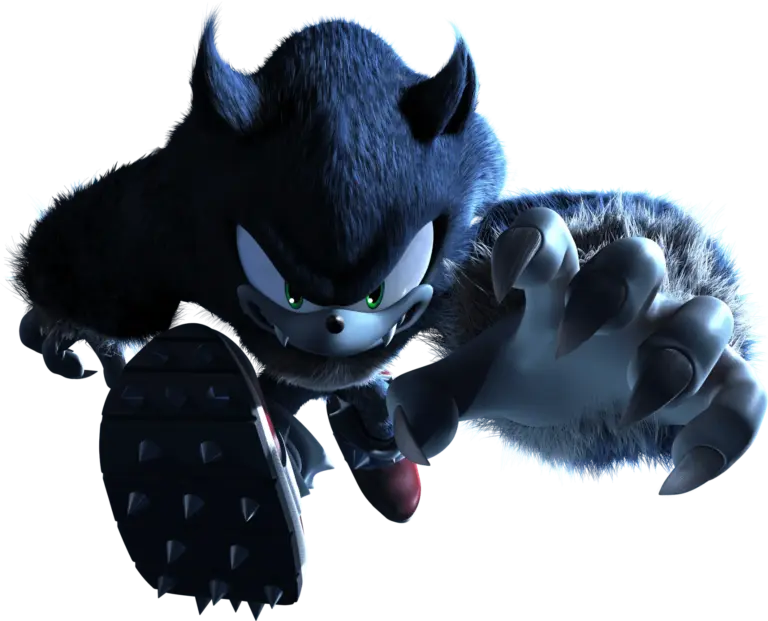
The Werehog.In English Jason Griffith voices both Sonic and the Werehog, but in Japanese the Werehog has his own actor, Tomokazu Seki, alongside Sonic’s Junichi Kanemaru.
Chip offers chocolate to every good person he meets, which shows off both his kindness and his appetite.
Two sides of Sonic.The downloadable demo, released in December 2008, let players try the daytime action only; it had no Werehog stages at all.
IGN nominated the Wii version for Best Graphics Technology in its 2008 awards, even though it does not use the Hedgehog Engine.
Sonic Retro counts Unleashed as the last Sonic game released for the PlayStation 2 in the West.
Chip in the credits photos.Sonic Retro points out that Chip fills the same guide role as Omochao, Tikal and Shahra in earlier games, feeding Sonic tips as he runs.
In 2013 a fan group began the Unleashed Project, a mod that rebuilt the daytime stages inside Sonic Generations.
The HD towns have a hot-dog stand, and Sonic Retro notes that the manual alludes to Sonic’s love of chili dogs, a running joke from the American cartoons.
Media & artwork
Box art, artwork, concept art, cutscenes and screenshots from Sonic Scene’s own galleries and Sonic Retro. Select any image to view it larger.
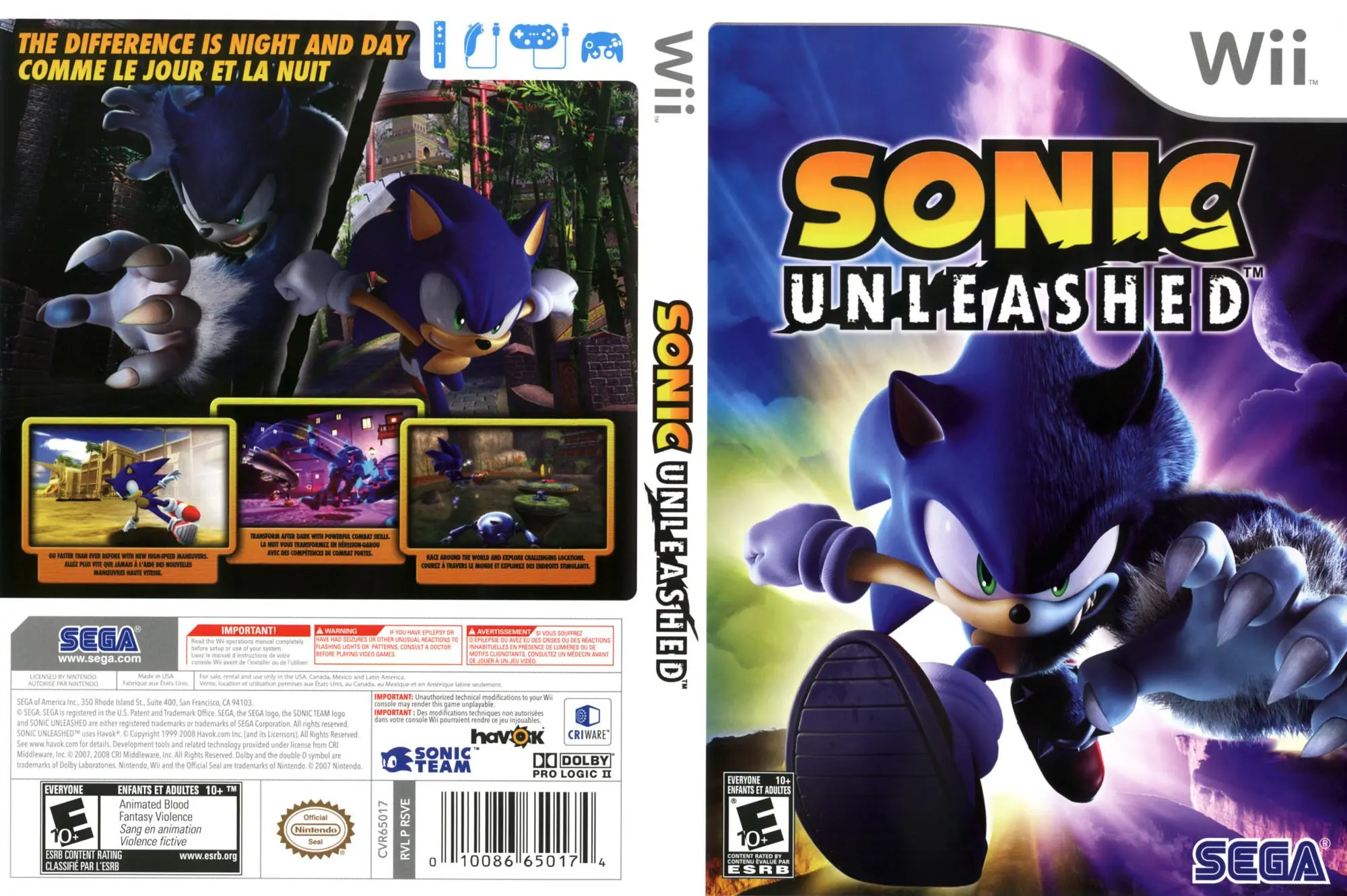
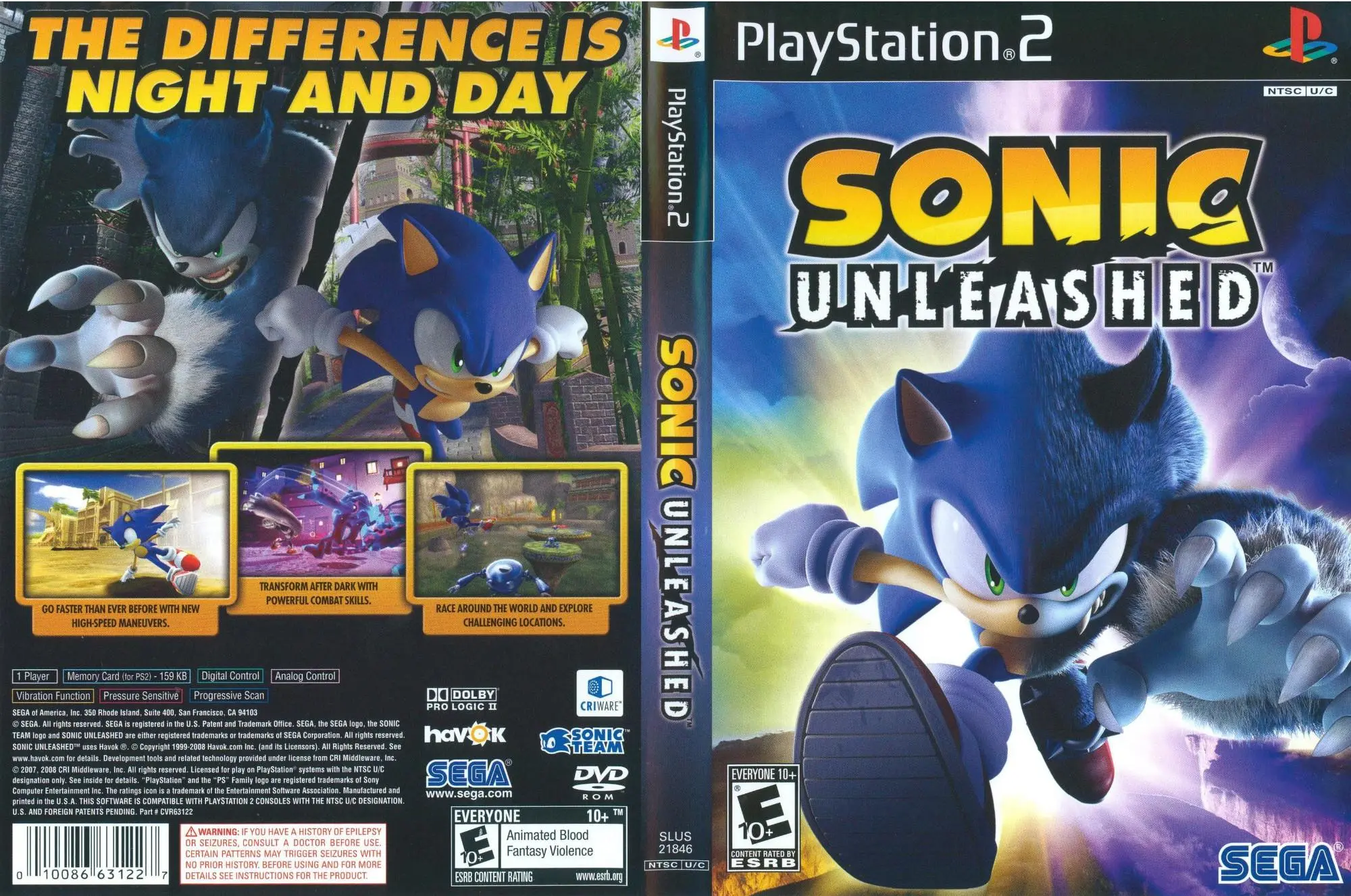
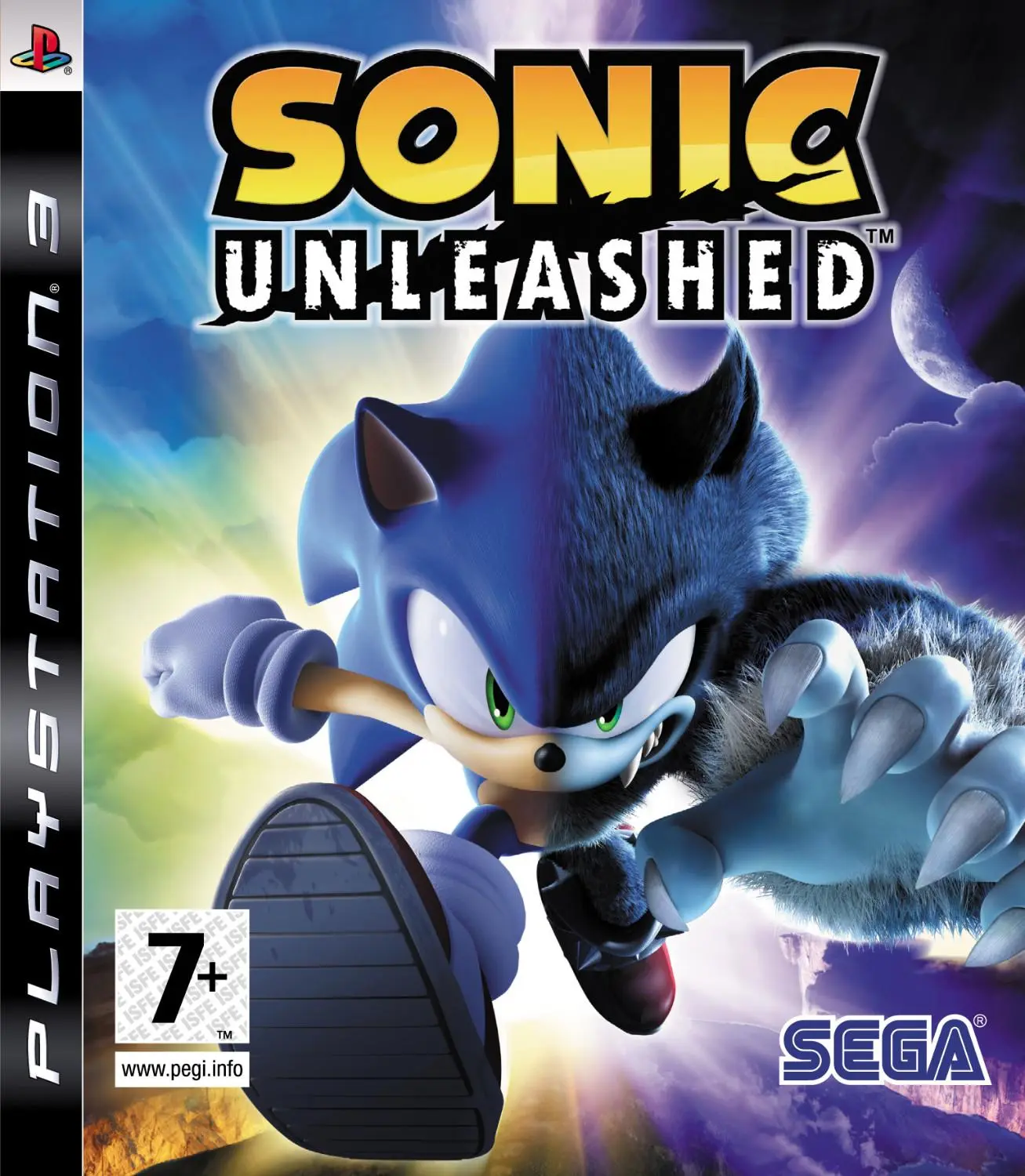
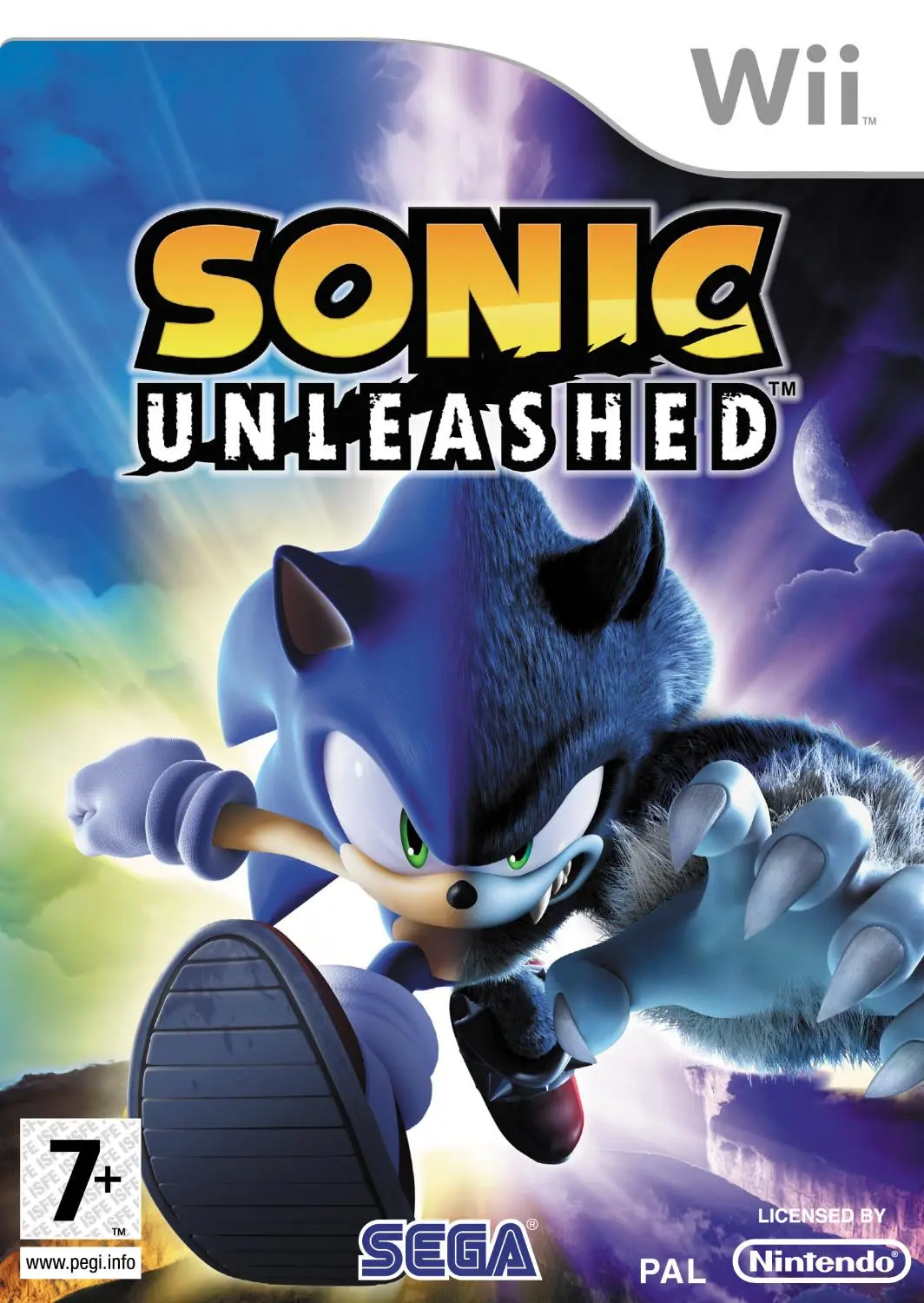
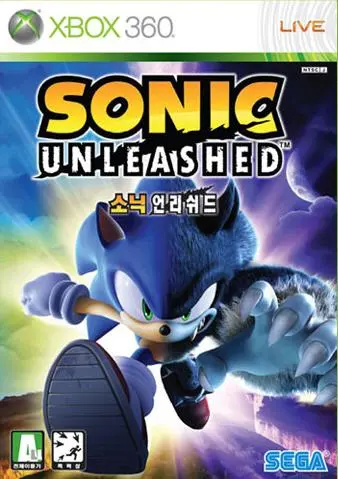
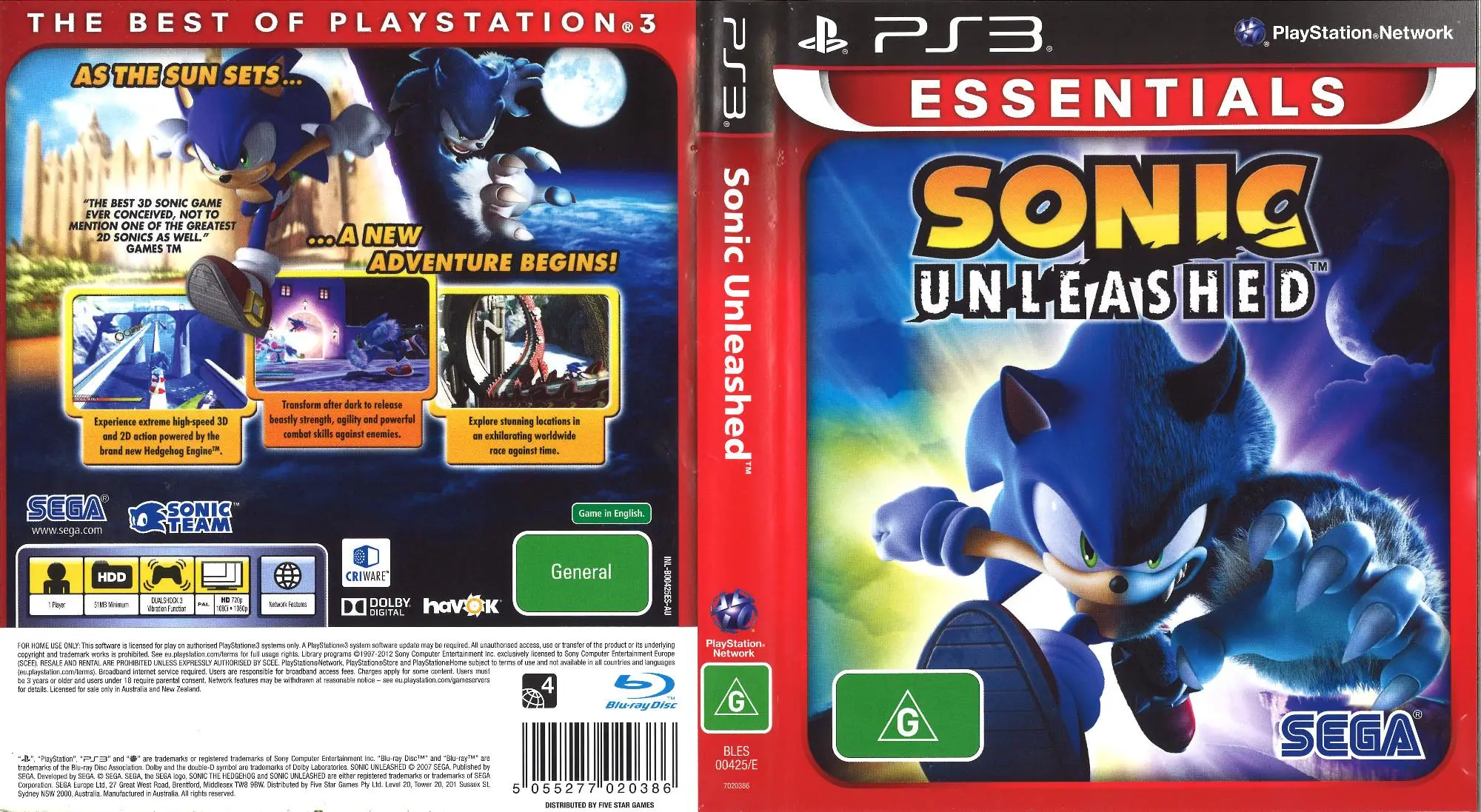
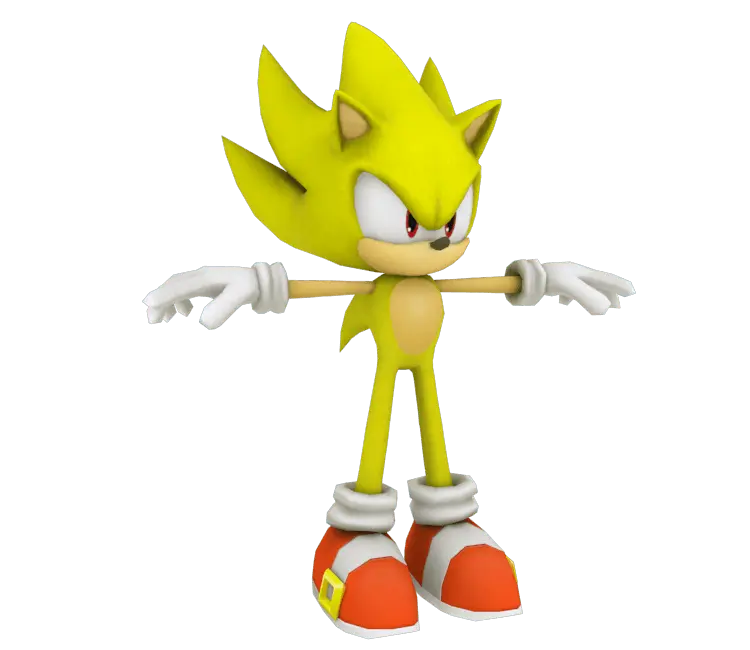
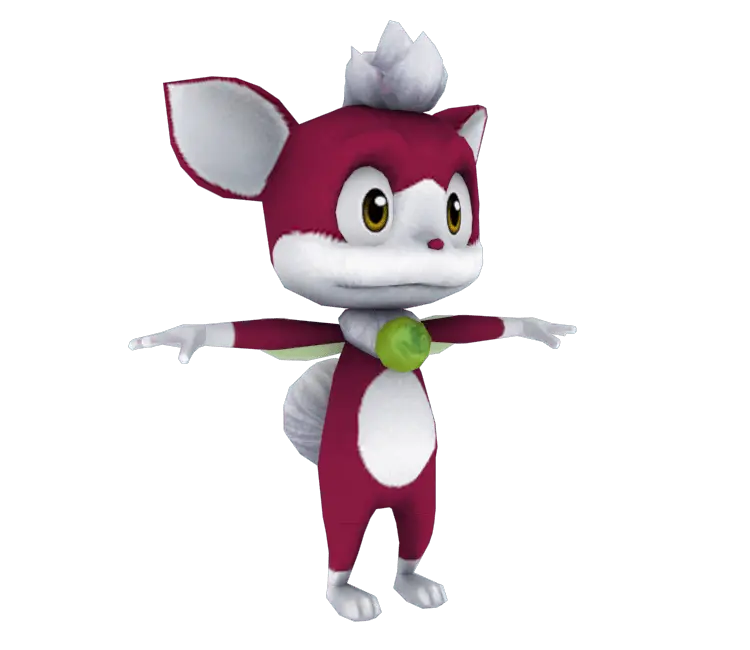
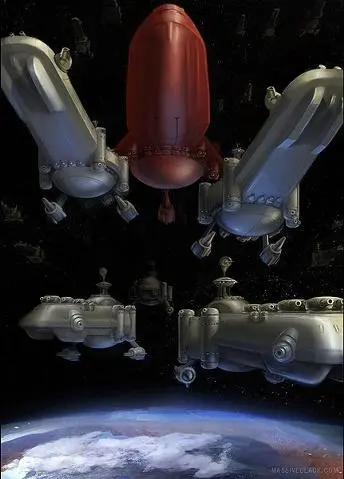
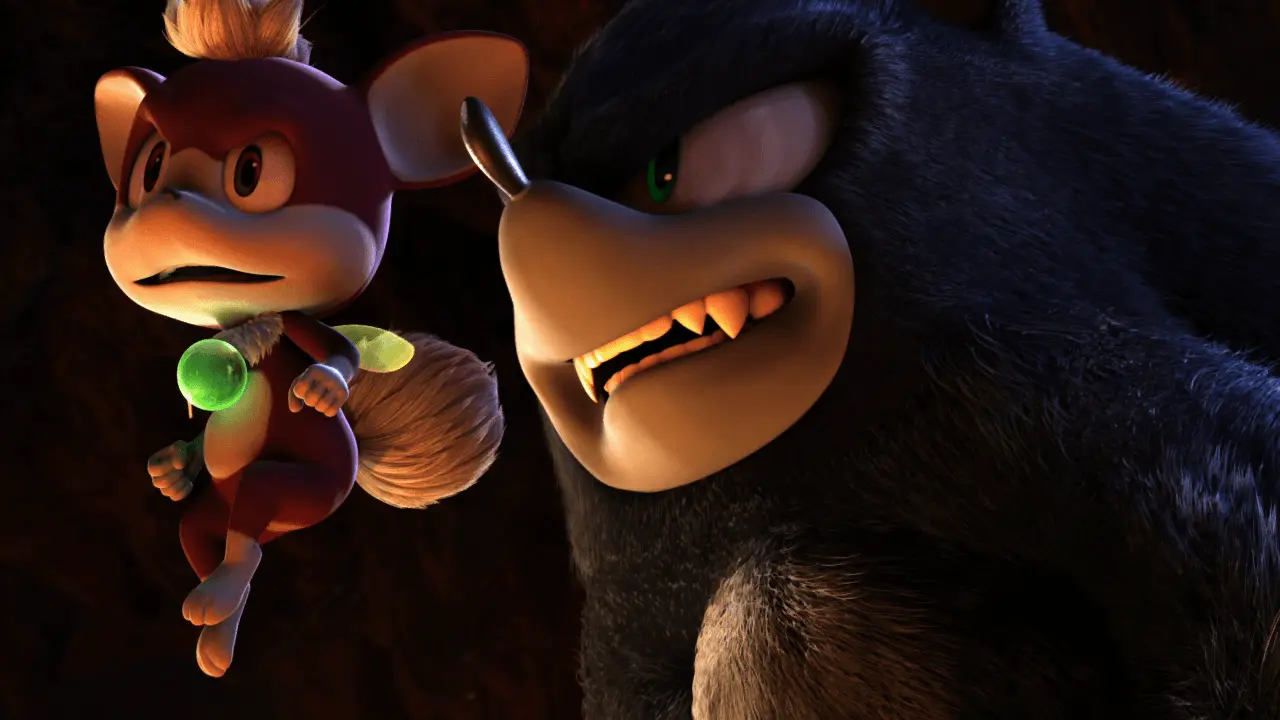
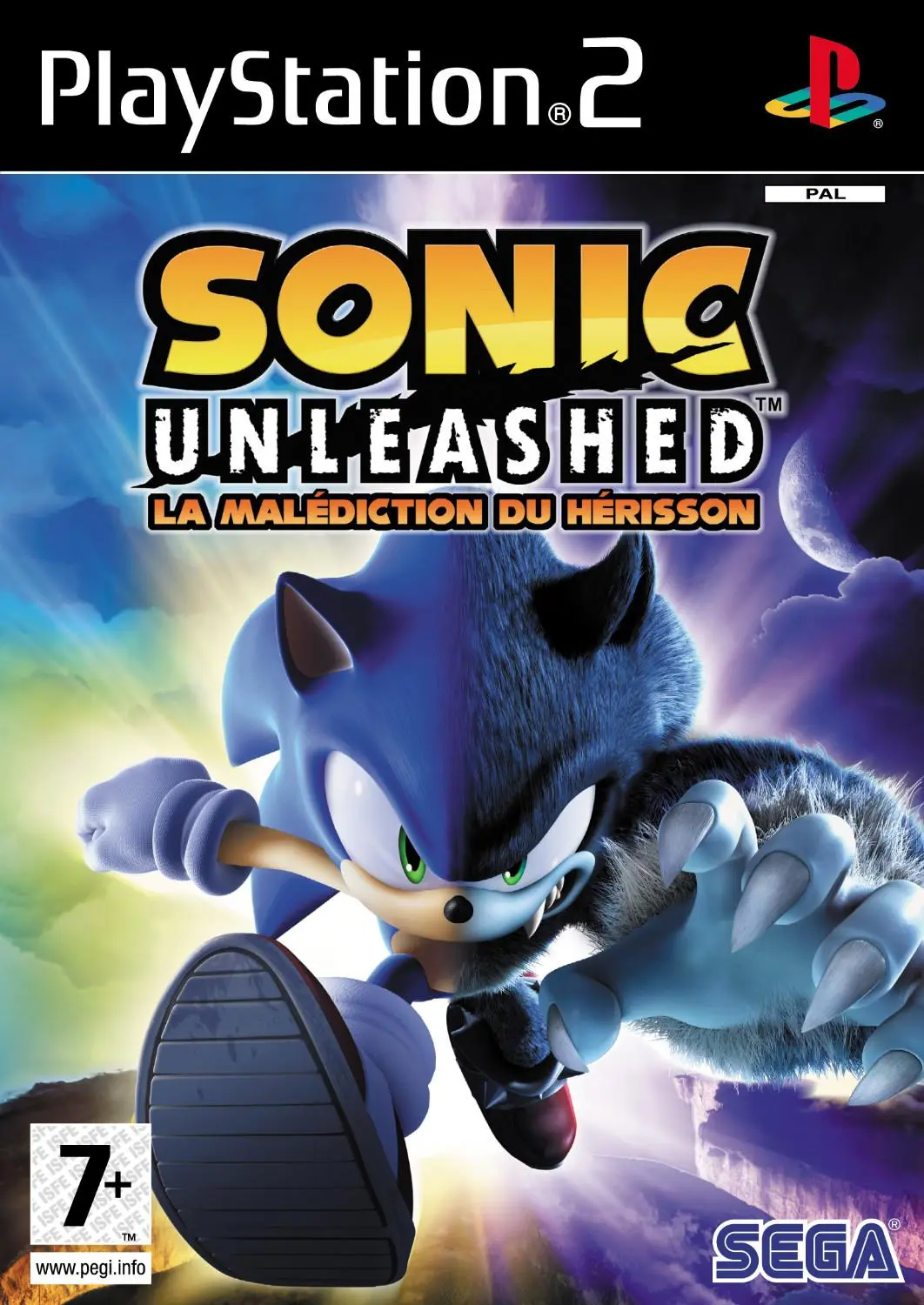
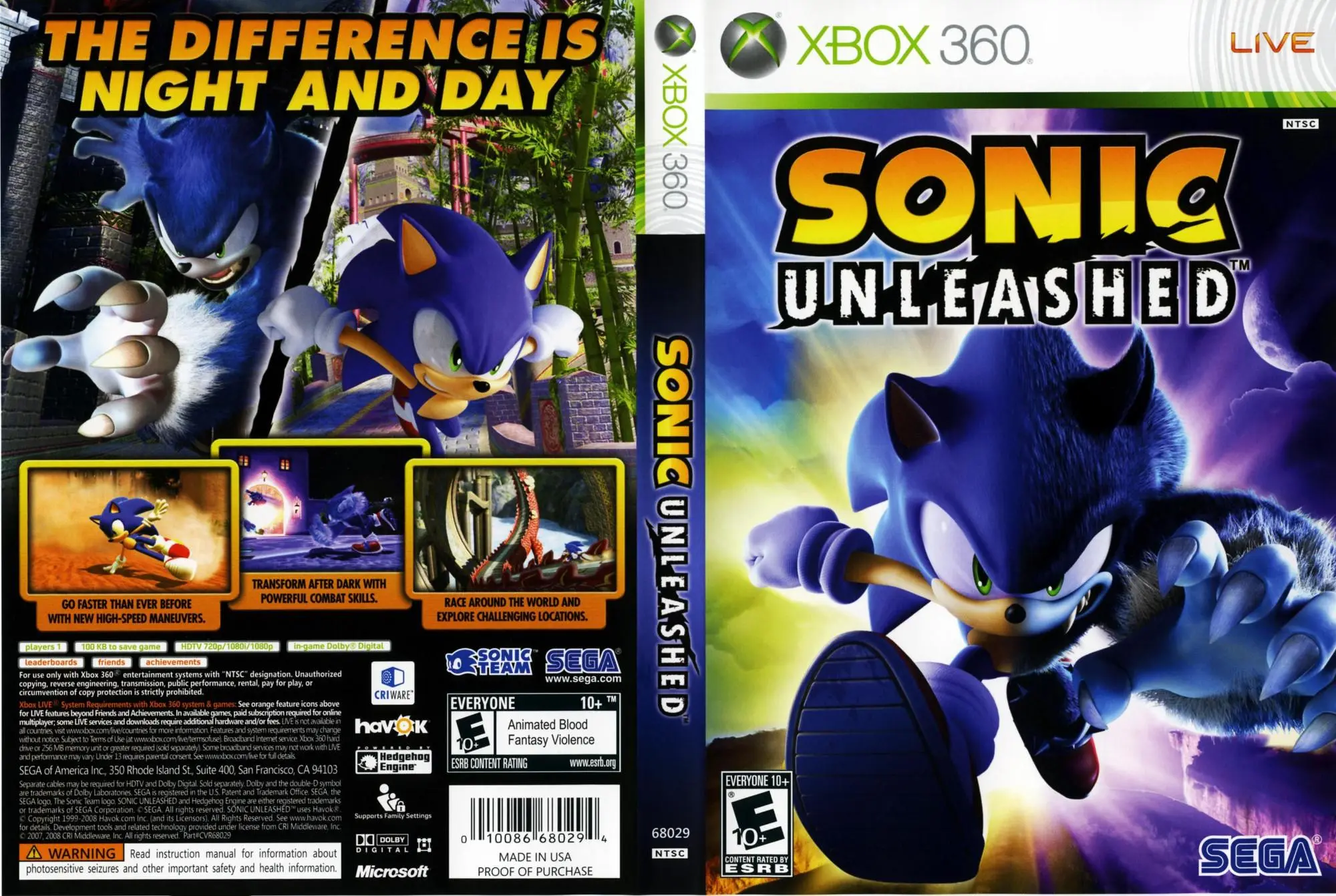
North American Xbox 360 box.North American PlayStation 3 box.North American Wii box.North American PlayStation 2 box.Sonic World Adventure, Japanese Wii box.Sonic World Adventure, Japanese Xbox 360 box.UK PlayStation 3 box.UK Wii box.Korean Xbox 360 box.Back of the Australian PlayStation 3 box.Australian Essentials re-release.Logo.Poster.Sonic and the Werehog.Super Sonic model (Wii/PS2).Chip model (Wii/PS2).The shattered planet.Official Nintendo Magazine cover.Spagonia concept art.Rooftop Run concept art.Adabat concept art.Concept art of Eggman’s ship.Chun-nan townsfolk concepts.Moments before Super Sonic.Chip and the Werehog come face to face with Dark Gaia.Sonic against an Egg Fighter.A credits snapshot.Title screen.Wii and PS2 title screen.A night stage.The Werehog on a rail.Empire City.A Gaia Gate.Egg Fighter.Interceptor.Titan.Nightmare.
The Werehog was not missed: before Sonic Colours, producer Takashi Iizuka said he regretted it because it clashed with Sonic’s core gameplay, though Sonic and the Black Knight’s director Tetsu Katano felt time and resources, not the idea, had held it back. The daytime stages were another story. Their mix of boosting, 3D runs and 2D sections defined Sonic for the next decade.
Releases and re-releases
Trademark and leakMarch 2008 – Confirmed by Sega on 3 April.
Night of the Werehog17 November 2008 – Marza’s short film.
Wii, PlayStation 2, Xbox 360 (North America)18 November 2008 – Europe 28 November.
PlayStation 3 (North America, Europe)December 2008 – 19 December in Europe.
Sonic World Adventure (Japan, Wii)18 December 2008 – ¥5,800.
Planetary Pieces soundtrack28 January 2009 – Three discs, Japan.
Sonic World Adventure (Japan, Xbox 360 and PS3)19 February 2009 – ¥6,800.
Adventure PacksFrom 12 March 2009 – Downloadable acts.
Gameloft mobile gameJune 2009 – A different, 2D game.
Platinum Hits and Classics (Xbox 360)2009 – Budget releases.
PlayStation 3 Essentials (UK)28 September 2012 – Budget release.
PlayStation Now2017 – Streaming.
Xbox One backward compatibilityNovember 2018 – Xbox Series X|S FPS Boost on 15 November 2021.
Ghost Tale31 October 2023 – A new short with the Night of the Werehog ghosts.
Unleashed Recompiled1 March 2025 – Unofficial PC and Linux port.
The fans’ port
With Unleashed stuck on old consoles, fans took matters into their own hands. In March 2013 the Unleashed Project mod rebuilt its daytime stages in Sonic Generations, and on 1 March 2025 a team released Unleashed Recompiled, an unofficial PC and Linux port made by converting the Xbox 360 program with an open-source recompiler, adding high resolutions, high frame rates and mod support.
Sales & reviews
Sales
Unleashed sold well. Sega’s figures, compiled by Sonic Retro, reached 2.45 million copies across North America, Europe and Japan, and Wikipedia notes it was Sega’s third best-selling game of that financial year.
2.45mCopies sold (Sega)
66Metacritic, Wii and PlayStation 2
60Metacritic, Xbox 360
54Metacritic, PlayStation 3
Reception and review scores
Scores from Wikipedia’s cited review table and Sega Retro’s magazine index, converted to percentages. Metacritic rated the game “mixed or average” on every format.
FamitsuJapan · Xbox 360 and PS3
85%
Nintendo PowerUS · Wii (8/10)
80%
Official Nintendo MagazineUK · Wii
79%
IGNUS · Wii (7.2/10)
72%
GameSpotUS · Wii (7/10)
70%
FamitsuJapan · Wii
68%
Official Xbox MagazineUS · Xbox 360 (6.5/10)
65%
Game InformerUS · Xbox 360 and PS3 (6/10)
60%
EurogamerUK · Wii (6/10)
60%
IGNUS · Xbox 360 and PS3 (4.5/10)
45%
Official PlayStation MagazinePS3 (4/10)
40%
GameSpotUS · Xbox 360 and PS3 (3.5/10)
35%
The day stages won almost everyone over. Reviewers praised their exhilarating speed, the switches between 3D and 2D and the lush, colourful cities of the Hedgehog Engine, with one comparing them to a playable Pixar film. The orchestral music went down well too, and several critics said they would have loved a game made only of day stages.
The Werehog was the sticking point. Critics found the night stages slow, repetitive and out of place, with comparisons to God of War; IGN felt the Werehog had nothing to do with Sonic at all. The town errands, which sent players wandering about talking to everyone, were called tedious, and some found the story and Chip too childish. Opinions on the versions split oddly: GameSpot thought the Wii version far better than the Xbox 360 one, while 1UP scored the Wii version lower.
Honours
IGN Best of 2008 · WiiBest Graphics Technology (nominee)For the Wii version, which does not use the Hedgehog Engine.
Reader reviews
No reader reviews yet. Played it? Give it a score out of 10 and tell other fans what you think.
Every fact on this page was checked against the sources below. Sonic Retro and Sega Retro pages were read through Wayback Machine copies from 2024 and 2026 that show the real article, because both live sites show a bot check. Review scores come from Wikipedia’s cited review table and Sega Retro’s magazine index. Where release dates disagree between sources, the info table says so. Our original article was an infobox only; its facts are kept in the info table.
To provide the best experiences, we use technologies like cookies to store and/or access device information. Consenting to these technologies will allow us to process data such as browsing behavior or unique IDs on this site. Not consenting or withdrawing consent, may adversely affect certain features and functions.
Functional
Always active
The technical storage or access is strictly necessary for the legitimate purpose of enabling the use of a specific service explicitly requested by the subscriber or user, or for the sole purpose of carrying out the transmission of a communication over an electronic communications network.
Preferences
The technical storage or access is necessary for the legitimate purpose of storing preferences that are not requested by the subscriber or user.
Statistics
The technical storage or access that is used exclusively for statistical purposes.The technical storage or access that is used exclusively for anonymous statistical purposes. Without a subpoena, voluntary compliance on the part of your Internet Service Provider, or additional records from a third party, information stored or retrieved for this purpose alone cannot usually be used to identify you.
Marketing
The technical storage or access is required to create user profiles to send advertising, or to track the user on a website or across several websites for similar marketing purposes.





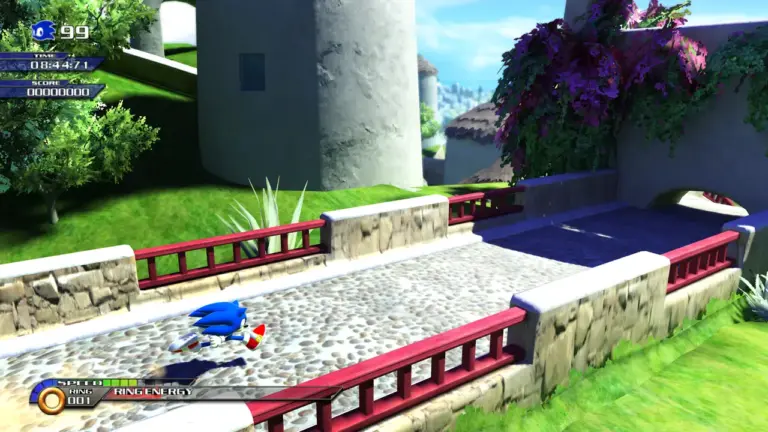 Windmill IsleApotosA whitewashed Mediterranean island town, home of the tutorials and the first Gaia Temple.
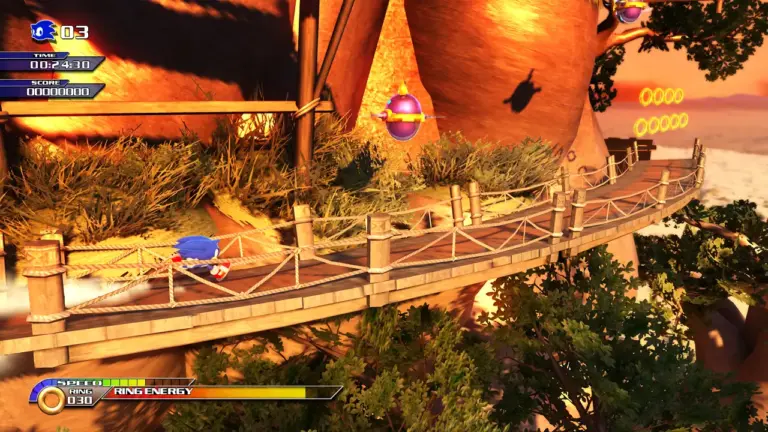 Savannah CitadelMazuriAfrican savannah around an earthen citadel, where Eggman sends the Egg Beetle. Only a cut-down Mazuri appears on Wii and PlayStation 2.
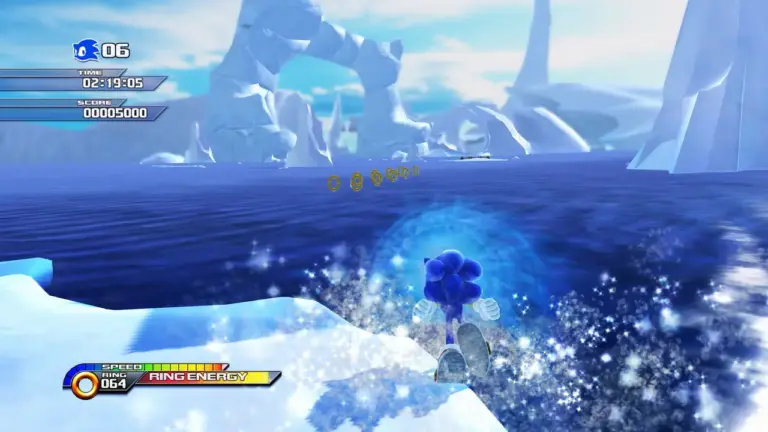 Cool EdgeHoloskaA frozen land of snow, ice and igloos; the Werehog meets the Dark Moray here.
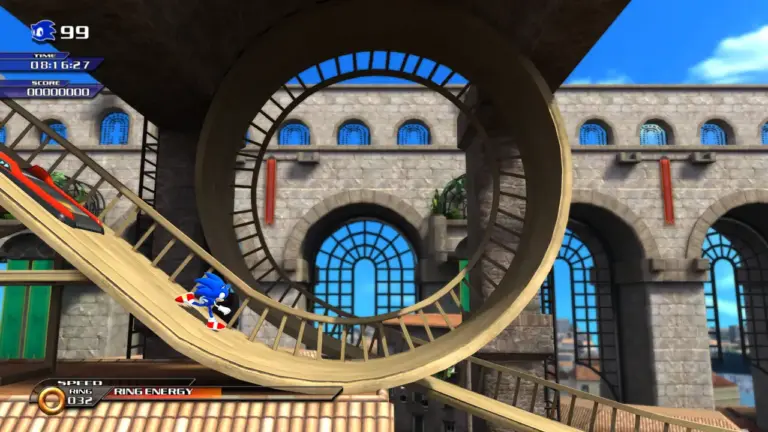 Rooftop RunSpagoniaA European city of towers and red rooftops. Eggman attacks with the Egg Devil Ray.
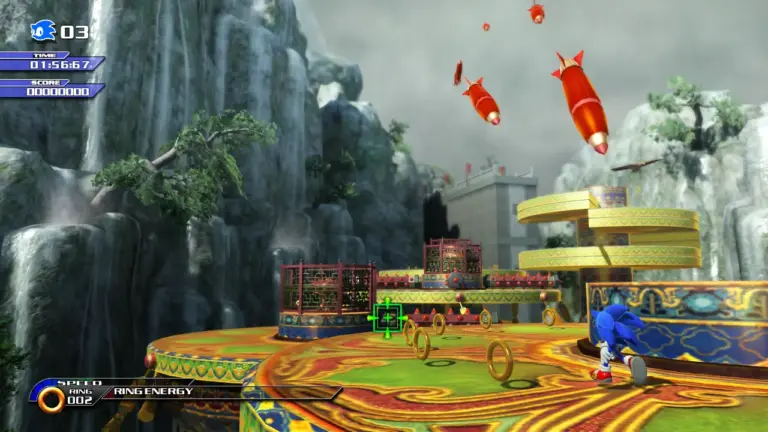 Dragon RoadChun-nanMountain roads and a great wall in a land inspired by imperial China; the Werehog battles the Dark Gaia Phoenix.
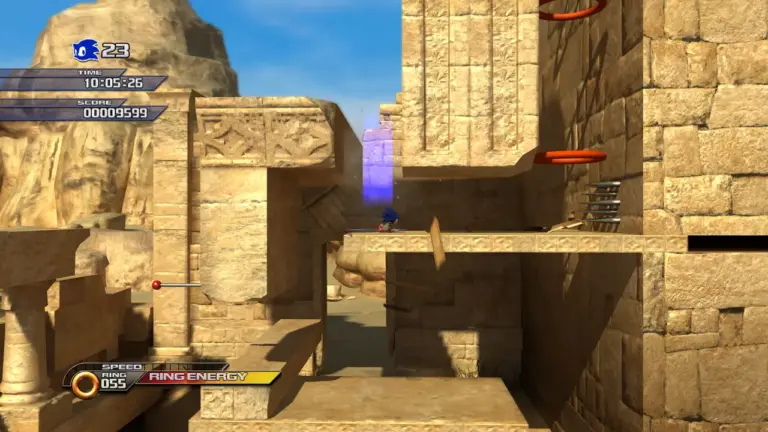 Arid SandsShamarA Middle Eastern desert of carved stone and sand, guarded at night by the Dark Guardian.
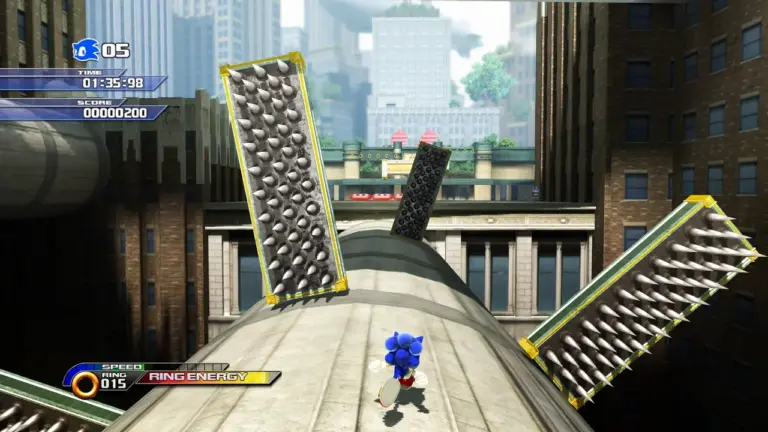 Skyscraper ScamperEmpire CityA New York-style metropolis, run across the tops of its towers. Xbox 360 and PlayStation 3 only.
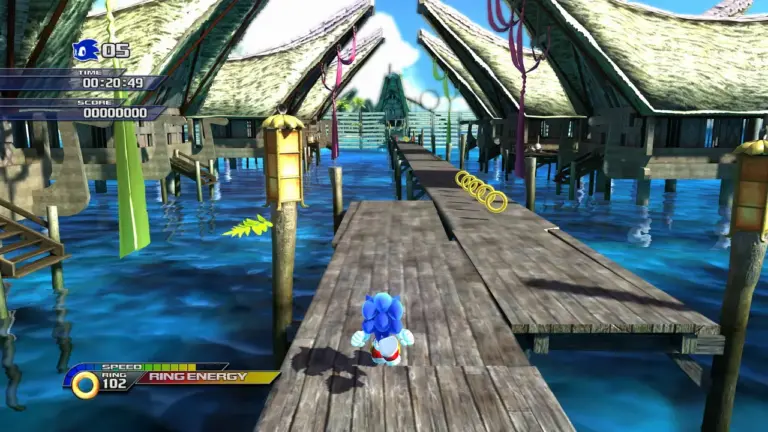 Jungle JoyrideAdabatSoutheast Asian jungle, rivers and cliffs, where Chip remembers who he is and Eggman brings the Egg Lancer.
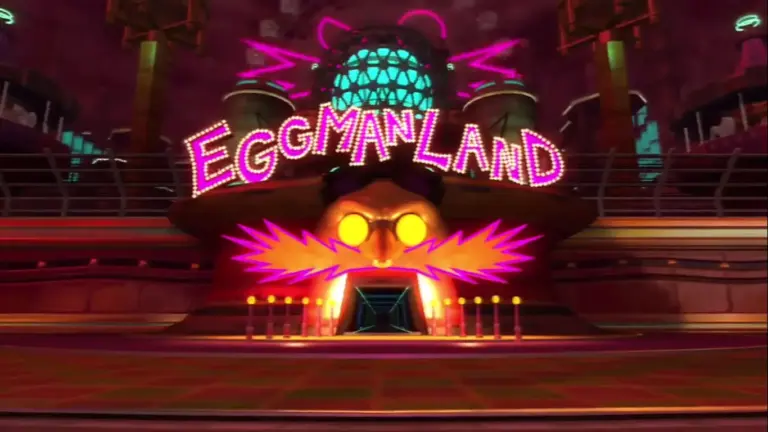 EggmanlandFinal stageEggman’s theme-park capital and factory. Sonic has to fight through it both by day and as the Werehog by night.
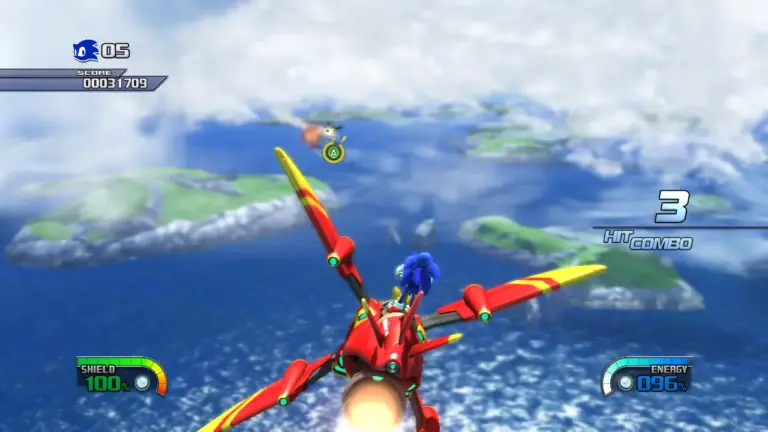 Tornado DefenseSky battlesShooting sections aboard Tails’s Tornado, ending with the Egg Cauldron. Xbox 360 and PlayStation 3 only.
 Sonic the HedgehogPlayable · day
 Dr. EggmanVillain
 Dark GaiaNew · Final boss
 Miles “Tails” ProwerFriend
 Amy RoseFriend
 Professor PickleNew · Ally
 Egg BeetleMazuri · SonicEggman’s machine on the savannah.
 Dark MorayHoloska · WerehogA moray-like monster lurking in Holoska.
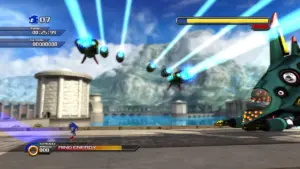 Egg Devil RaySpagonia · SonicEggman’s ray-shaped machine, fought in Spagonia.
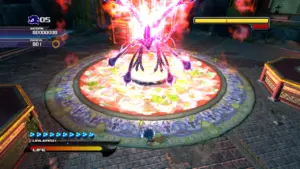 Dark Gaia PhoenixChun-nan · WerehogA phoenix-like monster of Dark Gaia.
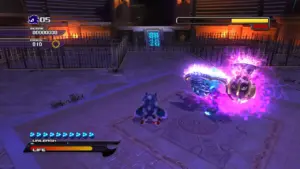 Dark GuardianShamar · WerehogA giant fought very differently in the two versions.
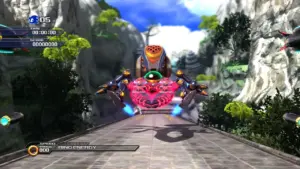 Egg LancerAdabat · SonicEggman’s last machine before Eggmanland.
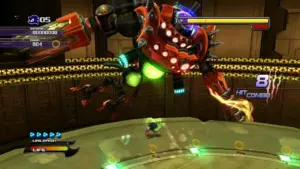 Egg DragoonEggmanland · WerehogEggman’s Dark Gaia-powered mech, later remade in Generations.
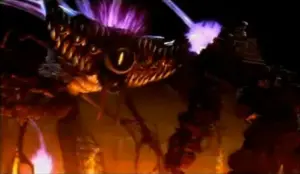 Dark Gaia and Perfect Dark GaiaPlanet’s core · Chip and Super SonicThe final battles, fought with the Gaia Colossus and Super Sonic.
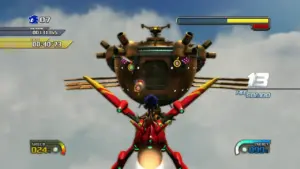 Egg CauldronTornado Defense · SonicEggman’s airborne machine, fought from the Tornado in both Tornado Defense acts.